Washington leaders launch Cascadia Sustainable Aviation Accelerator; position Pacific Northwest as global hub for sustainable aviation fuel
Share
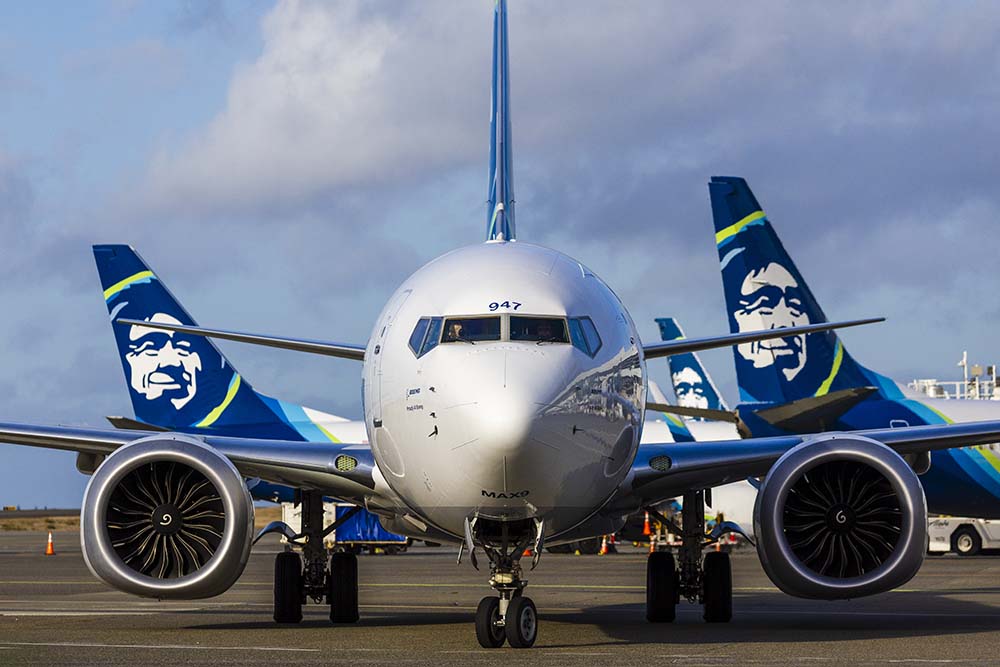
December 18, 2024; SeaTac, WA, USA; An Alaska Airlines 737-MAX9 aircraft taxis to a gate at Seattle-Tacoma International Airport. Mandatory Credit: Joe Nicholson-Alaska Airlines
Washington State leaders, aviation industry partners, research institutions, Tribal representatives and sustainability advocates today launched the Cascadia Sustainable Aviation Accelerator (CSAA). Announced at the Boeing Future of Flight, the initiative is the most comprehensive and well-funded across the region of its kind to accelerate the production, deployment and adoption of sustainable aviation fuel (SAF).
Funded through a 2025 State of Washington appropriation and private philanthropic donation of an additional $10 million, the CSAA positions the Pacific Northwest as a global leader in an accelerated transition to sustainable aviation fuel while capitalizing on the once-in-a-generation economic opportunity of scaling local SAF production. In partnership with the Washington State Department of Commerce, CSAA is a non-profit organization dedicated to advancing the renewable fuels industry in the Pacific Northwest.

Unlike traditional jet fuel, SAF is formulated from sustainable feedstocks, like crop seed oil, agricultural and forestry waste. Advancements in SAF technology and greater availability of affordable SAF will reduce the carbon footprint of air transportation, improve air quality and contribute to a more sustainable future while creating new industries, jobs and economic opportunities.
Sustainable aviation fuel puts the Cascadia region at the forefront of the next major chapter of the clean energy transition that will shape how the world is powered. This is the opportunity to do for clean fuels what this region did for the technology economy, creating lasting economic growth and leading the global effort to cut aviation emissions.”
The Cascadia region has been a trailblazer in aerospace innovation for over a century, and today it is uniquely positioned as a global center of aviation innovation, with an opportunity to unlock the next generation of sustainable fuel. With access to local, low carbon feedstocks, affordable clean energy, established infrastructure and a skilled workforce, the region has all the elements necessary to support production of up to one billion gallons of sustainable aviation fuel by 2035. Scaling production at this level would drive economic prosperity and development, strengthen regional energy security and independence, support state and regional climate initiatives and build on Cascadia’s long legacy as an aviation innovator.
The global aviation industry, which generates some $4.1 trillion in economic activity and supports 86.5 million jobs, currently accounts for approximately 2-3% of global carbon dioxide emissions, in addition to other environmental impacts. SAF is a safe, effective drop-in solution projected to be used for the next 70-plus years that can reduce emissions by 80% compared to fossil-based fuels and the transition to a thriving circular economy through locally produced SAF.

This initiative will be successful because it is grounded here, in the communities where aviation, manufacturing and clean energy intersect. CSAA builds on the infrastructure, workforce and partnerships we have already put in place, and this is just the beginning. Coalition partners like Washington State University are eager to partner in the establishment of a world class research and development facility adjacent to Paine Field. Combined with our region’s aviation industry cluster, these developments ensure we will be a leader in global aviation sustainability and investment well into the future.”
The region’s strength is built on advanced science, technology and aviation expertise, supported by leaders like Washington State University, Pacific Northwest National Laboratory and Boeing. This research foundation provides the technical backbone needed to move sustainable aviation fuel from small-scale production to commercial scale.
For the last six decades in Snohomish County, Boeing has relied on strong community partnerships to turn ambitious ideas into reality. Cascadia is a concrete example of that collaboration toward meaningful progress on a Sustainable Aviation Fuel ecosystem right here at home.”
Local aviation and technology leaders recognize that scaling SAF research and production will require coordinated action across the entire aviation ecosystem. Manufacturers like Boeing bring the technical expertise to integrate sustainable aviation fuels into aircraft and operations, while operators including Alaska Airlines and Amazon provide the operational expertise and market demand for cost-competitive SAF. Lawmakers, like Washington State Senator Marko Liias, have championed these partnerships at the state level by advancing legislation that supports SAF development and unlocks long-term investment.
Alaska Airlines and Hawaiian Airlines are committed to this journey to reduce carbon emissions for a more sustainable future for aviation, and while we are proud to be the most fuel-efficient premium U.S. carrier, SAF remains the biggest lever for us to meaningfully lower our emissions and reach our decarbonization goal. We’re thrilled to be a founding partner of CSAA because regional, cross-sector efforts like this are critical to align policy, public and private investment, to identify and invest in the right technologies and to incent and scale local production.”
Combined with existing infrastructure, affordable clean energy and access to feedstocks, research institutions are advancing the science that makes sustainable aviation fuels viable, and policymakers are ensuring sustainability and airport community impacts remain central as the industry transitions to cleaner fuels.
Washington has led the world in aerospace innovation for generations, and now we face a defining moment for the next generation of aviation. Sustainable aviation fuel is essential to decarbonizing air transportation, and Cascadia is the one region with the research, industry, policy and workforce needed to scale it. This is the moment to act, and CSAA gives us the vehicle to lead.”
The Jan. 8 launch event featured remarks from leaders across the aviation, research and public sectors. Executives from Alaska Airlines and Hawaiian Airlines and Boeing spoke to the importance of aligning the full ecosystem of manufacturers and operators, policy, research, financing and public awareness to scale sustainable aviation fuel and secure the long-term future of aviation. Representative Mia Gregerson highlighted the need to center sustainability and airport communities as the industry transitions to cleaner fuels. Washington State University President Elizabeth Cantwell underscored the role of research and innovation in advancing sustainable aviation fuel from the lab to commercial deployment, while Washington State Department of Commerce Director Joe Nguyễn addressed the state’s investments in clean energy, economic development and partnerships with Tribal nations.
The event also hosted a panel discussion moderated by Tim Zenk, a sustainable aviation fuel expert at Earth Finance, featuring executives Guy Palumbo at Amazon; Andy Billig, board member at SkyNRG; labor leader Jon Holden, Machinists Union, District 751; and Port of Seattle Executive Director Steve Metruck. The panel focused on investment pathways, workforce development and the economic opportunity presented by large scale sustainable aviation fuel production.
About Cascadia Sustainable Aviation Accelerator (CSAA)
Cascadia Sustainable Aviation Accelerator (CSAA) is a diverse, cross-sector coalition of public/private industry leaders committed to laying the foundation for sustainable aviation in Cascadia. CSAA recognizes the enormous economic and environmental value of the SAF transition and is dedicated to securing the Pacific Northwest as the next global hub for sustainable aviation.
About Alaska Air Group
Alaska Airlines, Hawaiian Airlines and Horizon Air are subsidiaries of Alaska Air Group, and McGee Air Services is a subsidiary of Alaska Airlines. We are a global airline with hubs in Seattle, Honolulu, Portland, Anchorage, Los Angeles, San Diego and San Francisco. We deliver remarkable care as we fly our guests to more than 140 destinations throughout North America, Latin America, Asia and the Pacific. We’ll serve Europe beginning in spring 2026. Guests can book travel at alaskaair.com and hawaiianairlines.com. Alaska is a member of the oneworld alliance, with Hawaiian scheduled to join oneworld in spring 2026. With oneworld and our additional global partners, guests can earn and redeem points for travel to over 1,000 worldwide destinations with Atmos Rewards. Learn more about what’s happening at Alaska and Hawaiian at news.alaskaair.com. Alaska Air Group is traded on the New York Stock Exchange (NYSE) as “ALK.”