Hawaiian Airlines and Polynesian Voyaging Society honor a legacy of wayfinding in Auckland
Share
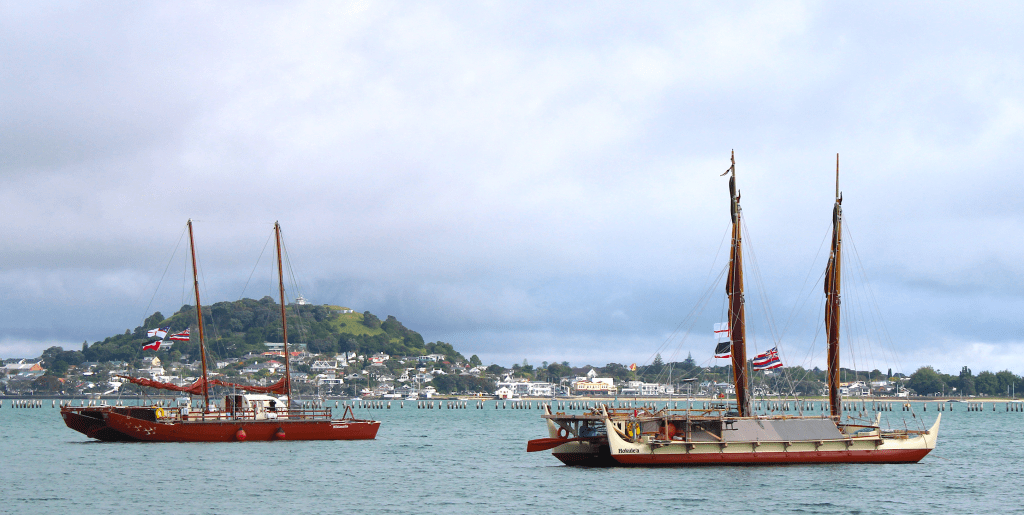
Hawaiʻi’s Polynesian Voyaging Society (PVS) has sailed with the spirit of exploration for over 50 years, reviving traditional wayfinding and inspiring cultural pride throughout the Pacific. That legacy was honored last month in Aotearoa (New Zealand), where Māori communities welcomed crews aboard the double-hulled canoes Hōkūleʻa and Hikianalia with a powerful and moving welcome. The arrival of PVS crews coincided with the return of our 2025–2026 seasonal service between Auckland and Honolulu.

A shared return to Auckland
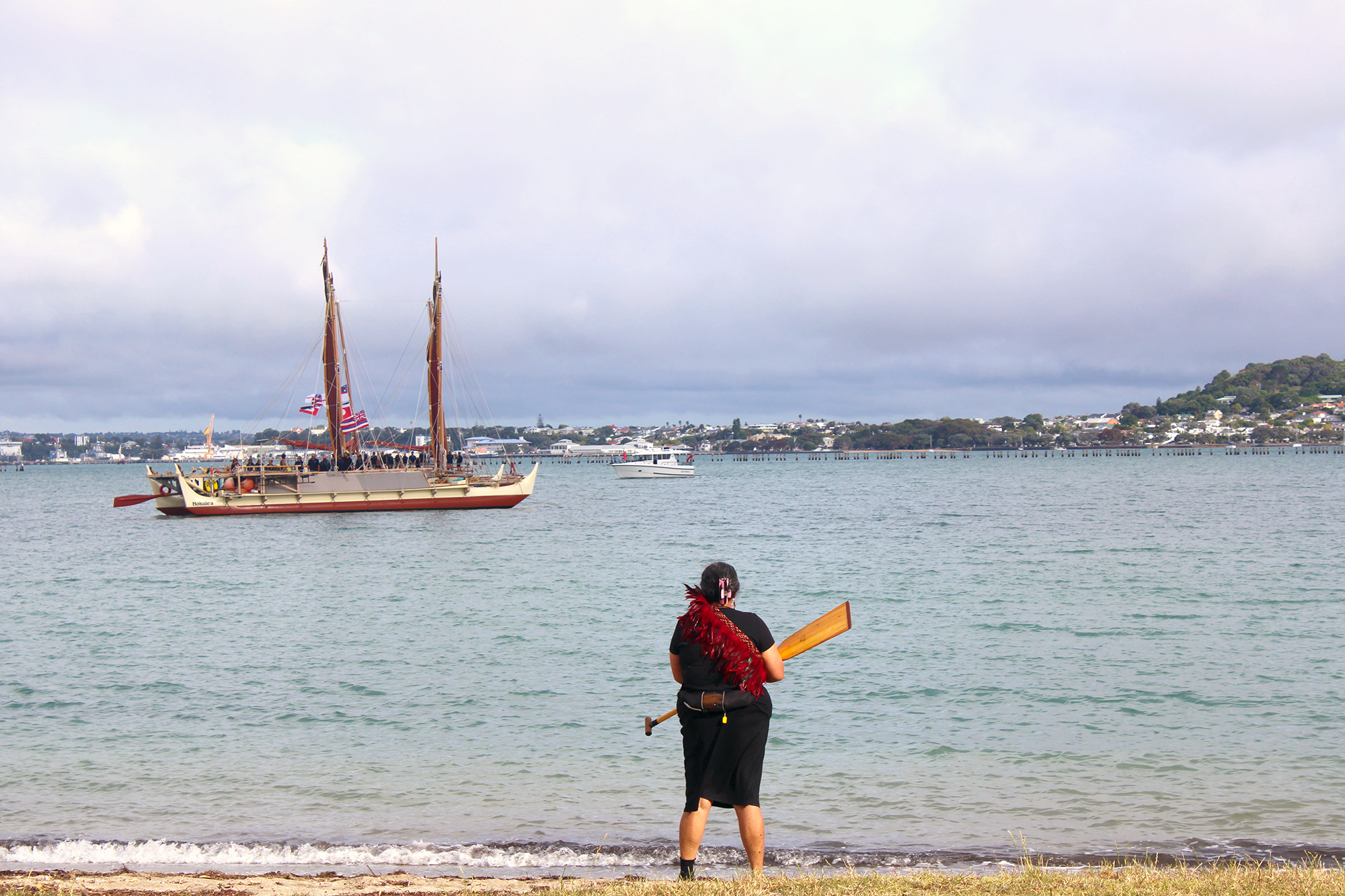
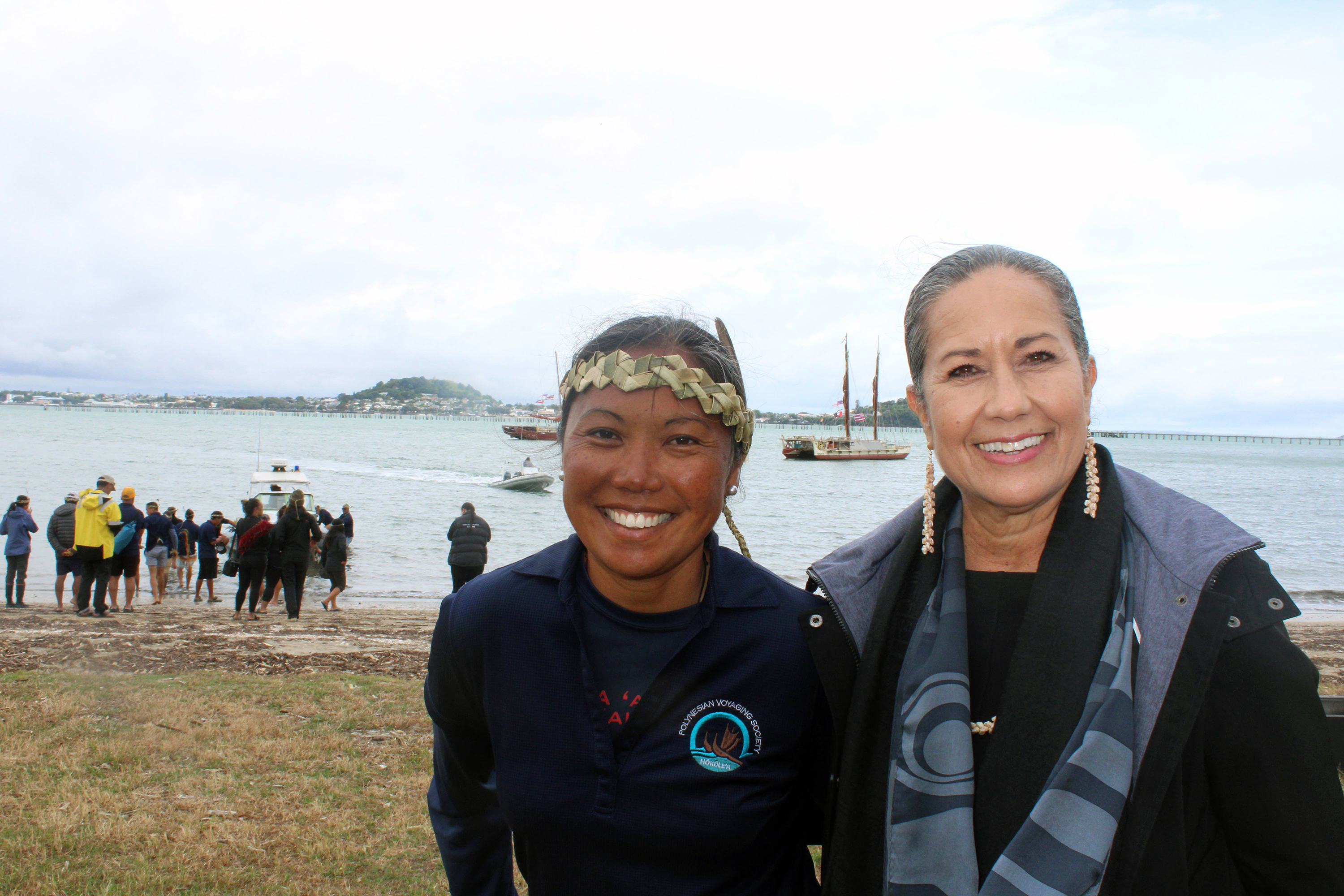
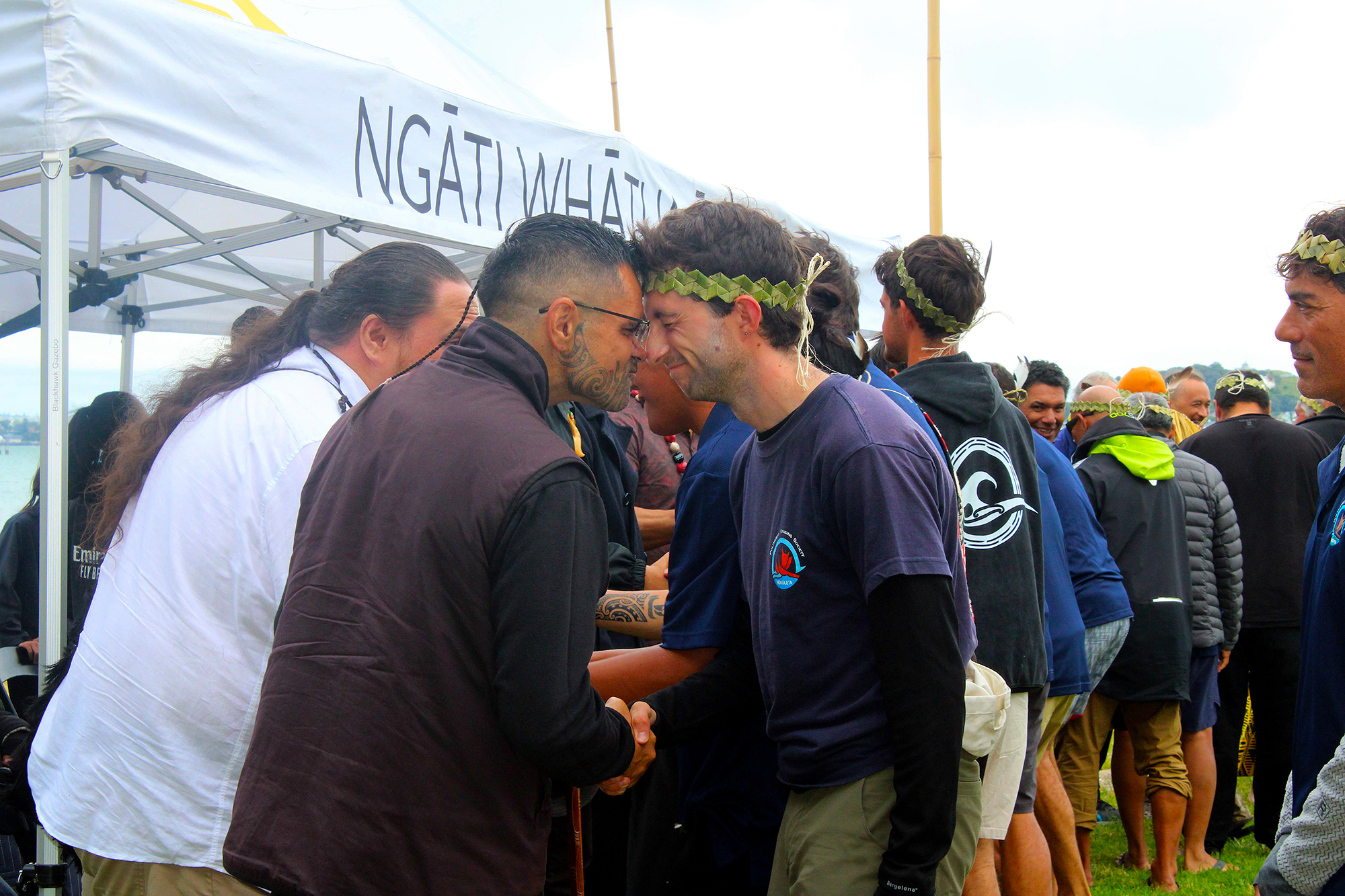
On Nov. 17, our Airbus A330, named Hikianalia after the star Spica, touched down in Auckland as the first of two vessels to carry the name. Debbie Nakanelua‑Richards, Hawaiian Airlines’ director of community and cultural relations, was among those on board the flight that evening. The following morning, she joined Ngāti Whātua Ōrākei tribal members at Ōkahu Bay — their ancestral homeland — to welcome PVS sister canoes Hōkūleʻa and Hikianalia to port.
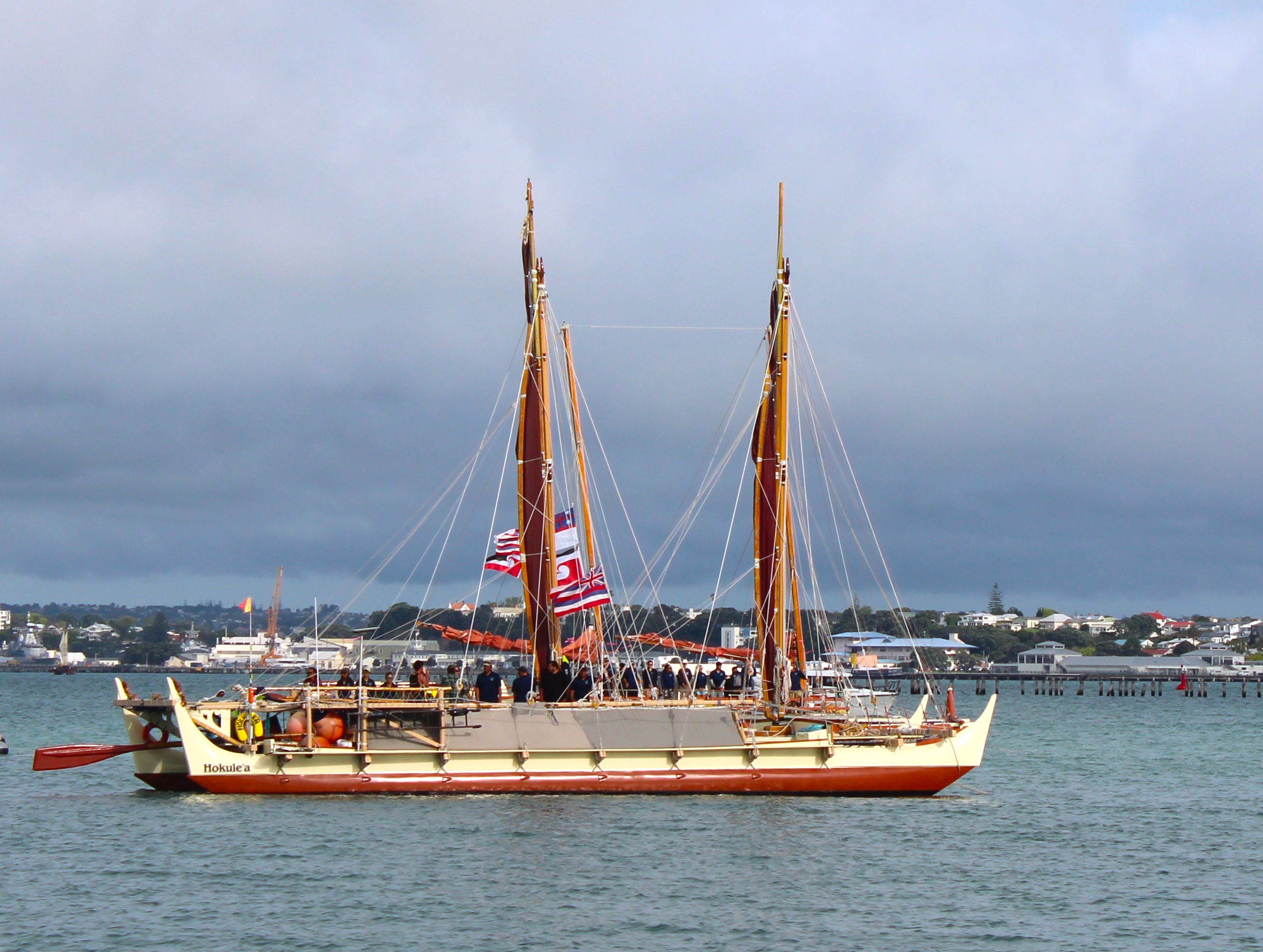
As Hōkūleʻa and Hikianalia emerged on the horizon of Auckland’s Ōkahu Bay, they were soon escorted by the waka hourua (Māori double‑hulled canoe) of the Te Toki Voyaging Trust — a nonprofit dedicated to preserving traditional wayfinding knowledge for Māori. The cultural welcome was a powerful gesture of collective respect for the canoes and their crews, who had sailed from Honolulu to Tahiti, Rarotonga and finally Aotearoa using the same ancient wayfinding techniques as their ancestors, without navigational instruments or modern technology.
The Aotearoa arrival marked another successful leg of PVSʻs Moananuiākea Voyage, a 43,000-nautical-mile, 47-month circumnavigation of the Pacific that touches 36 countries and archipelagoes, nearly 100 indigenous territories and 345 ports.


A cultural renaissance
As a teenager in the 1970s, Debbie developed a keen interest in PVS. The nonprofit was founded in 1973 and spent years focusing on reconstructing traditional Hawaiian double-hulled voyaging canoes and recovering ancient wayfaring knowledge. Hōkūle‘a, the first and foundational canoe of PVS, made history in 1976 when it completed its first voyage to Tahiti. The canoe was welcomed by more than 17,000 Tahitians, over half of Pape‘ete’s population at the time, underscoring a shared commitment to safeguarding indigenous values and practices across Hawaiʻi and the Pacific.
“It was a time when Hawaiian culture was at risk of extinction, so there was deep concern to preserve and pass on important cultural knowledge – our language, dance, music, art, carving and the legacy of exploration and navigation. Hōkūleʻa ignited a cultural renaissance in Hawaiʻi, which continues today,” Debbie said.
Connected by ocean (and air)
Today, Hōkūleʻa continues to carry crews around the world as they convey messages about respecting oceans, protecting cultural knowledge and caring for native communities and the environment.
Hawaiian Airlines, Hawaiʻiʻs carrier for 96 years, has proudly supported PVS for nearly five decades. As the official airline sponsor of the Moananuiākea Voyage, weʻve contributed 34 million miles (now points) to help transport voyagers during crew swaps and critical cargo during food and supply restocks. Our expansive network has also long connected a handful of Pacific communities touched by the Voyage, including Auckland, a city we have proudly served since March 2013.
Crew reflections at the arrival
Jay Tansley, the first Māori to become a U.S. Navy SEAL, described the voyage as profound. Born in Aotearoa, his family moved to Hawaiʻi when he was five. He joined PVS to add his skills to the Moananuiākea Voyage.
“Nainoa Thompson [master navigator and CEO of PVS] first told me, ‘the canoe will take you home,’ and ever since, the experience has been incredible,” he said.
“We approached in darkness, but between lightning strikes, we recognized Aotearoa’s long white cloud stretched over Mount Manganui. It was then that we estimated we were only about 200 miles off the coast.”
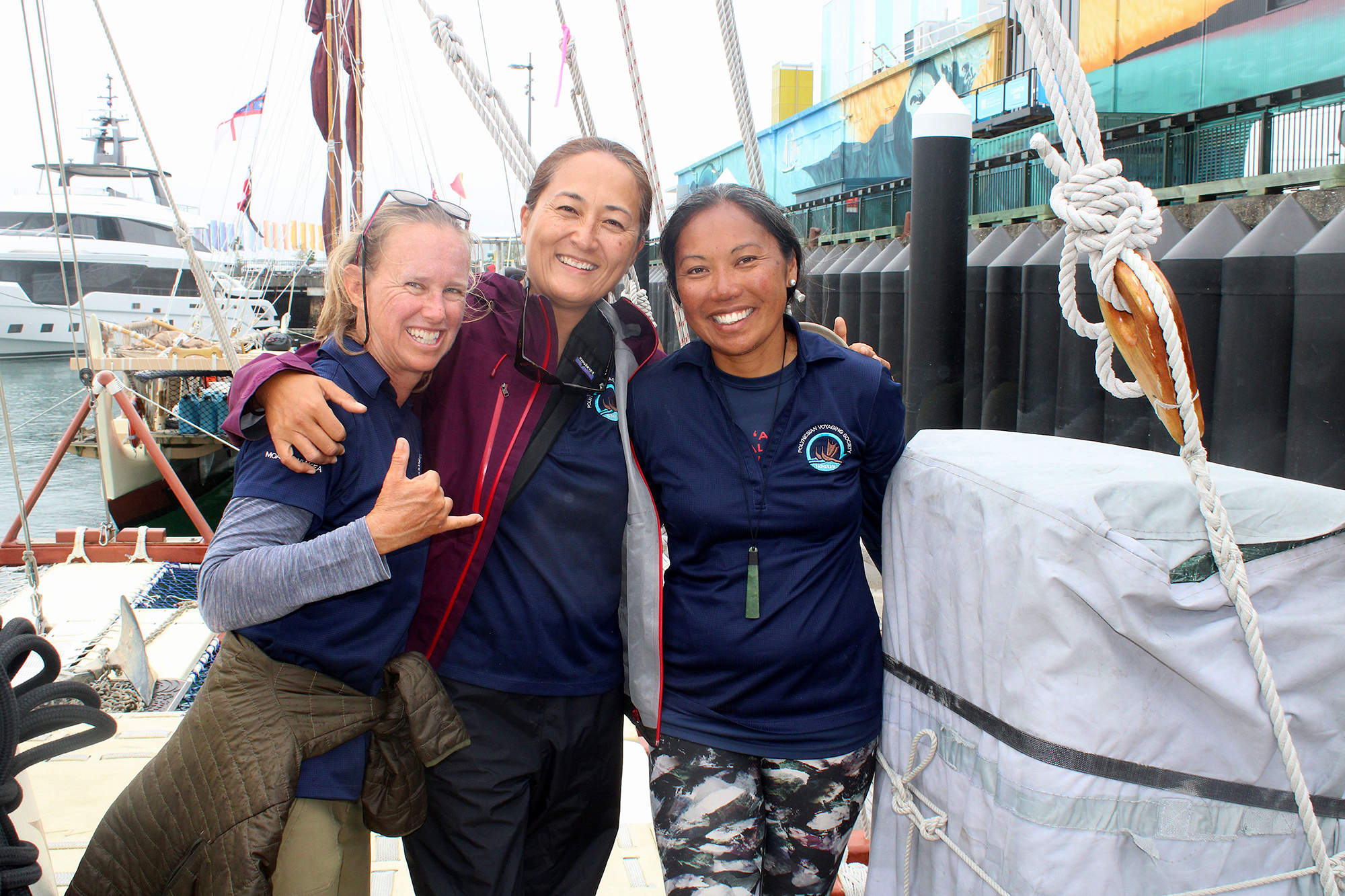
Kalā Baybayan-Tanaka grew up around voyaging canoes, learning from her father, the late master navigator and Captain Kālepa Baybayan, who crewed Hōkūleʻa in 1975 and on all major voyages. She joined PVS nearly two decades ago and has voyaged on both Hikianalia and Hōkūleʻa as captain, watch captain, navigator, safety officer and education specialist.
“It’s my hope that Hōkūleʻa continues to sail the sea roads that connect our past and future and that our decks stay full with ʻohana of the waʻa [family of the canoe] as we teach and pass on knowledge to future generations,” she said.
Our commitment to Hawaiʻi and PVS
While welcoming the canoes, Debbie reiterated Hawaiian Airlines’ longstanding commitment to PVS and Hawaiʻiʻs rich culture.
“Deeply embracing culture and supporting organizations like the Polynesian Voyaging Society is and has always been a priority,” she said.
“When people see Hawaiian Airlines, they see Hawaiʻi and think of a people, a place and a culture. There is kuleana, or responsibility, that comes with that, and so it matters how we show up to celebrate Hawaiʻi and share our culture – not just at home, but also with the communities we serve.”
To learn more about the Moananuiākea Voyage and the Polynesian Voyaging Society, visit hokulea.com.