Changing Course: Planning our Future in Uncertain Times
Share
Network Planning and Revenue Management is arguably one of the most complex areas of the airline business. At Hawaiian, it is where we make crucial decisions ranging from where we deploy our fleet to how we arrange our seats and the services we offer our guests to maximize value to travelers and keep us growing. So, what happens when a global pandemic forces the airline industry to almost shut down with nearly no markets to serve or seats to sell?
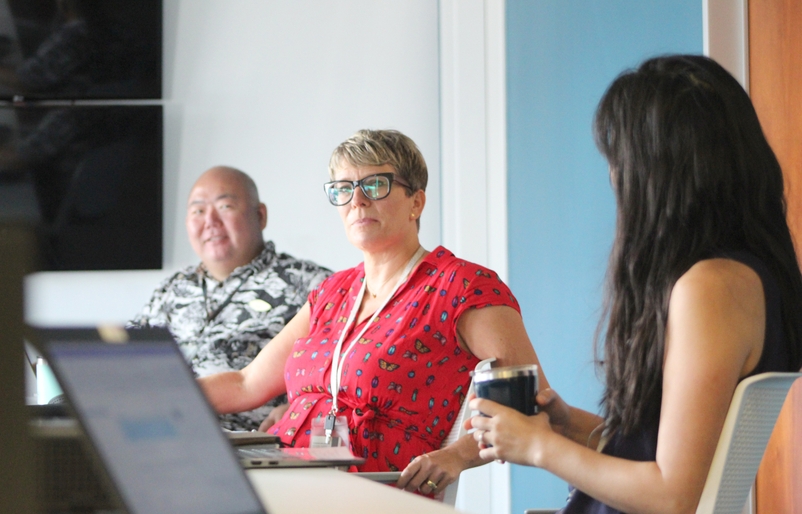
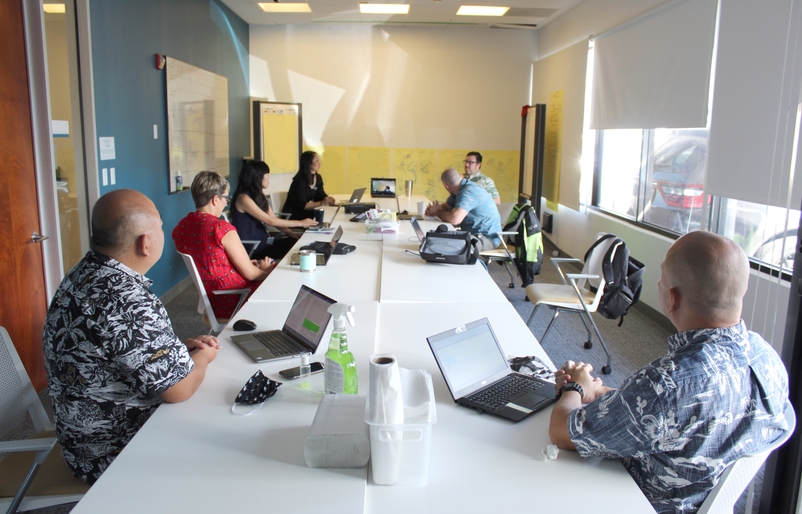
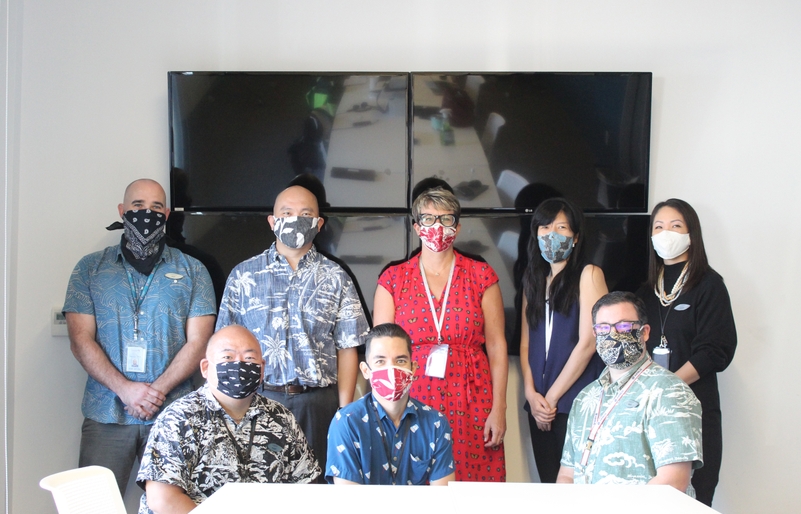
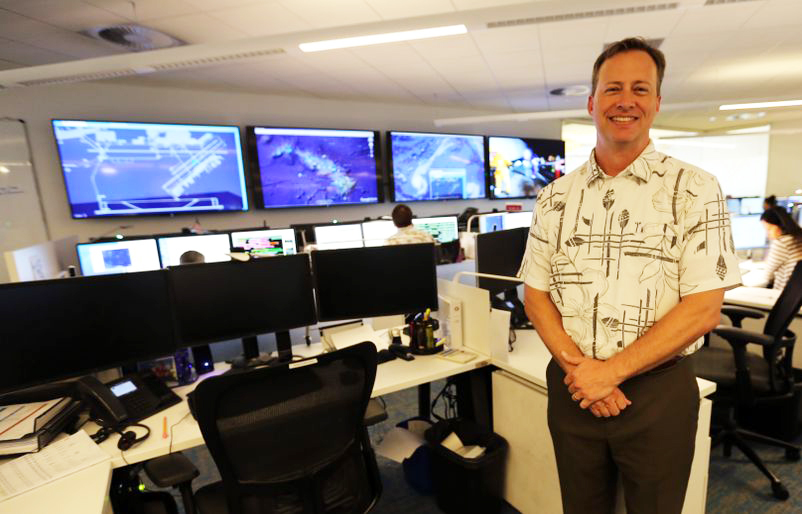
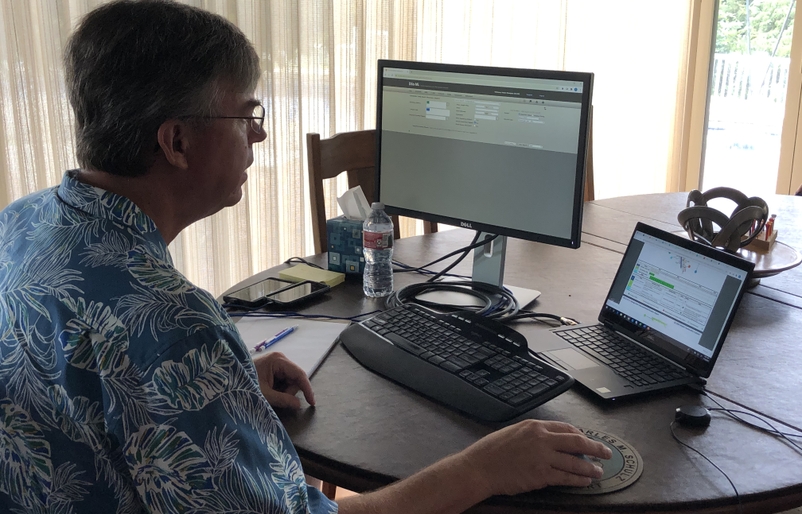
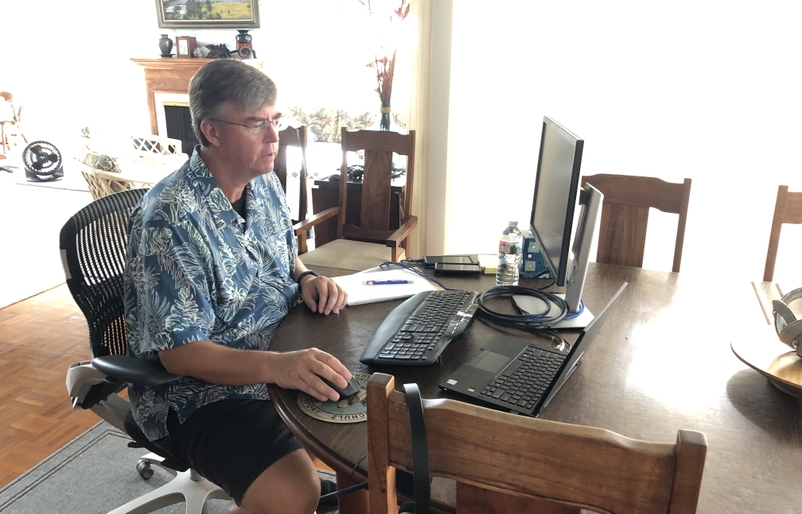
Bob Westgate, Hawaiianʻs managing director of network and schedule planning, explains how his 16 team members have had to quickly adapt to these exceptional industry changes.
Network Planning
Our Network Planning team has been actively monitoring industry developments since traditional, weekly updates are quickly out-of-date in the very fast-paced and fluid pandemic environment. The team has been analyzing how past economic events, including 9/11 and the last financial crisis, impacted Hawaiʻiʻs visitor numbers. They are reviewing the relationship between unemployment rates and Hawaiʻi visitor levels to see if any parallels to our current situation can be discerned. The group continues to monitor currency exchange rates and the status of various international travel restrictions to determine when we will be able to resume services to many of our international markets.
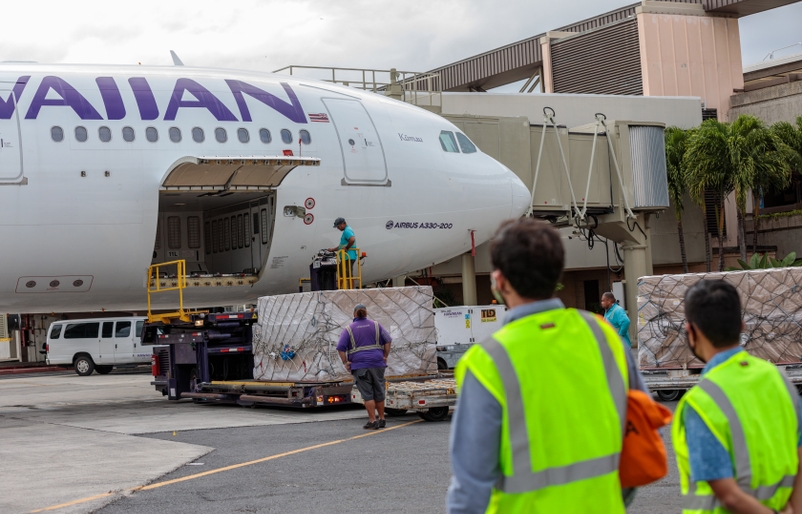
Lastly, we have been assisting our cargo team in determining the costs associated with all freight operations. Since mid-April, we have been operating regular all-cargo Airbus A330 flights between Honolulu and Incheon, South Korea, and Narita in Japan and Los Angeles, along with one-off flights from Shenzhen, China, to Honolulu and Taipei to San Francisco. We have several more flights planned from Hong Kong and Taipei and others under consideration.
Future Schedules
Members of our Future Schedules team have been working through a significant number of ramp-up scenarios to help us plan our future. These exercises have led to very detailed schedule modeling so we can determine the resources we may need under different situations. The team recently took the lead in determining what it would take for us to operate one-stop flights in the event they became necessary to be CARES Act compliant. An example of a one-stop flight would be Honolulu-New York-Boston, using one flight to serve two East Coast stations in our network. This option, which falls outside our existing model as a destination carrier, in which every one of our flights begins or ends in Hawaiʻi, was not deemed necessary.
This team is also responsible for monitoring block times – the amount of time a flight takes, from pushing back from the departure gate to arriving at the destination gate. Accurate block times help with flight planning and ensure we don’t arrive too early when a gate may not be available. Our block times analyst has been studying the impact of significantly less industry activity at our airports and in the sky. This effort has led to modest one-to-two-minute block reductions for our Honolulu and neighbor island flights, and up to 10 minutes for our flights to and from the U.S. mainland.
Current Schedules
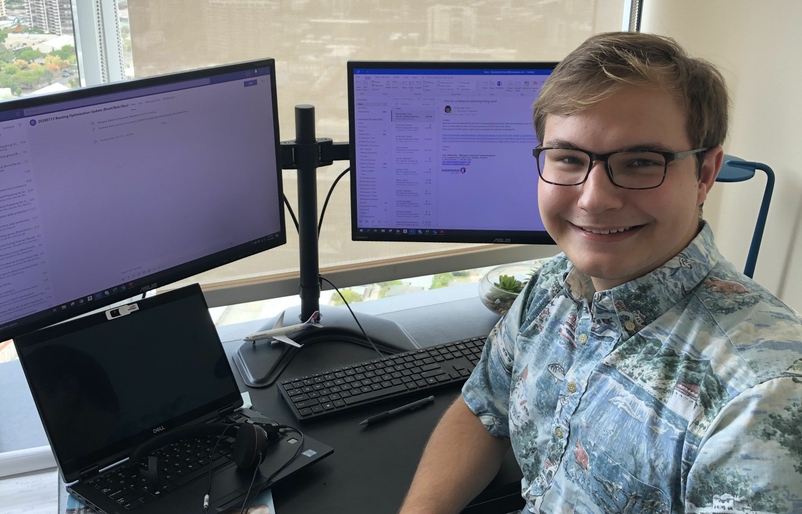
The Current Schedules team has been producing multiple scenarios before finalizing each month’s schedule. This preparation has been challenging because we need to rely on various governments for key dates, including when local, state and country quarantines are scheduled to be lifted. This team is also responsible, along with Revenue Management, for determining when neighbor island up gauges or extra flights are deemed necessary to accommodate in-flight social distancing, particularly on peak travel days. As an example, we have occasionally been operating our midsize Airbus A321neo aircraft in place of our smaller Boeing B717s on select Maui-Honolulu routes where we’ve seen higher bookings. This allows us to meet demand while capping our loads to allow for distancing onboard.
We have also increased our charter planning now that we have more available aircraft to pursue charter opportunities, which help offset some of the lost revenue on our reduced commercial schedule. Slot coordination, an often-complicated process to maximize the efficient use of airport infrastructure, continues to take up a lot of time, especially for ad hoc charters and cargo-only operations, and because we are making decisions relatively late in the slot coordination process.
Publications
Each time we add, cancel or retime our flights, we run a schedule change that is reflected on HawaiianAirlines.com, the Sabre reservation system and the global distribution systems. Prior to the pandemic, our Publications team would process one or two schedule changes per week. This has evolved into one or two changes per day as rapidly changing conditions force us to make relatively close-in decisions about our capacity. They have also been tasked with implementing the new seat maps with middle seat blocks to provide more personal space for our guests.
Additionally, codeshare coordination has become increasingly challenging as all airlines are scrambling to identify close-in schedules that offer passengers a seamless connection and, when necessary, reaccommodation options. We typically have 10 days to work with our codeshare partners but the urgency to make last-minute schedule changes has forced us to coordinate with partners in near real-time. This is especially important for our codeshare partners that rely on our neighbor island network since most nonstop flights between the U.S. mainland and neighbor island points have been cancelled due to decreased demand caused by the ongoing pandemic.
At the end of the day, my team is doing their best to break down complicated information and communicate it as effectively as possible, and I’d like to mahalo all the teams we have been working closely with, especially airport operations, crew, maintenance planning, our System Operations Control Center and catering. This close and speedy coordination has made it easier for us to do our jobs and continue to serve our guests in these tumultuous times.


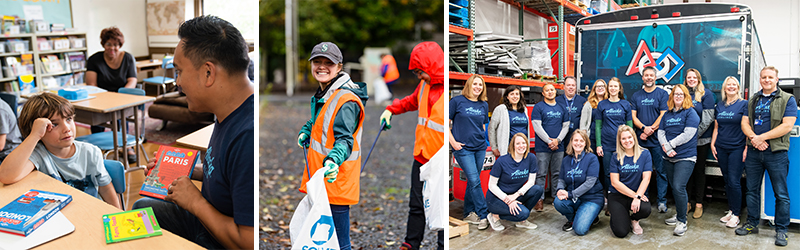
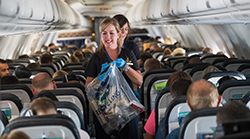
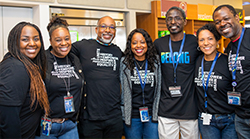
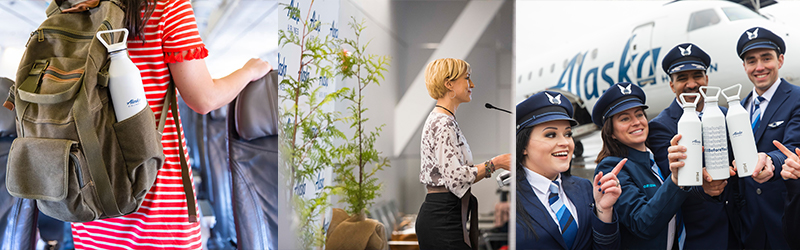




 “At my department I’m able to look like myself and not have to alter my appearance, which I am very grateful for.” – Amiya, a central baggage agent based in Seattle. She’s worked at Alaska for 1 year.
 “The reason I am able to live my true life is because brave people have stood up against injustices and fought for my freedom to live. That is something to be proud of, something to be thankful for, and something to celebrate!” – Corey, a flight attendant based in Portland for 2.5 years.
 “Alaska has opened the doors for me and welcomed me with open arms and said ‘we take you for who you really are’ and that feeling in my heart is amazing. I’m always grateful and honored to be able to represent this company with pure integrity of who I am. The Drill Team (Alaska’s dedicated group of flight attendants that dance routines at large events like Pride] is my escape to my dance world and allows me to pay forward what Alaska has done for me. Last year, Alaska’s Pride dance routine was amazing! Full attitude sass and pride.” – Orly, a flight attendant based in Seattle. He’s been with Alaska for 8 years.
 “Being interviewed by Living808 TV on top of our Alaska Pride Float in my hometown of Honolulu with my wife, our daughter, and my sister dancing alongside me in the Parade. I got to tell the world how proud I am to be gay and to work for a company who celebrates me for that!” – Rasha, Alaska flight attendant for 3.5 years, based in Portland.
 “I celebrate knowing how far we’ve come, but also how far we have to go. All the hard work we put into getting our Alaska contingent in parades, I’m rewarded by watching our employees celebrate the ability to be themselves and represent a company that supports them.” – Chad, a reservations workforce planning specialist in Seattle. He has been with Alaska for 16 years.
 “Watching employees at every level of our organization from frontline employees to the CEO volunteer at Pride events and celebrate our ability to bring our whole selves to work is truly rewarding and inspiring.” – Kevin, a central baggage service manager in Seattle. He has been with Alaska for 17 years.
 “Pride means not having to be scared to be who we are, to not hide and show everyone what acceptance is … I am grateful every day working at Alaska Airlines, where coworkers become friends and our passengers reach out to thank me for being a role model for so many.” – Jennifer, first officer based in Los Angeles. She’s been with Alaska for 4 years.