U.S. East Coast Artist Maika‘i Tubbs has claimed his creative fame with impactful montages pieced together using every-day trash. One of his newest installations was recently featured at ARTafterDARK, a monthly* evening art party at the Honolulu Museum of Art (HoMA) sponsored by Hawaiian Airlines Bank of Hawaii World Elite Mastercard®. Earth Day led the event theme this April, with Tubbs’ piece featured as the centerpiece of the installation.
His exhibition, called AMEND, was created with used plastic bags as a tribute to Honolulu’ recent plastic bag ban and Hawaii’s movement to eradicate plastic bags. From a spectator’s standpoint, the recycled plastic monster takes a life of its own as a tentacled creature bursting through a courtyards’ water fountain. It surfaces from its aquatic home with an important call-to-action: be mindful consumers.
The artist featured with his installation at HoMA’s April ARTafterDARK party.
Tubbs, an O‘ahu native who moved to Brooklyn, New York several years ago to attend art school, has used his creative mindset to give waste a new purpose and transform it into intricate sculptures and installations. He is an artist with an environmental agenda, leveraging his platform to spark conversations about plastic use and pollution.
“It means a lot to have a sponsor that backs your mission,” said Tubbs. “My entire art practice revolves around working with things that people consider garbage… and it’s really nice to have a sponsor that backs a garbage artist!”
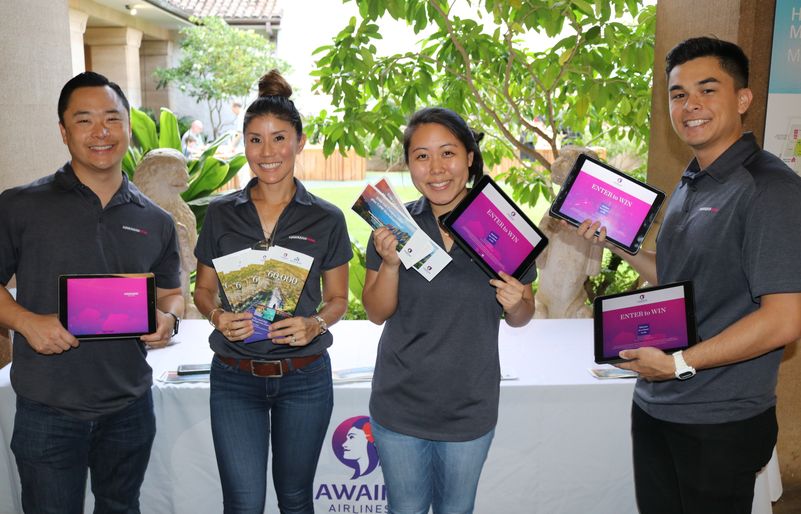
The Hawaiian Airlines Financial and Retail Partnerships team with artist Maika‘i Tubbs.
In addition to sponsoring Tubbs’s piece, Hawaiian and HoMA hosted an evening focused on sustainability. Attendees strung lei with recycled paper, sipped on earthy cocktails crafted by ‘Alohilani Resort Waikiki Beach and received samples of reef-safe sunscreen by Raw Elements USA.
Did you stop by the Hawaiian Airlines table at April’s art party? Those feeling extra lucky could enter for a chance to win 80,000 HawaiianMiles!
ARTafterDARK is one of Honolulu’s most popular evening events and attracts more than 1,200 of the city’s trend-setting art enthusiasts. Throughout the year, attendees can expect to see more eclectic exhibitions that echo important stories and messages relating to our island home.
*January to October only
The Hawaiian Airlines Bank of Hawaii World Elite Mastercard® is issued by Barclays Bank Delaware (Barclays) pursuant to a license by Mastercard International Incorporated. Mastercard and World Elite Mastercard are registered trademarks, and the circles design is a trademark of Mastercard International Incorporated.
In the early 1980s, a 23-year-old pilot named Mike Baumgartner started calling on Alaska Airlines. He knew he wanted to fly for a living, and he was becoming increasingly more convinced that Alaska Airlines was where he wanted to plant his stake. He grew up in Bellevue, Washington, had gotten his pilot training as a teenager, and had already spent a lot of time in The Great Land, flying fish from Dry Bay, Alaska, to Yakutat in DC-3s.
So, Mike bought a new suit, shaved and walked into the Alaska Airlines corporate office, located near Sea-Tac International Airport. He introduced himself to the nice lady at the front desk (Jan May, a legend in her own right). He didn’t have quite enough experience at the time, but he kept at it. Every time he earned a new rating, he put the suit on again and dropped off another resume. He and Jan came to know each other, and she looked out for him. Finally, the day for an interview came, and she ushered him through the door and, wishing him luck, said, “It’s up to you, kid.”
As Mike recalls, he was really nervous, and essentially failed the interview. Only after the hiring manager stood up to dismiss him did Mike relax and start telling his interviewer who this young pilot really was. They ended up talking for another hour and a half, and Mike got the job. That was February 6, 1984.
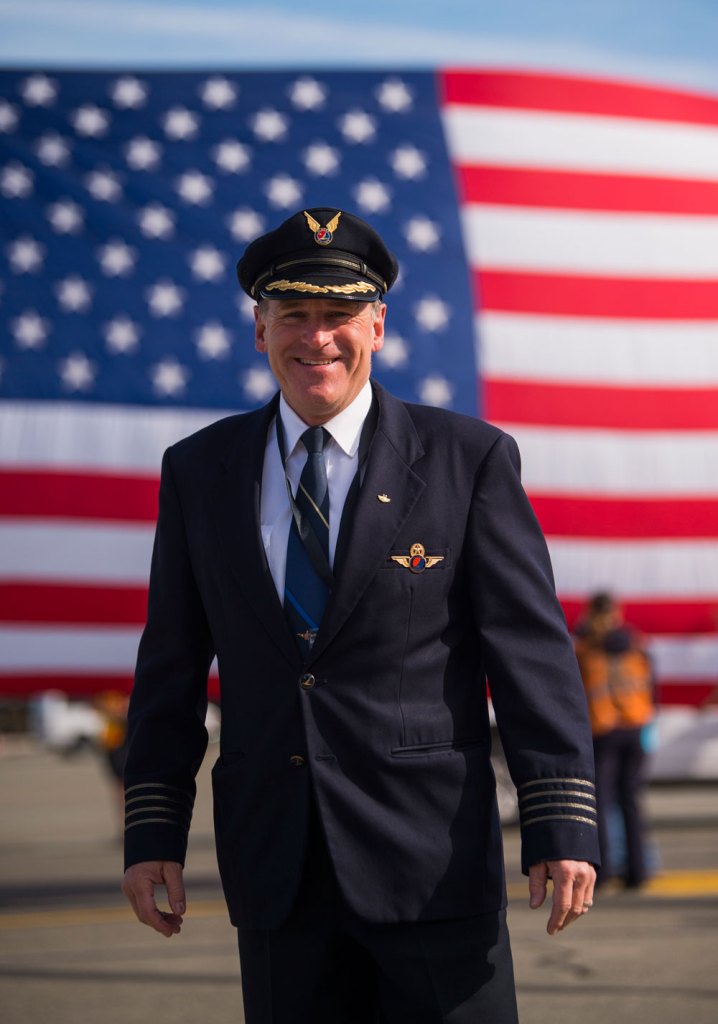
Pilot Mike Baumgartner on the flight deck in 1985, a year after he started working for Alaska. (Photo courtesy Mike Baumgartner)
Why all this background? On April 30, Mike and 14 other employees were inducted into Alaska’s Hall of Fame, a group we call our “Customer Service Legends.” To be as direct as possible, most of us believe that the only reason Alaska is still here and still prospering today is because of the extraordinary service that our people provide. For so many of our folks, life—and work—is all about connecting with other people and lifting them up. It’s so simple to say, but such a powerful human experience.
I have so many stories I’d like to tell you about Mike. He is a pilot’s pilot. He flies a lot. He loves aviation. He loves you, our customers. And he loves his fellow employees. He’s one of very few people I know who, when he’s getting ready to hang up the phone, will say—“Hey, Brad, you know I love you.” This is how Mike lives his life. He says, “Alaska has been my family for 35 years, and I do love these people.” As I write this, I’m honestly humbled that we have a guy like this working here.
“I tell new people I fly with, ‘This is your airline. This is all of ours to take care of.’ ”
Mike has flown a ton over his career, but has also made his voice and his leadership count to help us move our culture forward. He’s facilitated employee workshops; he’s volunteered at Aviation Days and countless other activities; and he’s been an ambassador for our airline with investors in New York City and beyond. His smile says it all.
CEO Brad Tilden and Mike Baumgartner at the New York Stock Exchange.
Alaska is fortunate to have so many people who, just by their sheer strength and determination, have lifted the company to greater and greater heights. With our Legend award, we recognize the best of the best. In addition to Mike, there are great people who work in all divisions of the company and in locations ranging from Anchorage to San Diego. Fewer than one-quarter of 1% of our employees are recognized with this honor. They truly are the best of the best.
I sat down with Mike on the day of our Legends celebration and asked him how he felt as he nears the twilight of his career; he’ll reach the mandatory pilot retirement age of 65 in just three and a half years. He said, “I love this place. Alaska is our airline to take care of. I tell new people I fly with, ‘This is your airline. This is all of ours to take care of.’ ”
Thank you, Mike. You’ve taken good care of us. And thank you to your fellow 2019 Legends for giving this place your all. The sky’s the limit with people like you.
Also, thanks to you, our guests, for flying with us today, and thank you for reading about Mike and our other extraordinary Legends.
This column also appears in the June 2019 issue of Alaska Beyond Magazine.
At Alaska Airlines, honoring the fallen and their families
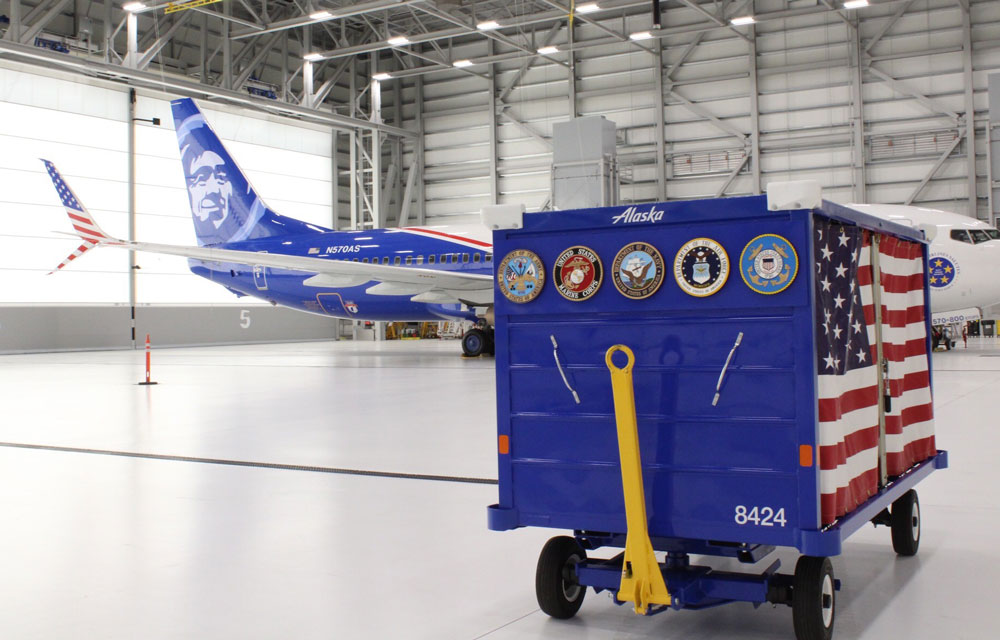
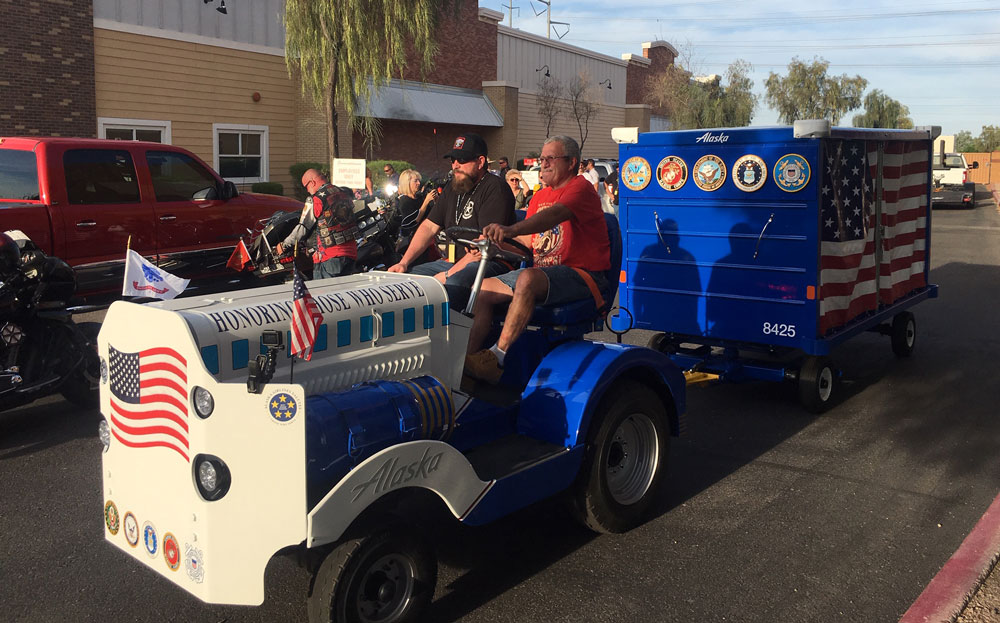
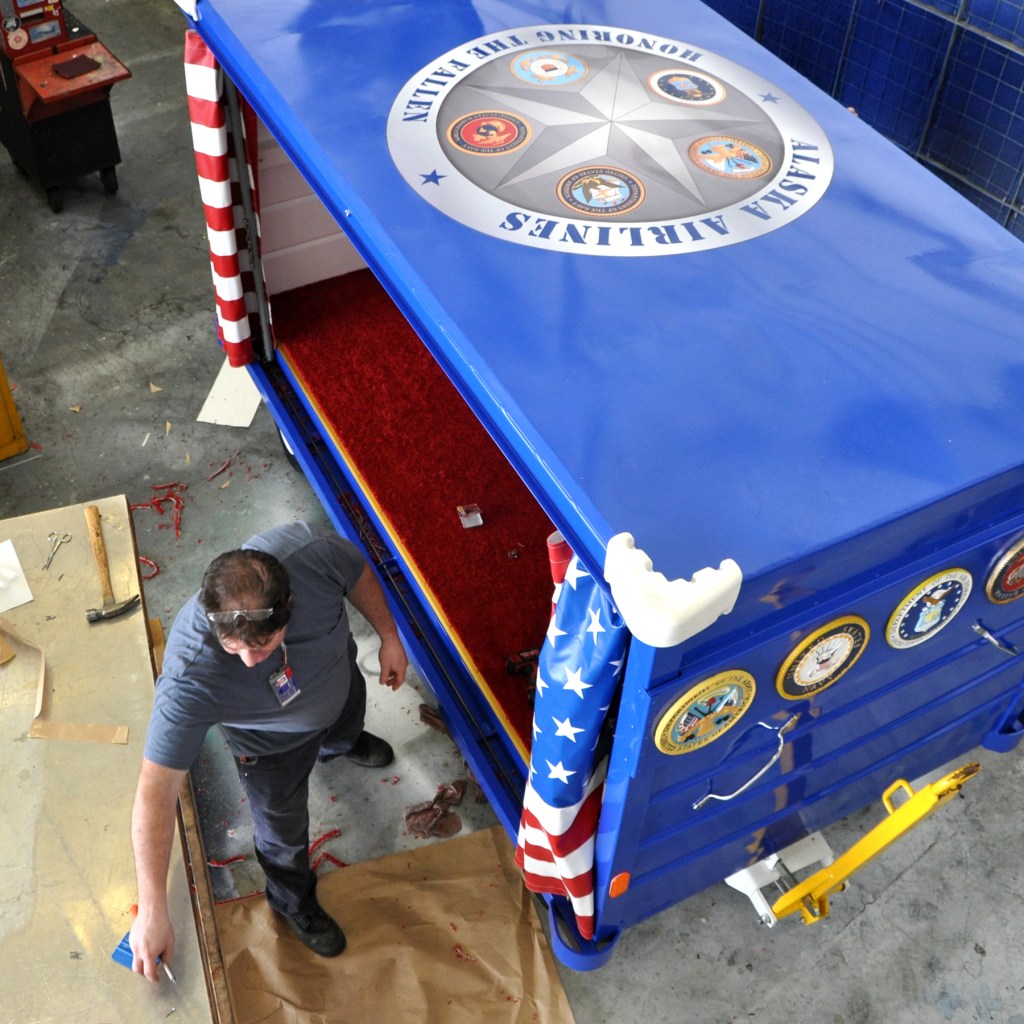
For the families of the fallen, the cart with American flag curtains and the insignia of the five branches of the military — the most visible part of Alaska Airlines’ Fallen Soldier Program — means their loved ones will be surrounded with respect and honor from those who accompany them on their final journey.
When a flag-draped coffin is carried off a plane and placed on the cart, the flight, maintenance and baggage crew members stand at attention on the tarmac — a powerful sight for a grieving family, says Julia Schmidtke, an Alaska flight attendant. Her 25-year-old son, Hunter Schmidtke, died in 2018 while serving at Fort Riley, Kansas: “It was amazing and meant so much to see all the working groups come together,” she says.
The 11th cart was delivered to Fairbanks in July 2019.
The experience was so important to Schmidtke that she became a program volunteer – and she was in Phoenix when the tenth Fallen Soldier cart was delivered to Sky Harbor International Airport in May. “It’s important to know what a Gold Star mom looks like,” she says.
Alaska employees delivered the 11th cart in the program to Fairbanks International Airport in time to be of service just before the Fourth of July. The carts are crafted by a team of Alaska’s Maintenance and Engineering department and are stationed at airports around the country. They’re available to honor members and veterans of all branches of the military.
Alaska’s Fallen Soldier Program employee training now includes this video shared by the Schmidtke family. In addition to photos from Hunter Schmidtke’s life, it shows the “Honoring Those Who Serve” plane that carried their son to Sea-Tac.
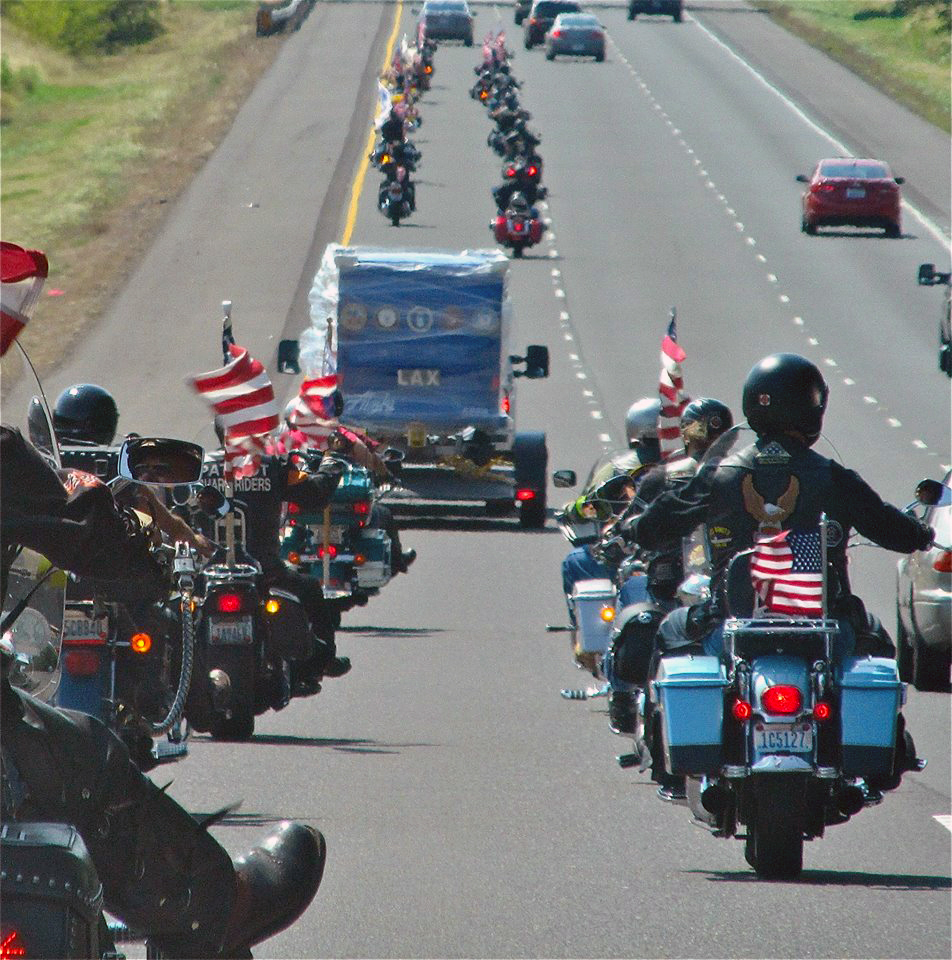
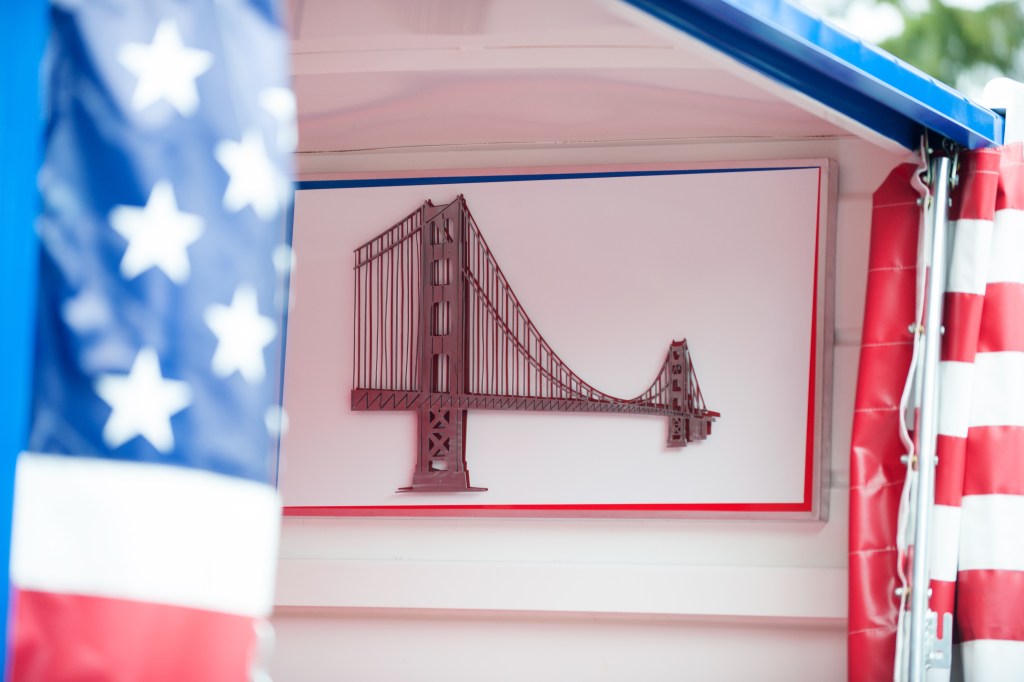
The interior of the Fairbanks cart is customized with a metal crafting of the Alaska state flag. The cart’s sections were flown from Seattle to Anchorage, where the cart was assembled and then escorted to Fairbanks by the Patriot Guard Riders and police.
In addition to Fairbanks and Phoenix, Alaska Airlines has dedicated carts in Anchorage, Seattle, Portland, San Diego, Los Angeles, Honolulu, Washington, D.C., Dallas and San Francisco. While the carts remain under Alaska’s care at each airport, they are available for any airline to use when transporting remains.
When the Fallen Soldier cart was delivered in Phoenix in May 2019, a custom “Honoring Those Who Serve” tug was given to the team to bring back to Seattle. On the tug: James Rea, Alaska lead line avionics technician; and driving the tug, Joe Burdolski, designer of the tug and a resident of Chandler, Arizona. The tug is now at Sea-Tac, where it is used with the Fallen Soldier cart. (Photo by Tim Thompson)
Brian Bowden, a line aircraft technician and Air Force veteran, helped start the Fallen Soldiers Program in 2011. In addition to creating the carts, the program established protocols for employees to follow when a service member’s body is traveling. Bowden notes that program volunteers include veterans and non-veterans. “We all wanted to take care of those who take care of us,” he says. “Freedom isn’t free. It comes at a price.”
“We are just trying to have soldiers’ backs and provide them with this service on their final journey home, so their loved ones know that people cared about what they did,” Bowden says. “You can never take away their pain, but you can show you care.”
As she volunteers with the program, Shmidtke often talks — and listens — to fallen soldiers’ families as they’re taking their loved ones home. “I think it provides some comfort to have someone sit with them who’s been through what they’re going through,” she says. And volunteering has helped her, as well: “It’s been a real healing experience for myself, and I’m so glad I opened myself up to it.”
The KING 5 News team in Seattle also recently produced this story on the Fallen Soldier Program:
In 2016, Alaska created a plane livery called “Honoring Those Who Serve” dedicated to the men and women currently serving in the military as well as veterans and their families. A crest, to the right of the cargo door, represents our Fallen Soldier Program. The plane is used to transport fallen soldiers flying on Alaska Airlines, as well as for special flights, like our Honor Flights, to help veterans visit memorials in D.C.
Schmidtke’s son’s body was flown from Kansas to Seattle-Tacoma International Airport on one of the planes. “To have him brought home on the honor plane was a really big deal,” she says.
This year, Alaska launched its second plane in the livery, allowing the airline to serve new stations including Hawaii and Reagan National International, increasing the reach of the Fallen Solider Program.
Fallen Soldier Program through the years
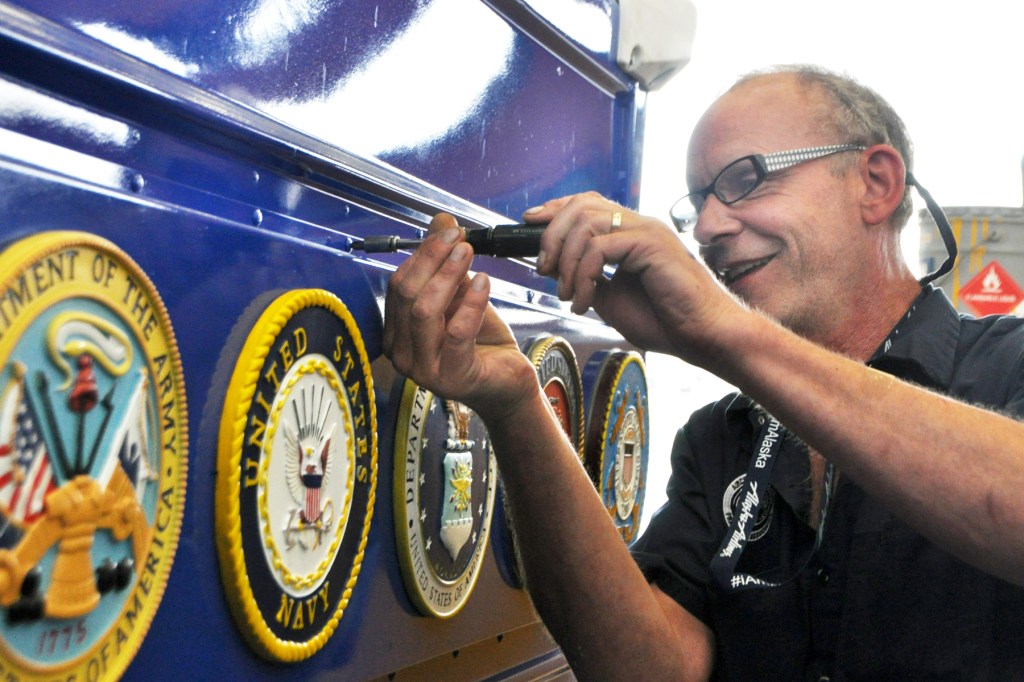
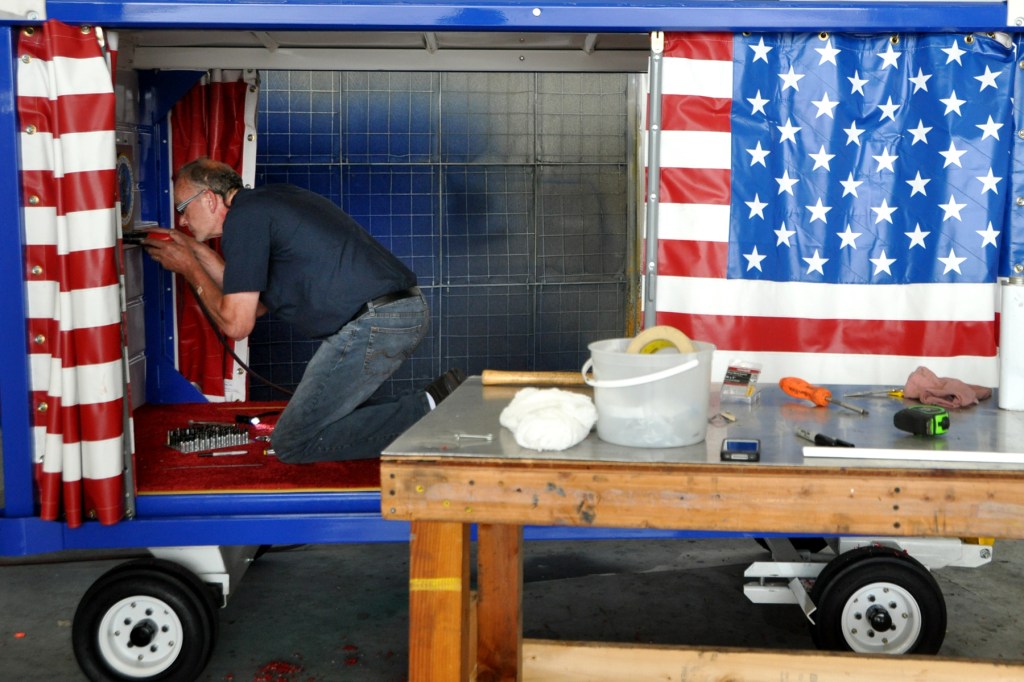
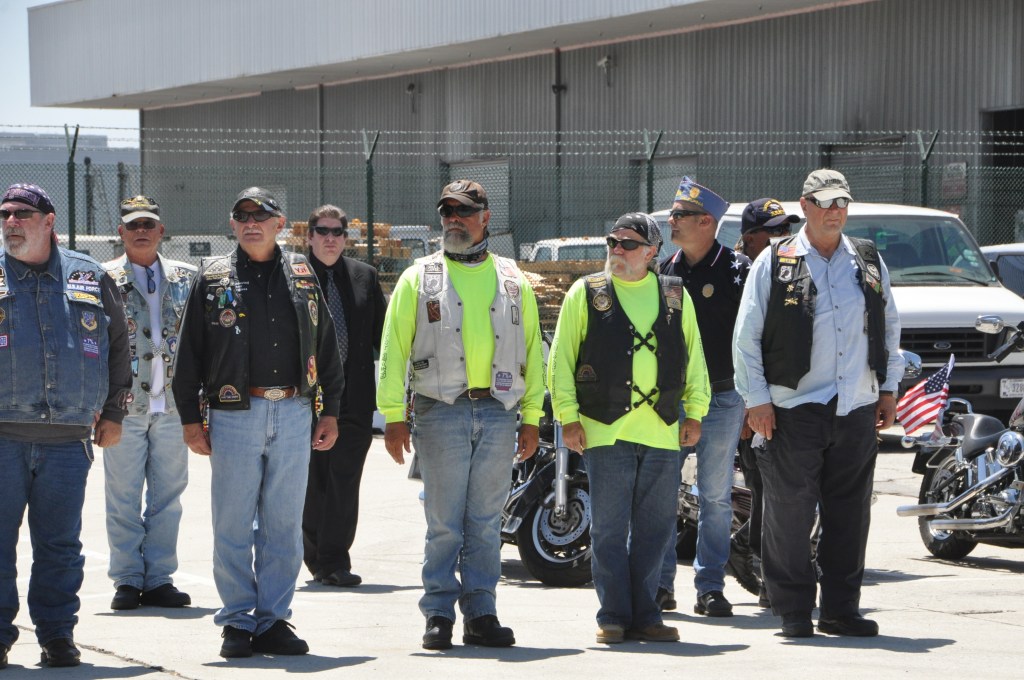
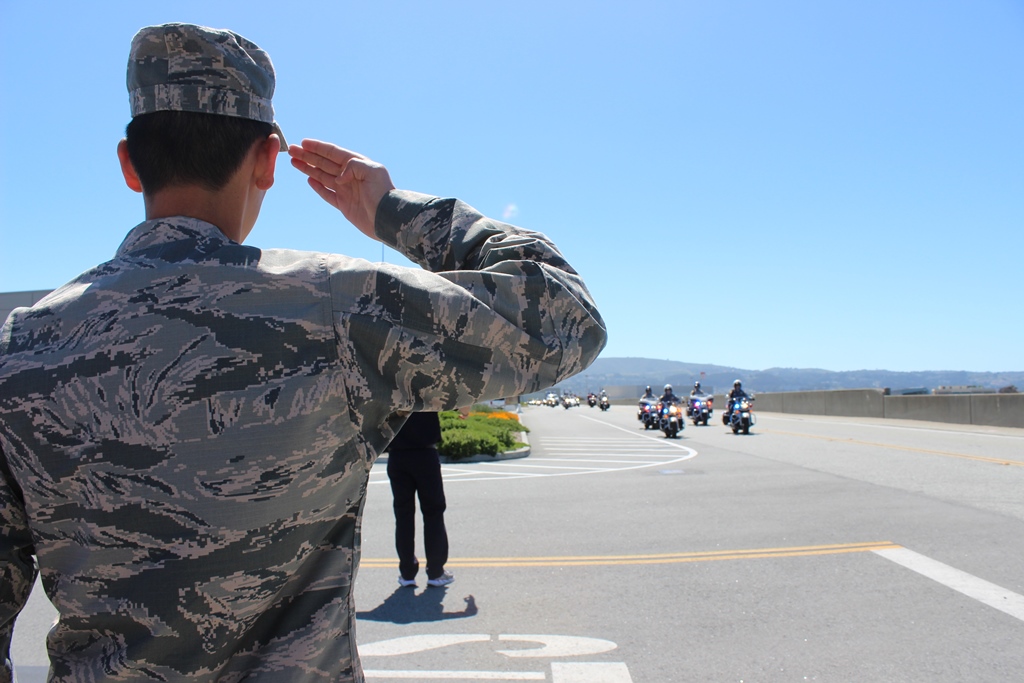
At the Seattle Hangar, John Van Dyke attaches plaques representing the Army, Navy, Air Force, Marines and Coast Guard.Jim Rea installs red carpet inside the cart.At the Seattle Hangar, Alaska Airlines maintenance technician John Van Dyke helps customize a cart that will be used to carry the remains of fallen service members at Los Angeles International Airport.Patriot Guard Riders escorted the cart from Seattle to Los Angeles.Patriot Guard Riders stand at attention in L.A.A cart was delivered to San Francisco International Airport in May 2018.Patriot Guard Riders escort the cart to SFO in May 2018.
Celebrating 15 Years of Nonstop Service Down Under
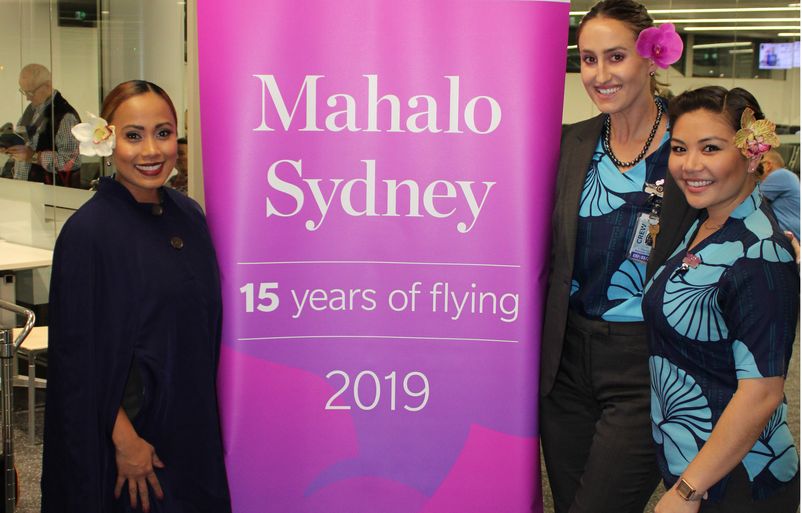
Our Hawaiian Airlines ‘ohana threw on our best party hats for our latest company milestone: 15 wonderful years of nonstop service between Sydney and Honolulu. We blew the birthday candles last Friday, marking 15 years to the day since we introduced our warm Hawaiian hospitality in the land down under.
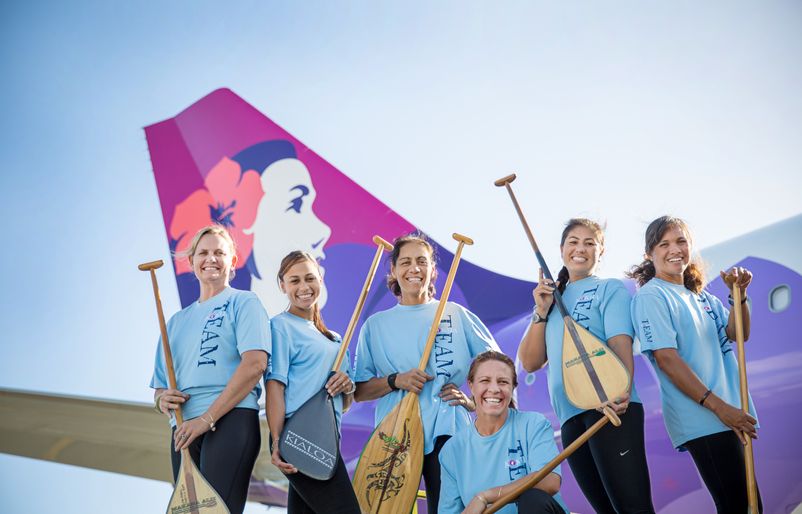
Hawaiian Airlines has a longstanding commitment to Australia. One example? Helping launch ‘The Hawaiian Airlines Sydney Harbour Outrigger Challenge’ – an endurance race in Sydney Harbour. This photo celebrates our employee volunteers who paddled at the event in 2015.
“We’ve had an incredible legacy as Hawai‘i’s largest and longest-serving airline,” said Andrew Stanbury, Hawaiian’s regional director for Australia and New Zealand, noting the carrier is also celebrating 90 years of continuous operations. “On behalf of our entire ‘ohana, I would like to say mahalo to our hardworking team and loyal guests for growing Hawaiian Airlines into a popular household name in Sydney and throughout Australia.”
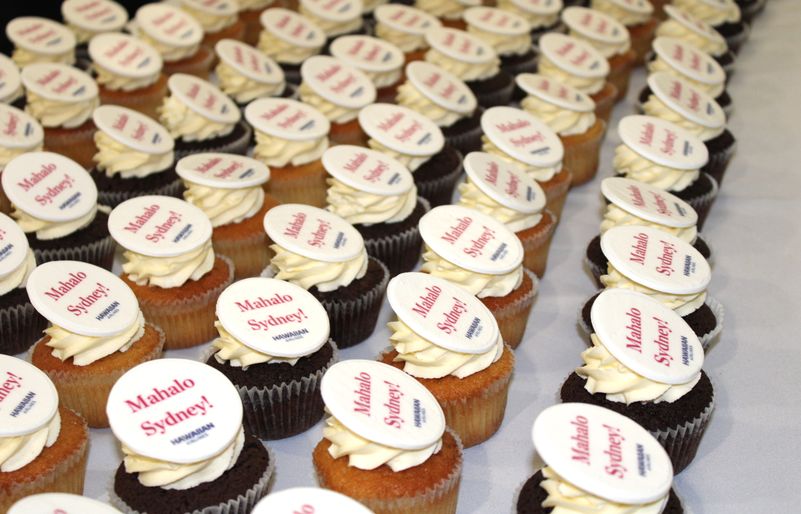
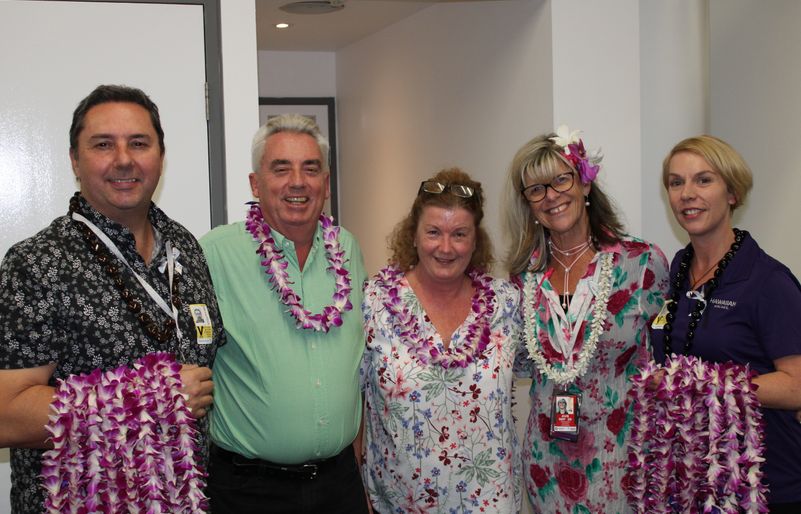
On May 17, we welcomed guests boarding flight HA452 at Sydney Airport (SYD) with birthday cupcakes, fresh flower lei and strummed our ukuleles for a gate-side hula performance.
As part of the gate-side celebration, we gifted two complimentary upgrades to Extra Comfort. Pictured L to R: Andrew Stanbury, regional director for Australia and New Zealand, our Extra Comfort winners, Lee Anne Drummond, manager of operations at SYD, and Karen MacMillan, director of Australia sales and partnerships.
“Since 2004, we’ve provided our Aussie guests with award-winning, authentic Hawaiian hospitality and today, it’s our honor to serve you during this special time,” Brian Worth, senior director of airport operations at Hawaiian Airlines, told guests waiting to board.
Our flight attendants celebrating at the gate in SYD prior to boarding HA452.
We kept the celebration going into the following Monday at a special luncheon hosted by our extended Sydney sales ‘ohana at the city’s new waterfront precinct of Barangaroo. Over a table full of island-inspired food and drinks, and some favorite local music in the background (think Keauhou, Anuhea, Kolohe Kai and Kimie Miner), we celebrated the route’s success and offered a special mahalo to our travel partners for their contributions.
Stanbury recognized our deep roots in the islands and in Australia, sharing the following insights:
Over 1.71 million travelers have flown between SYD and HNL on Hawaiian Airlines since we launched service in 2004;
In the past five years (2014-2019), one in four guests departing from Australia (Sydney and Brisbane combined) on Hawaiian Airlines continue their travel on our flights to the U.S. Mainland, and five percent of this group took advantage of a multi-day stopover in Honolulu at some point of their travel;
Our aussie guests' favorite Neighbor Island connections from SYD include Kahului on Maui, Kona on the Island of Hawai‘i, and Līhu‘e on Kaua‘i; and
Their top U.S. Mainland connections offered by Hawaiian’s network include Los Angeles (LAX), New York City (JFK), and Las Vegas (LAS).
The crowd favorite: the integration of the Boeing 787-9 Dreamliner, an ultra-fuel-efficient aircraft being equipped with top-of-the-line seat technology, into Hawaiian’s fleet starting in 2021.
The Boeing 787-9 Dreamliner
“We are currently evaluating exactly where these planes will fly, though we do highly anticipate the Boeing 787-9 to service Oceania,” Stanbury said.
“Adding the Boeing 787-9 to our existing Airbus A330 fleet of long-haul aircraft will open opportunities to launch new service. It’s too early to announce potential new routes, but we are excited about the prospect of increasing our network, and Oceania will certainly be part of our planning.”
Learn more about our nonstop service between Honolulu and Sydney or book your next trip down under by clicking here.
Copper River salmon 2019: First fish are the stars on the red carpet in Seattle
This week marks the official start of the 2019 Copper River king salmon season in Cordova, Alaska — and for many people, these salmon are the first sign that summer is on the way.
In celebration of the first catch, Alaska Airlines hosted a red carpet welcome for the Copper River salmon arriving Friday at Seattle-Tacoma International Airport. About 18,000 pounds of fresh fish were on the early-morning flight.
The outlook for the season is good, with the forecast for Copper River kings up from past years, and the sockeye projections holding steady, according to Christa Hoover, executive director of the Copper River Marketing Association. “We hope to see 55,000 king salmon and close to 1.5 million sockeye return to the Copper River this season,” she says.
“Cordova is off the road system here in Alaska, and we rely heavily on the passenger and cargo services that Alaska Airlines provides year-round,” Hoover says. “For nearly a decade, Alaska Airlines has flown the first Copper River salmon of the season to Seattle and beyond. In just a matter of hours, Copper River salmon is transported from the fisherman to dinner tables across the country.”
“I am an Alaskan fisherman”: A spotlight on the people who catch your fish
For the fishermen of Cordova, this moment is what they’ve been waiting for all year.
Darin Gilman started fishing with his father, Shawn Gilman, when he was only 5 years old. Growing up and watching his dad instilled a sense of pride in Darin that led him to work alongside his father at the same fishery today.
“It’s been wonderful to watch my son and the next generation of fishermen come up,” says Shawn Gilman. “I hope that they can pass our traditions and our fishery on in as good of shape as my generation was able to do for them.”
While neither man would say it’s easy work — acting as their own boat mechanics, net menders and salmon trackers — the Gilmans and other Cordova fishermen are true artisans. And they take pride in Cordova’s sustainable fishing practices. “We make sure year after year to have enough fish go up the rivers so they’ll keep coming back,” Darin Gilman says.
The Honkola family and others fishing in Cordova are dedicated to the preservation of salmon and their ecosystem, recognizing that their work today impacts what others can enjoy in the future. “To be a fisherman, you have to be dedicated, patient, and most importantly, passionate about sustainability,” James Honkola says.
Reflecting on her decades-long career, Thea Thomas recalls making the decision to follow her dream to fish in Alaska — at a time when few women worked in the industry. The best advice she received came from her father, who told her: “The most important thing is figuring out what you want to do. Don’t worry about the money, just make sure this is really what you want to do.”
Thomas thinks about retirement, but can’t bring herself to do it. “I love Cordova,” she says. “I love what I do.”
Seattle Storm and Alaska: Going the extra mile at the free-throw line
The Seattle Storm’s free throws will go a little further this season — about one million miles further.
Today, Alaska Airlines and Seattle’s defending WNBA champions announced an exclusive multi-year partnership and the “Free Throws for the Future” program, which will donate airline miles to community organizations working with young people. For every free throw made by Storm players throughout the 2019 season, Alaska will donate 2,000 airline miles. Last season, Storm players averaged 13.9 points per game from the foul line, which will now feature the Alaska logo on the Storm’s home court.
As they celebrated the new free-throw line sponsorship, Diana Birkett Rakow, Alaska’s vice president of external relations, and Storm CEO Alisha Valavanis took a moment to reflect on the values of partnership, leadership — and the commitment to elevate young people in our community.
Storm CEO and General Manager Alisha Valavanis.
DBR: Alisha, you and your team are fantastic partners and champions for so many around our region. You’re recognized for your humility and drive to grow the team, to learn together, and to excel — but to never rest on your laurels. You’re national champs, and back out there this year to strive for the next level of performance. That’s a good model for business, too.
A year or so ago, we talked about taking our partnership to a new level by empowering women and girls to own their strengths — on or off the court. My own grandmother was a brainy powerhouse, but I think it took her until she was in her 80s to fully own that. As for sports, she used to remind me that sweating wasn’t appropriate for girls (so I went ahead and played ice hockey). Times have certainly changed, but many kids don’t have enough champions — people who say “who you are is amazing, and you CAN play ball, or fly airplanes, or make robots, or work in finance, or lead.” At Alaska Airlines we’ve been talking a lot about how, as a community, we lift and empower young people furthest from opportunity to realize great futures — through inclusive education, mentors and models, exposure to career options and more.
When you’re building a roster for the Storm, you’re looking for amazing basketball talent — but probably some other characteristics of great team players. Some things that won’t necessarily be taught in a classroom, but might be relevant for any career path. What are the elements of great players — and leaders — that you look for to make up a championship team?
AV: I grew up in a big family, I have an identical twin and four other siblings, so being on a team started very early. Long before I understood team dynamics and what it would take to cultivate a winning team, I learned the fundamentals from my family unit. We shared common values instilled in us by our parents: honestly, kindness, generosity and passion. There was also space for our individuality, curiosity and adventure. When I think about the kind of leader I am today and some of the principles used to build the Seattle Storm, I think about those early lessons. Successful teams share core values that create the culture needed to achieve the highest levels of success, oftentimes in the face of great adversity.
But it is also true that winning takes talent, in the front office and on the court. In the WNBA we have the most elite women’s basketball players in the world; these athletes have spent decades committed to their game. We are fortunate to have a team that has been led by the best point guard in basketball history, Sue Bird. We have an ownership group and a front office and a basketball staff that are all working from the same playbook. There is clear vision and a relentless commitment to team that is in pursuit of success and committed to it. So, if I had to put it in one word it would be “culture.” Our culture created the space for talent and teamwork to achieve the greatest results possible; championships!
DBR: Culture matters so much! At Alaska, it is one of our greatest areas of focus. But I also wanted to ask you about how you share the story of the team. I saw recently that the league secured additional coverage through CBS Sports Network; congratulations! Why is that important?
AV: I believe the growth of this league is directly correlated to the visibility of this league. The exposure that the league gains through deals like the one with CBS Sports Network is imperative to developing new fans and exposing the country and the world to the WNBA. This season they will carry 40 live WNBA games, including six Storm games. Between the league’s deals with ESPN and CBS Sports Network, our partnership with JOEtv, and live-streamed games on Twitter and WNBA League Pass, people will get to know Storm Basketball.
DBR: Congratulations! OK, so my son loves the Storm, and proudly wears your gear. When he went to a game, he was impressed how fast the Storm players are. Makes me wonder — what are the demographics of your fan base? Does it skew female or are men watching women’s sports? Might my son be part of a new generation who does watch women’s sports?
By the way, we also recently introduced him to the Rat City Rollergirls — they are a good example of resilience! Those women are knocked down over and over, and get right back up and GO. And then hug each other at the end! Sportsmanship AND drive.
AV: That’s awesome, Diana, I love that your little one is getting exposure to all types of sport!
One of my favorite games last year was when I got to sit next to your son because it gave me the chance to experience the game from his perspective. There’s so much joy in sports and so many fantastic role models. It’s special to see how kids respond to that. It reminds me of one of my favorite memories during the playoffs last year. I was at a coffee shop — very Seattle, I know — when a father approached me and said that his little ones were chanting “PLAYOFFS!” while eating their cereal that morning. They are part of a generation that is growing up in a time when little girls and little boys can have strong female role models on the court.
Our fan base is incredibly diverse, and as far as numbers go it’s fairly equal between women and men for attendance. But what continues to be a top priority is to get families and kids out to games. It’s awesome entertainment that has the potential to really drive positive societal change; imagine all our children given the opportunity to look up to elite female athletes as well.
DBR: Really cool, thank you for being such great role models. Now, one final question — What’s your favorite place to fly, nationally or globally, and why?
AV: I absolutely love to fly. I love traveling around the country and the globe whenever possible, and basketball has definitely given me the opportunity to do that! One of my favorite spots every season is Chicago because I get the chance to meet up with family and spend time with them. New York is another place that’s circled on my calendar every year. I love the energy of New York and the restaurant and art scene. But of course, there’s no greater feeling than coming back to Seattle, flying over Mount Rainier and Puget Sound, and finally touching down at home.
DBR: Thank you, Alisha, and go Seattle Storm!
AV: Thank you, Diana. We’re thrilled to partner and excited to team up to make a positive impact in Seattle.
CAMBRIDGE, MASS – QuantumID Technologies today announced that Hawaiian Airlines has renewed its 5-year contract with SmartKargo, continuing the cloud-delivered real-time management of the carrier’s air cargo business using the advanced end-to-end Software as a Service (SaaS) solution. Hawaiian was the first U.S. carrier to adopt the SmartKargo Cloud platform in 2014, with the implementation Go Live in the second quarter of 2015.
Since then, the airline has utilized the innovative set of integrated tools that the SmartKargo SaaS solution offers to support and grow its domestic and international Cargo business, including the addition of freighter-configured ATR-72 aircraft to support a new All Cargo Overnight service within the Hawaiian Islands. The airline in 2017 also unveiled its multimillion-dollar Charles I. Elliott Maintenance and Cargo Facility, the Honolulu hub of its cargo business.
Brad Matheny, managing director of cargo at Hawaiian said: “For the past 5 years, the SmartKargo Cloud solution has provided Hawaiian Air Cargo with the advanced digital tools needed to quickly transform our cargo operations. As a result, our team was able to further digitize our processes to support faster air freight operations, growth and an improved experience for our customers in Hawai‘i and abroad. We are very pleased to extend the partnership and look forward to continuing to grow and innovate.”
SmartKargo has allowed Hawaiian to empower customers with real-time shipment information, gain access to advanced tools such as mobile apps and integrate quickly, and seamlessly, with airline systems and a network of 3rd party providers. This was accomplished via the SaaS solution offered through the Microsoft Azure platform and the large number of APIs that SmartKargo can provide.
The enhanced capabilities of the SaaS solution have also given Hawaiian access to paperless e-AWBs; ease of booking for Cargo agents and customers with single- screen data entries; powerful pricing and rate-making via simplification; real-time capacity management: user-configurable real-time Business Intelligence and reporting; and integrated Cargo Revenue accounting.
In addition, streamlined participation in e-commerce growth is available to Hawaiian via the platform to operate first-mile pick-up and last-mile delivery for e-commerce—facilitating B2B or B2C door-to-door operations via mobile applications and 3rd party integrations.
Milind Tavshikar, CEO, QuantumID Technologies, SmartKargo said: “On behalf of the SmartKargo team, we are grateful to have the continued support of Hawaiian’s Air Cargo team as well as their exemplary and forward-looking leadership. We look forward to supporting their growth and in enabling new opportunities in the marketplace as they arise.”
About SmartKargo
The SmartKargo end-to-end platform has robust mobile applications and advanced technologies such as real-time information, business intelligence, mobile apps, and machine-learning capabilities–while providing quick and seamless integrations with an airline’s current or future systems via APIs, for fast deployment and integration.
The end-to-end technology is an extension of the SmartKargo Cloud SaaS solution that is built upon the world’s leading global cloud infrastructure, Microsoft Azure. SmartKargo Cloud provides ease-of-use and instant access to shipment information for all members of the value chain. Azure is the world’s leading cloud platform that supports our robust mobile applications.
About Hawaiian Air Cargo
As the first U.S. airline certified to ship cargo in 1942, Hawaiian Air Cargo is a flagship carrier of the Pacific. For more than 70 years, we have provided high quality overseas shipping and outstanding customer service. Our dedication has helped us build outstanding relationships with local and international customers, freight forwarders, carriers and many others in the industry. Our streamlined process begins the moment you request an estimate for shipping cargo. Whether you’re shipping an animal, food or furniture, we’re committed to giving you clear and easy-to-understand estimates and guidelines for all your air shipping needs. We offer personalized service that includes fast and affordable shipping for domestic and international cargo that are tailored to your needs.
About Hawaiian Airlines
Hawaiian® has led all U.S. carriers in on-time performance for each of the past 15 years (2004-2018) as reported by the U.S. Department of Transportation. Consumer surveys by Condé Nast Traveler, Travel + Leisure and TripAdvisor have placed Hawaiian among the top of all domestic airlines serving Hawai‘i.
Now in its 90th year of continuous service, Hawaiian is Hawai‘i’s biggest and longest-serving airline. Hawaiian offers non-stop service to Hawai‘i from more U.S. gateway cities (13) than any other airline, along with service from Japan, South Korea, Australia, New Zealand, American Samoa and Tahiti. Hawaiian also provides, on average, more than 170 jet flights daily between the Hawaiian Islands, and over 260 daily flights system-wide.
Hawaiian Airlines, Inc. is a subsidiary of Hawaiian Holdings, Inc. (NASDAQ: HA). Additional information is available at HawaiianAirlines.com. Follow Hawaiian’s Twitter updates (@HawaiianAir), become a fan on Facebook (Hawaiian Airlines), and follow us on Instagram (hawaiianairlines). For career postings and updates, follow Hawaiian’s LinkedIn page.
For media inquiries, please visit Hawaiian Airlines’ online newsroom.
Hawaiian Airlines Reports April 2019 Traffic Statistics
HONOLULU, May 7, 2019 /PRNewswire/ — Hawaiian Airlines, Inc., a subsidiary of Hawaiian Holdings, Inc. (NASDAQ: HA) ("Hawaiian"), today announced its system-wide traffic statistics for the month ended April 30, 2019.
Hawaiian welcomed more than 947,000 guests in April. Total traffic (revenue passenger miles) increased 3.7 percent on an increase of 3.9 percent in capacity (available seat miles) compared to April 2018. Load factor decreased 0.2 points year-over-year to 85.0 percent.
The table below summarizes April and year-to-date statistics compared to the respective prior-year periods.
SYSTEM-WIDE OPERATIONS1
APRIL
2019
2018
% CHANGE
PAX
947,438
961,431
(1.5%)
RPMs (000)
1,437,569
1,386,621
3.7%
ASMs (000)
1,691,970
1,627,927
3.9%
LF
85.0%
85.2%
(0.2) pts
YEAR-TO-DATE
2019
2018
% CHANGE
PAX
3,770,072
3,852,953
(2.2%)
RPMS (000)
5,566,054
5,417,404
2.7%
ASMS (000)
6,543,890
6,359,424
2.9%
LF
85.1%
85.2%
(0.1) pts
PAX
Passengers transported
RPM
Revenue Passenger Mile; one paying passenger transported one mile
ASM
Available Seat Mile; one seat transported one mile
LF
Load Factor; percentage of seating capacity filled
1Includes the operations of contract carriers under capacity purchase agreements.
About Hawaiian Airlines
Hawaiian® has led all U.S. carriers in on-time performance for each of the past 15 years (2004-2018) as reported by the U.S. Department of Transportation. Consumer surveys by Condé Nast Traveler, Travel + Leisure and TripAdvisor have placed Hawaiian among the top of all domestic airlines serving Hawai'i.
Now in its 90th year of continuous service, Hawaiian is Hawai'i's biggest and longest-serving airline. Hawaiian offers non-stop service to Hawai'i from more U.S. gateway cities (13) than any other airline, along with service from Japan, South Korea, Australia, New Zealand, American Samoa and Tahiti. Hawaiian also provides, on average, more than 170 jet flights daily between the Hawaiian Islands, and over 260 daily flights system-wide.
Hawaiian Airlines, Inc. is a subsidiary of Hawaiian Holdings, Inc. (NASDAQ: HA). Additional information is available at HawaiianAirlines.com. Follow Hawaiian's Twitter updates (@HawaiianAir), become a fan on Facebook (Hawaiian Airlines), and follow us on Instagram (hawaiianairlines). For career postings and updates, follow Hawaiian's LinkedIn page.
For media inquiries, please visit Hawaiian Airlines' online newsroom.
On a brisk New England morning, Hawaiian Airlines made history as the first carrier to offer non-stop service between Boston (BOS) and Honolulu (HNL). Today, the route holds the title as the longest interstate flight in U.S. history.
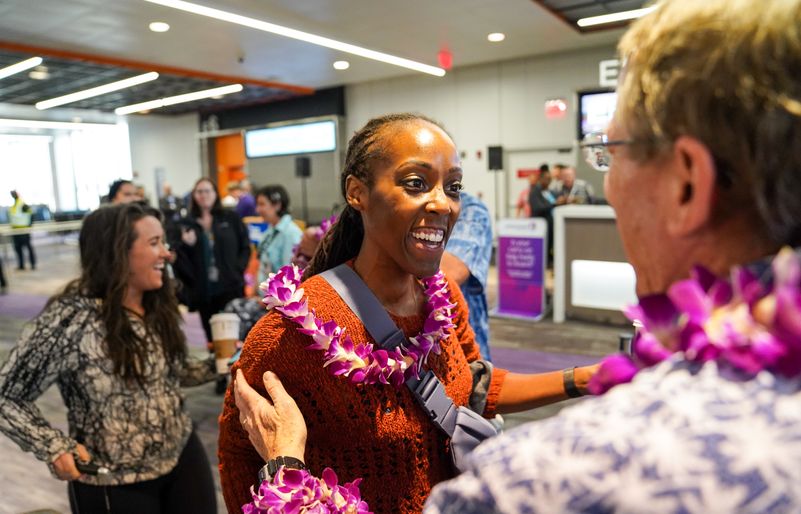
Our Hawaiian Airlines ‘ohana kicked off the inaugural HA89 (BOS-HNL) flight in true island style, welcoming our guests in the same hospitable way we would welcome them into our home. We indulged guests arriving at our gate with complimentary food and drinks, music and hula, and a few words from Hawaiian Airlines President and CEO Peter Ingram. Then, as guests boarded the aircraft, each received a fresh orchid lei – a special memento that embodies the aloha spirit of Hawaiian culture.
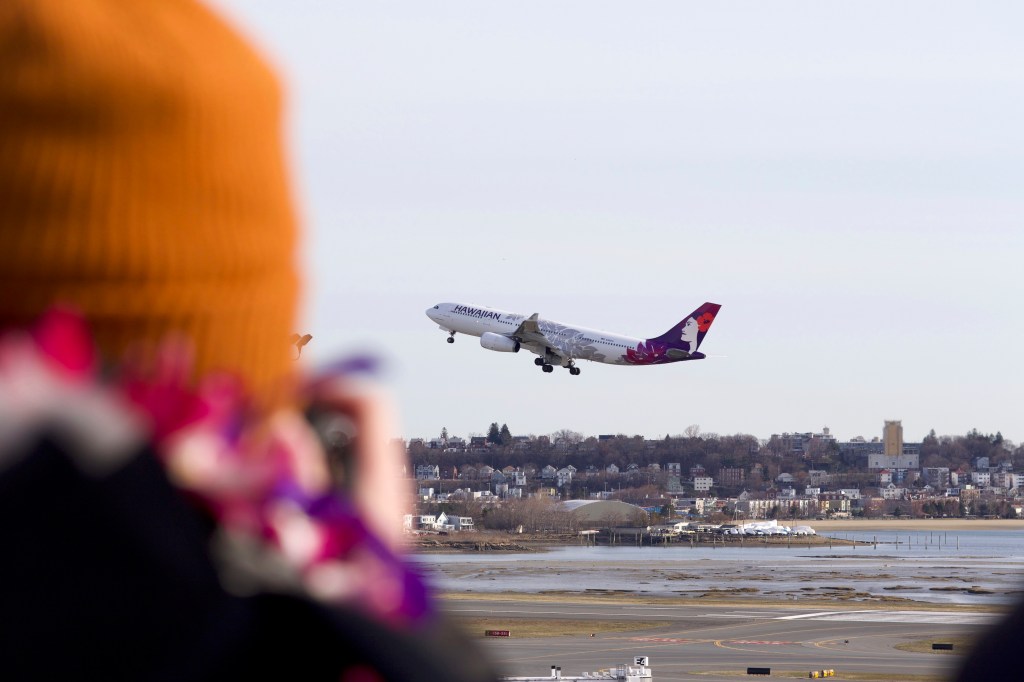
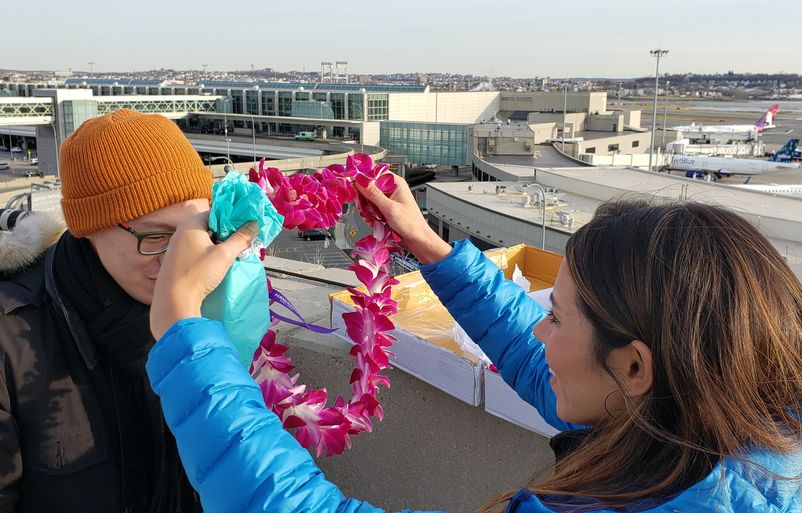
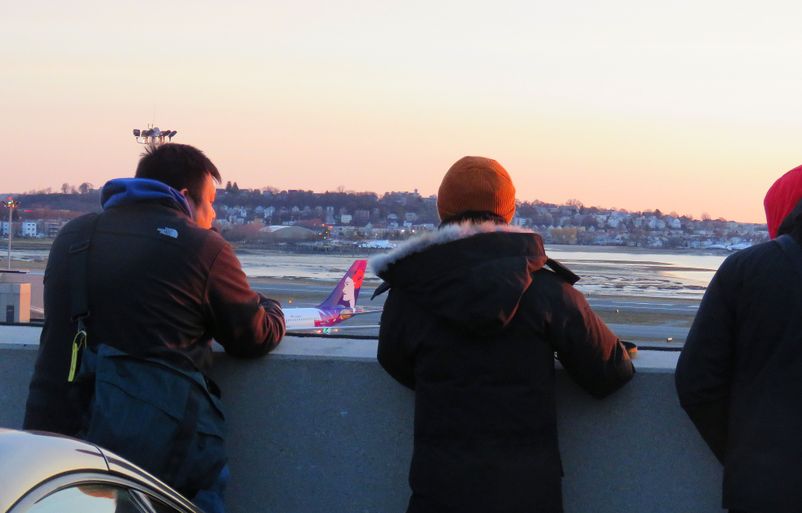
Amid the celebrations, I grabbed my camera and made a run for the top floor of the airport’s Central Parking Garage. This, I learned via coconut wireless (word-of-mouth), was a popular watering hole for the Boston Plane Spotters, a group of aviation enthusiasts who live for photographing airplanes.
Sure enough, I found the group angling their lenses at Runway 33L outside of Terminal E, with East Boston across the harbor as their backdrop. We welcomed each other and talked story (had a conversation) to pass time until our Hawaiian Airlines Airbus A330 would be positioned for take-off.
The author offering a welcoming lei to a BOS plane spotter. Photo courtesy of Thornton Shepherd
“We always love to celebrate these things, but when an airline includes us in their special day, it’s fantastic,” said Thornton Shepherd, founder of the Boston Plane Spotters.
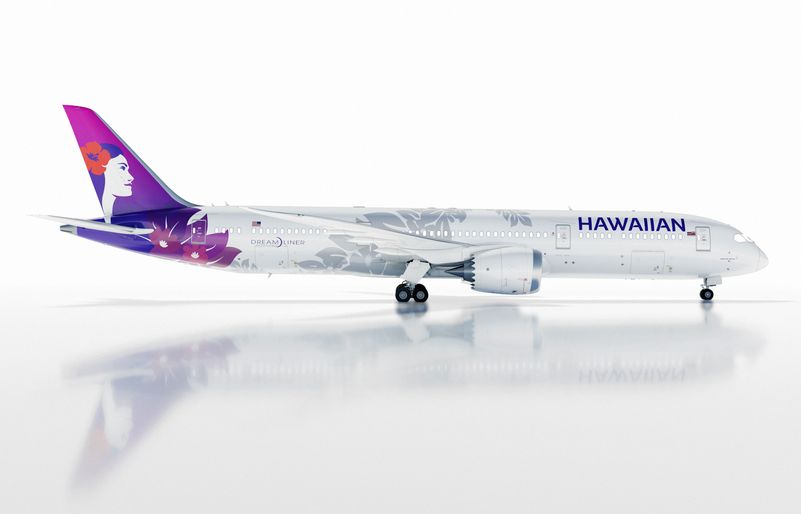
This gathering was unlike any other for the group. For many, it was the first time they met Pualani – the unmistakable Flower of the Sky icon adorning the tails of our fleet — and saw her proud gaze in the Massachusetts skies.
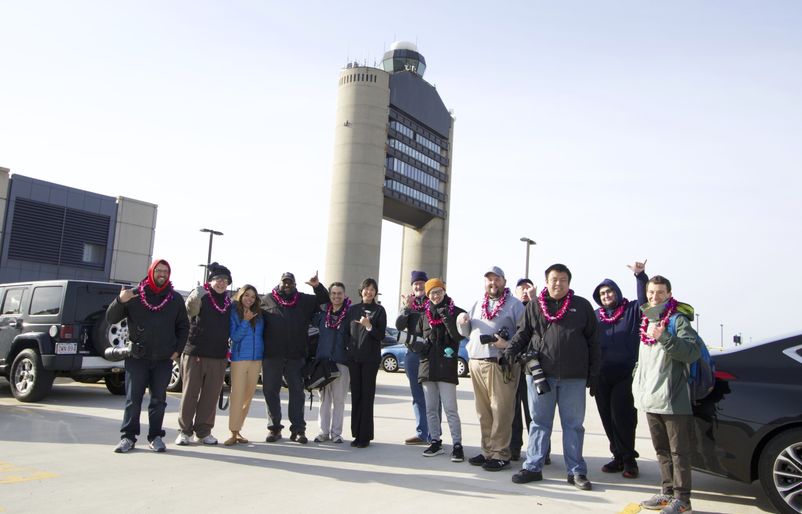
Marissa Villegas, Mana‘o editor (third from left), and Ann Botticelli, senior vice president of corporate communications and public affairs (sixth from left), with the Plane Spotters. Photo courtesy of Vance Martin.
“We are so happy to have a new airline coming into Boston, particularly one with Pualani on the vertical stabilizer,” said Jeffery Magnet, a longtime BOS plane spotter.
I learned plane spotting happens daily at BOS. The group was created by a collective of aviation lovers who organize gatherings around all things aviation. Their ears perk to news of inaugurals, interesting liveries, notable air turn-backs, and more.
“Spotters are out every day, especially for these events,” said Thornton. “We had an inaugural from another flight last week and some of us actually flew on the plane to take pictures from the inside while others took pictures from the ground.”
Photo courtesy of Vance Martin.
The group includes a mix of personalities, including pilots, aviation bloggers and just your “average Joe” mesmerized by airplanes since childhood. During a conversation, Magnet reminisced on when he and his father would go to the airport, walk on the tarmac and place his hands on a new Trans World Airlines aircraft. Nowadays, he shared, he prefers to take photos from a helicopter.
Plane spotters rely heavily on applications like live Air Traffic Control, Flightradar24, FlightAware, and other trackers to map an aircraft’s exact location and know when and where they need to set up with their camera gear.
In the case of HA90 (our first flight to Boston from Honolulu), the group followed the aircraft’s path the night prior, set their alarms, and woke up before sunrise to document the plane’s wheels touch the runway.
“I woke up this morning and the first thing I did was look at Flightradar24 to see where it was, and it was over Detroit, so I knew I had time to get over here,” Thornton said.
Plane spotters on top of the Central Parking Garage at BOS after the arrival of Hawaiian's inaugural flight from Honolulu. Photo courtesy of Thornton Shepherd.
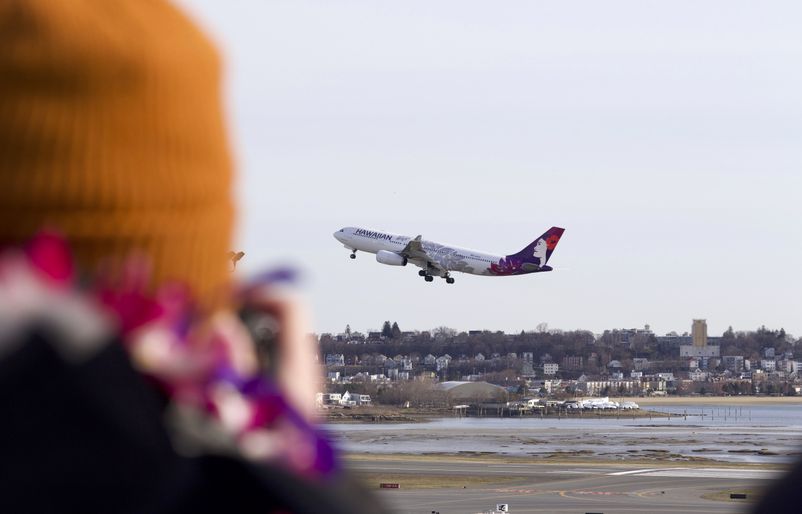
Most of the first group returned to the warmth of their homes to prepare for the day ahead, while others like Thornton braced the bitter cold for the departure of HA89. When the time came for our Airbus A330 to spread its wings, the spotters took their positions to capture the perfect shot.
Pualani left our sight, bound for warmer shores, and I thanked them for allowing me to be a spotter for a morning. As I said my goodbyes, Thornton admitted to me that, just as the plane took off, his camera battery died due to the cold air.
“I wasn’t expecting that to happen, and it was one of the first times I’ve watched through my own eyes and not the lens of a camera,” he said. “It was actually a truly beautiful moment.”
Photo courtesy of Ora Lassila.
Click here to learn more about why we chose Boston as our newest route, or hereto experience our flight.
SLIDESHOW: Check out some of my favorite shots from our inaugural flight and morning with the Boston Plane Spotters. Click the arrows or photos to view more. Image credits can be found in the file name when you right click + save image as.
Hawaiian Airlines to Seek New Fukuoka-Honolulu Service
HONOLULU – Hawaiian Airlines today announced it intends to provide new non-stop service between Fukuoka, Japan and Honolulu starting as soon as November 2019, subject to government approvals. Hawaiian plans to operate four weekly flights between Fukuoka Airport (FUK) on the island of Kyushu and Honolulu’s Daniel K. Inouye International Airport (HNL) on O‘ahu.
“We are eager to bring travelers in Fukuoka and throughout Kyushu our warm Hawaiian hospitality along with the convenience of non-stop flights to Hawai‘i,” said Theo Panagiotoulias, senior vice president for global sales and alliances at Hawaiian Airlines. “Japan is a special place to Hawaiian and Hawai‘i, and we are excited to make both island chains more accessible for our guests.”
Hawaiian’s proposed new service is subject to the airline securing FUK slots that enable a commercially viable schedule. Additional approvals are also required from Japanese and U.S. government agencies.
“I would like to send my sincere welcome to Hawaiian Airlines for its plan to operate Fukuoka-Honolulu service,” said Masanori Hashimoto, director general of airport planning bureau, Fukuoka Prefectural government. “Fukuoka Prefecture and the state of Hawaii have been sister states since 1981, and have been establishing exchanges in various areas, including tourism, culture, and the economy. We are excited that the discontinuation of service to Hawai'i this month will be short lived. Hawaiian’s new service will ensure that our Hawai'i exchange relationship and opportunities to travel abroad will be unaffected. We are glad that Hawaiian Airlines is planning to start the route in response to local demand.”
Fukuoka Prefecture is home to more than 5 million of the 13 million residents of Kyushu, the third largest and most southerly of Japan's four main islands. In 1981, the prefecture became Hawai‘i’s first sister state in recognition of their deep cultural and economic ties. Hawaiian previously operated non-stop service between FUK and HNL from April 2012 through June 2014.
Hawaiian’s new FUK-HNL flights would complement the airline’s Japan network, which includes non-stop service connecting the Hawaiian Islands with both Haneda and Narita in Tokyo, as well as Osaka and Sapporo.
Guests traveling with Hawaiian Airlines between Japan and Hawai‘i enjoy the roominess and comfort of the carrier’s wide-body Airbus A330 aircraft, which would serve the new Fukuoka-Honolulu route. It features 18 lie-flat Premium Cabin leather seats arranged in a 2-2-2 configuration tailored for couples, families and honeymooners, while offering great functionality to business travelers. Hawaiian also offers 68 of its popular Extra Comfort seats with more legroom and enhanced amenities, in addition to 192 Main Cabin seats. All guests will enjoy Hawaiian’s award-winning hospitality, including island-inspired meals prepared by Hawai‘i’s top chefs.
About Hawaiian Airlines
Hawaiian® has led all U.S. carriers in on-time performance for each of the past 15 years (2004-2018) as reported by the U.S. Department of Transportation. Consumer surveys by Condé Nast Traveler, Travel + Leisure and TripAdvisor have placed Hawaiian among the top of all domestic airlines serving Hawai‘i.
Now in its 90th year of continuous service, Hawaiian is Hawai‘i’s biggest and longest-serving airline. Hawaiian offers non-stop service to Hawai‘i from more U.S. gateway cities (13) than any other airline, along with service from Japan, South Korea, Australia, New Zealand, American Samoa and Tahiti. Hawaiian also provides, on average, more than 170 jet flights daily between the Hawaiian Islands, and over 260 daily flights system-wide.
Hawaiian Airlines, Inc. is a subsidiary of Hawaiian Holdings, Inc. (NASDAQ: HA). Additional information is available at HawaiianAirlines.com. Follow Hawaiian’s Twitter updates (@HawaiianAir), become a fan on Facebook (Hawaiian Airlines), and follow us on Instagram (hawaiianairlines). For career postings and updates, follow Hawaiian’s LinkedIn page.
For media inquiries, please visit Hawaiian Airlines’ online newsroom.
‘Reach for the sky’: Exploring the many pathways to an aviation career
The first time London Holmes flew a plane, she navigated past Santa Monica and out over the ocean. She peeked at the instructor to see if he was nervous — and caught him looking down at his phone. “It was really cool to see that he trusted me,” Holmes says. She took in the view of the blue waters and the coastline. “It was so pretty. I realized then that this is definitely for me.”
London Holmes took the controls of a plane for the first time in Southern California in 2017. She was 15. (Courtesy London Holmes)
She was 15.
Now 17, the Sammamish High School junior is a mere two weeks away from her check ride — the “final exam” to get her private pilot’s license. It’s a milestone for any aspiring pilot, but for Holmes, it’s just one step in the path toward her ultimate goal of becoming a military pilot. “I really want to fly fast jets,” she says.
Holmes is following in the footsteps of one of her mentors, Kim Ford, an Alaska Airlines First Officer and Sammamish High grad who attended the Air Force Academy. Ford’s 25-year Air Force career included service in Afghanistan and Iraq, and she retired from the military as a Lieutenant Colonel. She has been flying for Alaska Airlines since 2001, starting her commercial airline career while still serving in the Air Force Reserves.
Holmes and Ford discovered they shared the same high school and a passion for military jets when they met at a regional Women in Aviation conference at The Museum of Flight in 2016.
“I was just blown away that there were all these parallels and that she had this interest level at such a young age,” Ford says.
She’s thrilled Holmes has taken advantage of opportunities available through The Museum of Flight and other organizations that now put aviation training in reach for many young people, including programs encouraging young women and people of color to explore careers in flight.
“They just didn’t have this wide variety of programs in the ‘80s,” Ford says. “I wish I could have soloed before I went to the Academy. I wish I could have had my private pilot’s license. London has been able to do all of those things that will propel her toward the higher echelons of success.”
Aviation Day: The Need and the Possibilities
One of the opportunities for students like Holmes is Alaska Airlines’ Aviation Day, which brings more than 1,200 young people from around Western Washington to the Alaska Airlines hangar at Sea-Tac International Airport. They get to meet pilots, engineers, flight attendants and technicians who work in a range of aviation jobs at Alaska, Boeing, the FAA and the Port of Seattle. They also can connect with educators, military representatives and corporate recruiters to chart potential career paths. Aviation Day is possible because of the efforts of Alaska employees who lead the event, along with partners including Boeing, Port of Seattle, Aerostrat, the Boy Scouts, Girl Scouts and The Museum of Flight.
Now in its 11th year, Aviation Day on Saturday, May 4, allows students to get up-close to 30 different aircraft, including several military planes and a refurbished DC-3, which will be used for a World War II D-Day reenactment in France next month. The teens also can check out a 737 flight deck with pilots, look into a wheel well with mechanics and kick the tires of an F-18 or Lockheed Martin KC 130.
This will be Holmes’ first time attending Aviation Day, while Ford has volunteered multiple times: “I love to see kids walk into the 737, and they are so excited to go up to the flight deck and to sit in the pilot and co-pilot seats, and look at all the displays,” Ford says. She encourages students to not be limited by preconceptions of who can work in aviation. “There’s room in the military and in aviation for everyone to be able to lend their talents and to enjoy it,” she says. “Have courage. Reach for the sky.”
With a looming pilot shortage, airlines have an urgent need to inspire more young people to pursue aviation careers. In the next seven years, more than half the current commercial pilots in the U.S. will reach the mandatory retirement age of 65, and Boeing projects that in the next 20 years the industry will need 206,000 new pilots working in North America. Because women currently hold just six percent of the commercial pilot jobs in the U.S. — and African-American women hold only about one-half of one percent of all pilot jobs — Alaska is especially committed to helping passionate young women like Holmes find their way into aviation careers.
Ford and Alaska’s Black Employee Advocates and Allies group are helping Alaska significantly increase the number of female African-American pilots by 2025, a commitment made with the nonprofit Sisters of the Skies. And more than 170 Girl Scouts will attend Aviation Day this year.
Aircraft Maintenance: Getting in at the Ground Level
Brendan Cray remembers “geeking out” at the 2011 Aviation Day, which set him on the path to his current job as an aircraft maintenance technician at Alaska Airlines. Back then, he was a junior at Kentwood High School in Covington, Washington, who loved working on cars, and he saw an Aviation Day poster at the school library. At the event, he met some Alaska mechanics, toured Aircraft 569 (which is still in service) and got a look inside a 737 wheel well: “It’s amazing. Pipes, hydraulic lines, hydraulic fuses. I thought, ‘Imagine knowing what each of these lines goes to. Wouldn’t that be incredible to possess that knowledge?’”
Maintenance technician Brendan Cray attended Aviation Day in 2011 and started at Alaska Airlines three months after graduating from South Seattle College. (Photo: Ingrid Barrentine / Alaska Airlines)
After high school graduation, he started in South Seattle College’s Aviation Maintenance Technology Program, working his way through school while living at home. After graduating a little over two years later, he was hired by Alaska within three months. For students worried about costs, he points out that his education and testing costs came to about $16,000 over two years — less than a single semester’s tuition at some four-year universities. And aircraft maintenance technicians start off with good wages, Cray says. “The rate of return is huge.”
The opportunities for people who share Cray’s passion for plane mechanics are growing at Alaska and Horizon Air because more than a third of the airlines’ current maintenance technicians will be eligible for retirement in just three years. And when Cray gets the chance to volunteer at Aviation Day, he looks for those students whose faces reflect the same level of excitement he felt when he first looked inside a wheel well.
“It’s nice to know there are people who love planes as much as me,” he says. “You never know where aviation can take you. And there’s no greater feeling than waking up every day to go do something you love.”
“There are so many people who want to help”
Holmes urges young people who might want to try flying to start with programs like the Private Pilot Ground School at The Museum of Flight. And she shares a list of other resources, including educational organizations and scholarships. (Check out Holmes’ list) “It’s the perfect time to become a pilot,” she says. “Especially for teenagers and young adults, there are so many scholarships out there. There are so many people who want to help.” The costs of her own private pilot training have been covered by a scholarship from the LeRoy W. Homer Jr. Foundation.
Holmes keeps a sharp focus on her goals and takes Aeronautical Science Pathway courses after school. She’s looking forward to a summer internship at Boeing, where she’ll see how the Navy P-8 Poseidon is made. “It’s basically a 737 that carries missiles,” she says. “It’s pretty cool.”
But first, that check ride coming up on May 18. Holmes has a waitlist of passengers eager to fly with her. At the top: her mom, Sherrie Holmes. “Being around people who support you and believe in you is very important,” London Holmes says. “My mom is always there, uplifting me.”
One young pilot’s tips for others who aspire to fly
London Holmes grew up fascinated by the planes she could see from her house as they took off from Boeing Field and Renton Municipal Airport. By age 14, she was immersed in aerospace education programs — and now, at 17, she’s poised to get her private pilot’s license. Her plan is to become a military pilot, and possibly eventually fly commercial airplanes, too. “I’m a huge aviation nerd,” she admits. “I can live, drink and breathe aviation.”
Holmes is attending Alaska Airlines’ Aviation Day for the first time on Saturday, May 4. Now in its 11th year, Aviation Day brings more than 1,200 young people from around Western Washington to Alaska’s hangar at Sea-Tac International Airport. They get to meet pilots, engineers, flight attendants and technicians working in a wide variety of aviation jobs at Alaska, Boeing, the FAA and the Port of Seattle. They also can connect with educators, military representatives and corporate recruiters to chart potential career paths. Aviation Day is possible because of the efforts of Alaska employees who lead the event, along with partners including Boeing, Port of Seattle, Aerostrat, the Boy Scouts, Girl Scouts and The Museum of Flight. (Read more about Holmes’ story and Aviation Day.)
Holmes appreciates the support she’s received from organizations that help aspiring young pilots, as well as from mentors like Alaska Airlines First Officer Kim Ford. And she’s eager to share what she’s learned. “It’s important for me to give back to other girls in aviation because I have had really great mentors,” Holmes says. “I’ve had really great opportunities. I’ve received great scholarships and I want to give back because I know how amazing it feels.”
For people who worry about the costs of pilot training, Holmes reassures them that it’s possible with help. “I could not pay for flight training by myself. It’s just too expensive,” she says. Her pilot-training costs are covered by a scholarship from the LeRoy W. Homer Jr. Foundation. “It’s just a really great time to be in aviation because there are so many resources.”
Here are several organizations that Holmes and Ford recommend aspiring aviators check out.
Holmes says this should be the first stop for young people around Puget Sound who are curious about aviation. “I know that some people aren’t sure about aviation. This is a great introductory course — especially if you live in the area because it’s free. And these are people your age who also have an interest in aviation.”
Aeronautical Science Pathway program. The Museum of Flight
Holmes attends this after-school program for juniors and seniors two hours a day, four days a week, and she’ll earn both high school and college credits. “It’s really cool because six of the students that I took the Private Pilot Ground School course with when I was 14 years old are in the class now.”
ACE Aerospace Camp Experience, The Museum of Flight
Created in honor of Anderson, a Washington native and the payload commander of the Space Shuttle Columbia, this free educational program is offered to Washington state middle-schoolers.
(Note: The Museum of Flight offers several additional educational programs and resources. Check out the full site here: http://www.museumofflight.org/Education/)
The Civil Air Patrol is a civilian public service organization offering STEM education and cadet programs focused on developing young aerospace leaders.
Flying Clubs
Red-Tailed Hawks Flying Club, a chapter of the Black Pilots of America
“It’s really important to find aviation-related activities because then you’re able to network but also enjoy and have fun doing aviation-related things at the same time,” Holmes says.
Scholarship Opportunities and Other Resources
Aircraft Owners and Pilots Association (AOPA) Foundation
Sisters of the Skies is an organization of black women pilots offering scholarships, mentorships and an outreach program called “Girls Rock Wings.” This year, Alaska Airlines made a commitment with Sisters of the Skies to significantly increase the number of female African-American pilots by 2025.











 View original content to download multimedia: