



Broken Earth Winery: Sustaining the land, the wine it yields – and a business for the next generation
Share

Photos by Ingrid Barrentine
We are telling the stories behind some of the foods and drinks guests can enjoy inflight, highlighting companies whose sustainable business practices help Alaska “Fly Greener.” These businesses also offer unique experiences in West Coast destinations we love to visit. Today, we are featuring Broken Earth Winery in Paso Robles, California. Broken Earth’s 2018 chardonnay is currently offered in first class on Alaska flights, and the 2013 “CdR” red blend will be offered in the main cabin starting in March 2020.

Chris Cameron picks a few merlot grapes as he walks through the oldest vines of Broken Earth Winery’s vineyards in the chill of first light, tasting for the perfect balance of sugar and acid that shows his fruit is ready for harvest in the hills east of Paso Robles.
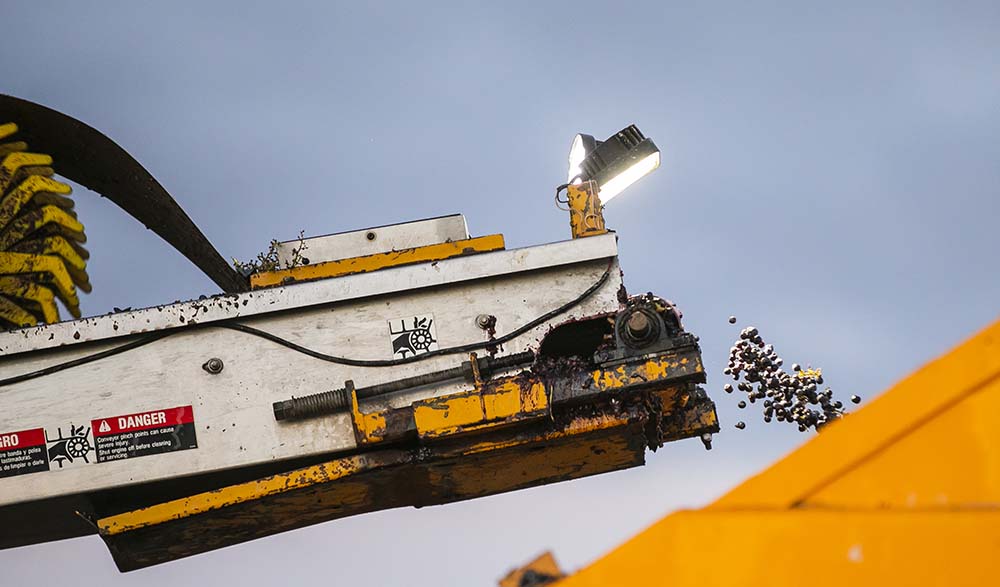
 Cameron, winemaker for Broken Earth since 2010, samples again when the morning’s harvest arrives at the winery facility 26 miles away. 2 tons of grapes cascade from the truck into the crusher/de-stemmer, which pipes the merlot juice and skins into two-story-tall stainless steel tanks to ferment. Cameron will taste at every step of his grapes’ journey, using a glass tube “wine thief” to draw a sample of an elegant young cabernet franc – his favorite from last year’s barrels.

He keeps each lot’s fruit separate until he determines its destiny, bound either for bottles of single-varietal wines or blends such as the red “CdR” (for the Cotes du Rhone style it emulates).
“The same grapes from clones 20 feet apart will look and taste different,” Cameron says. “By keeping each parcel separate, we give the grapes the opportunity to present themselves as the best they can be.”

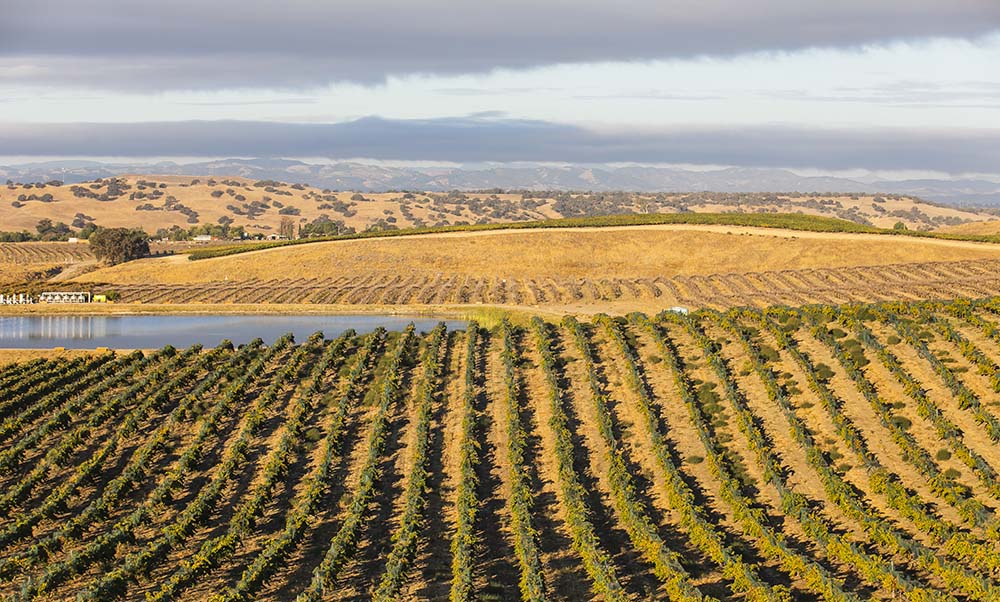
Across the 443 acres planted in 2019 with 21 grape varietals – and throughout the winemaking process – the Broken Earth team also has cultivated sustainable practices, nurturing the soil to minimize water use and installing solar panels in the winery facility. Both the vineyards and the winemaking are certified sustainable by the California Sustainable Winegrowing Alliance. “We look at the footprint we leave, and we’re reducing that as much as we can,” Cameron says.

This care for both the earth and the wine it yields makes Broken Earth Winery an appealing addition to Alaska Airlines’ inflight offerings, says David Rodriguez, product manager for food and beverages. “They are firmly rooted in the land they cultivate,” Rodriguez says. “They understand that their wine is part of a much larger ecosystem that they influence and that influences them.”
Alaska will pour the 2018 Broken Earth Winery chardonnay in first class into December, and the 2013 Broken Earth Winery CdR red blend will be offered in the main cabin starting next March. “Their product speaks to the sensibilities of those of us who call the West Coast home, both in the quality of the wine and the commitment to sustainability,” Rodriguez says.
Alaska now offers direct flights from Seattle and is adding flights from San Diego and Portland, Oregon, in January. And this year Broken Earth Winery opened a new 23,000-square-foot tasting room – designed with reclaimed steel and wine barrels – where the team hosts events educating visitors about the wide range of wines they offer.
“When Paso first came on the scene, because it was so hot, you typically had these big bold wine profiles,” Tooley says. “Now you’re getting more reserved balanced wines in the old world style. A lot of credit goes to Chris, who’s picked up varietals throughout the world, and they’re doing really well in the Paso Robles terroir.”
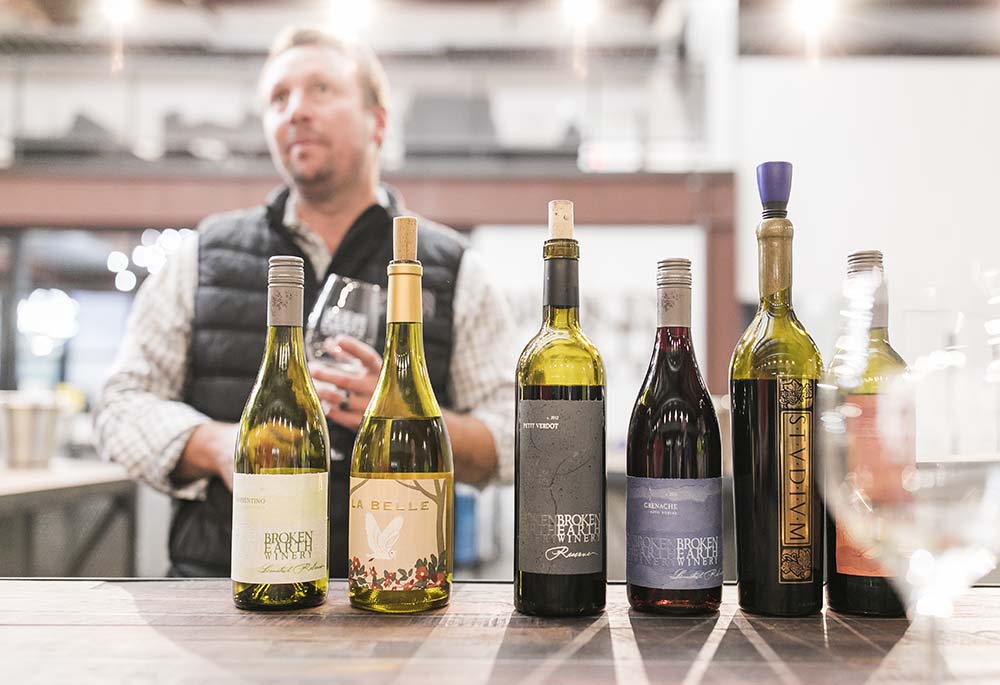
“Paso Robles is this gem that’s only starting to emerge even though we’ve been doing this for 45 years,” Tooley says.
Cameron’s own winemaking experience and eco-friendly sensibilities stretch back more than four decades to his days fresh out of university in Australia’s Hunter Valley, one of the oldest wine regions in the country. “I grew up caring for the environment,” he says. “Australians by nature are kind of closet basket-weavers and tree-huggers.”
This fall, as the 2019 harvest wound down, Cameron took time to walk through Broken Earth’s vineyards and talk about the Paso Robles region and his strategies to make the winery a thoroughly sustainable operation.

How did Broken Earth Winery get its start?

Chris Cameron: “The vineyard was originally planted in 1973. One of the partners, Herman Schwartz, was a local guy who had co-opted the likes of Hollywood actors Wayne Rogers, Peter Falk and James Caan into establishing a vineyard. It was created to grow grapes and send them into the marketplace, and it was a serious investment. It was the largest single merlot vineyard in the United States when it was planted, and was farmed by the original partner up until 2006. In 2010, the new owner [Gerald Forsythe] decided to enter the winemaking industry and that’s when I was approached to head up the wine-production side.”
What’s the story behind the name?

Cameron: “The property was Rancho Tierra Rejada, which translates as working the earth or cultivating the earth. Broken Earth represents us because at our roots, we’re farmers.”
Both the vineyard and the winery facility are certified sustainable. What are some of the ways you’ve worked to make the vineyards sustainable?

Cameron: “The property was originally focused on quantity over quality. My focus has been to build the health of the soil up so the consistency of quality from the vines is more efficient and the quality is much higher. If the soil is healthy, if the roots are healthy, the vines will grow. The future of the vineyard is spectacular. We put as much back into the soil as we can.
“We have an elevated reservoir and a ring main between our four reservoirs, which gives us the ability to share water, encouraging wildlife, trying to build a natural ecosystem that will control itself. We try to make a friendly environment for hawks and owls because they’re natural predators and will control pests and vermin. It’s a balance. On a commercial agricultural property, getting a balance isn’t easy. It was a bit of a gamble initially, but once it’s established, you actually save money. And part of sustainability needs to be sustaining the business. This is a legacy for the owner’s family. What I want to hand over is something that is as completely sustainable as we can get.”
In addition to solar power, what are some of the sustainable practices you’ve brought into the wine production process?
“We’re going to lower weight glass and bottles. We’re using synthetic corks which are made from plant material and are 100% recyclable. They are the first wine stopper that has a zero carbon footprint.”
Broken Earth does its harvesting at night. Why?
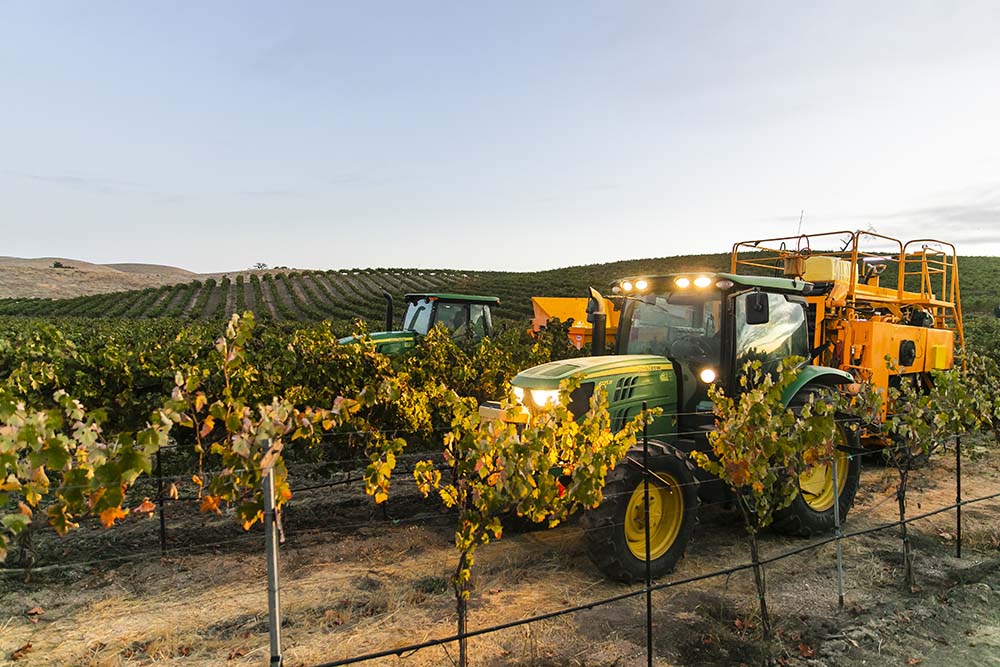
“We monitor the outside temperatures and around 11 p.m. as the temperature drops pretty solid, we’ll start the harvest then. Grapes are a fruit and like any fruit, they enjoy being in the dark and being cool. And they stay fresher longer.”
What is one of the most surprising parts of the winemaking process?
“There is an awful lot of cleaning. It’s like being permanently stuck in a kitchen and your partner uses every pot and dish in the building every day. And you have to wash and clean them all and put them all away. It’s 85% of winemaking, I think.”

What’s unique about Paso Robles and its wines?
 “The climate is quite warm during the day but typically quite cool at night, and the relative humidity is fairly low. So that keeps disease pressures low. The upside of that is that everything will get ripe – but that’s also the downside because everything can get very ripe. You’ve got to be careful that you don’t end up with wines that are too big, too alcoholic and too soft. They tend to lose their varietal characters if they get too ripe. I like wines to stay brighter and more true to form so they’ve got the correct varietal definition. Paso allows you to grow a whole bunch of different varietals. It’s a bit too warm for the likes of sauvignon blanc, riesling and pinot noir, but it does a lot of things well, including both Bordeaux and Rhone-based varieties that don’t really occur many places. Apart from a handful of grapes you can kind of grow anything.”
“Paso Robles is a bit like stepping back in time now. It’s just coming out of the Wild Wild West and everyone’s really friendly. It’s young in relation to being a wine-producing area, and it’s still learning what it does best. For people who come to the area, they become part of the journey for Paso Robles, too and that is unique.”

How to visit
 The Broken Earth Winery tasting room is open daily at 1650 Ramada Dr., Paso Robles, CA. Phone: 805-239-2562. Explore the wine list and learn about upcoming events.
Book your trip now to San Luis Opiso at alaskaair.com.



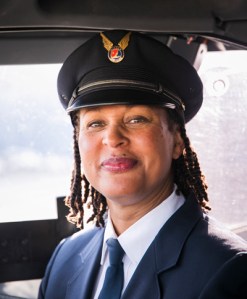

 Kelsey grew up going to summer fly-ins in Oshkosh, Wisconsin, with her uncle, who encouraged her love for aviation. She saved up for flying lessons and did her first solo at 16 in a Cessna 150. Now, with 14 years of flying for Alaska Airlines and 23 years of serving in the Air National Guard and Air Force Reserve, Kelsey has flown aircraft that could swallow that two-seat Cessna whole. This fall, she’s taking a month away from her Alaska job to coordinate Air Force operations in New Zealand in support of National Science Foundation missions in Antarctica.
 “Flying into Antarctica is amazing, challenging and unique. McMurdo Station is one of the most remote locations on the planet. We land on a runway that’s 10,000 feet long and is made by compacting snow. During winter flights, there are no runway lights or markings, just reflectors along the edges of the runway. We use night vision goggles to land during a time of year where the temps are as cold as minus 60 F, and the sun doesn’t rise for nearly four months.”
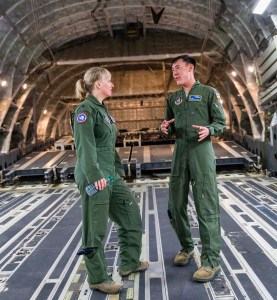 “The hardest part is juggling your time. I think people would be surprised at how hard we work. A typical pilot flying the C-17 will work five days a month as a minimum, in addition to their full-time job at Alaska. Sometimes we fly in for Alaska in the morning and go straight to the base.”


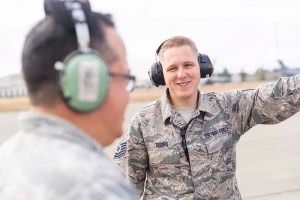
 “We work on the planes all night, and then you get that instant satisfaction: The plane was broken when it came in, and you’re able to fix it. In the morning, we take our planes from the hangar to the gate. Twenty minutes later, passengers are getting on, and they’re off to Hawaii or wherever.”
 “You have to keep them all balanced. Alaska is helpful and pretty much allows me to take
my military time, no matter what. And my wife takes a lot of the burden, too. With the two of them, I have a pretty good support system. I would love to serve a total of 20 years. And as much as I love serving my country, I’m also looking forward to having a family and serving them.”


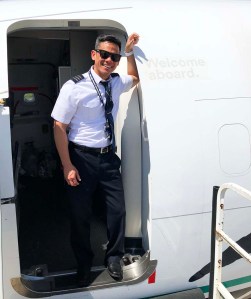
 “We have a state mission responsibility, for example, in hurricane response. We also fly missions to India, Korea, Australia, Japan, Philippines and DPAA (Defense POW/MIA Accounting Agency) recovery missions in Vietnam and Laos, just to name a few—all operations inherent to our strategic location in the Pacific Theater.”
 “I bunch my Alaska flying time in a more compact schedule, just like other commuters commuting long distances. I work to be as efficient as possible to get my flying done for the company and my drills done for the Guard. It’s no different from a lot of reservists and Guardsmen you see throughout the company. They all have this commitment.”

 Photo courtesy Daniel Chun

 “We’ll perform in concert halls or high school gymnasiums, inside and outside. Rain, thunder, snow—it doesn’t matter. I’ve played for an audience of 12, and I’ve played for thousands.”

 joined, I know him a little better. I would love to do 20 years and retire like my dad.”

















 From the beginning, serving people and our communities has defined us. Driven by our incredible employees, we take care of each other to build culture and community. We take time to focus on
