Meet the Hawaiian Airlines engineer turning historic aircraft into LEGO art
Share
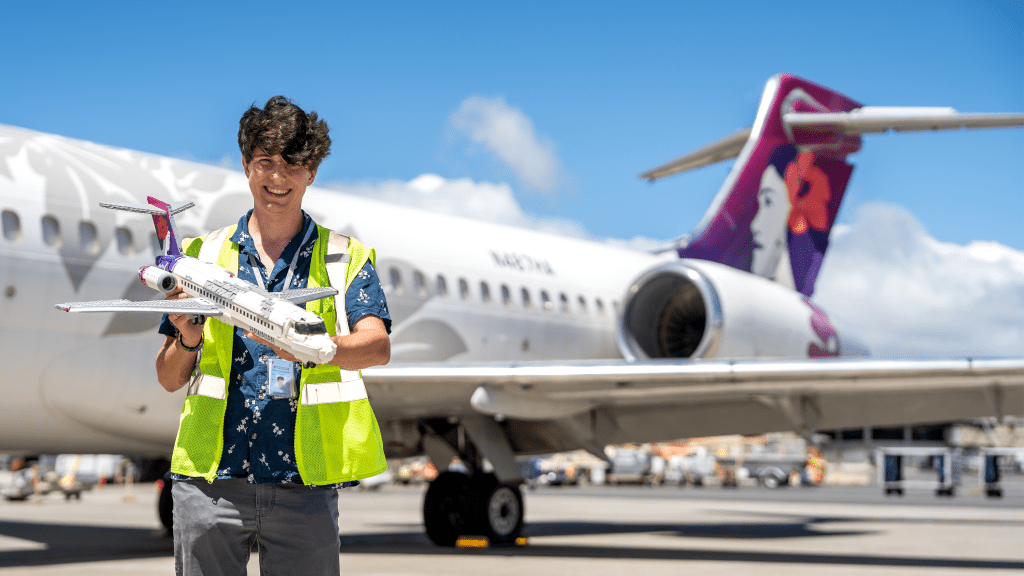
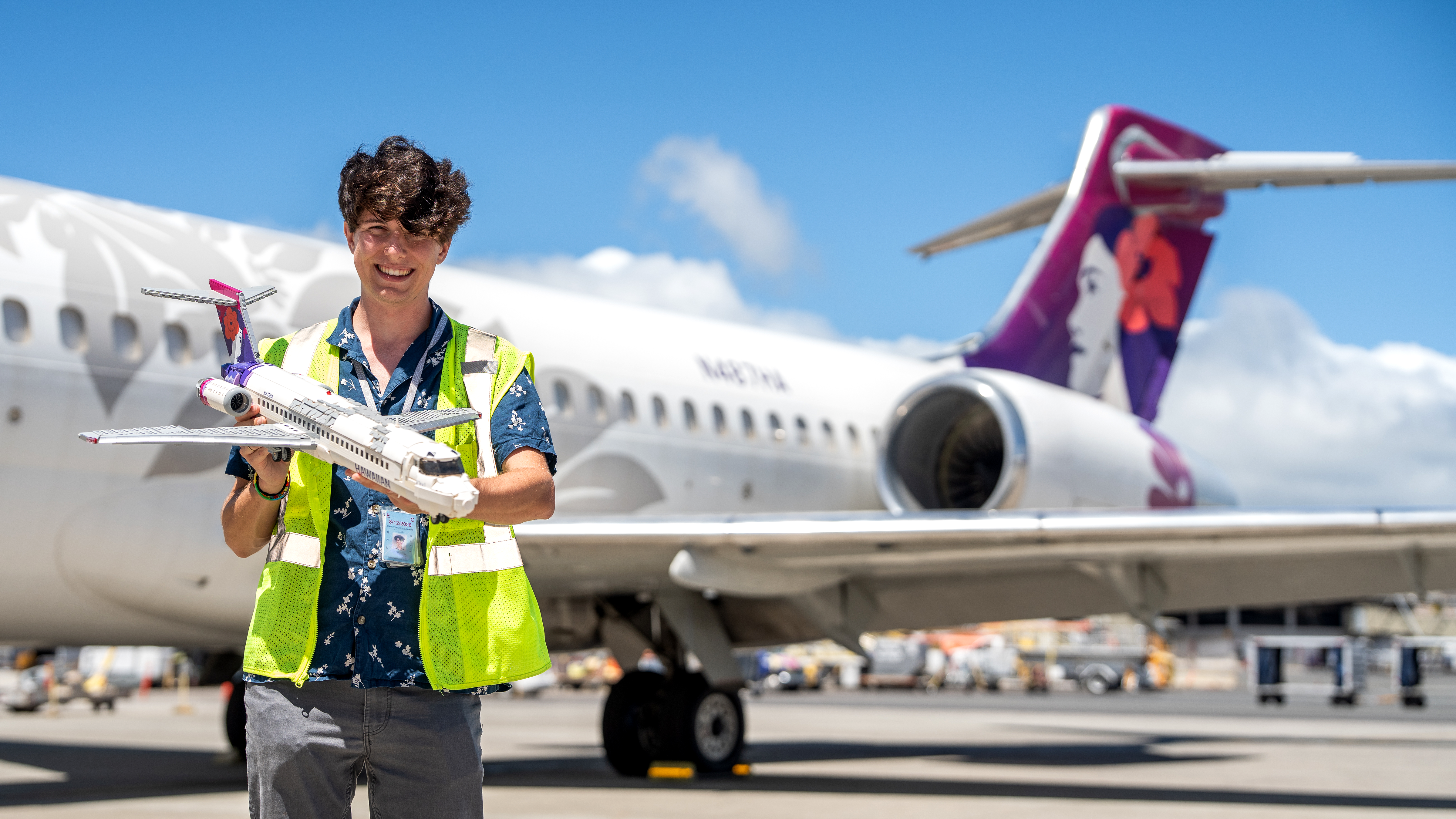
By day, Ashton S. helps keep Hawaiian Airlines’ aircraft cabins in top shape, designing, maintaining and troubleshooting cabin systems as a Honolulu-based interior engineer. By night, he builds detailed replicas of the airline’s most iconic aircraft from his dining room table, one LEGO brick at a time.
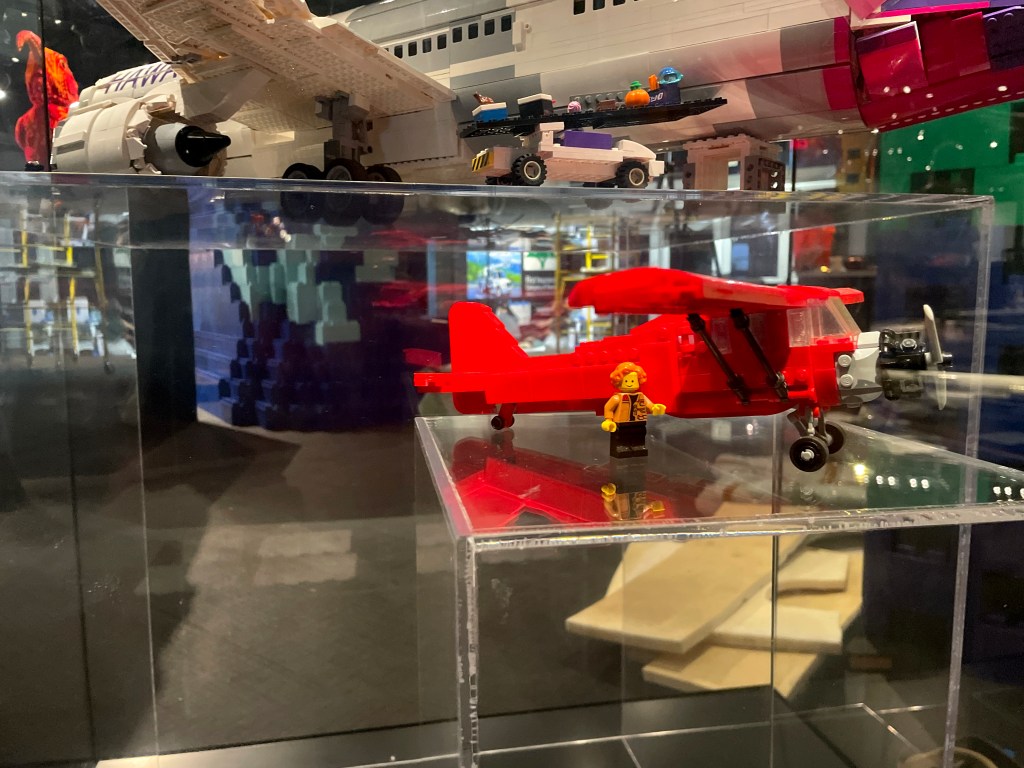
Through Oct. 11, Oʻahu visitors can experience Ashton’s hobby up close when visiting Bishop Museum’s “Aloha Bricks ’26: Stories of Hawaiʻi” exhibit, where five of his custom-built LEGO aircraft models are on display. The models pay homage to five aircraft types that played pivotal roles in Hawaiian’s nearly century-long history: the 1929 Bellanca CH-300 Pacemaker, a Douglas DC-3 and DC-9, a Boeing 717 and 787 Dreamliner.
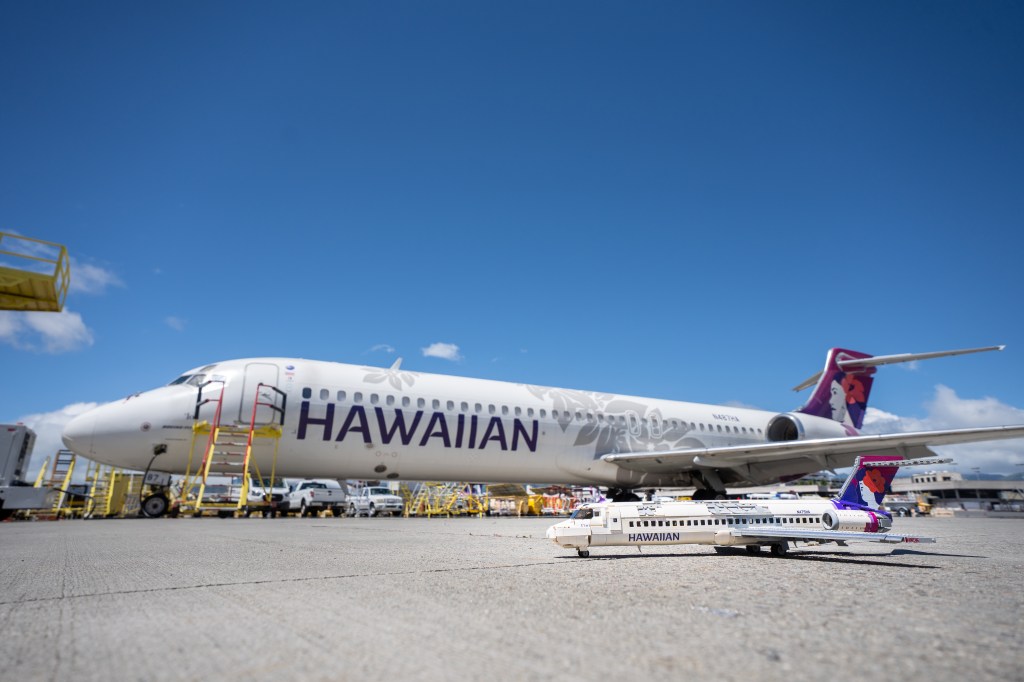
The “Aloha Bricks” display marries Ashton’s longtime interest in taking things apart and rebuilding them or turning the pieces into something new. “I’ve always been into creating things,” he said. “Whether it was building train tracks across my floor as a kid or building LEGO models, I’ve always liked figuring out how things work.”
That love of tinkering led Ashton to earn a mechanical engineering degree from the University of Tennessee, Knoxville, before starting his career at Hawaiian. Now, he spends his days reenvisioning and finding solutions for aircraft cabin furnishings and materials, including seats, galley appliances, wall placards, stowage bins and lighting.
As he works, he draws on the problem-solving skills he developed from building with LEGO bricks as a child.
How to build a LEGO aircraft
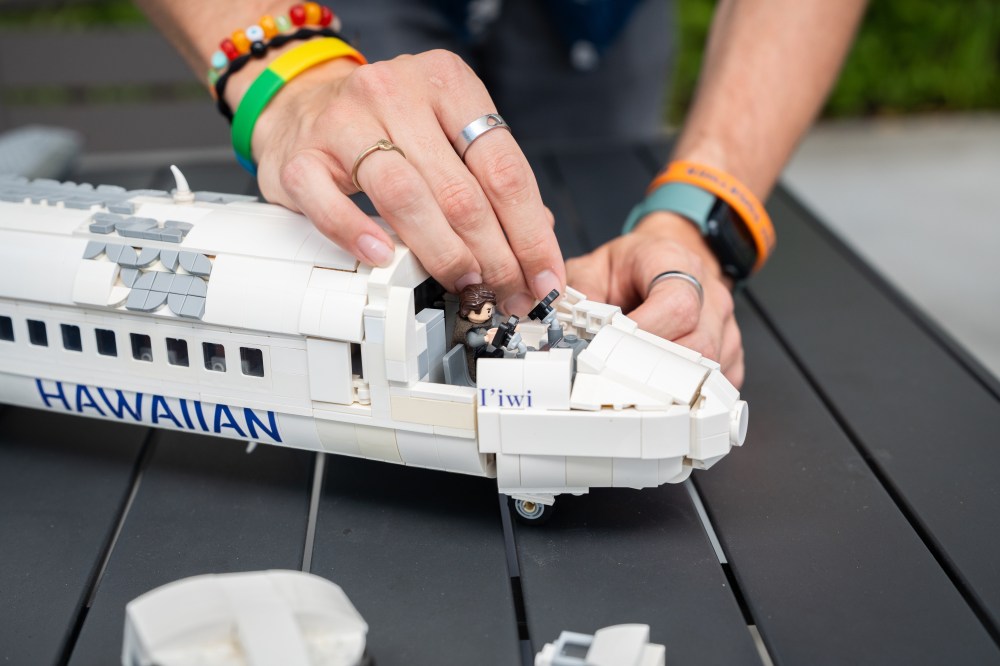
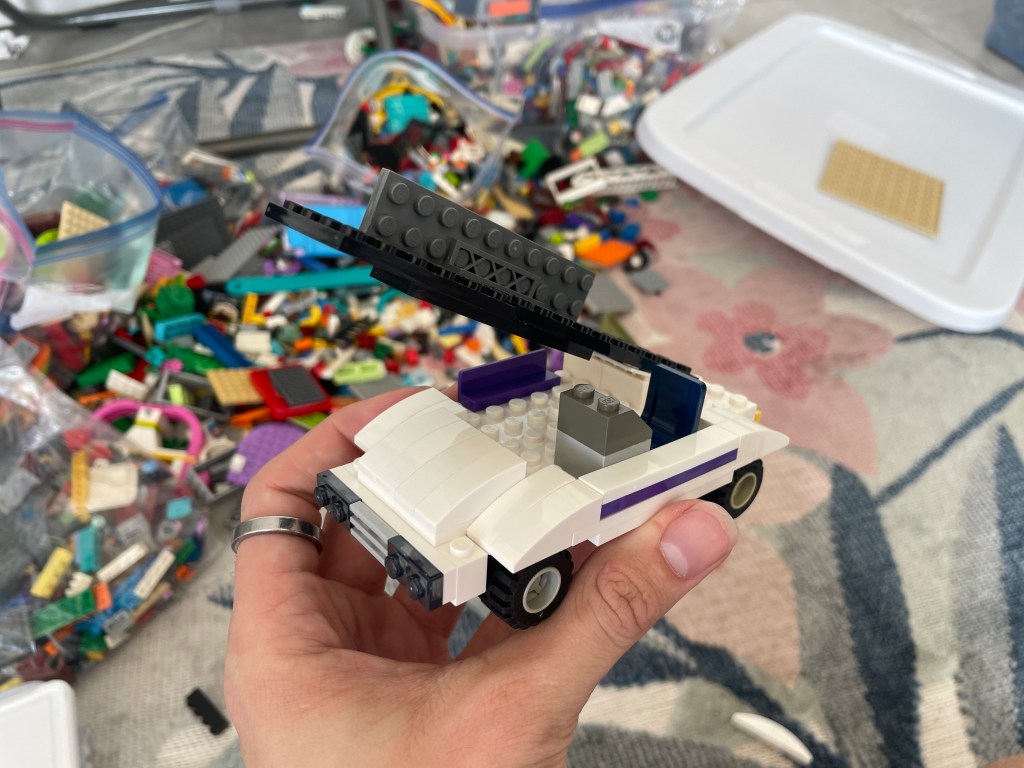
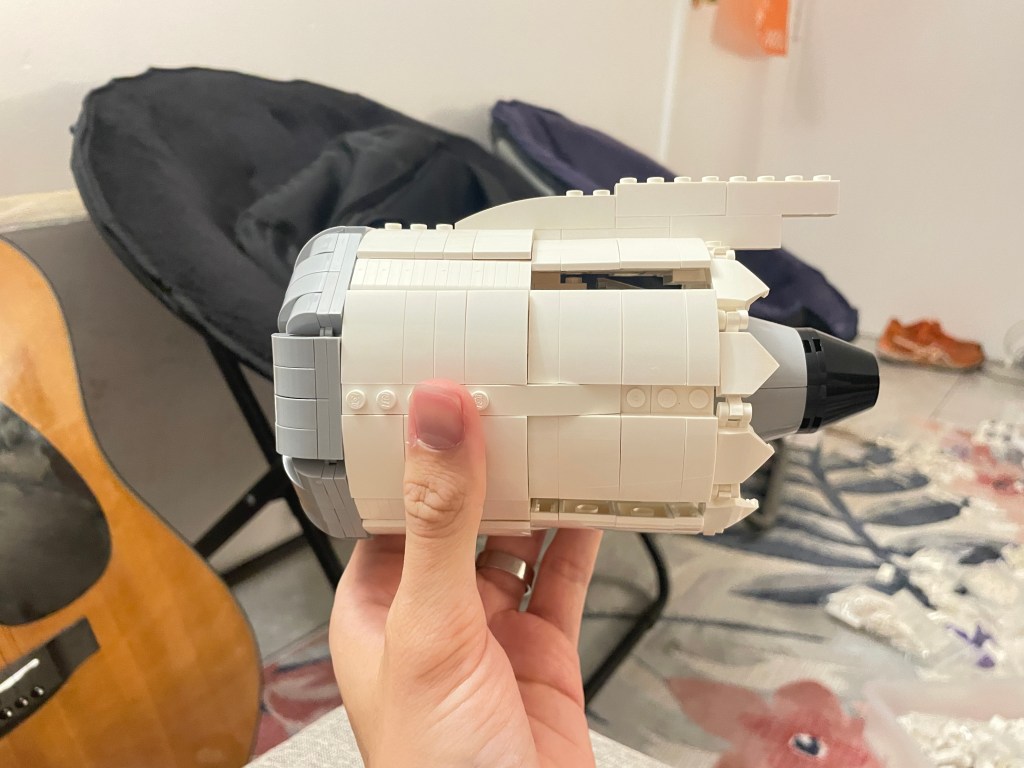
Building a LEGO airplane starts long before the first bricks snap into place. Ashton starts by studying aircraft schematics, setting the model’s scale and designing it digitally using specialized software. He then orders the parts he needs (often through secondhand stores) and works through trial and error as he builds each aircraft’s unique shapes and components.
“It’s kind of physical, then digital, then back to physical,” he explained.
The process can be flawed at times, revealing challenges computers miss. For example, a digital model may appear structurally sound but fall apart when assembled, forcing him to make changes along the way.
From LEGO hobbyist to Hawaiian Airlines exhibit designer
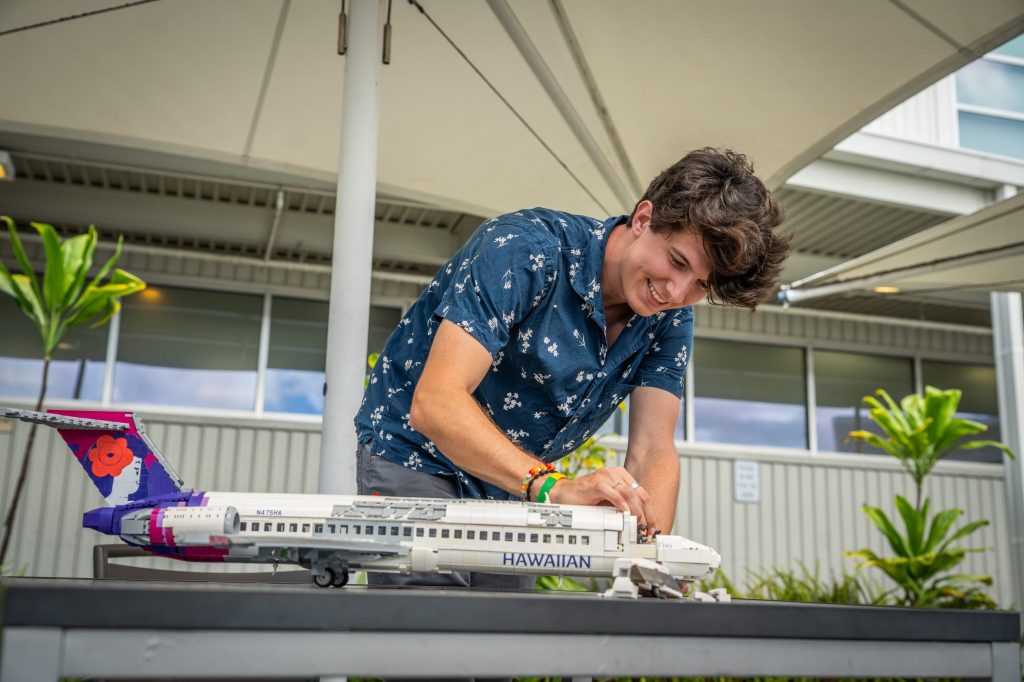
Ashton first learned about the opportunity to contribute to Bishop Museum’s exhibit via the Hawaiʻi LEGO Users Group (HLUG), a local club where he has long been a member. When museum organizers approached the group about creating displays that represented iconic symbols of Hawaiʻi life, Hawaiian was an obvious inclusion. At the time, Ashton was already building a detailed LEGO model of the 717 — his favorite aircraft in Hawaiian’s fleet.
“When they described what they were looking for, I showed them a picture of what I was working on,” he said. “They said, ‘That’s exactly what we want.’”
Ashton built his five LEGO aircraft by hand and spent over 180 hours piecing them together. Each model is made of thousands of LEGO bricks, and Ashton estimates his “Aloha Bricks” display totals more than 1 million pieces, with his most ambitious build, the 787 Dreamliner, comprising more than 10,000 parts.
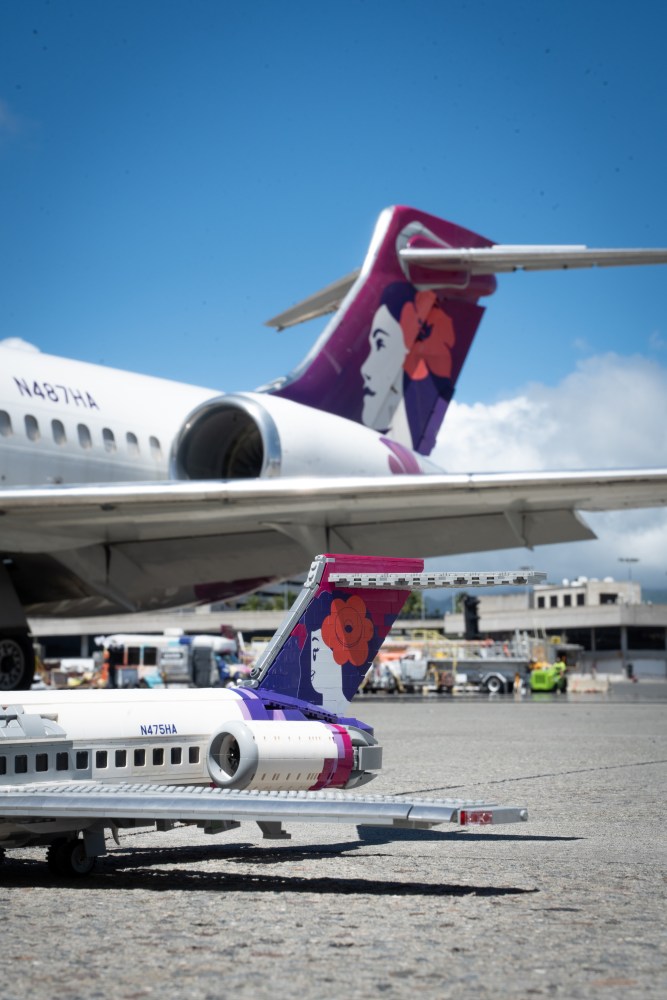
Ashton selected the five featured aircraft to help tell Hawaiian’s story. Each model in the exhibit reflects a different chapter of the airline’s legacy as Hawaiʻi’s first and longest-serving carrier.
- The Bellanca represents the airline’s earliest days when it was known as Inter-Island Airways. The single-engine aircraft first launched into service on Oct. 6, 1929, with a series of sightseeing flights around Oʻahu as a trial for commercial operations. It successfully carried 76 passengers that day and sparked enough curiosity among locals and visitors to convince the Inter-Island Steam Navigation Company board to expand its footprint into aviation. One month later, on Nov. 11, 1929, Inter-Island Airways was incorporated, and sightseeing tours took off with the Bellanca logging nearly 50 flight hours that month.
- The propellor-driven DC-3, introduced in 1941, was the first aircraft to fly with the Hawaiian Airlines name on its fuselage. After flying amphibious planes for nearly 12 years, the airline’s founder, Stan Kennedy, pushed for the acquisition of three DC-3s, the aircraft recognized as the greatest of its time. It later propelled the carrier into transpacific flying and served as the backbone of its Neighbor Island fleet for two decades.
- The DC-9 brought Hawaiian into the jet age, operating the carrier’s Neighbor Island routes. It was the first aircraft to feature an iteration of the carrier’s iconic Pualani logo.
- The 717 was introduced in 2001 as a replacement for the DC-9 and continues to serve as the dedicated aircraft of Hawaiian’s Neighbor Island network, while the 787 Dreamliner symbolizes Alaska and Hawaiian’s new era of global flying as a combined carrier.
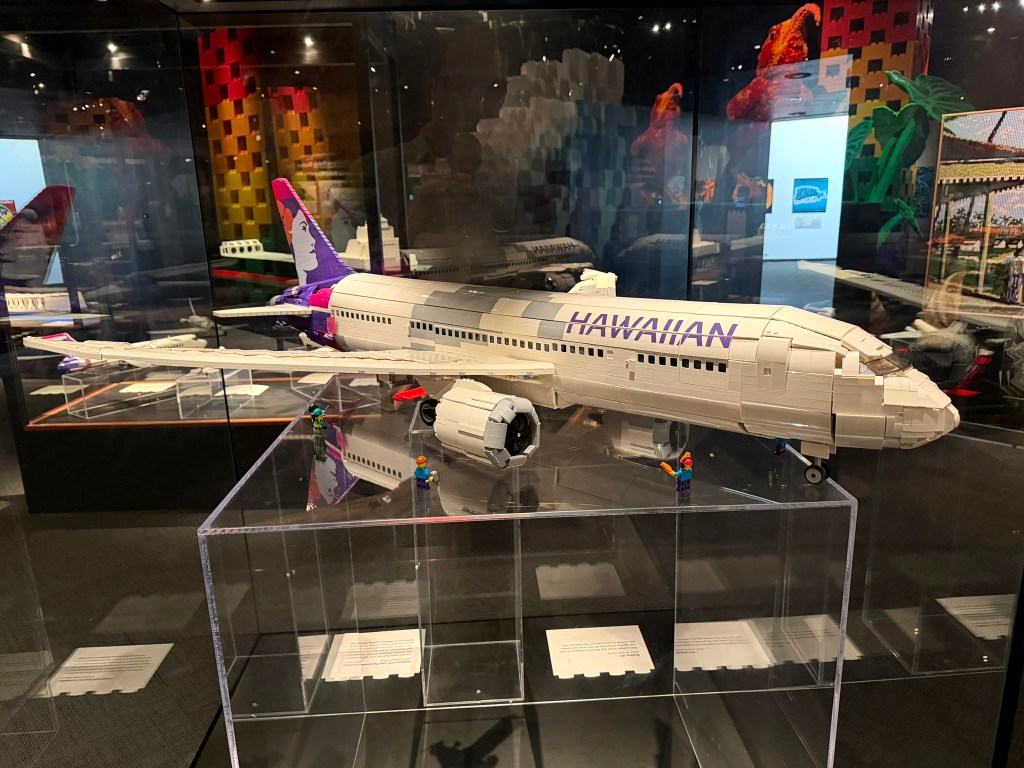
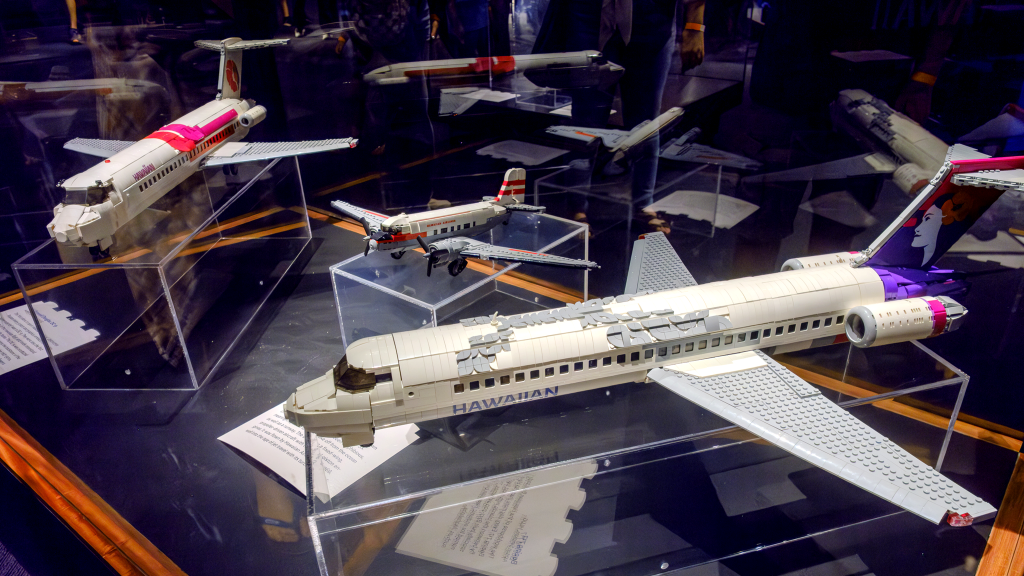
For Ashton, seeing his completed work on such a public display will always be a surreal moment. “My favorite thing is watching other people react to the exhibit,” he said. “Especially kids. Maybe it will inspire one of them to become an engineer someday too.”