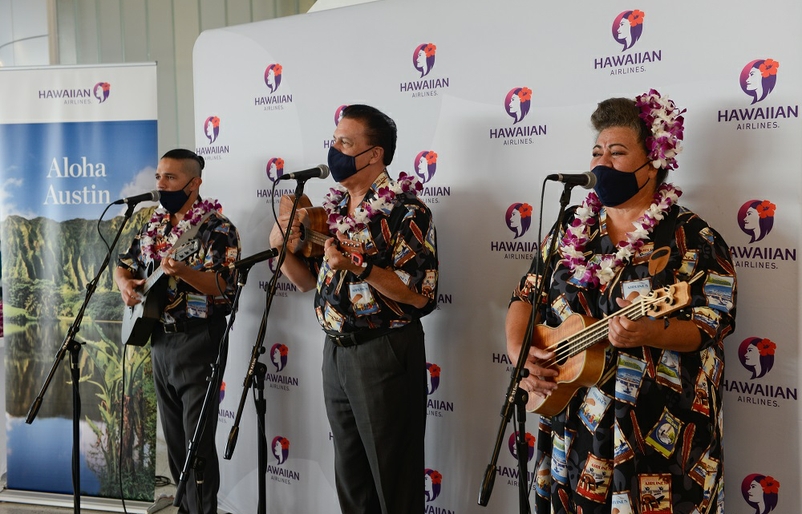
HONOLULU – Hawaiian Airlines today celebrated the inauguration of its twice-weekly nonstop service between Austin-Bergstrom International Airport (AUS) and Honolulu’s Daniel K. Inouye International Airport (HNL). Hawai‘i’s hometown carrier introduced its in-house music and dance group, The Hawaiian Airlines Serenaders, to the “Live Music Capital of the World” as it welcomed guests aboard its first flight to Hawai‘i.
The Hawaiian Airlines Serenaders performing at Austin-Bergstrom International Airport
“We’re thrilled to be the first carrier to provide nonstop flights between Central Texas and Hawai‘i,” said Peter Ingram, president and CEO of Hawaiian Airlines, who celebrated the inaugural departure alongside representatives from AUS airport, the City of Austin, Visit Austin and the Austin Chamber of Commerce. “Both destinations are known for their incredible food, music and arts scene and we couldn’t be more excited to connect these two amazing cities with our convenient, award-winning service.”
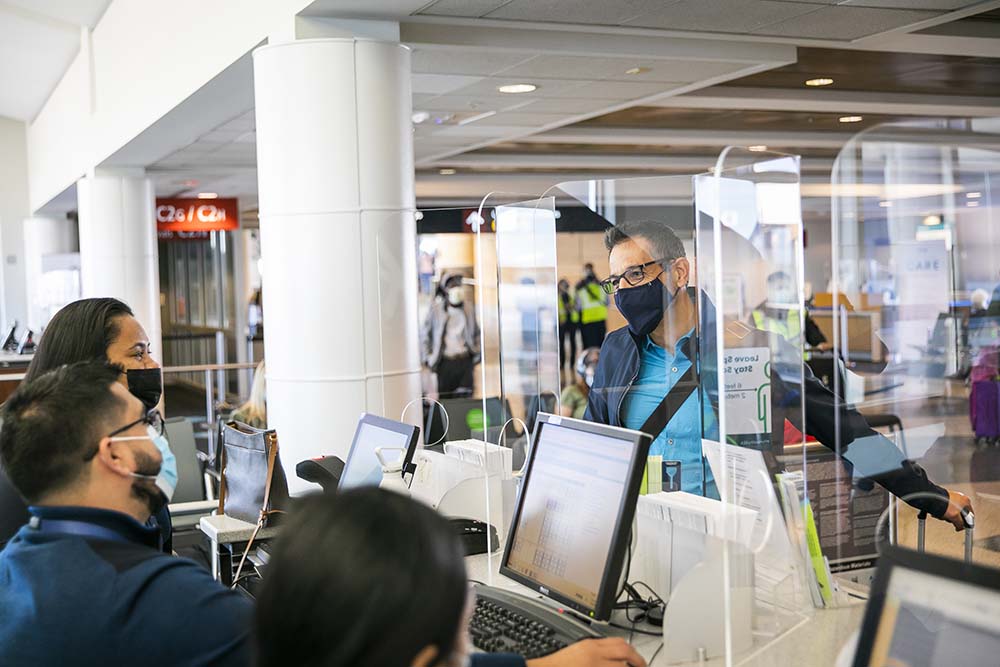
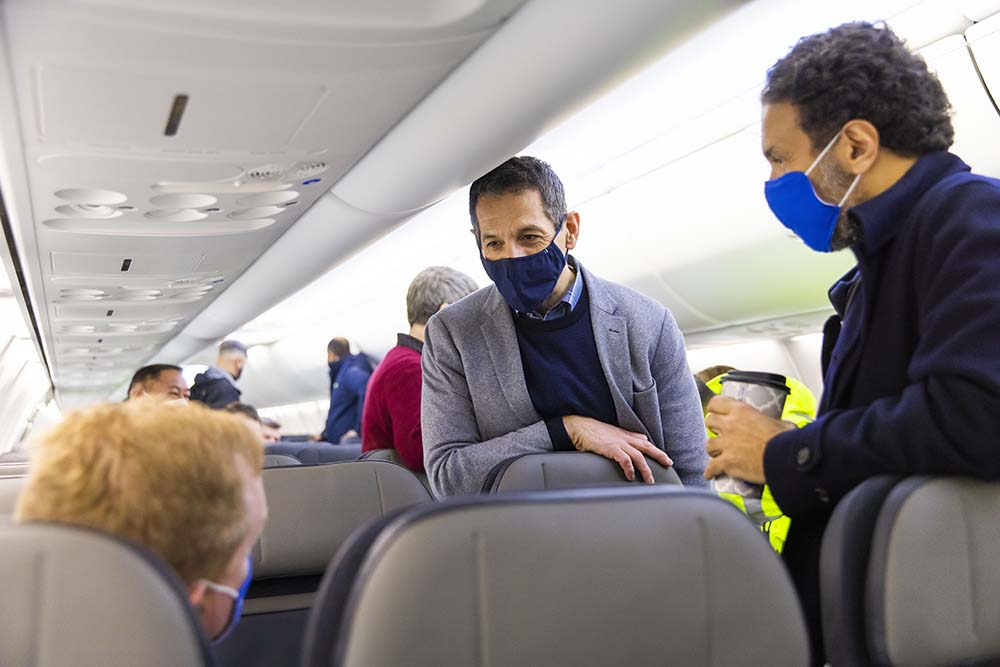
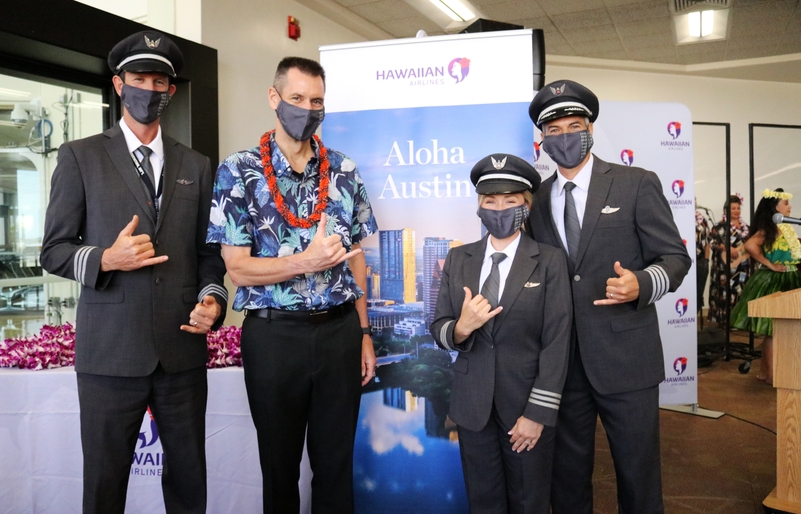
Hawaiian Airlines President and CEO Peter Ingram (second from left) pictured with HA82's pilot crew at Honolulu's Daniel K. Inouye International Airport prior to the inaugural flight
Flight HA81 departs Austin on Thursday and Sunday at 10:10 a.m. with a 1:30 p.m. scheduled arrival in Honolulu, allowing guests to check in to their accommodations and begin exploring O‘ahu or connect to any of Hawaiian’s four Neighbor Island destinations. The flight from Honolulu to Austin, HA82, departs on Wednesday and Saturday at 10 a.m. and arrives at 10:10 p.m. Hawaiian will increase AUS-HNL service to three weekly flights from May 28 through Aug. 13 to meet summer travel demand.
"Hawaiian Airlines' arrival in Austin signals strong confidence in the Austin market as we continue to recover from the financial impacts of the pandemic," said Jacqueline Yaft, chief executive officer for AUS. "This is a great milestone for both our airport and our greater Austin community."
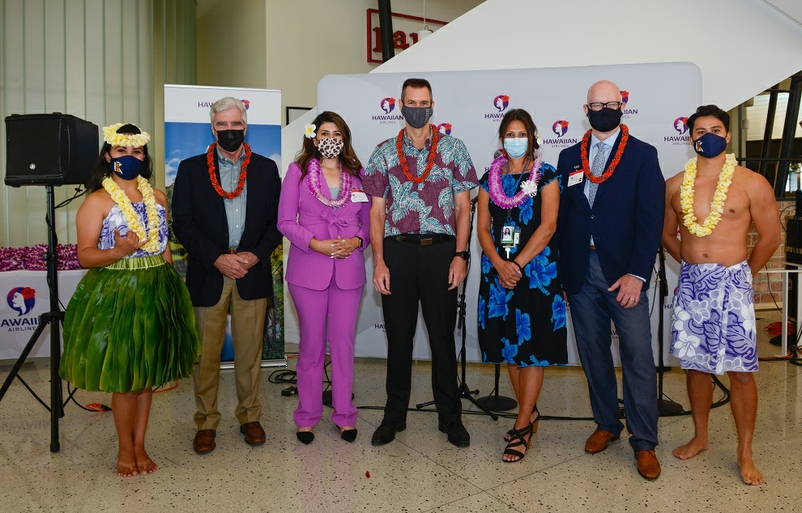
Pictured from L to R (not including dancers): Doug Driskill, chair for the Austin Chamber Air Service Task Force; Vanessa Fuentes, Austin city councilwoman, District 2; Peter Ingram, president and CEO of Hawaiian Airlines; Jacqueline Yaft, chief executive officer of Austin-Bergstrom International Airport; and Tom Noonan, president & CEO of the Austin Convention & Visitor’s Bureau.
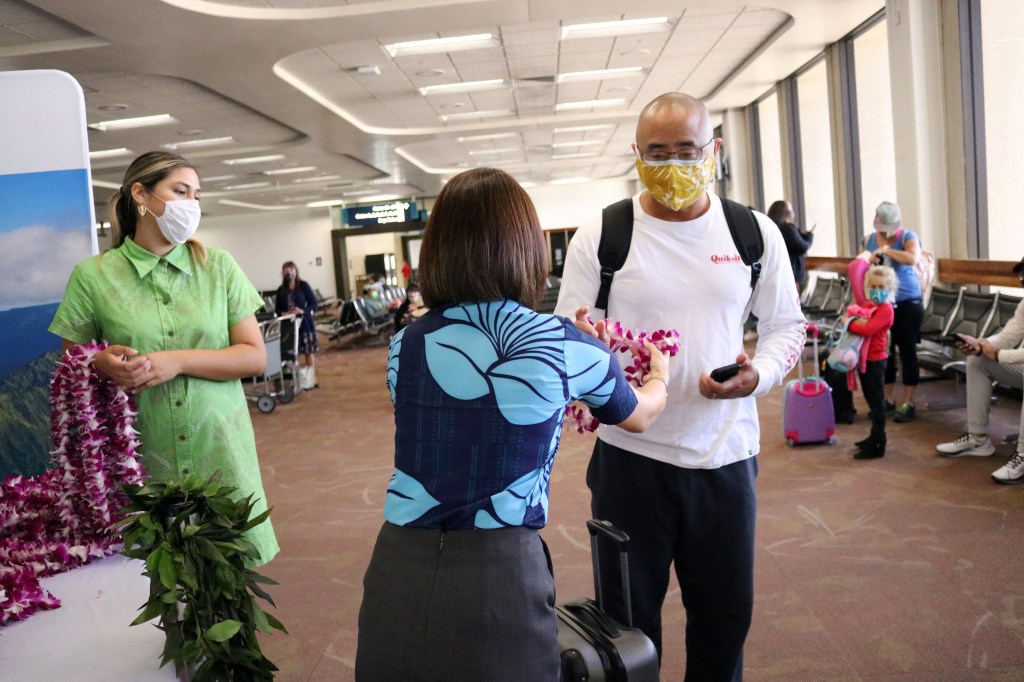
In recognition of the inaugural service coinciding with Earth Day, Hawaiian encouraged guests heading to Hawai‘i to travel pono – responsibly – by gifting them a reusable utensil kit, part of the airline’s new eco-minded collection of products that launched this week
Guests onboard Hawaiian’s Austin-Honolulu flights will enjoy the airline’s signature Mea Ho'okipa (I am host) service – the gold standard in domestic leisure travel featuring an authentic Hawai'i experience. Hawaiian proudly offers complimentary meals in all cabins and has partnered with Hawai‘i’s top chefs to offer an island-inspired dining experience for guests traveling in its First Class cabin. Guests will feel relaxed in the roominess and superior comfort of its 278-seat Airbus A330 aircraft, which feature 18 First Class lie-flat leather seats arranged in a 2-2-2 configuration tailored for couples, families and honeymooners, as well as business travelers. Hawaiian’s A330s are also equipped with 68 of its popular Extra Comfort premium economy seats providing more legroom and enhanced amenities, in addition to 192 Main Cabin seats.
Hawaiian, the nation’s most punctual airline for 17 straight years, has simplified the experience for guests to meet the state of Hawai‘i’s pre-travel testing requirements and be exempt from quarantine upon arrival through partnerships with Worksite Labs, which offers drive-thru COVID-19 testing near AUS airport, and CareNow Urgent Care, which administers rapid testing at 15 locations in the Greater Austin area. More information on these partners can be found at www.HawaiianAirlines.com/Covid-Test-Options/Austin.
Guests who obtain a negative test within 72 hours from departure will receive a pre-clear wristband during boarding that allows them to bypass airport screening in Hawai‘i.
For more media assets from the AUSHNL (HA81) inauguration ceremony, click here. For more media assets from the HNLAUS (HA82) inauguration ceremony, click here.
About Hawaiian Airlines
Hawaiian® has led all U.S. carriers in on-time performance for each of the past 17 years (2004-2020) as reported by the U.S. Department of Transportation. Consumer surveys by Condé Nast Traveler, Travel + Leisure and TripAdvisor have placed Hawaiian among the top of all domestic airlines serving Hawai‘i.
Now in its 92nd year of continuous service, Hawaiian is Hawai‘i's biggest and longest-serving airline. Hawaiian offers nonstop flights within the islands, between Hawai‘i and more U.S. gateway cities (16) than any other airline, as well as service connecting the islands with Japan and South Korea. As a result of the COVID-19 pandemic, Hawaiian has temporarily suspended service in Australia, New Zealand, American Samoa and Tahiti.
The airline is committed to the health and safety of its guests and employees and has reinforced enhanced cleaning procedures across its business. While the experience may be a little different, the authentic Hawaiian hospitality remains unchanged. Additional details on how Hawaiian is keeping guests and employees safe can be found at HawaiianAirlines.com/KeepingYouSafe.
Hawaiian Airlines, Inc. is a subsidiary of Hawaiian Holdings, Inc. (NASDAQ: HA). Additional information is available at HawaiianAirlines.com. Follow Hawaiian’s Twitter updates (@HawaiianAir), become a fan on Facebook (Hawaiian Airlines), and follow us on Instagram (hawaiianairlines). For career postings and updates, follow Hawaiian’s LinkedIn page.
For media inquiries, please visit Hawaiian Airlines’ online newsroom.
Flying with purpose: Alaska sets new climate goals, including net-zero carbon emissions by 2040
Each year we share how we’re caring for the planet and the people we serve in our annual sustainability report. This year we’re also setting our course for the future.
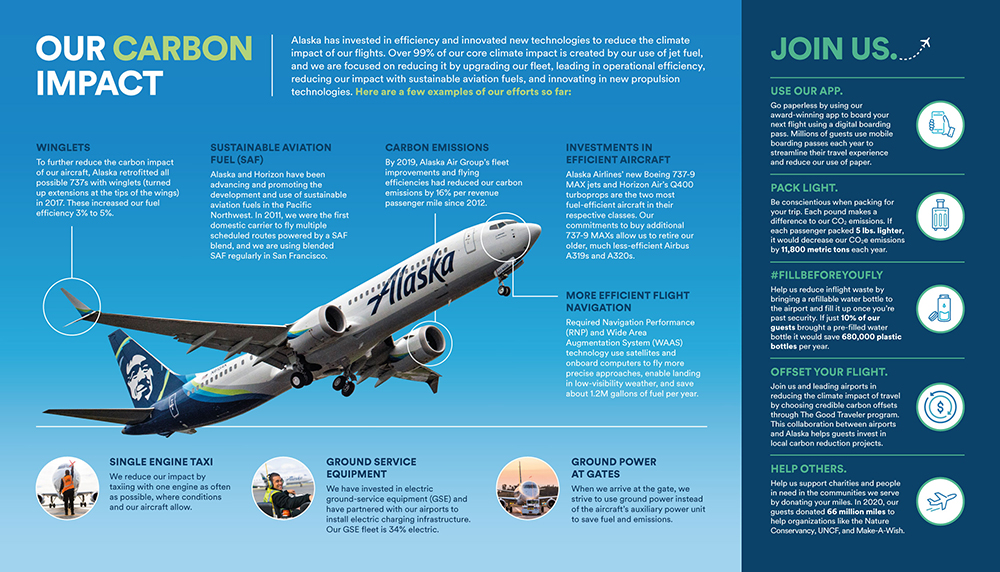
Today, we announced our commitment to reduce our climate impacts with new goals for carbon, waste, and water. We’ve set a course for net zero carbon emissions by 2040, with near-term 2025 targets to maintain carbon neutral growth from 2019. We also set goals to be the most fuel-efficient U.S. airline and cut the climate emissions from our ground equipment in half. We’ll keep up our industry-leading recycling program, continue to source more sustainable packaging for inflight service and offset our water use with investments in local ecology and habitats. With these goals, we are joining Amazon and over 100 other companies in signing The Climate Pledge, a commitment to be net zero carbon across our business 10 years ahead of the Paris Agreement.
Doing the right thing
One of our core values is to do the right thing, and that means reducing the impact of air travel on the environment. Our most significant environmental impact is through greenhouse gas emissions produced through the burning of jet fuel. That’s why we’ve prioritized the work to burn and emit less fuel, to employ greener alternatives and ultimately to transform aviation for a more sustainable future and to keep the incredible destinations we serve beautiful and viable for generations to come.
“Air travel connects us to our friends and families, helps us understand one another, and helps communities across the globe grow and thrive,” said Alaska Airlines CEO Ben Minicucci. But we know that to live our purpose, creating an airline people love, we must operate every day in a way that cares for both people and the environment. That’s why we’ve set out on this bold path to reduce our climate impact near and long term.”
Our Roadmap
There are five parts of our path to net zero:
1. Fleet renewal
We recently finalized our order for up to 120 Boeing 737-9 MAX aircraft, with four already delivered this year. Our newest MAX aircraft are 22% more fuel-efficient on a seat-by-seat basis than the aircraft they replace. And we’ll continue to test and adopt technology to further improve our fleet’s efficiency.
2. Operational efficiency
We’re focused on embedding efficiency and sustainability into our culture. That means continuing our leadership in standardizing operational best practices and using technology for the lowest emissions possible. We’re also expanding our use of technology to optimize flight routes for emissions savings, working with the government to make the best use of our airspace, moving toward electric and other renewable options for our ground equipment and working with airports to ensure infrastructure available to support it. We will also continue responsible construction and energy use throughout our facilities – like our LEED-certified hangar in Anchorage and employee “Hub” in Seattle.
3. Sustainable aviation fuel
With up to 80% lower carbon emissions than traditional jet fuel, sustainable aviation fuel (SAF) is the best possible option to decarbonize medium- and long-distance flying within the next few decades. Alaska has piloted use of different types of SAF for over a decade, and SAF is now certified as safe and available as a fuel to mix with traditional fuel. We currently use and are partnering to advance SAF production, with Neste and SkyNRG. We’ve also partnered with Microsoft to offset the carbon impact of their employees’ travel from Seattle to San Francisco, San Jose and Los Angeles with sustainable aviation fuel.
SAF represents even greater potential to reduce emissions with government support to increase supply and commercial viability of these fuels, which don’t currently exist in sufficient volume to power US flights. That’s why we’re supporting research at Washington State University to advance SAF in the Pacific Northwest, partnering with other companies to grow use of SAF, and working with the oneworld alliance and Airlines for America to support SAF production globally. This is an area that will take collective action to advance.
Novel propulsion essentially means increasing the use of electric or alternative power without fossil fuels. We believe that increasingly electrified options will be available for regional aircraft by 2040 and are evaluating partnerships and in-kind exchanges with the goal of enabling these emerging and decarbonizing technologies. Alaska’s sister regional airline, Horizon Air, is well positioned to explore this exciting, innovative opportunity in the decades ahead.
Aviation is one of the hardest sectors to decarbonize, so credible carbon offsets may be needed to close the gap to our net zero target by 2040, and until SAF and novel propulsion become viable and available at scale. We’ll work with science advisory firm Carbon Direct to identify and vet carbon offsets that add net offset value, are verified in carbon accounting, do no harm, are durable, and don’t just displace emissions to another project.
What does this mean for you?
You can read more about our commitments to fly greener, reduce waste and offset our water use in our Alaska Airlines 2020 LIFT Sustainability Report. In it, you will see more details on our approach to social and environmental stewardship across the company.
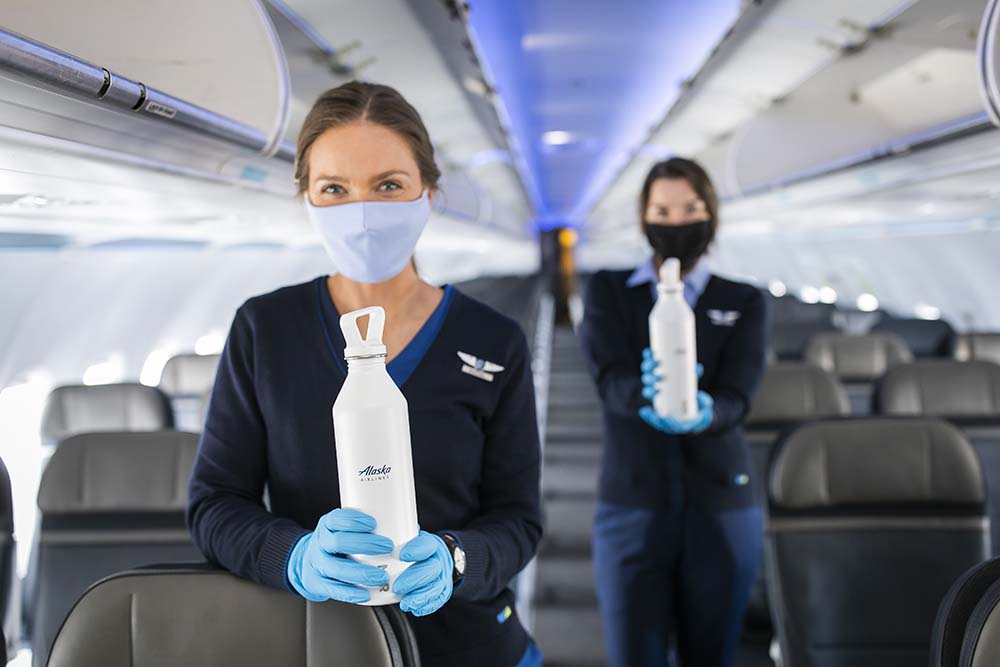
Meanwhile, there are things every flyer can do to partner with us on this journey. Want to offset your carbon footprint? Good news! You can invest in carbon offsets with our partner, The Good Traveler, in locally based and high-quality projects to restore the climate balance. Since its founding by San Diego International Airport in 2015, The Good Traveler helped removed 230 million pounds of CO2 from the air by funding projects like tree planting, habitat protection, waste composting and renewable energy. Packing lighter, using our app, pre-ordering your onboard meal, and bringing your own reusable water bottle to #FillBeforeYouFly all contribute to reducing our collective impact.
This is a long-term journey, and it will take all of us. Thank you for having high expectations of us, and for joining us on the journey.
Travel Pono on Kaua‘i: Sip, Savor and Slow Down All Vacation Long
If getting on island time during these unusual times is on your wish list, look no further than Kaua‘i. Hawai‘i’s oldest major island is home to small towns with vibrant arts, food and shopping scenes, unreal views and a slower pace – making it the perfect place for travelers to unwind and indulge in local culture.
While scoping out a place to stay during your next Kauaʻi holiday, we recommend checking out our partner hotel properties, where our guests can score exclusive deals, earn HawaiianMiles, and relax knowing they’re in good hands.
Sip, Savor and Support Local
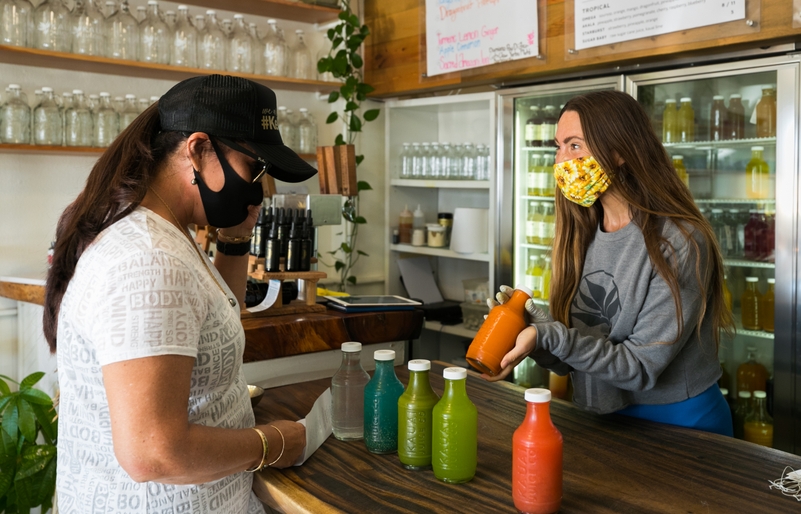
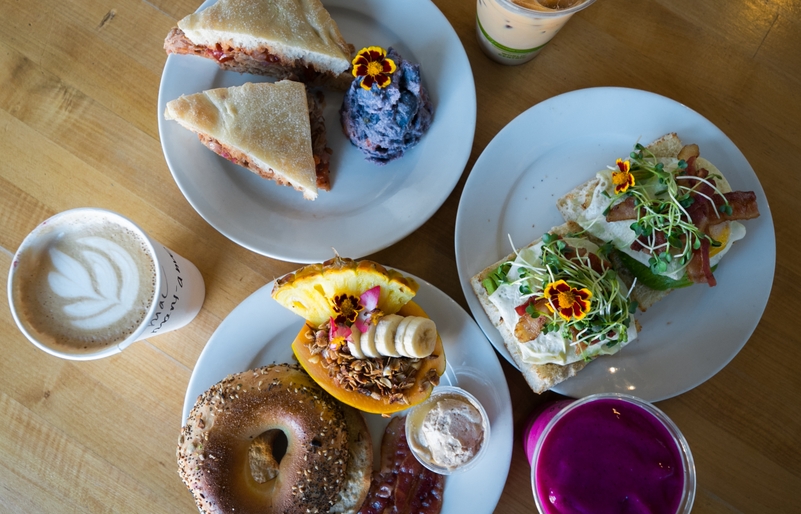
Kaua‘i’s shops and restaurants are symbolic of the community’s love for the land and pride in calling the Garden Island home. While wandering its small towns during a lazy afternoon, visit Java Kai and Kaua‘i Juice Co, whose menus emphasize Kaua‘i’s tropical crops, like ‘ōlena (turmeric), kalo (taro), banana, mango, pineapple, and more, and dish up sweet and savory bites that are as good for your body as they are for your taste buds.
Kaua‘i Juice Co, which has multiple locations throughout the island, is known for mastering the art of a flavor- and health-packed juice. Visitors can relax in the shops’ refreshing ambiance, indulge in handcrafted foods, or purchase locally made beauty and health products.
In the heart of Kapa‘a, Java Kai offers a lively and welcoming atmosphere to enjoy a smoothie or coffee and share a meal with a friend. Patrons can pair specialty drinks such as Maui Mocha or Limeade with dishes like its Kālua Pork Burrito or Surfer Sandwich. All orders are served on the go or at its limited seating.
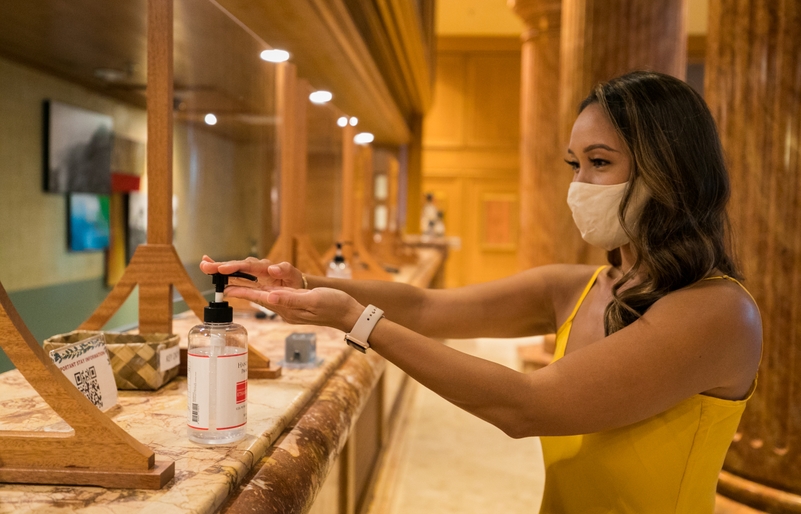
Masks are required while visiting local businesses and social distancing is a must when waiting in line and shopping. Visitors should also brief themselves on the latest details of Kaua‘i County’s COVID-19 order before venturing the island.
Settle into a Relaxing Resort Experience
Mauka-to-makai (mountain-to-ocean) views and authentic hospitality are abundant at Royal Sonesta Kaua‘i Resort. The hotel sits on an impressive beach-facing parcel with dreamy sunsets and sunrises, a signature spa and an expansive cliffside golf course. The resort is an easy drive from Līhu‘e Airport and fronts the soft sands of Kalapaki Beach, a natural harbor known as an ideal spot for swimming, surfing lessons, and relaxing on the beach.
Providing a safe and hospitable guest experience has been a paramount focus for the resort's team, with health protocols reflected throughout the property. To learn more about Royal Sonesta Kauaʻi Resort and what to expect before visiting, click here.
Experience (and Take Home) Hawaiian Sugar Cane Rum
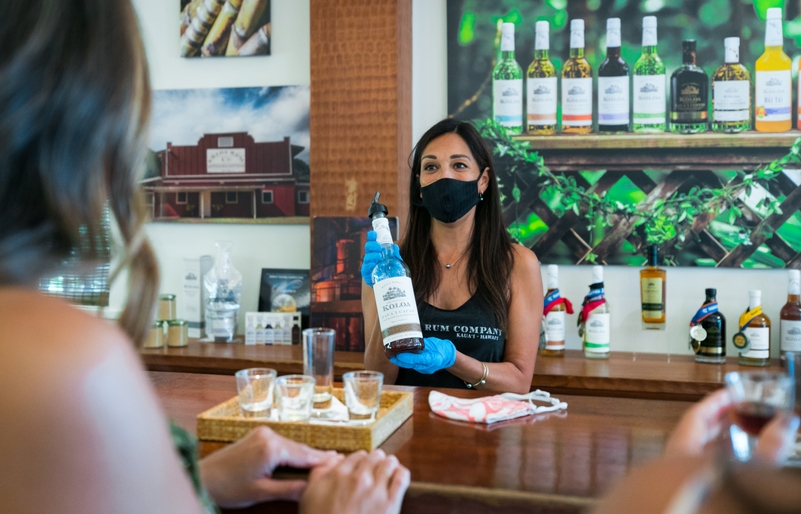
Kōloa Rum Company was founded in 2009 and today proudly sources its staple components for premium Hawaiian rum – coffee, sugarcane and water – from the Garden Island. Based on Kauaʻi’s south shore, its distillery refines the ingredients and blends them into a unique spirit that is bottled, sold, and served worldwide.
Visitors can get an up-close experience with Kōloa Rum's distilling process at its tasting room and shop at the iconic Kilohana Plantation in Līhu‘e. Rum lovers can learn about the unique taste notes of Hawaiian “tall cane” sugarcane rums, meet with connoisseurs, and chose from a wide selection of rum varieties to sample, mix into a cocktail or take home.
In response to the COVID-19 pandemic, tastings are now by reservation only and groups are limited. Tastings are both outdoors and at the bar, though face masks and social distancing are required when not tasting. For the latest health and safety protocols at its store and tasting room, guests should call 808-246-8900 or visit koloarum.com.
‘I am my ancestors’ wildest dreams’: Albany State Alum shares the importance of HBCUs’ history, legacy and excellence
Long before Beyoncé brought Historically Black Colleges and Universities (HBCUs) to center stage at Coachella, experiences alike were cultivated by trailblazers centuries before and continue toward a more equitable future.
HBCUs were created out of necessity at a time when Blacks in America were prohibited from attending higher education institutions that were predominantly white. Today, there are now 107 HBCUs that provide education for students from all socio-economic backgrounds while continuing the legacy and commitment to Black education.
‘HBCUs are the embodiment of legacy, history and Black excellence.’
HBCUs have been a vehicle and driving force in the fight for equality and liberation. From freedom fighters to world-renowned writers, from aeronautical math geniuses to the Vice President of the United States. Some of the world’s most notable legends, leaders and innovators have emerged from these institutions.
‘I am my ancestors’ wildest dreams.’
I am a first-generation college graduate. My HBCU experience was immensely transformative. Not only because I finally had professors who looked like me, but because they taught me what was waiting for me on the other side and prepared me for the road ahead.
“A Past to Cherish. A Future to Fulfill” is the motto of my alma mater, the “Unsinkable,” Albany State University. Those words resonate every time I drive down Georgia Highway 300 — a road that used to be lined with cotton fields and dotted with plantations that once housed enslaved people.
The saying honors our past and people whose blood was shed and lives were lost in those fields. It’s a reminder to be eternally grateful for those who came before us, those who weren’t afforded the right to an education. Even if they, the people who diligently fought for those rights themselves, never saw the fruits of their fervent labor.
‘I wanted to be surrounded by people like me, my culture.’
I didn’t learn about HBCUs through legacy or lineage. In fact, I didn’t have a frame of reference for college at all. I learned about them through the television show A Different World. I didn’t know much, but I knew I wanted to attend a university like Hillman, the fictional HBCU portrayed in the series. As someone who grew up in a small, predominantly white town in Northwest Georgia, I wanted to experience something different.
Vice President, and HBCU graduate Kamala Harris, said it best, “What you learn at an HBCU is you do not have to fit into somebody’s limited perspective on what it means to be young, gifted and Black.”
Holiday, a first-generation college graduate, in her cap and gown at her commencement ceremony at Albany State University.
It was at Albany State University, a school affiliated with UNCF, where teachers like Dr. Bennett, my business communications professor, demanded excellence and nothing less. Mediocracy wasn’t an option because she knew I would have to fight twice as hard to get half as much as other individuals. She was hard on her students because she knew the world would not be easy on us.
Then, there were professors like Mr. Hankerson, my English lit professor who was also my first Black male teacher. The gravity of that alone is astounding.
It wasn’t until my sophomore year of college when I experienced the academic scope through a Black male teacher’s lens — a lens that defied society’s stereotypes of who and what a Black man represents. He was a man of the arts, with a palpable passion for literature. He was my favorite professor by far, simply for his ability to get you so entranced in the literature through his own unique storytelling and spinning the stories in a way that made it relatable to modern-day life. He challenged me to be a better writer and a better storyteller.
Albany State provided me a sense of belonging. It was a place where I could shed the layers of assimilation and the idea of fitting into whatever box I was expected to be in. I realized the viable impact of being taught by teachers who looked like me and the importance of Black role models who paved paths before me who now lead prominent positions.
‘I finally felt I could fully thrive and rid myself from feeling like my blackness was a burden or my existence was a threat to society.’
Representation matters. The defining moments of my HBCU experience were the life lessons that weren’t a part of the syllabus; the history not found in the text books. It was the community and the we’re in this togetherness that forged lifelong friendships and redefined what it meant to be family. This was my HBCU experience. One I wouldn’t trade for the world, and one I encourage all young Black students to consider experiencing for themselves.
The sky is the limit
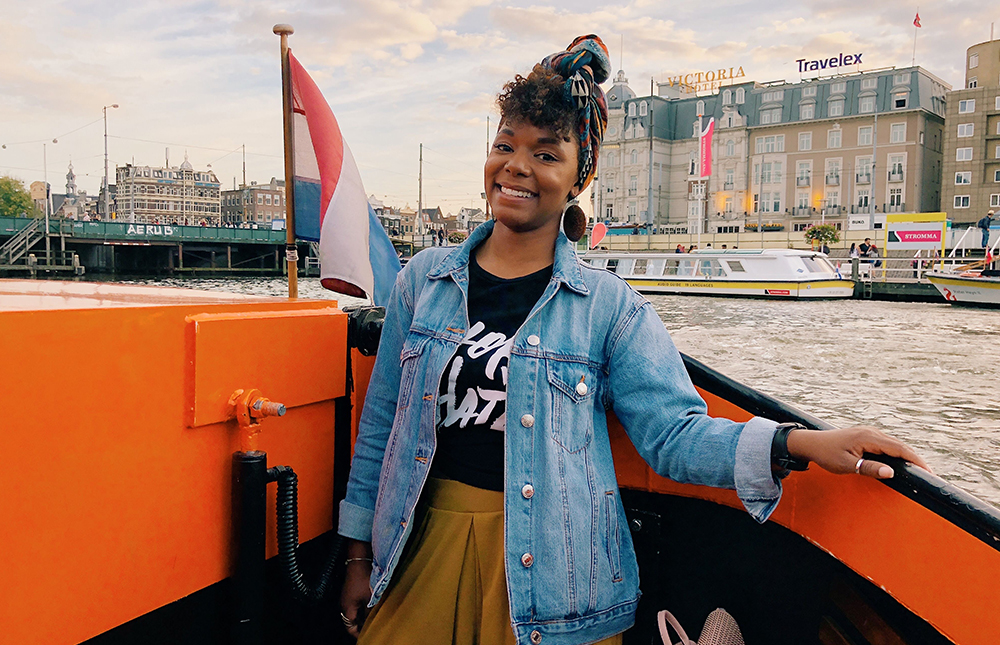
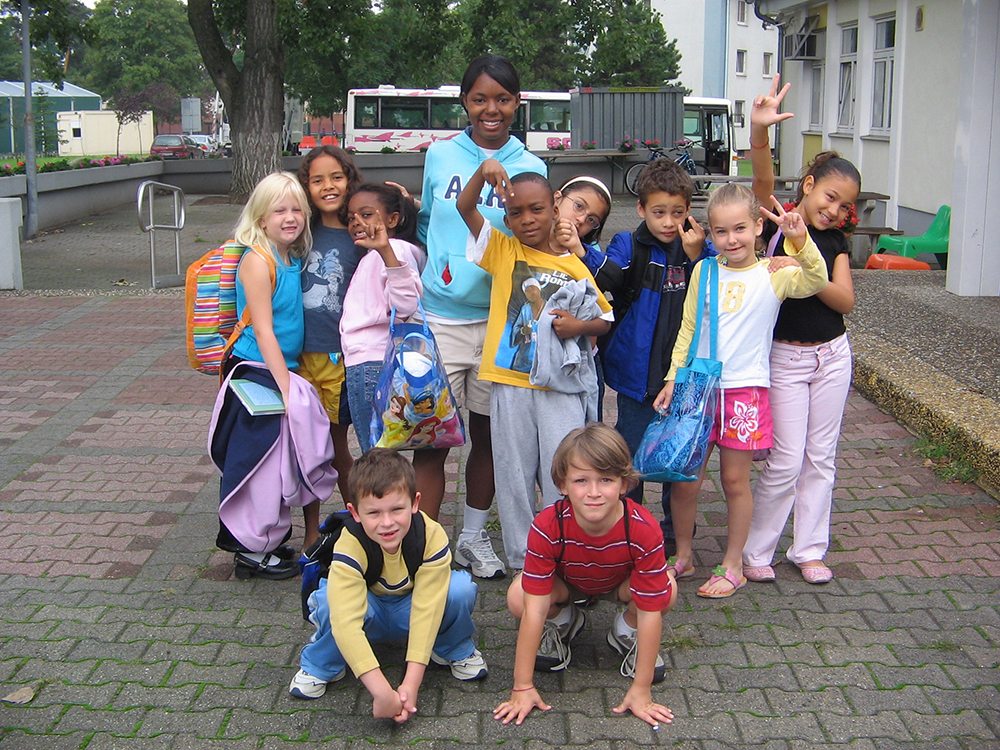
Beyond the curriculum, Albany State is where I was introduced to the world of international travel through a college program that stationed students on American military bases around the globe as camp counselors.
Holiday with her camp kids in Darmstadt, Germany 2006.
My first flight was at the age of 21. I flew to Germany, where I lived for three months. It was a life-changing experience that led me to live the travel-loving, location-independent lifestyle I do today. My mission is to empower and inspire other young, Black travelers to do the same.
It is programs like this and Alaska Airlines’ LIFT Miles program, in partnership with UNCF, that affords HBCU students the opportunities to pursue their dreams. I would have never been able to financially afford such an experience had my college program not sponsored me, and I know so many other students can relate. For this, I am forever thankful for the programs that put minority college students in a position to reach new heights.
Holiday visiting Tripsdrill Theme Park in Germany, 2006.
[inset]
I especially love Alaska’s UNCF LIFT Miles program because it has consistently showed up for minority students over the past 15 years and counting. Not only does the program support HBCU students with flights home for the holidays, but they fly students to college tours at HBCUs, career development opportunities and other UNCF programs.
With over 7 million miles contributing and donated, Alaska’s flights help students overcome the financial obstacles of getting a college education.
Travel Greener with Our New Earth Day Reusable Collection
Mālama (to care for) is a value that we hold close to our hearts at Hawaiian Airlines. Whether lowering our carbon footprint with a fuel-efficient fleet, regularly engaging our employees in cleaning beaches or restoring loʻī (taro patches) and supporting local nonprofits, our motivation to mālama our island home never runs short.
As an extension of this commitment, we invite our guests to go green with the launch of a new Hawaiian Airlines Earth Day logo collection of eco-minded travel products. The reusable items feature a mark designed to honor native flora and fauna, with the kalo (taro) – a sacred root plant, medicinal source and food staple in Hawaiian culture symbolic of ʻohana (family), creation and sustainability in Hawaiʻi – at the center.
“The broad, organic shape of the leaf creates a visual play on a heart and symbolizes the love and connection to Mother Earth,” said Hawaiian Airlines Graphic Designer Emily Matsuno, who spearheaded the artwork.
Proceeds from the collection will be donated to Kauluakalana, a local nonprofit working to revive cultural identity, steward the community, restore connections to ‘āina (land) and renew kuleana (responsibility) in the historic ahupuaʻa (traditional subdivision) of Kailua, Oʻahu.
Photo credit: Kauluakalana
Kauluakalana volunteers working in a loʻi cared for by the nonprofit.
The organization, established in 2019 by a group of Kailua residents, offers immersive, culture-based programs centered around the nonprofit’s vision “to restore and grow healthy relationships between people and place through the aloha ʻāina practices of retelling our Kailua-specific stories, replanting and eating our ancestral foods, and caring for the sacred sites, lands, and waters of our beloved ahupuaʻa of Kailua.”
Proud to Fly the 808: Connecting Locals with the World Beyond Our Shores
I mua, meaning to move forward with purpose, has been a guiding principle for Hawaiian Airlines as we navigate the pandemic. While COVID-19 has brought setbacks, it has also given our company much to look forward to as we begin to rebuild our business. Among the silver linings is having the opportunity to bring our Hawaiian hospitality to new cities, including Austin, Orlando, Ontario, California, and expanding our presence in Long Beach with new nonstop service to Kahului.
While our routes, both old and new, have proven demand for travelers seeking to experience all that makes the Hawaiian Islands so special, our network serves another critical purpose: connecting kamaʻāina (residents) with the world beyond Hawai‘i. We’re proud to provide local communities with crucial transportation through our extensive network, offering nonstop options for our residents to go on essential travel and business trips and take family and leisure vacations.
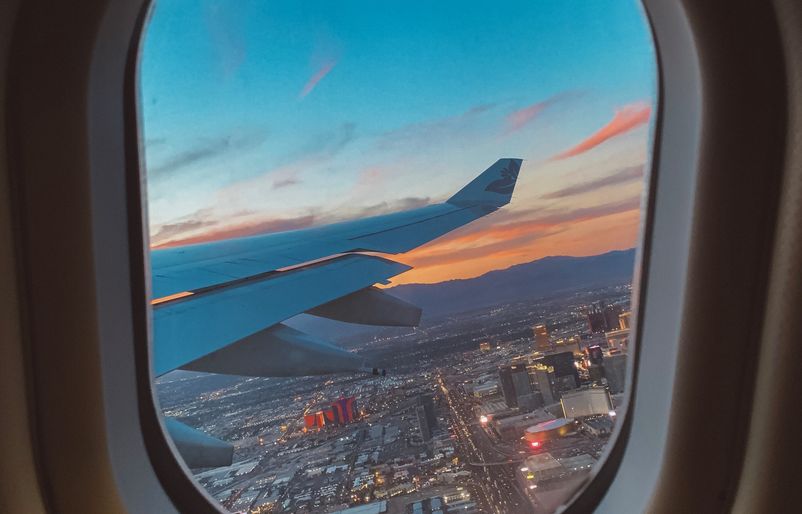
An aerial view of Las Vegas, known as the Ninth Island among kamaʻāina, from one of our window seats.
For Tammy Amemiya, a Hawaiian Airlines Airbus A321neo first officer and Windward Oʻahu resident, our nonstop service between Honolulu and Orlando, which launched March 11 with two weekly flights, meant more chances to create and share memories with her two young boys.
“When I was a child, my parents took us to Disney, and it’s one of the most wonderful childhood memories that I have,” said Amemiya, who brought her family on our inaugural flight. “I wanted to share that experience with my two sons, and we did and had a blast. We wore our masks that whole time and planned in advance to get into the parks, which were open at 30 percent capacity.”
Amemiya pictured with her two sons and husband during their recent trip to Disney in Orlando, Florida.
Before Hawaiian began serving Orlando, it was the second-largest travel market to Hawai’i that lacked a nonstop option and the second most popular destination for kamaʻāina after Las Vegas.
“Our direct Orlando flight opens up so many more opportunities for families to spend time together and made the long journey from Hawaiʻi significantly more seamless,” Amemiya added.
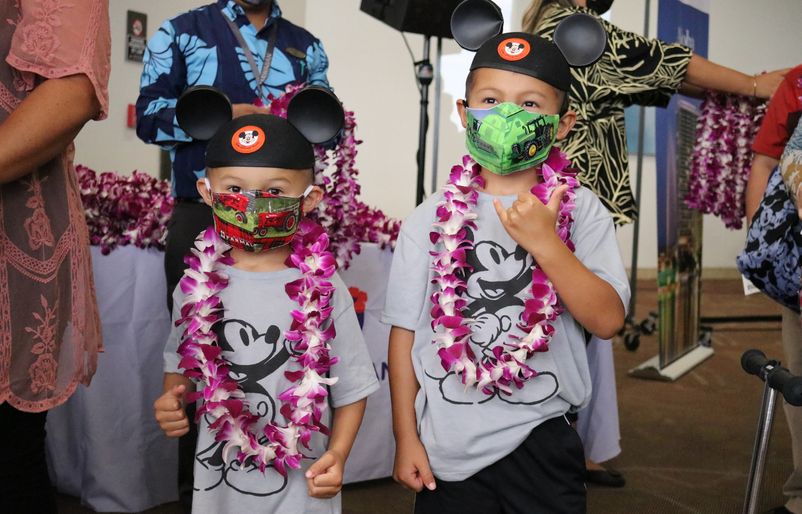
Amemiya's sons giving a shaka while boarding the inaugural flight between Honolulu and Orlando.
Our twice-weekly Honolulu-Austin service, which launches on April 21, also draws strong kamaʻāina demand and fills a connectivity gap.
Kimberly Ashley, a Hawaiian Airlines flight attendant who lives on O‘ahu’s North Shore, partially grew up in Austin, a city that remains one of her favorite places to visit.
“I am very grateful that I still have family and friends in Austin, which I visit twice a year,” she said. “Austin has so much to offer – from live music to incredible Tex-Mex food – and I’m looking forward to working the flight so I can share some of my favorite Austin experiences with other kama'āina who have never been.”
Ashley, pictured front center, taking a selfie with her Texas family while on their way to a football game. Editor's Note: This photo was taken prior to the pandemic.
Outside of our new routes, many of our Hawaiʻi guests – including our HawaiianMiles elite members – are ready to begin revisiting our existing markets. Josiah Castellanos, a Pualani Platinum member on Oʻahu, often travels on Hawaiian for work.
“I travel a lot for my job – mostly to San Jose, California. I work [and live] here in the islands but the company I work for is headquartered in the Bay Area, so most of my business trips involve going there,” he said.
Castellanos also frequently flies to Seattle, Portland, San Diego, Long Beach and Los Angeles for business or to visit family who lives nearby. “Hawaiian makes it pretty easy for me to access the west coast,” he added.
Castellanos, to his surprise, is one of many kamaʻāina traveling on our inaugural Honolulu-Austin flight. “I’m excited to test it out,” he said, adding he plans to visit his brother in Dallas and explore the region’s national parks with his girlfriend.
Peter Dames, a Pualani Platinum member and the executive vice president of distribution, marketing and digital at Servco Toyota in Honolulu, is also eager to get back to his regular travel schedule. For years, Dames frequently traveled to Australia, Japan and the U.S. West Coast but paused his business travel due to the pandemic.
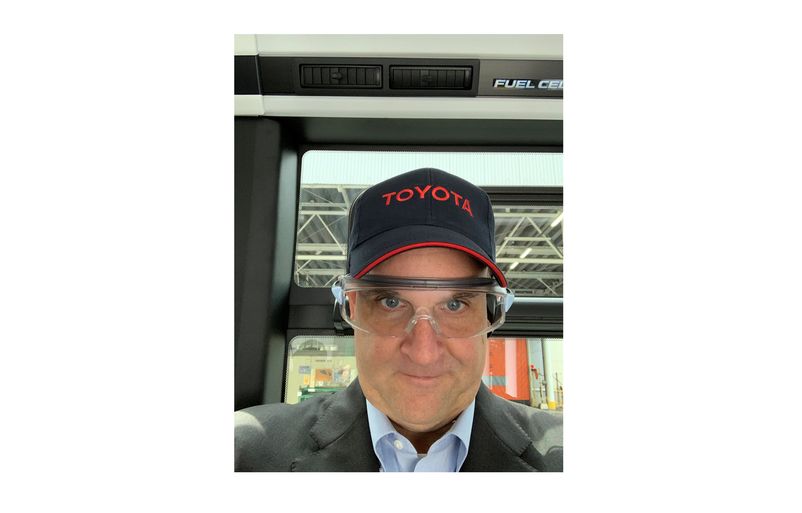
Dames taking a selfie while touring the Toyota Factory during his last business trip to Japan in February 2020. Dames flew our nonstop Honolulu-Haneda service often, and looks back to being able to return to Asia.
Until his international business trips can resume, Dames says he expects to travel to the U.S. West Coast to drop off his 18-year-old son at college, and he also plans to experience our newest routes.
“Before COVID-19, I was traveling primarily for business,” he said. “I try to fly Hawaiian as much as I can because I don’t like having connections, and Hawaiian can pretty much get me to most places that I need to be without having to connect.”
Hawaiian Holdings Announces 2021 First Quarter Results Conference Call
HONOLULU , April 13, 2021 /PRNewswire/ — Hawaiian Holdings, Inc. (NASDAQ: HA), parent company of Hawaiian Airlines, Inc. ("Hawaiian"), plans to report its first quarter 2021 financial results after the market closes on Tuesday, April 27 , 2021. An investor conference call is scheduled for 4:30 p.m. Eastern Time that day.
The call will be open to all interested investors through a live audio webcast accessible in the Investor Relations section of Hawaiian's website at HawaiianAirlines.com . For those who are not able to listen to the live webcast, the call will be archived for 90 days on Hawaiian's website.
About Hawaiian Airlines
Hawaiian ® has led all U.S. carriers in on-time performance for each of the past 17 years (2004-2020) as reported by the U.S. Department of Transportation. Consumer surveys by Condé Nast Traveler , Travel + Leisure and TripAdvisor have placed Hawaiian among the top of all domestic airlines serving Hawai'i.
Now in its 92nd year of continuous service, Hawaiian is Hawai'i's biggest and longest-serving airline. Hawaiian offers nonstop flights within the Hawaiian Islands, between Hawai'i and more U.S. gateway cities (16) than any other airline, as well as service connecting the islands with Japan and South Korea . As a result of the COVID-19 pandemic, Hawaiian has temporarily suspended service in Australia , New Zealand , American Samoa and Tahiti.
The airline is committed to the health and safety of its guests and employees and has reinforced enhanced cleaning procedures across its business. While the experience may be a little different, the authentic Hawaiian hospitality remains unchanged. Additional details on how Hawaiian is keeping guests and employees safe can be found at HawaiianAirlines.com/KeepingYouSafe .
Hawaiian Airlines, Inc. is a subsidiary of Hawaiian Holdings, Inc. (NASDAQ: HA). Additional information is available at HawaiianAirlines.com . Follow Hawaiian's Twitter updates ( @HawaiianAir ), become a fan on Facebook ( Hawaiian Airlines ), and follow us on Instagram ( hawaiianairlines ). For career postings and updates, follow Hawaiian's LinkedIn page.
For media inquiries, please visit Hawaiian Airlines' online newsroom .
Outdoor lovers will find refuge on Kaua‘i, the oldest major island of the Hawaiian archipelago. With lavish forests, cascading waterfalls, and a unique, prehistoric landscape, the Garden Island is a bounty of nature experiences and adventures.
Our guests should plan outdoor adventures ahead of time to ensure personal safety, awareness of cultural and historical sites, and compliance with the county’s COVID-19 guidelines.
Wander or Bike East Kaua‘i’s Ke Ala Hele Makalae
Among the island’s many must-do activities is the Kapa‘a Bike Path, formally known as Ke Ala Hele Makalae (the path that goes by the coast). The trail stretches across nearly eight miles of Kaua‘i’s eastern shore, with oceanfront views and plenty of spots to pull over for a scenic rest or a socially distanced lunch. The path bustles with runners, walkers, and bicyclists and is a family-friendly option to indulge in the Garden Isle’s fresh air while safely exploring the area.
Kapa‘a's small shops, eateries and beachside location make it the perfect place to wander before and after exploring its coastline or the popular Ke Ala Hele Makalae path.
Visitors can walk or jog the path or rent a bike in Kapa‘a, where they can pick up food to-go from the small town’s eateries and trucks. Please keep your mask on or close by as this path is a popular attraction and remember to step aside when passing others (if possible) to allow for social distancing. We also recommend packing reef-safe sunscreen, hand sanitizer, swimwear, towel and more than enough water.
Experience the North Shore by Horseback
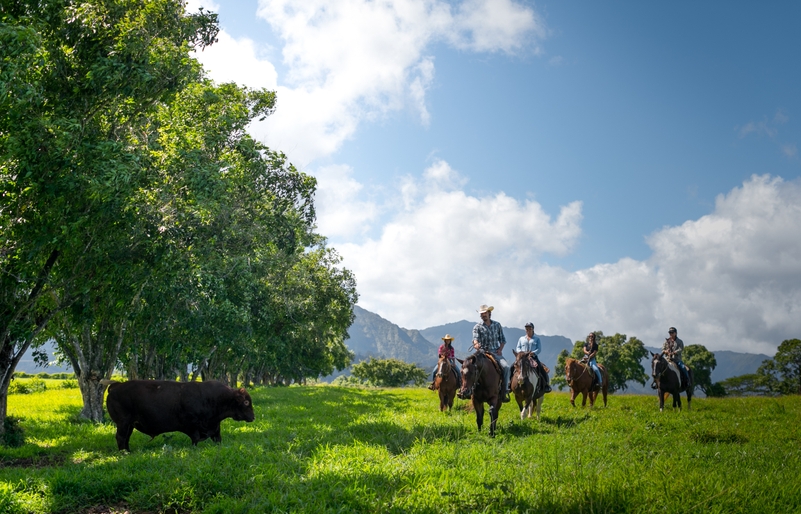
Those venturing to Kaua‘i’s North Shore can experience one of Hawai‘i’s most pristine locations for horseback riding. The majestic Hanalei mountains surround Princeville Ranch Adventures, a working, 2,500-acre cattle ranch and outdoor destination rich in history, waterfalls, native flora and fauna and unforgettable views. Established in the early 1800s during King Kamehameha III's reign, it is one of the first cattle ranches in the state and a staple in today’s local agriculture community.
Guests exploring the rolling hills and panoramic views of Princeville Ranch and Kaua‘i's North Shore on horseback.
Like many other local businesses, the pandemic forced Princeville Ranch Adventures to readjust its business and downsize operations. The company, which once offered visitors a variety of tours, now focuses on authentic paniolo (cowboy) experiences. Visitors can take a guided private ride through rolling country hills, a customized riding lesson, or go on an expedition, like journeying by horse across the ranch’s vast terrain to reach a hike that leads to an 80-foot waterfall.
“There are always silver linings in life, and the biggest one has been the number of locals that have visited us during this COVID period,” said Karin Carswell Guest, owner of Princeville Ranch Adventures. “In the past, they may not have had the time to come to the ranch, but with things shut down and limited travel options, they were able to do fun and different things. Building that relationship has been amazing, and now we are experiencing a deeper connection with out-of-state visitors because everyone is so happy to be back in Hawai‘i!"
Masks aren't requires while on horses, giving guests plenty of time to breathe in the fresh mountain air along their ride.
She noted that all visitors should be prepared to show negative results of their pre-travel COVID-19 test or provide their travel itinerary to prove that they have been on the island for at least 14 days. A mask is required when near staff, though guests can remove it once on horseback. The ranch has also increased cleaning of high-touch common areas, like the check-in desk, and made hand sanitizer available throughout the property. Visitors are encouraged to visit the ranch’s website for the latest COVID-19 protocols.
Trek Down and Experience Waimea Canyon
Called the “Grand Canyon of the Pacific,” Waimea Canyon is one of Kaua‘i’s most spectacular natural gems. Home to canyons formed millions of years ago, the state park invites nature lovers of all skill levels to take in unparalleled views at its many lookouts, venture down into one of its varied trails, trek to waterfalls and hike through native forests.
Guests can hike responsibly by researching the trail before going, heeding caution signs, carrying plenty of food and water, staying on the designated path, and maintaining a six-foot distance from other hikers.
Research trail conditions before hiking Waimea Canyon and bring a daypack with a mask and plenty of water, food and sun protection. Social distancing on trails is critical, and hikers are advised to respect all park signs and carry out any ʻōpala (garbage).
HONOLULU – Hawaiian Airlines is offering its loyalty members a lifetime of flexibility to earn, save and redeem HawaiianMiles by eliminating its mileage expiration. In celebration, Hawai‘i’s hometown carrier is inviting travelers to participate in an “Endless Hawai‘i” sweepstakes for a chance to win 1 million HawaiianMiles* – the equivalent of 16 roundtrip flights between the U.S. mainland and Hawai‘i.**
Effective today, HawaiianMiles members no longer have to worry about posting account activity within 18 months to preserve their miles – the latest enhancement Hawaiian has made to its frequent flyer program to offer the greatest value for anyone traveling to, from and within the Hawaiian Islands.
"Removing mileage expiration is one of many changes we're making to better serve our guests and members. The hard times we have gone through as an airline have challenged us to ask ourselves how we can be an even better airline, for our guests, our employees and our communities," Avi Mannis, senior vice president of marketing, wrote in an email to HawaiianMiles members. "We are committed to emerging from this crisis a stronger airline, even more deeply committed to guests and our purpose of connecting people with aloha.”
Hawaiian first paused HawaiianMiles expiration in March 2020 (through Dec. 31, 2020) to assist members unable to travel due to the COVID-19 pandemic and government travel restrictions. The carrier later eliminated change fees, offered HawaiianMiles members the ability to redeem miles for a pre-travel COVID-19 test, and made it easier to reach Pualani Gold or Pualani Platinum status by cutting qualifications requirements in half.
The HawaiianMiles program, which was introduced in 1998, is free for members to join. Miles can be earned for every mile flown with Hawaiian Airlines, and by flying with the carrier’s designated partner airlines, making purchases with a Hawaiian Airlines® World Elite Mastercard® or shopping at partner merchants. Miles can be redeemed for travel, food, shopping and more, or turned into a charitable donation via the HawaiianMiles giving program.
*No purchase necessary to enter the Hawaiian Airlines “Endless Hawai‘i” Sweepstakes. Void where prohibited. Open to HawaiianMiles members who are legal residents of the 50 U.S., DC & its territories, 18 years of age or older or age of majority as of date of entry. Starts 9:00 AM HST on 4/12/21 and ends 11:59 PM HST on 4/25/21. For complete rules and eligibility, visit HawaiianAirlines.com/OfficialRules. Sponsor: Hawaiian Airlines, Inc.
**Based on the availability of our lowest standard redemption rate of 30,000 HawaiianMiles for a one-way Main Cabin ticket on Hawaiian Airlines from Boston (BOS) or New York (JFK) to Honolulu (HNL)
About Hawaiian Airlines
Hawaiian® has led all U.S. carriers in on-time performance for each of the past 17 years (2004-2020) as reported by the U.S. Department of Transportation. Consumer surveys by Condé Nast Traveler, Travel + Leisure and TripAdvisor have placed Hawaiian among the top of all domestic airlines serving Hawai'i.
Now in its 92nd year of continuous service, Hawaiian is Hawai'i's biggest and longest-serving airline. Hawaiian offers nonstop flights within the Hawaiian Islands, between Hawai'i and more U.S. gateway cities (16) than any other airline, as well as service connecting the islands with Japan and South Korea. As a result of the COVID-19 pandemic, Hawaiian has temporarily suspended service in Australia, New Zealand, American Samoa and Tahiti.
The airline is committed to the health and safety of its guests and employees and has reinforced enhanced cleaning procedures across its business. While the experience may be a little different, the authentic Hawaiian hospitality remains unchanged. Additional details on how Hawaiian is keeping guests and employees safe can be found at HawaiianAirlines.com/KeepingYouSafe.
Hawaiian Airlines, Inc. is a subsidiary of Hawaiian Holdings, Inc. (NASDAQ: HA). Additional information is available at HawaiianAirlines.com . Follow Hawaiian's Twitter updates ( @HawaiianAir ), become a fan on Facebook ( Hawaiian Airlines ), and follow us on Instagram ( hawaiianairlines ). For career postings and updates, follow Hawaiian's LinkedIn page.
For media inquiries, please visit Hawaiian Airlines' online newsroom .
Cook up an ideal getaway: Chef Renee Erickson shares her favorite oneworld destinations to travel for the best food
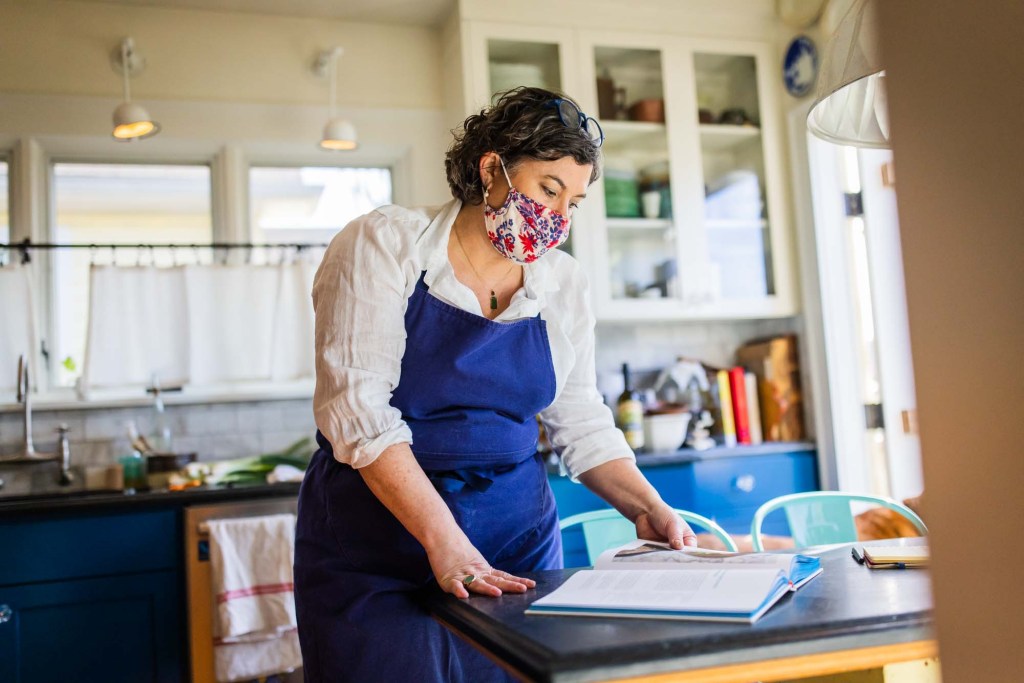
International travel has always been transformative for Renee Erickson, an award-winning chef and restaurateur in Alaska Airlines’ hometown of Seattle. It all began with a trip to Rome.
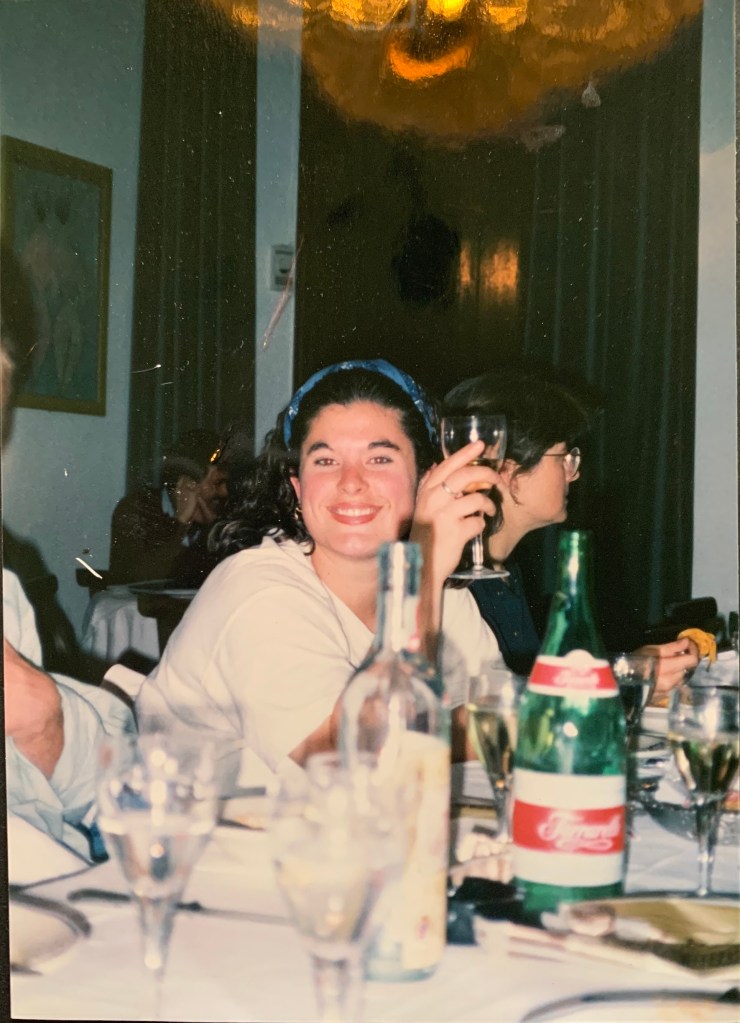
Erickson was a 21-year-old art student who found herself drawn to bustling markets filled with seasonal produce and cheesemongers handing out samples. She remembers little cookies being offered while standing in line for pizza bianca – and the gelato and negronis that she would skip lunch to afford.
“It was the moment when I woke up to the idea of other cultures and how food was at the center,” Erickson says. “I came home and immediately started thinking about how I could go back.”
Rome launched a culinary journey that led Erickson to buy her first Seattle restaurant when she was just 25. She’s since explored cuisines across Europe from Paris to Normandy and London – all destinations accessible to Alaska guests through our oneworld partners.
Those travels shaped Erickson’s group of Seattle restaurants, including The Walrus and the Carpenter, her lauded oyster bar inspired by French brasseries. And now her love of food and travel come together in her newest book, “Getaway,” a cookbook-meets-travel memoir publishing April 27.
She’s always exploring new places – with Baja, Mexico, a more recent favorite (and accessible to Alaska guests via Cabo San Lucas and Loreto). But Italy remains her first travel love.
And while COVID-19 restrictions still prohibit travel to Europe, Erickson hopes the recipes and memories in her book will transport readers – and whet their appetites for future travel.
Here, Erickson shares a few travel tips to savor some of her favorite places:
ROME
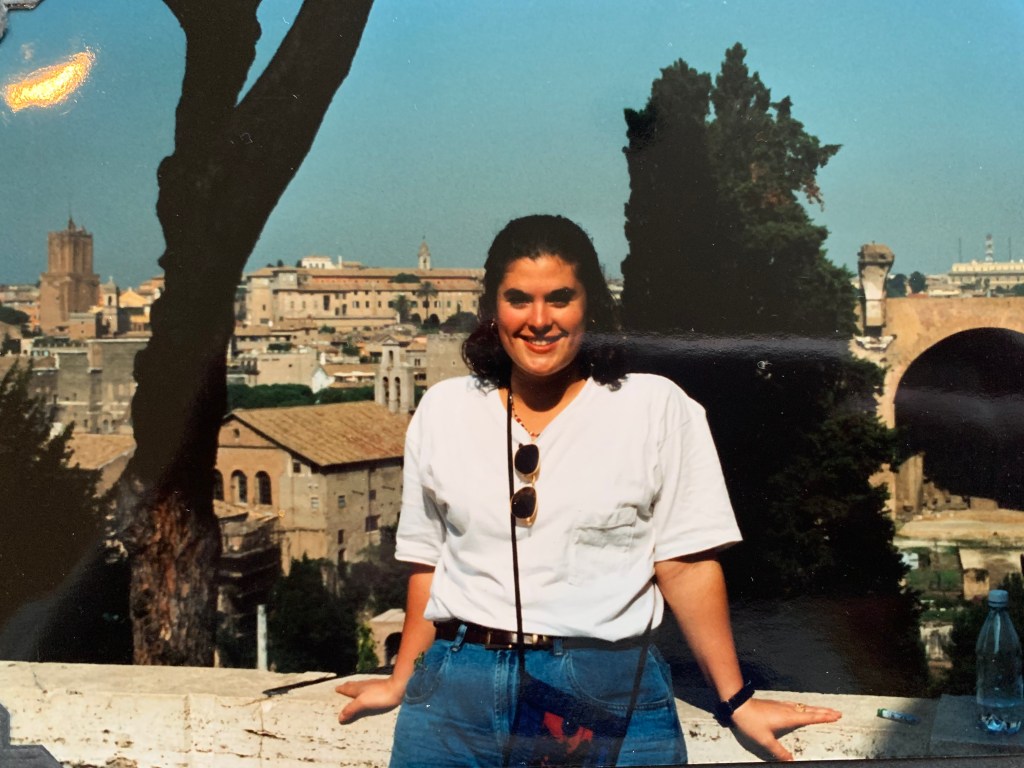
“The magic of getting on a plane and ending up in Rome is just mind-blowing to this day,” Erickson says. “I can’t believe that in nine hours, I’m going to be sipping espresso in Piazza Navona. It’s the greatest thing.” Erickson visiting Rome in fall 1994.
“When my husband Dan and I talk about travel or dream about having an apartment, it’s always Rome. It’s the combination of history and art being everywhere, on top of a culture that’s obsessed with food and wine. And it’s a bit crazy. It’s loud and dirty and beautiful. I feel comfortable there, and I think that has to do with being there so young.”
What to eat: “Go to Testaccio, a market outside of the center. Spend some time and eat some food there. Try these great little pizzette snacks. (There’s also a recipe in my book.) You’ll also get to sample all kinds of vegetables, and there’s a cheese guy who will give you five different samples of pecorino that are all different.”
What to drink, ideally at sunset: ”Make sure you have a negroni somewhere on a piazza.”
PARIS AND NORMANDY
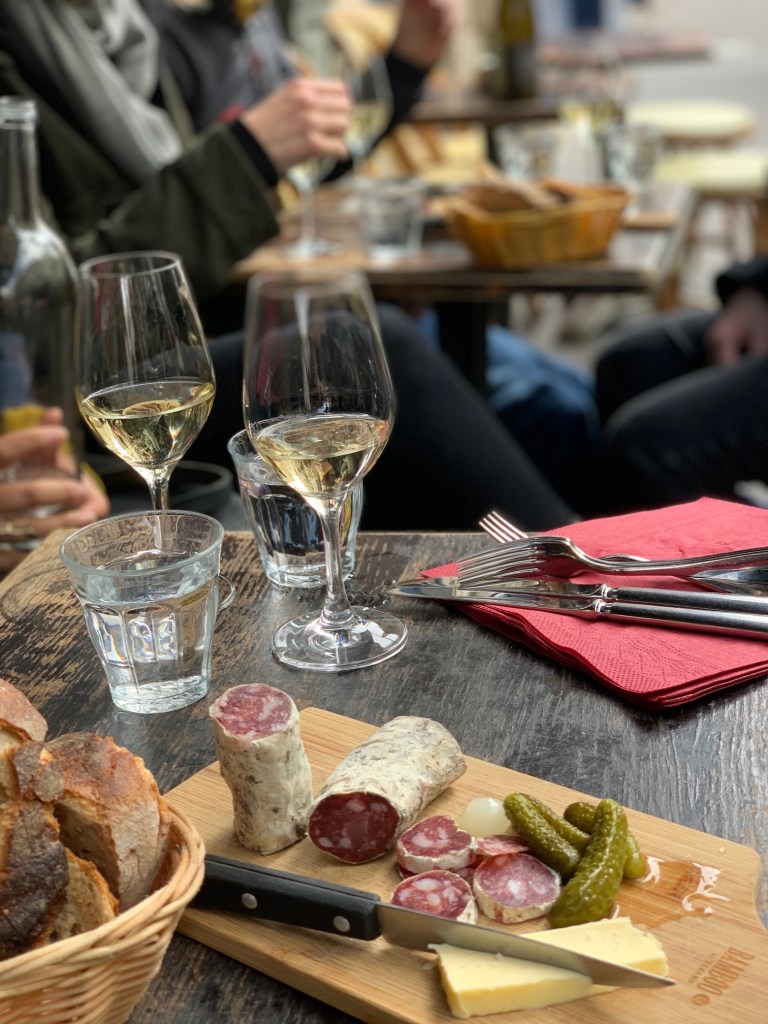
A perfect afternoon snack at Le Café de la Nouvelle Mairie.
“As a young chef and restaurant owner, I wanted to go to Paris because it had tons of restaurants and the experience of dining was masterful there. It was an invigorating place to be and still has some of my favorite restaurants.”
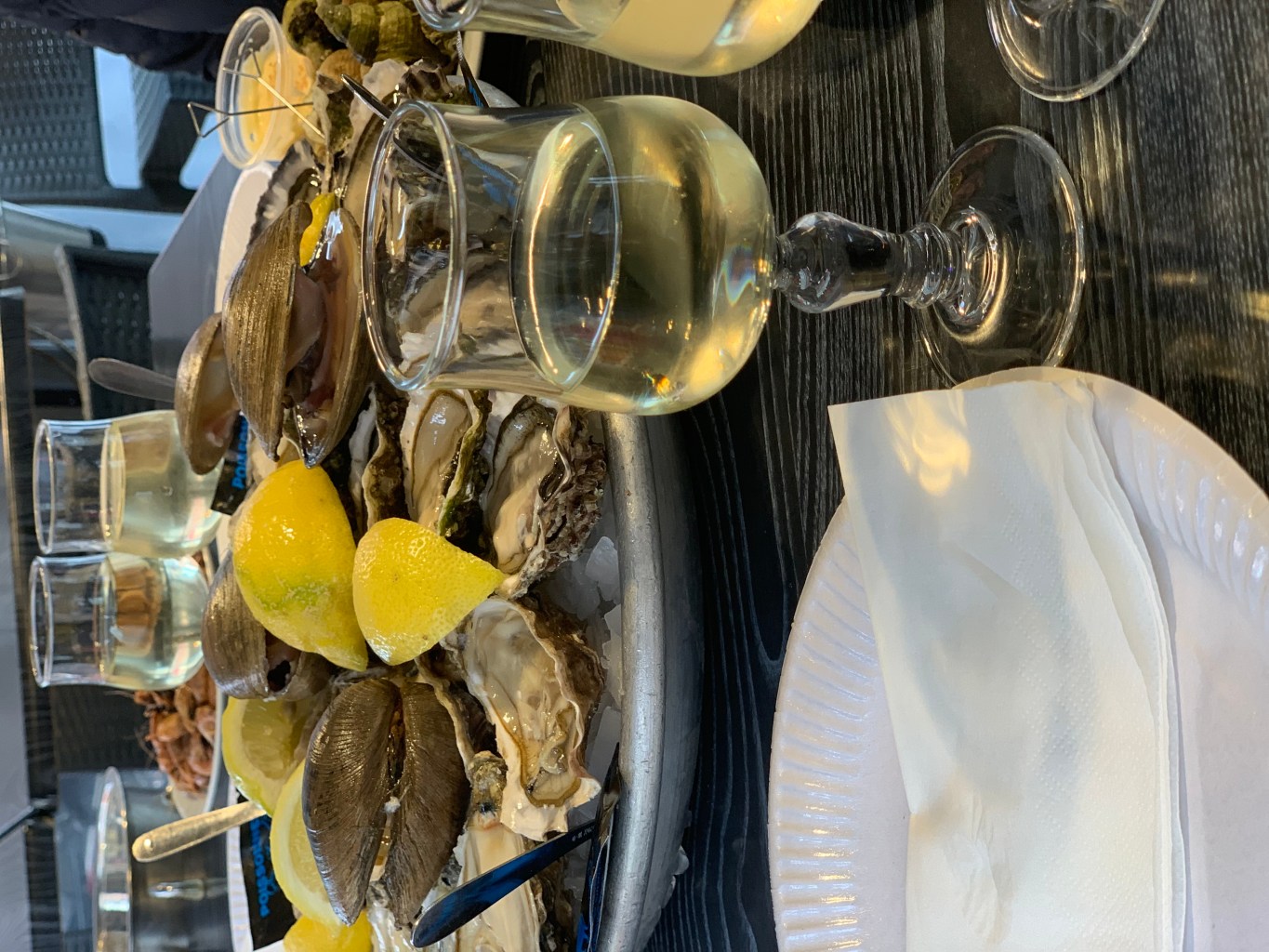
Dining at the market in Deauville.
Where to go in Paris: “La Buvette, a shop that sells delicious snacks like white beans with lemon oil, incredible patés, and a lovely selection of wines, is a must. I am also a huge fan of Martin, a raucous wine bar with the sweetest little pup named Saucisse, who checks everyone out. My favorite spot might be Le Café de la Nouvelle Mairie, which has lovely simple food, a beautiful tree-lined street and friendly people.”
What to eat in Normandy: “There’s a shellfish market in Deauville where the ships come in and unload everything, and you can have these giant plateaus of seafood with wine. Nothing fancy. You sit out on the street eating the most delicious oysters that they shuck for you right there and shrimp that they’ve just cooked. They give you a little aioli to dip them in, and they give you some rye bread. And that to me is the perfect meal in Normandy.”
LONDON
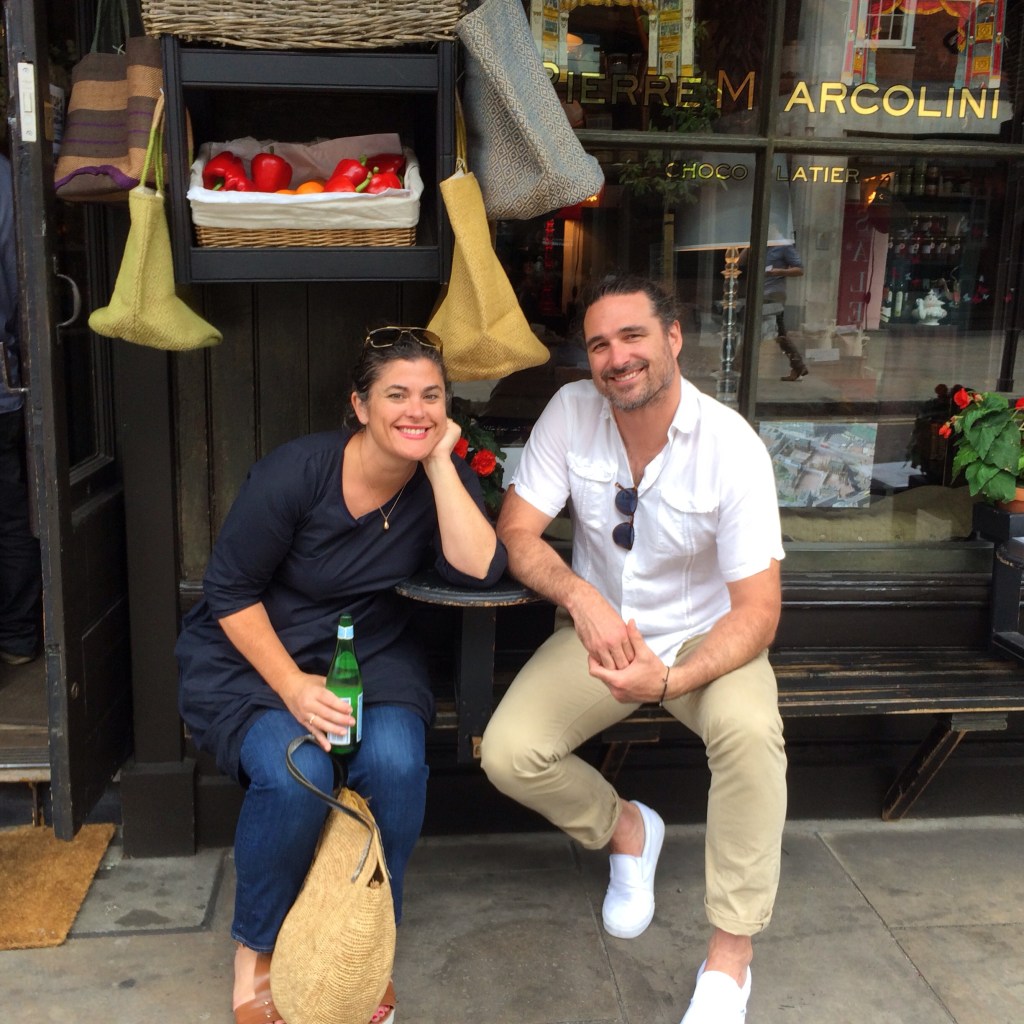
Erickson and her husband, Dan Crookston, in London, 2016.
“The last time we were in London was two Decembers ago when a friend had an art show there. We went to the Columbia Road Flower Market. London, especially, does flowers better than anyone. They had amaryllis that were 4 feet long and something like $3 apiece, and I said, ‘Let’s buy a dozen!’ They were so extravagant and so big and so beautiful.”
What to eat: “There’s this place called the Marksman Pub that I love. Try to eat a well-sourced version of classic British food – like something that would have been cooked 100 years ago. Dishes like Yorkshire pudding and peas and haddock, or any sort of meat pie, and beer.”
One food myth: “If people still think that England has bad food, they’re wrong. London is probably one of the top three cities that I would happily go back to any day to eat. It’s dynamic, super sophisticated, and has unbelievably delicious food.”
BAJA, MEXICO
Sunset in Todos Santos, Mexico.
“Baja is so easy to get to from Seattle, just four hours away by plane. And the climate is so different, but still on the water, which I love. It’s like Joshua Tree by the Pacific Ocean. I love to buy a whole fish from the fishermen and cook it. I’ll take a jar of olive oil and salt with me, and make sure to get fruit, veggies and tortillas, plus tequila, of course.”
What to eat: “Fish tacos in Baja are the best. Depending on where you are in Baja, there are different traditions. Try as many as you can. They have giant clams there, too. You can eat them raw, but they also grill them and put salsas in them on the grill. They’re round like a manila clam, but they’re like the size of your fist—it’s pretty fun.”
Best advice: “Don’t be afraid of eating street food. In Italy, I like to follow construction workers into a restaurant. In Baja, I follow construction workers into a taco shop. I want to eat where they’re eating.”
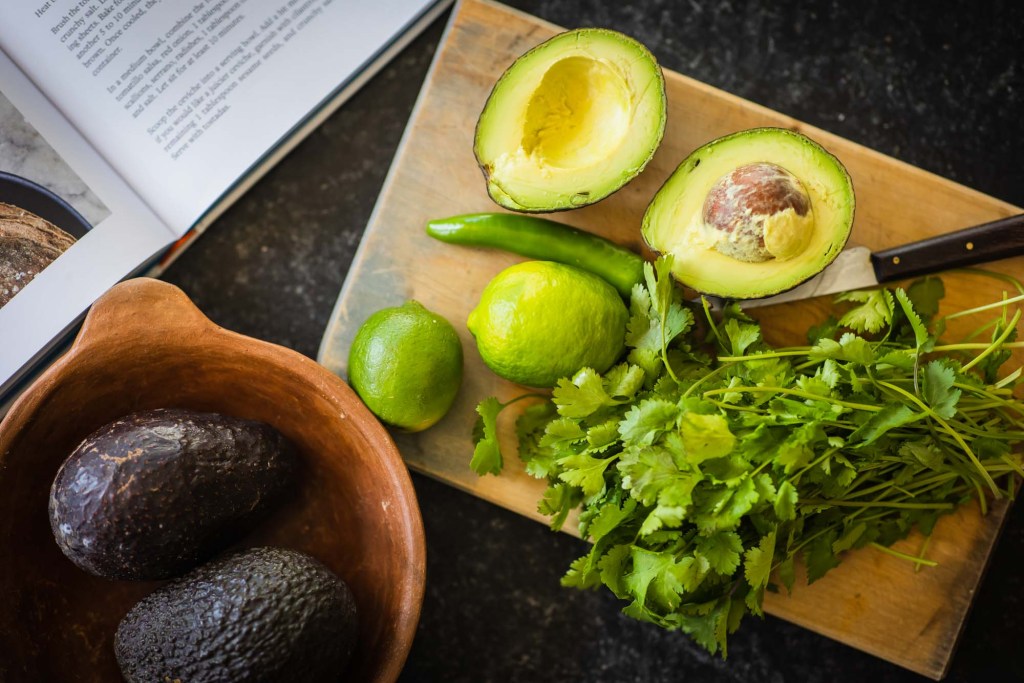
Baja-inspired recipe: Tomatillo and Avocado Salsa
Ingredients:
12 tomatillos, husks removed
1 small ripe avocado, halved, pitted, and peeled
1/2 bunch cilantro, leaves and stems included (about 2 cups/80 g)
Zest and juice from 2 small limes (about 3 tablespoons juice)
1 serrano chile, stem removed
Salt
Makes about 1 cup (240 ml)
Directions:
In a large, heavy skillet over medium-high heat, cook the tomatillos until charred on one side, about 5 minutes. Turn the tomatillos and continue cooking until they are browned on most surfaces and softening, another 10 to 12 minutes.
Slip the tomatillos into a bowl and cover with a plate. Let steam for 10 minutes, then place the tomatillos in a blender with the avocado, cilantro, lime zest and juice, serrano, and 1/2 teaspoon salt. Buzz until very smooth. Taste and season with more salt or lime juice, if desired.
Store in an airtight jar in the refrigerator until ready to eat. It will keep well for 2 to 3 days.
Renee’s top 10 things to pack:
In her carry-on:
A liter metal water bottle that she fills to prevent dehydration. (#FillBeforeYouFly)
Dark chocolate (when the weather isn’t too warm)
Almonds
Satsumas (a variety of mandarin oranges) in the winter. “They’re easy to peel and they just smell so good.”
In her suitcase:
One chef’s knife in carbon steel. “It’s really easy to keep sharp.”
A microplane for zesting and grating
A wine key
A travel kit with a mini mandolin and mini cheese grater. “I love having a mandolin to slice onions and fennel to make salads. These are sharp things that make your life easier.”
Sea salt – unless it’s easily available in her destination, like in Italy and France
Olive oil
Alaska Airlines to open new lounge in San Francisco this summer
New lounge membership pricing to take effect this fall
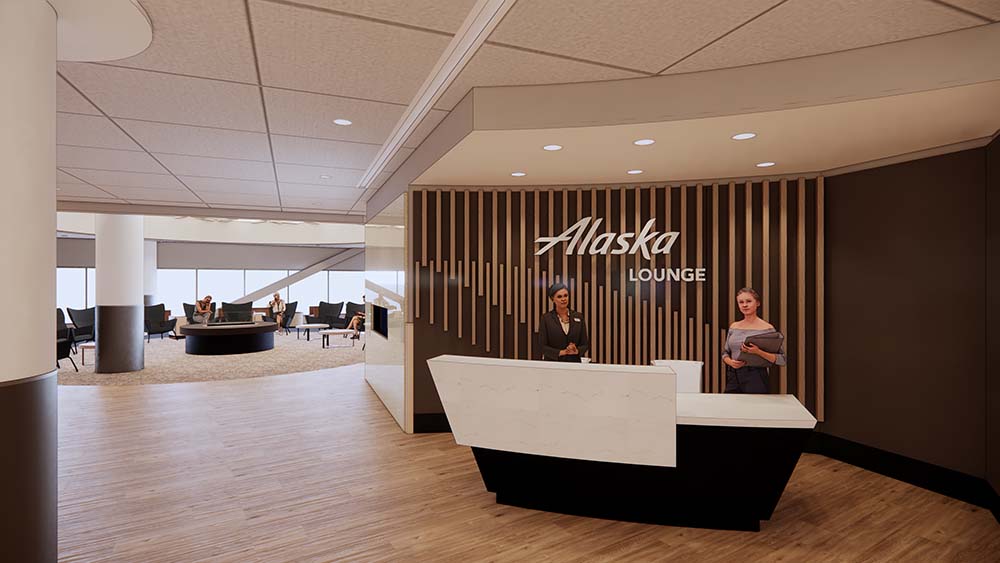
Late this summer, we’ll be opening a new Alaska Lounge at San Francisco International Airport’s Terminal 2.
We’ll move into the former American Airlines Admirals Club space, which will allow us to open a new lounge quickly as guests start to return to travel.
“We’re always looking for ways to be more responsive to our guests and amenities that make travel more relaxing. SFO has been the top-requested Alaska Lounge location by our guests for years,” said Sangita Woerner, SVP of marketing and guest experience. “So many people are dreaming of travel this year, so we wanted to open up our newest Alaska Lounge as quickly and efficiently as possible – and renovating this space in Terminal 2 allows us to do that.”
About the new lounge:
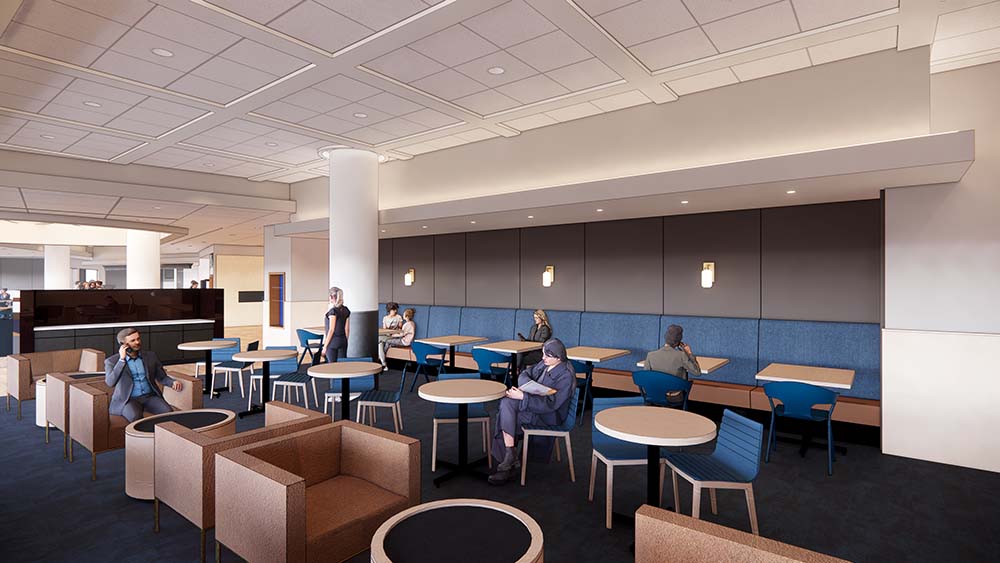
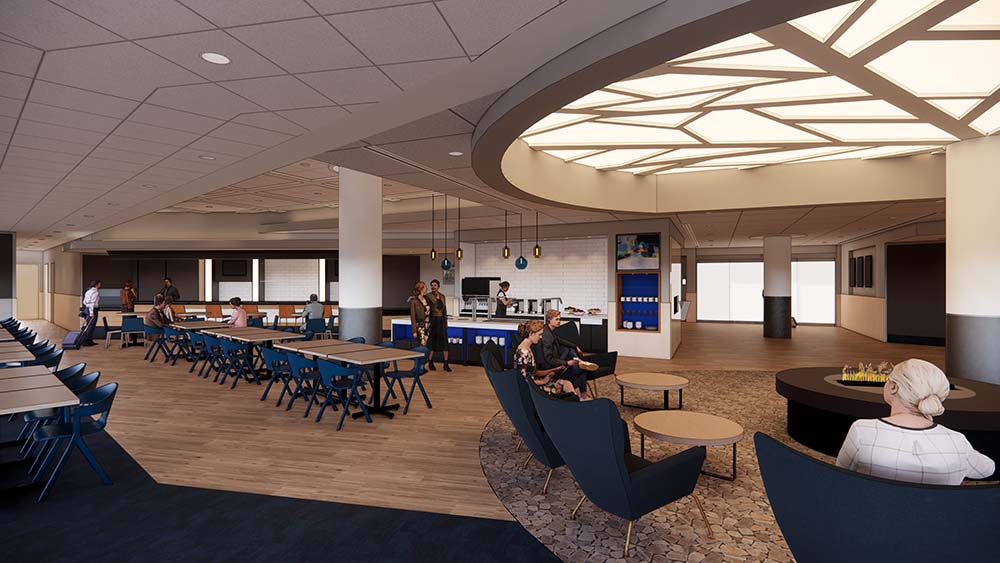
When completed, the lounge at SFO will be the second-largest Alaska Lounge, just under 10,000 square ft.
The space is centrally located in Terminal 2, with easy access to additional dining and shopping options for guests
The lounge will have an espresso bar staffed by a trained barista, a full bar featuring complimentary local craft brews, West Coast wines and spirits and a wine selection of guest favorites like made-to-order pancakes from our famous pancake printer, steel-cut oatmeal, fresh salads and hearty soups.
“We’re thrilled to welcome the opening of the Alaska Lounge at SFO,” said SFO Airport Director Ivar C. Satero. “As the recovery of air travel continues, travelers can look forward to more and more amenities at SFO. The Alaska Lounge offers a great way for people to relax, recharge, and enjoy the friendly service that they’re known for.”
Alaska in the Bay Area:
We’re continuing to expand our presence in the Bay Area. We now operate more than 80 daily flights from Bay Area airports (San Francisco, San Jose and Oakland). In June, we’ll begin service to Anchorage and Bozeman, Montana from SFO. We also recently announced:
As of April 4, we resumed service to Honolulu and Maui from SFO.
We’ll resume service to Los Cabos and Puerto Vallarta from SJC in early April.
We’ll begin new service to Missoula, Montana, from SJC starting in May.
New lounge membership pricing:
Beginning in October, we’ll be updating our lounge membership structure to give members more options and flexibility as we work to control our costs.
This fall, we’ll offer two tiers of lounge memberships:
Alaska Lounge: Members will receive access to all Alaska Lounges when flying on any airline.
Alaska Lounge Plus: Members will receive access to all Alaska Lounges and an extended network of partner airline lounges across the country, including all American Airlines Admirals Clubs.
Pricing will update to the following, remaining as one of the best values for lounge membership in the industry:
Alaska Lounge membership: $450 annually ($350 for Alaska Airlines MVP, MVP Gold and MVP Gold 75k members)
Alaska Lounge Plus membership: $600 annually ($500 for Alaska Airlines MVP, MVP Gold and MVP Gold 75k members)
New lounge membership enrollments and renewals made before Alaska’s two-tier structure goes into effect in October will be grandfathered into an Alaska Lounge Plus membership for the duration of the membership period.
Eight things to know about Alaska’s new CEO, Ben Minicucci
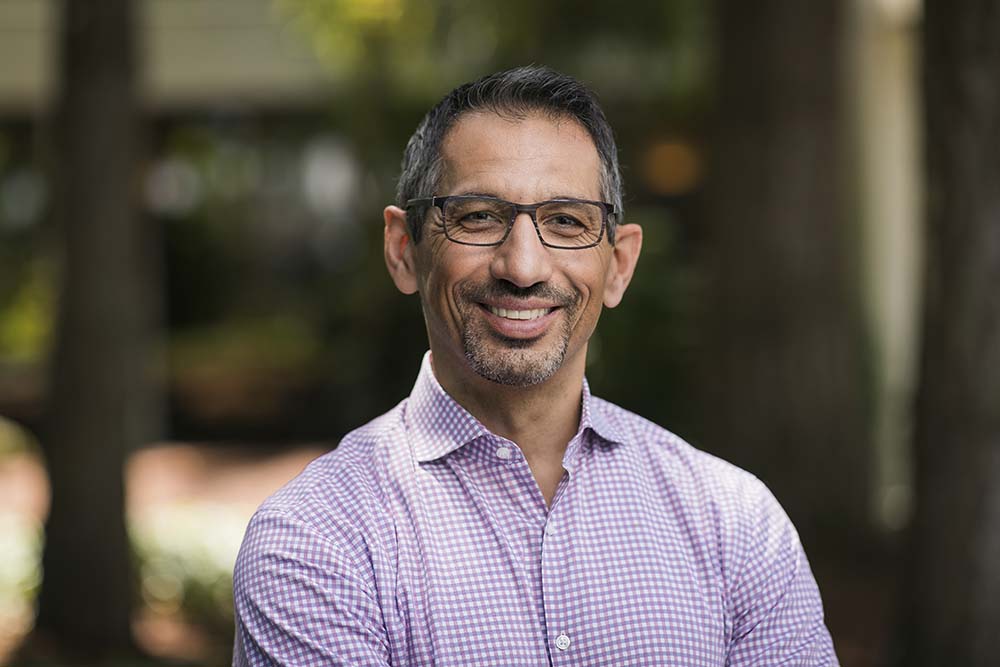
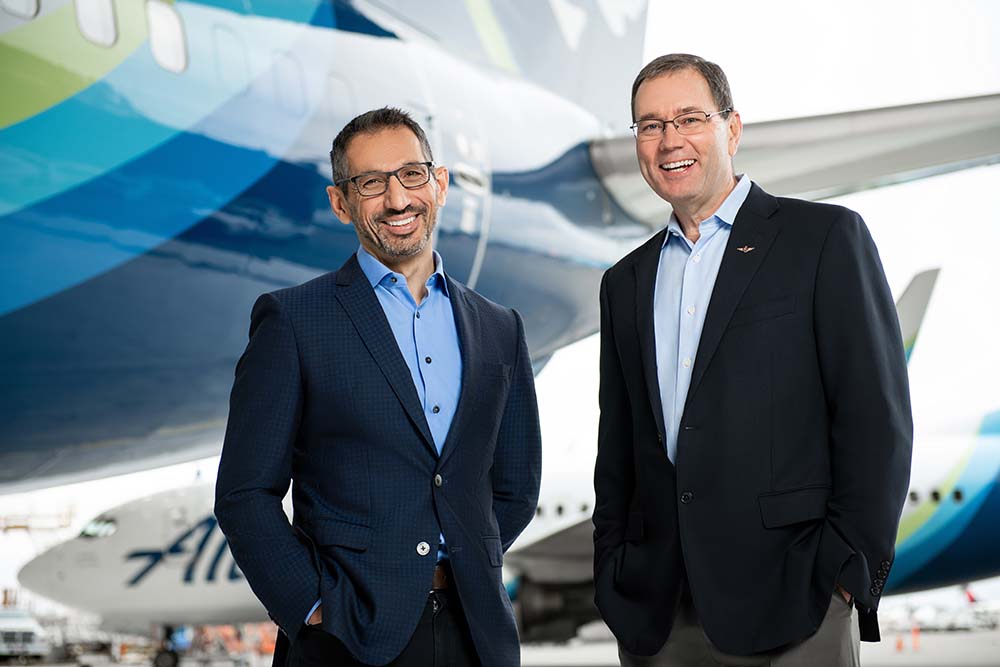
Ben Minicucci sees exciting growth on the horizon for Alaska Airlines as he takes the controls as CEO, replacing Brad Tilden, who retired last month after a 30-year career. Looking forward in his new role, Minicucci says Alaska is poised to emerge stronger out of the pandemic. He also reflects on his long partnership with Tilden and shares what the future looks like for people who fly and work for the fifth largest airline in the United States.
“At Alaska, I know I’ve got everyone counting on me to make sure we guide this airline through whatever is ahead. I have the responsibility, along with 23,000 people, to build on the fantastic legacy of this company.” – Ben Minicucci, Alaska Airlines CEO and President
1. What is unique about Alaska that you will protect and grow as CEO?
Minicucci: Our company has always had strong values around safety and around people. When we merged with Virgin America, we rewrote our values to really reflect who we are: “Own safety. Be kind-hearted. Do the right thing. Deliver performance. Be remarkable.” and our purpose: “Creating an airline people love.” It was a fun exercise to lead but it was also challenging to get a bunch of people aligned on what was at the root of our success. We aligned on these five values, which encompass everything to me that characterizes our success.
2. How has working with Brad Tilden for 17 years influenced you as a leader?
Minicucci: Working with Brad, with his love for the airline and what makes the airline special – the importance of our people and our culture and values – Brad really imprinted that on me. Also, how to survive the ups and downs of the cyclical industry we’re in, and that low costs and low fares are how to get growth. Over the years, as we ran the business as tightly as we could, we never forgot about the other side of the business — creating a culture with our people and delivering great customer service.
During the years Tilden was CEO and Minicucci was president, they worked in lockstep through the ambitious acquisition of Virgin America and the expansion of the Alaska brand. Together, with the entire executive team and Alaska employees, they pledged Alaska’s commitments to racial equity and vowed that the diversity of the leadership will match the diversity of the front-line workforce by 2025. And together they navigated the challenges of the pandemic, implementing Next-Level Care policies to keep guests and employees safe.
3. Your parents were immigrants, moving to Canada in the 1950s. How did your family’s experience shape you?
Minicucci: My parents left after the war in Italy because there was no work, and my father never went to school because, at the time, it was so poor in Italy. So, the work he did was work you do with your hands and your back. My parents worked hard to put food on the table, a roof over our heads, and they believed the way you progress in life was to go to school and get an education and work hard. And they worked to afford a house, and they had gardens where they planted all sorts of fruits and vegetables. They would make sausages and salami and prosciutto, and they made wine every fall. To me, that’s what it was like when you grew up. You just took care of yourself.
When I was 17, I didn’t know what I wanted to do, so I decided to enter the military and attend the Royal Military College — like the West Point for Canada. I got my engineering degree, and I was fortunate. I was posted to a Transport Squadron and went all over the world. I was responsible for a C-130 and B707 maintenance crew and learned so much about leadership and a lot about aircraft maintenance, and what it meant to be responsible for men and women and be deployed. And it was just an amazing formation early in my career that ended up helping me throughout my professional life.
“For me, equity and diversity goes back to my parents. When they came here, I had the opportunity to get educated. If I wanted to work for it, I could be everything I wanted to be. And that’s what I want people to feel at our airline. I want to provide opportunities for growth and education so you can aspire to whatever job you like. And our leadership team, when you look at them, you should see yourself reflected.” – Minicucci
4. You’ve said diversity, equity and inclusion has been a journey for you. How will you make DEI a priority at Alaska?
Minicucci: So much has happened in our country over the last 12 months with the killings of George Floyd, Ahmaud Arbery and Breonna Taylor and too many others before. We conducted a lot of listening sessions with employees. And when you talk with our people, you realize the depth of challenges with respect to racial equity. We are far from being where we need to be as a company that’s really diverse and inclusive, particularly a leadership team that’s representative of our front line. Those sessions opened my eyes. When you look at what we’ve done in the last 10 years, we’ve made progress — but not enough progress. So, we’ve got work to do.
I want our company to be a place where people feel like they belong, no matter who you are, where you’re from, your sexual orientation, gender, race, disability, background or language. We want to create a company where people know they belong and they say, “You know what? I feel good here and comfortable to be who I am and can be my best. And my company invests in people.”
I truly believe that one of the best paths to racial equity is through education. We have a wonderful partnership with UNCF and other great organizations, and have worked with local school districts to support youth and education. We want to continue supporting institutions with underrepresented students and communities where we can invest to create opportunities and help make those communities stronger.
5. Rumor has it, you’re trained in mindfulness or practice meditation. How does that play a role in your life and as a leader?
Minicucci: I’ve been really diligent about it, especially in the last six months. I actually took a course in transcendental meditation, which is an easy type of meditation. And I do it twice a day for 20 minutes. What I love about it is it calms me down. These jobs can get really stressful, and it helps me find balance. The second thing that I love is it gives me clarity of thought. So, as you’re bouncing from one topic to another, one meeting to another, it helps give me clarity so I can be the best for those I work with and focus on what’s important. I am actually addicted to it now. When I don’t do it, I find that maybe I’m not at my best. So, it’s really helped me.
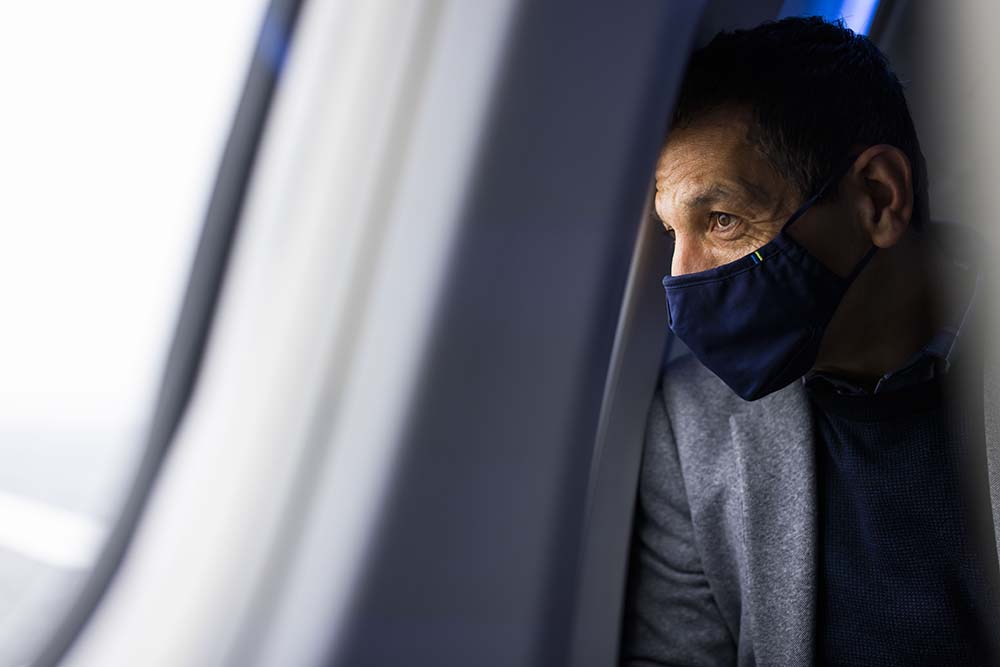
“With all the enhanced safety measures we’ve put into our Next-Level Care, when Alaska guests are ready to fly, we’re ready to take them where they want to go,” said Minicucci after traveling to Hawaii when the islands reopened to visitors last October.
6. Many people haven’t flown in over a year. What has Alaska done to ensure the safety of its guests and employees?
Minicucci: Since the pandemic started, our priority has been our guests’ and employees’ safety. We doubled down on that and we introduced Next-Level Care with 100 safety action items. But what I got excited about is how we communicated this to our guests. Safety policies always seem a little rigid — you know, you have to wear your mask, you’ve got to keep your distance from people, and so forth. So, we implemented all these things, yet we wanted to do it our way, the Alaska way. And then, our team came up with the “Safety Dance” idea, and we got our employees involved, which was key. We wanted to communicate that these are the safety expectations when you fly with us and communicate that in a clever, witty, funny way.
7. How is Alaska’s alliance with oneworld a game-changer for its guests?
Minicucci: I can’t tell you how excited I am about oneworld. One of my aspirations is to get Alaska on the national map – to be viewed not simply as a regional airline. What oneworld does is open the world to our airline and customers. I’ll use Seattle as an example: We have a massive domestic network in Seattle. And when you add our oneworld partners, we’ll add at least seven international destinations out of Seattle. For loyal customers of Alaska, they can accrue miles on Alaska and redeem them on British Airways, Qantas, Japan Airlines, Cathay Pacific, Qatar Airways, among others. The ability to redeem and accrue miles, and access the 650 worldwide lounges in the alliance, wherever an Alaska customer is, make their Mileage Plan benefits go so much further.
We also have an alliance with American Airlines, the West Coast International Alliance, where our customers can access American’s international and domestic network across the country. All of this is huge in terms of accessibility and benefits, priority bags and priority boarding, so it’s a really exciting springboard for growth.
8. What do you want people to think of when they hear “Alaska Airlines”?
Minicucci: I want people to smile at the thought of Alaska Airlines and say, “Alaska’s a great company.” Not just because we’re a great airline, but also for what we stand for. Whether it’s racial equity, the environment, how we treat our people or how we treat our customers and run the business—it’s all done with the utmost integrity and through our values.
And when I say I want Alaska to be on the national map, it means I want people to say, “I wish they flew everywhere. I want them to fly everywhere so I can fly them all the time.”
Ben’s Firsts & Favorites:
First job in aviation: The Canadian Armed Forces. First time on an airplane: “I was about 10 when I visited my grandparents in Italy. I can’t remember what type of aircraft or airline but remember sitting by the L1 door and it was very noisy.” First job at Alaska + one thing from that job that stays with him: 2004, staff vice president of maintenance. “I’ll always remember a graveyard shift I worked with mechanics at the line and how much I enjoyed it.” Favorite travel destination: Hawaii. Must-pack item for any flight: Workout clothes. Favorite sport: Cycling trips with friends. “We’ve been to Corsica, we’ve been to Italy, France, Spain – I just love doing big weeklong bike trips around the world.” One thing people are surprised to learn about you: “My taste in movies. I love to laugh, and I love movies that are silly – like Will Ferrell movies. Everything from ‘Talladega Nights’ to ‘Wedding Crashers’ to ‘We’re the Millers.’ A lot of people think I’m into sophisticated stuff, but I just want to watch movies that make me laugh.”
















 View original content to download multimedia:



 “It was the moment when I woke up to the idea of other cultures and how food was at the center,” Erickson says. “I came home and immediately started thinking about how I could go back.”