As parts of the world start to open up to international travel, knowing where you can fly and what you can do when you get there is key.
To celebrate Asian American & Pacific Islander Heritage Month, we’ve compiled a list of places you can fly to (when travel is permitted) on our oneworld airline partners and tips from our employees who are members of our Pan-Asian and Pacific Islander business resource groups.
Although the term AAPI generally refers to Asian Americans and Pacific Islanders, it’s important to know the rich heritage and diversity within it, especially before traveling to Asian and Pacific Islander destinations. Here’s a roundup of destinations you must add to your travel bucket list and cultural tips when you get there.
Asia
Although some capacity is picking back up in mainland China, overall, the travel industry in Asia is still looking forward to opening its borders to visitors. We expect more travel as people get vaccinated and the resurgent of coronavirus cases subside.
Here are airlines you can fly to Asia and earn/redeem Alaska miles with our oneworld alliance:
American Airlines
British Airways
Cathay Pacific
Japan Airlines
Malaysia Airlines
Qantas
Royal Jordanian
S7 Airlines
SriLankan Airlines
Fiji Airways
Culture note: Asian Americans may include persons having origins in any of the original people of Asia’s six major sub-regions: East, West, Central, Northern, Southeastern and North including, but not limited to: Indonesia, Cambodia, China, India, Japan, Korea, Malaysia, Pakistan, the Philippines, Thailand and Vietnam.
I grew up in Hong Kong, a pretty small place compared to the state of Washington, where I Iive now (165x smaller). Although I’ve been in the U.S. for a while, I miss everything about Hong Kong – especially the food. There are so many great layers to Hong Kong, and I’m sure you’ll find one you enjoy.
Visit during fall and winter instead of summer as it gets very hot and humid. I’d also suggest bringing a pair of comfortable walking shoes, as travel by foot is easy when used in conjunction with public transportation (known as the Mass Transit Railway, or MTR, in Hong Kong.)
Most people in Hong Kong understand and communicate in English – so try to explore the city on your own instead of joining a group tour. This way, you’ll have an opportunity to interact with the locals (who love visitors and may end up becoming your new friend!).
Mindful travel advice: You’ll notice that in Hong Kong, although we stand close to each other while talking, body contact should be avoided when you first meet someone. I also suggest that you do not point your index finger at someone, as it is considered rude, as it is in other countries around the world.
Common greeting in Hong Kong: Neih hou, (pronounced “nay hoe”), is Cantonese and means “How are you?”
Edrea, Alaska Airlines Technical Product Owner in Seattle
I am a Nisei, or second-generation Japanese American. What I love most about Japan is its unique diversity and distinctive culture – deeply rooted in traditions and blended with the latest innovations – Japan leaves you enchanted and wanting more.
Whether you’re a foodie, a trendsetter or eager to experience Japan’s pursuit of perfection through its beautiful traditions, there is something for everyone! From the moment you step off the plane, you will experience the art of omotenashi, or genuine hospitality and exceptional service that anticipates your every need. Immerse yourself in the rich culture by taking advantage of the JR Rail Pass to explore Japan at your own pace by train, or if you prefer flying, our oneworld partner Japan Airlines can connect you anywhere between Okinawa and Sapporo (and even Tokyo Disney!). Don’t forget to grab an ekiben (railway bento) to enjoy on the train!
Travel advice: When traveling around Japan, it’s super important to be mindful of others and don’t litter or talk loudly on the train. Tipping is not necessary and avoid standing your chopsticks in your food (it’s considered bad luck!).
Common greeting in Japan: Konnichiwa (pronounced “koh knee chi wah), is Japanese and typically means “hello” during a mid-day to early evening greeting.
Pacific Islands
Some Pacific Islands are open to travel, which is good news for people eager to find a vacation spot this summer, but don’t assume that everything is back to normal everywhere you go.
For example, the beautiful islands of French Polynesia, which include popular beach getaways like Tahiti and Bora Bora, reopened its borders to travelers arriving from the United States on May 1 who have been in the U.S. for at least 30 days prior to departure — but islands of Tahiti still have curfews in place until June 1.
Pacific Islanders may include persons having origins in any of the original people of Oceania’s three major sub-regions of Polynesia, Melanesia or Micronesia, including, but not limited to: Hawaii, Samoa, Guam, Palau, Papua New Guinea and Vanuatu.
I was born and raised in Samoa – one of the main Samoan islands recognized as a United States territory, separate from the Independent Nation of Samoa. However, all of the Samoan archipelago is a tropical paradise.
Travel tip: A popular place to visit is the island of Aunu’u; it’s one of the smaller islands off the southeastern shore of Tutuila, American Samoa. There, I’d recommend visiting the marketplace where there’s all kinds of fresh fruits, local foods and souvenirs.
Mindful travel advice: Samoan culture is all about respect. When it comes to villages, there may be some restrictions; please be mindful of your behavior as local villages may be run by chiefs. Also, Samoans are modest people; I’d recommend covering up if you’re outside of a resort.
Common greeting in Samoa: Talofa, (pronounced “tah-low-fuh”), means ‘hello’, sometimes extended to ‘talofa lava’, which means ‘hello to you.’
Marie Laureano, Seattle Supervisor of Passenger Record Support
I grew up in Dededo, the second largest most populated villages in Guam. What I love most about Chamorro culture (indigenous people of the Mariana Islands including Guam) is the people. The feeling of warmth is everywhere – you are always welcome into someone’s home.
Travel tip: Head south, away from Tumon (the center of tourism activity), to try some mom-and-pop shops like: Buenas Market in Yona known for their many pickled foods or Chode’s Mart in Hagatna for titiyas (Chamorro tortillas). For hiking, I’d recommend Marbo Cave in Mangilao for the inside cave you can swim through, and Thousand Steps trail in Mangilao for a beautiful water view when you reach the bottom.
Mindful travel advice: Because hospitality is so embedded into the culture, wouldn’t suggest turning down food. Don’t be shy – eat as much as you want, and don’t hesitate to take food home if offered.
Common greeting in Guam: Hafa adai, (pronounced as “half a day”), which means hi or hello.
The history behind “AAPI”
What does AAPI mean and where did it come from? There are countless distinctions within AAPI communities, starting with geographical differences. The illustration below gives a general idea where Asian and Pacific Islander origins may stem.
This map is a general geographic illustration of Asia and the Pacific Islands and what they include. It is not intended to represent the intricacies pertaining to countries, geopolitics, regions, borders, cultures or otherwise.
The catch-all term was initially created in the 1980s by the United States Census Bureau as a category for race when surveying population (deemed “Asian Pacific Islander,” or API.) Later in the 90s, the need to recognize the significant cultural and geographic differences between Asian from Pacific Islander then resulted in separating the two as racial categories, now recognized as “Asian” or “Native Hawaiian and Other Pacific Islander.” However, the old term ‘API’ stuck; today, this term has inadvertently embedded itself into the United States, often referred to as Asian Pacific Islander (API) or Asian American Pacific Islander (AAPI).
Whether or not you’re planning to travel to Asia or the Pacific Islands (although we hope you do!), we invite you to take a moment not just this month, but year-round to better understand the term AAPI, what it includes, acknowledging the differences between groups and how to appreciate them individually.
This probably hits home right about now: You’re itching to take-off somewhere. Once you get to the airport, how does a shorter wait in security sound?
Save time while traveling with SEA Spot Saver, a new pilot program for TSA line reservations. Learn more.
If you’re flying out of Seattle, Alaska Airlines and the Port of Seattle are testing a new way to get you through the general screening security checkpoint faster called SEA Spot Saver.
Alaska guests can sign up online for an appointment and then get a designated time on their day of departure to pass through an expedited security screening at Checkpoint 5, which is right behind the Alaska ticket counters. Securing a slot is free and no membership is required.
You’ll get a 15-minute window of time (say 8-8:15 a.m.) to make your way through security. Appointment slots are issued every day between 4 a.m. to noon Pacific Time – when the airport is busiest – now through the end of August. Your entire family can be listed on your reservation to get through security together.
“These are the innovations and ideas that we love to make our guest experiences more convenient and stress-free, especially as more people get back to flying again,” said Charu Jain, Alaska’s senior vice president of merchandising and innovation. “With very little effort, guests can lean on technology to get them through the security process quicker.”
The program’s primary goal is to regulate passenger flow in security areas that can often become congested and improve physical distancing between travelers.
How it works
Alaska guests can register for an appointment up to 24 hours before their scheduled departure:
Book a spot online with your date of travel, destination, flight number and how many are traveling in your party.
You’ll receive an email with a QR code that you’ll use when you arrive at your scheduled time.
Enter Checkpoint 5 during your designated 15-minute window.
Guests can also take advantage of the program once they get to the airport by scanning the QR code on SEA Spot Saver signs around the terminal — the code will take you to the website to sign up.
Save time now! The pilot program is scheduled to end on Aug. 31, 2021.
SEA Spot Saver is available only to general screening passengers who are not part of a trusted traveler program – that’s to help provide a better screening experience and create efficiency where demand is the highest. TSA PreCheck passengers will continue to be screened at Checkpoint 4 in order use their PreCheck benefits, such as not having to remove their shoes and electronics. CLEAR customers should still use their dedicated lanes at each security checkpoint.
“We can use technology to make the travel experience more streamlined and intuitive,” said Port of Seattle Commissioner Sam Cho. “Touchless solutions reduce stress for those traveling today but are the kind of innovations that will make the airport safer and more efficient for years to come.”
With hygiene and safety concerns top of mind as many of us return to air travel, we’ve focused additional innovation efforts on making it easy for your journey to be almost entirely touch-free. Here are some options:
Use the Alaska mobile app to do it all, from buying a ticket to checking in for your flight to paying for any bags you want to check.
At our airport kiosks, you can scan your mobile boarding pass to print bag tags – without even touching the screen.
If you need to check in with one of our agents, no need for handing over a paper trail: they can text you your boarding pass and email your receipts.
During boarding, your boarding pass can now be scanned from up to six feet away to help maintain physical distance.
Onboard your flight, enjoy the food and beverage you pre-ordered and paid for using a credit card stored in your Mileage Plan account. If you purchase a Signature Fruit and Cheese Platter and a glass of wine on the flight, our flight attendants can still use your stored credit card – no need to reach out and hand over a card.
Boxed Water is helping Alaska Airlines reduce plastic waste onboard
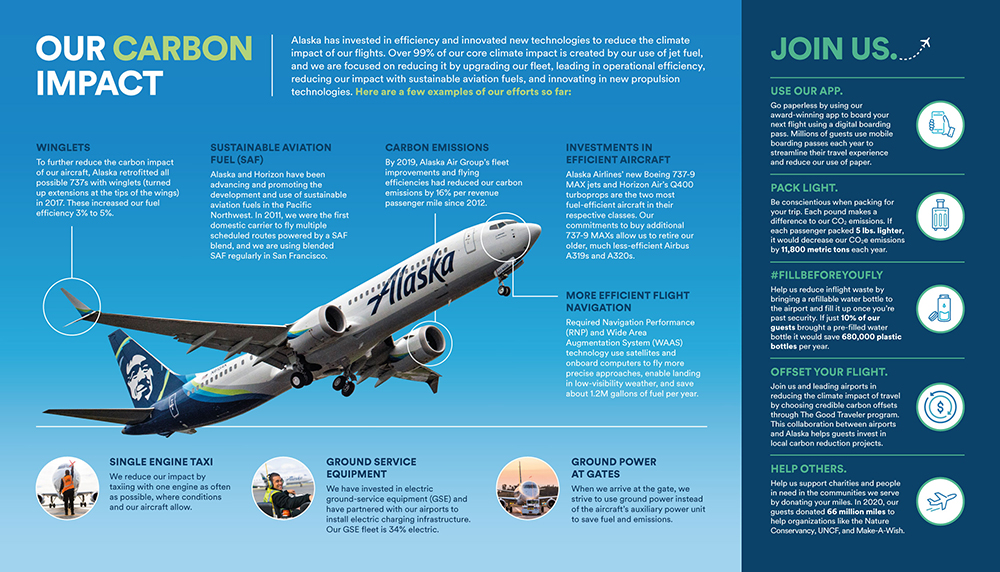
When it comes to recycling and sustainability, we mean business. We’ve set goals to reduce our carbon emissions to net-zero by 2040, as well as efficiency, waste and water goals for 2025, and are always looking for ways to offset our footprint.
For over two years, we’ve reduced waste on board by shifting to more sustainable practices and service items such as ditching straws in our lounges and on aircraft, using cans instead of plastic bottles and reducing packaging where we can.
Today, we’re excited to partner with Boxed Water to begin to replace single-use plastic bottles in First Class, as well in the main cabin on our Q400 aircraft, with Boxed Water’s 92% plant-based cartons. This will effectively remove 7.2 million plastic bottles from landfills per year — that’s equivalent to approximately 98,000 lbs of plastic. Earlier this year, we introduced Boxed Water on Alaska’s Horizon Air operated flights and will expand the program to all Alaska flights this summer.
Boxed Water is exactly what it suggests: a fully recyclable box-shaped carton of water, sealed with a plant-based cap. Each carton is made from sustainably harvested trees and the multi-filtered water goes through a proprietary eight-step purification – giving it a clean, crisp taste.
Alaska and Horizon employees are also excited to re-launch our industry-leading inflight recycling program on May 19.
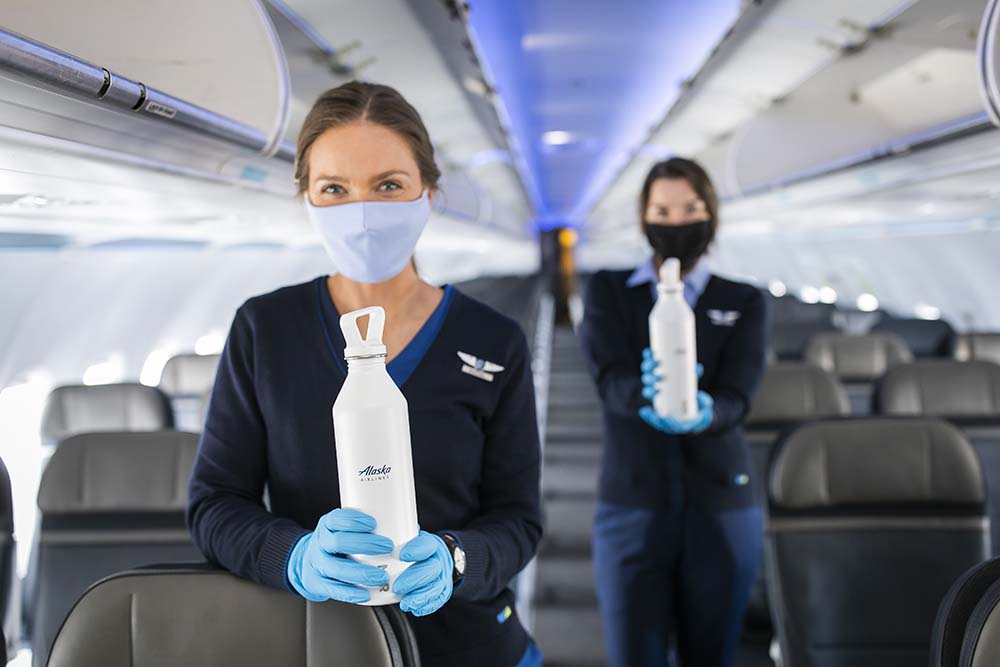
Beyond our common goal of moving to non-plastic alternatives, both Boxed Water and Alaska partner with the National Forest Foundation (NFF). Boxed Water has planted 1.2 million trees with the organization and Alaska guests supporting their mission through donating Mileage Plan miles in our LIFT Miles program. Alaska also encourages our guests to bring their own refillable water bottle, and if each time a guest tags Alaska and #FillBeforeYouFly with a photo of their refillable, we’ll plant a tree in partnership with the Bonneville Environmental Foundation to strengthen local habitats.
Our sustainable journey
In 2007, several environmentally conscious Alaska and Horizon employees formed the “Green Team,” a business resource group dedicated to improving the environment through increased in-flight recycling and trash sorting programs and other environmental initiatives. The group was the first of its kind in the airline industry and their efforts have significantly decreased the amount of waste per guest that ends up in landfills. Green Team members were also involved in the selection process for Boxed Water.
“When researching alternatives to plastic water bottles, the Green Team considered a variety of factors on overall environmental impact such as water sourcing, packaging materials, recyclability, and shipping distance,” said Robbie Neff, Green Team member and pricing team lead at Alaska. “Boxed Water scored better than the other options of glass bottles and aluminum cans.”
In 2019, we encouraged guests to join our efforts by bringing a reusable water bottle when they travel and #FillBeforeYouFly, as part of an initiative to completely avoid using single-use plastics.“Is there anything cuter than a mini box of water? I think not!” @courtney.mones via Instagram
While we know our greatest impact is reducing carbon emissions, every decision we make, including how we source the products we serve onboard is critically important. Alaska is committed to working with forward-thinking companies like Boxed Water that are focused on sustainability, both in their finished products and operations.
“We admire Boxed Water’s leadership to change manufacturing, production, conversation and consumer choice to create a more sustainable and eco-friendly future,” said Traynor-Corey, managing director of guest products for Alaska Airlines. “We hope that when our guests are enjoying Boxed Water they are interested in learning more about eco-friendly products and, ideally, are inspired to make sustainable choices when they travel and on the ground.”
For the Love of Lei: How to Join Our ʻOhana’s May Day Celebrations
On the eve of May 1, kamaʻāina (residents) across the islands string together flowers or visit their local florist so they can share lei with those around them the next day. May Day, also known as Lei Day, is a lively holiday when gifts of lei serve as gestures of aloha, hospitality is abundant, and the air is rich with fragrant blossoms, fresh greenery, live music and love for community.
Lei has long served as a symbol of our signature hoʻokipa (I am host) hospitality at Hawaiian Airlines and is shared when we greet our guests on special occasions, bless our planes before entering service and celebrate our employees.
The 1929 Bellanca CH-300 Pacemaker, our airline's first aircraft, adorned with a lei after undergoing a full restoration in 2009.
This year, we’re inviting our guests to join our May Day celebrations in a few different ways:
Virtually tune in to a live May Day showcase with some of Hawaiʻi’s most beloved musicians and dancers. “Hawaiian Airlines May Day 2021: Mākaʻikaʻi” will debut at 6 p.m. HST on May 1 on Hawaii News Now-KGMB and 7 p.m. HST on Hawaii News Now-KFVE. The performance will be streamed live on HawaiiNewsNow.com and the station’s Facebook channel.
Share the lei love with your ‘ohana digitally this May Day by taking a selfie with our Lei Day filter! The new plumeria lei filter is available on Facebook and Instagram.
Learn the language of lei with a starter guide to help you get to know the names and meanings of the most common lei in Hawai‘i.
Subscribe to our Spotify playlists, built with May Day in mind. Our team has selected mele (songs) that pay tribute to locations across each island. Click here to start streaming and subscribe.
During this year's May Day festivities, we welcome you to take a trip down memory lane as our employees reminisce on special moments of making, giving or receiving a lei.
Debbie Nākanelua-Richards, director of community and cultural relations: This is a photo of one of the first times I received lei made of ʻākulikuli flower. I was riding in the Aloha Festival Parade that year, and I remember being moved by the fact that someone had painstakingly gathered on the island of Maui and brought for me to wear. The lei is so significant, and I always keep this photo at my desk because it was such a special gift.
Puamana Garcia, flight attendant: May Day always has been a special day for me. This photo was taken in 2014 while celebrating with my Hawaiian Airlines inflight ʻohana. From left: Our Handsome Crewmembers pictured are Kaimana Domingo, Stanley Dickson, Puamana Garcia, Kaleo Izumi.
Tara Shimooka, manager of external communications: My colleague took this photo when we bid aloha to our former president and CEO, Mark Dunkerley, on his last day before he retired. People from across the company stopped by to give lei, and I remember him taking the time to exchange memories with every person. There was a constant stream of people and activity throughout the day, but everyone got a chance to talk story with him. I love giving lei because it offers this unique opportunity to share a moment with someone regardless of what else is going on around you. It’s almost as if everything else stops during this brief connection. Lei Day captures that feeling and honors it, and it truly is something special.
Alisa Onishi, senior director of brand and community: One of my most cherished, favorite memories is when my little brother Ryan and I won the Kamehameha Schools Song Contest. We were both showered with lei from our classmates and families. Winning was such an honor but winning alongside my little brother made it even better.
Jamie Matsuda, pricing implementation analyst: Receiving a lei is always special. We learned at an early age to sew flower lei, especially plumeria and carnations, for our school May Day programs. Our grandpa made the lei needles, so we would always have them on hand. My family would search the neighborhood for plumeria flowers, and my dad would bring home orchid and carnation flowers. We even learned to make double carnation lei, which I hardly see today. Though we are no longer in school, my mom still enjoys sewing lei and calls it her “relax time” and makes her lei even if there is no special occasion.
Irina De La Torre, senior specialist of community relations: When I was in sixth grade at Sunset Beach Elementary, we had to prepare for our school’s May Day celebrations by making our own lei. I distinctly remember each kid had to collect 150 plumeria flowers and bring them back to class the next day. I foraged all over the North Shore to gather my plumeria, but the trees were bare, so it proved to be more challenging than I thought. Our teachers thought we would be building character by having our parents drive us around as we actively searched and climbed trees to pick our flowers. I was so proud of myself, but I later learned some kids purchased loose plumeria from a nearby farm. Here is a picture with me wearing my lei, on the left.
Shannon Kaleikini-Fukuda, customer service chief agent: I remember my mom's sister, Sarah (Ayat) Quick, known as Kumu (Teacher) Quick to her students at Kamehameha Schools, would come to visit our home in Kāneʻohe often. The day my family took this photo, she and my mother were teaching me how to make my first Haku Lei, which my aunt later took with her to the Annual May Day Lei Contest in Kapiʻolani Park where she was one of the judges
Hawaiian Holdings Reports 2021 First Quarter Financial Results
HONOLULU , April 27, 2021 /PRNewswire/ — Hawaiian Holdings, Inc. (NASDAQ: HA) (the "Company"), parent company of Hawaiian Airlines, Inc. ("Hawaiian"), today reported its financial results for the first quarter of 2021.
First Quarter 2021 – Key Financial Metrics
GAAP
YoY Change
Adjusted
YoY Change
Net Loss
($60.7M)
$83.7M
($190.6M)
($156.6M)
Diluted EPS
($1.23)
$1.91
($3.85)
($3.11)
Pre-tax Margin
(42.2)%
(10.9) pts.
(132.4)%
(124.4) pts.
"We reached an important inflection point during the first quarter on our path to recovery with an encouraging rebound in demand, despite the challenges that the COVID-19 pandemic continues to impose on our business. Bookings in North America improved materially as we began to realize the pent up demand for leisure travel after a year of lockdown," said Peter Ingram , Hawaiian Airlines President and CEO. "I am grateful to my colleagues who continue to connect people with aloha in the face of historic uncertainty. I am more optimistic each day about our progress as we rebuild our network and capitalize on the resilience of Hawai'i as a post-pandemic vacation destination."
Statistical data, as well as a reconciliation of the reported non-GAAP financial measures, can be found in the accompanying tables.
First Quarter 2021
Financial Results
For the first quarter of 2021, the Company reported a net loss of $60.7 million , and adjusted net loss of $190.6 million .
The Company reported total revenue of $182 million , down 72% compared to the first quarter of 2019, on 49% lower capacity. After a slow start to the year, the Company experienced a rebound in close-in demand in North America in March 2021.
The Company reported total operating expenses of $255.4 million , and operating expenses excluding non-recurring items of $402.7 million , down 33% compared to the first quarter of 2019.
Routes and Network
Throughout the first quarter of 2021, the State of Hawai'i continued its Safe Travels program, which allows guests to avoid quarantine with evidence of a negative COVID-19 test, subject to certain additional county-specific requirements.
The Company continued to rebuild as well as expand its network primarily in North America . During the first quarter, the Company operated an average of 51% of its first quarter system 2019 capacity, comprised of 73%, 38% and 12% of North America , Neighbor Island and International 2019 capacity levels, respectively.
In March and April of 2021, the Company launched four new North America routes. Starting in the summer of 2021, the Company will expand frequencies on the less than daily routes.
Daily service between Kahului , Maui (OGG) and Long Beach (LGB), which started March 9, 2021 .
Twice weekly service between Honolulu's Daniel K. Inouye International Airport (HNL) and Orlando International Airport (MCO), which started March 11, 2021 .
Five-times-weekly service between Honolulu's Daniel K. Inouye International Airport (HNL) and Ontario International Airport (ONT), which started March 16, 2021 .
Twice weekly service between Honolulu's Daniel K. Inouye International Airport (HNL) and Austin-Bergstrom International Airport (AUS), which started April 21, 2021 .
In April 2021 , the Company announced it will initiate four-times-weekly service between Kahului , Maui (OGG) and Phoenix Sky Harbor International Airport (PHX) starting in May 2021 .
Liquidity and Capital Resources
As of March 31, 2021, the Company had:
Unrestricted cash, cash equivalents and short-term investments of $1.9 billion , up $1.0 billion from December 31, 2020
Outstanding debt and finance lease obligations of $2.1 billion , up $852 million from December 31, 2020
Air traffic liability of $687 million , up $154 million from December 31, 2020
The Company further enhanced its liquidity position during the first quarter of 2021, including:
In February 2021 , Hawaiian completed a private placement by Hawaiian Brand Intellectual Property, Ltd., an indirect wholly owned subsidiary of Hawaiian, and HawaiianMiles Loyalty, Ltd., an indirect wholly owned subsidiary of Hawaiian, of an aggregate of $1.2 billion principal amount of 5.75% senior secured notes due 2026.
In March 2021 , the Company completed an at-the-market equity offering ("ATM program") of shares of its common stock. The Company issued an aggregate of 5.0 million shares through the ATM program, raising net proceeds of $109 million , of which $68 million was raised in the first quarter of 2021.
As of March 31, 2021 , the Company has received $147.3 million in grants and $20.2 million in loans pursuant to the Payroll Support Program Extension Agreement (the "PSP Extension Agreement") with the U.S. Department of the Treasury.
In February 2021 , the Company repaid in full the $45 million loan from the U.S. Department of Treasury under the Economic Relief Program pursuant to the Coronavirus Aid, Relief, and Economic Security Act (the "CARES Act"). This debt extinguishment resulted in the recognition of a non-operating loss of $4 million.
In February 2021 , the Company repaid $235 million of borrowings under its revolving credit facility, of which the full amount is available to the Company.
In the second quarter of 2021, the Company expects to receive approximately $25.1 million pursuant to the PSP Extension Agreement and approximately $179.7 million in Payroll Support Program funds pursuant to a Payroll Support Program 3 Agreement ("PSP3") with the U.S. Department of Treasury under the American Rescue Plan Act of 2021.
As of March 31, 2021 , the Company had $2.1 billion in liquidity, including the undrawn portion of its revolver. This figure does not include the $205 million of additional PSP Extension Agreement and PSP3 funding that the Company expects to receive in the second quarter. The Company is confident it has the liquidity to weather the remaining near-term effects of the pandemic and is not currently looking to raise additional capital.
Guest Experience
The Company continues to adapt its policies and services to better meet the needs of its guests. In April 2021 , the Company announced that HawaiianMiles – the currency of its award-winning loyalty program – will no longer expire. This policy comes in addition to the elimination of change fees and the extension of status for Hawaiian's elite members.
In the first quarter, the Company joined the State of Hawai'i Pre-Clear Program, allowing its guests in both domestic and participating international markets ( Japan and Korea) who are entering the state of Hawai'i to validate their pre-travel testing status at their departure airport and avoid lines upon arrival in Hawai'i.
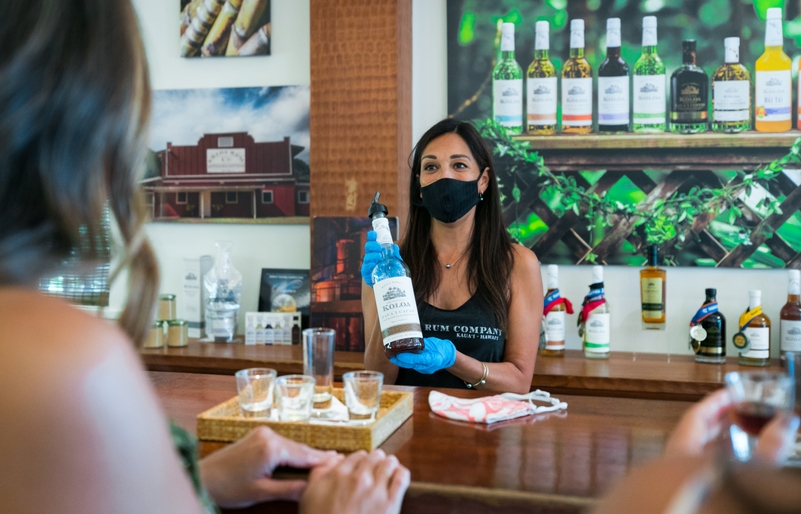
Starting June 1, 2021 , the Company will bring back more of its signature onboard services, including drink service, complimentary Koloa Breeze cocktails, and a curated assortment of alcoholic beverages and snacks for purchase, in addition to the complimentary meals it has served throughout the pandemic, while maintaining the highest standards of safety for its guests and guest-facing team members.
The Company continues its enhanced cleaning procedures and guest-facing protocols to minimize the risk of transmission of COVID-19. Understanding that health and safety are still critical concerns for our guests, the Company will continue to focus on effective measures such as:
Frequent cleaning and disinfecting of counters and self-service check-in kiosks in airports.
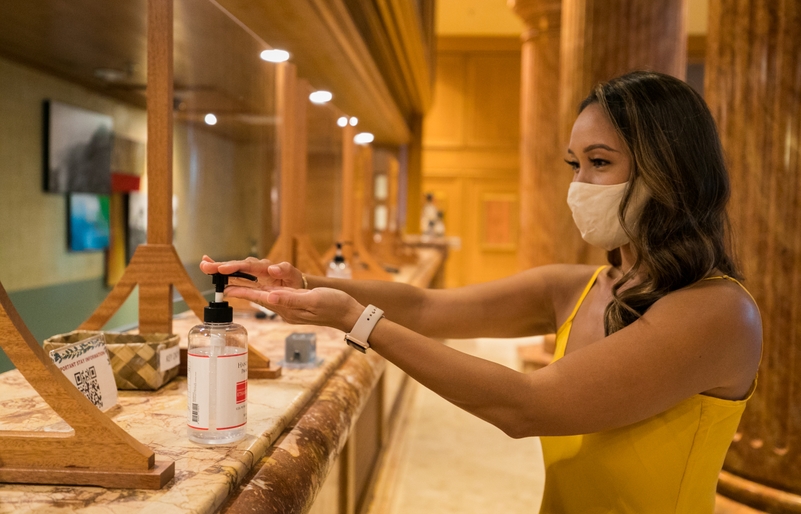
Ensuring hand sanitizers are readily available for guests at airports it serves.
Requiring guests and guest facing employees to wear a face mask or covering, with guests required to wear masks from check-in to deplaning (except when eating or drinking on board).
Performing enhanced aircraft cleaning between flights and during overnight parking.
Awards and Recognition
The Company maintained its #1 national ranking for On-Time Performance for the 17th consecutive year in 2020 as well as in January and February of 2021, as reported in the U.S. Department of Transportation (DOT) Air Travel Consumer Report.
Second Quarter 2021 Outlook
The Company expects to continue to rebuild its network in the second quarter, and expects significant sequential improvement in revenue compared to the first quarter, primarily driven by strength in North America. The Company expects a sequential increase in operating expenses, excluding non-recurring items, driven by the increase in capacity as compared to the first quarter.
The table below summarizes the Company's expectations for the second quarter ending June 30, 2021 , expressed as an expected percentage change compared to the results for the quarter ended June 30, 2019 , as applicable.
(a) See Table 4 for a reconciliation of GAAP operating expenses to operating expenses excluding non-recurring items.
(b) The Company is not providing a reconciliation of adjusted EBITDAR to GAAP net income, the most directly comparable GAAP measure, as it is unable, without unreasonable efforts, to calculate certain special and non-recurring charges, which could have a significant impact on the GAAP measure.
Statistical information, as well as a reconciliation of certain non-GAAP financial measures, can be found in the accompanying tables.
Full Year 2021 Outlook
The Company expects its capital expenditures for the full year of 2021 to be between $50 and $60 million .
Investor Conference Call
Hawaiian Holdings' quarterly results conference call is scheduled to begin today (April 27, 2021) at 4:30 p.m. Eastern Time ( USA ). The conference call will be broadcast live over the Internet. Investors may access and listen to the live audio webcast on the investor relations section of the Company's website at HawaiianAirlines.com . For those who are not available for the live webcast, a replay of the webcast will be archived for 90 days on the investor relations section of the Company's website.
About Hawaiian Airlines
Hawaiian® has led all U.S. carriers in on-time performance from 2004-2019 as reported by the U.S. Department of Transportation. U.S. DOT results for 2020 will be reported in February 2021 . Consumer surveys by Condé Nast Traveler, Travel + Leisure and TripAdvisor have placed Hawaiian among the top of all domestic airlines serving Hawai'i.
Now in its 92nd year of continuous service, Hawaiian is Hawai'i's biggest and longest-serving airline. In 2019, Hawaiian offered nonstop flights between Hawai'i and more U.S. gateway cities (13) than any other airline, along with service connecting the islands with Japan , South Korea , Australia , New Zealand , American Samoa and Tahiti. As a result of the COVID-19 pandemic, Hawaiian is offering an adjusted schedule of daily flights within the Hawaiian Islands and between Hawai'i and the U.S. mainland as well as Japan and South Korea .
The airline is committed to the health and safety of its guests and employees and has reinforced enhanced cleaning procedures across its business. While the experience may be a little different, the authentic Hawaiian hospitality remains unchanged. Additional details on how Hawaiian is keeping guests and employees safe can be found at HawaiianAirlines.com/KeepingYouSafe .
Hawaiian Airlines, Inc. is a subsidiary of Hawaiian Holdings, Inc. (NASDAQ: HA ). Additional information is available at HawaiianAirlines.com . Follow Hawaiian's Twitter updates ( @HawaiianAir ), become a fan on Facebook ( Hawaiian Airlines ), and follow us on Instagram ( hawaiianairlines ). For career postings and updates, follow Hawaiian's LinkedIn page.
For media inquiries, please visit Hawaiian Airlines' online newsroom .
Forward-Looking Statements
This press release contains "forward-looking statements" within the meaning of the Private Securities Litigation Reform Act of 1995 that reflect the Company's current views with respect to certain current and future events and financial performance. Such forward-looking statements include, without limitation, the Company's ability and timing to rebuild its business, including its network, from the impacts of COVID-19 pandemic; funds the Company expects to receive under the PSP Extension Agreement and PSP3; the Company's ability to weather the remaining near-term effects of the COVID-19 pandemic; the Company's intention to bring back traditional onboard services; the Company's continued focus on effective cleaning, sanitization and safety efforts; the Company's expectations related to rebuilding its network and significant sequential improvement in revenue in the second quarter of 2021, including the expected strength of the North America market; the Company's expectations regarding the sequential increase in operating expenses, excluding non-recurring items, driven by the increase in capacity in the second quarter of 2021; the Company's outlook for the second quarter of 2021, including expectations regarding a ASMs, total revenue, operating expense, interest expense, adjusted EBITDAR, effective tax rate, capital expenditures and statements as to other matters that do not relate strictly to historical facts or statements of assumptions underlying any of the foregoing. Words such as "expects," "anticipates," "projects," "intends," "plans," "believes," "estimates," variations of such words, and similar expressions are also intended to identify such forward-looking statements. These forward-looking statements are and will be subject to many risks, uncertainties and assumptions relating to the Company's operations and business environment, all of which may cause the Company's actual results to be materially different from any future results, expressed or implied, in these forward-looking statements. These risks and uncertainties include, without limitation, the continuing and developing effects of the spread of COVID-19 on the Company's business operations and financial condition; the duration of government-mandated and other restrictions on travel; the full effect that the quarantine, restrictions on travel and other measures to limit the spread of COVID-19 will have on demand for air travel in the markets in which the Company operates; fluctuations and the extent of declining demand for air transportation in the markets in which the Company operates; the Company's dependence on the tourism industry; the Company's ability to manage its available cash; the Company's ability to accurately forecast economic volatility; macroeconomic developments; political developments; the price and availability of aircraft fuel; labor negotiations; regulatory determinations and related developments; competitive pressures, including the impact of industry capacity between North America and Hawai'i and interisland; changes in the Company's future capital needs; and foreign currency exchange rate fluctuations.
The risks, uncertainties and assumptions referred to above that could cause the Company's results to differ materially from the results expressed or implied by such forward-looking statements also include the risks, uncertainties and assumptions discussed from time to time in the Company's other public filings and public announcements, including the Company's Annual Report on Form 10-K and the Company's Quarterly Reports on Form 10-Q, as well as other documents that may be filed by the Company from time to time with the Securities and Exchange Commission. All forward-looking statements included in this document are based on information available to the Company on the date hereof. The Company does not undertake to publicly update or revise any forward-looking statements to reflect events or circumstances that may arise after the date hereof even if experience or future changes make it clear that any projected results expressed or implied herein will not be realized.
Table 1.
Hawaiian Holdings, Inc.
Consolidated Statements of Operations (unaudited)
Three Months Ended March 31,
2021
2020
% Change
(in thousands, except per share data)
Operating Revenue:
Passenger
$
137,469
$
503,469
(72.7)
%
Other
44,748
55,675
(19.6)
%
Total
182,217
559,144
(67.4)
%
Operating Expenses:
Wages and benefits
12,809
188,254
(93.2)
%
Aircraft fuel, including taxes and delivery
47,736
113,478
(57.9)
%
Maintenance, materials and repairs
34,252
60,409
(43.3)
%
Aircraft and passenger servicing
17,251
38,283
(54.9)
%
Depreciation and amortization
35,356
39,449
(10.4)
%
Commissions and other selling
11,409
26,716
(57.3)
%
Aircraft rent
29,841
27,004
10.5
%
Other rentals and landing fees
19,668
29,766
(33.9)
%
Purchased services
24,097
34,241
(29.6)
%
Special items
—
126,904
100.0
%
Other
22,962
42,736
(46.3)
%
Total
255,381
727,240
(64.9)
%
Operating Loss
(73,164)
(168,096)
(56.5)
%
Nonoperating Income (Expense):
Interest expense and amortization of debt discounts and issuance costs
(23,693)
(6,795)
Interest income
1,249
3,020
Capitalized interest
684
831
Gains (losses) on fuel derivatives
217
(6,452)
Loss on extinguishment of debt
(3,994)
—
Other components of net periodic benefit cost
981
338
Other, net
20,896
1,966
Total
(3,660)
(7,092)
Loss Before Income Taxes
(76,824)
(175,188)
Income tax benefit
(16,133)
(30,816)
Net Loss
$
(60,691)
$
(144,372)
Net Loss Per Share
Basic
$
(1.23)
$
(3.14)
Diluted
$
(1.23)
$
(3.14)
Weighted Average Number of Common Stock Shares Outstanding:
Basic
49,472
45,967
Diluted
49,472
45,967
Hawaiian Holdings, Inc.
Consolidated Balance Sheet (unaudited)
March 31, 2021 (unaudited)
December 31,
2020
(in thousands, except shares)
ASSETS
Current Assets:
Cash and cash equivalents
$
987,865
$
509,639
Restricted cash
31,817
—
Short-term investments
889,962
354,782
Accounts receivable, net
57,887
67,527
Income taxes receivable
94,724
95,002
Spare parts and supplies, net
36,014
35,442
Prepaid expenses and other
74,340
56,086
Total
2,172,609
1,118,478
Property and equipment, less accumulated depreciation and amortization of $928,892 and $894,519 as of March 31, 2021 and December 31, 2020, respectively
2,063,134
2,085,030
Other Assets:
Operating lease right-of-use assets
604,766
627,359
Long-term prepayments and other
118,890
133,663
Intangible assets, net
13,500
13,500
Total Assets
$
4,972,899
$
3,978,030
LIABILITIES AND SHAREHOLDERS' EQUITY
Current Liabilities:
Accounts payable
$
117,288
$
112,002
Air traffic liability and current frequent flyer deferred revenue
687,323
533,702
Other accrued liabilities
145,701
140,081
Current maturities of long-term debt, less discount
142,051
115,019
Current maturities of finance lease obligations
22,545
21,290
Current maturities of operating leases
83,428
82,454
Total
1,198,336
1,004,548
Long-Term Debt
1,863,999
1,034,805
Other Liabilities and Deferred Credits:
Noncurrent finance lease obligations
115,447
120,618
Noncurrent operating leases
482,140
503,376
Accumulated pension and other post-retirement benefit obligations
212,853
217,737
Other liabilities and deferred credits
79,688
78,908
Noncurrent frequent flyer deferred revenue
207,610
201,239
Deferred tax liability, net
200,824
216,642
Total
1,298,562
1,338,520
Commitments and Contingencies
Shareholders' Equity:
Special preferred stock, $0.01 par value per share, three shares issued and outstanding as of March 31, 2021 and December 31, 2020
—
—
Common stock, $0.01 par value per share, 51,107,210 and 48,145,093 shares outstanding as of March 31, 2021 and December 31, 2020, respectively
511
481
Capital in excess of par value
261,423
188,593
Accumulated income
464,919
525,610
Accumulated other comprehensive loss, net
(114,851)
(114,527)
Total
612,002
600,157
Total Liabilities and Shareholders' Equity
$
4,972,899
$
3,978,030
Hawaiian Holdings, Inc.
Condensed Consolidated Statements of Cash Flows (unaudited)
Three Months Ended March 31,
2021
2020
(in thousands)
Net cash provided by Operating Activities
$
122,009
$
46,887
Cash flows from Investing Activities:
Additions to property and equipment, including pre-delivery payments
(10,417)
(46,845)
Proceeds from the disposition of aircraft related equipment
117
—
Purchases of investments
(655,266)
(48,133)
Sales of investments
117,857
80,218
Net cash used in investing activities
(547,709)
(14,760)
Cash flows from Financing Activities:
Proceeds from the issuance of common stock
68,132
—
Long-term borrowings
1,220,259
235,000
Repayments of long-term debt and finance lease obligations
(328,256)
(25,320)
Dividend payments
—
(5,514)
Debt issuance costs
(24,664)
—
Repurchases of common stock
—
(7,510)
Payment for taxes withheld for stock compensation
(1,565)
(1,230)
Other
1,837
—
Net cash provided by financing activities
935,743
195,426
Net increase in cash and cash equivalents
510,043
227,553
Cash, cash equivalents, and restricted cash – Beginning of Period
509,639
373,056
Cash, cash equivalents, and restricted cash – End of Period
$
1,019,682
$
600,609
Table 2.
Hawaiian Holdings, Inc.
Selected Statistical Data (unaudited)
Three months ended March 31,
2021
2020
% Change
(in thousands, except as otherwise indicated)
Scheduled Operations (a) :
Revenue passengers flown
733
2,360
(68.9)
%
Revenue passenger miles (RPM)
1,054,128
3,711,474
(71.6)
%
Available seat miles (ASM)
2,466,043
4,974,971
(50.4)
%
Passenger revenue per RPM (Yield)
13.04
¢
13.57
¢
(3.9)
%
Passenger load factor (RPM/ASM)
42.7
%
74.6
%
(31.9)
pts.
Passenger revenue per ASM (PRASM)
5.57
¢
10.12
¢
(45.0)
%
Total Operations (a) :
Revenue passengers flown
737
2,362
(68.8)
%
Revenue passenger miles (RPM)
1,062,317
3,714,773
(71.4)
%
Available seat miles (ASM)
2,481,647
4,979,529
(50.2)
%
Operating revenue per ASM (RASM)
7.34
¢
11.23
¢
(34.6)
%
Operating cost per ASM (CASM)
10.29
¢
14.60
¢
(29.5)
%
CASM excluding aircraft fuel and non-recurring items (b)
14.30
¢
9.78
¢
46.2
%
Aircraft fuel expense per ASM (c)
1.92
¢
2.27
¢
(15.4)
%
Revenue block hours operated
26,995
52,860
(48.9)
%
Gallons of jet fuel consumed
29,945
63,822
(53.1)
%
Average cost per gallon of jet fuel (actual) (c)
$
1.59
$
1.78
(10.7)
%
Economic fuel cost per gallon (c)(d)
$
1.60
$
1.83
(12.6)
%
(a)
Includes the operations of the Company's contract carrier under a capacity purchase agreement.
(b)
See Table 4 for a reconciliation of GAAP operating expenses to operating expenses excluding aircraft fuel and non-recurring items.
(c)
Includes applicable taxes and fees.
(d)
See Table 3 for a reconciliation of GAAP fuel costs to economic fuel costs.
Table 3. Hawaiian Holdings, Inc. Economic Fuel Expense (unaudited)
The Company believes that economic fuel expense is a good measure of the effect of fuel prices on its business as it most closely approximates the net cash outflow associated with the purchase of fuel for its operations in a period. The Company defines economic fuel expense as GAAP fuel expense plus losses/(gains) realized through actual cash (receipts)/payments received from or paid to hedge counterparties for fuel hedge derivative contracts settled during the period.
Three months ended March 31,
2021
2020
% Change
(in thousands, except per-gallon amounts)
Aircraft fuel expense, including taxes and delivery
$
47,736
$
113,478
(57.9)
%
Realized losses on settlement of fuel derivative contracts
165
3,086
(94.7)
%
Economic fuel expense
$
47,901
$
116,564
(58.9)
%
Fuel gallons consumed
29,945
63,822
(53.1)
%
Economic fuel costs per gallon
$
1.60
$
1.83
(12.6)
%
Table 4. Hawaiian Holdings, Inc. Non-GAAP Financial Reconciliation (unaudited)
The Company evaluates its financial performance utilizing various GAAP and non-GAAP financial measures, including net income (loss), operating expenses, diluted net income per share, CASM, PRASM, RASM, Passenger Revenue per RPM, EBITDAR, and pre-tax margin. Pursuant to Regulation G, the Company has included the following reconciliation of reported non-GAAP financial measures to comparable financial measures reported on a GAAP basis. The adjustments are described below:
During the three months ended March 31, 2020 , the effective tax rate included a tax benefit of $14.2 million resulting from the rate differential between the prevailing tax rate of 21% during the years that generated net operating losses and the previous tax rate of 35% that was in effect during the years to which net operating losses were carried back as a result of the enactment of the CARES Act.
During the three months ended March 31, 2021 , the Company recognized $147.3 million in contra-expense related to grant proceeds under the PSP Extension Agreement. The grant proceeds were recognized in proportion to estimated wages and benefits expense over the period the PSP Extension Agreement covers. The Company utilized all proceeds received in the first quarter of 2021 pursuant to the PSP Extension Agreement as of March 31, 2021 .
Loss on extinguishment of debt is excluded to allow investors to better analyze our core operational performance and more readily compare our results to other airlines in the periods presented below.
Changes in fair value of fuel derivative contracts, net of tax, are based on market prices for open contracts as of the end of the reporting period, and include the unrealized amounts of fuel derivatives (not designated as hedges) that will settle in future periods and the reversal of prior period unrealized amounts.
Changes in fair value of foreign currency derivative contracts, net of tax, are based on market prices for open contracts as of the end of the reporting period, including the unrealized amounts of foreign currency derivatives (not designated as hedges) that will settle in future periods and the reversal of prior period unrealized amounts.
Unrealized loss (gain) on foreign debt is based on fluctuation in exchange rates and the measurement of foreign-denominated debt to our functional currency.
The Company recorded the following as special items:
During the three months ended March 31, 2020 , a charge of $20.2 million was recorded for the ratification of a collective bargaining agreement with the Association of Flight Attendants in April 2020 (related to service prior to January 1, 2020 ).
During the three months ended March 31, 2020 , a special charge of $106.7 million was recorded for goodwill impairment resulting from the decline in the market value of the Company's equity (i.e., share price), and the Company's inability to support the carrying value of goodwill on its financial statements.
The Company believes that adjusting for the impact of an effective tax rate differential, the recognition of grant proceeds, changes in fair value of fuel and foreign currency derivative contracts, fluctuations in exchange rates on debt instruments denominated in foreign currency, special items and the loss recognized on the extinguishment of debt helps investors better analyze the Company's operational performance and compare its results to other airlines in the periods presented.
Three months ended March 31,
2021
2020
Total
Diluted Net
Loss Per Share
Total
Diluted Net
Loss Per Share
(in thousands, except per share data)
GAAP Net Loss, as reported
$
(60,691)
$
(1.23)
$
(144,372)
$
(3.14)
Adjusted for:
CARES Act carryback of additional NOLs
—
—
(14,156)
(0.31)
Payroll support programs grant recognition
(147,270)
(2.98)
—
—
Loss on debt extinguishment
3,994
0.08
—
—
Changes in fair value of fuel derivative contracts
(382)
(0.01)
3,366
0.07
Unrealized (gains) losses on foreign debt
(19,043)
(0.38)
743
0.02
Unrealized gain on non-designated foreign exchange positions
(1,749)
(0.03)
(812)
(0.02)
Special items
—
—
126,904
2.76
Tax effect of adjustments
34,534
0.70
(5,722)
(0.12)
Adjusted net loss
$
(190,607)
$
(3.85)
$
(34,049)
$
(0.74)
Three months ended March 31,
2021
2020
Total
Margin
Total
Margin
(in thousands, except margin data)
Income Before Income Taxes, as reported
$
(76,824)
(42.2)
%
$
(175,188)
(31.3)
%
Adjusted for:
Payroll support programs grant recognition
(147,270)
(80.8)
—
—
Loss on debt extinguishment
3,994
2.2
—
—
Changes in fair value of fuel derivative contracts
(382)
(0.2)
3,366
0.6
Unrealized (gains) losses on foreign debt
(19,043)
(10.4)
743
0.1
Unrealized gains on non-designated foreign exchange positions
(1,749)
(1.0)
(812)
(0.1)
Special items
—
—
126,904
22.7
Adjusted Income Before Income Taxes
$
(241,274)
(132.4)
%
$
(44,987)
(8.0)
%
Operating Costs per Available Seat Mile (CASM)
The Company has separately listed in the table below its fuel costs per ASM and non-GAAP unit costs, excluding fuel and non-recurring items. These amounts are included in CASM, but for internal purposes the Company consistently uses cost metrics that exclude fuel and non-recurring items (if applicable) to measure and monitor its costs.
Three months ended March 31,
2021
2020
(in thousands, except CASM data)
GAAP Operating Expenses
$
255,381
$
727,240
Adjusted for:
Payroll support programs grant recognition
147,270
—
Special items
—
(126,904)
Operating Expenses excluding non-recurring items
$
402,651
$
600,336
Aircraft fuel, including taxes and delivery
(47,736)
(113,478)
Operating Expenses excluding fuel and non-recurring items
354,915
486,858
Available Seat Miles
2,481,647
4,979,529
CASM – GAAP
10.29
¢
14.60
¢
Aircraft fuel, including taxes and delivery
(1.92)
(2.27)
Payroll support programs grant recognition
5.93
—
Special items
—
(2.55)
CASM excluding fuel and non-recurring items
14.30
¢
9.78
¢
Operating Expenses Excluding Non-recurring Items Outlook
The Company excludes non-recurring items from its operating expense outlook for the same reasons as described above.
Estimated three months ending June 30,
2021
(in thousands)
GAAP operating expenses
$
378,361
–
$
403,327
Adjusted for:
Non-recurring items
(96,000)
–
(96,000)
Operating expenses, excluding non-recurring items
$
474,361
–
$
499,327
Adjusted EBITDAR
The Company believes that adjusting earnings for interest, taxes, depreciation and amortization, aircraft rent expense, non-recurring operating expenses (such as changes in unrealized gains and losses on financial instruments) and one-time charges helps investors better analyze the Company's financial performance by allowing for company-to-company and period-over-period comparisons that are unaffected by company-specific or one-time occurrences. Although aircraft rent expense is a recurring cash operating expense, it is a variable metric across the airline industry because airlines use different practices in obtaining aircraft, including renting and financing. Presentation of EBITDA unadjusted for aircraft rent expense would eliminate the costs of financing and owning aircraft (interest and depreciation expense), but not the cost of leasing aircraft (aircraft rent expense).
Three months ended March 31,
2021
2020
(in thousands)
Net Loss
$
(60,691)
$
(144,372)
Income tax benefit
(16,133)
(30,816)
Depreciation and amortization
35,356
39,449
Aircraft rent
29,841
27,004
Interest expense and amortization of debt discounts and issuance costs
23,693
6,795
EBITDAR, as reported
12,066
(101,940)
Adjusted for:
Payroll support programs grant recognition
(147,270)
—
Changes in fair value of fuel derivative instruments
(382)
3,366
Unrealized gain on non-designated foreign exchange positions
At Hawaiian Airlines, we view giving back as a shared kuleana (responsibility). In celebration of National Volunteer Week and Earth Day, over 70 Team Kōkua volunteers spent the last several days donating over 270 hours of labor to a selection of beloved environmental, cultural and human services organizations. Maximizing the opportunity, we teamed up with the nonprofit Kanu Hawaii, which empowers people to build more environmentally sustainable, compassionate and resilient communities rooted in personal commitments to change.
Hawaiian Airlines was a proud supporter of Kanu Hawaii’s fourth annual Volunteer Week Hawaiʻi, a local take on National Volunteer Week created to foster volunteerism in the continued prosperity of communities across the state.
Join us as we recap last week’s events and celebrate our employees who donated their time to kōkua (help) others.
Monday: Removing Invasives with Mālama Maunalua
Along Oʻahu’s southeastern shoreline is the picturesque Maunalua Bay, where locals cast their fishing lines, spend time with family and paddle canoes and boards through its shallow waters. Once a marshy ecosystem home to native sea life and waterbirds, the bay’s health has been harmed by development over the past century.
Since 2005, Mālama Maunalua has focused on seabird habitat restoration, data collection, education and outreach in the area. Among the nonprofit’s longstanding effort is removing invasive alien algae (IAA) to restore once-thriving fields of native seagrass and algae.
“These invasive, non-native marine algae species flourish in an environment created by sediment and runoff from the land,” according to the organization’s website. “As IAA spreads, it smothers coral reefs and native algal communities and kills extensive areas of native habitat…Restoring Maunalua Bay takes a community that understands the Bay is in trouble, believes it is worth saving and has hope that the decline can be reversed. Our work is driven by these community members who help improve the quality of Maunalua Bay.”
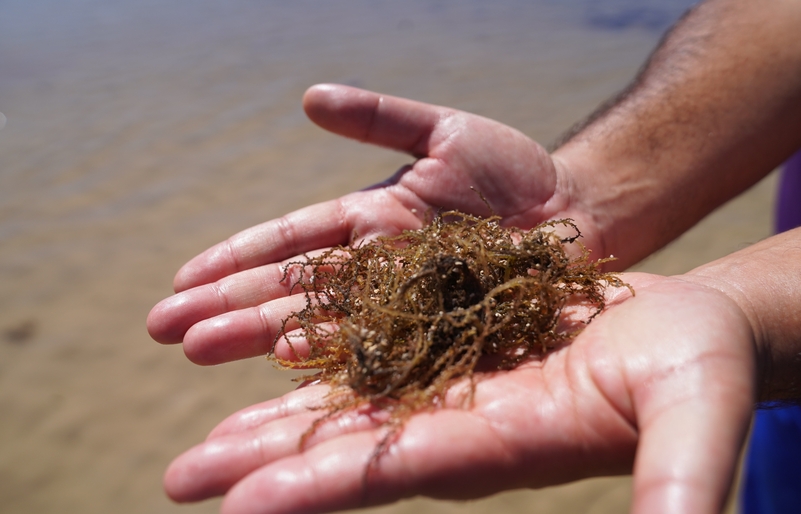
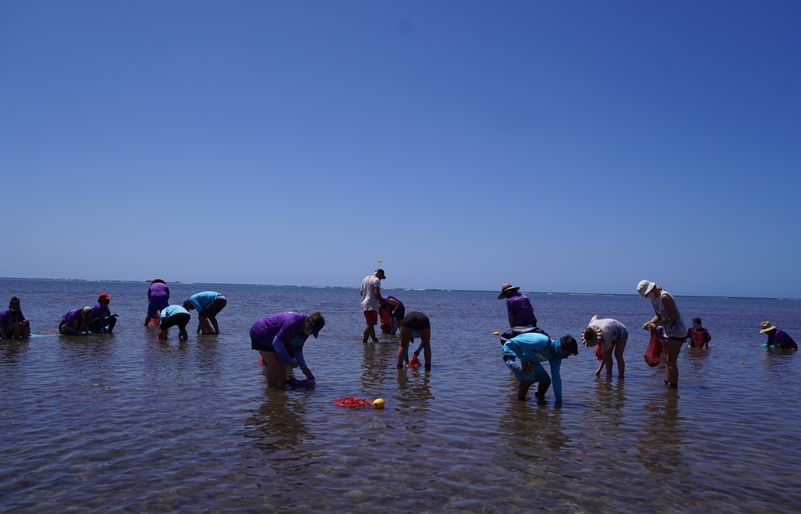
Twenty-one volunteers waded into the waters at Paikō Beach in Maunalua Bay and pulled detrimental IAA, including gorilla ogo, leather mudweed, and prickly seaweed, from the seafloor.
“The work they [Mālama Maunalua] do is very important, not only for the community but also in keeping Oʻahu’s shores healthy. Their efforts go beyond clearing the shoreline and extend into the community via education and land management,” said Irina De La Torre, senior specialist of community relations at Hawaiian Airlines. “With Earth Day just a few days after, it was the perfect opportunity to remind ourselves that taking caring for a special place like Hawaiʻi is a never-ending labor of love.”
Friday: Loʻi cleanup at Ulupō Heiau
Ulupō Heiau rests on the eastern edge of Windward Oʻahu’s Kawainui Marsh and is the largest heiau (ceremonial place) on Oʻahu. Believed to be over a thousand years old, Ulupō Heiau is cared for by the loving hands of Kauluakalana, a local nonprofit working to revive cultural identity, steward the community, restore connections to ‘āina (land) and renew kuleana (responsibility) in the historic ahupuaʻa (traditional subdivision) of Kailua, Oʻahu.
The organization, established in 2019 by a group of Kailua residents, offers immersive, culture-based programs centered around the nonprofit’s vision “to restore and grow healthy relationships between people and place through the aloha ʻāina practices of retelling our Kailua-specific stories, replanting and eating our ancestral foods, and caring for the sacred sites, lands, and waters of our beloved ahupuaʻa of Kailua.”
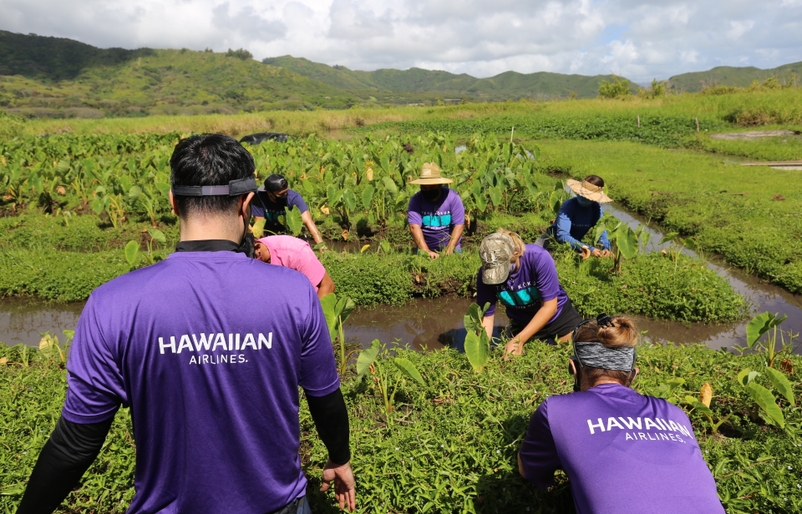
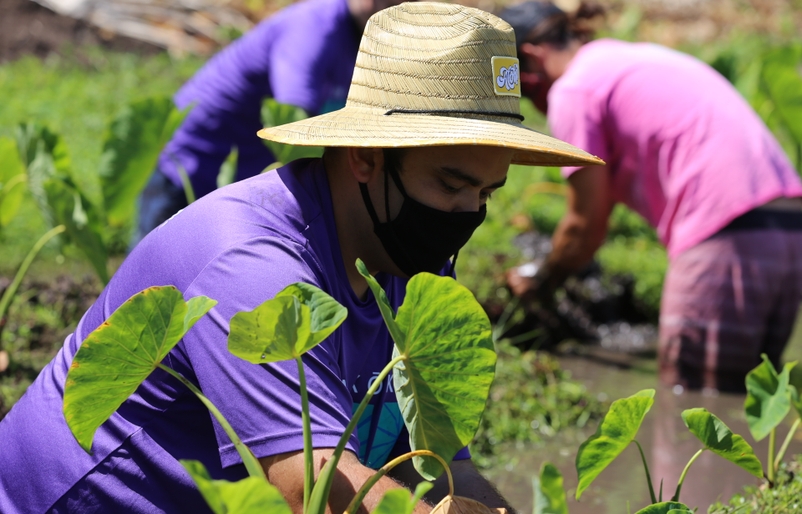
Team Kōkua volunteers came together at Ulupō Heiau to learn from its caretakers and remove ʻaeʻae, a native weed, and invasive apple snails from a loʻi kalo (taro patch).
“My ʻohana, Kūaliʻi, has ties to Kailua and Kawainui in particular,” shared ʻIwalani Kualiʻi Kahoʻohanohano, senior specialist of internal communications at Hawaiian Airlines. “This was my first time visiting the area and Kauluakalana provided a space for us to be present – especially with our kupuna [elders], including the ʻāina [land]. Giving back to the ʻāina at and around Ulupō Heiau by getting waist-deep in the loʻi and huli ana i ka lima i lalo (turning our hands down in the work) made me feel more connected to Kawainui than ever. Hearing the moʻolelo (stories) of the significance of this place and working alongside those who keep these stories alive made me proud to have had the chance to contribute with my ʻohana at Hawaiian Airlines.”
Friday: Distributing Donations with Hawaii Foodbank
The Hawaii Foodbank has spent nearly four decades ensuring that no one in Hawaiʻi goes hungry, and its role has become even more critical as the COVID-19 economic fallout impacts communities statewide. Since the onset of the pandemic, the Hawaii Foodbank distributed 28 million pounds of food to local families.
In response to the nonprofit’s growing demand for services and, thus, the need for volunteers, Team Kōkua has spent each Friday for over a year helping Hawaii Foodbank staff distribute food boxes to community members in Central Oʻahu. Last week, 16 volunteers once again answered the call and offered their kōkua to those in need.
Saturday: Cleaning Beaches with Sustainable Coastlines Hawaiʻi
Sustainable Coastlines Hawai’i (SCH) works to engage communities to care for Hawaiʻi’s coastlines through fun, educational beach cleanups where participants also learn about the impact everyday purchases have on the environment.
“In Hawai’i, we see the growing impact of consumerism as plastics wash up on our shores, coming from both our own home and afar, and impact our islands' marine life,” Rafael Bergstrom, executive director of SCH, recently said in a Manaʻo blog post. “Education on how to stop this pollution at the source is what leads to change; this is where you can make an impact.”
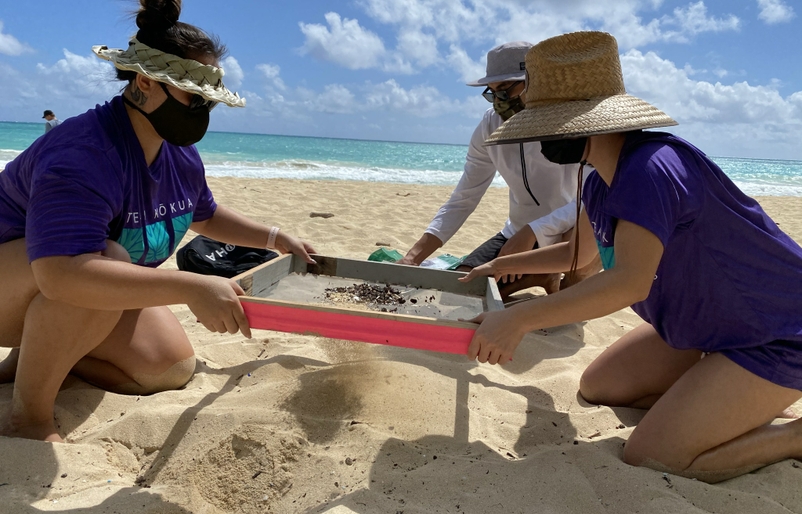
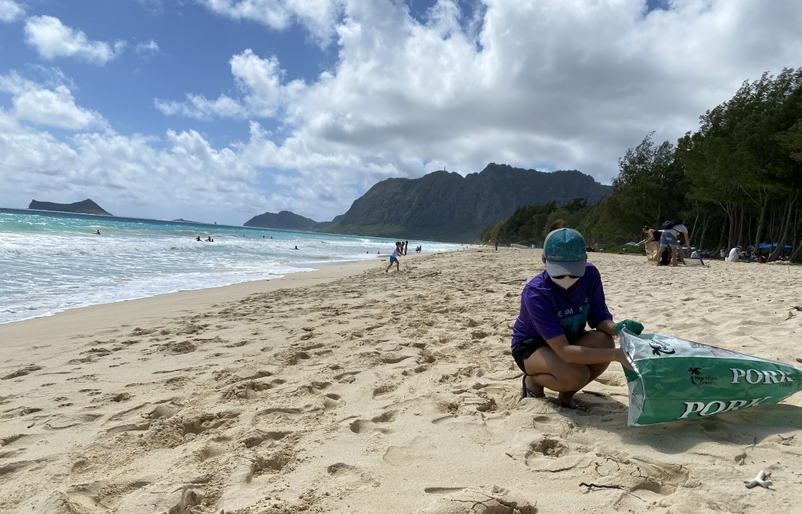
Last weekend, SCH safely gathered hundreds of volunteers, including Hawaiian Airlines employees, along the shores of Sherwoods Beach in Waimānalo, Oʻahu, a hotspot for micro-plastics, fishing nets, oyster spacers and more. Nearly 30 of our Team Kōkua members dawned their gloves, purple shirts and reef-safe sunscreen to sift bits of plastic out of the beach’s fine sand.
“Volunteering with Sustainable Coastlines Hawaiʻi last weekend allowed me to demonstrate a selfless pride in restoring and protecting my island home’s beaches,” said Michelle Nguyen, senior supply chain analyst at Hawaiian Airlines. “Seeing people from all around the island come together to clean Sherwoods Beach embodied the meaning of kuleana and was an enriching experience.”
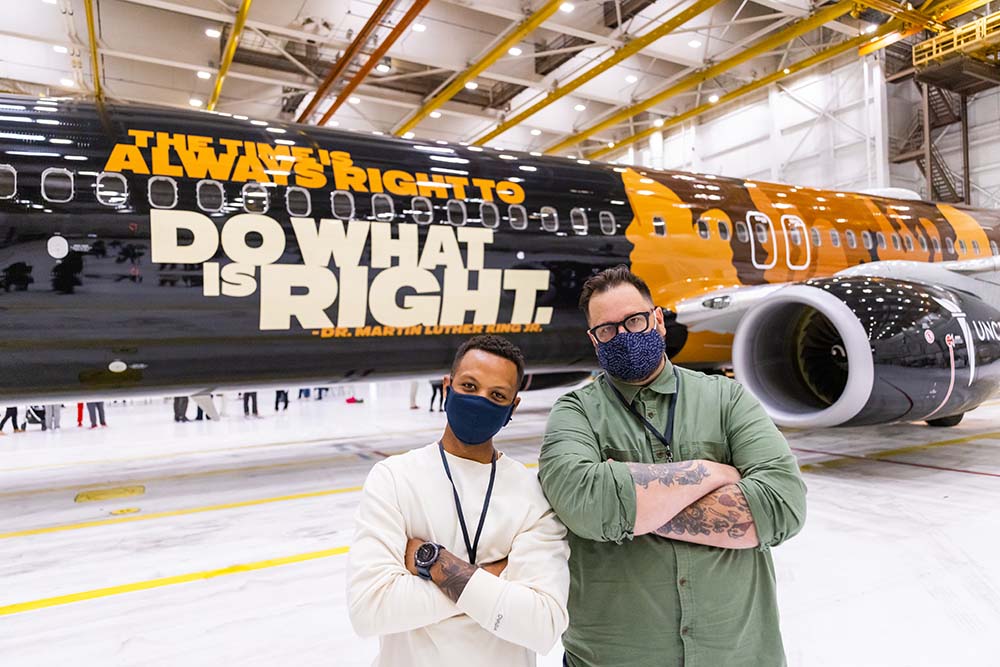
Alaska Airlines reveals “Our Commitment” aircraft in partnership with UNCF to promote education and equity
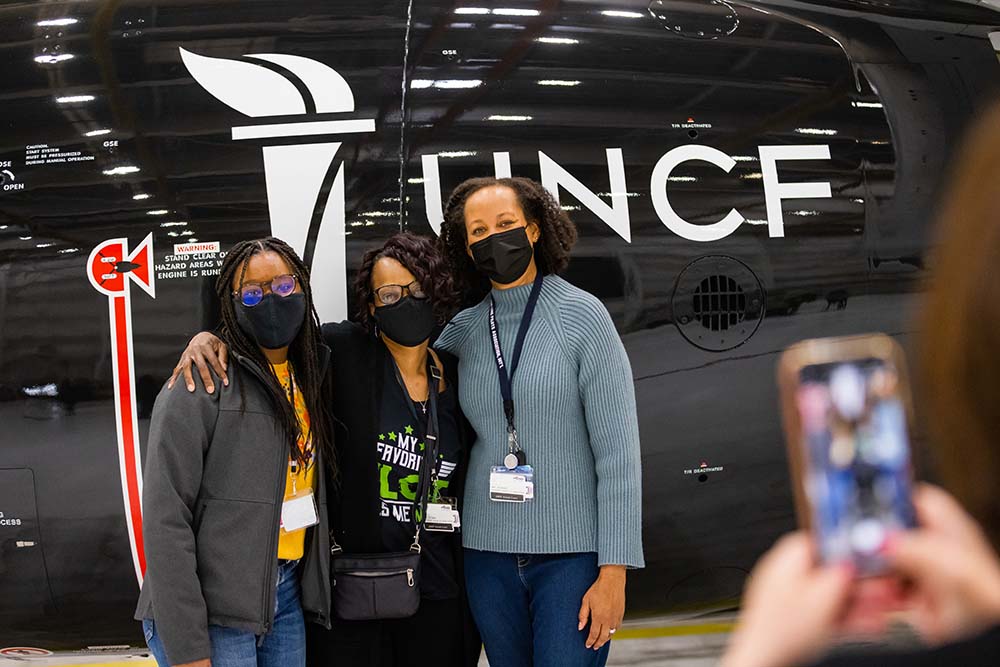
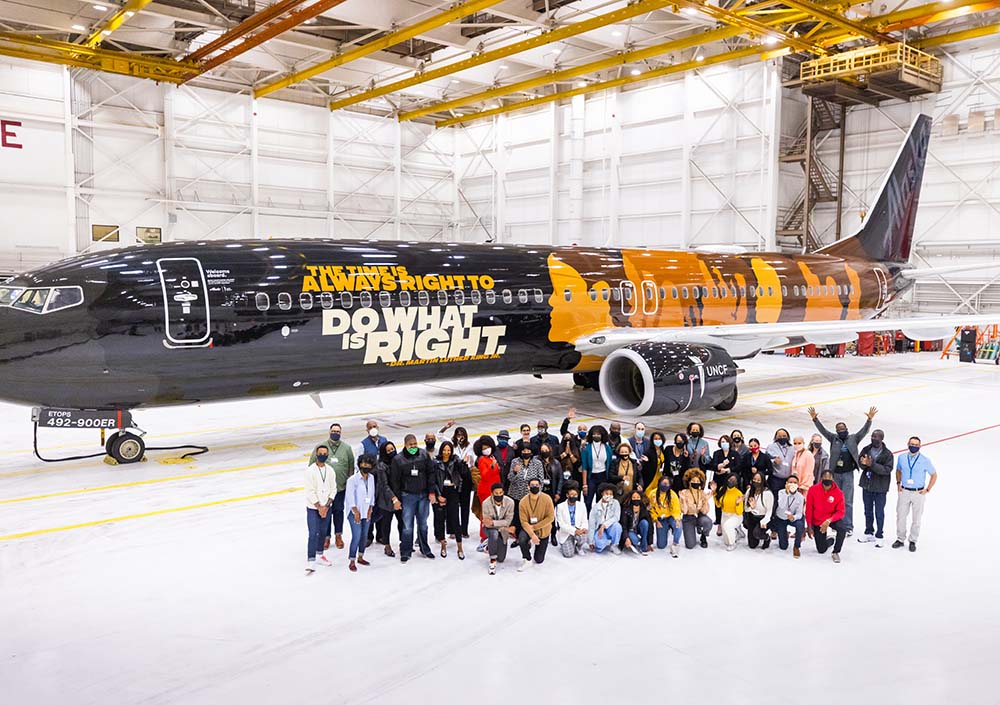
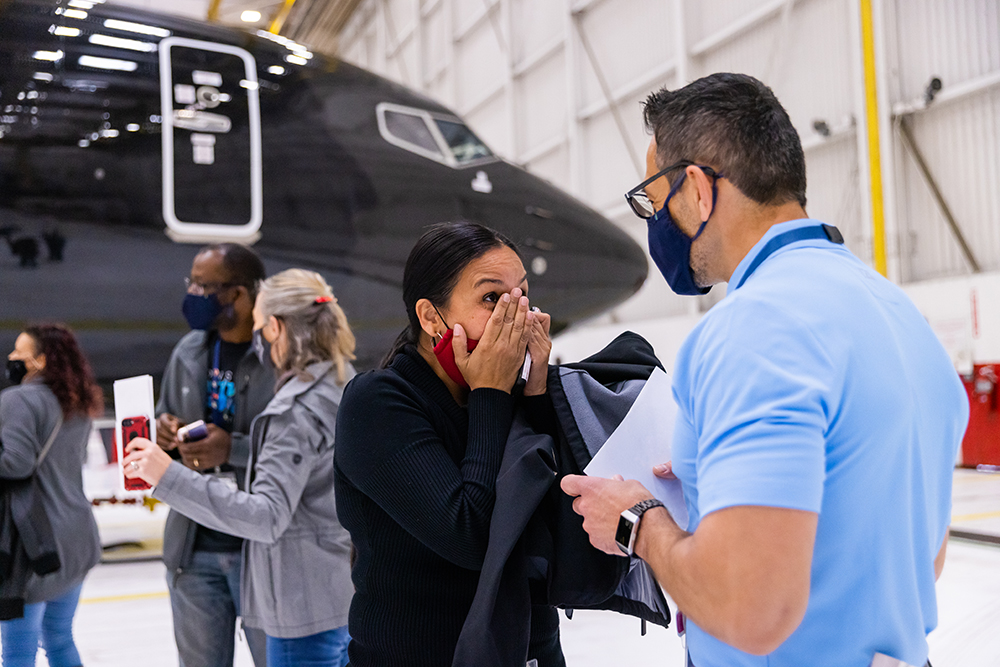
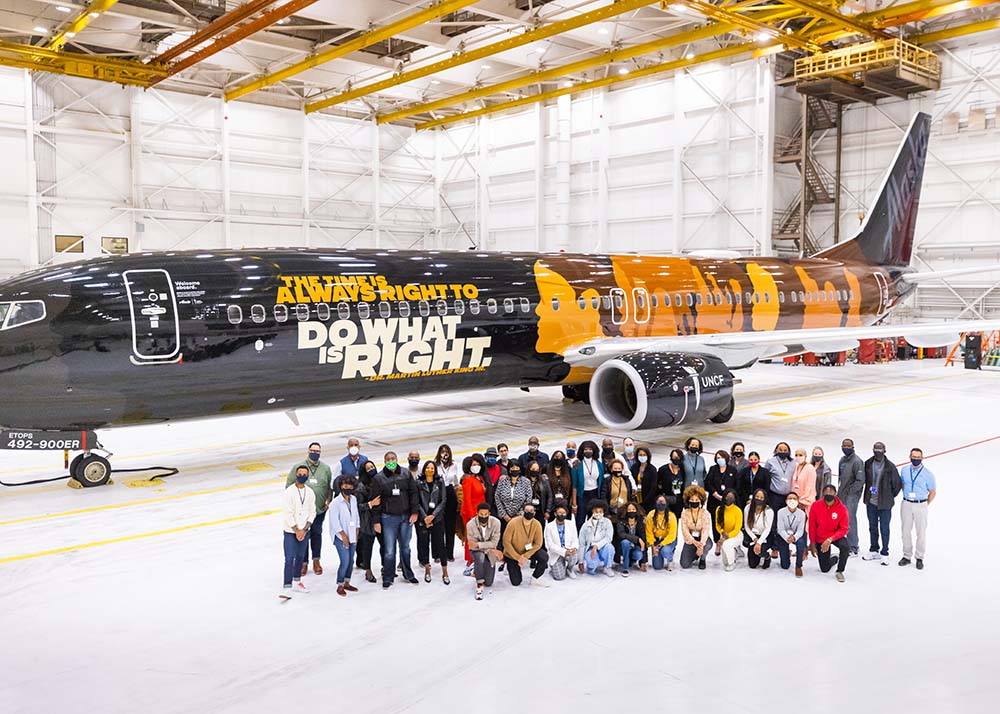
We are on a journey to make Alaska Airlines a place where everyone belongs and has opportunity. We also believe education is the key to equity and representation, with the power to transform the lives of young people—opening doors to careers in aviation and beyond. In partnership with UNCF, this special aircraft is a symbol of our commitment to education and advancing racial equity at Alaska Airlines, and we hope it inspires others as well.
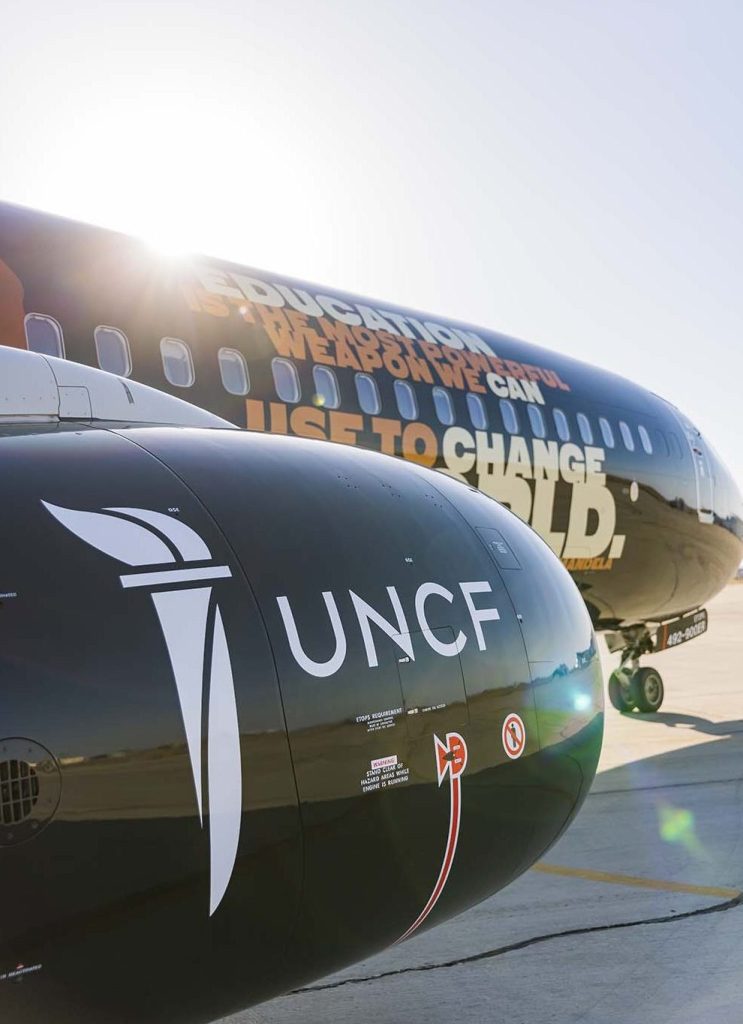
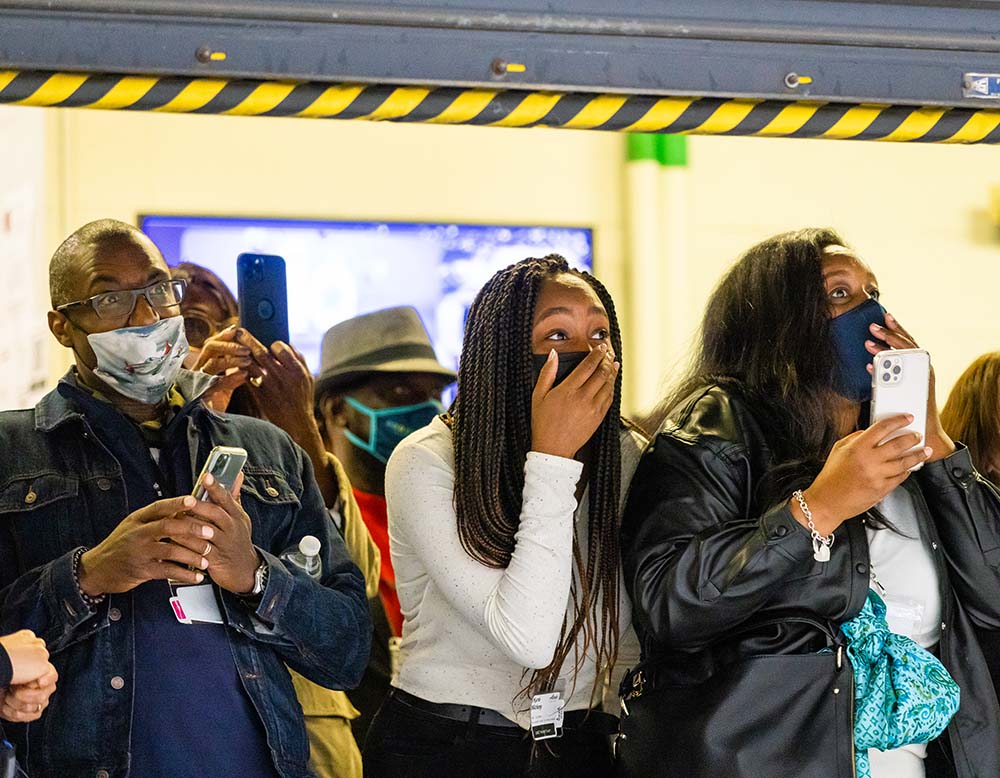
One of our diversity, equity and inclusion commitments is to help create career pathways for young people by supporting programs like UNCF, the nation’s largest and most effective minority education organization, who we’ve been working with for more than 15 years. Today, we are proud to reveal a special aircraft that symbolizes our support for education and equity – called “Our Commitment.” We know there is much more to do, and this airplane is a flying reminder of the journey.
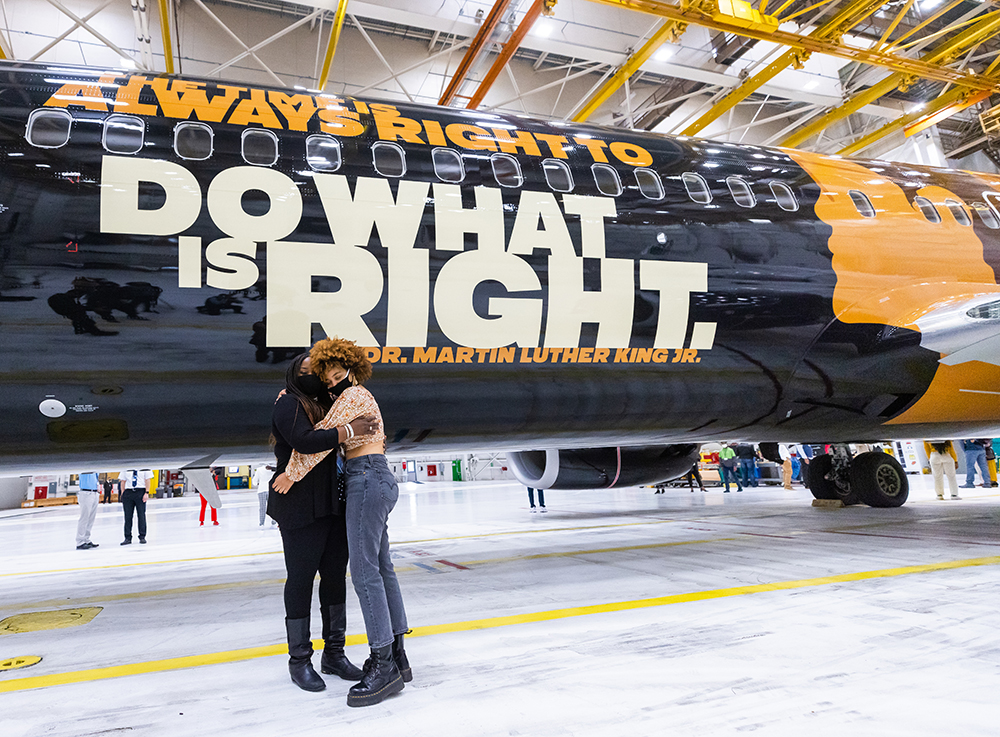
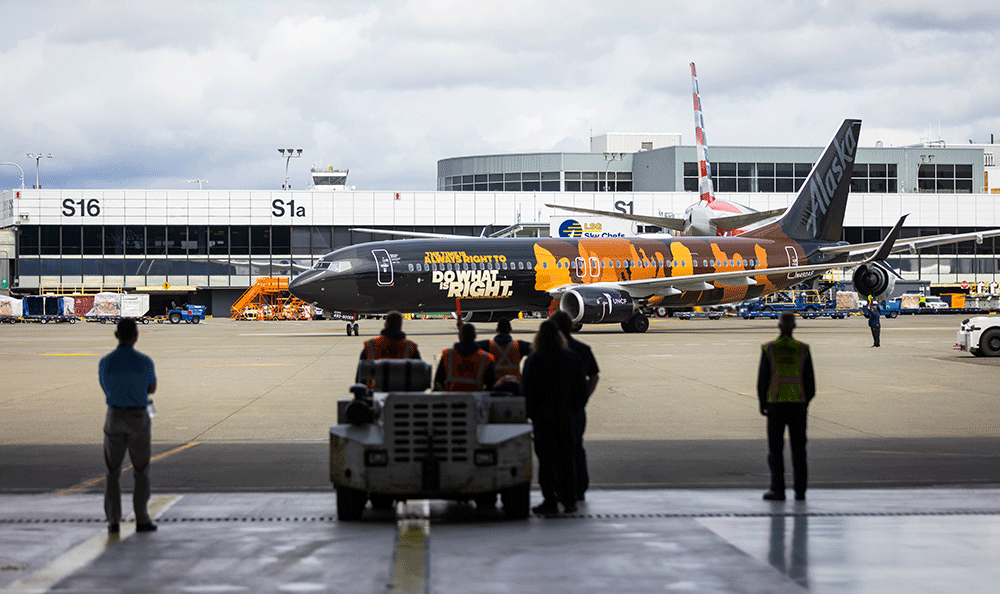
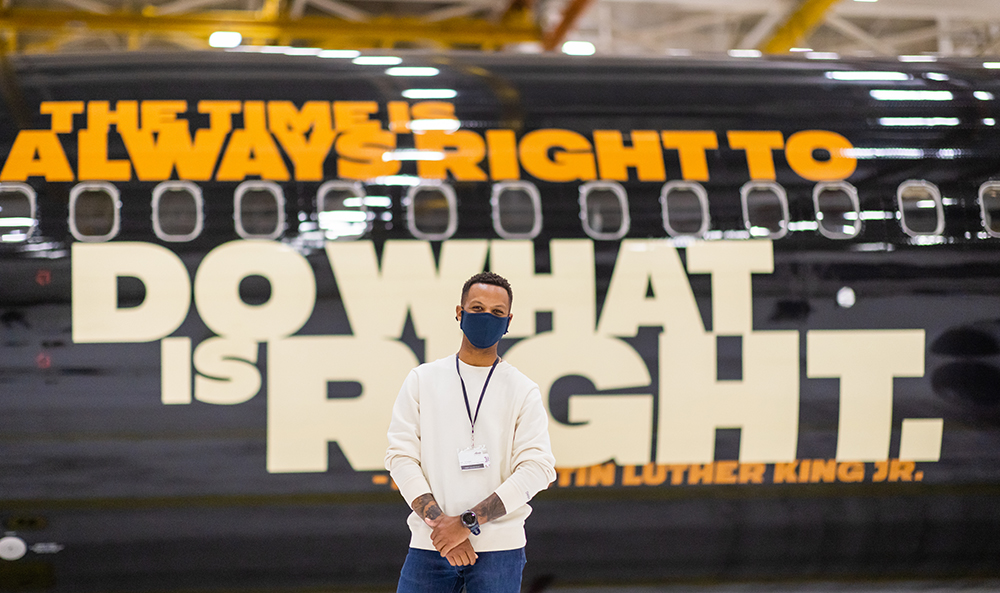
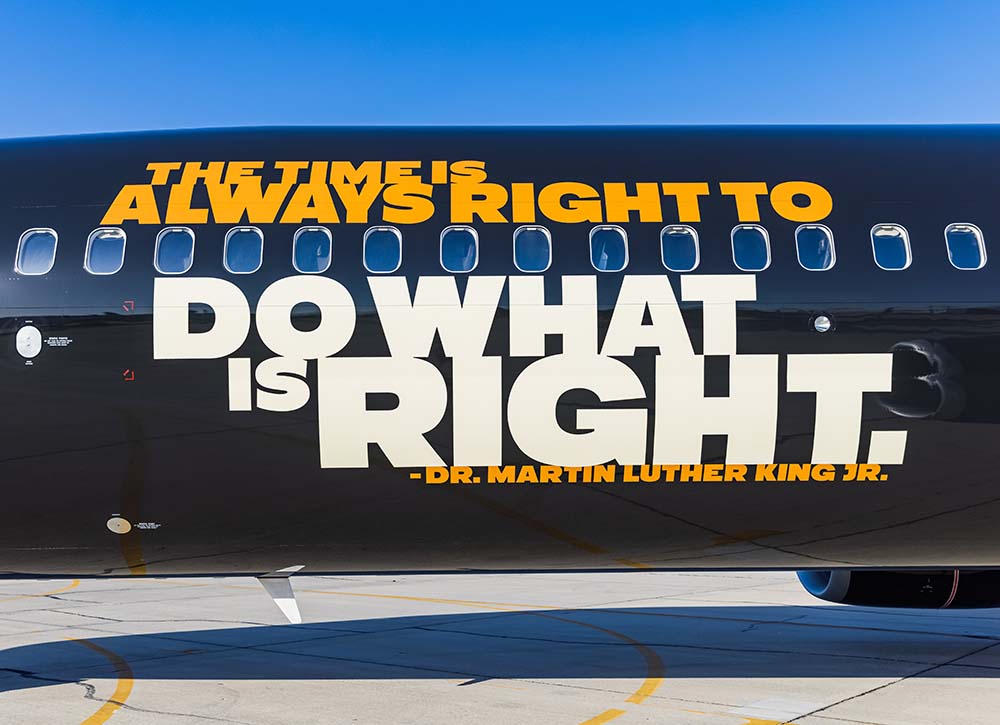
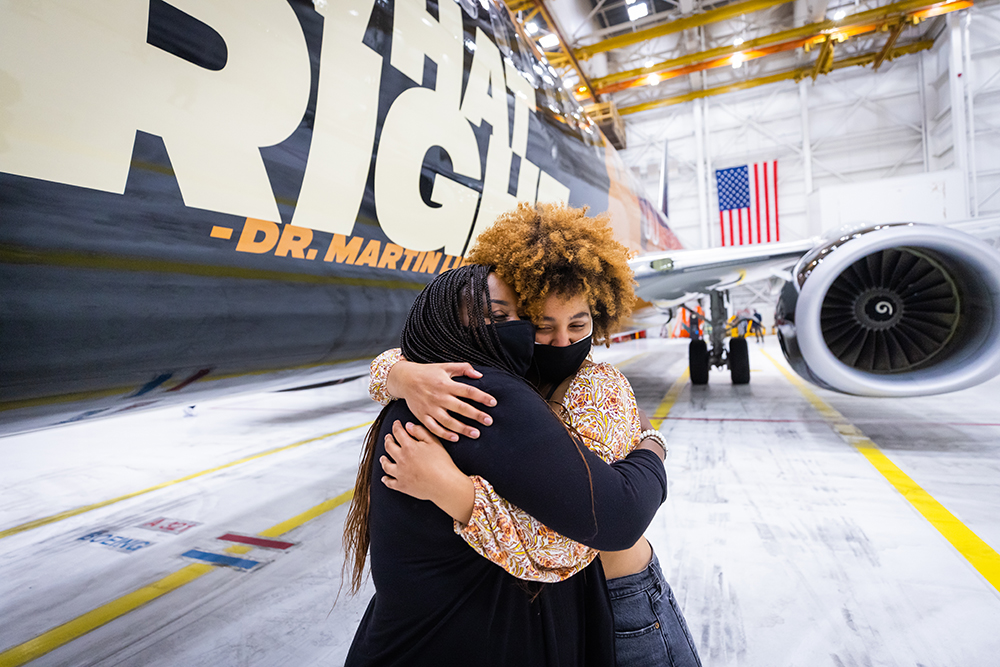
“The time is always right to do what is right.” – Rev. Dr. Martin Luther King, Jr.
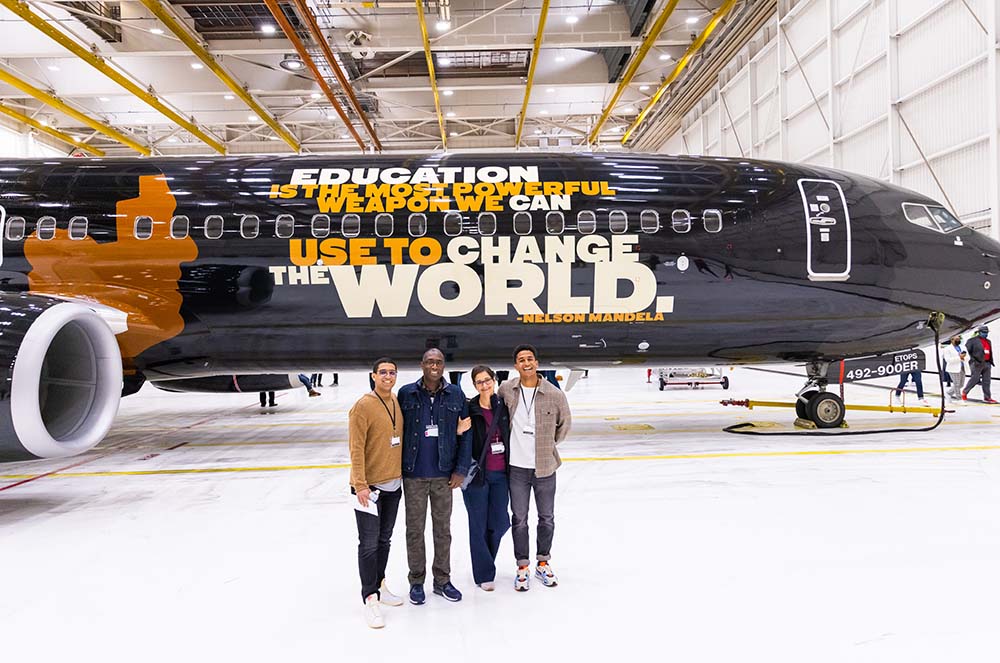
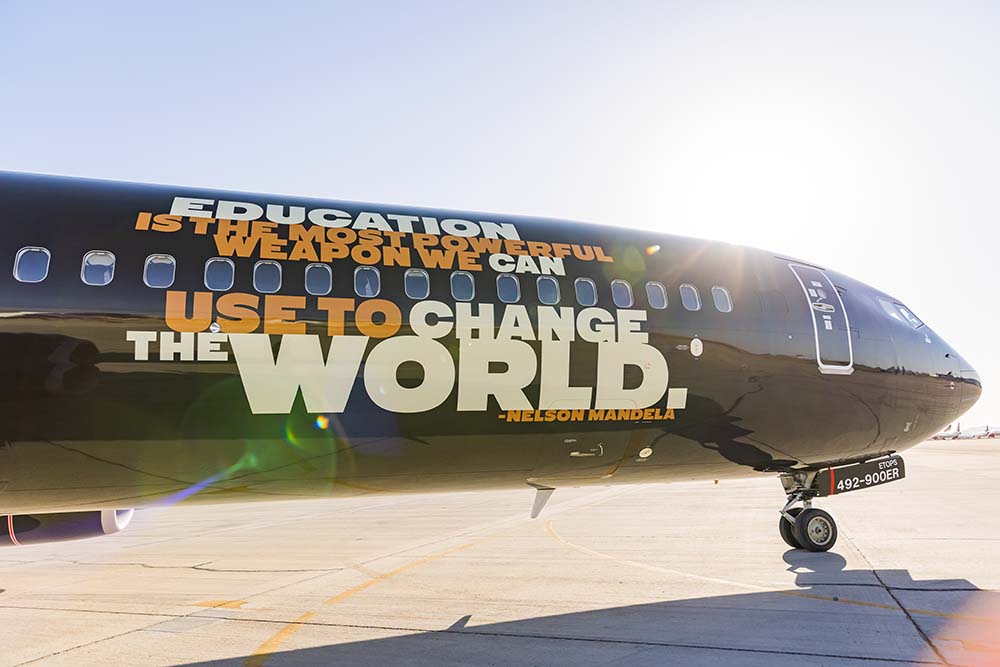
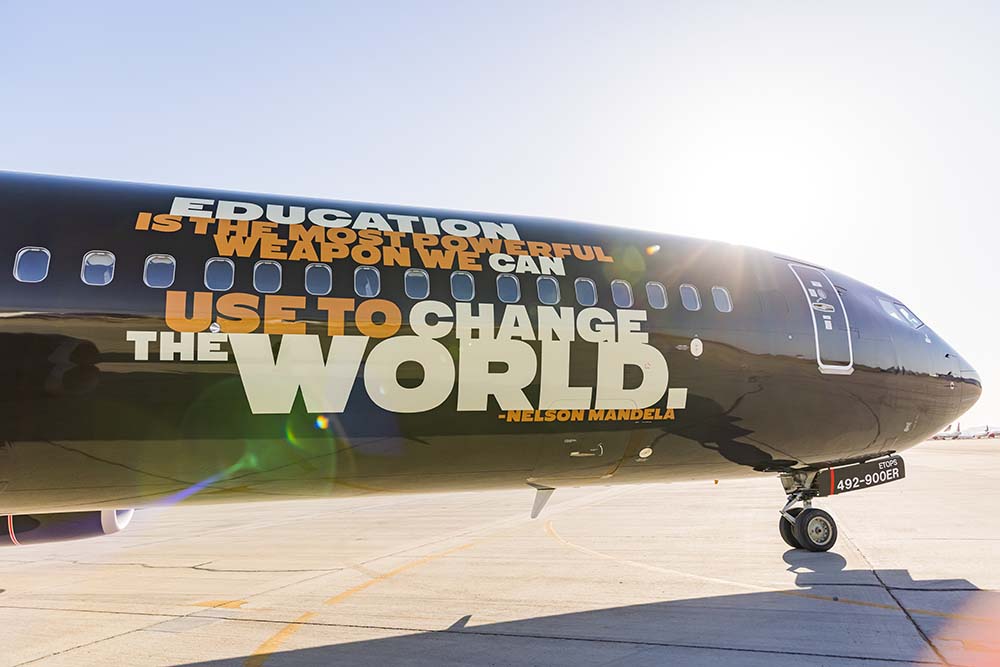
“Education is the most powerful weapon which you can use to change the world.” – Nelson Mandela
“When you learn, teach, when you get, give.” – Dr. Maya Angelou
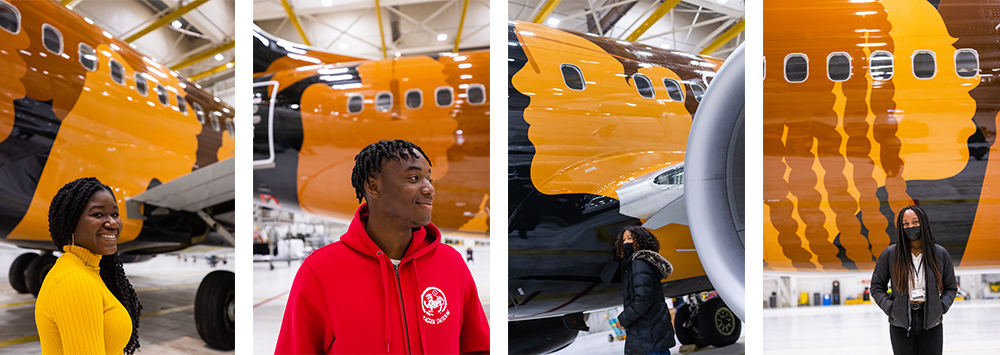
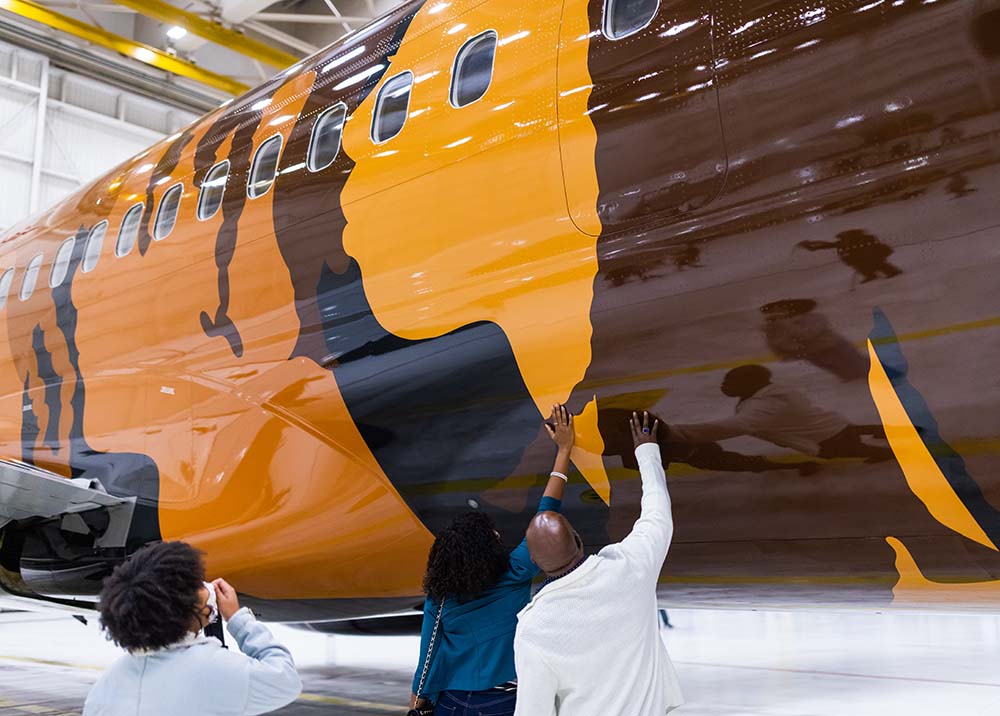
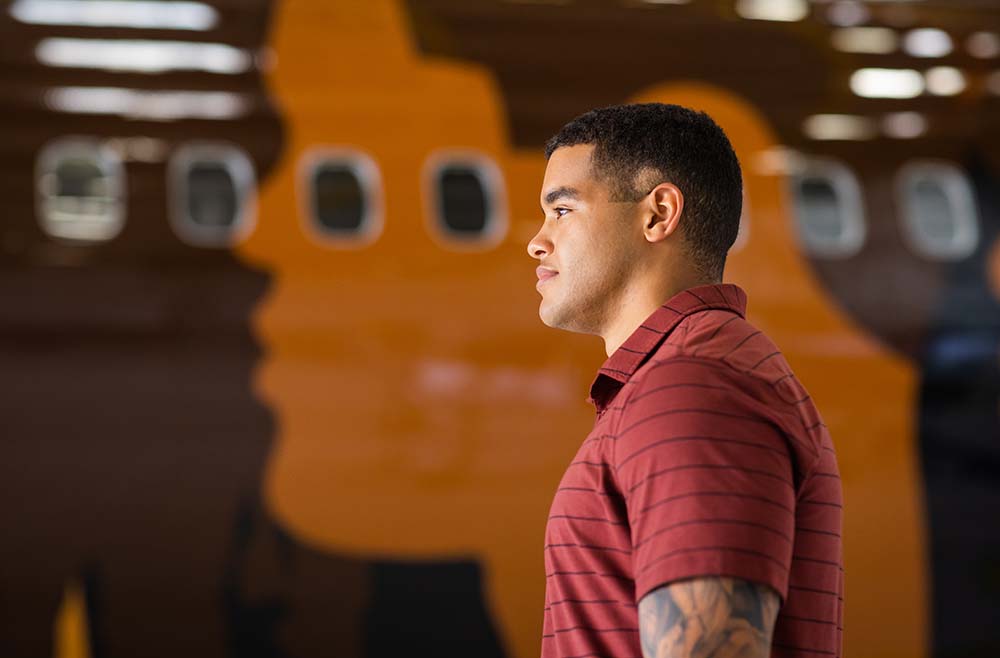
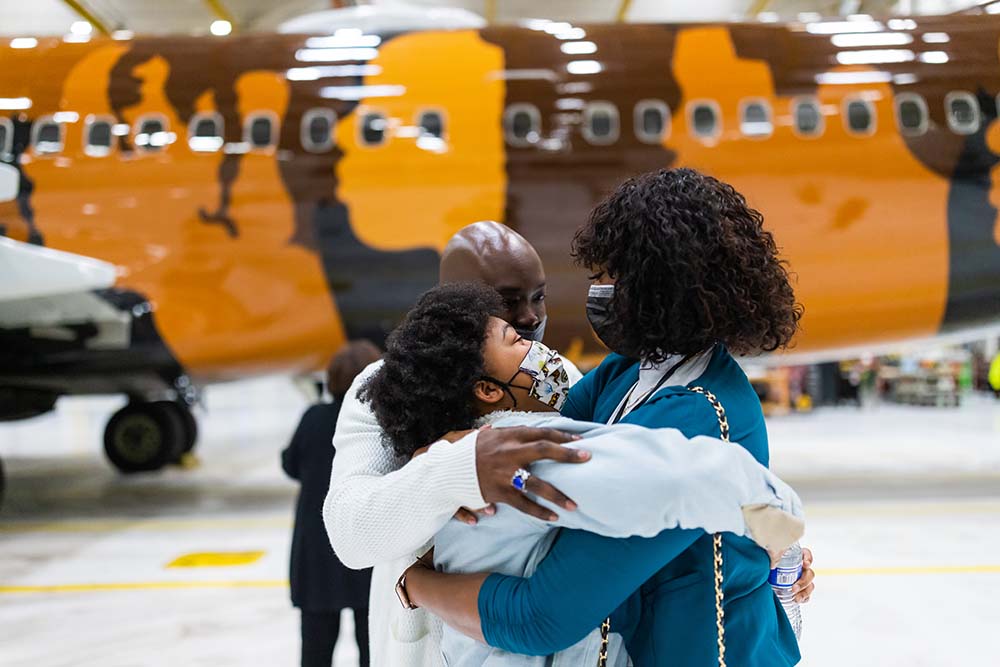
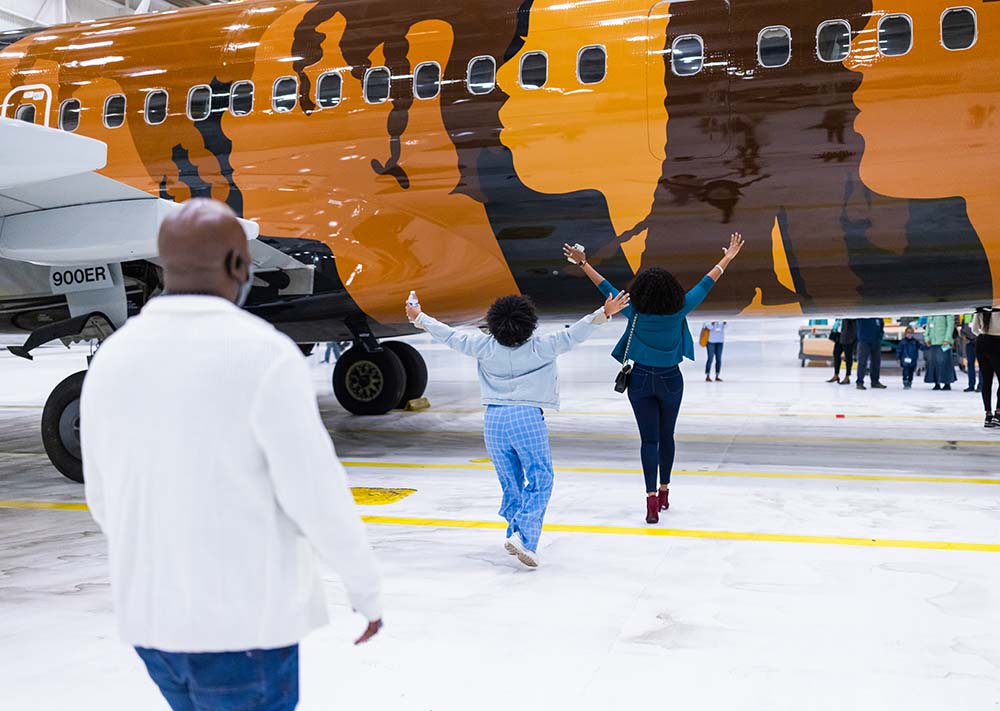
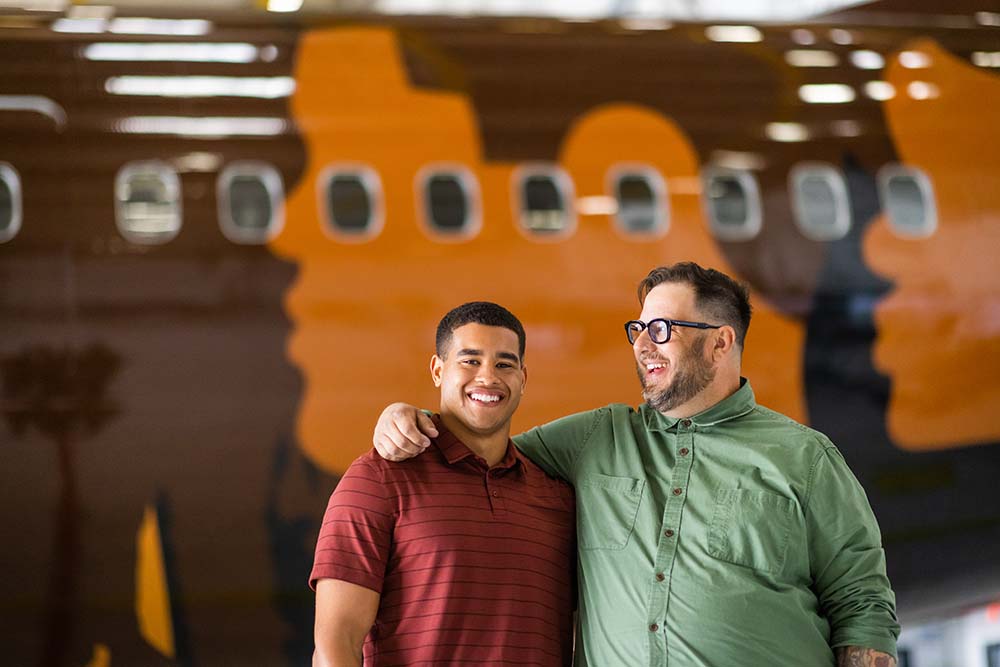
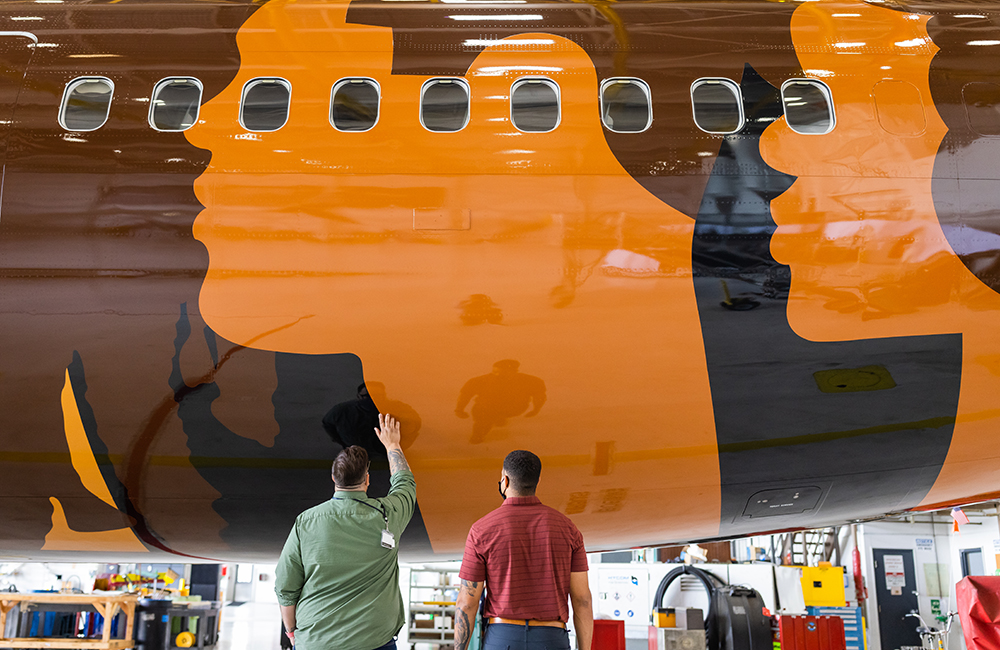
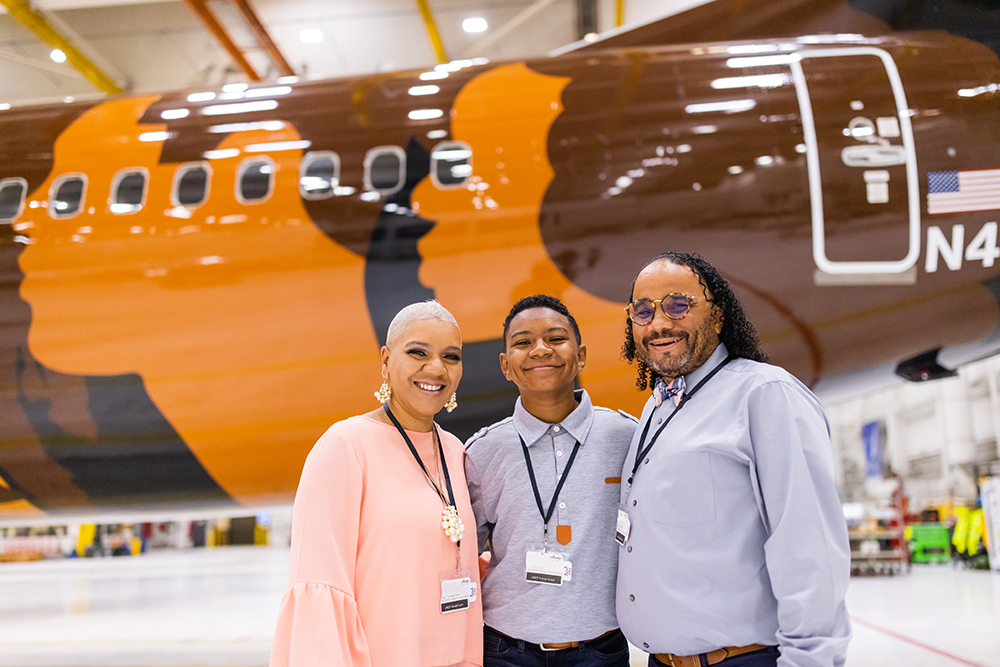
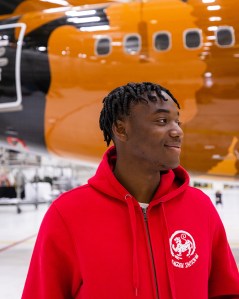
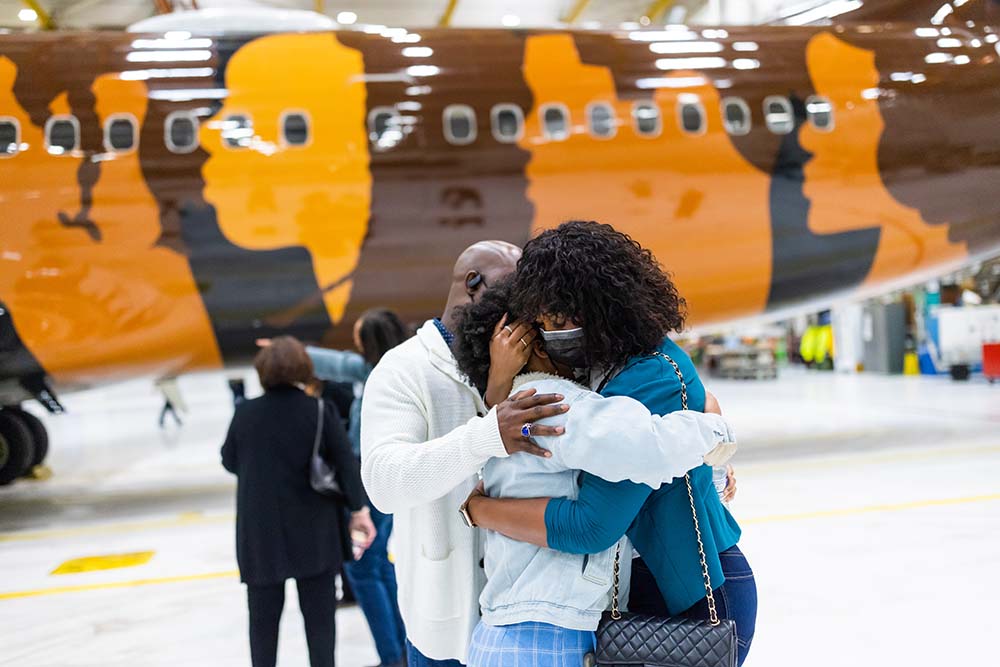
Inspired by these words and designed in partnership with Alaska’s Black employees, allies and UNCF, Our Commitment aircraft features profiles of the next generation of leaders — the children, grandchildren and mentees of Alaska’s employees along with teachings from extraordinary social activists. Because when we create belonging, we can be our best and soar together.
“As a company, we know we are not yet where we need to be when it comes to diversity, but we are inspired and guided by our value to do the right thing. With this aircraft, we are doing the right thing by amplifying the conversation around education, equity and belonging and taking it to the skies,” said Ben Minicucci, Alaska Airlines CEO. “This aircraft will continue to be an inspiration for us on the journey.”
‘Education has the power to transport us from where we are to where we want to go.’
This aircraft will fly throughout Alaska’s network, inspiring conversation, raising awareness and spreading the word about UNCF, an organization dedicated to enabling under-represented students to become highly qualified college graduates.
In 2017, UNCF became one of our LIFT Miles partners, enabling guests to contribute airline miles alongside the company to ensure travel does not hold young people back from pursuing their dreams. Today, our company and guests have contributed more than 13.4 million Alaska Airlines miles to fly students to Historically Black Colleges and Universities (HBCUs) for college tours, career development events, and other UNCF programs.
As part of our commitment, Alaska will donate one million miles annually to support students attending HBCUs. We’ve also established a scholarship fund through UNCF to help students overcome the financial obstacles of getting a college education. Learn more about donating miles here.
Dr. Michael L. Lomax, president and CEO of UNCF says, “While small in number, our HBCUs are landmarks to our past and keys to our future. They enable us to keep a legacy — by their very existence. HBCUs are much more than schools. They are places where Black students can feel safe, welcomed, and embraced by the college community. Additionally, the nation’s HBCUs make up just 3% of America’s colleges and universities, yet they produce almost 20% of all African American graduates and 25% of African American graduates in the STEM fields of science, technology, engineering and mathematics — the critical industries of the future.”
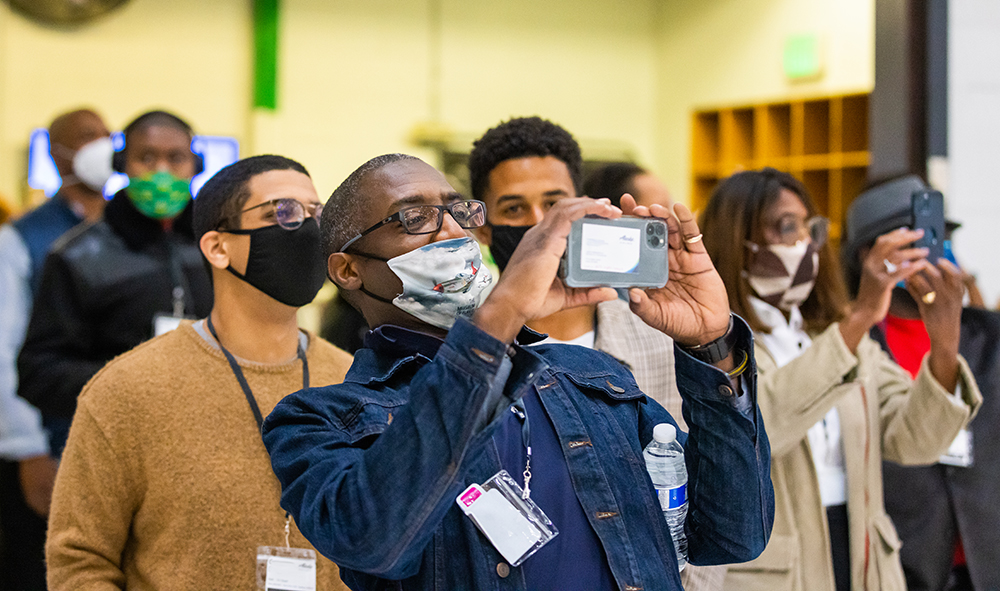
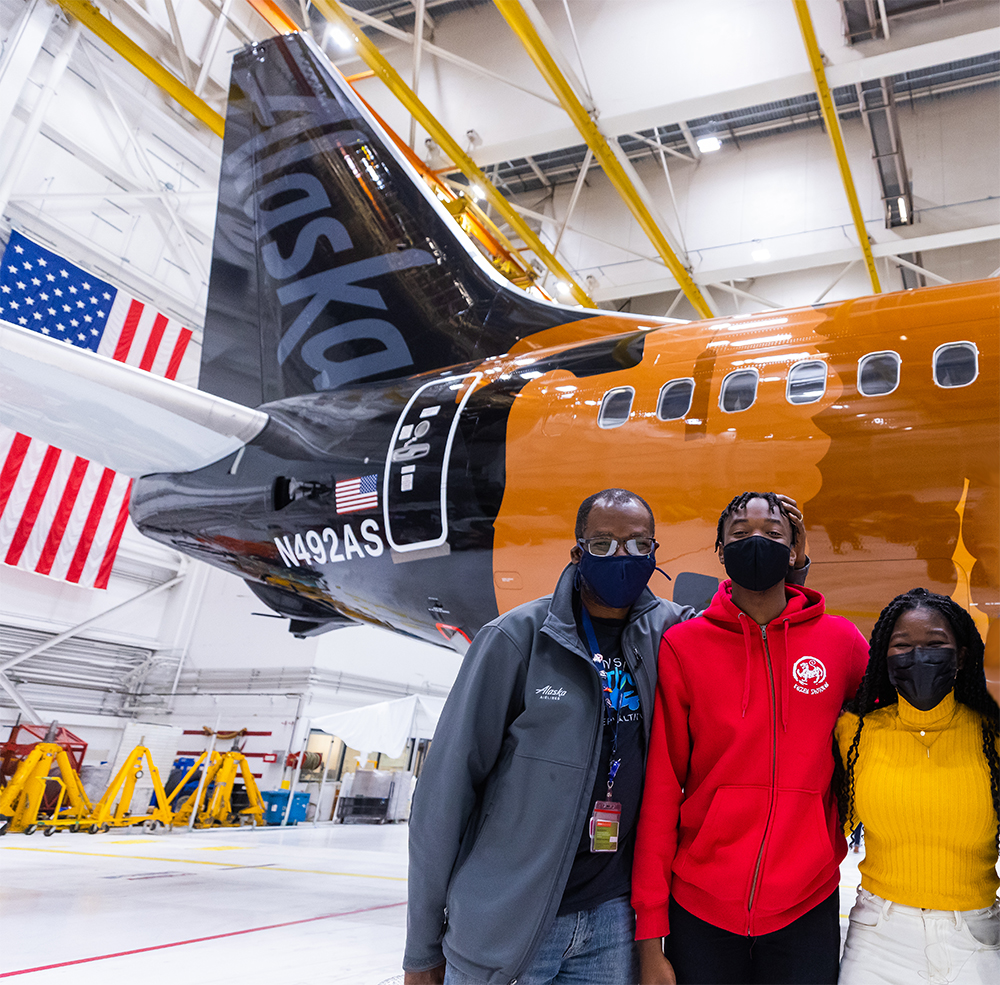
We are proud to reveal a special livery to celebrate our commitment to equity in education – introducing the “Our Commitment” aircraft. Revenue service for the aircraft begins on April 27, with an inaugural flight from Seattle to Washington D.C.
Our Commitments
Earlier this year, we shared our commitments to racial equity.
Our commitments are not simply a statement of values, they are a statement of actions and accountable goals we believe are essential to making our guests feel welcome and our employees feel valued, respected and seen.
Based on input from employees, we set three areas of focus:
Representation: Increasing the racial diversity of our leadership to reflect the diversity of our frontline employees.
Culture: Cultivating an inclusive culture so employees feel welcomed and that they belong.
Public Leadership: Working with community-based organizations to positively impact the lives of young people through education and career development.
We are expanding our programs for outreach, recruitment and career pathways to cultivate and support diverse talent and continue to work closely with our employee business resource groups and external partners to learn and improve. See our latest DEI progress.
About the aircraft
Where did the idea come from?
As an airline with the unique asset of aircraft, we have a long history of wearing our values on our wings, including our “Honoring those who serve” aircraft, which honors the brave men and women of the U.S. military. We use our aircraft to drive awareness and inspire conversation around topics of importance to our company and the communities we serve.
Alaska employees inspired the aircraft following conversations with Alaska’s Black business resource group known as ABEA or Alaska Air Group Black Employees, Allies & Advocates, around last summer’s civil unrest.
De Marco Best, a Duty Manager of Simulator Operations in Seattle, who has been an ABEA leader since its inception in 2006, says this aircraft is a small part of Alaska’s equity and inclusion efforts. It represents the most visible part of its commitment for the next decade and holds us accountable for creating an equitable future, says Best—for our children, our grandchildren, and us all.
“This airplane supports kids and education. I happen to have an affinity for education and kids, especially underserved youth and those who look like me. I think all kids could be inspired by this plane to find a career that they’ll love. If every child can find a career—not a job— that they are passionate about, it could propel them and create lasting change that instills the power of education,” said Best.
We focused on one key question: How can Alaska do something lasting, inspirational and impactful? With aircraft as our biggest tool, we realized we could create a flying reminder of the work toward equity.
Who are the faces?
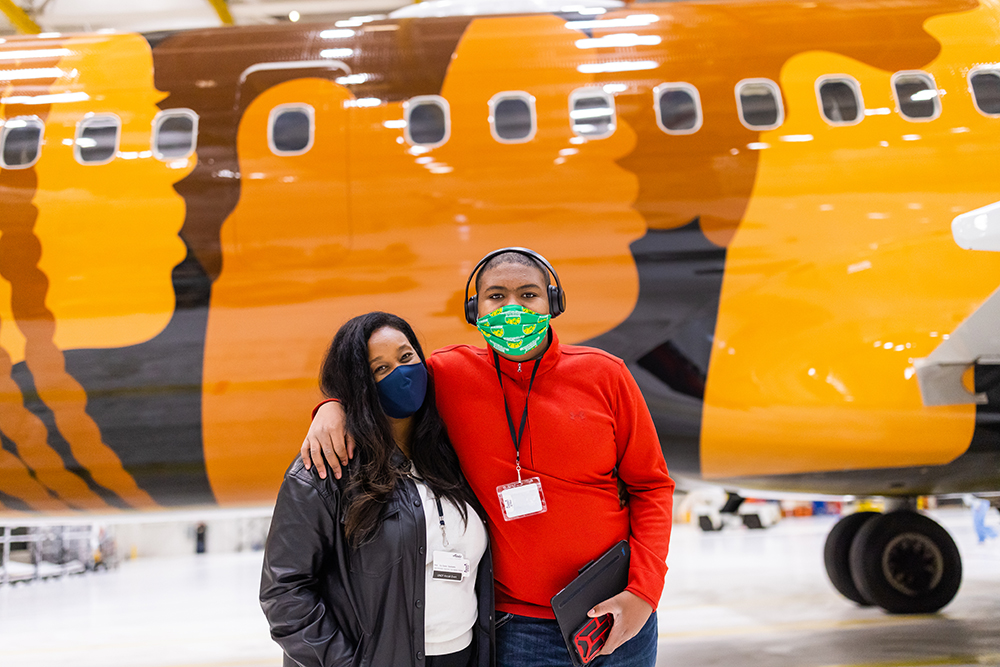
The custom-painted Boeing 737-900 ER features artistic renderings of 14 students connected to Alaska’s employees, along with quotes from legendary social activists, Dr. Martin Luther King Jr. and former South African President Nelson Mandela, whose leadership and words continue to drive our commitment. Learn more about the students represented on Our Commitment aircraft.
Who are the designers?
The typography and color palette on the aircraft were created by Adé Hogue, a Chicago-based artist and designer who found inspiration in Civil Rights Movement-era imagery.
“At the beginning, my mind went to protest posters from the 60s and the shape of the design slowly shifted into what you see today,” Hogue said. “A lot of the sort of lettering pieces I do, especially with things like this, I try to use the subject matter as a basis for things I’m creating. I think we integrated something that feels strong and impactful.”
Hogue worked with designer Jonny Mack, who has previously designed ten of Alaska’s special aircraft, to take our employees’ vision and make it a reality.
“Designing artwork for an airplane is incredible. It’s a big challenge and there’s lots of things that go into it. We knew we wanted to illustrate actual people instead of generic profiles that didn’t mean anything—we decided ‘let’s feature real people and have a real story to tell,’” said Mack.
The type treatment, he added, was a critical piece.
“The quotes from activists, thinkers and world changers on the plane are just as important as the people … and are a heavy weight to put on somebody—Adé was the first person I thought of for this project because I’ve seen his work and saw what he was doing in this space for social justice,” said Mack.
Adé Hogue and Jonny Mack met in 2019 at a Letter West design conference in Salt Lake City, sponsored by Alaska Airlines.
What can flyers expect onboard?
Onboard, guests will be able to learn more about the aircraft through a custom seatback card and digital resources featuring bios of the students on the aircraft, details on Alaska’s DEI commitments, and information about UNCF, including how to donate miles to support college students.
They are part of a 138-feet-long, 41-feet-high piece of art that will fly in Alaska’s fleet for up to 10 years to symbolize Alaska’s own equity journey and our collective commitment to education in partnership with organizations like UNCF.
Profiles of 14 students — family members and mentees of Alaska’s employees – are represented on the aircraft. Recently, these remarkable young people have shared their reflections on equity and education, in their own words:
“Equity is something a kid can’t control, yet could possibly affect their entire future,” says Shilah, 11th grade. “Every child deserves an equal opportunity to be able to succeed, and you only get that when you have an equal playing field.”
“Knowledge is power. If you have knowledge, you can change the world. You can make it a better place and that’s what we really need to do,” says Dominique, 11th grade.
“Equity challenges the imbalances and power within our society,” says Alexis, sophomore at Whitworth University. “Equity is not about making sure that everybody has the same amount. It’s about making sure that everybody has the same start.”
Learn more about the children, grandchildren and mentees of Alaska’s employees featured on our newest special aircraft
Represented in order of how they appear on the aircraft from nose to tail.
JADE
DAUGHTER OF SARAH, DIVERSITY, EQUITY & INCLUSION SPECIALIST (SEA)
Jade is featured at the front of the aircraft just before Dr. Martin Luther King Jr.‘s quote. She is a linguistics major at the University of Washington and has studied Spanish, Portuguese and Swahili. She is also fluent in German, which she taught herself in just three years by watching YouTube videos and reading books.
“I’ve always been captivated by foreign languages. When I was younger, growing up in Seattle, I’d always be surrounded by different cultures and languages and was curious to know what they were saying,” said Jade. “So, when I figured out linguistics was a field and something I could study in university. I was like, ‘that’s it,’ and I haven’t changed my mind since.”
“I truly believe a mind is a terrible thing to waste.” -Jade
Her mom, Sarah, who has been a customer service agent and manager at the Seattle airport and lounge, and leads Alaska’s Black employee resource group, is inspired by her daughter’s willingness to never give up and to look at all the steps, no matter how hard they are, and go for it.
“Jade is an example of what happens when you don’t block your kids from doing the things they think of — and kids can think of some pretty ridiculous things — like when she told me she wanted to learn German. I remember saying to myself, ‘Why, you’ve already done four years of Spanish?’ But she had this idea and not only that but teaching herself. Inside, I had doubts, but I didn’t say anything, and if I had, I wonder if she would have had doubts too and not be where she’s at today? I’ve learned as a parent not to put barriers in front of children and let them be whoever they want to be,” Sarah said.
Jade and Sarah.
ELLE
DAUGHTER OF FRANCHESSA, ALASKA AIRLINES FLIGHT ATTENDANT (LAX)
Elle is a freshman in Long Beach, California. She is on the high school track and field team and says she feels the freest when running. After graduation, she hopes to attend Howard University or another HBCU.
She also enjoys playing Minecraft and creating on TikTok. She says her biggest influences are her mom and actress Zendaya because they are “strong, beautiful and talented.”
Elle looks forward to running hurdles this year.
“I always caution her never to limit herself,” her mom, Franchessa said. “‘Go out there and get it,’ I tell her. As females, and Black females, we are already limited, so I tell her to make herself as marketable as possible. I think that’s one of the reasons I named her Elle. I have two kids and named them their names for a reason — Because I didn’t want them to be limited by anything if I could help it. I didn’t want them to be stereotyped or have less opportunity. I wanted it to be as even playing ground as possible — school especially should give every kid a fair start.”
Franchessa and Elle.
LONDON
MENTEE OF KIM, ALASKA AIRLINES FIRST OFFICER (SEA)
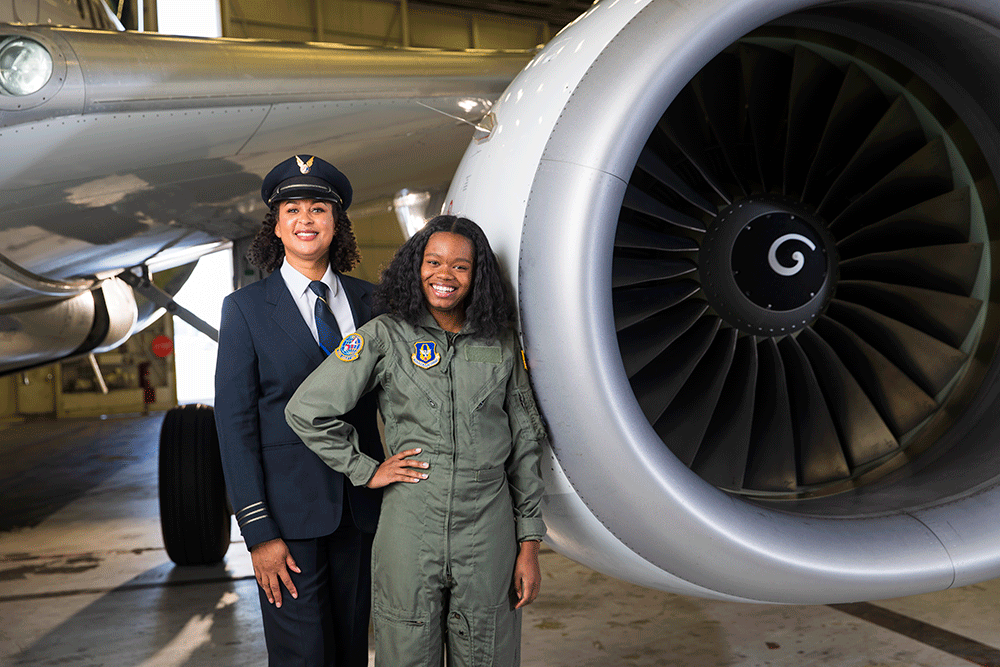
London grew up fascinated by the planes she could see from her house as they took off from Boeing Field and Renton Municipal Airport. By age 14, she was immersed in aerospace education programs — and now, she has her own private pilot’s license and plans on graduating from the Air Force Academy in 2025. “I want to get a degree in either aerospace engineering or computer science, and probably a minor in French, and pilot slot through the Air Force too,” she said.
She is currently at the Air Force Academy Preparatory School in Colorado Springs, and has high hopes of flying jets, following in the footsteps of her mentor, Alaska Airlines First Officer Kim Ford.
First Officer Kim Ford and mentee London in 2019.
“I’m glad that I have had the opportunity to be a part of flying organizations like Red Tailed Hawks through Black Pilots of America and fly camps where I get to see other people that look like me flying,” said London. “Internships are also important for kids my age to learn, grow and gain experience and great mentors, like Kim. Making sure there are opportunities like that is so valuable and has helped me and my other pilot friends get to where we are at today.”
London, her mom Sherrie and Kim Ford.
SHIMONE
SON OF GLORIA, ALASKA AIRLINES RESERVATION AGENT (PHX)
Shimone’s side profile that inspired his portrait on the plane.
Shimone, 15, is a high school freshman in Arizona. He loves football and has played the game since he could pick up a ball. “He is a great sport on and off the field,” says his mom.
Gloria, a reservations agent in Phoenix, says Shimone is shy but very sweet and kind. When he’s not playing football as a defensive back, he is doing schoolwork online or playing PlayStation. He also attends Bible study at least once a week.
Shimone is one of nine brothers and three sisters—who he loves to play pranks on, says Gloria. “He’s a very good big brother and mentor. I just remind him to work on his mindset and always stay focused and that education is the key to success.”
Gloria with Alaska CEO Ben Minicucci at the Our Commitment aircraft reveal.
“Shimone inspires me because he’s so mature for his age, he makes me laugh and is such a big helper. His heart is just so sweet like he’s just very kind and I love it.” – Gloria
When Shimone grows up, he’s thinking about becoming a fireman.
SHILAH
DAUGHTER OF SHIRAH, ALASKA AIRLINES FLIGHT ATTENDANT (LAX)
Shilah, 16, aspires to have a career in STEM. She loves computer science, graphic design and crochets for fun. When she’s not doing schoolwork, she loves playing golf with her dad, Devon—he taught her everything she knows about the sport. Ever since she picked up a club, she’s enjoyed the critical and technical thinking required to make every stroke and putt. When she graduates, she hopes to attend MIT.
Shirah, Shilah and Devon.
“I’m a very artsy person, but I’m also very meticulous with my work, so I like certain things and subjects like math and science that have an order to it. I want to be a software developer or just like graphic design. I want to mix the two worlds I enjoy into one, so I can have a career I enjoy,” Shilah said.
Shilah’s mom, Shirah, an Alaska Airlines flight attendant, says her daughter is like her ‘yang’ and has helped her to think differently.
“My generation was raised completely different than her generation, so she’s taught me to be a little bit more open-minded and open to learning new things her way,” Shirah said. “Just because we are the parents doesn’t mean that there’s not an opportunity for us to sit back and learn from our kids. She’s taught me not to just be the parent, but to also be the student with her.”
Shilah and Shirah.
MICAH
SON OF JONNY, ART DESIGNER OF OUR COMMITMENT AIRCRAFT
Micah, 22, is a 2020 graduate of the Air Force Academy. He is now a 2nd Lieutenant and is beginning his journey to becoming a pilot. At the Academy, Micah studied economics and played Division I football and later took up boxing and was named All-American. He is currently stationed in San Antonio, Texas, awaiting pilot training. He looks forward to flying the T-6 Texan later this year.
Micah was inspired to go into the military because of his grandfather on his biological father’s side, who earned a Purple Heart while serving in the Vietnam War. Jonny, Micah’s dad and one of Alaska’s Our Commitment aircraft designers, has been in Micah’s life since he was two years old.
Micah and Jonny.
“My Dad’s taught me empathy and patience and that being different makes you special,” says Micah, who is biracial. “Growing up, having two white parents, I usually had to explain myself to new people and could see the shock on their faces … what a lot of biracial kids experience is like ‘you’re not black enough for the black kids and not white enough for the white kids’ and you are always kind of looked at a little bit different. I’m thankful I’m able to embrace those differences now and look at them as a positive.”
Jonny and Micah admiring the plane.
“Micah’s dedication is just beyond anything I’ve ever seen,” Jonny said. “He’s always been the kid who wakes up early to go workout, leaves school and trains and did all of the things necessary to be above and beyond. And that’s been something I learned and changed about myself after seeing it in him and try to emulate in my own career today.”
ARTHUR
SON OF MACARA, ALASKA AIRLINES TRAINING DELIVERY SPECIALIST (SEA)
Arthur is in 8th grade and was just accepted to an aviation and aerospace STEM high school. His greatest love is aeronautics and space exploration. He also enjoys creating models using his 3D printer—his favorite creations are his custom chess pieces. His biggest dream is to fly in space. Arthur holding custom 3-D chess pieces he designed.
Arthur studying his custom chess pieces.
“We walk on the ground and can only see birds in the sky or planes. So, I think it’s fun to be able to think of what space is like and what it’s like to get off your feet and fly like an astronaut — like a bird in the sky but figuring out everything to make sure that you can stay in the air and everything that goes into that process excites me,” said Arthur.
Arthur and Macara.
“He wants to build a cruise ship in space or in the sky one day, and you know, that’s OK,” Macara said. “I tell him it’s OK to think farfetched and beyond what people think because the greatest creators are usually the ones who achieve what we all once believed to be impossible. He just amazes me and thinks in a different way that encourages me to be patient and expand my mind a little bit more too.”
Macara, Arthur Jr. and his dad Arthur.
BRANDON
SON OF RON, ALASKA AIRLINES BASE CHIEF PILOT (SEA)
After traveling to Europe with his family during the 2010 World Cup games, Brandon caught the soccer bug and is now a sophomore at the University of Portland, living out his Division I dream as a goalkeeper for the men’s soccer team.
“He’s a goalkeeper and that makes him a little crazy. Goalkeepers have to run toward the ball instead of running away from the ball,” his dad, Ron, Alaska base chief pilot in Seattle, said jokingly. “They have a great program and are a nationally ranked team, so when he was recruited, that was cool. I’m very proud of him.”
Ron says his kids, who are biracial, have what they call ‘this half and half hybrid thing going on, which is awesome.’ He says the important thing is when they see themselves, they see what is important: “whatever they want to see.”
Cameron, Ron, their mom Celiane and Brandon.
“When they asked us what color they were — once you discover you have a color … so awful, right? — You get this, label of color, and my kids are mixed, so they asked what color? ‘Well, my dad is Black, my mom’s white.’ And we’ve always said, ‘you’re just the color beautiful,’ and that’s where we left it for years,” said Ron, father of both Brandon and Cameron.
CAMERON
SON OF RON, ALASKA AIRLINES BASE CHIEF PILOT (SEA)
Cameron attends Washington State University, where he majors in broadcast journalism and works three jobs. When he graduates in the spring of 2021, he’s thinking about moving to New York City to pursue a career in the entertainment industry, specifically for late-night talk shows. His favorites are The Daily with Trevor Noah and the Week Update segment on Saturday Night Live.
“My guys — they are blazing their own trails. They deal with situations that I never dealt with, being mixed race, so I try to help them, but I also respect the fact that I don’t live in their shoes. I don’t know what it’s like to be them. I can empathize and we can talk, and they always know they’ll have unconditional love from me, so that makes it so much easier. But they also realize, and I let him know, that they will never be victims. They may be targeted sometimes, but we are never, ever going to be a victim.”
Cameron, Ron and Brandon.
DOMINIQUE
GRANDDAUGHTER OF HILDA, ALASKA AIRLINES STATION OPERATIONS DUTY MANAGER (SEA)
Dominique is in 11th grade in South Seattle. She loves water polo, literature and working with children at a daycare in South Seattle. She plans to attend an HBCU and aspires to have a career in social work.
“I really enjoy being around kids, like I really do. I love my little sister. I love all the kids that are at the daycare that I work at,” says Dominique.
Dominique also loves fashion — same goes for her grandmother, Hilda — and nail art.
Her dream is to attend Morgan State University in Baltimore or Howard University in Washington, D.C. because of their social work and psychology programs. “My favorite subject right now is a college readiness class. We work on applications, resumes and what’s best for us and what we’re doing right now to be successful later on,” she said.
Hilda and Dominique.
“It’s been beautiful to see her flourish and to watch her grow. She’s so used to fighting and working so hard that it’s just become a part of her. I’ve never seen anyone so determined to win,” said her grandmother, Hilda, who is a station operations duty manager in Seattle.
ALEXIS
DAUGHTER OF JOHN-ANTONY, ALASKA AIRLINES SENIOR TEST MANAGER (SEA)
Alexis is currently a sophomore at Whitworth University. She is double majoring in International Studies and French, with aspirations of going into law. She is passionate about policy and what policy can do to change lives. She also enjoys poetry and roller skating with her friends.
When asked what the most influential thing is that she’s learned from her dad, John-Antony Dubreuil, a leader in ABEA, Alaska’s Black employee resource group and ITS senior test manager, is ‘the power of hard work.’
“I know that sounds really cheesy and it sounds like the go-to answer that every minority student will ever say but it’s true — it’s hard work that gets you places, and being diligent. I think it’s also important to think critically about various subjects. Like not to just accept things as they are but seek to understand why they are how they are and what you can do to change it.”
JA with his daughter Alexis at the Our Commitment aircraft unveiling.
“Education is important because ignorance brings pain. It brings a lot of hurt and a lack of empathy and compassion for people of different backgrounds and different cultures. Education plays a huge a role in learning what’s what and a holistic education teaches you about so many different things,” Alexis said.
KADEN
SON OF KAREN, FORMER ALASKA AIRLINES DIRECTOR OF DIVERSITY AND INCLUSION (SEA)
Kaden is a high school sophomore and a member of the school’s bowling club and the Special Olympics swim team. Kaden is on the autism spectrum and was non-verbal until he was 6 years old. These days, you can’t get him to stop talking––his favorite thing to say is “I love you, Mommy.”
“I want Kaden to have the same opportunities that anyone else has. I want him to have the life that his sister has. I want him to graduate high school in the same amount of time as other students … I want him taking the classes that everybody else is taking. It’s important for me because I never want anyone to give up on my son,” she said.
Karen and Kaden.
Kaden is a straight A student and loves his classes, and his teachers adore him.
“Equity is really important, because regardless of the differences he has or his learning ability, he is thriving and I believe that is because of equity,” says Karen.
Kaden and Karen.
KYRA
DAUGHTER OF KAREN, FORMER ALASKA AIRLINES DIRECTOR OF DIVERSITY AND INCLUSION (SEA)
Kyra is a high school senior and plays basketball at an academy in Florida. She hopes to continue playing in college and has been accepted to all of her college choices for academics.
“Honestly, I just want to be my best self if that makes sense like wherever life takes me. If basketball is not a part of it or is, I just want to live out my life to its fullest potential. Like I don’t want to limit myself,” she said. “I would just like to be successful at whatever I do in life, like my mom who has built her way up in her career and I think it’s so impressive and I just want to be like her.”
Karen and Kyra.
Kyra is passionate about representation, especially within education. She helped organize a Black student union at her previous high school and likes how her new school has many clubs to represent minorities.
“I felt like I really belong here, like I’m at home even though I’m across the country away from my family,” she said. “Equity in the classroom leads to how people start out in their professional lives — when they go to college or enter the business world. It’s important to know where someone is coming from and what makes them who they are.”
Her mom, Karen, was part of the group who started on the path to designing Our Commitment aircraft.
Kyra and Karen react to seeing the plane for the first time.
JONATHAN
SON OF JOHN-ANTONY, ALASKA AIRLINES SENIOR TEST MANAGER (SEA)
“If you go about it in the right way, an education could help your community,” Jonathan said.
Jonathan is currently a freshman at the University of Washington, majoring in communications. He loves coordinating social events with his friends and listening to jazz music. He also speaks French and Spanish.
Jonathan thinks education should be looked at with circular logic.
“Education in many ways is correlated to a paycheck and the higher your education, the more you typically are paid — it’s what you can do with that money that matters. If that money could be pumped back into your community, it could open so many more doors and the rest of your community could have the opportunity to be educated.”
JA, Johnathan and Alexis.
Growing up, Jonathan and his family practiced Karate. He says he learned a lot of life lessons from it.
“Something my dad says a lot, when we did karate that still resonates with me, is ‘practice doesn’t make perfect. Perfect practice makes perfect performance.’ And, like this plane, it’s a great start but its impact will depend on the actions put into it.”
To be a Black travel professional in today’s industry still comes with microaggressions and bias even in 2021. Fighting for equal opportunities, pay and the need to constantly break negative stereotypes toward people of color can be emotionally exhausting. But as a diversity travel consultant, I understand there’s an opportunity for the industry to create a reality where everyone sees themselves, feels they belong and can be their absolute best. It takes admitting there is a problem, awareness of all people and a commitment to change and support from leadership, and progressive plans of action. Celebrating diversity isn’t always easy or comfortable, but in the words of Dr. Martin Luther King Jr., “The time is always right, to do what’s right.”
When I first saw Alaska Airlines’ Our Commitment aircraft, my cheeks blushed and my eyes filled with tears. I was so overwhelmed by the magnitude of what I was seeing. For the first time as a Black woman, avid traveler, and passionate advocate for diversity in the travel industry, I was speechless at what I saw on my computer screen. The only word I could utter out was ‘WOW.’ All I could think to myself was, ‘all it takes is one plane.’
The aircraft was revealed privately to the families, children, grandchildren and mentees of Alaska’s employees on April 25.
All it takes is one plane to change the narrative. A narrative that celebrates Black contributions — acknowledging how our differences and voices have helped shape more welcoming corporate cultures — on the plane, in the cockpit, and in flight. All it takes is one plane to change how we, the Black community, see ourselves represented in inflight information, entertainment and programming.
As the daughter of an airline employee, I’ve flown avidly for over 25 years. I’ve seen many aircraft designs from Disney characters to NFL teams, but never one like this. From the plane’s exceptional design to its overall significance, I walked into the hanger, extremely grateful for the opportunity to experience such a moment. A moment created from a 15+ year partnership between Alaska and UNCF to celebrate both education and the chance to experience a good one.
When Alaska revealed the plane, it was incredible. I mentally took note of each child’s face as they found their profile on the plane, and the feeling we all felt was priceless. ‘’How does it feel to see yourself?‘’ I asked Dominique, a student featured on the plane. ‘’This is so cool. I’m excited!’’ she replied. Like Dominique, I am an Oakland native; it was like looking at myself in the mirror. Dominique says she hopes to attend Morgan State University, a Historically Black College in Baltimore, which ironically holds a special place in my heart. Morgan State was my first job out of graduate school, teaching in the fashion department as the youngest professor on campus at age 25. Her passion, excitement and interest in the HBCU experience became a full-circle moment for me when she asked, ‘’What is the best part about attending an HBCU?’’ I thought about it, and told her how she knows being from Oakland, a lot of kids don’t get the opportunity to go far due to lack of resources, so seeing Black students who want to be at school and are serious about their education is the best and most rewarding part.
Dominique seeing the plane for the first time with her grandmother Hilda Shepard, Alaska station operations duty manager in Seattle.
Since the start of its partnership with UNCF, Alaska and its guests have contributed more than 13.4 million miles to fly students to HBCUs for college tours, career development events and other UNCF programs. As part of the Our Commitment aircraft, Alaska will also be donating one million miles annually to support students attending HBCUs and established a scholarship fund through UNCF to help students overcome the financial obstacles of getting a college education. As an HBCU alum of North Carolina A&T State University, I understand how much of an impact this has on students and their families or support systems. As a California native, attending college on the East Coast, I saw my classmates have to stay on campus during breaks because their families couldn’t afford the plane tickets home. I’ve seen students transfer to closer institutions because paying for flights wasn’t easy for some families. This initiative indeed changes lives and gives access to those students who are our future leaders and game-changers.
The reveal was mind-blowing, but my anticipation of flying on its special charter flight on Monday, April 26, before it enters passenger service the following day, is high! Never before have I seen an all-Black crew or have had the opportunity to experience a journey that is 90% filled with Black passengers.
During the reveal, I met Alaska First Officer Christopher Jones, who told me on a route back to Baltimore last week for the first time in his two-year Alaska career, he and another Black pilot were in the cockpit. He said he felt so proud in that moment, and I know it’s exactly how I will feel. For the first time, I know I will feel completely comfortable on a plane. I know I can be myself. Nobody will ask to touch my hair; nobody will be shocked that I, a Black woman, travels as frequently as I do. I don’t have to experience someone not wanting to sit next to me because of the color of my skin (yes, it happens). Nobody will say, “you speak so well and poised,’’ as if that is shocking. And to top it all off, I will be on a plane with the 14 Black faces of the children, grandchildren and mentees of Alaska’s employees featured on the aircraft. A dream I don’t have to wake up from.
Alaska might have more work ahead to advance diversity, equity and inclusion, but still, it is clear to me they are committed to creating a culture of belonging and opportunity for its guests, employees and communities. Working in this industry, I can quickly identify when a brand is performative, and I am proud to say nothing about this initiative is that. I sincerely feel like ‘’Alaska gets it, and that is one of the best feelings in the world. Alaska says the aircraft symbolizes their journey to making Alaska a place where everyone feels like they belong. For me, it symbolizes a shift in the industry where a brand is willing to step up and lead by example. That is impeccable, and the bar has been set. All it takes is one plane to change the narrative.
HONOLULU – Hawaiian Airlines today celebrated the inauguration of its twice-weekly nonstop service between Austin-Bergstrom International Airport (AUS) and Honolulu’s Daniel K. Inouye International Airport (HNL). Hawai‘i’s hometown carrier introduced its in-house music and dance group, The Hawaiian Airlines Serenaders, to the “Live Music Capital of the World” as it welcomed guests aboard its first flight to Hawai‘i.
The Hawaiian Airlines Serenaders performing at Austin-Bergstrom International Airport
“We’re thrilled to be the first carrier to provide nonstop flights between Central Texas and Hawai‘i,” said Peter Ingram, president and CEO of Hawaiian Airlines, who celebrated the inaugural departure alongside representatives from AUS airport, the City of Austin, Visit Austin and the Austin Chamber of Commerce. “Both destinations are known for their incredible food, music and arts scene and we couldn’t be more excited to connect these two amazing cities with our convenient, award-winning service.”
Hawaiian Airlines President and CEO Peter Ingram (second from left) pictured with HA82's pilot crew at Honolulu's Daniel K. Inouye International Airport prior to the inaugural flight
Flight HA81 departs Austin on Thursday and Sunday at 10:10 a.m. with a 1:30 p.m. scheduled arrival in Honolulu, allowing guests to check in to their accommodations and begin exploring O‘ahu or connect to any of Hawaiian’s four Neighbor Island destinations. The flight from Honolulu to Austin, HA82, departs on Wednesday and Saturday at 10 a.m. and arrives at 10:10 p.m. Hawaiian will increase AUS-HNL service to three weekly flights from May 28 through Aug. 13 to meet summer travel demand.
"Hawaiian Airlines' arrival in Austin signals strong confidence in the Austin market as we continue to recover from the financial impacts of the pandemic," said Jacqueline Yaft, chief executive officer for AUS. "This is a great milestone for both our airport and our greater Austin community."
Pictured from L to R (not including dancers): Doug Driskill, chair for the Austin Chamber Air Service Task Force; Vanessa Fuentes, Austin city councilwoman, District 2; Peter Ingram, president and CEO of Hawaiian Airlines; Jacqueline Yaft, chief executive officer of Austin-Bergstrom International Airport; and Tom Noonan, president & CEO of the Austin Convention & Visitor’s Bureau.
In recognition of the inaugural service coinciding with Earth Day, Hawaiian encouraged guests heading to Hawai‘i to travel pono – responsibly – by gifting them a reusable utensil kit, part of the airline’s new eco-minded collection of products that launched this week
Guests onboard Hawaiian’s Austin-Honolulu flights will enjoy the airline’s signature Mea Ho'okipa (I am host) service – the gold standard in domestic leisure travel featuring an authentic Hawai'i experience. Hawaiian proudly offers complimentary meals in all cabins and has partnered with Hawai‘i’s top chefs to offer an island-inspired dining experience for guests traveling in its First Class cabin. Guests will feel relaxed in the roominess and superior comfort of its 278-seat Airbus A330 aircraft, which feature 18 First Class lie-flat leather seats arranged in a 2-2-2 configuration tailored for couples, families and honeymooners, as well as business travelers. Hawaiian’s A330s are also equipped with 68 of its popular Extra Comfort premium economy seats providing more legroom and enhanced amenities, in addition to 192 Main Cabin seats.
Hawaiian, the nation’s most punctual airline for 17 straight years, has simplified the experience for guests to meet the state of Hawai‘i’s pre-travel testing requirements and be exempt from quarantine upon arrival through partnerships with Worksite Labs, which offers drive-thru COVID-19 testing near AUS airport, and CareNow Urgent Care, which administers rapid testing at 15 locations in the Greater Austin area. More information on these partners can be found at www.HawaiianAirlines.com/Covid-Test-Options/Austin.
Guests who obtain a negative test within 72 hours from departure will receive a pre-clear wristband during boarding that allows them to bypass airport screening in Hawai‘i.
For more media assets from the AUSHNL (HA81) inauguration ceremony, click here. For more media assets from the HNLAUS (HA82) inauguration ceremony, click here.
About Hawaiian Airlines
Hawaiian® has led all U.S. carriers in on-time performance for each of the past 17 years (2004-2020) as reported by the U.S. Department of Transportation. Consumer surveys by Condé Nast Traveler, Travel + Leisure and TripAdvisor have placed Hawaiian among the top of all domestic airlines serving Hawai‘i.
Now in its 92nd year of continuous service, Hawaiian is Hawai‘i's biggest and longest-serving airline. Hawaiian offers nonstop flights within the islands, between Hawai‘i and more U.S. gateway cities (16) than any other airline, as well as service connecting the islands with Japan and South Korea. As a result of the COVID-19 pandemic, Hawaiian has temporarily suspended service in Australia, New Zealand, American Samoa and Tahiti.
The airline is committed to the health and safety of its guests and employees and has reinforced enhanced cleaning procedures across its business. While the experience may be a little different, the authentic Hawaiian hospitality remains unchanged. Additional details on how Hawaiian is keeping guests and employees safe can be found at HawaiianAirlines.com/KeepingYouSafe.
Hawaiian Airlines, Inc. is a subsidiary of Hawaiian Holdings, Inc. (NASDAQ: HA). Additional information is available at HawaiianAirlines.com. Follow Hawaiian’s Twitter updates (@HawaiianAir), become a fan on Facebook (Hawaiian Airlines), and follow us on Instagram (hawaiianairlines). For career postings and updates, follow Hawaiian’s LinkedIn page.
For media inquiries, please visit Hawaiian Airlines’ online newsroom.
Flying with purpose: Alaska sets new climate goals, including net-zero carbon emissions by 2040
Each year we share how we’re caring for the planet and the people we serve in our annual sustainability report. This year we’re also setting our course for the future.
Today, we announced our commitment to reduce our climate impacts with new goals for carbon, waste, and water. We’ve set a course for net zero carbon emissions by 2040, with near-term 2025 targets to maintain carbon neutral growth from 2019. We also set goals to be the most fuel-efficient U.S. airline and cut the climate emissions from our ground equipment in half. We’ll keep up our industry-leading recycling program, continue to source more sustainable packaging for inflight service and offset our water use with investments in local ecology and habitats. With these goals, we are joining Amazon and over 100 other companies in signing The Climate Pledge, a commitment to be net zero carbon across our business 10 years ahead of the Paris Agreement.
Doing the right thing
One of our core values is to do the right thing, and that means reducing the impact of air travel on the environment. Our most significant environmental impact is through greenhouse gas emissions produced through the burning of jet fuel. That’s why we’ve prioritized the work to burn and emit less fuel, to employ greener alternatives and ultimately to transform aviation for a more sustainable future and to keep the incredible destinations we serve beautiful and viable for generations to come.
“Air travel connects us to our friends and families, helps us understand one another, and helps communities across the globe grow and thrive,” said Alaska Airlines CEO Ben Minicucci. But we know that to live our purpose, creating an airline people love, we must operate every day in a way that cares for both people and the environment. That’s why we’ve set out on this bold path to reduce our climate impact near and long term.”
Our Roadmap
There are five parts of our path to net zero:
1. Fleet renewal
We recently finalized our order for up to 120 Boeing 737-9 MAX aircraft, with four already delivered this year. Our newest MAX aircraft are 22% more fuel-efficient on a seat-by-seat basis than the aircraft they replace. And we’ll continue to test and adopt technology to further improve our fleet’s efficiency.
2. Operational efficiency
We’re focused on embedding efficiency and sustainability into our culture. That means continuing our leadership in standardizing operational best practices and using technology for the lowest emissions possible. We’re also expanding our use of technology to optimize flight routes for emissions savings, working with the government to make the best use of our airspace, moving toward electric and other renewable options for our ground equipment and working with airports to ensure infrastructure available to support it. We will also continue responsible construction and energy use throughout our facilities – like our LEED-certified hangar in Anchorage and employee “Hub” in Seattle.
3. Sustainable aviation fuel
With up to 80% lower carbon emissions than traditional jet fuel, sustainable aviation fuel (SAF) is the best possible option to decarbonize medium- and long-distance flying within the next few decades. Alaska has piloted use of different types of SAF for over a decade, and SAF is now certified as safe and available as a fuel to mix with traditional fuel. We currently use and are partnering to advance SAF production, with Neste and SkyNRG. We’ve also partnered with Microsoft to offset the carbon impact of their employees’ travel from Seattle to San Francisco, San Jose and Los Angeles with sustainable aviation fuel.
SAF represents even greater potential to reduce emissions with government support to increase supply and commercial viability of these fuels, which don’t currently exist in sufficient volume to power US flights. That’s why we’re supporting research at Washington State University to advance SAF in the Pacific Northwest, partnering with other companies to grow use of SAF, and working with the oneworld alliance and Airlines for America to support SAF production globally. This is an area that will take collective action to advance.
Novel propulsion essentially means increasing the use of electric or alternative power without fossil fuels. We believe that increasingly electrified options will be available for regional aircraft by 2040 and are evaluating partnerships and in-kind exchanges with the goal of enabling these emerging and decarbonizing technologies. Alaska’s sister regional airline, Horizon Air, is well positioned to explore this exciting, innovative opportunity in the decades ahead.
Aviation is one of the hardest sectors to decarbonize, so credible carbon offsets may be needed to close the gap to our net zero target by 2040, and until SAF and novel propulsion become viable and available at scale. We’ll work with science advisory firm Carbon Direct to identify and vet carbon offsets that add net offset value, are verified in carbon accounting, do no harm, are durable, and don’t just displace emissions to another project.
What does this mean for you?
You can read more about our commitments to fly greener, reduce waste and offset our water use in our Alaska Airlines 2020 LIFT Sustainability Report. In it, you will see more details on our approach to social and environmental stewardship across the company.
Meanwhile, there are things every flyer can do to partner with us on this journey. Want to offset your carbon footprint? Good news! You can invest in carbon offsets with our partner, The Good Traveler, in locally based and high-quality projects to restore the climate balance. Since its founding by San Diego International Airport in 2015, The Good Traveler helped removed 230 million pounds of CO2 from the air by funding projects like tree planting, habitat protection, waste composting and renewable energy. Packing lighter, using our app, pre-ordering your onboard meal, and bringing your own reusable water bottle to #FillBeforeYouFly all contribute to reducing our collective impact.
This is a long-term journey, and it will take all of us. Thank you for having high expectations of us, and for joining us on the journey.
Travel Pono on Kaua‘i: Sip, Savor and Slow Down All Vacation Long
If getting on island time during these unusual times is on your wish list, look no further than Kaua‘i. Hawai‘i’s oldest major island is home to small towns with vibrant arts, food and shopping scenes, unreal views and a slower pace – making it the perfect place for travelers to unwind and indulge in local culture.
While scoping out a place to stay during your next Kauaʻi holiday, we recommend checking out our partner hotel properties, where our guests can score exclusive deals, earn HawaiianMiles, and relax knowing they’re in good hands.
Sip, Savor and Support Local
Kaua‘i’s shops and restaurants are symbolic of the community’s love for the land and pride in calling the Garden Island home. While wandering its small towns during a lazy afternoon, visit Java Kai and Kaua‘i Juice Co, whose menus emphasize Kaua‘i’s tropical crops, like ‘ōlena (turmeric), kalo (taro), banana, mango, pineapple, and more, and dish up sweet and savory bites that are as good for your body as they are for your taste buds.
Kaua‘i Juice Co, which has multiple locations throughout the island, is known for mastering the art of a flavor- and health-packed juice. Visitors can relax in the shops’ refreshing ambiance, indulge in handcrafted foods, or purchase locally made beauty and health products.
In the heart of Kapa‘a, Java Kai offers a lively and welcoming atmosphere to enjoy a smoothie or coffee and share a meal with a friend. Patrons can pair specialty drinks such as Maui Mocha or Limeade with dishes like its Kālua Pork Burrito or Surfer Sandwich. All orders are served on the go or at its limited seating.
Masks are required while visiting local businesses and social distancing is a must when waiting in line and shopping. Visitors should also brief themselves on the latest details of Kaua‘i County’s COVID-19 order before venturing the island.
Settle into a Relaxing Resort Experience
Mauka-to-makai (mountain-to-ocean) views and authentic hospitality are abundant at Royal Sonesta Kaua‘i Resort. The hotel sits on an impressive beach-facing parcel with dreamy sunsets and sunrises, a signature spa and an expansive cliffside golf course. The resort is an easy drive from Līhu‘e Airport and fronts the soft sands of Kalapaki Beach, a natural harbor known as an ideal spot for swimming, surfing lessons, and relaxing on the beach.
Providing a safe and hospitable guest experience has been a paramount focus for the resort's team, with health protocols reflected throughout the property. To learn more about Royal Sonesta Kauaʻi Resort and what to expect before visiting, click here.
Experience (and Take Home) Hawaiian Sugar Cane Rum
Kōloa Rum Company was founded in 2009 and today proudly sources its staple components for premium Hawaiian rum – coffee, sugarcane and water – from the Garden Island. Based on Kauaʻi’s south shore, its distillery refines the ingredients and blends them into a unique spirit that is bottled, sold, and served worldwide.
Visitors can get an up-close experience with Kōloa Rum's distilling process at its tasting room and shop at the iconic Kilohana Plantation in Līhu‘e. Rum lovers can learn about the unique taste notes of Hawaiian “tall cane” sugarcane rums, meet with connoisseurs, and chose from a wide selection of rum varieties to sample, mix into a cocktail or take home.
In response to the COVID-19 pandemic, tastings are now by reservation only and groups are limited. Tastings are both outdoors and at the bar, though face masks and social distancing are required when not tasting. For the latest health and safety protocols at its store and tasting room, guests should call 808-246-8900 or visit koloarum.com.








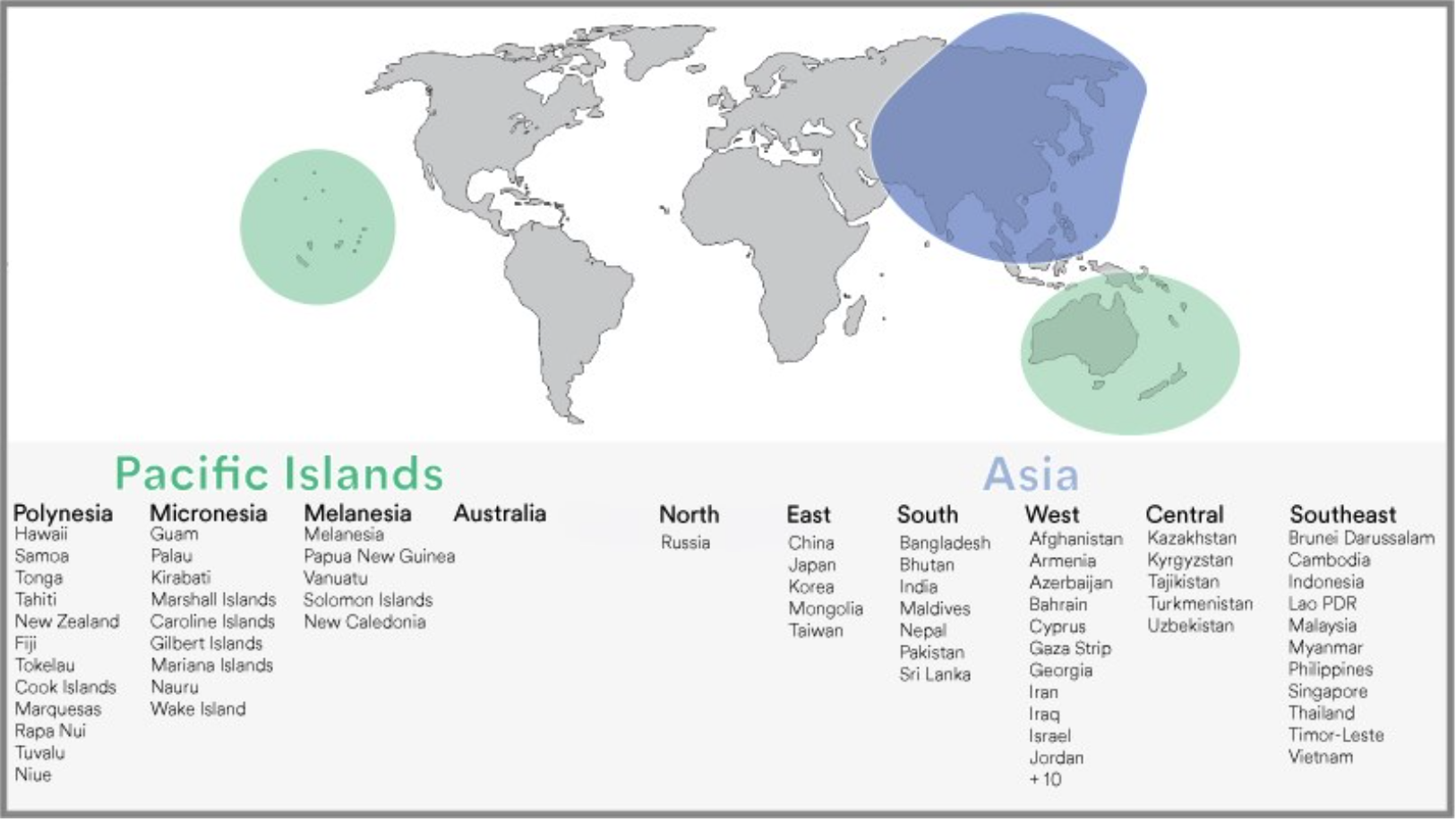
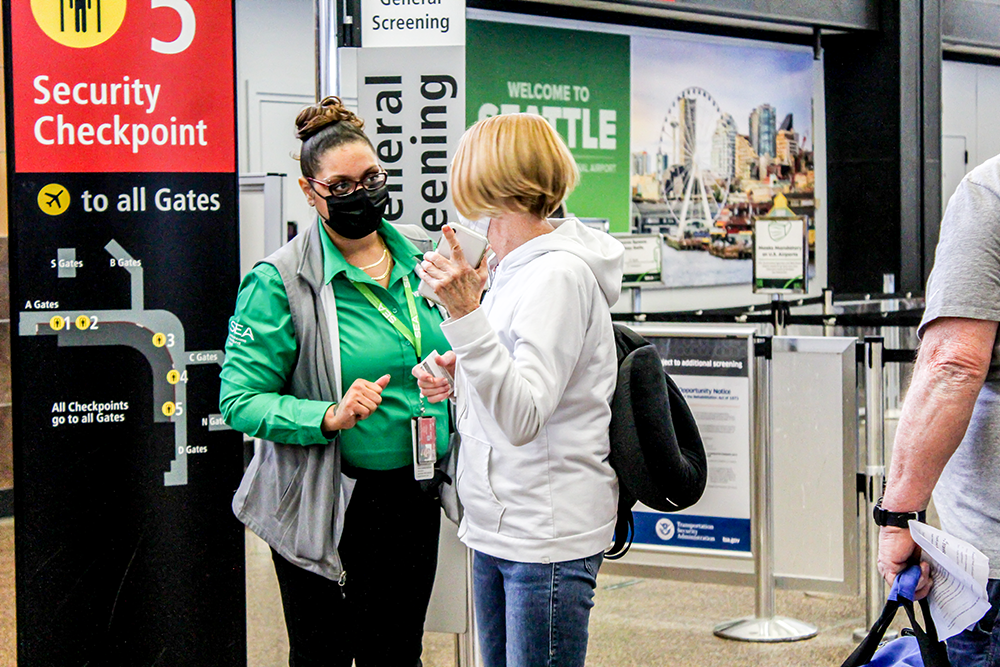

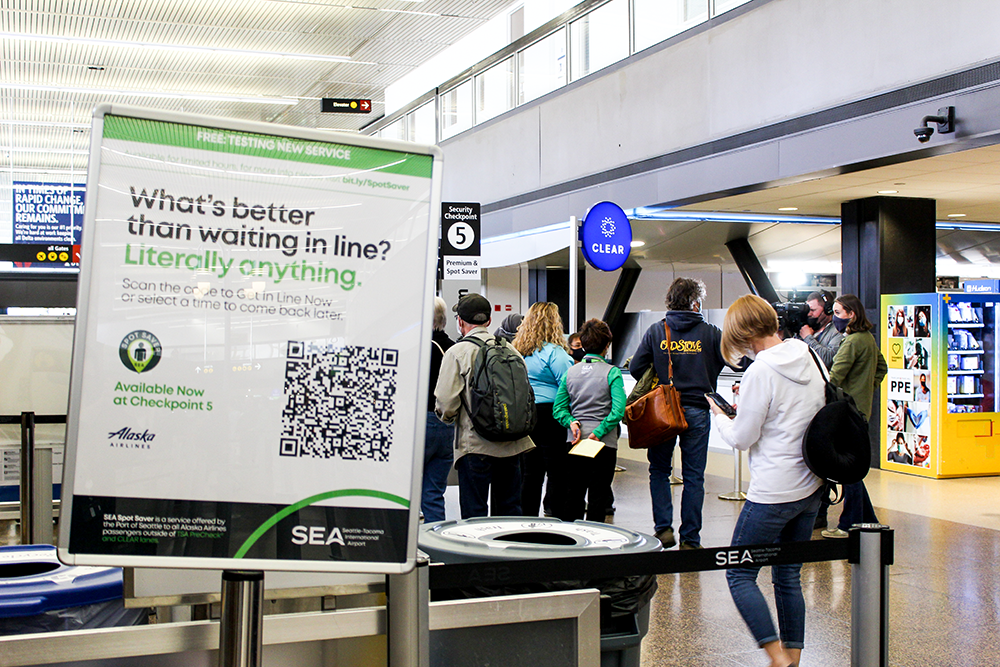
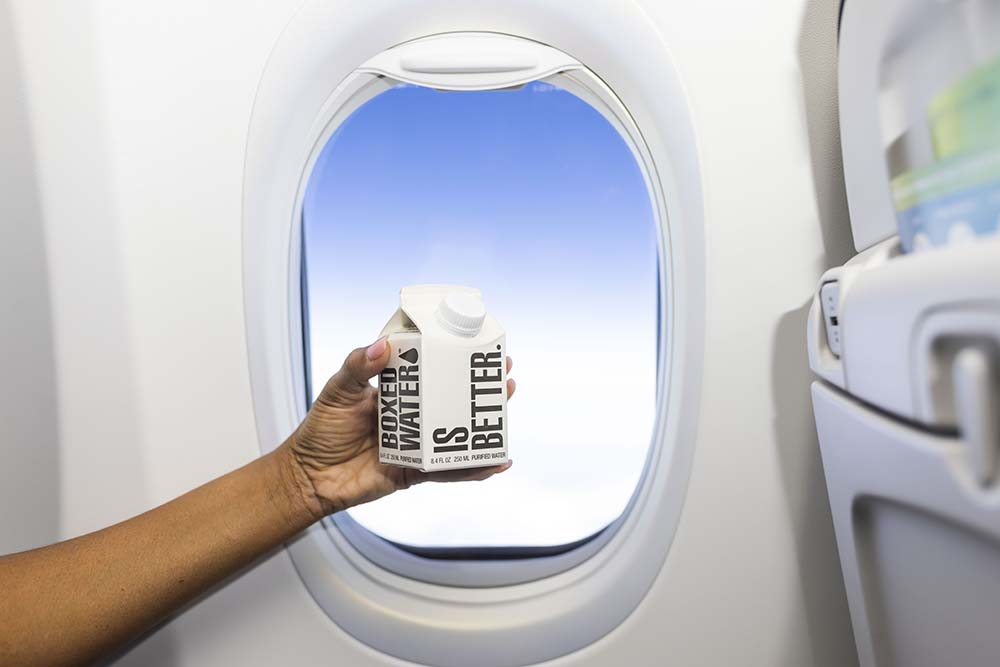
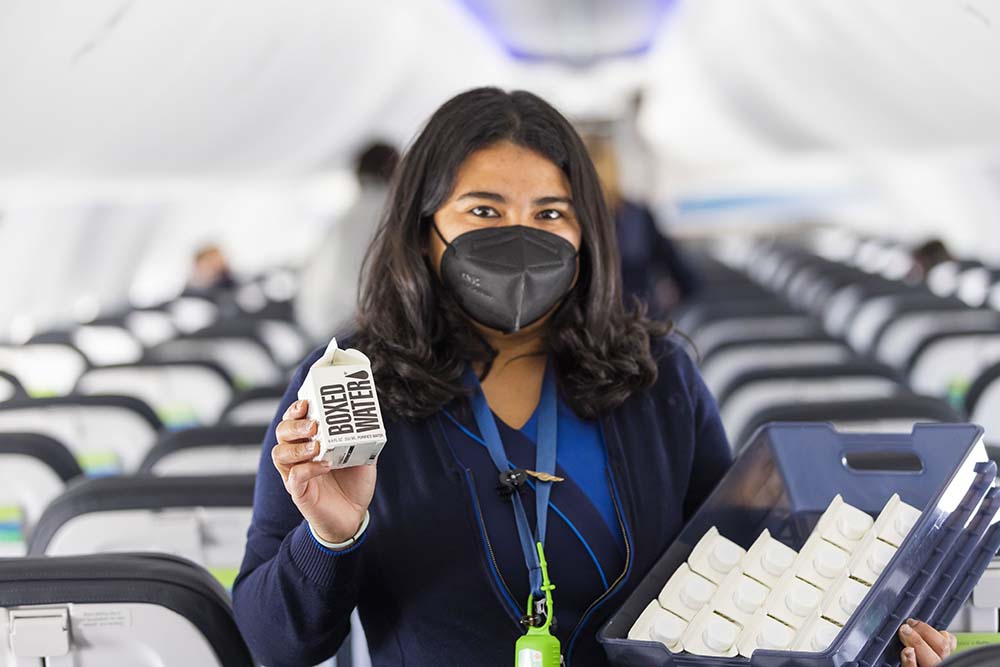
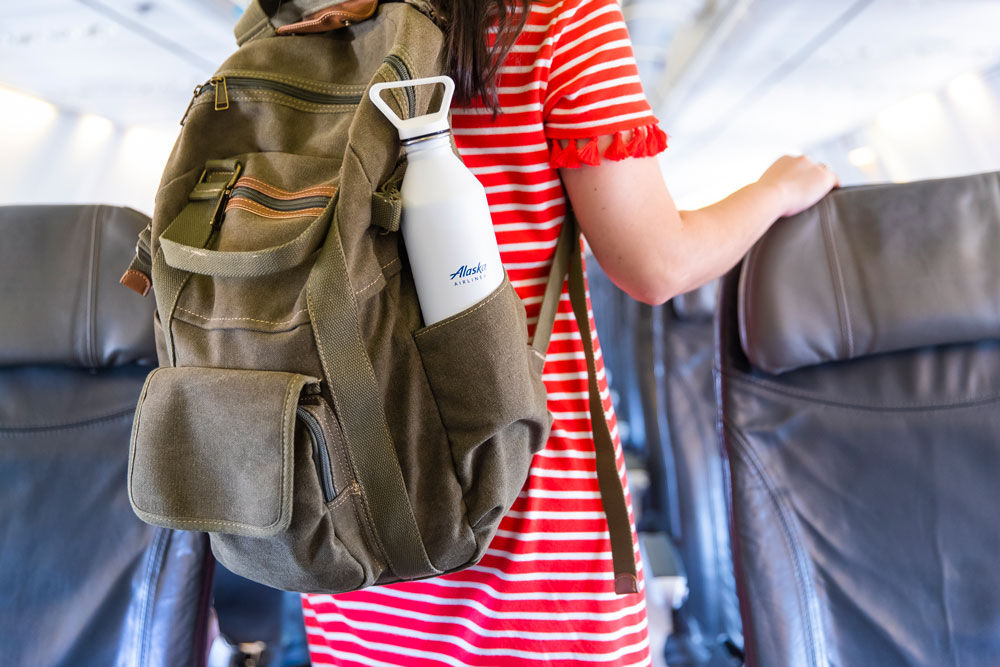
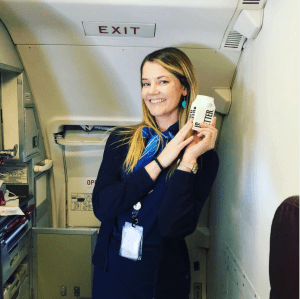
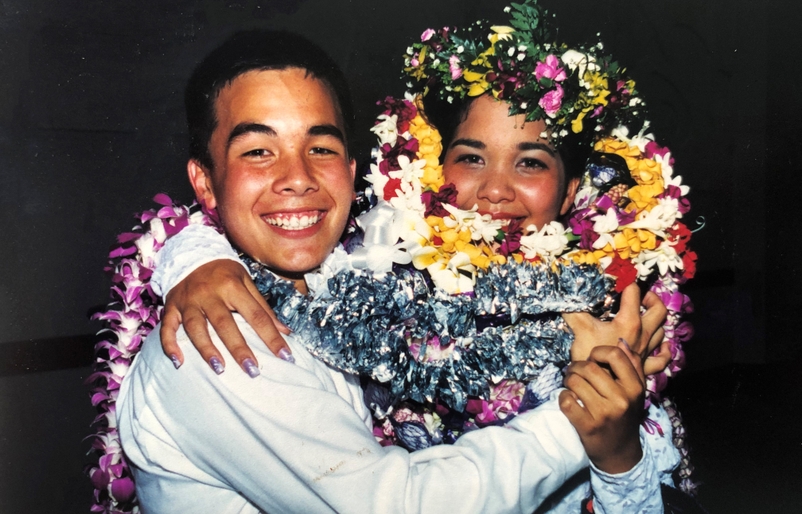

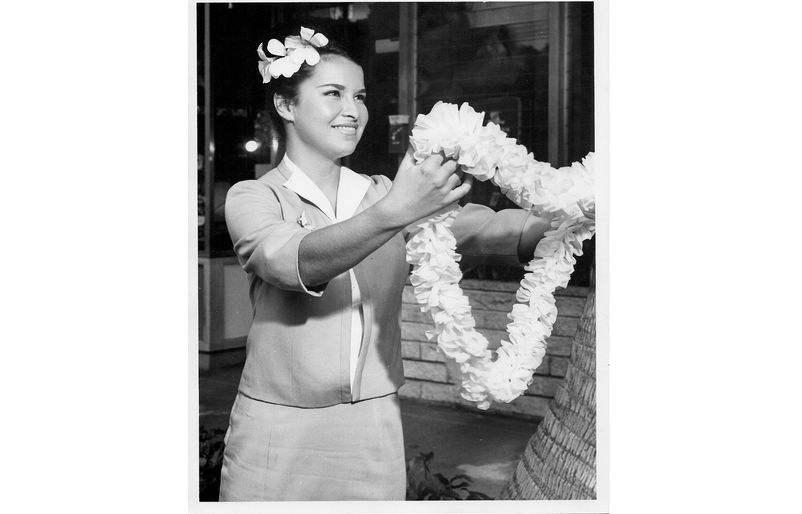

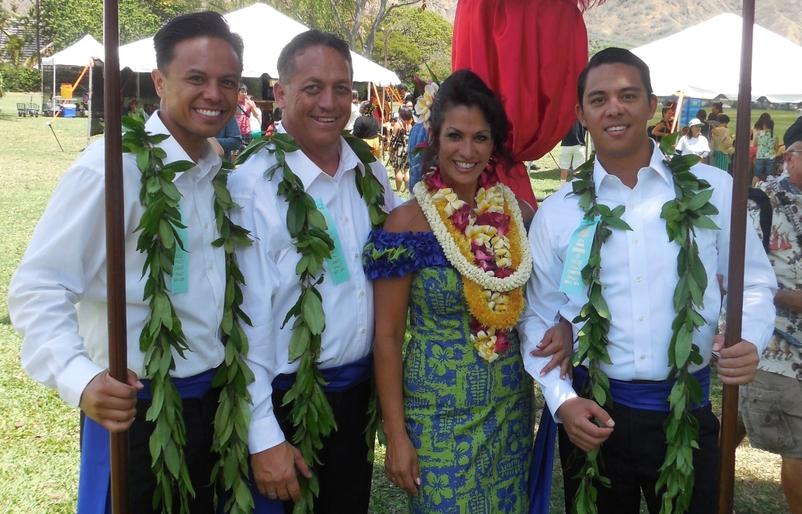
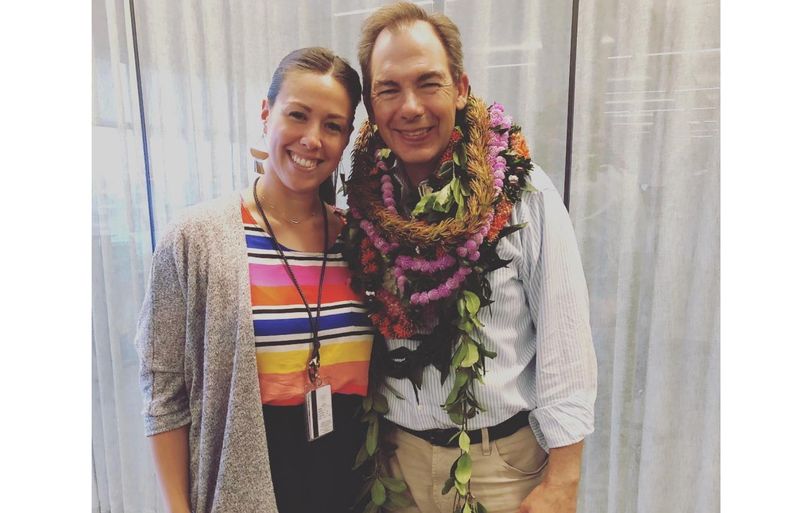

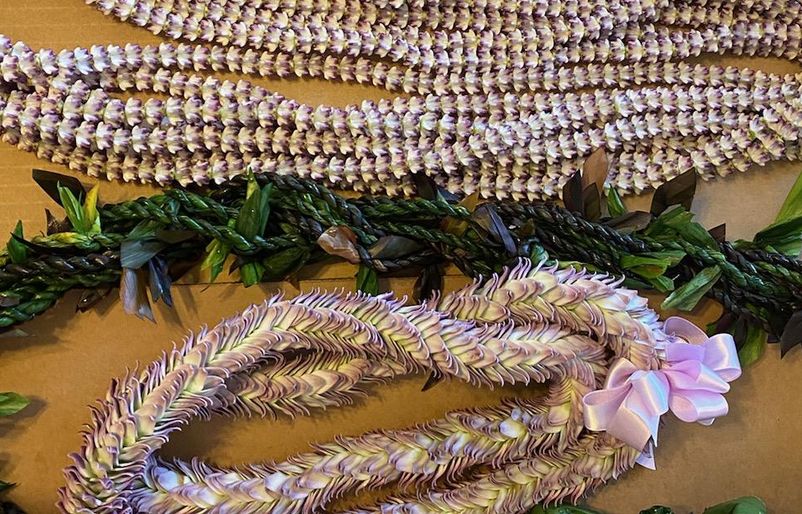



 View original content to download multimedia: