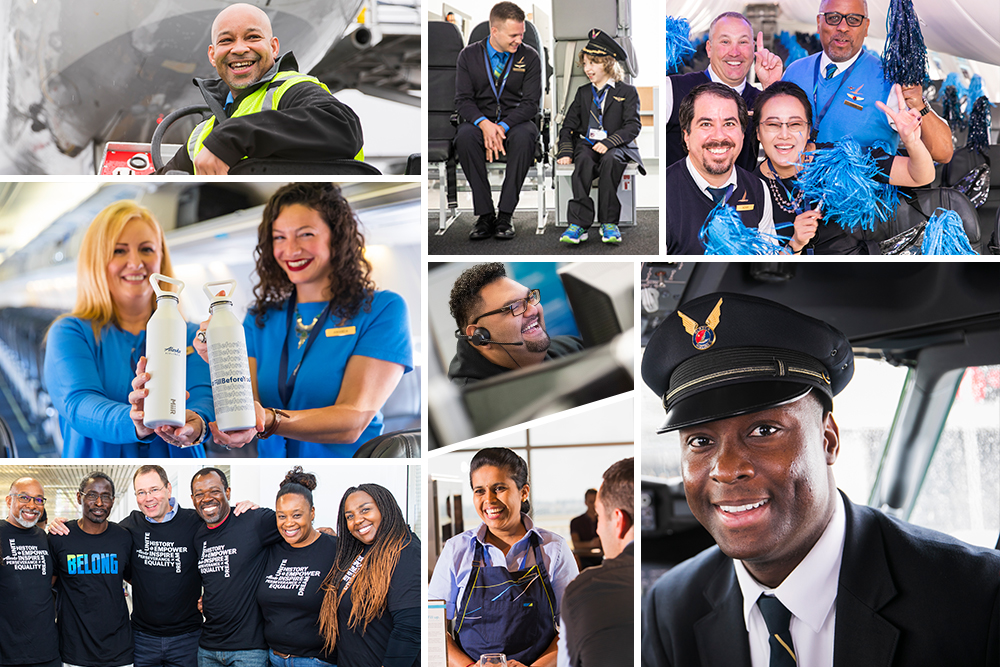
Our people are the heart of our business, and the reason we’re an award-winning airline. Our people always go above and beyond—on nights, weekends and holidays—to take care of our guests, each other and our communities.
Today, we’re awarding more than $130 million in annual bonuses to recognize their passion, dedication and hard work. For most employees, this equates to more than 7% of their annual pay in 2019, about a month’s extra pay. Employees also earned an additional $20 million throughout 2019 for meeting monthly operational goals.
Each year we adjust our incentive pay plans to align with our annual business objectives. Last year’s performance-based payout was determined by meeting or exceeding specific company-wide goals for safety, operational and guest-facing performance.
“I’m so proud of all the great things this team accomplished together in 2019. It was a pivotal year for Alaska as we put the integration further into our rearview mirror,” said Alaska President Ben Minicucci. “For the 11th-straight year, we exceeded our annual targets for incentive pay, and I’m happy that all 23,000 employees will be sharing in that success. As more people fly Alaska, they get to know what we’re all about: We’re safe, on time, a great value, and our people care more. That’s a powerful combination – and I’m excited about where it will take us.”
Breakdown of our yearly bonus, called Performance Based Pay (PBP) in 2019 by region:
About $70 million in annual bonuses — nearly 53 percent of the total — is being paid to Alaska Airlines and Horizon Air employees across Washington
$31 million — or 23 percent of the total — is going to employees throughout California
$13 million is being paid to employees in Oregon
$9 million is going to employees throughout the state of Alaska
Alaska Airlines and Horizon Air aim to hire nearly 2,800 employees in 2020
If you’ve ever wanted to fly for a living, work on planes or help passengers on their journeys, this could be the year to come work with us and jump into the fast-growing world of aviation.
Alaska Airlines and Horizon Air are announcing plans, as part of a 2020 jobs forecast, to hire nearly 2,800 employees in the coming year: from pilots and flight attendants to maintenance technicians and customer service agents in frontline positions, to software developers and product designers on the e-commerce team.
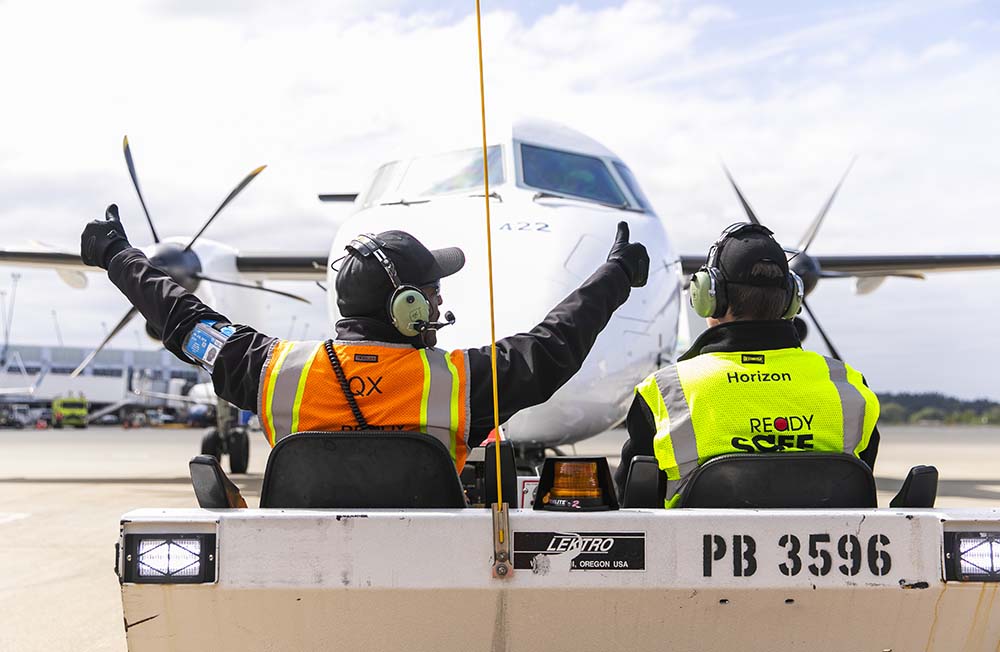
Most of the new jobs are based at the companies’ two hubs in Seattle and Portland. A majority of the positions do not require previous airline experience. The openings will be posted on alaskaair.jobs throughout the year.
“We’re hiring! And we’re eager to welcome more great people at Alaska and Horizon,” said Andy Schneider, Alaska’s vice president of people. “We offer a wide variety of positions at both airlines, including jobs in airport operations that can lead to growth opportunities within the companies. There’s always the potential to move up the ladder.”
Many employees who start off as a customer service agent, passenger service agent or ground service agent at Alaska or Horizon can move into other roles, including becoming flight attendants, supervisors or transition into corporate roles.
Here’s a look at the approximate number of positions in specific areas we’re aiming to fill most quickly:
Positions
Alaska
Horizon
Pilots
About 200
200
Flight attendants
166
About 150
Maintenance technicians
60
30
Ground service agents
—
About 450
Customer service agents / Passenger service agents
945
220
E-commerce software developers and product designers
25
—
Information technology services software engineers
22
—
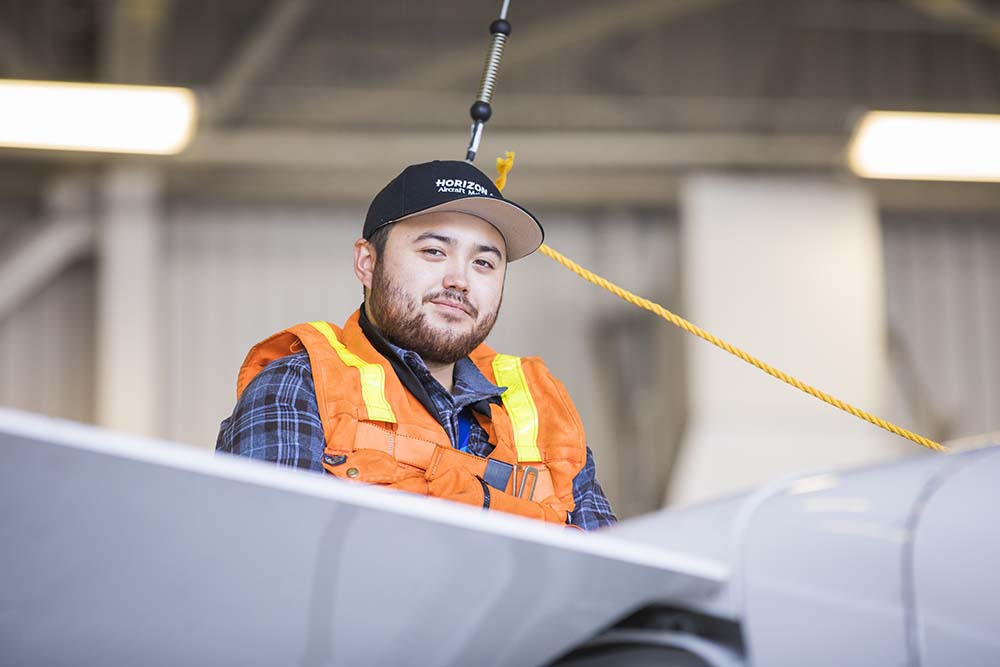
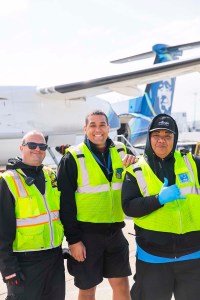
Even though most of the jobs are based in the Pacific Northwest, we’re still hiring across our network. For Horizon, hundreds of ground service agent and passenger service agent job openings are at other airports outside of Sea-Tac.
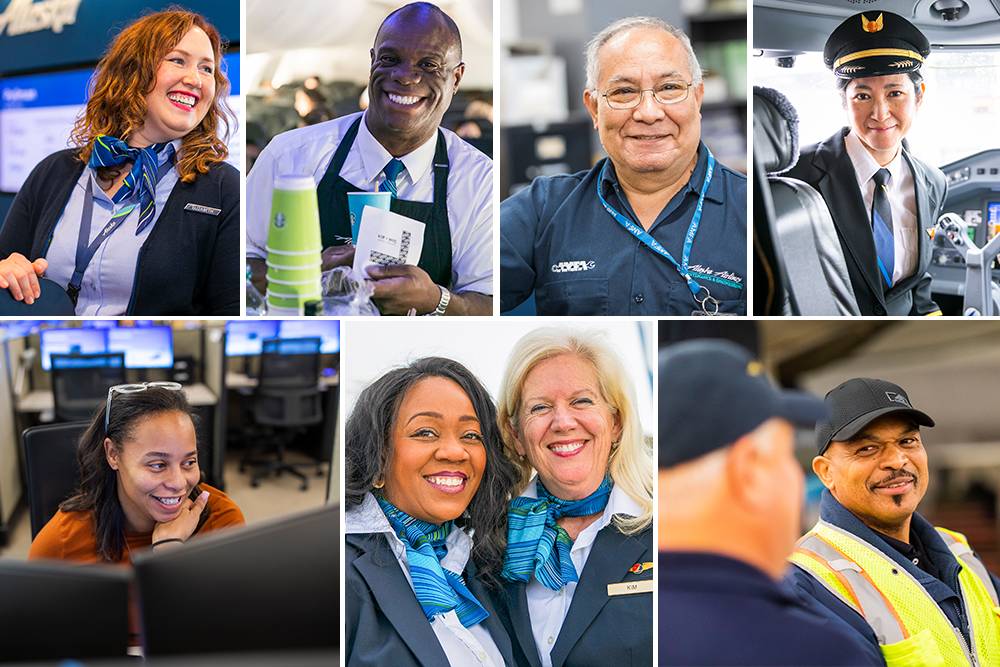
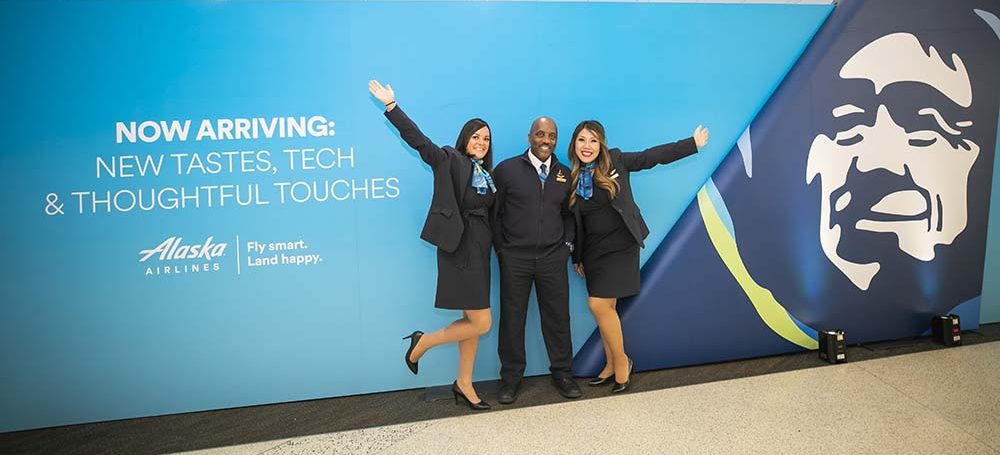
We pride ourselves on providing career development in an inclusive workplace where you can grow your career. We provide travel privileges to explore and connect with family and friends; unique pay bonus programs to reward you when the company does well; and competitive benefits for your health and wellness.
Interested in the possibilities? The place to learn more is alaskaair.jobs.
Flyback Friday: Amelia Earhart’s Historical Day with Our Founders
The name Amelia Earhart does more than ring a bell in the aviation industry; it evokes a sense of adventure and nostalgia. She built her legacy by overcoming gender barriers and breaking records, including becoming the first female (and second person ever) to fly alone across the Atlantic Ocean.
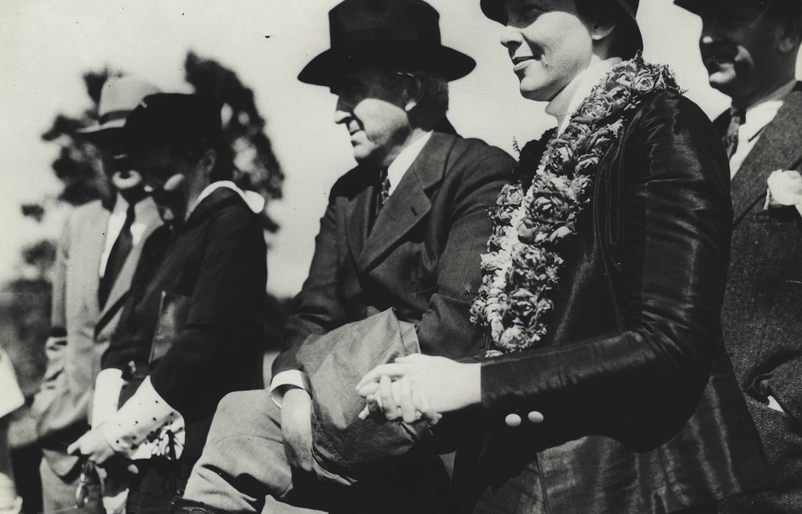
Days before marking her great achievement, Inter-Island Airways, the former name of our airline, hosted the pioneer during her visit to the islands. Capt. Charles Irving “Sam” Elliott, the man who flew our maiden flight from Honolulu to Hilo in 1929, invited Earhart to join him in piloting a Sikorsky S-38 to Hilo. The duo, accompanied by Inter-Island Airways founder and president Stanley C. Kennedy, his son Stanley Kennedy Jr., and Earhart’s husband and publicist George Putnam, departed Honolulu’s John Rogers Airport and landed at Hilo Airport. The trip took an estimated two hours to complete.
[Editor’s note: Today, a flight from Honolulu to Hilo takes approximately 55 minutes.]
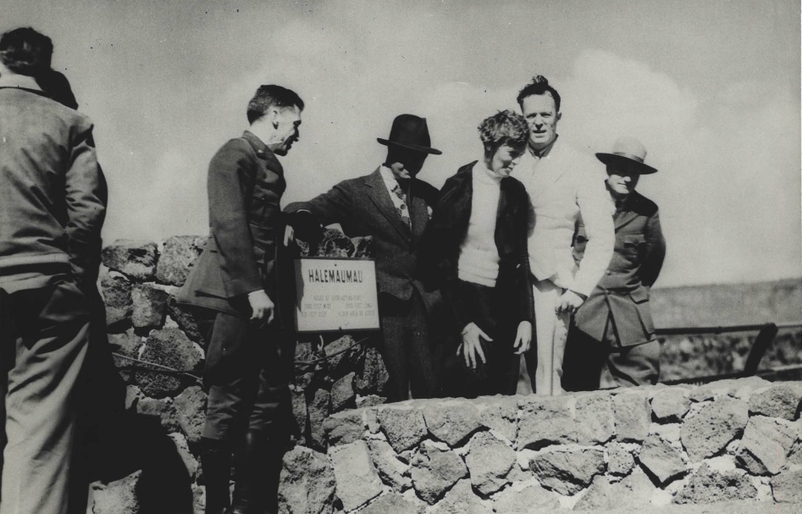
The group was greeted on the tarmac by local dignitaries and later led to Hawai‘i Volcanoes National Park to visit Kīlauea’s Halema‘uma‘u Crater and pay respects to Pele, the Hawaiian goddess of fire and volcanoes.
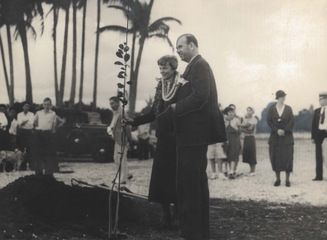
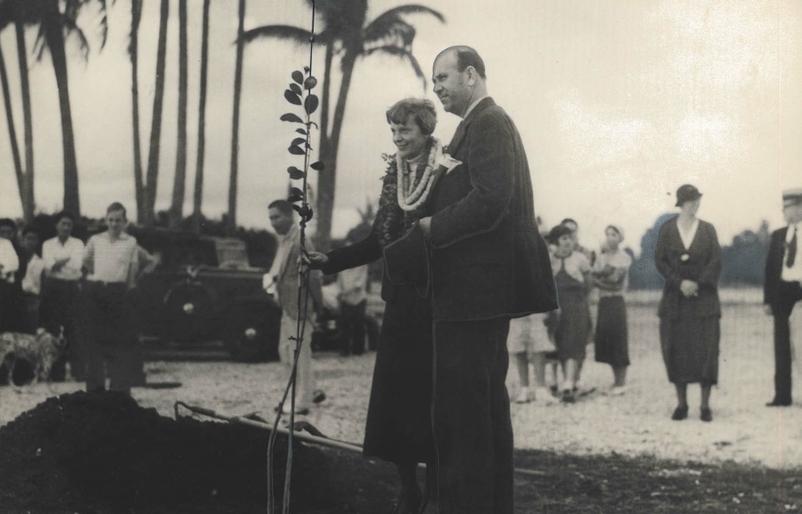
Afterward, they were escorted to Hilo’s Banyan Drive, where they planted a young Banyan tree that stills stands today. Town leaders frequently invited celebrities to participate in the tree planting program to encourage tourism in the sleepy Big Isle town.
Kennedy and Earhart, shovels in hand, worked together to pack the seedling into the ground before making their final return to Honolulu. Island of Hawai‘i visitors can relive history by visiting Hilo and grabbing a selfie under the growing 85-year-old tree.
Embrace safe, responsible and mindful travel in Hawaii
Alaska Airlines offers daily service to Hawaii Island (Kona), Kauai, Maui and Oahu.
My father’s tree is a cute little iliahi, a sandalwood that is barely a foot tall. I’ve planted it in the crumbly cinnamon-colored volcanic soil at 2,600 feet up the east slope of Mauna Kea, the world’s tallest mountain (as measured from its seafloor base), in a little clearing amid 50-foot ohia and koa trees. Dad would be happy with this memorial planting. He was a geologist, avidly interested in travel and the natural world, and supported my own adventures in those realms.
Photo courtesy of Hawaiian Legacy
We chant in the calm morning, led by Kekaiokalani Naone, a Hawaiian cultural practitioner: “I ola no oe, I ola no makou nei.” (You live so that we may live.) This blessing is a traditional Hawaiian planting invocation. In this case it’s for the tree, though I reflect on how it applies to my father, too. He passed on six years ago, but my understanding of many indigenous beliefs is that our ancestors are with us every day—even on this day, as I work here with Hawaiian Legacy Reforestation Initiative, the organization guiding this planting project. It’s an activity popular with visitors to Hawaii Island: The “Planter’s Tour” of the company’s midmountain forestland near the Hamakua Coast is an opportunity for guests to help restore native woodlands on the island while they experience a scenic excursion.
This activity is a modest example of a concept known as kuleana that’s gaining prominence in the Aloha State—a philosophy that promotes a heightened awareness of heritage, culture, conservation and safety. State tourism authorities, lodging and activity providers, community leaders and government officials are cultivating the idea in order to protect the things that make Hawaii special. They are asking guests to the Islands to embrace the effort.
“We believe our visitors care about perpetuating the uniqueness of this place,” explains Jay Talwar, chief marketing officer at the Hawaii Visitors and Convention Bureau (which is part of the Hawaii Tourism Authority).
Like many Hawaiian words, “kuleana” is a complex term that is difficult to express concisely in English. Kuleana embraces multiple concepts, including integrity, responsibility, stewardship, courtesy, tradition and respect for nature (and natural hazards).
Photo by Andrew Richard Hara
On one level, kuleana can be illustrated by the example of taking responsibility for your family’s safety around the ocean—being alert at all times in or near the water, not taking the sea for granted, not turning your back on the waves. And if you are less than an expert ocean swimmer, choosing beaches with lifeguards.
“If in doubt, don’t go out,” says Jason Cohn, president of Hawaii Forest & Trail, one of the biggest tour operators in the state and a purveyor of adventures on Hawaii Island and Oahu. The company’s offerings range from volcano-oriented day trips to waterfall hikes along little-traveled streams that plunge down from the island’s volcanic peaks.
Similar exercise-good-judgment principles apply to hiking in the Islands. You want to be sure you carry essential gear, mind the weather, be watchful that you only enter lands that are open to you, respect the landscape and its history … and enjoy your experiences.
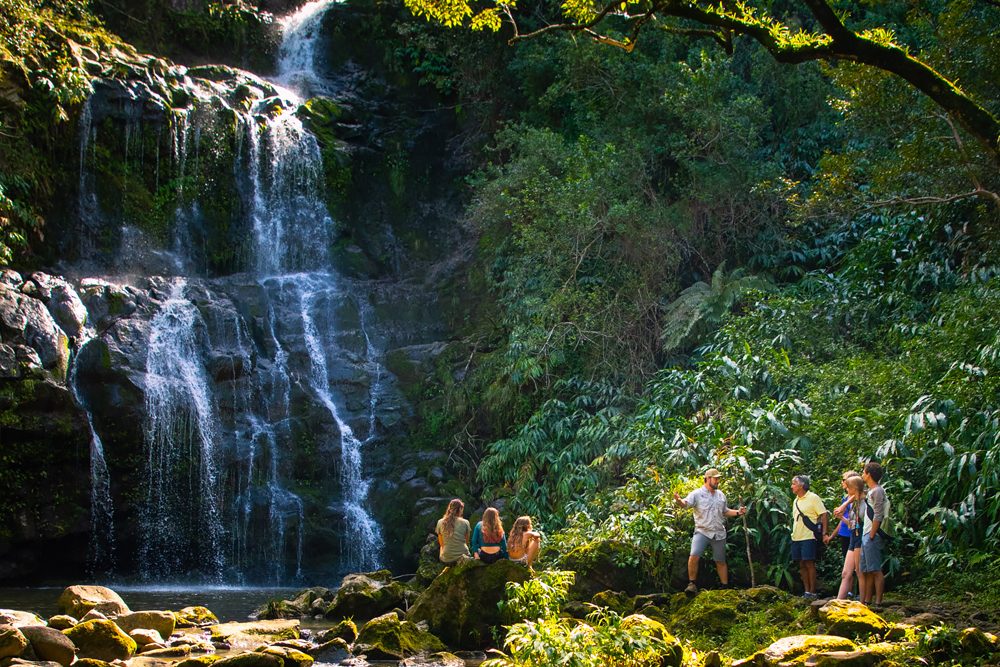
On another level, kuleana is about seeking experiences that enhance your knowledge of natural and cultural history. I join a Hawaii Forest & Trail tour led by Cohn up a hillside on the north end of Kohala, the oldest of Hawaii Island’s volcanoes. Here, the outfitter takes visitors on walks in a small, privately owned gulch in the community of Hawi. We cross a trestle over the Kohala Ditch, an irrigation flume that has carried water to crops since the early 1900s—and Cohn tells us about the history of local sugar cane farming. We visit a small clearing where we can see traditional Hawaiian food plants such as kalo (taro), breadfruit, banana and sweet potato, all growing in a restored farming terrace. We navigate dense, dark stands of strawberry guava, an invasive nonnative plant that has overtaken much of Hawaii’s original forest and that people work to remove. And we learn the safe way to approach and plunge into a shimmering pool beneath a small waterfall—watching our footing on slick rocks and checking carefully for hazardous rocks above and below the water’s surface.
“Amazing how cool and refreshing it is,” Cohn enthuses. Immersing visitors in Hawaiian lands and heritage, he believes, helps create context that will boost a sense of place, which in turn leads to greater care for the Islands—and an enhanced vacation experience.
Cohn is one of 15 community leaders whom the Hawaii Tourism Authority and Hawaii Visitors and Convention Bureau have enlisted as spokespeople in videos designed to help visitors understand and practice kuleana. Ocean experts, cultural practitioners, artisans, business owners and journalists all explain why the Islands are unique, and how visitors can help keep them that way. Visitors can look for the film clips on, among other places, Alaska Airlines flights to Hawaii. Kuleana Campaign videos can also be found on YouTube.
In one video, Oahu conservationist Ocean Ramsey advises you to use reef-safe sunscreen. Coral-killing sunscreens are banned in Hawaii, but visitors may unwittingly bring unsafe products from home. In another video, Maui meteorologist Malika Dudley urges you to make sure you’re signing up for a private accommodation that is legitimately licensed for rental. In yet another, Kauai-based cultural practitioner Sabra Kauka suggests devoting some time to volunteer work that helps preserve Hawaii.
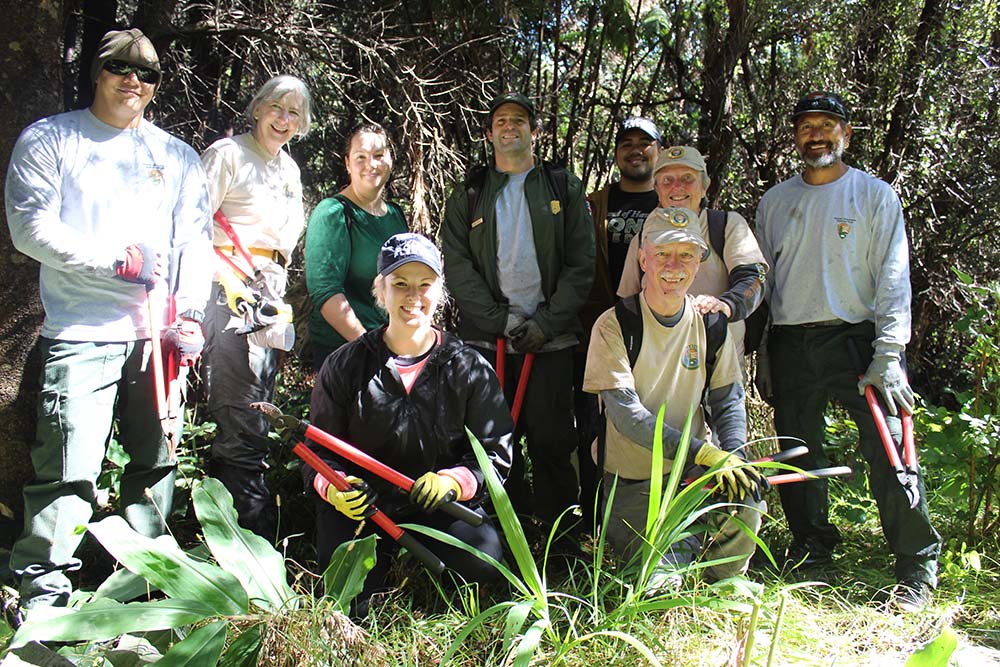
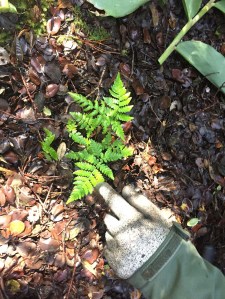
That’s what I do one morning at Hawaii Volcanoes National Park, one of the state’s highest-profile destinations. This time, I’ve enlisted in the invasive-species battle against a plant that at first glance may seem quite desirable. Himalayan ginger’s tall stems with glossy evergreen leaves are topped by attractive spires of fragrant flowers in rich yellow and orange. It’s a ubiquitous landscape plant in the Islands, seen in many backyard gardens. But it’s also an aggressive plant that has escaped its confined landscaping uses and is outcompeting native species in some areas.
“Amazing what a difference our effort makes,” observes crew leader Jane Field of the newly open, sun-strewn little clearing I’ve made in the woods about a mile from the park’s visitor center. I worked on one ginger patch while others tackled nearby areas. Using big pruning shears, I cut 6-foot ginger spires and stacked them carefully where they wouldn’t suffocate little native plants struggling to grow. I yanked out a few invasive guava seedlings, as well, trying to make room for the ferns and flowering shrubs that are endemic to the forest.
Photo courtesy of Hawaii Volcanoes National Park
Field and her husband, Paul, lead weekly work sessions at the park under a program called Stewardship at the Summit. It’s one of dozens of volunteer endeavors visitors are welcome to participate in.
If even a small portion of Hawaii travelers took part in such activities, the effect would be enormous. With more than 10 million visitors a year—about a third of them from foreign countries—Hawaii is among the most popular and best-known travel destinations on Earth. Each year, travel contributes about $20 billion directly to the state’s economy, a fifth of all economic activity in the Islands.
Hawaii residents and community leaders welcome the visitors who reach the chain of islands; the Aloha State is known worldwide for its nickname. Aloha means, among other things, “welcome.” But, as Talwar points out, the meaning of “aloha” also includes respect and care, as does the meaning of “kuleana.”
Photo courtesy of Hawaii Volcanoes National Park
Hawaii is one of many destinations asking guests to be more conscious of their actions while traveling. Responsible-travel campaigns are taking hold around the world, from Canada to Italy to Peru. The Republic of Palau, a small Pacific Island nation, stirred global notice when, in 2017, it enacted the Palau Pledge that all visitors are required to sign before entering the country. This pledge, addressed to the children of the nation, is stamped in passports and compels signees to tread lightly and respectfully.
Most destinations opt for Hawaii’s approach, which is to promote nonmandatory cooperation in the hope that visitors will realize that awareness around sustainability and safety is for everyone’s benefit. Voluntary pledges for visitors were first introduced on Hawaii Island and on Kauai in recent years. Visitors pledge to be pono (translated as “righteous”) when they sign the Island of Hawaii Pono Pledge (ponopledge.com). There is also some hope that this vow, along with Kauai’s Aloha Pledge (alohapledge.com), may inspire a statewide version tied to the Kuleana Campaign and its awareness videos.
“Hawaii touches your heart—and we all want to protect that,” says Sue Kanoho, executive director of the Kauai Visitors Bureau. “We hope these videos plant the seed for people to be more aware of the people and the place.”
Kauai has struggled with unwelcome behaviors, such as large numbers of visitors encroaching on private land or crossing barriers to access dangerous waterfalls. The Kauai Visitors Bureau and Hawaii Tourism Authority discourage geotagging, a practice of labeling locations where photos were taken, which has been linked to accidents, trespassing and overcrowding. Authorities ask that, if you find a special spot, you take pictures as mementos, and share them judiciously. They request that you not post something that could draw thousands to a steep cliff, or onto private or sacred land.
“Would you go up to somebody’s house, open the door and walk in without knocking?” asks Puni Patrick, a kumu hula (hula teacher) and Hawaiian cultural practitioner on Kauai who harvests salt at an ancient salt-pond complex near Waimea on Kauai’s south shore. Located next to a state park popular with campers and picnickers, the salt-pond complex is not an appropriate area for passersby to simply wander into.
Hawaiians have been making salt here for many centuries. It is a treasured place where more than 20 families now continue the annual salt-making heritage that once was a crucial art for those who thrived in the tropics, without refrigeration. According to legend, the goddess Pele came by on her search for a home in the Islands, and the salt-making ponds epitomize the amazing indigenous Hawaiian lifestyle that enabled people to live self-sufficient lives in these islands. Some families who enter the salt-pond area with guests first perform a chant/song that asks permission and calls on the spirits of those who have worked here for centuries.
Photo courtesy of Four Seasons Resort Hualalai
While the lands, waters, wildlife and other physical attributes of the Islands are among the many ingredients that make Hawaii unique, the indigenous cultural and spiritual heritage of Hawaii is perhaps its most distinctive feature—one that is easy for visitors to observe today.
The Hawaiian language, for instance, is a beautiful, evocative tongue enjoying a marvelous renaissance. Linguistic learning opportunities for visitors include quick tips on pronouncing words from bartenders at The Olelo Room, a Hawaiian-language-inspired lounge at Aulani, A Disney Resort & Spa on Oahu. They also include whole weekslong classes tailored to the many mainlanders who spend several months in the Islands in winter. The language app Duolingo also has Hawaiian capabilities.
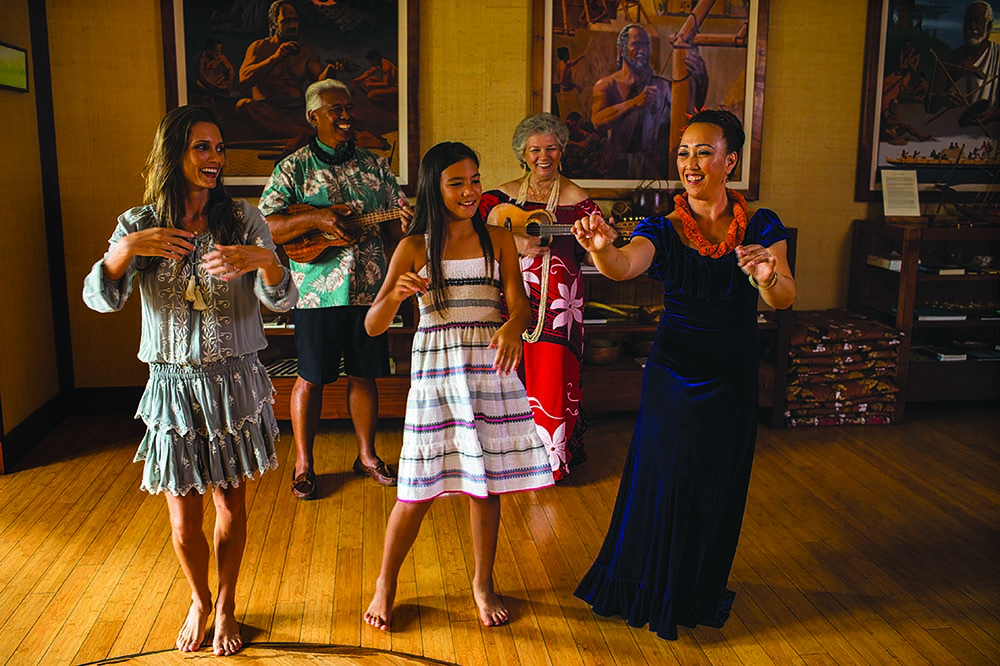
Hula classes, once rare, are ubiquitous now; among the most popular are the sessions throughout the week at Waikiki’s Royal Hawaiian Center, where guests learn that hula is a deeply meaningful cultural practice.
Nearby, at The Royal Hawaiian, a Luxury Collection Resort, guests can join a sunrise ceremony in which participants immerse themselves in the ocean and perform a chant that thanks the sun for its return, and blesses our ancestors for bringing us to this day. My participation a few years ago in this type of ceremony, at The Ritz-Carlton, Kapalua, on Maui, was the first time I invoked my father’s spirit in the Islands.
“I want people to enjoy what I have enjoyed for 70 years, in the way I was brought up,” says Earl Kamakaonaona Regidor, cultural adviser at the Four Seasons Hualalai on Hawaii Island, and a Kuleana Campaign ambassador.
Regidor’s mother was full-blooded Native Hawaiian, and her guidance helped him create a sense of kuleana that is specific to the island he inhabits. Visitors to the resort’s Kaupulehu Cultural Center can learn words in the Hawaiian language, lauhala weaving, lei-making or ukulele playing—many of these taught by Regidor himself.
Regidor credits his ancestors for teaching him the kuleana way of life. His father, for example, would bring him down to the shore (at the exact location where Regidor now works) and they’d fish … for just a half-hour. Regidor recalls asking, “Dad, why did we come all the way here just to spend a half-hour?”
“Because it’s right to take only what you need—not what you want,” his father told him.
“Respect the people, the culture and the history,” Regidor urges. “My mother taught me: ‘Don’t live in the past, but learn from it.’
“She said it best when you are talking about kuleana,” he muses. “ ‘Respect everything,’ she told me. ‘Everything.’ ”
Eric Lucas lives on San Juan Island in Washington state. This story originally appeared in ALASKA BEYOND MAGAZINE—JANUARY 2020.
The formula to looking fly: Incorporating safety, employee feedback into custom uniforms
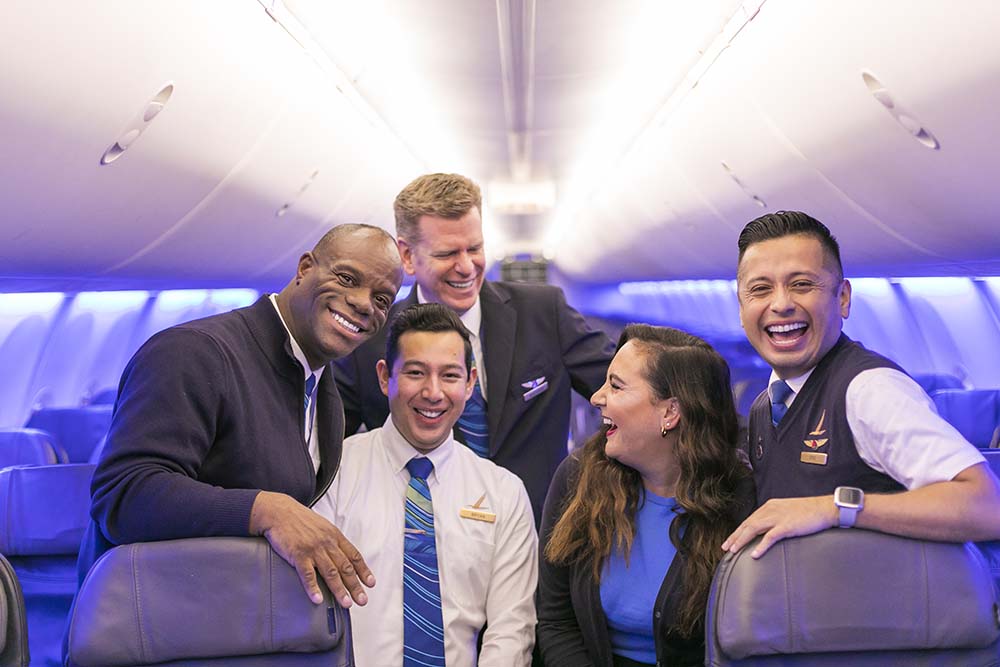
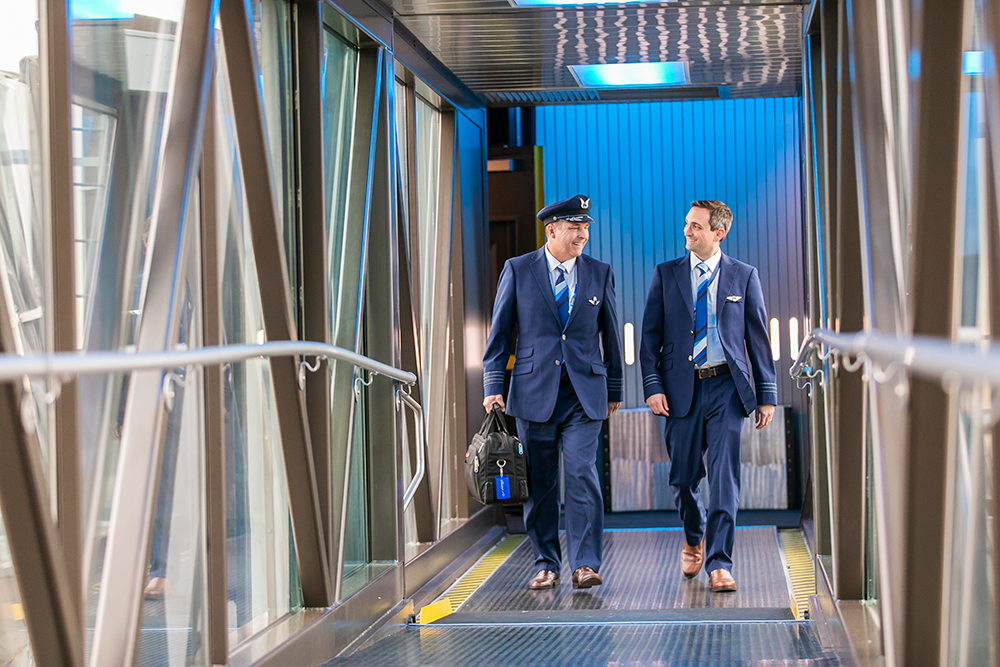
A day in the life of an airline uniform is hard. They brush through bustling airport crowds. They stretch to close overhead bins. They stand up to scorching heat and arctic cold as baggage is loaded, bolts are turned and fuel is measured.
And then they’re washed, dried, and expected to do it again. And again. And again.
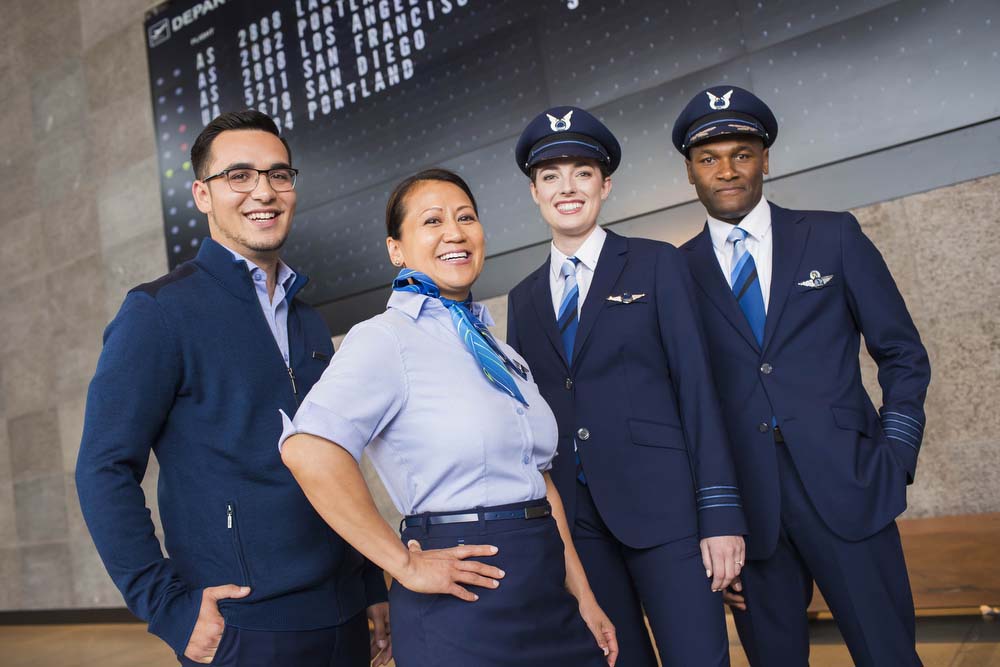
So, when we set out to update our uniforms in partnership with Seattle designer Luly Yang in 2016, it wasn’t just a matter of picking a handful of colors and materials.
It was the start of a four-year journey in creating the perfect balance of quality, and form and function to achieve a U.S. airline industry first: a custom-designed uniform collection certified to STANDARD 100 certification by OEKO-TEX®, the highest industry standard for safety.
To meet the rigorous standard, more than 1,200 safety tests on fabrics, zippers, buttons, thread, linings and more were conducted.
Step 1: Asking the right questions
How do you get to the bottom of what more than 20,000 employees need from their uniforms? Well, you ask them. Over the past two years, we conducted surveys, focus groups and work-site visits to get the feedback they needed.
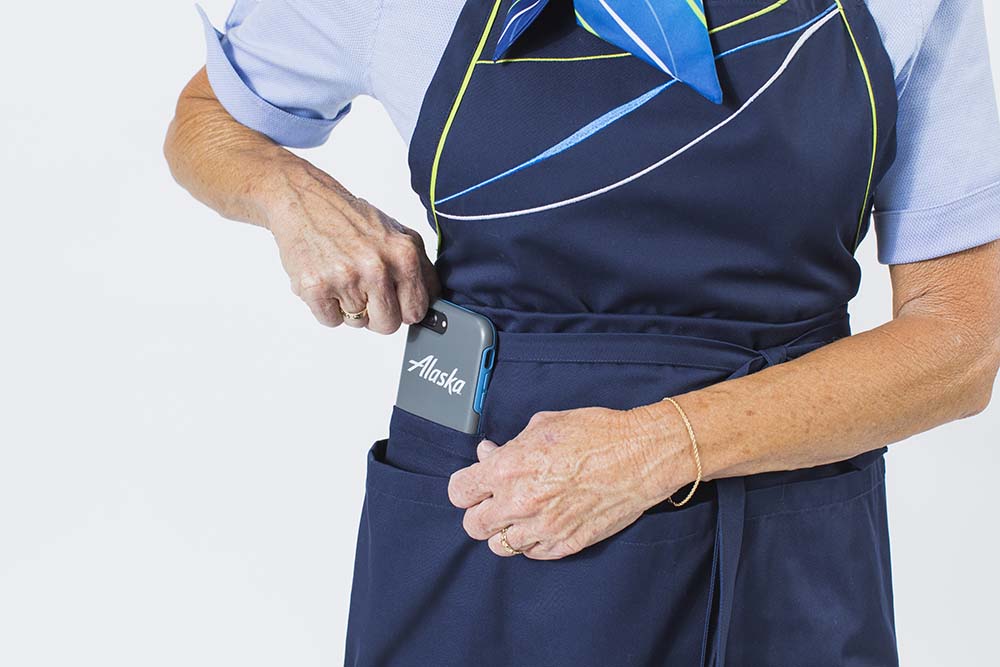
The answers? More pockets to accommodate all the odds and ends that come with keeping an airline in motion. Designs that look great on people of all shapes and sizes. And materials with the perfect amount of elasticity and breathability to keep a crew feeling comfortable and looking polished from the time they take off from Honolulu and land in Anchorage.
Step 2: Creating the look
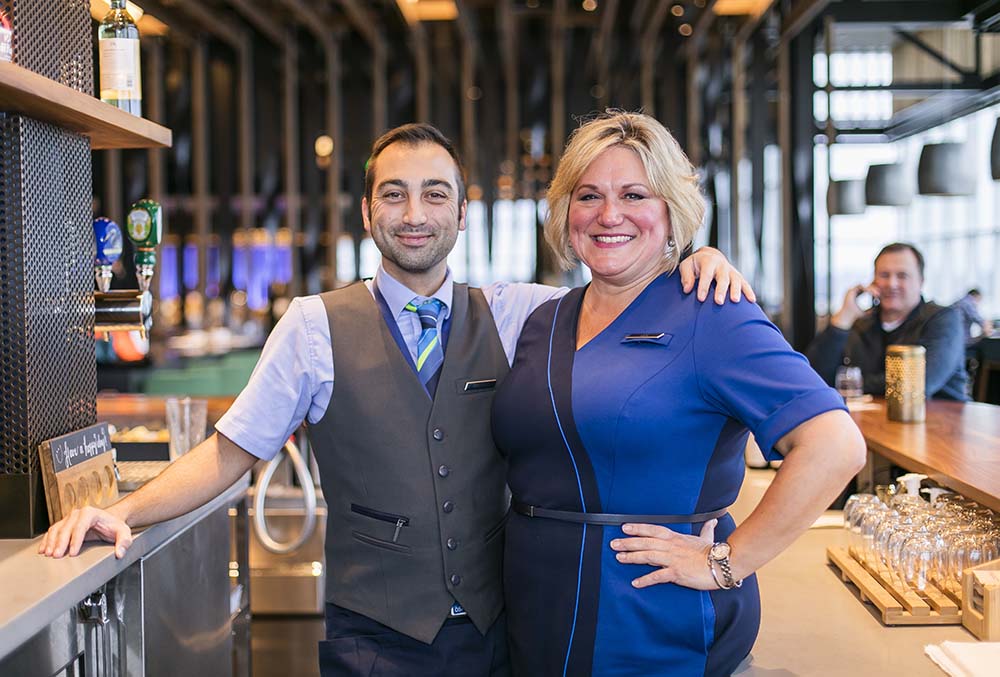
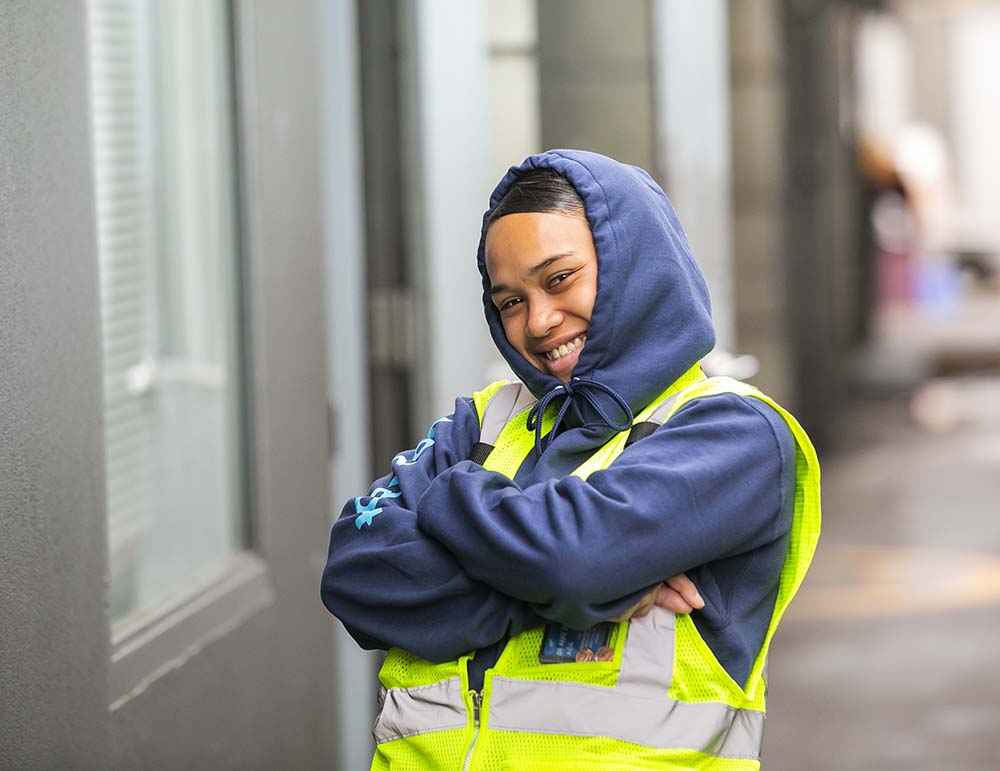
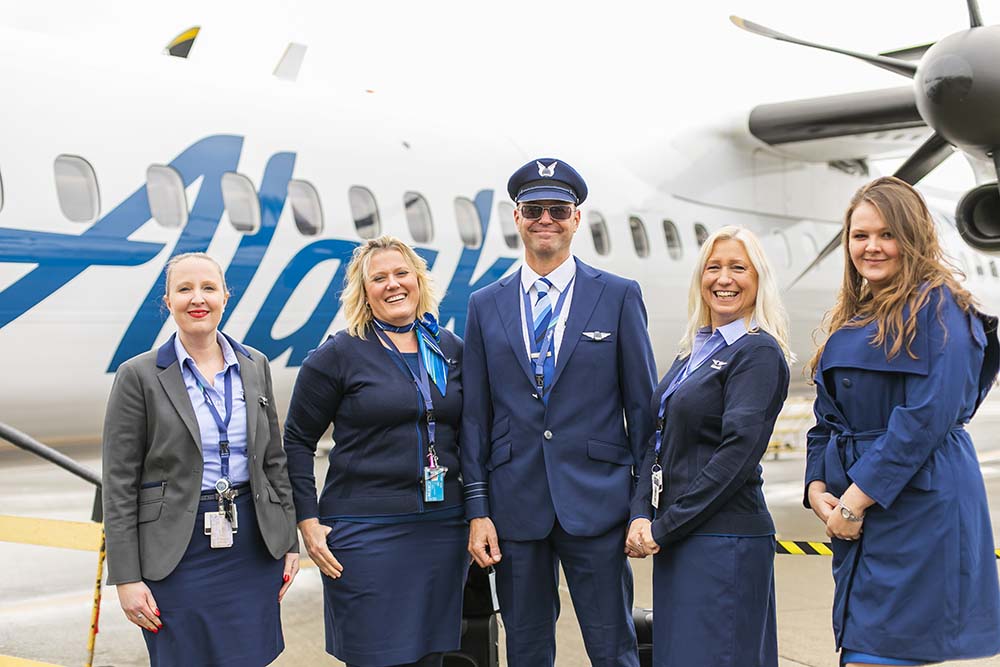
With the research finished, it was Luly Yang’s time to shine. The designer got to work creating a signature silhouette for the Alaska collection, reviewing designs with employees, gathering feedback and making refinements to meet the needs of Alaska’s pilots, flight attendants, maintenance & engineering teams and more.
“This was the ultimate puzzle for a designer,” Yang said, in an interview with CNBC. “In this case it was more than 20,000 clients, employees with hundreds of body shapes, 13 work groups and sometimes 45 sizes per garment. It was complicated, which is why I loved it.”
They looked good, they felt good, but the only way to know if the new uniforms were up to the job was to see how they held up to the pressure of packing, unpacking, bending, lifting, scuffs, spills and spin cycles.
Alaska selected 175 employees to participate in 60 day “wear tests” of the new uniform and report back on performance. Following the first wear test, refinements were made and then a second, abbreviated wear test took place to validate the improvements and quality standards.
Step 4: Ready for lift off
After four years of research, design, feedback and testing, Alaska’s new uniforms launched, making Alaska and Horizon Air the first U.S. airlines to earn the Standard 100 by Oeko-Tex rating for its custom garments.
As the new uniforms continue their rollout in early 2020, with Horizon Air and Alaska Lounge concierges already donning the new look, they have also stood up to scrutiny from one of the toughest panels on the planet: anonymous social media users.
“My daughter and I just did it for fun and then it blew up,” said Banomyong. “I heard so much ‘you look amazing’ and ‘I can’t wait to see these uniforms on my flight.’ It was really fun to see the reaction.”
Long (weekend) story short: 2020 has eight (8!) holidays that fall on a Monday or Friday––including this past Monday when we honored MLK, Jr.––which means more opportunities for a much-needed long-weekend getaway.
Here are a few of the best places to use that extra day of self-care to take in the scenery, take a calming, deep breath or just take your mind off the weekday grind.
Picture this: your signature Starbucks drink in hand, a stroll on Alki Beach, a view of the skyline, and wildlife wherever you look! Why would you Seattle for anything less?
If you like it, then you should put a spring on it! (‘It’ being your wander-list!) If things are really heating up with you and your self-care goals, take it to the next level with a trip to any of the Montana hot springs––one of the world’s most beneficial, tranquil and spiritual wonders.
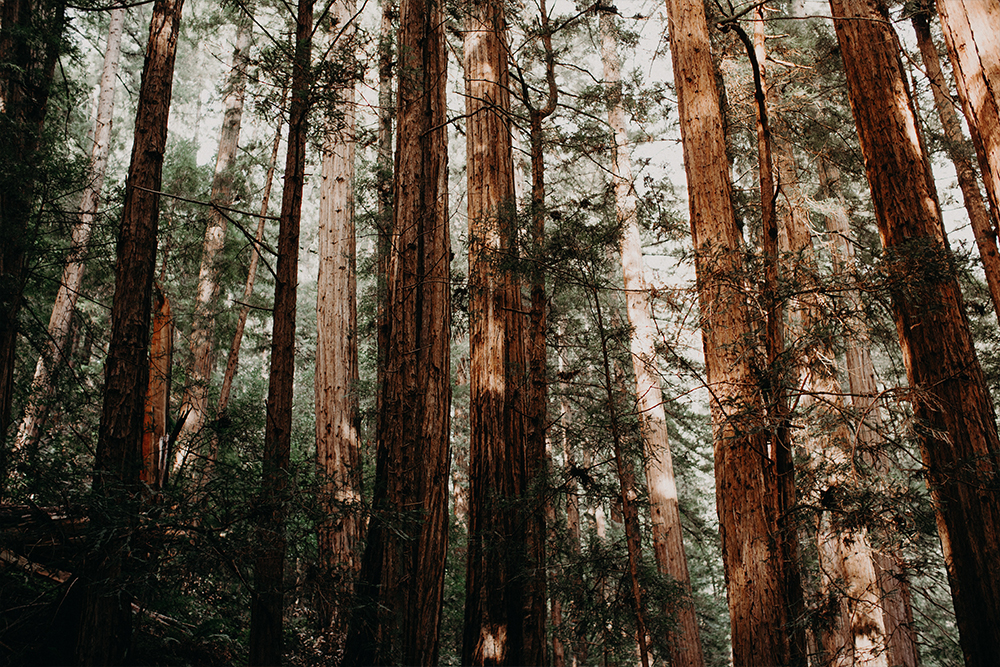
Branch out at Redwood National Forest in Crescent City, CA
See the tallest trees on Earth in this coveted neck of the woods! Naturally, a hike among the Redwoods will do wonders for the mind and the body. Inhale, exhale, repeat.
Draw a line in the sand at White Sands National Monument in Otero County, NM
Biking, camping, dune driving, hiking, sand sledding––this isn’t someone’s dating app profile, these are the amazing things you can do to let loose and unplug in this incredible and historic national park that’s “like no place else on earth.”
If skiing and mountains aren’t your thing, can we suggest flatter ground? The famous Bonneville Salt Flats are one of the most unique environments and landscapes in the U.S., and the perfect place to feel like you, too, are the salt of the Earth.
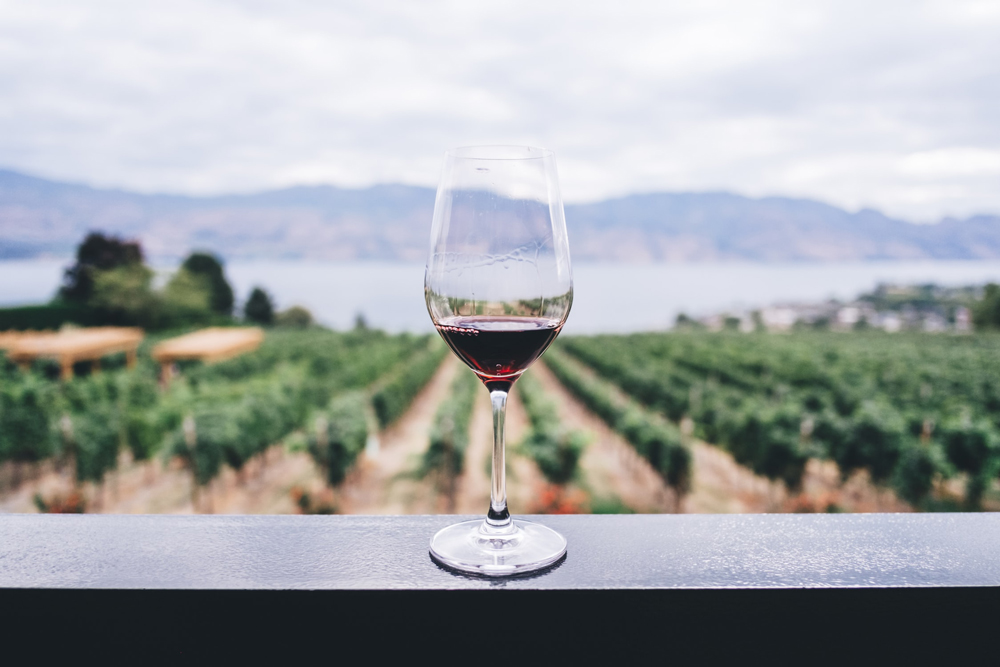
🎶 Our aircraft bring all the guests to vineyard! 🎶 We heard it through the grapevine you’re overdue for a Wine Country weekend, unwinding with a glass, bottle or barrel of pinot. (Plus, you can bring home your favorite sips from your trip because Wine Flies Free.)
Considering how energetic and nonstop the city is, this one might be a stretch. But if you find yourself in Central Park, take a moment to do some mind-clearing yoga ––we promise you won’t be the only one in mountain pose in the middle of the city.
Ready to plan?
Don’t let your long relaxing weekends get away from you. Take a deep breath, mark your calendar and seize the holiday on alaskaair.com!
MONDAY, JANUARY 20 – MARTIN LUTHER KING, JR. DAY
MONDAY, FEBRUARY 17 – PRESIDENTS DAY
MONDAY, MAY 25 – MEMORIAL DAY
FRIDAY, JULY 3 – INDEPENDENCE DAY
MONDAY, SEPTEMBER 7 – LABOR DAY
FRIDAY, NOVEMBER 27 – DAY AFTER THANKSGIVING
FRIDAY, DECEMBER 25 – CHRISTMAS DAY
FRIDAY, JANUARY 1 (BONUS DAY!) – NEW YEAR’S DAY
*We know everyone doesn’t get holidays off, but we hope you find time to explore these great destinations when you can!
Hawaiian Holdings Announces 2019 Fourth Quarter and Full Year Conference Call
HONOLULU, Jan. 16, 2020 /PRNewswire/ — Hawaiian Holdings, Inc. (NASDAQ: HA), parent company of Hawaiian Airlines, Inc. ("Hawaiian"), plans to report its fourth quarter and full year 2019 financial results after the market closes on Thursday, January 30, 2020. An investor conference call is scheduled for 4:30 p.m. Eastern Time that day.
The call will be open to all interested investors through a live audio webcast accessible in the Investor Relations section of Hawaiian's website at HawaiianAirlines.com. For those who are not able to listen to the live webcast, the call will be archived for 90 days on Hawaiian's website.
About Hawaiian Airlines
Hawaiian® led all U.S. carriers in on-time performance from 2004-2018 as reported by the U.S. Department of Transportation. U.S. DOT results for 2019 will be reported in February. Consumer surveys by Condé Nast Traveler, Travel + Leisure and TripAdvisor have placed Hawaiian among the top of all domestic airlines serving Hawai'i.
Now in its 91st year of continuous service, Hawaiian is Hawai'i's biggest and longest-serving airline. Hawaiian offers non-stop service to Hawai'i from more U.S. gateway cities (13) than any other airline, along with service from Japan, South Korea, Australia, New Zealand, American Samoa and Tahiti. Hawaiian also provides, on average, more than 170 jet flights daily between the Hawaiian Islands, and over 260 daily flights system-wide.
Hawaiian Airlines, Inc. is a subsidiary of Hawaiian Holdings, Inc. (NASDAQ: HA). Additional information is available at HawaiianAirlines.com. Follow Hawaiian's Twitter updates (@HawaiianAir), become a fan on Facebook (Hawaiian Airlines), and follow us on Instagram (hawaiianairlines). For career postings and updates, follow Hawaiian's LinkedIn page.
For media inquiries, please visit Hawaiian Airlines' online newsroom.
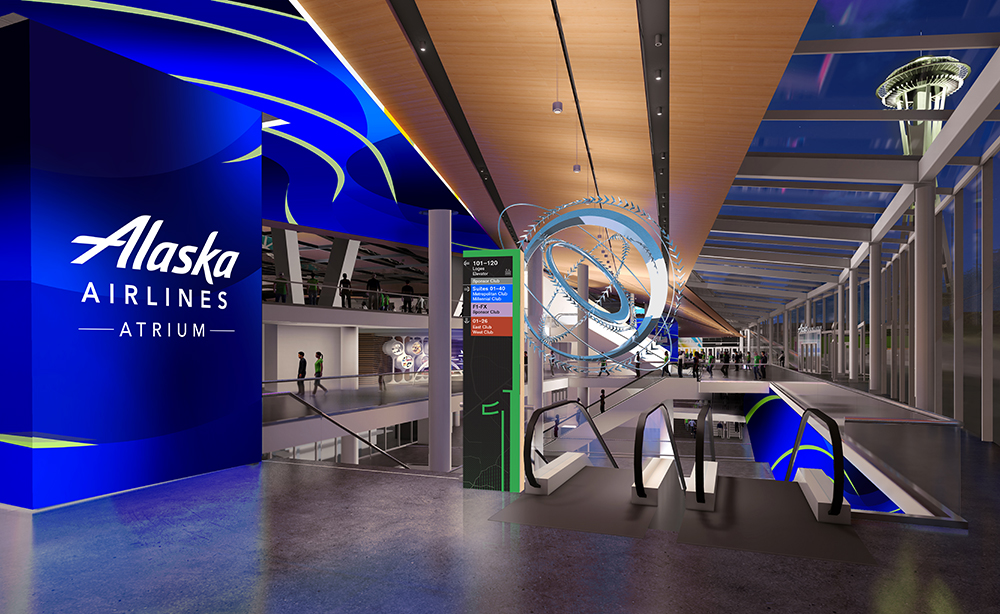
We’re on cloud nine to team up with our newest hometown professional sports team, NHL Seattle. As the official airline and founding partner of the hockey team, we’ll welcome our community and guests to Seattle Center’s New Arena and the teams’ practice facility and headquarters at Northgate Ice Centre.
As part of our partnership, Seattle Center’s atrium will be named “The Alaska Airlines Atrium.” The space, located at the main entrance on the south side of the arena, will offer a unique and memorable Alaska-immersive experience for everyone attending events at the facility – from sports to music and more.
Alaska branding will also appear on the ice and several boards of the hockey rink during NHL games. We’re thrilled to work closely with NHL Seattle to invest in our city and bring joy to the Seattle community and visitors beyond events at the arena.
“I grew up playing hockey and love the drive and energy of players and fans alike. This is an incredible sport – kids must really want to play, with early ice times and cold temperatures – so anyone who winds up in hockey has to work for it,” said Alaska Airlines President Ben Minicucci. “At Alaska, we get that, and we’re proud to be a founding part of bringing hockey to this great and growing city.”
In addition to the NHL Seattle, Alaska Airlines partners with several other Seattle Center gems, including the Museum of Pop Culture and Pacific Science Center and the Seattle Storm WNBA team. Last year, we launched “Free Throws for the Future” with the Seattle Storm, which provides 2,000 airline miles for every free throw completed by the Storm to support nonprofits who are equipping the next generation of young leaders with the knowledge, skills and pathways for success.
NHL Seattle’s inaugural season begins in 2021. Latest updates can be found at www.nhl.com/seattle.
Let’s do that hockey!
Photos of Alaska Airlines breaking the news to their employees with NHL Seattle:
At Alaska Airlines’ Seattle employee meeting, President Ben Minicucci was joined onstage by Tod Leiweke, CEO of NHL Seattle, and a group of our pilots and employees who love hockey and play in an Alaska-sponsored league or coach a youth team. Photos by Ingrid Barrentine.
This slideshow requires JavaScript.
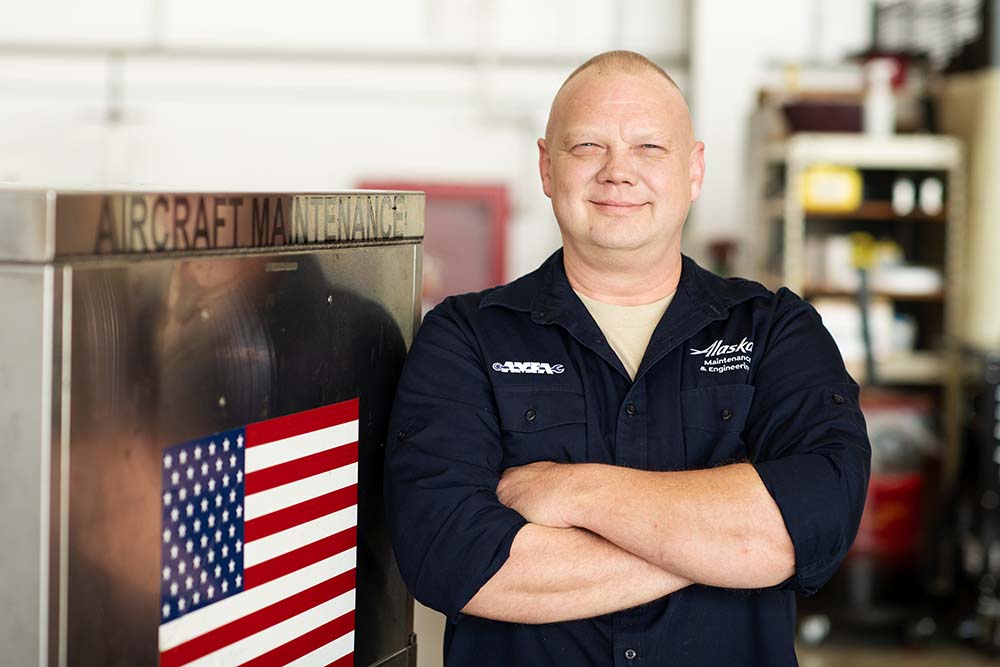
Defying gravity is all in a day’s work for Line Aircraft Technician TJ Spring
Working hard, and well into the night, has never been an issue for TJ Spring, a 20-year Alaska Airlines aircraft technician in Seattle’s Maintenance & Engineering Department. Even as a young man mowing lawns for money, he used to attach bright lights to a lawnmower so he could keep working more safely into twilight hours. Nowadays, Spring, who works night shifts for Alaska, puts the same ingenuity, work ethic and safety consciousness to good use readying airplanes for daytime flights.
It’s work that he finds deeply satisfying. “I love aviation, and I love aircraft,” Spring says. “It takes a lot to defy gravity, and it’s remarkable to be part of a team making that happen.”
Spring began his career in the U.S. Air Force in 1991, and he later attended airframe-and-powerplant school. He served for 21 ½ years in the Air Force, Air Force Reserve and Air National Guard combined, maintaining military jets while also pursuing his airline career. On September 12, 2001, he was activated to support the nation’s air defenses, and in 2007 he volunteered for a tour in Iraq. He retired from the military in 2012 as a master sergeant.
Known for his technical expertise, Spring has played a key role for Alaska Airlines at the Aerospace Maintenance Competition, which brings together more than 70 international teams for events that resemble pit-stop repairs. Spring was on a team for four years that placed highly each year and won the overall contest in 2016.
As a member of Alaska’s Continuous Improvement Team, Spring meets monthly with co-workers from across the company to discuss ways maintenance can be done even better.
Outside of work, Spring volunteers at Alaska’s community Aviation Day and chairs a student-exchange program between his hometown area of Kent–Auburn, and its sister city, Tamba, Japan. He’s also the father of two grown daughters.
“I like to be busy,” says Spring. “It’s in my DNA to work hard.”
Questions & Answers
What do you like most about your job? I like identifying a problem, fixing it and knowing it’s fixed. To me, an aircraft is a living entity—with systems similar to bone structures and circulatory systems. Being able to diagnose and fix those systems is really what it’s all about.
What do you see as your role in providing service to Alaska Airlines guests? It comes down to efficiently delivering the safest, most reliable aircraft that we can. The entire airline is built on its aircraft.
What advice do you have for new hires? Being an aircraft technician is a lifestyle decision. You have to love the job, be willing to work long hours, and consider accuracy, time management, safety and doing a job correctly every single time.
What are your favorite places to travel? One favorite was Florida—we took a really good family trip to see Disney World and Universal Orlando. I’m from Upstate New York, and my wife’s family is in Las Vegas, so we get to those places, too.
Kudos from TJ’s Co-Workers
“When TJ is working a problem, you can consider it done. Along with his aircraft knowledge, TJ has a positive attitude—no job is too small or too big for him. He’s the first one on the job, the last to leave and always ready to help.” —William M., Lead Aircraft Technician, Seattle
“We always used to joke that the hardest-working guy is the dirtiest, and TJ is hands-down the dirtiest mechanic out on the floor.” —Ernest Y., Senior Engineer, Seattle
“TJ brings a wealth of knowledge and skill to the task of fixing airplanes. He never misses an opportunity to help others when his work is complete. He’s always available for questions, listening, and giving helpful, directed feedback.” —Tom A., Director, QA and Regulatory Compliance, Seattle
“He is just all around a great human being and one who keeps the Spirit of Alaska alive in the sky.” —Robert N., Line Aircraft Technician Trainer, Seattle
Alaska Airlines employees such as TJ Spring are the reason for our excellence. Join us in creating an airline people love. Visit alaskaair.jobs.
Northern Lights myths & tips to make your aurora adventure lit
The state of Alaska happens to be one of the best places in the world to see the Northern Lights, scientifically known as the Aurora Borealis. And, since we’re the airline with the most flights to Alaska, we know a thing or two about seeing this natural wonder.
“I’ve seen the aurora at least 40 times. My most reliable spot is Ester Dome, just outside of Fairbanks. Drive up to the antennas and adjacent is a large snowfield you can walk on. If you’re visiting Anchorage, I’ve had the best luck seeing the Northern Lights from the end of the runway (at Ted Stevens Anchorage International Airport) near Earthquake Park. In my experience, I’ve found that midnight to 1:30 a.m. is when the lights are most active.” – Kevin, Manager of Market & Competitive Analysis
“I’ve had the best luck seeing the lights in and around Fairbanks compared to anywhere else – it generally has clearer skies. I often monitor the aurora forecast provided by the University of Alaska Fairbanks. My advice is to find conditions where skies are forecasted to be clear and the aurora Kp (strength) forecast is high. If booking a trip far out where you’re unsure about the weather, it’s a great idea to plan to stay at least a few days.” – Garrison, Yield Management Analyst
“My favorite spot to view the lights is from Chena Hot Springs Resort outside Fairbanks. It’s a lovely spot to wait for the aurora while soaking in the hot springs.” – Jacqueline, Manager Revenue Management
Explore Fairbanks:
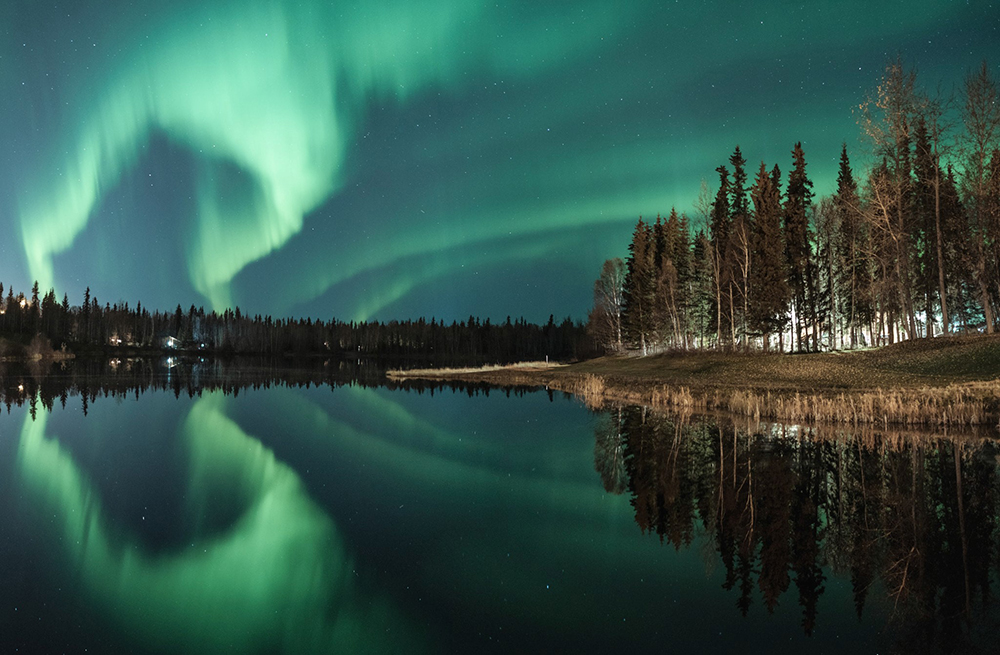
In an early Aurora Season appearance, the Northern Lights create a spectacular display over Chena Lake Outdoor Recreation Area. Photo by Andy Witteman.
If you’re visiting Fairbanks, be sure to check out Aurora Pointe, Murphy Dome, Cleary Summit, Chena Lakes Recreation area, or up the Elliott Highway. These offer some of the best views of the lights, just make sure you go at night. If you prefer to watch the Northern Lights indoors, try out a heated “aurorium” cabin, yurt or lodge.
Though the Northern Lights are more vibrant a few miles out of town where it’s darker, you’ll be able to see the Northern Lights in and around Fairbanks too. Many accommodations’ front desks will even offer a wake-up call for guests when the Northern Lights appear.
There are quite a few misconceptions about the Northern Lights, and when and how they appear. Mark Conde, a professor of physics and a geophysicist at the University of Alaska Fairbanks, dispelled some for us below.
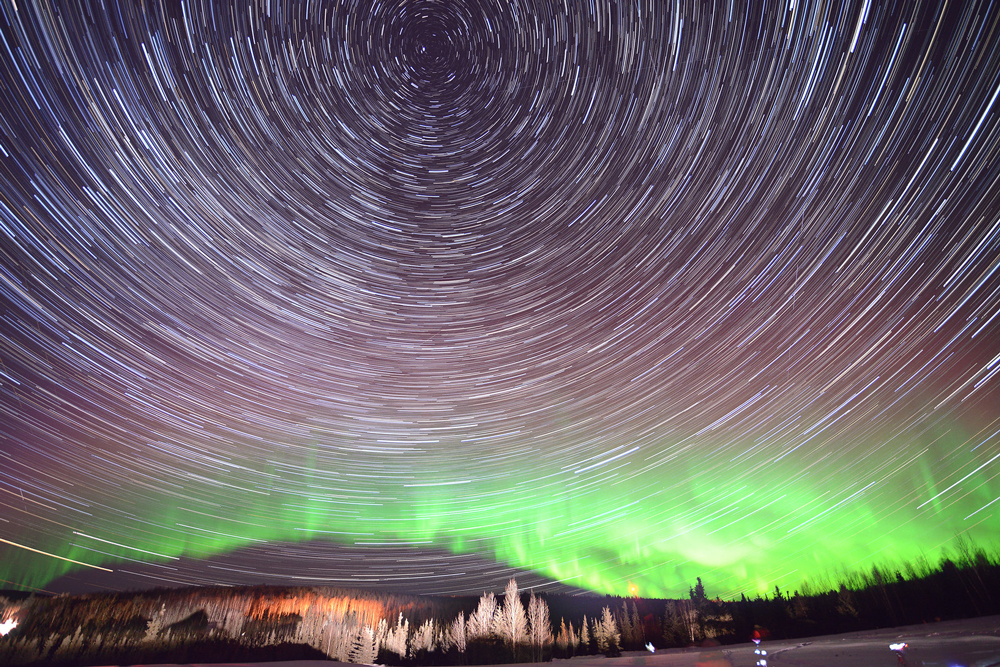
A dramatic time lapse of the stars and Aurora just outside of Fairbanks, Alaska during Aurora Season. Photo by Sherman Hogue, Explore Fairbanks.
1. You can turn the Northern Lights on and off. – MYTH
“There’s no known way for human technology to turn the naturally-occurring aurora on and off. There also aren’t any human facilities that can match the total power of the active aurora – that power can be more than 100 gigawatts, which is a lot. If someone wanted to generate that much power, they would need an entire electricity grid.”
2. The Northern Lights make noise. – TRUE, ish
“There are numerous reports of the aurora producing audible sounds. Science doesn’t have a good explanation for how or why this occurs, nor any really definitive measurements to show that it does. There are enough first-hand human reports that, in my opinion, would be unwise to completely discount any possibility that there is something to this. The types of sounds that people report hearing are hissing or crackling. There are suggestions that sounds like this may be caused by electrical discharges from airborne ice crystals or spruce needles. This doesn’t necessarily mean that the aurora is making noise.
“I personally have heard hissing from radios or intercom systems when the aurora is active. This isn’t auroral sound. Its electrical interference associated with the aurora being turned into sound by the radio or intercom.”
3. The aurora only happens at night. – MYTH
“The aurora happens at all hours of the day. However, you can only see the aurora if it’s dark (unless you have a spacecraft or very special ground-based equipment). A person will never be able to see the aurora from the ground with their unaided eyes during full daylight. However, it’s not uncommon for humans to see the aurora by eye during twilight, which isn’t really night.
Also, if you travel far enough north in the winter, it’s dark during the day and then you’ll be able to see the daytime aurora. Spacecraft and special ground-based instruments tell us that bright aurora do occur in broad daylight. My own graduate study was based on seeing the aurora in the daytime blue sky above Antarctica, so it’s not a nighttime-only phenomenon.”
4. Winter is the only time you can see the Northern Lights. – MYTH
“In high latitude locations like Fairbanks, the sky won’t be dark enough in the summer if you’re observing the aurora by eye from the ground. But during a magnetic storm at solar maximum, the aurora expands a long way toward the equator, even as far south as Texas. At mid-latitudes, such as those in the continental U.S., it will be dark at midnight, even in the summer. So, observers in those locations can and do see the aurora in the summer.”
5. Clear skies cause the aurora to occur. – MYTH
“If you’re watching the aurora from the ground, you won’t be able to see it if it’s cloudy because the aurora occurs above the clouds. It’s easy to take your personal experience of seeing the aurora when the sky is clear. We have instruments that can see auroral light through the clouds. We also have spacecraft viewing them from above. Both techniques show that the aurora occurs regardless of whether the sky below is clear or cloudy.”
You’re now one step closer to your aurora adventure — Head north to Alaska for your chance to chase the lights by booking your flight on alaskaair.com.
It’s safe to say 2019 was among the most eventful years Hawaiian Airlines has had in nine decades. The yearlong observance of our 90th anniversary – a milestone reserved to only a handful of commercial airlines – was marked by exciting new routes, renovations to our airport lobbies, a fleet expansion, and a host of sustainability and cultural initiatives.
“It has been a remarkable time of high-paced growth and fleet transition while honoring our past and connecting people with aloha,” said Peter Ingram, president and CEO of Hawaiian Airlines, in a year-end letter to employees. “I extend a sincere mahalo for all you have done and continue to do for our company and the communities we serve.”
Please join us in reliving our 90th anniversary and keep reading to learn more about key 2019 accomplishments.
Supporting our Community
We held a plane pull fundraiser at the Castle & Cooke Aviation Hangar for our 90th birthday on Nov. 11. Approximately 2,000 people representing Hawaiian Airlines and corporate teams throughout Honolulu competed in the charity event that raised $33,000 for Sustainable Coastlines Hawaii.
Earlier that morning, we surprised guests aboard HA1111,a commemorative flight back in time. The trip replicated our first service from Honolulu to Hilo on the Island of Hawai‘i, with a stop on Maui, and flight attendants wore vintage company uniforms from the 1960s through the ‘90s. Each guest received a birthday card with a gift of 90,000 HawaiianMiles.
An independent ICF analysis, commissioned by Hawaiian, reported that our airline generated the equivalent of $9.3 billion in economic benefit for Hawai‘i and supported more than 60,000 jobs in 2018.
In November, our employees hosted a special welcome at the Daniel K. Inouye International Airport for two veterans traveling to Honolulu from Sacramento for the 78th anniversary of the attack on Pearl Harbor – Col. Clarence Anderson, a World War II pilot and Pearl Harbor survivor, and Lt. Cmdr. Lou Conter, one of three remaining survivors of the USS Arizona. The Hawaiian Airlines Veterans Employee Resource Group, alongside a cohort of active-duty U.S. Navy sailors, gave them an honorable recognition, including a red-carpet walkway, patriotic flags, recognition bell, and a group salute. Additionally, flight HA19 was staffed with an air and army national guard flight crew and captain, and a veteran first officer.
Our Air and Army National Guard flight crew, Air National Guard pilot and veteran first officer with Lou Conter (center).
Protecting the Environment
We, along with nine other members of the Hawai’i Green Growth Sustainability Business Forum, invested in a pilot carbon offset project by The Nature Conservancy. The project will result in the management of 8,245 acres on Hawai’i Island, also known as the Kona Hema Forest Preserve, and allow The Nature Conservancy to sell the carbon captured to entities that wish to offset their carbon emissions.
“We hope that this project demonstrates that a carbon offset market can be developed in the islands, which would be a great new industry for Hawai’i that currently keeps our land in agricultural use,” said Ann Botticelli, Hawaiian’s senior vice president of corporate communications and public affairs.
We partnered with local and international organizations to host a series of beach cleanups throughout the Pacific, including Sydney, Australia; Chigasaki, Japan; Auckland, New Zealand; Waimānalo and Kahuku, O‘ahu; and South Point, Island of Hawai‘i. Each gathering exposed volunteers to the realities of plastic pollution and the effects it has on the oceans and the world’s coastal regions. We also deepened our partnership with New Zealand’s Sea Cleaners to create opportunities for Pacific youth to access environmental stewardship exchange programs. The result of our collaboration brought waves of positive impact to coastal communities throughout Hawai‘i and New Zealand.
Chigasaki Beach cleanup
We became the first U.S. carrier to adopt the Pacelab Flight Profile Optimizer in our cockpit. The technology augments flight plans done hours before departure by informing pilots about real-time aircraft data and meteorological information while recommending optimal altitudes to reduce fuel consumption throughout the flight. Additionally, we teamed up with Carbon Lighthouse to improve energy efficiency at the Hawaiian Airlines Airport Center.
Hawaiian Airlines and Raw Elements USA, our official reef-safe sunscreen partner, came together in the heart of Waikīkī to recognize June 1 as the inaugural World Reef Day and spread global awareness about the health of coral reefs and oceans.
Photo credit: Raw Elements USA/Nolan Omura
From left: Theresa van Greunen of Aqua-Aston Hospitality, Brian Guadagno of Raw Elements USA, Peter Ingram of Hawaiian Airlines, Rafael Bergstrom of Sustainable Coastlines Hawaii, and Lisa Bishop of Friends of Hanauma Bay
Perpetuating Hawaiian Culture
This year, Hawaiian Airlines proudly became a major sponsor of the 34th annual Eddie Aikau Big Wave Invitational. With he‘e nalu (wave sliding) holding deep roots in Hawai‘i’s history, it was a natural fit and honor for us to sponsor one of the world’s premier surfing events.
This summer, we embarked on a refresh of our lobbies with new, culture-centric designs. Our neighbor island renovation started at Kahului Airport (OGG), the second busiest airport in the state, and concluded with Hilo International Airport (ITO). All of our Hawai‘i lobbies now feature new and faster self-service kiosks to enhance the day-of-travel experience for our guests.
The Hawaiian Airlines lobby at OGG
After the launch of our nonstop service to Boston, we transported cultural practitioners from Bishop Museum, the Office of Hawaiian Affairs and Paepae o He‘eia Fishpond to Massachusetts’ Peabody Essex Museum. There, they conducted a cultural ceremony for one of the last remaining Kū renderings. Kū, a carved statue of the Hawaiian god Kūka‘ilimoku, required a proper moving ceremony before being transported to its new home.
Ingram later reflected on the opportunity, sharing, “As our route map has grown, we have had increasing opportunities to unite precious cultural artifacts with those who care deeply about their preservation. It is an enduring benefit of remaining firmly tethered to this archipelago, and one that I deeply appreciate.”
Photo credit: Peabody Essex Museum
In celebration of ‘Ōlelo Hawai‘i (Hawaiian language) Month in February, we established an ‘ōlelo Hawai‘i certification program for our employees. The certification, which is still available to our 7,400-plus employees at no cost, is an extension of our commitment to perpetuate Hawai‘i’s culture.
Look for the Hawaiian flag on our employees’ name tag to learn if they are certified speakers or not.
In the same month, we also unveiled a pop-up Hawaiian Culture Resource Center in the heart of our Honolulu headquarters.
Enhancing our Network and Operations
Traveling between Japan and Hawai‘i got even more seamless this November after we began serving Fukuoka on the island of Kyushu. And our footprint on the U.S. East Coast expanded with the launch of our Boston service, bringing New Englanders closer to the Aloha State. The service launched in April, becoming the longest U.S. interstate route.
President and CEO Peter Ingram (right) at the BOS Inaugural
We retired our Boeing 767-300ER fleet after aircraft N594 completed its final commercial flight from Sacramento to Honolulu. The Boeing 767s flew Hawaiian skies for over 17 years and our fleet, at its peak, consisted of 18 aircraft.
2019 was also the year of the Airbus A321neo, a fuel-efficient aircraft that allowed us to introduce new nonstop service that connects Sacramento and Las Vegas to Maui and expands our service to San Francisco, Los Angeles (seasonal) and Seattle. Our network growth reinforces our commitment to being the leading carrier between Hawai‘i and the U.S. West Coast.
Down under, our Aussie ‘ohana celebrated 15 years of service between Honolulu and Sydney and launched a codeshare agreement with Virgin Australia to welcome more guests throughout Oceania.
‘Ohana by Hawaiian, operated by Empire Airlines, celebrated five years of service between Honolulu and Moloka‘i and Lāna‘i by gifting 1 million HawaiianMiles to two nonprofit organizations and helping restore the Moloka‘i Land Trust’s Mokio Preserve.
The icing on the cake: we marked 15 straight years as the nation’s leader in on-time performance!
Improving our Products
We released a new line of in-flight amenities and soft goods called ‘Ēkaha. Produced in partnership with Moloka‘i-based brand Kealopiko, the collection pays homage to Hawai‘i’s rich culture and environment.
Our mobile app was completely redesigned with new, modern features that simplify the day-of travel experience.
Guests were introduced to a refreshed menu of island-inspired drinks crafted by On the Rocks Premium Cocktails. We also teamed up with Lion Coffee to bring their distinct, locally roasted brew onboard.
Mahalo, from Hawaiian Airlines, for a wonderful 2019. We’re looking forward to the opportunities in the new year and decade.
Start off the new year fresh and fly with Evergreens salads
We are telling the stories behind some of the foods and drinks guests can enjoy inflight, highlighting companies whose sustainable business practices help Alaska “Fly Greener.” These businesses also offer unique experiences in West Coast destinations we love to visit. Today, we are featuring Evergreens, a made-to-order salads company headquartered in Seattle with 26 locations in Washington and Oregon. Evergreens’ Beets So Fly salad is available for purchase on Alaska Airlines’ coast-to-coast and Hawaii flights through March 15.
Photography by Ingrid Barrentine
The team of six started early this morning in downtown Seattle, steaming quinoa and brown rice, slicing cucumbers and tomatoes, and chopping the five types of greens that anchor Evergreens’ salads, grain bowls and wraps. A rainbow of fresh and house-pickled produce sparkles across the tidy grid of the salad bar.
The lunch rush is a short hour away, and locals and visitors alike will soon line up at this location of Seattle’s homegrown chain around the corner from Pike Place Market. But first, there are dozens of online preorders to fill. The team dashes along the counter – tongs and scoops dancing between fixings and the clear compostable serving bowls that have been Evergreens’ signature from its start in 2013.
“All hands on deck!” calls out general manager Ricardo Salinas, sporting a T-shirt that says “Romainager,” as he starts a line of 70-plus El Sombrero salads topped with avocado, black beans, fire-roasted corn, jalapeños and Beecher’s cheese – the runaway favorite among 2.5 million bowls served in 2019.
Since the made-to-order salad chain launched six years ago, Evergreens has grown to 26 restaurants in Washington and Oregon. The first airport location arrived at Sea-Tac last year and was an instant hit with flyers, dishing up four times as many bowls as a typical urban location. Travelers in the know place their orders on the Evergreens app, where they can set a pick-up time for their salads and avoid standing in line. At Portland International Airport, Evergreens is coming to the expanded Concourse E in late spring.
Tina Holdman and the Beets So Fly salad.
And now health-minded Alaska Airlines guests also can enjoy Evergreens’ Beets So Fly salad on coast-to-coast and Hawaii flights through March 15. Beets So Fly features romaine and mixed greens, pickled beets, pickled red onions, cucumbers, walnuts, feta and black pepper with Dijon balsamic dressing and is served with roasted chicken. “It’s a really colorful salad that offers great flavors for the inflight experience,” says Tom Small, Evergreens’ chief operating officer and head of the culinary-development team.
Small, who was a chef in fine-dining restaurants for many years, says his team draws on the experience of crafting high-end cuisine to create Evergreens’ flavor combinations. In addition to four core salads, the menu features five seasonal bowls that change twice a year, and a unique salad is highlighted each month.
To kick off 2020, the Evergreens team has packed January’s Dance Dance Resolution bowl with romaine, spinach, roasted carrots, red bell peppers, green onions, toasted almonds, apricots, garbanzos and veggie chips with a Greek yogurt dressing. “We added simple layers of flavor along the way to add interest without adding a lot of calories,” Small says. “The garbanzo beans are marinated with Middle Eastern spices and the dried apricots are poached in chai tea. Both add exotic flavors.”
This fall, Small took a break from taste-testing dressings and menu planning at Evergreens’ central commissary kitchen to reflect on the company’s ingredients for success and sustainability efforts – and to share how salads like Cobb Your Enthusiasm get their names.
Q&A with Tom Small, Evergreens’ chief operating officer and head of the culinary-development team:
What makes Evergreens stand out among the fast lunch options available in metropolitan Seattle and Portland?
Tom Small: “We’re focused on super freshness. We go through a ton of produce, and we’re really focused on getting food in and out as quick as possible. We also do a lot of transparency around nutritional information. On our website, you can see a full list of every ingredient and every salad and full nutritional labels. You know what you get.
“And we tend to be more lighthearted and fun. Our teams are super dynamic, and we’re super fast. We time the experience from when a guest comes into when they finish at the register, and our fastest stores are able to do that in less than two minutes.”
The Evergreens team at the Second and Pike location in Seattle: Marialena Macanas, Raul Soto, Dakota VanBrunt, Yuri Alvarez, Tina Holdman and Ricardo Salinas.
About a quarter of Evergreens guests preorder online – an option for all locations, including Sea-Tac. Do you have any tips for online orders?
Small: “We don’t mix the ingredients into the salad for online orders. That’s for transparency so when the guest gets the order, they know they got everything before they mix it up. We wish more people knew that on the online ordering form there’s a button to tell us to put your salad in a big bowl for easier mixing. Then, we’ll make a 32-ounce salad in a 48-ounce bowl, which gives two extra inches of headspace so it’s super easy to mix.”
What are some of the ways Evergreens has incorporated eco-friendly practices into its business?
Small: “In the stores, almost 100 percent of the items that you get from us are compostable. That’s bowls and beverage cups – even soup cups, lids and utensils. Everything can go straight into compost. We use compostable plastics that are corn-based and have from the beginning. There was recently some news about compostable fiber bowls used by some restaurants that have chemicals and additives that might be a concern. We don’t use those at all.
“We’ve also been working with EnviroStars [an organization that recognizes businesses’ environmental commitment]. We have the highest rating for our locations, and that has to do with energy output, the use of LED light bulbs and water efficiency.”
How did you come up with the Beets So Fly salad for the Alaska inflight menu?
Beets So Fly is available inflight until mid-March on coast-to-coast and Hawaii flights.
Small: “Last year in the fall and winter we had a salad called Beets by Evergreens – like the headphones Beats by Dre. It was such a popular salad that it’s one of only a few we’ve brought back. That salad in particular looks really great. It also has a big flavor. This is a style we thought was going to carry through to the inflight experience really well.”
How does your team’s fine-dining background influence the salads you create?
Small: “It’s ingredients, it’s technique, it’s color, it’s flavor balance and there’s some trend to it. Seasonality plays a huge part.
“The progression of our Asian salads is a good illustration. The first Asian-inspired salad we launched was called the Rice Rice Baby. It was the classic Chinese chicken salad, with a very familiar teriyaki sauce. And then a couple of years ago, Thai food was really popular, and we ran a couple of different Thai salads. Last year, Korean food came on-trend, so we had a Korean salad called Lil’ Kimchi.
“Now, as we move into the new season, we’re going in a Japanese direction. I Pity the Tofu is a salad that has pickled ginger. It’s basically a California roll in the form of a salad. That’s the kind of flavor progression that we do.”
What’s your personal go-to salad?
Small: “Planet of the Apricots is my favorite right now. It brings some different flavors and textures with the roasted Brussels sprouts and feels super seasonal. But there have been so many that I’ve liked. A summer and a half ago we had the Evergreens Barbeque Salad. We had house-made pickles and barbecue sauce and smoky Southern spices. It was jokingly called a dude salad because of the heavier, bigger flavors. It was fun that we could do a vegetarian salad that felt so much like an outdoor barbecue.”
How do you come up with the salad names?
Small: “The team has so much fun with the names. It’s a companywide competition and we solicit names from all 475 employees. We share photos of the salads and we’ll get 50 or 60 fun names to choose from.”
Was there a salad name ever suggested by guests?
Small: “There was! It’s Hard Out Here for a Shrimp.”
How does the mission of healthy living influence the work culture at Evergreens?
Small: “I’ve actually lost 75 pounds since I’ve started at Evergreens. Not just from eating salad, obviously; I worked on it as well. We talk with our internal team a lot about ‘Living the brand.’ We give our team members $40 a month to do something that’s on-brand: buy a pair of shoes, buy a gym membership, take yoga classes. It’s all about having a healthy lifestyle and work-life balance.”
How to visit:
Find Evergreens menus, online ordering and directions to locations around metropolitan Seattle and Portland, Oregon, at evergreens.com.
Others who help us Fly Greener:
Fremont Brewing,Seattle: “The mission is to brew great beer and do good”
Broken Earth Winery, Paso Robles, California: Sustaining the land and the wine it yields




 Even though most of the jobs are based in the Pacific Northwest, we’re still hiring across our network. For Horizon, hundreds of ground service agent and passenger service agent job openings are at other airports outside of Sea-Tac.
 We pride ourselves on providing career development in an inclusive workplace where you can grow your career. We provide travel privileges to explore and connect with family and friends; unique pay bonus programs to reward you when the company does well; and competitive benefits for your health and wellness.



 And then they’re washed, dried, and expected to do it again. And again. And again.
 With the research finished, it was Luly Yang’s time to shine. The designer got to work creating a signature silhouette for the Alaska collection, reviewing designs with employees, gathering feedback and making refinements to meet the needs of Alaska’s pilots, flight attendants, maintenance & engineering teams and more.









 View original content to download multimedia:


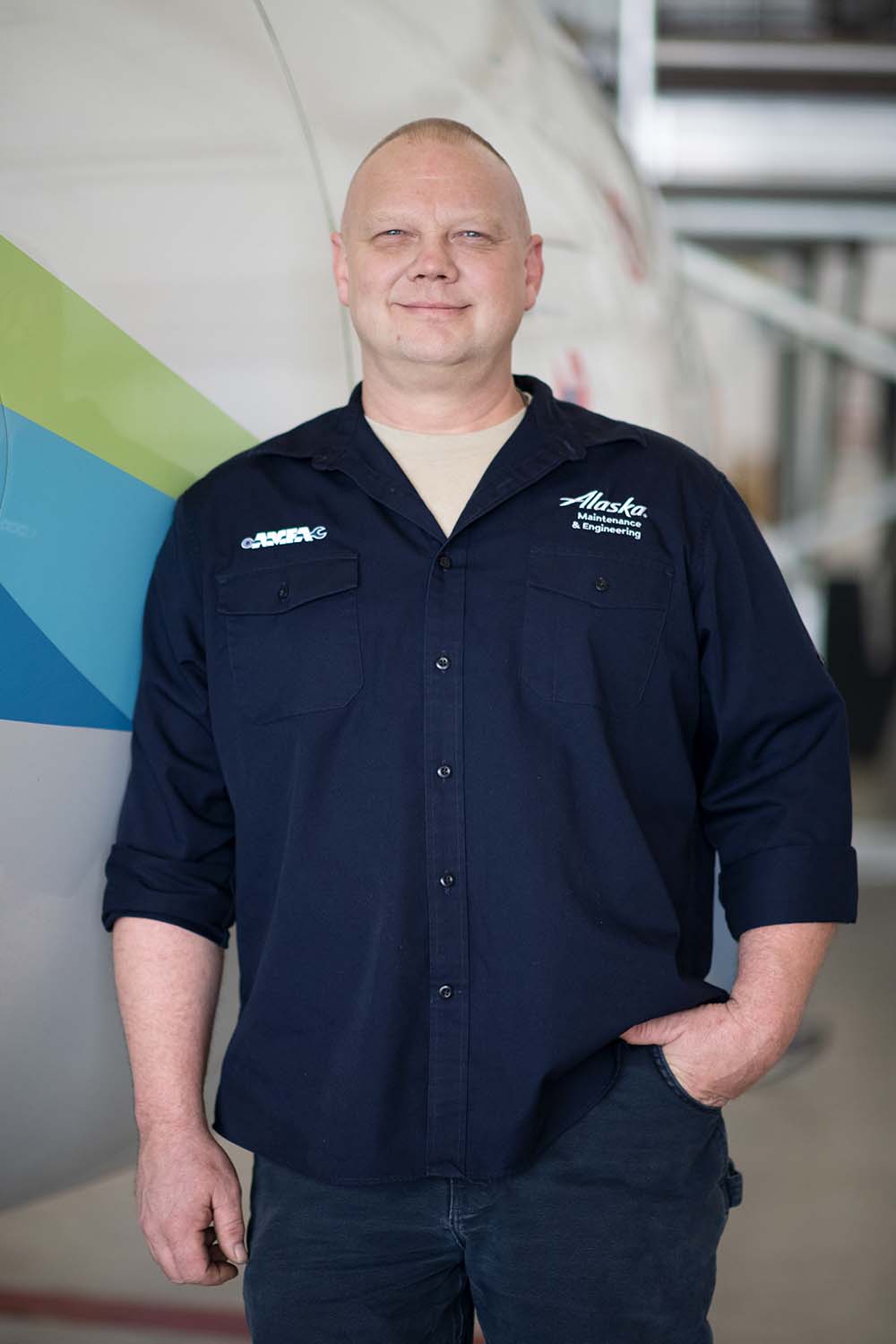 Spring began his career in the U.S. Air Force in 1991, and he later attended airframe-and-powerplant school. He served for 21 ½ years in the Air Force, Air Force Reserve and Air National Guard combined, maintaining military jets while also pursuing his airline career. On September 12, 2001, he was activated to support the nation’s air defenses, and in 2007 he volunteered for a tour in Iraq. He retired from the military in 2012 as a master sergeant.