HONOLULU, July 11, 2019 /PRNewswire/ — Hawaiian Holdings, Inc. (NASDAQ: HA), parent company of Hawaiian Airlines, Inc. ("Hawaiian"), plans to report its second quarter 2019 financial results after the market closes on Tuesday, July 30, 2019. An investor conference call is scheduled for 4:30 p.m. Eastern Time.
The call will be open to all interested investors through a live audio webcast accessible in the Investor Relations section of Hawaiian's website at HawaiianAirlines.com. For those who are not able to listen to the live webcast, the call will be archived for 90 days on Hawaiian's website.
About Hawaiian Airlines
Hawaiian® has led all U.S. carriers in on-time performance for each of the past 15 years (2004-2018) as reported by the U.S. Department of Transportation. Consumer surveys by Condé Nast Traveler, Travel + Leisure and TripAdvisor have placed Hawaiian among the top of all domestic airlines serving Hawai'i.
Now in its 90th year of continuous service, Hawaiian is Hawai'i's biggest and longest-serving airline. Hawaiian offers non-stop service to Hawai'i from more U.S. gateway cities (13) than any other airline, along with service from Japan, South Korea, Australia, New Zealand, American Samoa and Tahiti. Hawaiian also provides, on average, more than 170 jet flights daily between the Hawaiian Islands, with a total of more than 260 daily flights system-wide.
Hawaiian Airlines, Inc. is a subsidiary of Hawaiian Holdings, Inc. (NASDAQ: HA). Additional information is available at HawaiianAirlines.com. Follow Hawaiian's Twitter updates (@HawaiianAir), become a fan on Facebook (Hawaiian Airlines), and follow us on Instagram (hawaiianairlines). For career postings and updates, follow Hawaiian's LinkedIn page.
For media inquiries, please visit Hawaiian Airlines' online newsroom.
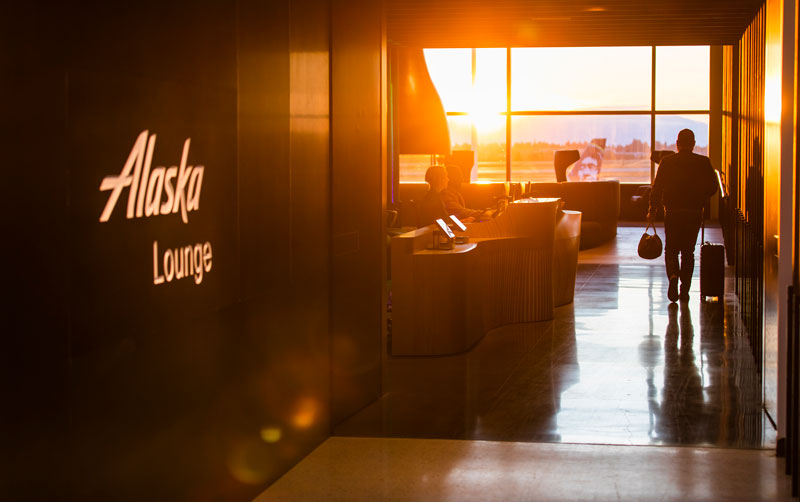
At the new flagship Alaska Airlines Lounge, it’s all about the views. And, if you’re a craft beer fan, the brews.
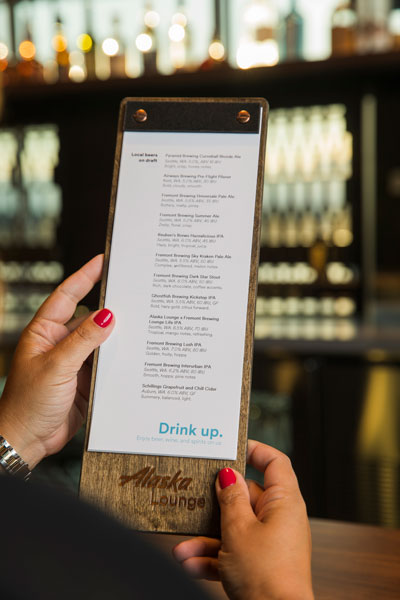
Among the dozen beers on tap are several from Seattle’s Fremont Brewing, including Lush IPA, which is also available inflight on Alaska flights.
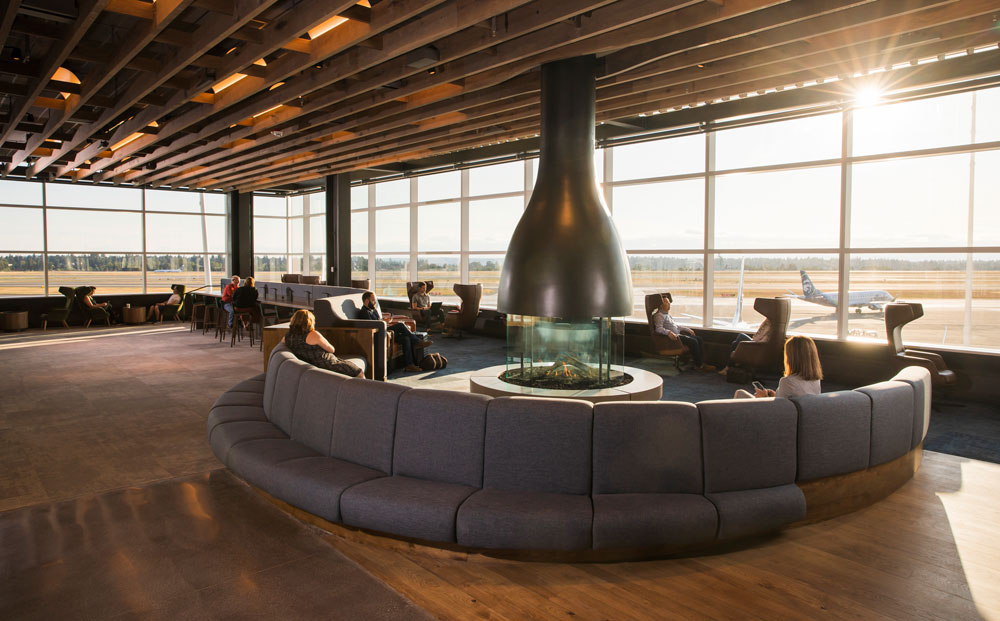
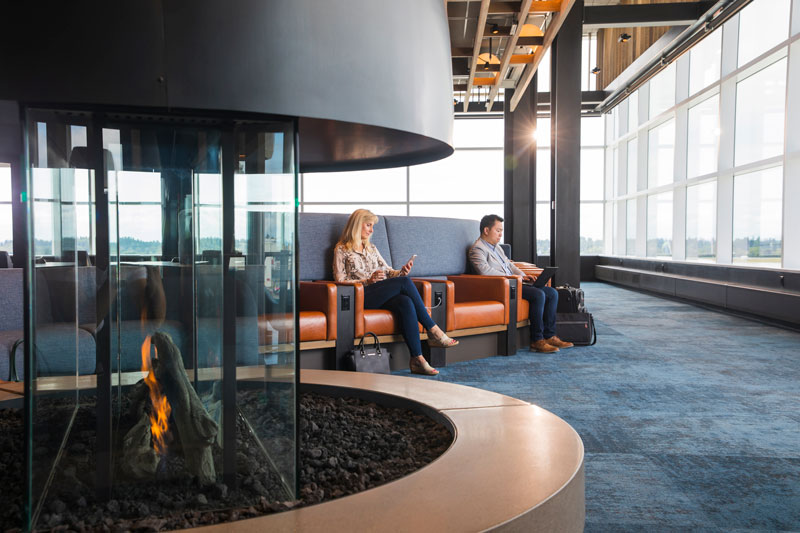
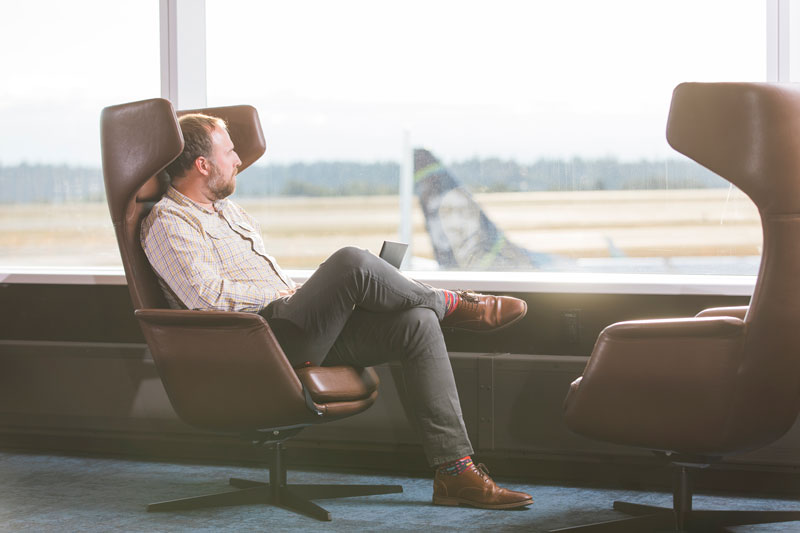
From the 15,800-square-foot lounge in the newly upgraded North Satellite Terminal at Sea-Tac International Airport, Alaska guests can take in expansive views of the Olympic Mountains – as well as downtown Seattle – while unwinding by the fireplace with one of the 12 microbrews on tap. Featured beers include Lounge Life IPA by Seattle’s Fremont Brewing, which was crafted exclusively for Alaska Lounges.
Designed in partnership with Seattle’s Graham Baba Architects, the new lounge offers a relaxing atmosphere. It’s Alaska’s third lounge at Sea-Tac, seventh overall – and the largest by far. The opening on Friday, July 12, reflects Alaska’s continuing investment in guest experiences, following the recent renovation of Alaska Lounges in Los Angeles, Portland and Anchorage, the opening of Alaska’s JFK Lounge and plans for a new lounge at San Francisco International Airport, coming in 2020.
The new Sea-Tac lounge also marks the completion of phase one of the North Satellite Modernization Project, a partnership between the Port of Seattle and Alaska Airlines. The 255,000-square-foot expansion adds more gate seating with charging stations and showcases regional restaurants including Bambuza Vietnam Kitchen, Skillet and Caffe D’Arte.
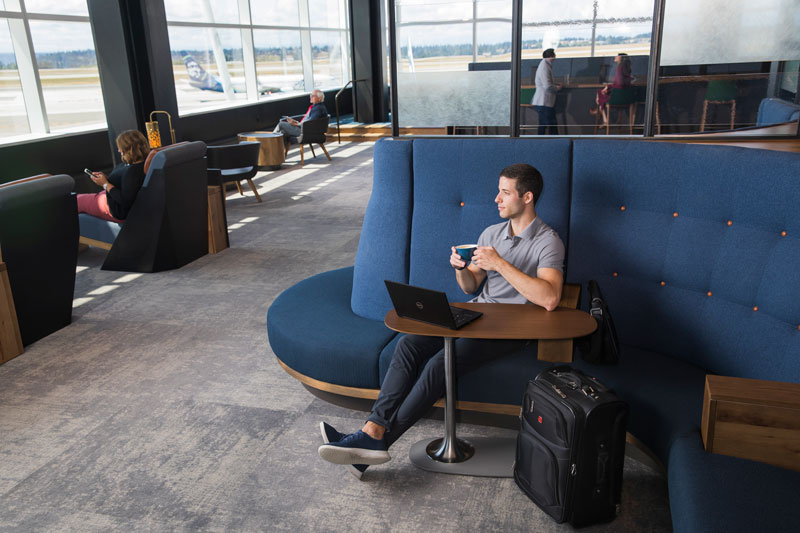
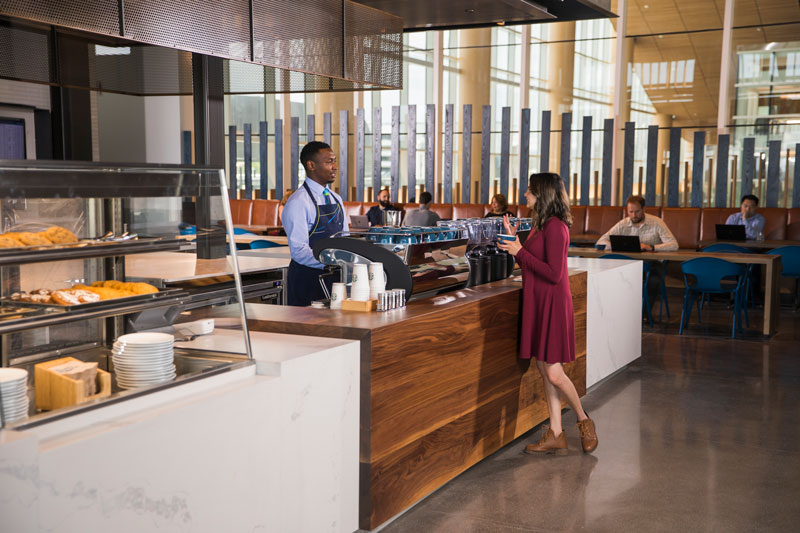
The lounge offers plenty of room to recharge – both for guests and their electronic devices.The lounge features cookies from Seattle’s Marsee Baking, along with other Pacific Northwest-inspired bites.
“At Alaska, we truly strive to meet the needs of the modern traveler – and the touches throughout this newest lounge reflect that care and investment,” says Sangita Woerner, Alaska’s vice president of marketing. “This welcoming space is an extension of the remarkable service we provide every day for our guests.”
How to enjoy Alaska Lounges
Alaska guests can visit by becoming a lounge member, flying first class with Alaska or purchasing a day pass. Flyers can enjoy 50 percent off a day pass when they pay with their Alaska Airlines Visa Signature® credit card.
Scenes from the flagship Alaska Airlines Lounge
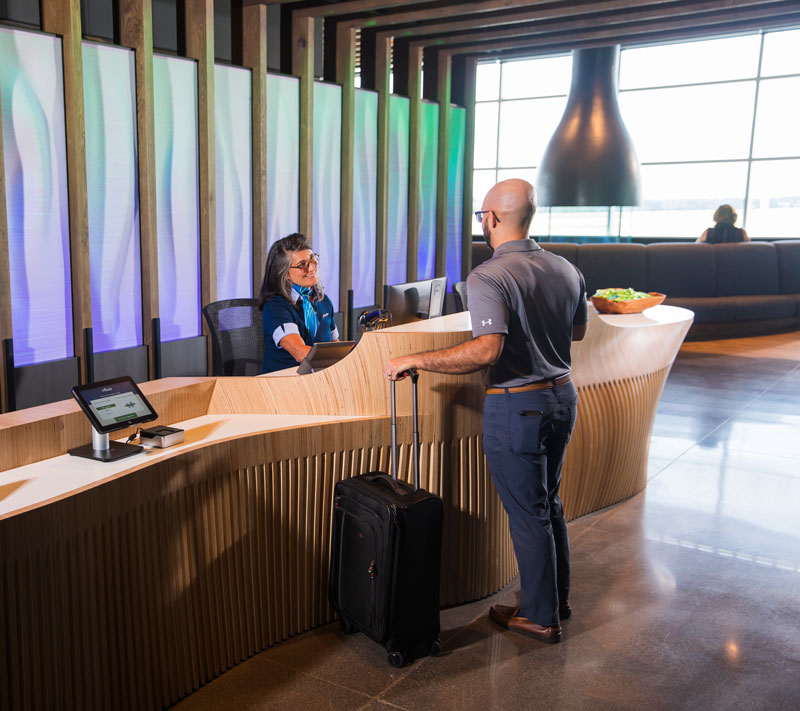
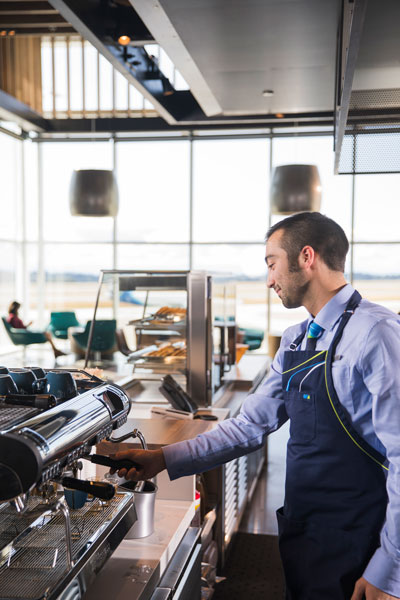
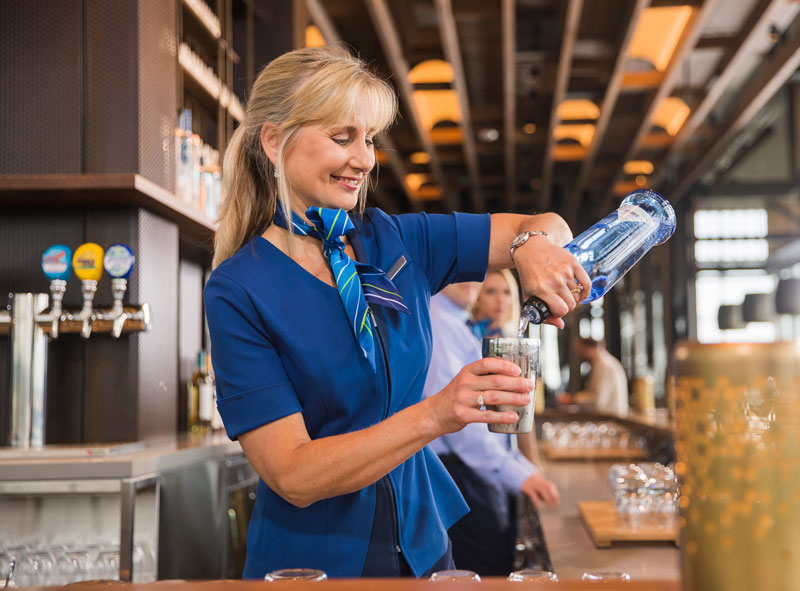
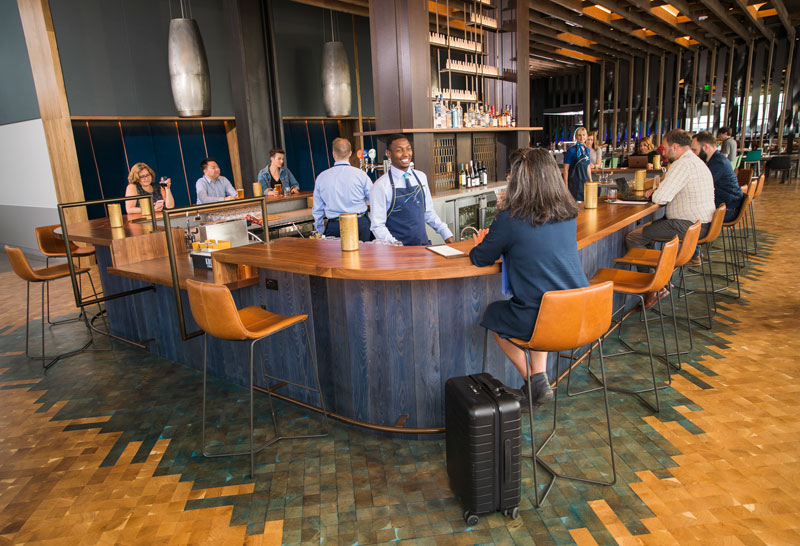
The new flagship Alaska Lounge is the largest of the airline’s seven lounges nationwide.Seattle architect Graham Baba partnered with Alaska to make the Northwest-inspired design vision for the lounge a reality.The lounge offers open spaces and vistas – and plenty of outlets to charge phones and laptops.Lounge guests can enjoy a wide variety of breakfast items, as well as handcrafted espresso beverages and teas.Espresso and tea beverages are crafted by Starbucks-trained baristas.A dozen microbrews – including the exclusive Lounge Life by Fremont Brewing – are offered on tap.The lounge features sweeping views of the airfield, as well as the Olympic Mountains.The newest Alaska Lounge is the airline’s seventh and reflects a continuing investment in the guest experience.Alongside the complimentary bites offered in the Alaska Lounge, made-to-order dishes are available for purchase. Meals can be enjoyed in the lounge or on the go, and all food features fresh, local and seasonal ingredients.The spacious bar offers a chance to relax and unwind.
Sea-Tac and Alaska then and now: North Satellite expansion is the newest development in decades of growth
Did you know that Sea-Tac International Airport is home to several honeybee hives? Or that construction workers found the bones of a giant sloth while building a new runway in 1961? How about the fact that the airport was named Henry M. Jackson International Airport for about six months in 1984 to honor the state’s famous senator nicknamed “Scoop”?
This week, Alaska Airlines’ hometown hub celebrates the grand opening of its newest upgrade: the expanded North Satellite, with eight new gates and Alaska’s flagship 15,800-square-foot Lounge. The new Lounge offers sweeping views of the Olympic and Cascade mountains, as well as downtown Seattle, and welcomes guests with a grand fireplace. At the bar, guests will find a dozen beers on tap, including the Lounge Life IPA from Seattle’s Fremont Brewing, created just for Alaska Lounges.
As phase 1 of the North Satellite Modernization Project prepares for its grand opening this week, a look back on the airport’s history shows how far Sea-Tac – and Alaska Airlines – have come together.
What we call Sea-Tac today was built in 1944 to support the region’s aviation build-up for World War II. Its name is a tale of two cities, Seattle and Tacoma, combined to represent the airport’s location smack dab between the two (not to mention some investment from the city of Tacoma). Before the airport was built, customers waited for their flight in a Quonset hut heated by a single potbellied stove.
A modern terminal opened in 1949. Northwest Airlines and United Airlines inaugurated the first scheduled service, with Alaska Airlines, Pan American Airways and Western Airlines soon after.
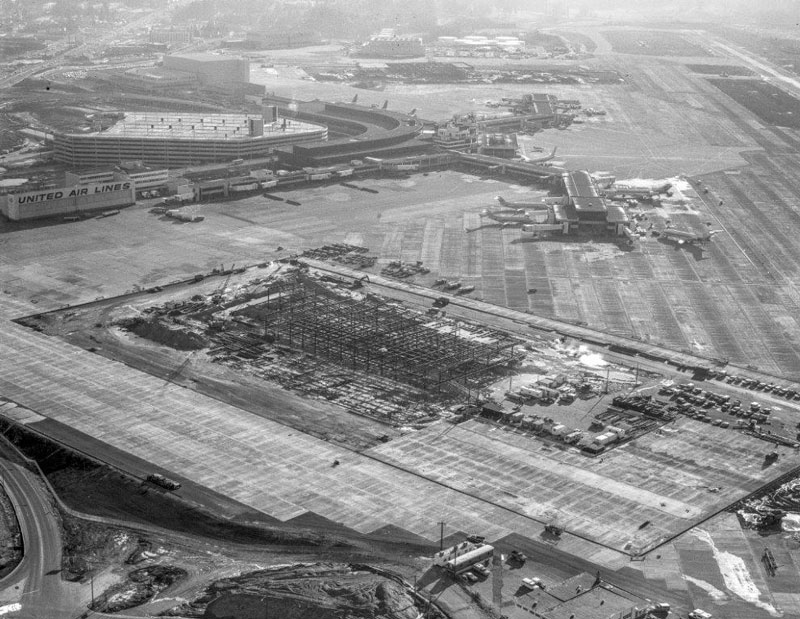
The North Satellite under construction in 1970. (Port of Seattle photo)
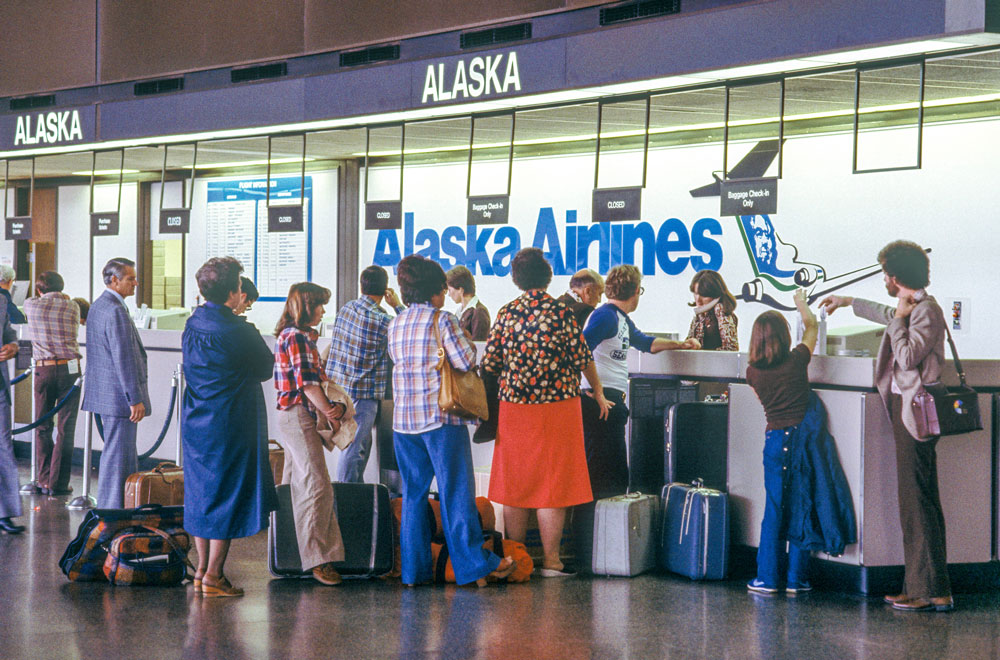
As traffic grew, so did the airport. The North Satellite addition opened in 1973, bringing expanded facilities and an ultra-modern people-mover train. Back then, no one had a smart phone and travelers satisfied their daily habit with Mr. Coffee makers at home — thus no need for Wi-Fi, plug-in power or espresso stands. At that time Sea-Tac’s traffic totaled 5.2 million passengers a year, and it was the only airport in the Lower 48 that Alaska Airlines served. (The airline also served 10 cities within the state of Alaska in the early 1970s.)
Fast forward: In 2018, 49.8 million passengers traveled through Sea-Tac — nearly half of them guests on Alaska flights — and Alaska Airlines now flies to more than 115 destinations across the nation, in Canada, Costa Rica and in Mexico.
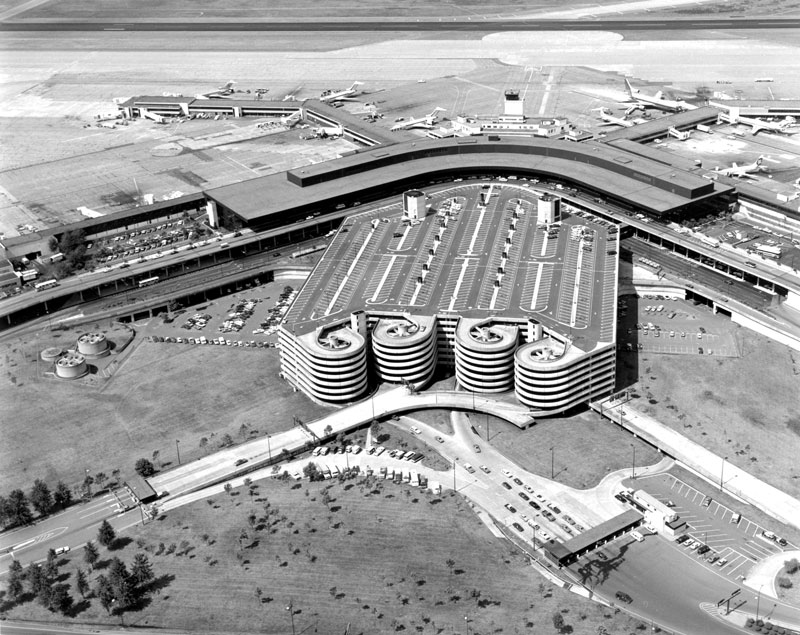
Sea-Tac in 1981.
But with the exception of a few internal upgrades, the North Satellite was stuck in time for 45 years. In 2017, the Port of Seattle and Alaska embarked on the North Satellite Modernization Project — an unprecedented working arrangement between the port and Alaska — with the goal of creating a better experience for passengers.
After “pardoning our dust” for months, Alaska guests saw five new gates open in January. The second phase of the project will be fully underway at the end of July and will close all of the old North Satellite for renovation. By 2021, the North Satellite — where Alaska is the sole tenant — will hold a total of 20 new or newly renovated gates.
Here are a few things Alaska guests can look forward to as the North Satellite and the new Alaska Lounge opens Friday, July 12:
Bright and open spaces, with a gracefully curved roof that filters sunlight and allows for natural light
Fully-powered seats with outlets for each guest, and more robust Wi-Fi
New restaurants including Caffe D’arte, a local Italian coffee bistro; Skillet, beloved for its Seattle comfort food; and Bambuza, a Northwest family-owned Vietnamese kitchen
Rainwater collected to supply flushing water to the restrooms
100 percent LED lighting and efficient heating and cooling
As Seattle’s hometown airline and airport, Alaska and Sea-Tac have really grown up together,” says Shane Jones, Alaska Airlines’ vice president for airport real estate and development. “The new and improved amenities in the North Satellite show how important it is to us to provide a modern, convenient and thoughtful experience for passengers flying in and out of our city.”
How to enjoy Alaska Lounges
Alaska guests can visit by becoming a lounge member, flying first class with Alaska or purchasing a day pass. Flyers can enjoy 50 percent off a day pass when they pay with their Alaska Airlines Visa Signature® credit card.
Hawaiian Airlines Reports June and Second Quarter 2019 Traffic Statistics
HONOLULU, July 8, 2019 /PRNewswire/ — Hawaiian Airlines, Inc., a subsidiary of Hawaiian Holdings, Inc. (NASDAQ: HA) ("Hawaiian"), today announced its system-wide traffic statistics for the month and quarter ended June 30, 2019.
Hawaiian welcomed more than one million guests in June 2019. Total traffic (revenue passenger miles) increased 1.6 percent on an increase of 0.3 percent in capacity (available seat miles) compared to June 2018. Load factor increased 1.2 points to 89.0 percent.
For the second quarter ended June 30, 2019, Hawaiian welcomed over 2.9 million guests. Total traffic increased 3.7 percent on an increase of 2.7 percent in capacity. Load factor increased 0.8 points to 87.1 percent.
The table below summarizes June, second quarter, and year-to-date statistics compared to the respective prior-year periods.
SYSTEM-WIDE OPERATIONS1
JUNE
2019
2018
% CHANGE
PAX
1,004,487
1,045,740
(3.9%)
RPMs (000)
1,525,316
1,500,894
1.6%
ASMs (000)
1,713,440
1,708,871
0.3%
LF
89.0%
87.8%
1.2 pts
SECOND QUARTER
2019
2018
% CHANGE
PAX
2,958,564
3,018,346
(2.0%)
RPMs (000)
4,491,974
4,333,178
3.7%
ASMs (000)
5,157,677
5,020,026
2.7%
LF
87.1%
86.3%
0.8 pts
YEAR-TO-DATE
2019
2018
% CHANGE
PAX
5,781,198
5,909,868
(2.2%)
RPMs (000)
8,620,459
8,363,961
3.1%
ASMs (000)
10,009,598
9,751,523
2.6%
LF
86.1%
85.8%
0.3 pts
PAX
Passengers transported
RPM
Revenue Passenger Mile; one paying passenger transported one mile
ASM
Available Seat Mile; one seat transported one mile
LF
Load Factor; percentage of seating capacity filled
1Includes the operations of contract carriers under capacity purchase agreements.
About Hawaiian Airlines
Hawaiian® has led all U.S. carriers in on-time performance for each of the past 15 years (2004-2018) as reported by the U.S. Department of Transportation. Consumer surveys by Condé Nast Traveler, Travel + Leisure and TripAdvisor have placed Hawaiian among the top of all domestic airlines serving Hawai'i.
Now in its 90th year of continuous service, Hawaiian is Hawai'i's biggest and longest-serving airline. Hawaiian offers non-stop service to Hawai'i from more U.S. gateway cities (13) than any other airline, along with service from Japan, South Korea, Australia, New Zealand, American Samoa and Tahiti. Hawaiian also provides, on average, more than 170 jet flights daily between the Hawaiian Islands, and over 260 daily flights system-wide.
Hawaiian Airlines, Inc. is a subsidiary of Hawaiian Holdings, Inc. (NASDAQ: HA). Additional information is available at HawaiianAirlines.com. Follow Hawaiian's Twitter updates (@HawaiianAir), become a fan on Facebook (Hawaiian Airlines), and follow us on Instagram (hawaiianairlines). For career postings and updates, follow Hawaiian's LinkedIn page.
For media inquiries, please visit Hawaiian Airlines' online newsroom.
HONOLULU – Hawaiian Airlines guests who sit back and watch the carrier’s complimentary in-flight entertainment (IFE) programming when traveling in July will be supporting Hawai‘i’s arts movement while helping protect the islands’ environment.
Throughout the month, each time guests onboard Hawaiian’s flights view any IFE content, the airline will award one mile to benefit three local nonprofits featured on its Hawaiian Skies channel – Na Kama Kai, Hawaii International Film Festival (HIFF) and the state of Hawai‘i Department of Land and Natural Resources’ (DLNR) Malama Hawaiʻi initiative.
Hawaiian offers over 100 hours of movies, and television, music and games on all Airbus A330 and A321neo aircraft, with approximately 30 percent of the content highlighting Hawaii's rich culture. Hawaiian Skies gives travelers an in-depth look at the people and things that make Hawaiʻi an unparalleled destination.
"As Hawaii's airline, we are proud to share with our guests the many stories that make our island home so special. In the last year, we've featured over 300 programs that were either about Hawaiʻi, filmed in Hawaiʻi, or showcased local actors or directors," said Evan Nomura, product manager of in-flight entertainment at Hawaiian Airlines. "This month, we are excited to engage our guests as we express our mahalo to organizations that have shared their stories to entertain us but also educate us about important issues affecting our home.”
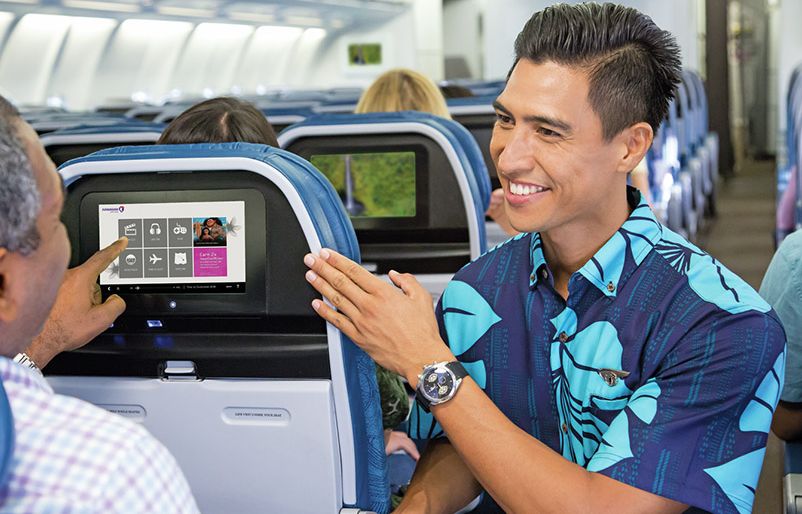
Hawaiian rolled out complimentary IFE on all transpacific flights on July 1. Guests onboard Hawaiian’s A330 aircraft enjoy seatback monitors in the Main Cabin and 13-inch tablets in the Premium Cabin. The A321neo features wireless streaming in-flight entertainment for personal devices through the Hawaiian Airlines app.
About Hawaiian Airlines
Hawaiian® has led all U.S. carriers in on-time performance for each of the past 15 years (2004-2018) as reported by the U.S. Department of Transportation. Consumer surveys by Condé Nast Traveler, Travel + Leisure and TripAdvisor have placed Hawaiian among the top of all domestic airlines serving Hawai‘i.
Now in its 90th year of continuous service, Hawaiian is Hawai‘i’s biggest and longest-serving airline. Hawaiian offers non-stop service to Hawai‘i from more U.S. gateway cities (13) than any other airline, along with service from Japan, South Korea, Australia, New Zealand, American Samoa and Tahiti. Hawaiian also provides, on average, more than 170 jet flights daily between the Hawaiian Islands, and over 260 daily flights system-wide.
Hawaiian Airlines, Inc. is a subsidiary of Hawaiian Holdings, Inc. (NASDAQ: HA). Additional information is available at HawaiianAirlines.com. Follow Hawaiian’s Twitter updates (@HawaiianAir), become a fan on Facebook (Hawaiian Airlines), and follow us on Instagram (hawaiianairlines). For career postings and updates, follow Hawaiian’s LinkedIn page.
For media inquiries, please visit Hawaiian Airlines’ online newsroom.
Last month, we revealed our newly designed lobby at Maui’s Kahului Airport (OGG) and are still reminiscing on that beautiful morning's celebrations. In case you missed it, our Hawaiian Airlines leadership, guests and community partners joined hands at Hawai‘i’s second busiest airport to bless the reimagined space and welcome guests traveling to and from the Valley Isle.
The lobby was adorned with patterns designed by Keone Nunes, a Maui-based master tattooist and cultural practitioner. Watch the video below to learn about the mo‘ōlelo (story) and unique design elements behind this space and our commitment to perpetuating Hawaiian culture throughout our company.
To learn more about our most recent updates to our OGG lobby, click here.
Opinion: Mayors’ gathering in Honolulu evokes legacies of service (Honolulu Star-Advertiser)
At Alaska Airlines, we recognize how vital it is to give back to the communities we serve. As part of our support of the 87th annual U.S. Conference of Mayors, held June 28 to July 1 in Honolulu, Vice President of External Relations Diana Birkett Rakow reflects on the challenges our cities’ mayors face and the commitment to create “lift” within our communities.
Adapted from a column originally published in the Honolulu Star-Advertiser on June 27, 2019.
By Diana Birkett Rakow, Alaska Airlines Vice President of External Relations
Growing up in Boston, I walked to the park with my brothers to play ball or down the street to get pizza and remember a peaceful and community-oriented place. Later, I better understood the scale of challenges facing the city at that time, through continued racial discrimination and school desegregation.
Mayor Kevin White led Boston through those years. In his first term, he established “Little City Halls” to give neighborhood residents a stronger voice. The eve after the assassination of Rev. Martin Luther King Jr., he joined James Brown for a publicly broadcasted concert at the Boston Garden to address residents’ grief in honoring Dr. King with peace. And he’s remembered by many as the first Boston mayor who, with partners across the city, was willing to publicly recognize Boston’s problem with racial discrimination, say “this is not OK,” and begin the path to address it.
Friday marked the start of the 87th annual meeting of the U.S. Conference of Mayors. Community leaders from every corner of America have gathered in Honolulu to share experiences, learn from one another and drive action on priorities important to people in their communities. On this occasion of celebrating our nation’s mayors, I think about Mayor White. We are all only human, but the power of listening and having the courage to act can enable better lives.
In today’s noisy and busy world, it might be easy to overlook the daily work of mayors to solve problems. They’re frontline leaders in public safety, pothole repair, growing jobs and economic opportunity. Today, we celebrate their deep commitment to – as we at Alaska Airlines like to say – creating “lift” with communities across the country.
In aviation, differential air pressure creates lift, easing planes into the sky. Over a thousand times a day, lift is the natural force enabling our passengers to move from one amazing place to another around the world. And like those in Honolulu this week, Alaska Airlines feels a deep sense of responsibility not only to understand and serve peoples’ needs, but to create lift with communities, to connect young people to career options, mentoring and training, to imagine and create possibility for the future.
This gathering marks a legacy of service to local communities, seen in our daily lives through urban green spaces in Portland, cultural centers in Seattle, revitalized neighborhoods in San Francisco, the terminals we fly into at LAX, the powerful 9/11 memorial in New York – and so much more.
Diana Birkett Rakow, Honolulu Mayor Kirk Caldwell and Georgette Deemer in Honolulu.
That legacy is continued by today’s mayors, including Honolulu Mayor Kirk Caldwell who is leading through change for smart and resilient growth. This is the first time since 1967 that the annual meeting is being held in Hawaii. So after proudly serving the Islands for over a decade, Alaska Airlines is honored to support Mayor Caldwell’s effort, with the City & County of Honolulu, to host the annual meeting. We are grateful for the mission of the U.S. Conference of Mayors, and to join our local leaders in this special place. And we know that local leadership is critical to create lift for generations to come.
All who enjoy the fruits of a strong community can mark this occasion by thanking our local mayors. I was once the girl who walked to the park without fear, believing my city was one of justice and peace. Now I am grateful, but also very humbled; such a simple pleasure is deserved by all. So today I say thank you, mahalo, to all our mayors, here and across the nation, for their leadership and partnership to make a great today and tomorrow for kids in all communities.
Flyback Friday: Join Us for a Tour of Hawaiian’s First Mini-Museum
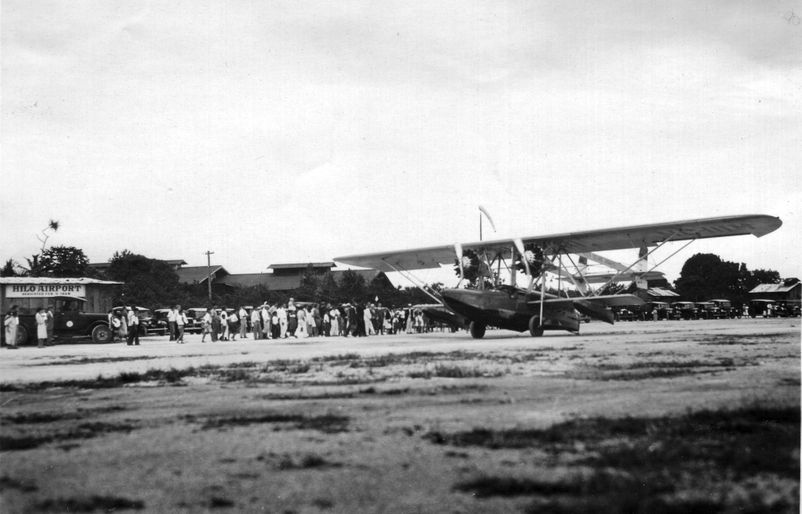
Let’s spin our propellers back to 1929 when Hawaiian Airlines, then called Inter-Island Airways, successfully completed its first scheduled commercial flight from Honolulu to Hilo. Our Sikorsky S-38 aircraft stopped on Maui before flying to the Island of Hawai‘i, where its wheels touched down approximately three hours and fifteen minutes after departing O‘ahu.
Our Sikorsky S-38 following our inaugural flight to Hilo Airport.
That moment served as a launching point in our airline’s history and was followed with a myriad of milestones documented, restored and preserved by Capt. Rick Rogers, Hawaiian Airlines archivist and former Dash 7 pilot. As part of celebrations marking our 90th year of service, we tasked Rogers with selecting his favorite artifacts in his historical collection to create the first-ever Heritage Pop-Up Showcase, a mini-museum at our company’s Honolulu headquarters.
"Building our archives has been an incredible journey and given me the chance to experience Hawaiian Airlines’ fantastic history first-hand,” said Rogers. “We designed the room to tell the story of our humble beginnings and, after spending years collecting, categorizing and protecting these items, I couldn’t be happier to finally open this special space.”
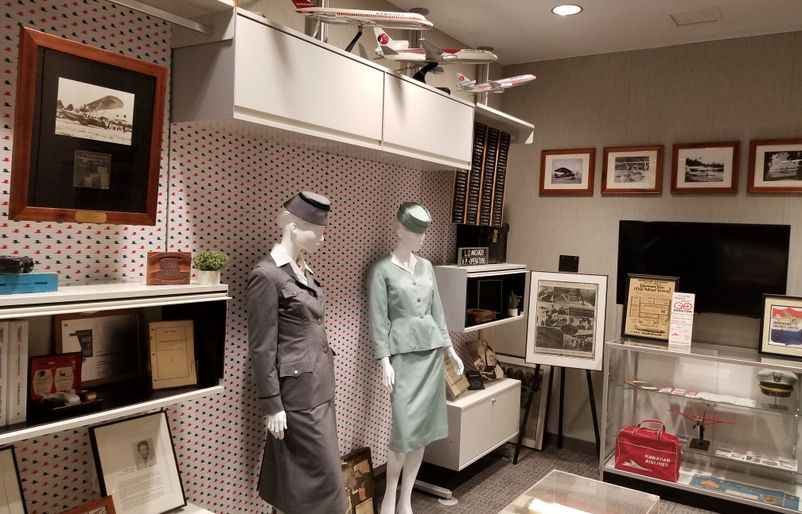
The Pop-Up near our lobby is filled with a selection of items from the 1920s to 1960s that Rogers has safely kept in our archives. The room gives visitors and employees a quick and unique look at the first decades of our service, generating a sense of pride and place as Hawai‘i’s hometown carrier.
Curious about what’s in it? Join us on a guided photo tour of the Heritage Pop-Up to learn about some of our favorite items:
First Stop: Uniforms
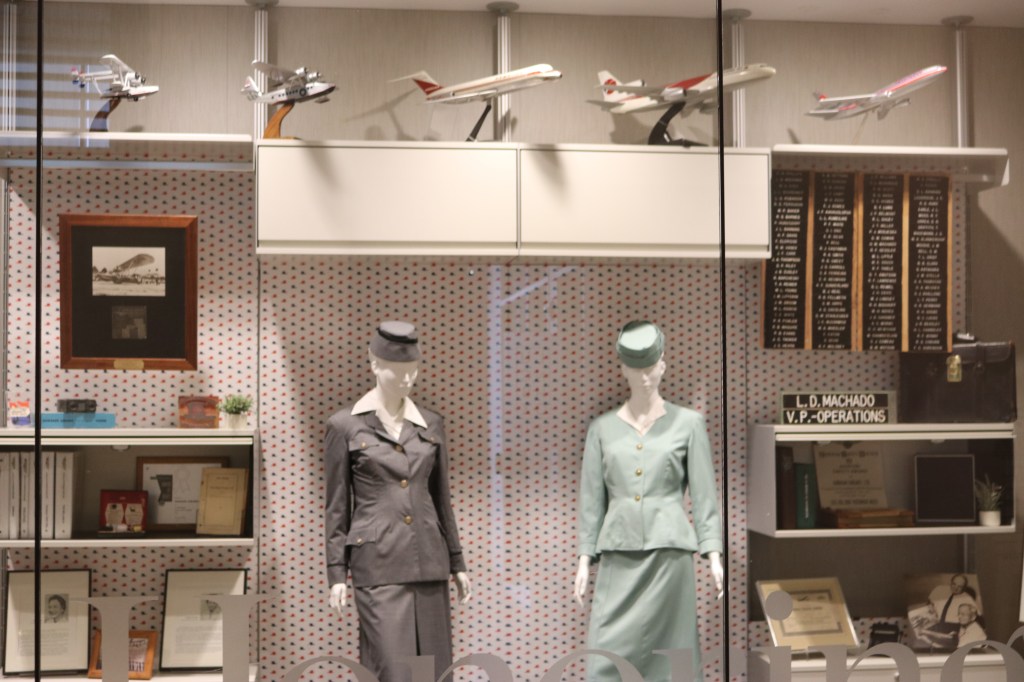
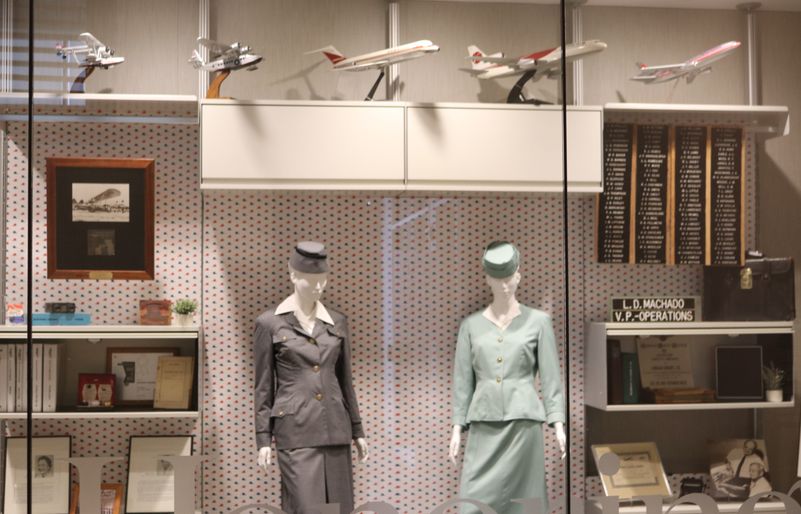
A set of mannequins, each dressed in uniforms once worn by flight attendants in the 1940s and the 1960s, are the centerpiece of our display. Overhead, Hawaiian Airlines aircraft models symbolize our airline’s growth throughout those decades.
Second Stop: Our First Inter-Island Aircraft
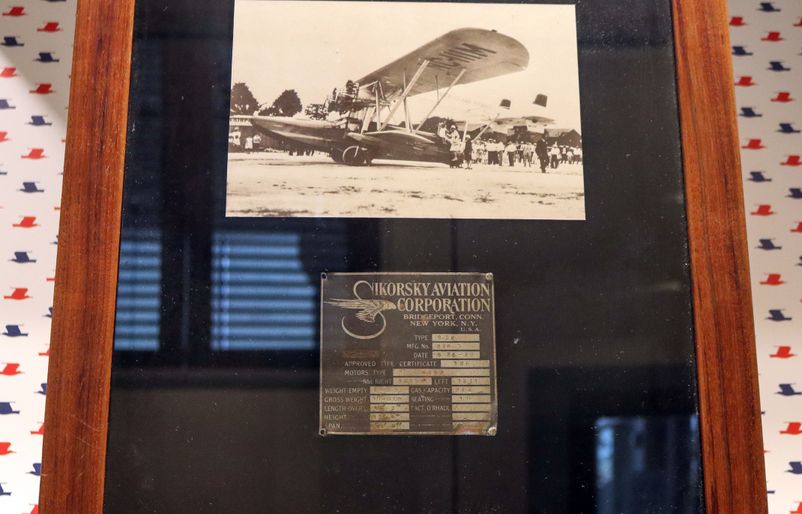
Look for the display of our first inter-island aircraft, the Sikorsky S-38, a twin-engine, eight-seat amphibious plane. The placard features an original photograph of the S-38 in Hilo on the Island of Hawai‘i, taken before our inauguration of scheduled commercial service in November 1929. Next to it, and one of Rogers’ most cherished items, is the aircraft’s real data plate that once branded it as “Aircraft #1.”
Third Stop: Memorable Knick-Knacks
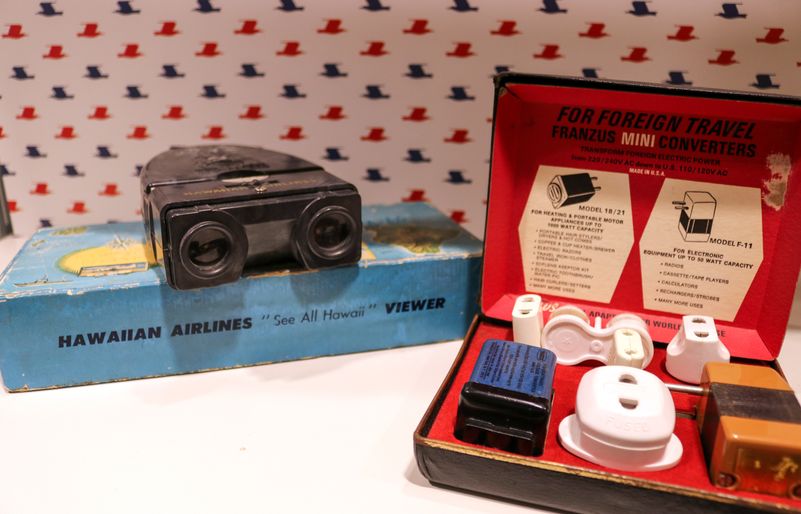
In the 1950s, our guests could experience the Hawaiian Islands before even stepping on our shores by peering through a pair of vintage 3-D viewfinders. These were sold as an exclusive item to travelers looking for an early taste of their tropical vacation with the sights of Hawai‘i. Also displayed is a travel-sized power converter set from the same era, once used for international travel.
Fourth Stop: Flight Division
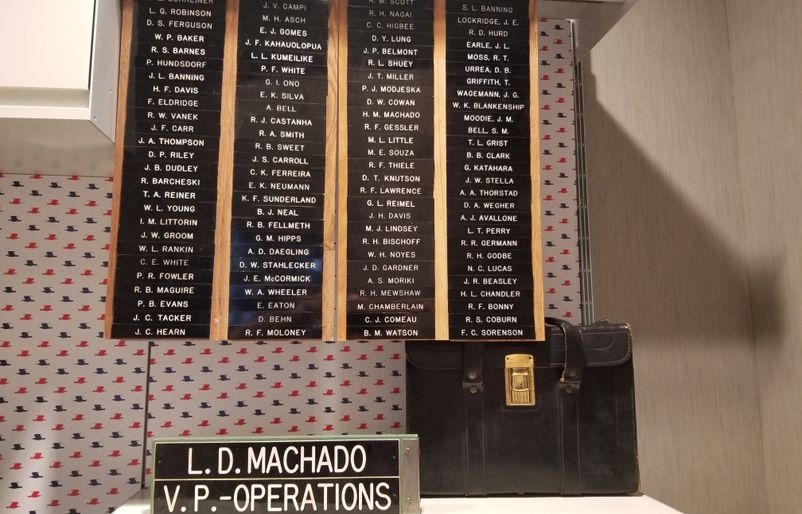
The room boasts a rich assortment of items from our in-flight and pilot divisions. You will see pilot name tags that were, during the propeller era, placed on the bulkhead bins next to the cockpit doors of our Douglas DC-3 and Convair 340 aircraft. Displayed beneath them is the leather pilot bag of Capt. Lionel Machado, who flew several different aircraft in our fleet and later became our vice president of operations as we transitioned into the jet era in the 1960s.
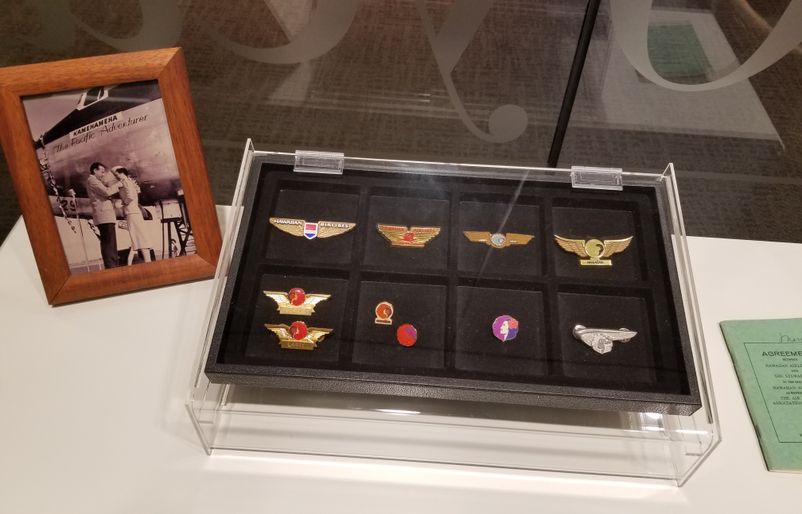
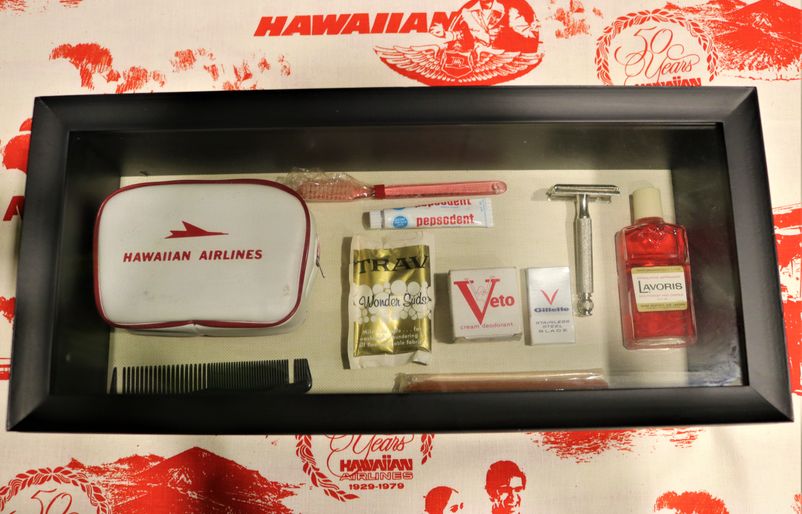
Glass cases around the room protect several interesting pieces, including a vast collection of Hawaiian’s vintage flight attendant and pilot wings, a well-preserved first-class amenity kit equipped with a shaver, nail file, toothpaste, and other personal care items, hand-written flight logs, schedules, aircraft manuals, and more.
Fifth Stop: The Mecca
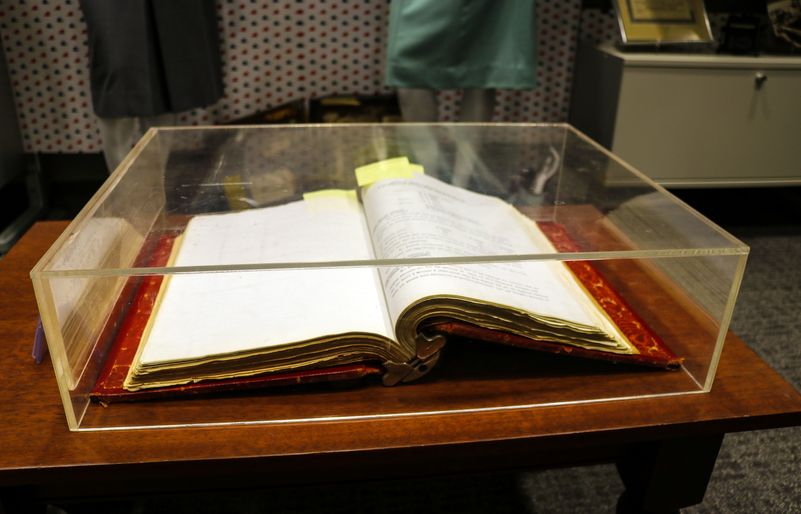
In the center of the room, a plexiglass case houses a large volume of Inter-Island Airways board meeting minutes. This book contains documentation of operations during our earliest years, including days before our first commercial flight. They paint a detailed picture of the genesis of Hawai‘i’s largest and longest-serving airline.
In addition to seeing our favorite items, visitors of the Heritage Pop-Up Showcase can kick back and relax in a comfortable chair while browsing through annual reports, vintage in-flight magazines and photographs.
What’s Next
The Heritage Pop-Up Showcase will be updated throughout the year with new items chronicling our history well into recent decades – known as the “Pualani Period.” The display will remain open for our employees and their guests leading up to our 90th-anniversary celebration on Nov. 11, 2019.
Check out more of what's featured in the Heritage Pop-Up Showcase:
Hawaiian Airlines Begins Ticket Sales for Fukuoka-Honolulu Service
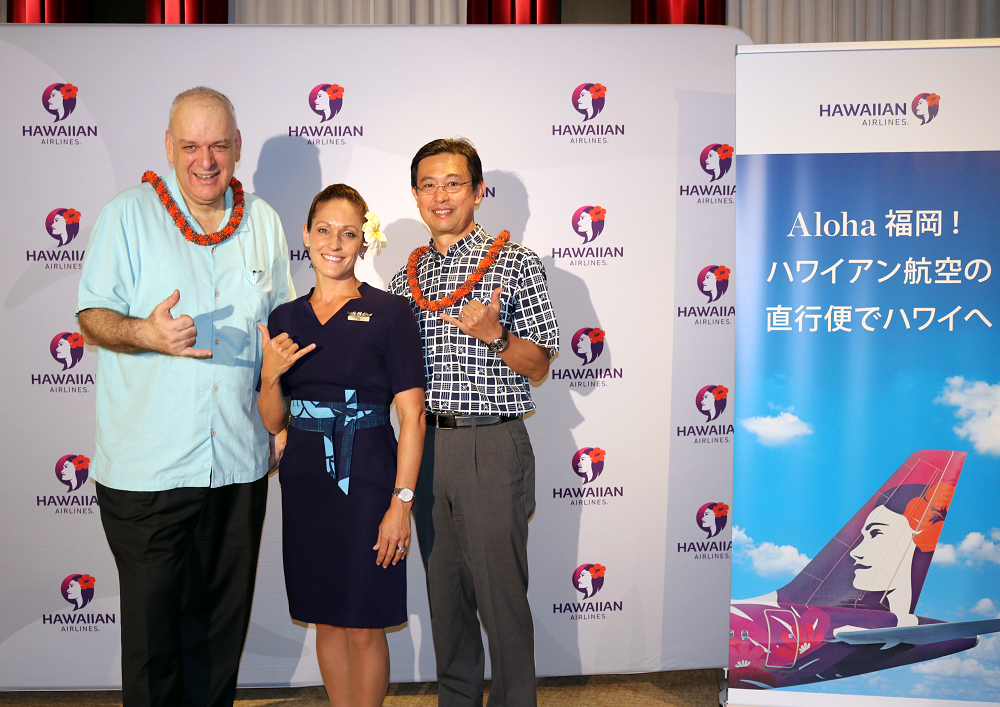
FUKUOKA – Hawaiian Airlines is now offering ticket sales for new nonstop service between Fukuoka, Japan and Honolulu, Hawai‘i. Starting Nov. 26, the airline will operate four weekly flights between Honolulu’s Daniel K. Inouye International Airport (HNL) on O‘ahu and Fukuoka Airport (FUK) on the island of Kyushu.
“We appreciate the overwhelming support we have received throughout Fukuoka for our new nonstop service to Honolulu,” Theo Panagiotoulias, senior vice president for global sales and alliances at Hawaiian Airlines, said during a news conference in Fukuoka today. “We look forward to welcoming our guests onboard with our warm Hawaiian hospitality and providing convenient access to our Hawaiian Islands.”
Beginning with the inaugural flight on Nov. 26, HA827 will depart Honolulu at 11:50 a.m. on Tuesday, Friday, Saturday and Sunday, with an estimated 5:55 p.m. arrival into Fukuoka on the following day. The return flight, HA828, will depart Fukuoka at 7:55 p.m. on Monday, Wednesday, Saturday and Sunday, arriving into Honolulu at 8:45 a.m. the same day, giving guests ample time to settle into their accommodations, or conveniently connect to neighboring Hawaiian Islands or the airline’s North America and South Pacific destinations.
In celebration of Hawaiian’s new service, the airline is offering special $599* (Sun.-Thurs.) and $699* (Fri.-Sat.) roundtrip fares available for purchase through July 19 at www.HawaiianAirlines.com, through travel agencies, or by calling Hawaiian's Reservations Department toll-free at 800-367-5320.
Guests traveling between Fukuoka and Honolulu will enjoy the roominess and comfort of Hawaiian’s Airbus A330 aircraft, which features 18 fully flat Premium Cabin leather seats arranged in a 2-2-2 configuration tailored for couples, families and honeymooners while offering great functionality to business travelers. Hawaiian also offers 68 of its popular Extra Comfort seats with more legroom and enhanced amenities, in addition to 192 Main Cabin seats. All guests will enjoy Hawaiian’s award-winning hospitality, including island-inspired meals prepared by Hawai‘i’s top chefs.
Fukuoka Prefecture is home to more than 5 million of the 13 million residents of Kyushu, the third largest and most southerly of Japan's four main islands. In 1981, the prefecture became Hawai‘i’s first sister-state in recognition of their deep cultural and economic ties.
Hawaiian’s new Fukuoka-Honolulu flights will complement the airline’s Japan network, which includes nonstop service connecting the Hawaiian Islands with Osaka, Sapporo, and both Haneda and Narita airports in Tokyo.
*Subject to government approval. Fares displayed are based on the purchase of a non-stop roundtrip ticket between Honolulu, HI and Fukuoka, Japan. Flights must be booked from now through 7/19/2019. Fares are available for travel only on Sundays through Thursdays from 11/26/2019 – 12/19/19 or 1/1/2020 – 3/31/2020 and are valid only for travel in the Economy (coach) cabin. Fares may not be available over all dates, and fares on some dates may be higher. The number of seats available in this fare class during the travel period shown are limited and may change at any time without notice. Fares include government taxes and fees and carrier fees. Fares are non-refundable, non-transferrable, and non-endorsable. Travel must only be on flights operated by Hawaiian Airlines. Other restrictions apply. Additional baggage charges may apply.
About Hawaiian Airlines
Hawaiian® has led all U.S. carriers in on-time performance for each of the past 15 years (2004-2018) as reported by the U.S. Department of Transportation. Consumer surveys by Condé Nast Traveler, Travel + Leisure and TripAdvisor have placed Hawaiian among the top of all domestic airlines serving Hawai‘i.
Now in its 90th year of continuous service, Hawaiian is Hawai‘i’s biggest and longest-serving airline. Hawaiian offers nonstop service to Hawai‘i from more U.S. gateway cities (13) than any other airline, along with service from Japan, South Korea, Australia, New Zealand, American Samoa and Tahiti. Hawaiian also provides, on average, more than 170 jet flights daily between the Hawaiian Islands, and over 260 daily flights system-wide.
Hawaiian Airlines, Inc. is a subsidiary of Hawaiian Holdings, Inc. (NASDAQ: HA). Additional information is available at HawaiianAirlines.com. Follow Hawaiian’s Twitter updates (@HawaiianAir), become a fan on Facebook (Hawaiian Airlines), and follow us on Instagram (hawaiianairlines). For career postings and updates, follow Hawaiian’s LinkedIn page.
For media inquiries, please visit Hawaiian Airlines’ online newsroom.
Travelers with disabilities learn what it feels like to fly – without leaving LAX
The Gaspar family of five has big travel dreams: Washington, D.C. Colorado. Disney World! But for years, just getting on an airplane seemed almost impossible.
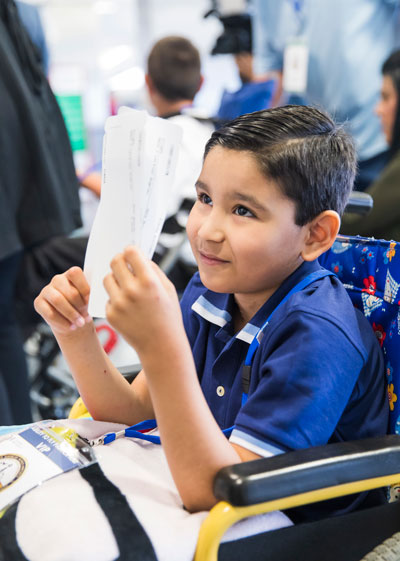
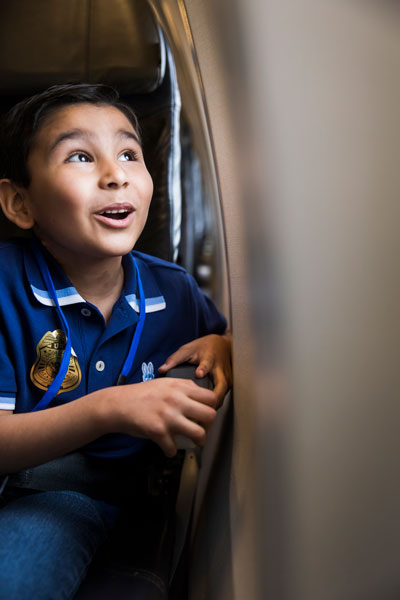
Karen Gaspar worried the bustle and noise of an airport might overwhelm her 10-year-old son. “Karlo has sensory-processing and mobility challenges. When we have a new situation, he can have meltdowns,” she says. “It’s hard on him. It’s hard on the family, and It’s not pleasant for other people on the plane.”
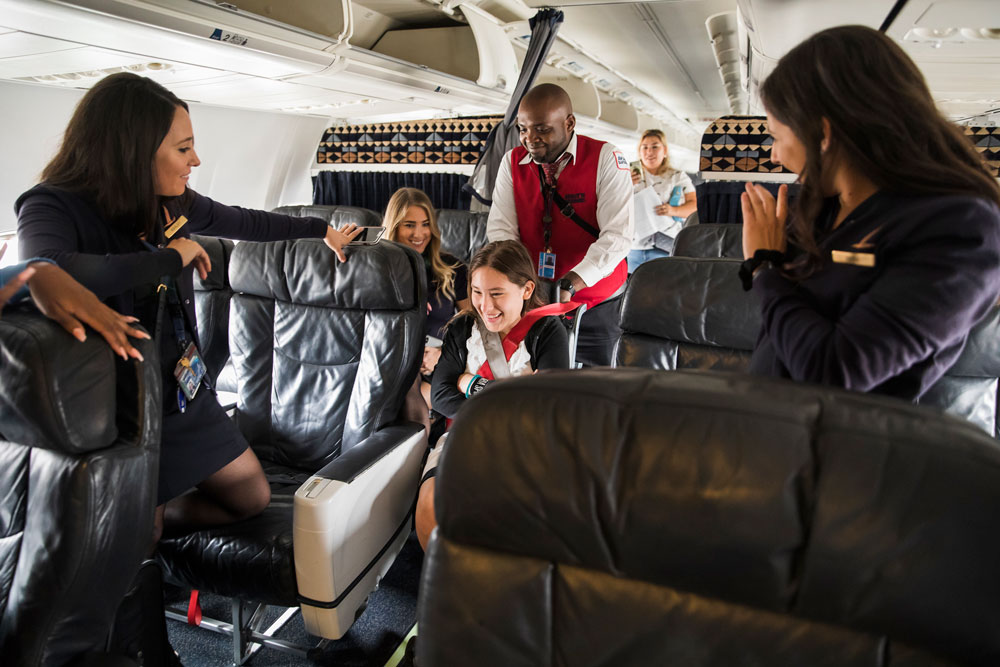
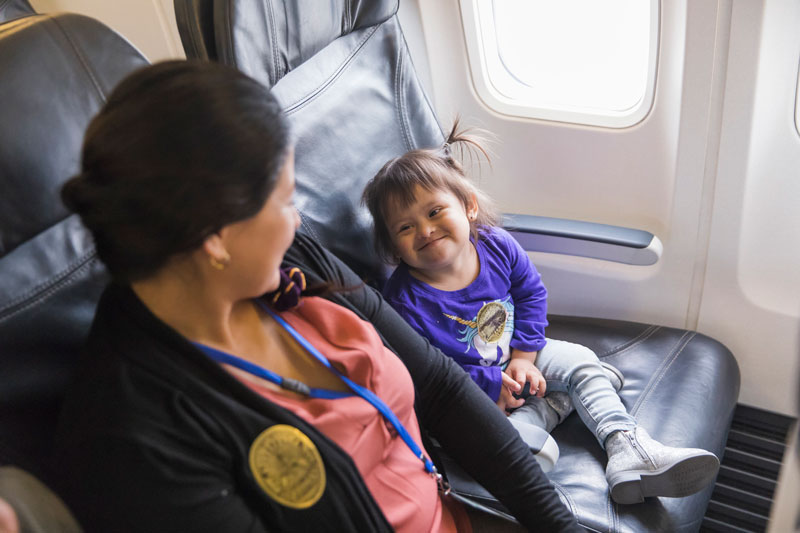
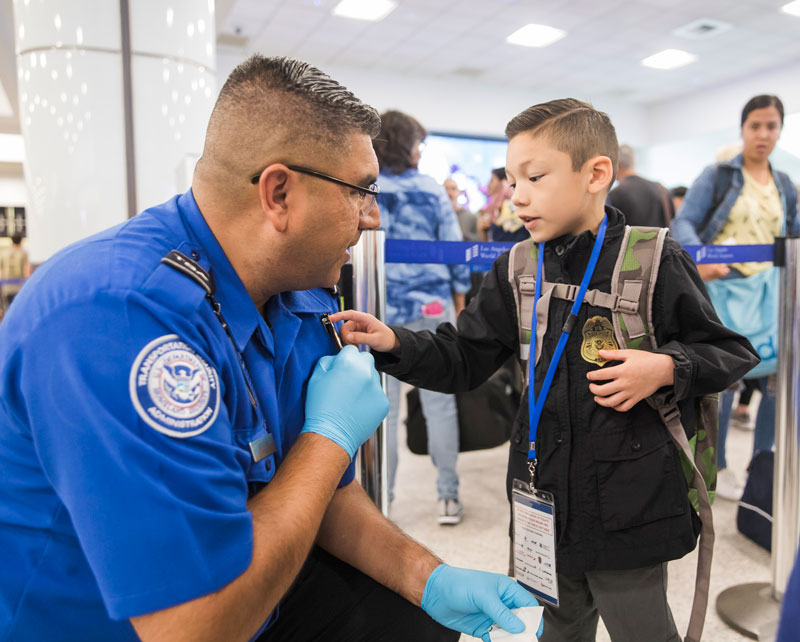
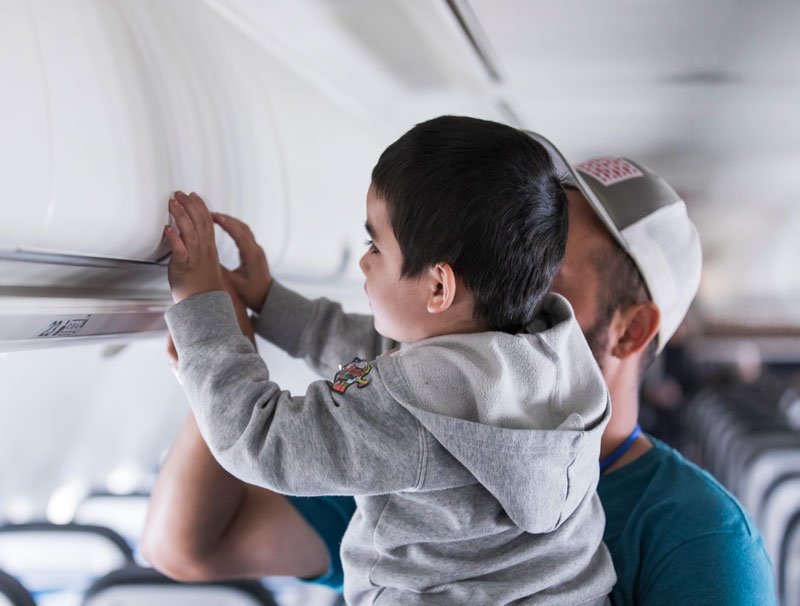
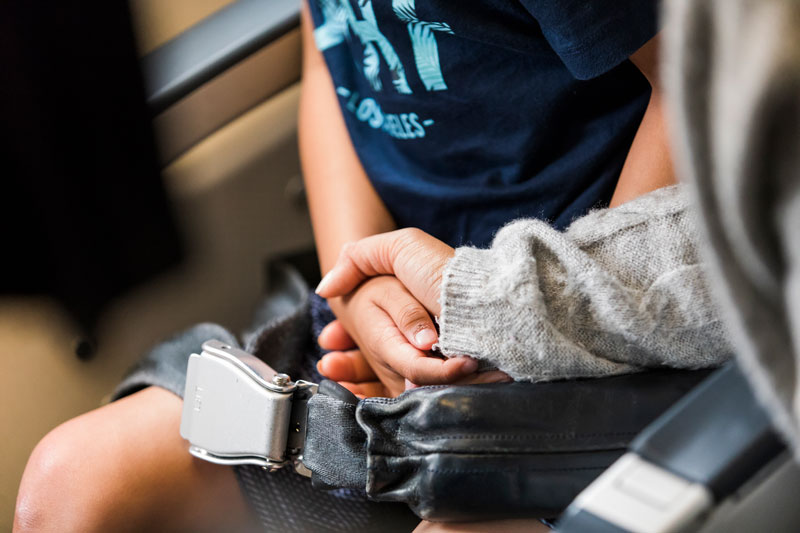
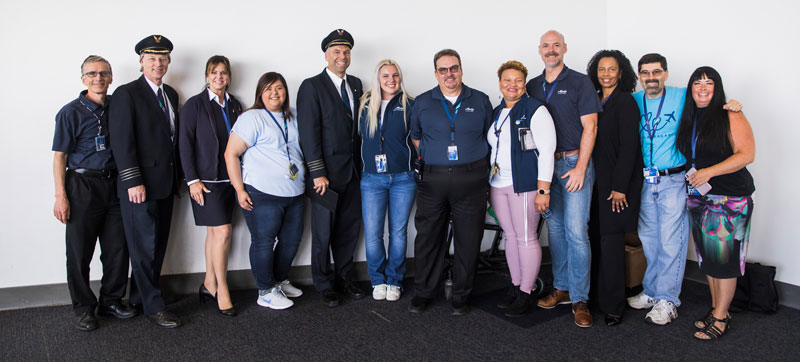
This June, the Los Angeles family had the chance to try out flying – without the expense of buying a ticket, without worrying about disrupting a flight, without even leaving the ground. The Gaspars were among 71 individuals with disabilities and their families who participated in the “Ability to Fly” event at Los Angeles International Airport – the first collaboration between Alaska Airlines and Los Angeles World Airports to help travelers with disabilities experience how a commercial flight feels before going on an actual trip.
Karlo Gaspar, 10, high-fives a member of the Los Angeles Airport Police before boarding the airplane.
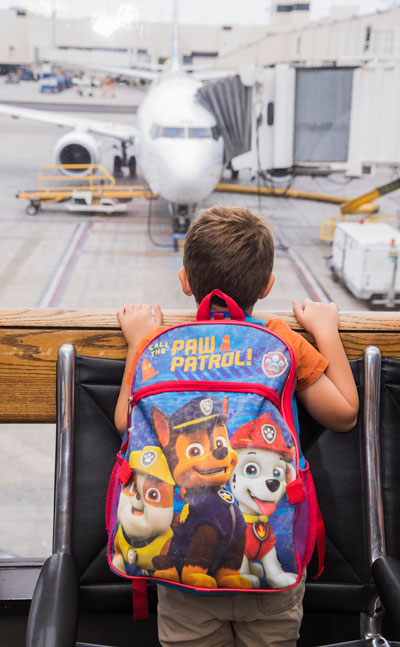
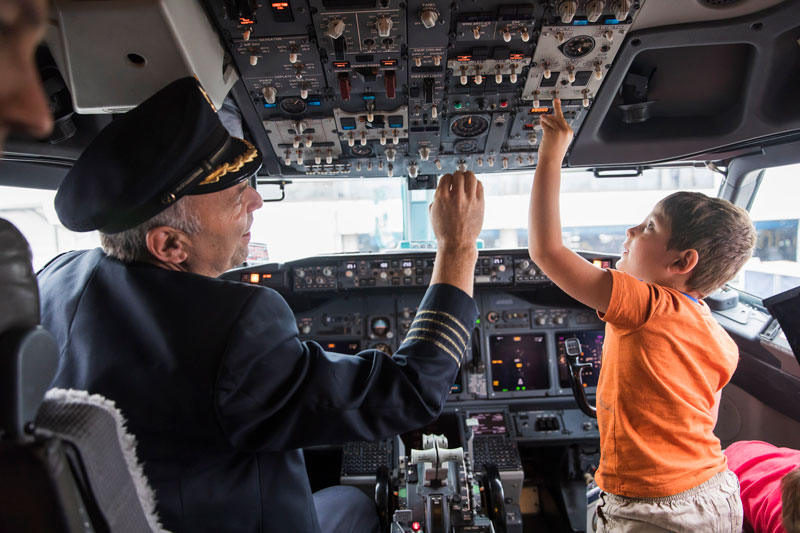
Families went through the major steps in airport travel: check-in, security screening and the boarding process. Once they were aboard Alaska’s “Toy Story 4”-themed 737, the plane taxied to LAX’s remote gates to simulate taxiing for takeoff, and then returned to the gate. The pilot, Capt. Rick Russek, volunteered for the event because his 12-year-old nephew has autism. “I’ve been with him a lot at a young age and I know the things that could be scary for him,” he says.
For the Gaspars, the event made Disney World feel just a little closer. “People have been answering his questions, and he’s been getting special attention,” Karlo’s mom says. “So far, he loves it!”
“These events are intended to help alleviate the anxiety commonly associated with air travel for individuals with disabilities and their families,” says Ray Prentice, Alaska’s Director of Customer Advocacy. Alaska participates in four to five similar events each year at airports around the country. “There are great benefits to Alaska as well,” he says. “Our volunteers become disability advocates for life, after attending a single event.”
Flor Hernandez shares in a moment of joy while taxiing aboard the 737.
A few families shared their stories as they embarked on their travel adventure:
The Jaronczyk family: “They explained everything to him”
Emmitt Jaronczyk, 5, waits to board the Alaska Airlines aircraft.
Elyse and Evan Jaronczyk learned about “Ability to Fly” through a Facebook group and brought their 5-year-old son Emmitt, who has a sensory-processing disorder, and his 2-year-old brother, Easton.
Can you tell a little about what Emmitt’s experience is?
Elyse: “We have a lot of issues with sensory sound and noise. It could feel like a full-on meltdown. With kids on the spectrum, you don’t know why they’re going to freak out, and it’s good to know that he is calm about this. I think how they treated us VIP-like was nice because they explained everything to him, and he knew what was happening. Now that he knows this and has a memory of it, we’re comfortable to come back and fly.”
Captain Rick Russek shows Emmitt Jaronczyk how to power up the 737.
The Livio family: “I think I was more nervous than she was”
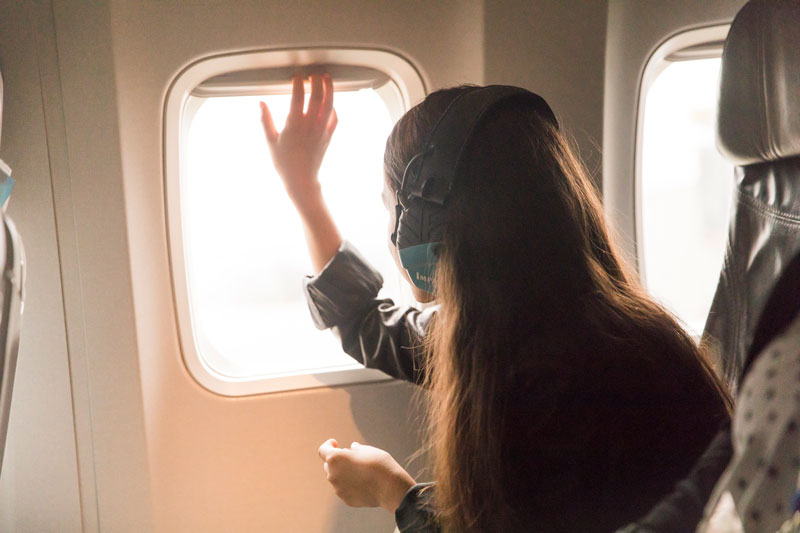
Kahlen Livio, 9, takes in the sights from her window seat. The 737 taxied to LAX’s remote gates to simulate the process of taxiing for takeoff.
Keith and Elin Livio of Torrance, California, travel frequently and had been searching for a program to help their 9-year-old daughter, Kahlen, experience air travel so she can join them on longer trips. Through Kahlen’s therapy for autism, they learned about “Ability to Fly.”
Has Kahlen flown before?
Elin: “This is the first time we actually got her into the airport. Before, we could not even drive in because of her fear of new situations. She gets terrified if you don’t give her a story, like ‘Where are you going?’ This time, we said ‘We’re going to go on an adventure.’ We’ve been talking to her for days. We’re very impressed; she’s just doing very well. I was nervous about how she was going to react with the TSA check-in – and keeping her with us because she likes to wander off. They were very kind and it was so easy. I think I was more nervous than she was. I think we’re ready to actually fly.”
Where would you like to go?
Elin: “Hawaii! She loves the beach. And maybe Florida because she wants to go to Disney World.”
Keith: “That’s the fear – the risk of paying thousands of dollars for an entire trip and then at the end of the day, if she has a meltdown, we’d have to back out. So that’s why being here helped, to go through the motions.”
Elin: “My fear is that she’s going to melt down in an airplane and what am I going to do? How is the staff going to react? If she does, I want to make sure she’s safe and people around understand, ‘OK, this is what’s going on.’ Those are the kinds of fears I have, but everyone here is very well-trained.”
ADDITIONAL RESOURCES FOR TRAVELERS WITH DISABILITIES:
Beer tourism is a real thing. For hardcore aficionados, these adventures take the form of singularly focused “beercations” – but for most travelers, visiting local taprooms is simply part of the overall vacation plan. More than three-quarters of respondents in a 2016 Travelocity survey said they would like to go on a trip that included visiting craft breweries and sampling local beers.
It’s hard to define, but a taproom feels different from other drinking establishments. Something about visiting a brewery feels authentically local – providing a greater understanding of a place and its people. And of course, sampling beers you can’t get at home is its own reward.
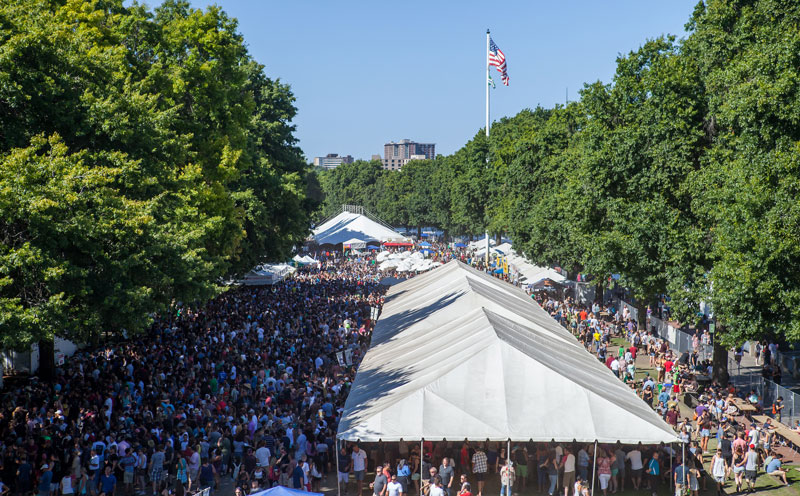
Good news for thirsty travelers: Alaska Airlines offers flights to the West Coast’s top beer destinations – and features regional craft beers inflight to enjoy along the way. Throughout the summer, outdoor festivals in each city offer the chance to sample a variety of craft beers and soak up the sun at the same time.
(Courtesy of Boundary Bay Brewery)
BELLINGHAM, WASHINGTON: Located along Interstate 5, 50 miles south of Vancouver, B.C., this small city (population 90,000) boasts a dozen breweries. Nearby access to year-round outdoor activities attracts all types of adrenaline junkies and nature lovers, but the density of breweries in this laid-back burg make it a destination for beer enthusiasts. The oldest brewery and pub, Boundary Bay Brewery, remains a local favorite, while newer breweries like Chuckanut Brewery and Wander Brewing have earned regional and national acclaim. For more on Bellingham’s breweries, consult the Tap Trail. Coming up June 29:The Sixth Annual Bellingham Beer and Music Festival
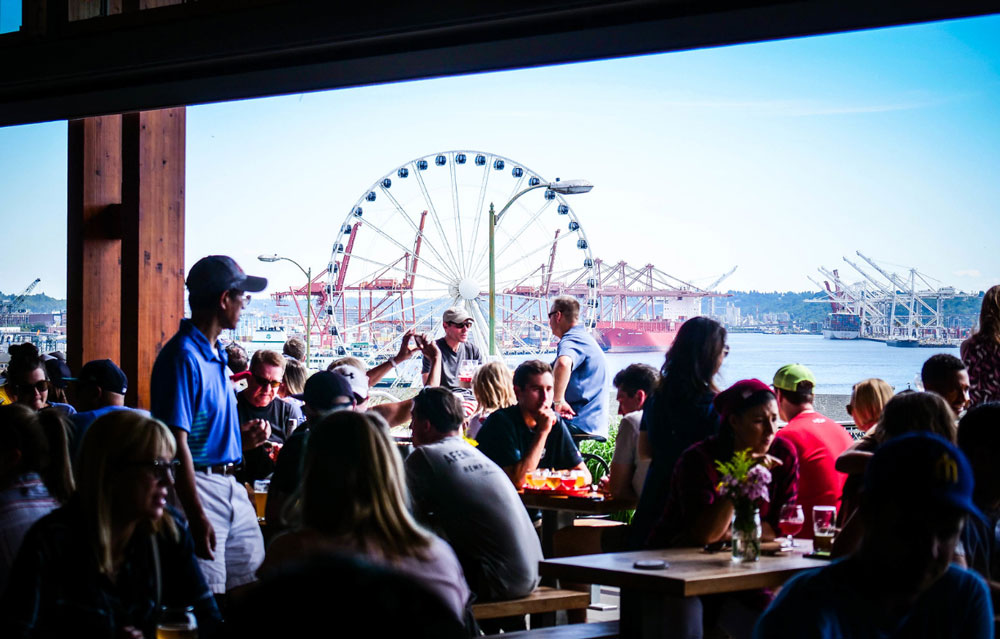
SEATTLE, WASHINGTON: There are more than 60 breweries within city limits, so you won’t have trouble finding one regardless of where you’re staying. The Ballard neighborhood offers the greatest density with 11 breweries within walking distance of each other. Don’t miss Stoup Brewing and Reuben’s Brews, two rising stars on the local beer scene. At Fremont Brewing, which crafts the Lush IPA offered on Alaska flights, visitors can settle into an urban beer garden setting. Downtown at Pike Place Market – a favorite destination for crowds of visitors and locals alike – be sure to check out Old Stove Brewing’s MarketFront location, where the brewery and tasting room offer an expansive view of Elliott Bay and the majestic Olympic Mountains. For more on the Seattle beer scene, check out my Washington Beer Blog. Coming up July 12-14:Seattle International Beer Fest
The 32nd Oregon Brewers Fest on the Portland waterfront will feature more than 100 craft beers and ciders – all produced in-state. (Photo by Timothy Horn, courtesy of Oregon Brewers Fest)Cascade Barrel House. (Courtesy of Kim Sharpe Jones)
PORTLAND, OREGON: Aptly nicknamed “Beervana,” Portland embraces craft beer as an essential part of its identity. Plenty of proud locals claim it’s the greatest beer town in America – and they’re probably right. You’ll have no trouble gathering recommendations about which of the Rose City’s more than 60 breweries to visit, but adventurous beer drinkers should not skip Hair of the Dog Brewing or the Cascade Barrel House. The Oregon Brewers Festival, held in Portland in July for more than three decades, typically attracts more than 50,000 festivalgoers. Dive deeper on the Portland Beer Blog. Coming up July 24-27:Oregon Brewers Festival
The Crux Fermentation beer garden. (Courtesy of Kim Sharpe Jones)
BEND, OREGON: In the heart of the Cascade Mountains, Bend boasts 22 breweries and a population of just 80,000, making it one of the nation’s leaders for breweries per capita. In winter, earn your beer by swooshing down the slopes at nearby Mount Bachelor. In summer, daydream about beer as you float lazily down the picturesque Deschutes River, which bisects the town. Don’t miss Deschutes Brewing Company, one of the oldest breweries in Oregon, and be sure to catch a breathtaking sunset from the beer garden at Crux Fermentation Project. Plot your path on Bend’s Ale Trail. Coming up Aug. 15-17:Bend Brewfest
Russian River Brewing in Santa Rosa. (Courtesy of Russian River Brewing)
SANTA ROSA, CALIFORNIA: Located at the north end of Sonoma Valley, a region renowned for its wine, this is home to one very important brewery: Russian River Brewing, makers of Pliny the Elder and Pliny the Younger, two of the nation’s most ballyhooed beers. (They make a lot of other fantastic beers, too.) They release the ultra-rare Pliny the Younger just once each year, in February, and the event draws about 16,000 beer tourists from around the world. A 2016 study found visitors hailed from 40 states and 11 countries. Any time of year, all the beers at the company’s two brewpubs are exceptional, making Santa Rosa a mecca for America’s beer enthusiasts. Learn more. Coming up Aug. 3:NorCal Brewfest
(Courtesy of Societe Brewing)
SAN DIEGO, CALIFORNIA: If perfect weather, palm trees, sandy beaches and bronzed bodies on surfboards are not enough to entice you, know that there are more than 100 breweries in the area. North of town, in nearby Escondido, Stone Brewing Company’s World Bistro and Garden offers a 1-acre alfresco beer drinking opportunity in what is described as an organic beer garden. If you’re looking for a more typical San Diego brewery experience, visit Eppig Brewing or Societe Brewing, both great examples of the smaller, friendly breweries that dot the city’s neighborhoods. Learn more. Coming up July 21: San Diego Beer and Music Festival
Hawaiian Airlines Seeking Japanese Speakers for Flight Attendant Positions
HONOLULU – Hawaiian Airlines is hiring Japanese speakers to join its flight attendant team in delivering the carrier’s award-winning Hawaiian hospitality and advance the company’s ongoing growth in Asia and beyond.
“Hawaiian’s flight attendants love welcoming our guests with a hospitality that is unmatched in the industry,” said Robin Sparling, vice president of in-flight services at Hawaiian Airlines. “Our market expansion in Japan is a testament to the value travelers place on our uniquely Hawaiian and memorable in-flight experience. We are excited to grow our 2,100-plus flight attendant ‘ohana with people who share Hawaiian’s commitment to safety and service excellence.”
Interested candidates should visit www.hawaiianairlines.com/careers and select requisition No. 19-0197 or click here to view the job requirements and application information. Successful applicants will represent Hawaiian onboard its Japan flights as well as throughout the carrier’s transpacific network between Hawai‘i and South Korea, Australia, New Zealand, Tahiti, American Samoa and 13 U.S. mainland gateways, in addition to flights within the Hawaiian Islands.
Hawaiian, which began serving Japan in 2010 with one daily flight between Tokyo’s Haneda Airport (HND) and Honolulu’s Daniel K. Inouye International Airport (HNL), has become the leading U.S. carrier on the Japan-Hawai‘i route. Today, Hawaiian offers 31 weekly non-stop flights utilizing its Airbus A330 wide-body aircraft fleet between Hawai‘i and Japan, serving both Haneda and Narita (NRT) airports in Tokyo, as well as Kansai International Airport (KIX) in Osaka and New Chitose Airport (CTS) in Sapporo.
Hawaiian’s robust Japan business is spurring continued investment in the market. Last month, Hawaiian secured preliminary approval from the U.S. Department of Transportation to operate a new HND slot and provide additional Honolulu-Tokyo service ahead of the 2020 Olympic Summer Games. The ruling came just days after Hawaiian announced its intention to launch four weekly non-stop flights between Fukuoka (FUK) and Honolulu as soon as November 2019, pending government approvals for the new service.
Meanwhile, the airline is currently waiting for U.S. and Japanese government regulators to approve a proposed antitrust immunized joint venture between Hawaiian and its codeshare partner, Japan Airlines, that would deliver a range of additional consumer benefits.
About Hawaiian Airlines
Hawaiian® has led all U.S. carriers in on-time performance for each of the past 15 years (2004-2018) as reported by the U.S. Department of Transportation. Consumer surveys by Condé Nast Traveler, Travel + Leisure and TripAdvisor have placed Hawaiian among the top of all domestic airlines serving Hawai‘i.
Now in its 90th year of continuous service, Hawaiian is Hawai‘i’s biggest and longest-serving airline. Hawaiian offers non-stop service to Hawai‘i from more U.S. gateway cities (13) than any other airline, along with service from Japan, South Korea, Australia, New Zealand, American Samoa and Tahiti. Hawaiian also provides, on average, more than 170 jet flights daily between the Hawaiian Islands, and over 260 daily flights system-wide.
Hawaiian Airlines, Inc. is a subsidiary of Hawaiian Holdings, Inc. (NASDAQ: HA). Additional information is available at HawaiianAirlines.com. Follow Hawaiian’s Twitter updates (@HawaiianAir), become a fan on Facebook (Hawaiian Airlines), and follow us on Instagram (hawaiianairlines). For career postings and updates, follow Hawaiian’s LinkedIn page.
For media inquiries, please visit Hawaiian Airlines’ online newsroom.




 View original content to download multimedia:https://www.prnewswire.com/news-releases/hawaiian-holdings-announces-2019-second-quarter-conference-call-300883267.html



 View original content to download multimedia: