Changing Course: A New Day-to-Day, from Our People to Our Planes
Share
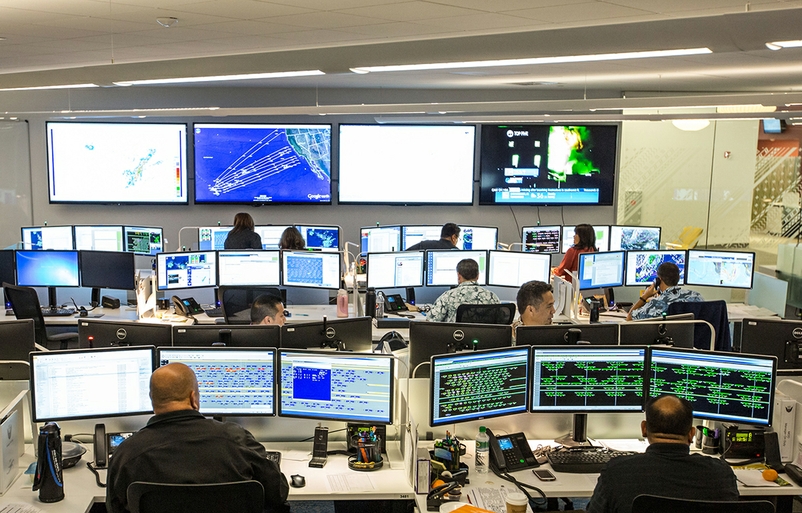
Leaders throughout our airline have one task in common: keeping their departments focused as roles adapt to changes that have stemmed from the pandemic.
For some of our employees, day-to-day responsibilities have temporarily changed to help the company, while others remain focused on maintaining our airline’s commitment to safety and reliability.
For example, our System Operations Control Center (SOCC) continues to manage our reduced route network while assisting other work areas, and our Human Resources (HR) Employee Service Center remains busy answering questions from thousands of employees. We talked story with two SOCC and HR leaders whose teams have stepped up to help and adjusted as needed for the future of Hawaiian Airlines.
From People…
Asiana Ponciano, manager of the HR Employee Service Center
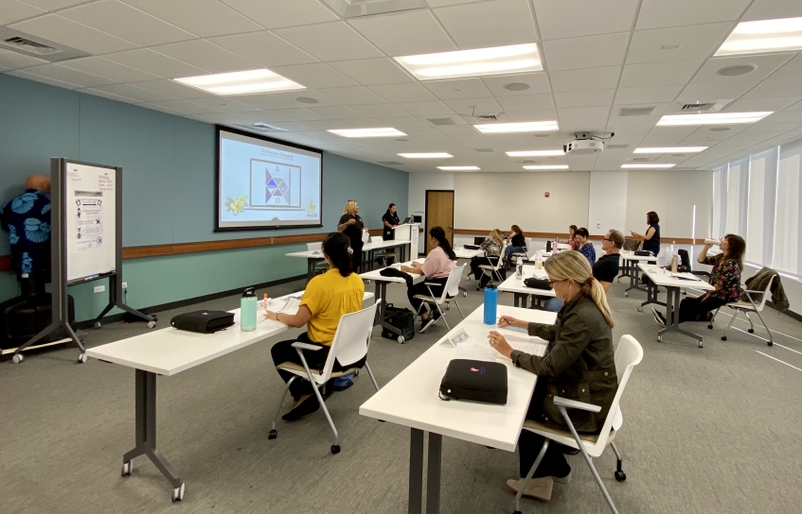
The Hawaiian Airlines’ HR Employee Service Center (ESC) usually is a bustling touchpoint for employees, retirees, on-boarding new hires, and anyone needing HR support. We also facilitate pre-employment orientations for every workgroup, from flight attendants and pilots to guest service agents and mechanics.
COVID-19 presented our department, much like others in the company, with a series of challenges we’ve never faced.
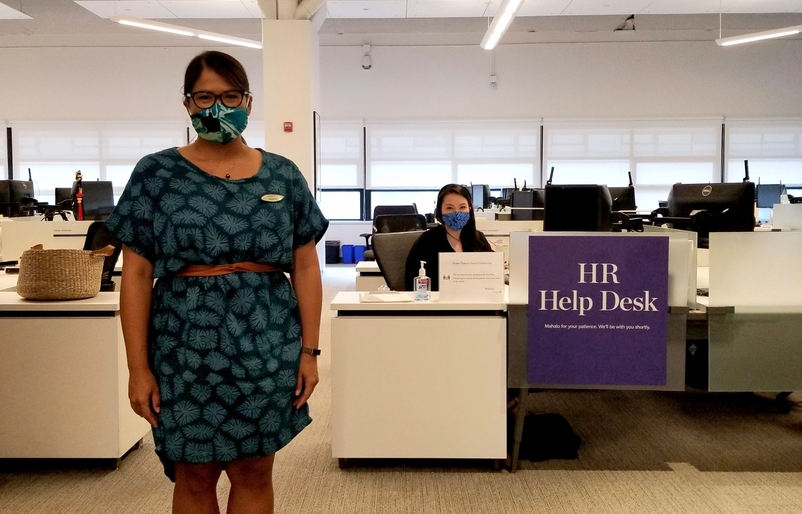
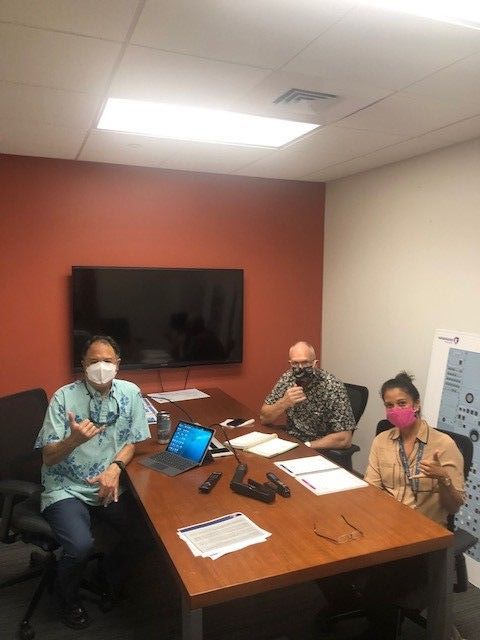
Over the past two months, we have been answering our employee phone line and responding to emails while keeping healthy at home. Pre-COVID-19, the ESC team was handling an average of 520 employee appointments, drop-ins, emails, and phone calls per week; now, we’re managing about 300 per week. With lower-than-usual drop-ins and office meetings, we've used the downtime to digest and share new company information related to COVID-19, including updated policies and procedures, voluntary furlough options for different workgroups, unemployment insurance, and ongoing changes to internal programs and services like recurrent training and our employee shuttle.
In April, the company decided to offer employees opportunities to help reduce company costs via voluntary furlough. Various sub-departments throughout HR, like mine, had to coordinate the program rollout, compiling letters of agreement for contract employees, such as our airport operations team, and drafting communications for non-contract employees, most of whom work at our headquarters. Two weeks after we launched the initiative, the ESC experienced a massive influx of employees filing for unemployment insurance, and we had escalated over 100 calls to navigate employees through the process.
We later expanded our services in May to manage benefits-related calls that were previously handled by a third-party company to save costs during this critical period. We also began promoting complimentary health and wellness workshops and resources (provided by our vendors), including fitness, financial planning, and mental well-being.

Staying organized and timely with communications was (and still is) critical to my team’s success in handling an evolving situation.
While trust and transparency have been necessary, having fun kept us close and strengthened our team. Our HR operations team hosts weekly virtual socials on our video conferencing platform, and each week a different group facilitates a game. Team bonding moments have made a significant difference in boosting morale during one of the most challenging times in our company and have made us stronger as a unit.
As we enter a phased reopening of our headquarters and our regular operations, I can’t help but reflect on the lessons I’ve learned about my team as a unit and myself as a leader, including:
- A team can pivot and work remotely without sacrificing output if we establish transparency and employees feel supported.
- Playing a game is just as important as doing a status check.
- Delivering timely and accurate information over the phone and email is essential, but being available to support employees is indispensable.
…To Planes
David Rouse, managing director of the System Operations Control Center
Continuity and adaptability are vital for our System Operations Control Center (SOCC), and large-scale disruptions like COVID-19 put these critical components to the test. Our SOCC is sometimes called the nerve center of Hawaiian Airlines, with a core mission to ensure safe and reliable flight operations for our guests. Housed at the center of our headquarters, our SOCC is where teams work 24/7 to keep our network running smoothly and orchestrate critical functions like aircraft route assignments, crew scheduling, and disruption management such as significant weather events.
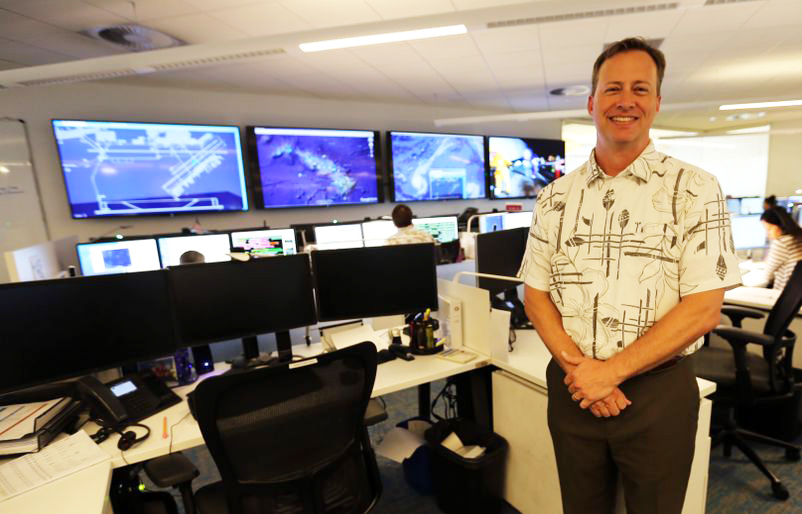
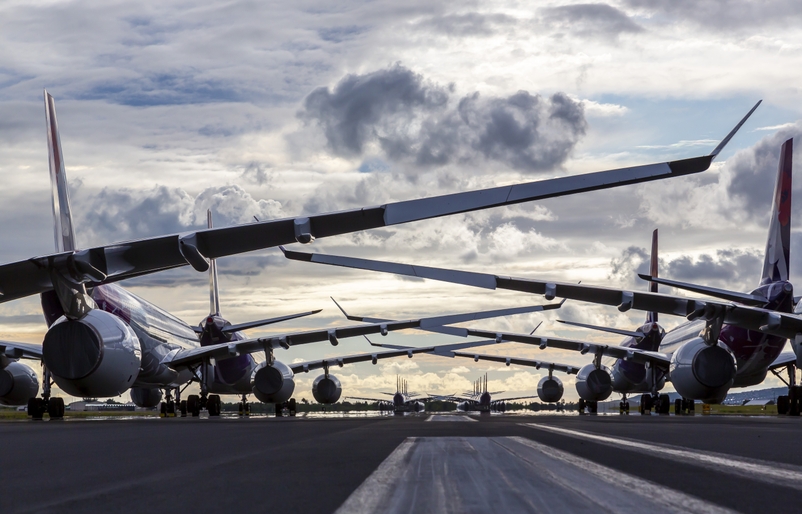
The impact of the pandemic we’re in now, however, has been unprecedented. In just one month, we needed to make constant schedule changes to accommodate the rapid disruption to our operations and our guests’ travel plans. With our network downsized to a small fraction of the over 260 daily flights we previously offered, our dispatching operations also scaled-down relative to the reduced number of passenger and cargo flights. Since March, our Customer Service team and managers on duty have also volunteered to help our Consumer Contacts team respond quickly to a rush of reservation cases. Their assistance contributed to cutting guest response time in half.
Lastly, our automation team has been working tirelessly to identify cost-cutting opportunities, including reducing unnecessary data streaming and assisting our airline’s finance and technical operations colleagues in renegotiating vendor contracts.
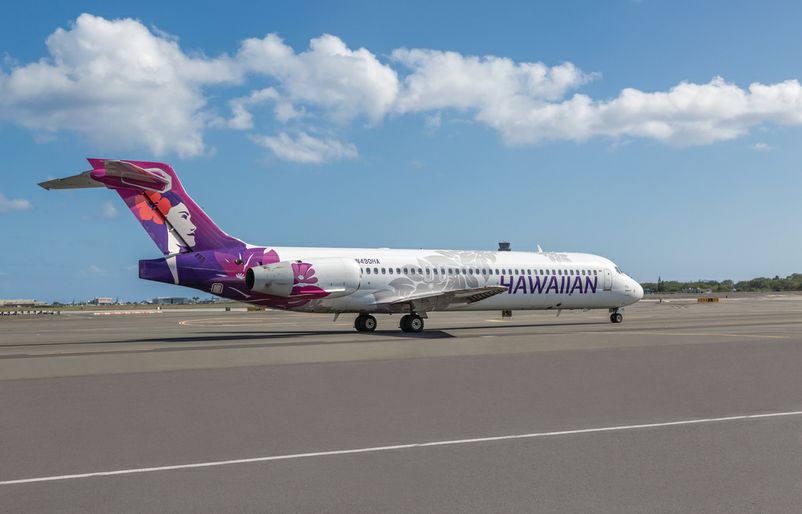
However, our dispatch leaders’ role has not slowed. In addition to overseeing current operations, they have also been working tirelessly on various ad-hoc charter missions that require a high level of expertise and logistical support. One of our more proud examples was our recent humanitarian charter that brought about 1.6 million face masks to Hawai‘i from Shenzhen, China – a city that we had never flown to before. Getting the proper permits and government approvals so we could land at the airport and pick-up the cargo order took an enormous amount of collaboration with multiple departments.

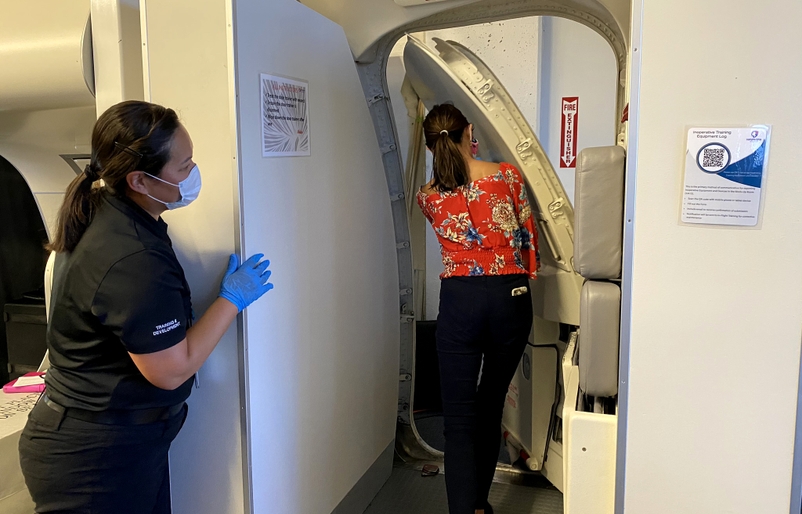
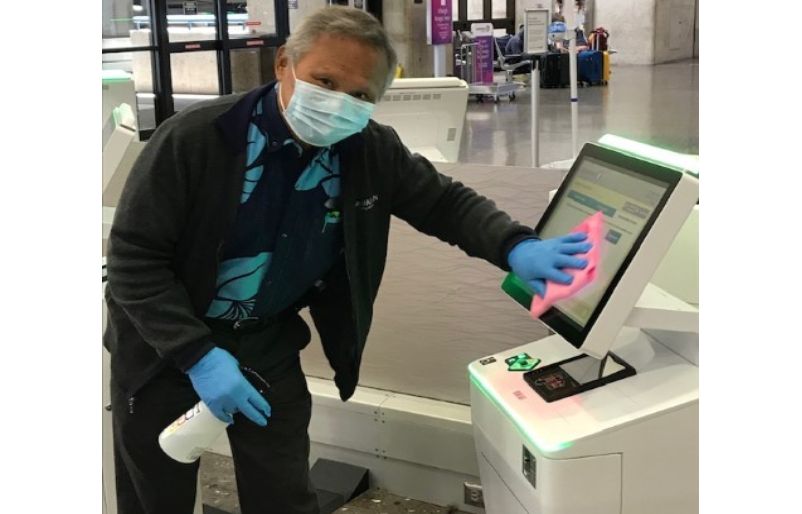
Our team members' health and safety are paramount. We have implemented several measures that work to mitigate the risk of COVID-19 exposure, including splitting our workforce between our primary and backup sites, opening SOCC doors to allow easier egress, and providing adequate supplies for disinfecting workstations.
My team’s demonstration of po‘okele (to excel) is indicative of their dedication to the success of Hawaiian Airlines. Their fundamental commitment to operate safely and reliably, combined with their personal sacrifice to support the company, has been incredible to witness during this challenging time.






 If you’re still having issues uploading a background, please visit the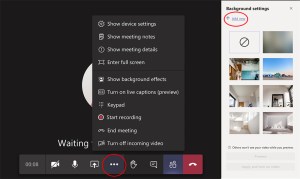

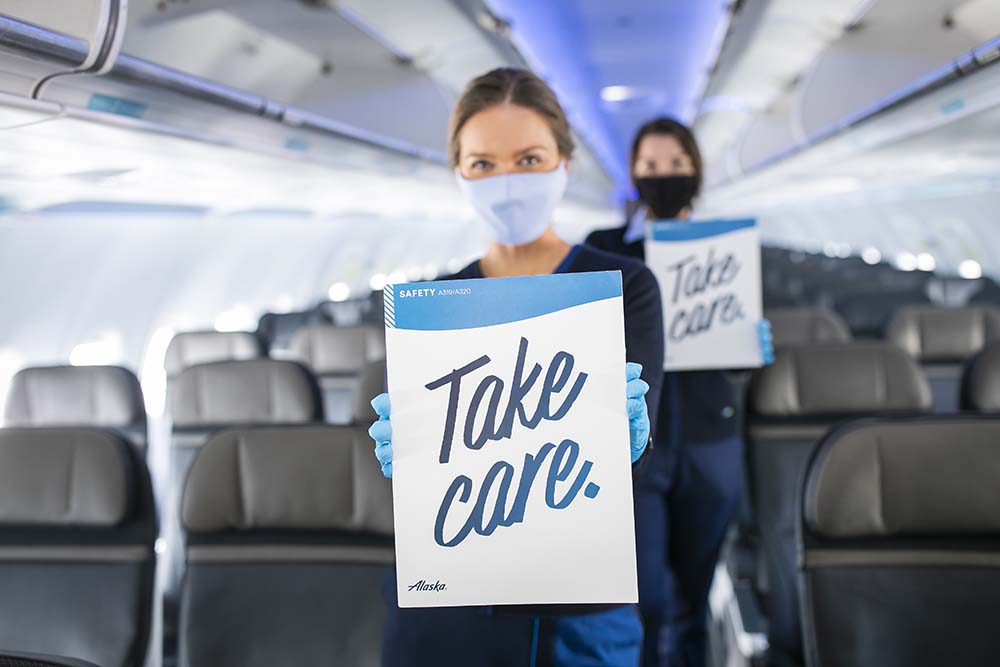
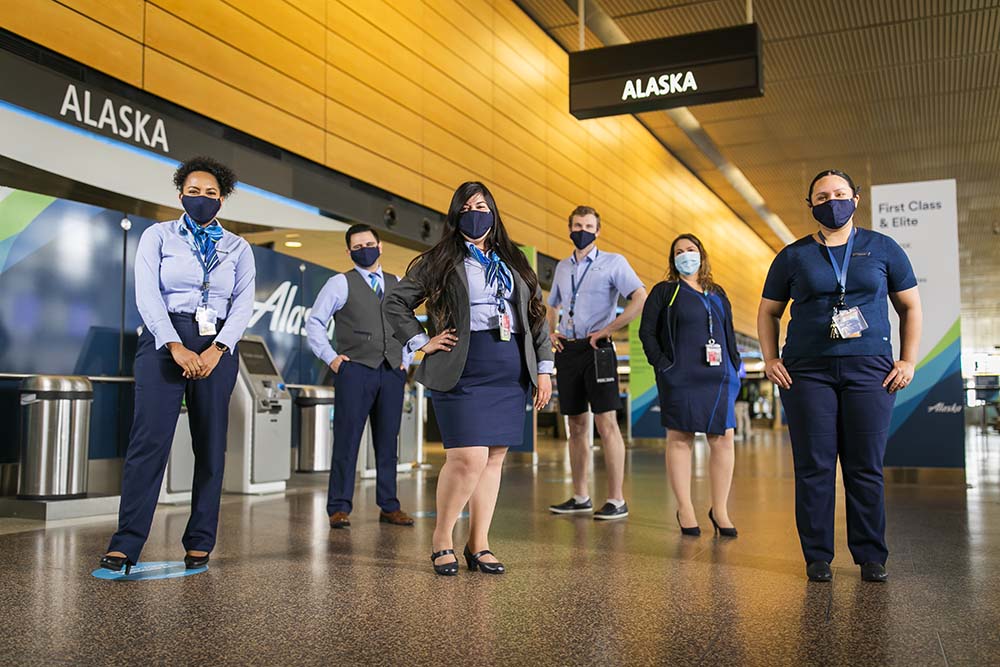
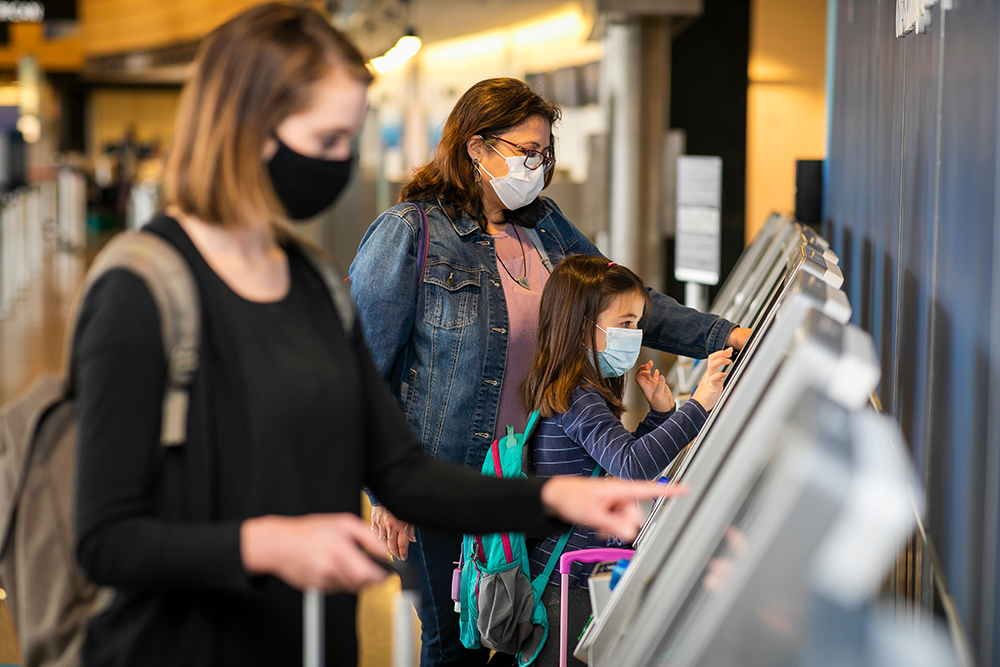
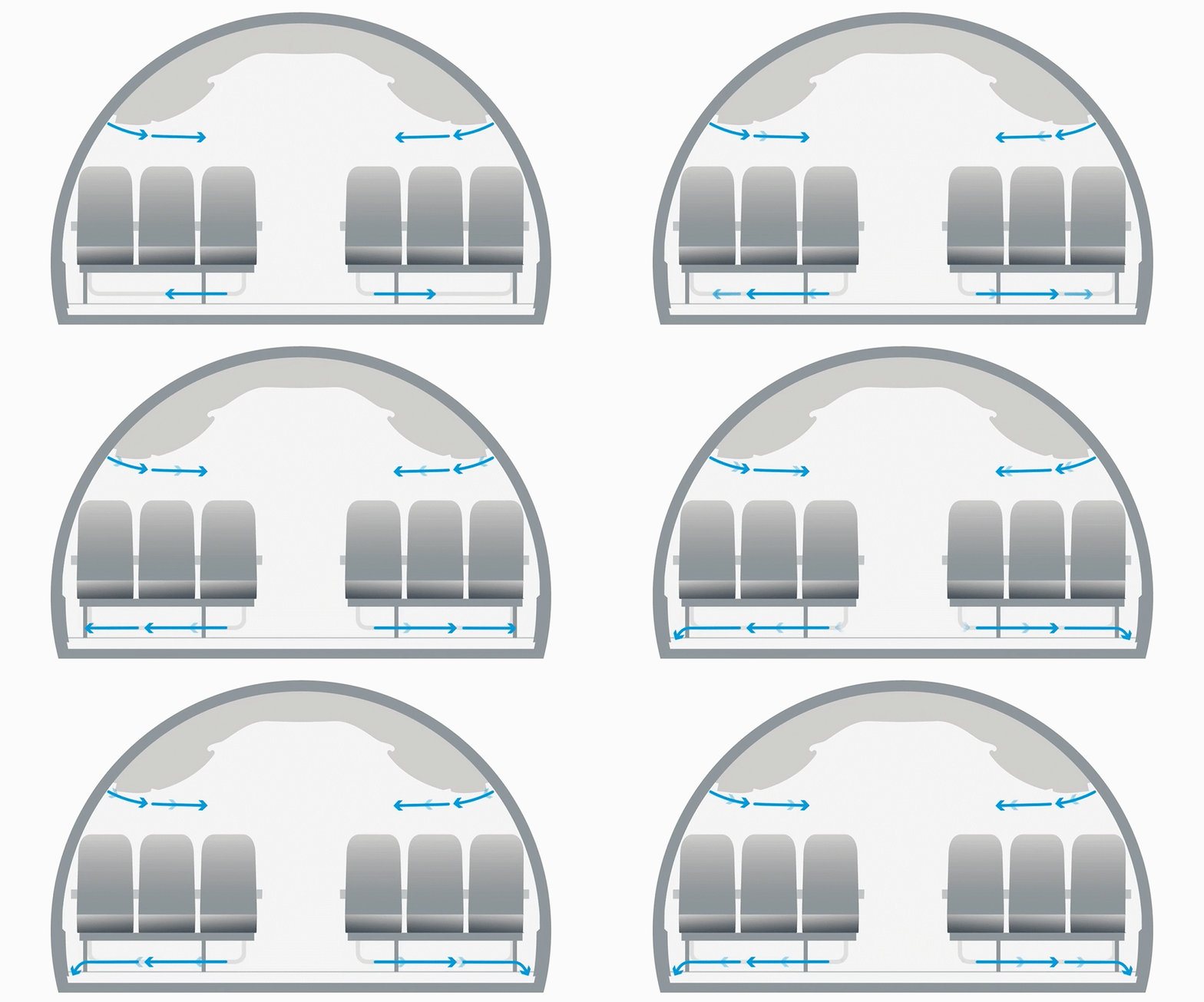
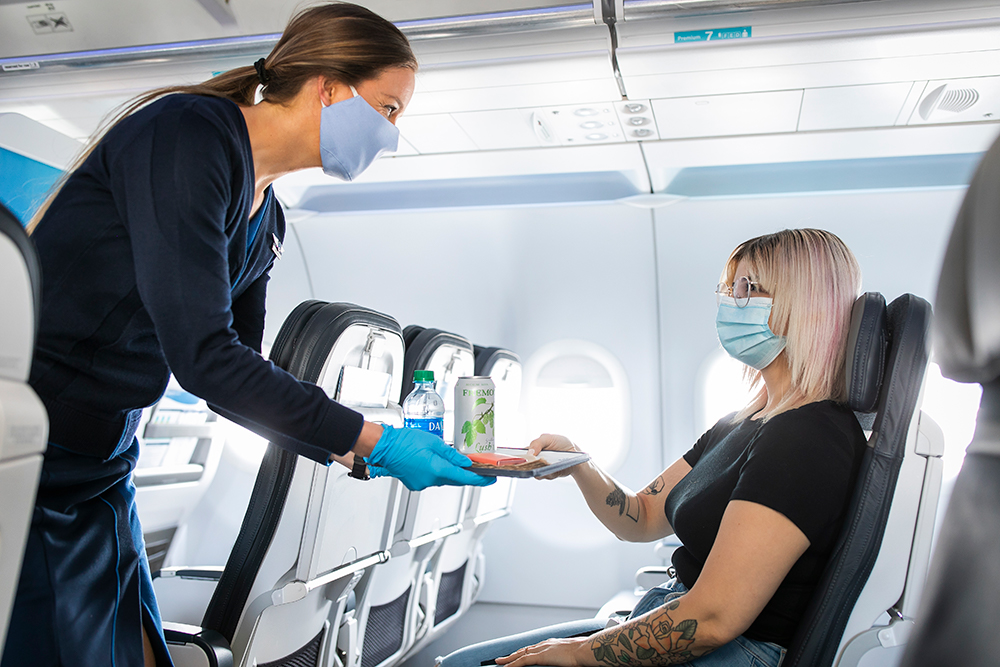
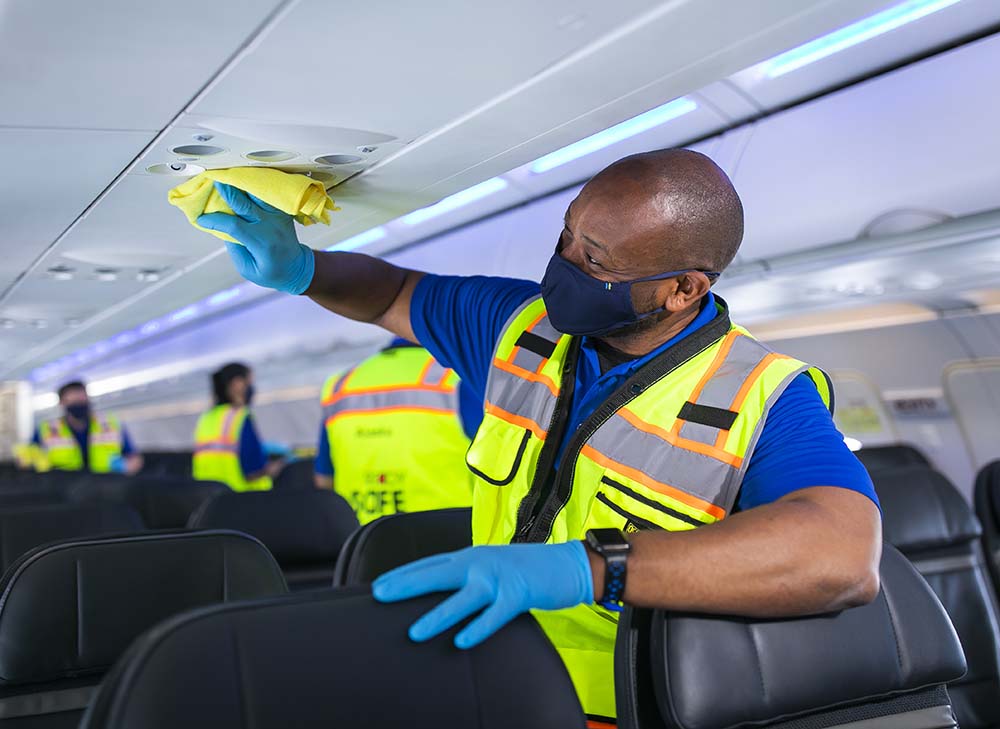 Cleanliness has always been important to us, but the next level involves techniques that reduce the already low risk of onboard transmission.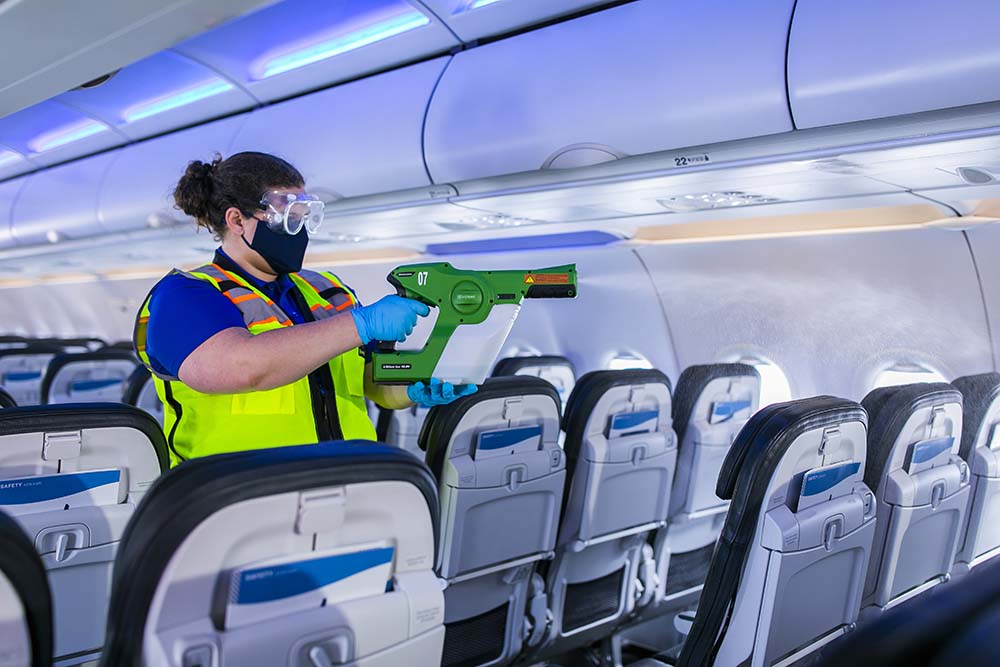



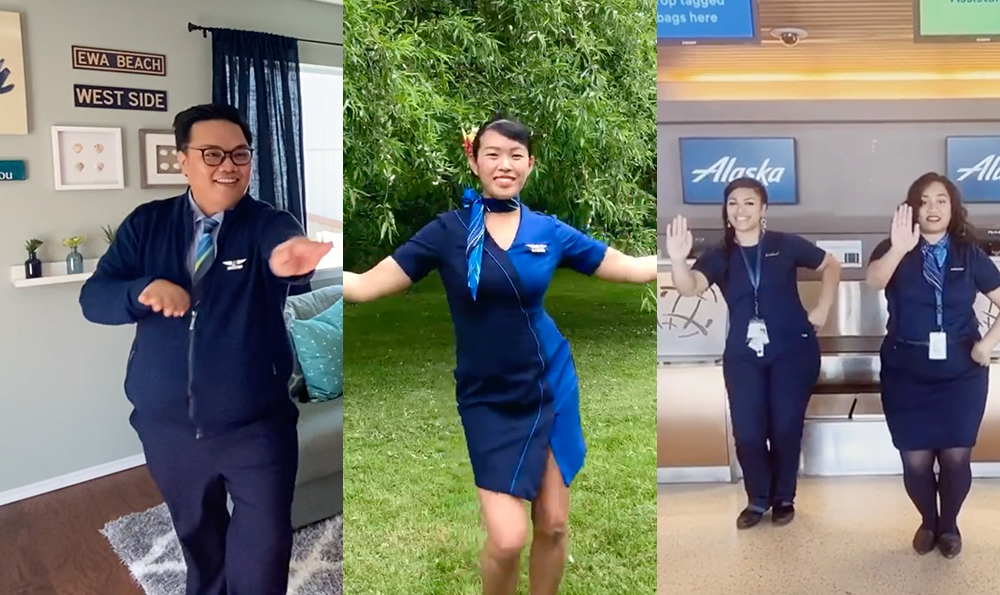
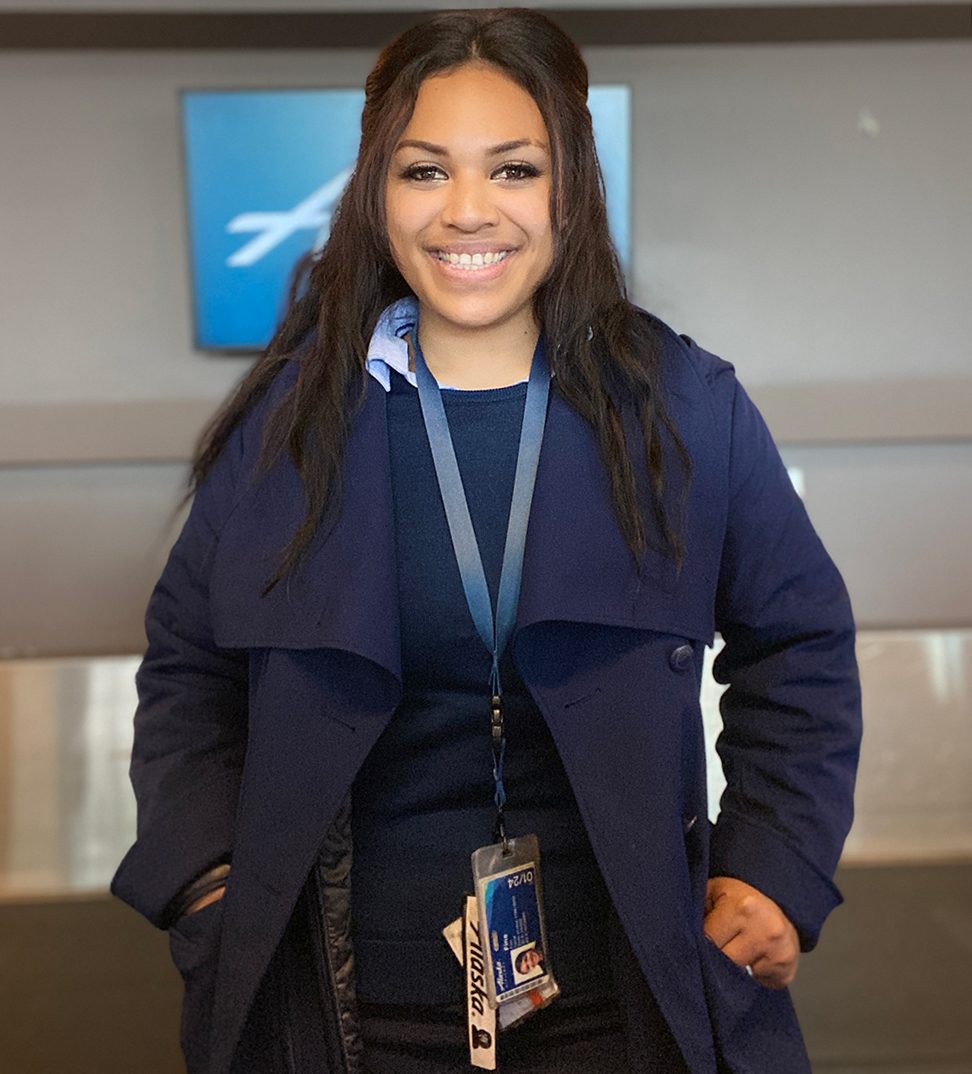 “This month is a very special time where we get the chance to share our culture with the rest of the world. Tonga is known for being the friendliest island and so I’d like to keep that spirit alive whether I’m at work, home or out running errands. Be a light wherever you go.” — Ila Langi, a customer service agent in San Jose California
 “This month has become a little more meaningful to me than it has in the past because I have finally taken initiative the past couple months to expand more on what I know of my culture. Especially being married to my husband, who knows the language and culture almost so fluently, he has helped me so much. He’s so encouraging and he makes it so enjoyable to learn and love our culture!” — Angelica Mapa, a customer service agent in San Jose California “Every day, I always try to make it a habit to pass on my knowledge to the younger generation in my family by trying to speak as much Tongan in the home and teach them traditions that we still hold on to today. At work, I always try to answer questions about my culture and heritage to anyone that asks. I always admire my coworkers who openly share what traditional foods they love to make or traditional events they keep up with their family because it also encourages me to share mine as well. It’s always a safe place to share about our heritage at work because no one judges,” she said.
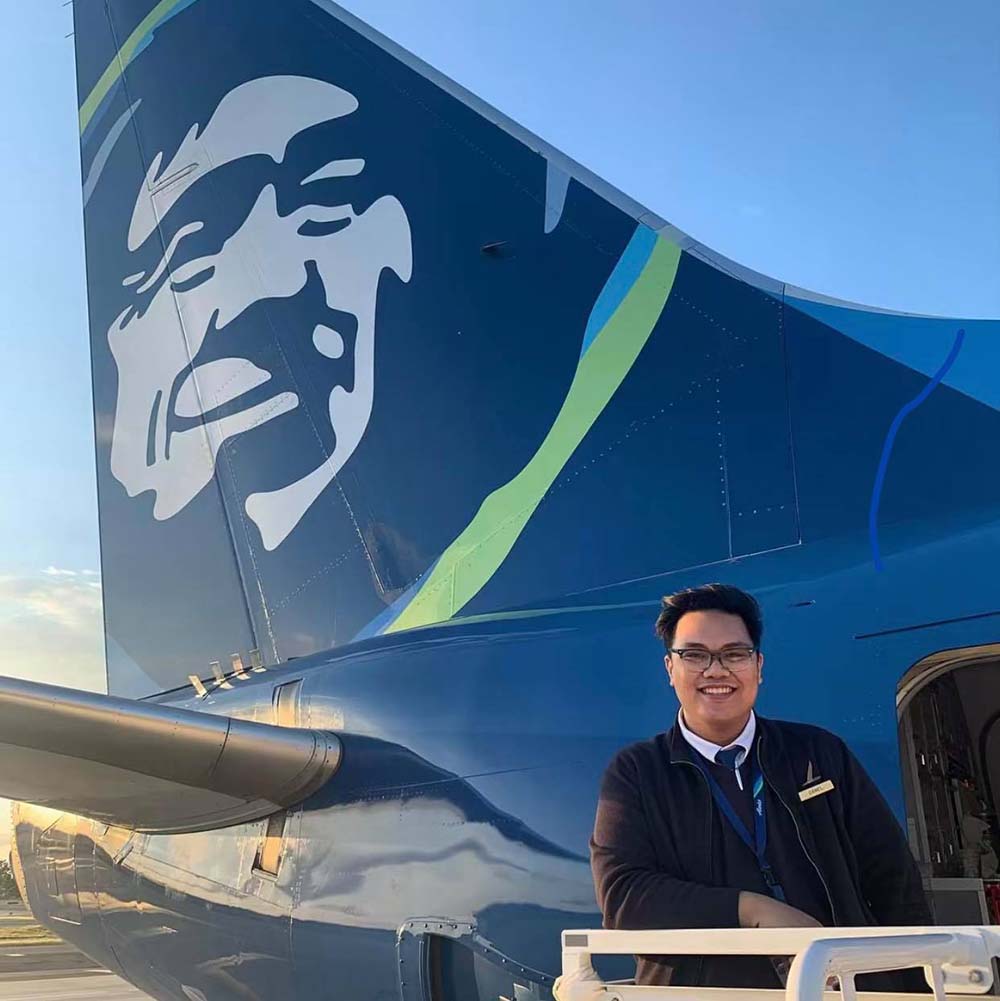 “This month means so much to me because not only does API month highlight my culture, it allows me to honor the generations before me that have paved the way for me, by their sacrifices and hard work. I am so blessed to have grown up in a multilingual household, and speaking multiple languages helps me stay connected to my heritage.” — Daniel Remigio, Seattle-based flight attendant
 “When most people think of Polynesians, they usually think of song and dance, and rightfully so, as it is the root of our culture. Dating back thousands of years, singing and dancing has been an ancient tradition used to communicate and connect, from ceremonial rituals to preparing for war to reciting history through storytelling and more. And although hula might be one of the first types of dance that comes to mind, there are actually many forms of ancient melodic traditions from around the South Pacific, like Samoa, Tonga, New Zealand, Fiji and Tahiti. But no matter which island or country, we all share that same heartbeat of Polynesia through dance.” — Shanyn Wright, multimedia communications specialist