Hawaiian Holdings Reports 2020 Fourth Quarter and Full Year Financial Results

HA High Res Logo_mid


HONOLULU , Jan. 26, 2021 /PRNewswire/ — Hawaiian Holdings, Inc. (NASDAQ: HA) (the "Company"), parent company of Hawaiian Airlines, Inc. ("Hawaiian"), today reported its financial results for the fourth quarter and full year 2020.

Fourth Quarter 2020 – Key Financial Metrics


GAAP


YoY Change


Adjusted


YoY Change

Net Loss


$(162.6)M


$(212.3)M


$(172.8)M


$(218.8)M

Diluted EPS


$(3.50)


$(4.57)


$(3.71)


$(4.70)

Pre-tax Margin


(152.8)%


(162.4) pts.


(145.2)%


(154.1) pts.


Full Year 2020 – Key Financial Metrics


GAAP


YoY Change


Adjusted


YoY Change

Net Loss


$(510.9)M


$(734.9)M


$(551.0)M


$(769.9)M

Diluted EPS


$(11.08)


$(15.79)


$(11.96)


$(16.56)

Pre-tax Margin


(82.9)%


(93.7) pts.


(87.2)%


(97.7) pts.

"While 2020 has been the most challenging year the airline industry has experienced, we are encouraged that the re-opening of Hawai'i to tourism through the state's pre-travel testing program and Hawaiian's successful testing partnerships have allowed us to begin the journey to recovery," said Peter Ingram, president and CEO of Hawaiian Airlines. "My colleagues inspire me every day with their resolve to persevere and emerge from the pandemic strongly as they navigate through challenges and create innovative solutions to position Hawaiian for long-term success. The negative impacts of COVID-19 will create a challenging beginning of 2021, but we are confident that the structural pieces are in place for a sustained recovery."

Statistical data, as well as a reconciliation of the reported non-GAAP financial measures, can be found in the accompanying tables.

Liquidity and Capital Resources

As of December 31, 2020 the Company had:

  • Unrestricted cash, cash equivalents and short-term investments of $864 million .
  • Outstanding debt and finance lease obligations of $1.3 billion .
  • Air traffic liability of $534 million .

In January 2021 , the Company applied to participate in the Payroll Support Program Extension program (the "PSP Extension"), part of the Consolidated Appropriations Act of 2021, and expects to receive approximately $168 million in funds through the program.

Fourth Quarter 2020

On October 15, 2020 , the Company reached an important inflection point in its recovery from the COVID-19 pandemic with the re-opening of Hawai'i to tourism through the launch of the state of Hawai'i's pre-travel testing program, which allows guests to avoid quarantine with evidence of a negative COVID-19 test, subject to certain island-specific requirements.

During the fourth quarter, the Company reinstated non-stop service from Honolulu to Las Vegas , Phoenix , San Jose , Oakland , New York and Boston , restoring service to all of its pre-pandemic origin points on the U.S. mainland, as well as non-stop service from Honolulu to Tokyo-Haneda, Japan ; Osaka, Japan ; and Seoul, South Korea . While the Company doubled its capacity as compared to the third quarter of 2020, its capacity was down 72 percent compared to the same period in 2019.

As testing is key to the resumption of Hawai'i travel, the Company launched an array of testing options for travelers, including access to mail-in test kits and proprietary drive-through testing labs in select U.S. mainland gateways.

To increase liquidity, the Company raised approximately $41 million in net proceeds through the sale of approximately 2.1 million shares of common stock under the Company's at-the-market offering program (ATM Program) during the fourth quarter. The Company may sell up to 5 million shares in total under the ATM Program.

On October 1, 2020 , the Company implemented both permanent and extended voluntary leave programs with each of its workgroups. In total, the Company reduced its workforce by approximately 2,400 employees, or more than 32 percent of all employees, of which approximately 2,100 were through voluntary means. As of January 26, 2021 , all employees who were subject to an involuntary furlough between October 1, 2020 and January 15, 2021 have been sent recall notices pursuant to the PSP Extension.

In October 2020 , the Company executed an amendment with the U.S. Treasury increasing the total amount of the CARES Act Economic Relief Program (ERP) loan under the Coronavirus Aid, Relief, and Economic Security Act (CARES Act) from $420 million to $622 million , of which $577 million is undrawn. The Company has until May 28, 2021 to determine how much of the remaining ERP funds to borrow.

In October 2020 , the Company reached an agreement with Boeing to delay 787-9 deliveries under its purchase agreement for 10 aircraft.  The Company expects to take delivery of 787-9 aircraft from 2022 to 2026 with its first aircraft to be delivered in September 2022 .

Guest Experience

During the fourth quarter, the Company continued its enhanced cleaning procedures and guest-facing protocols in an effort to minimize the risk of transmission of COVID-19, including:

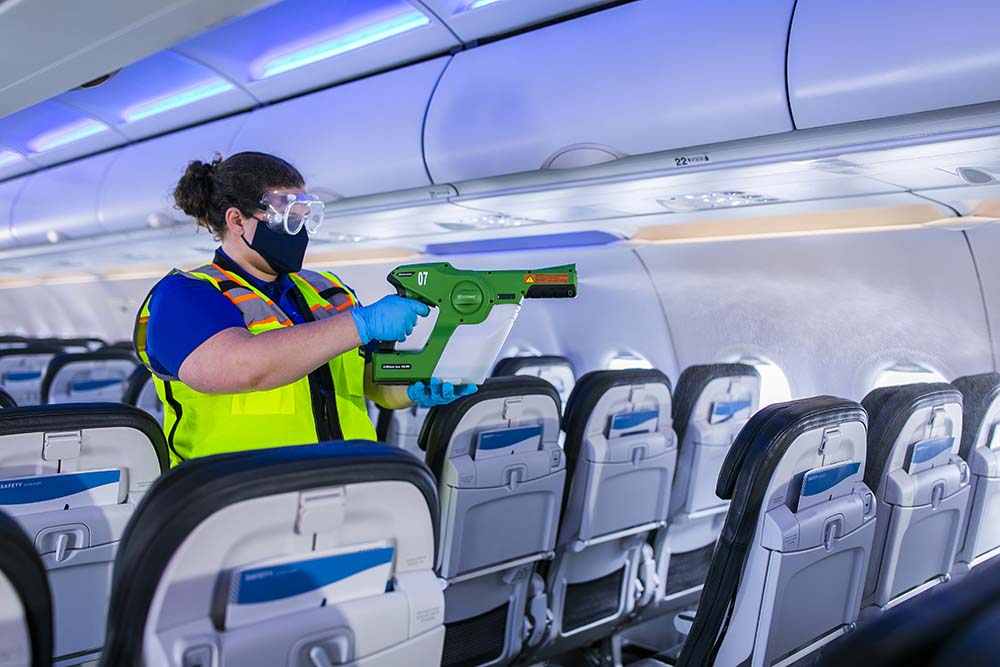
  • Performing enhanced aircraft cleaning between flights and during overnight parking, including recurring electrostatic spraying of all aircraft.
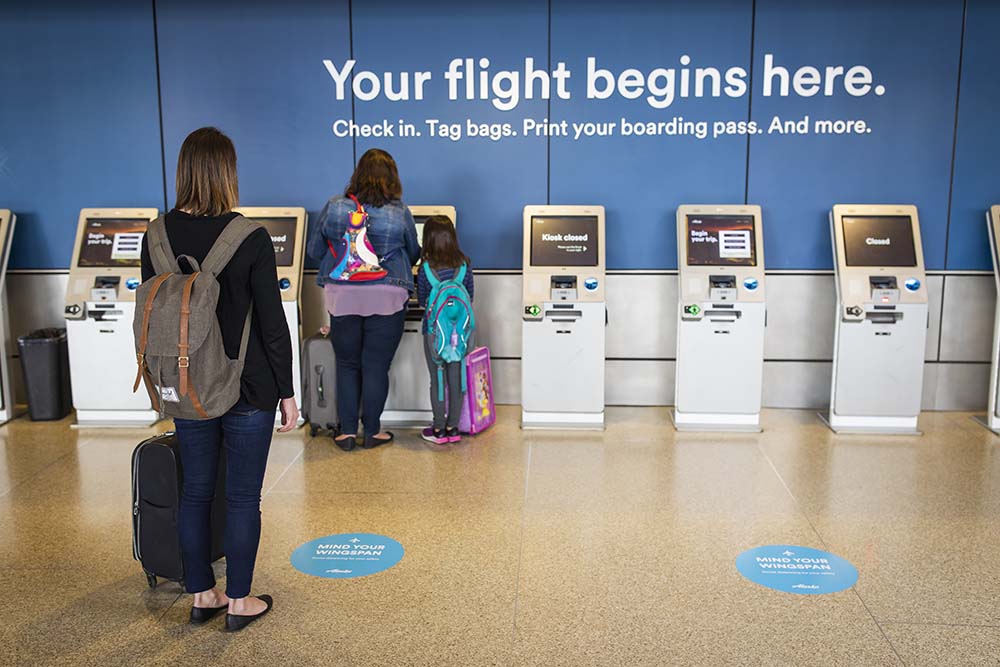
  • Frequent cleaning and disinfecting of counters and self-service check-in kiosks in airports.
  • Ensuring hand sanitizers are readily available for guests at airports we serve.
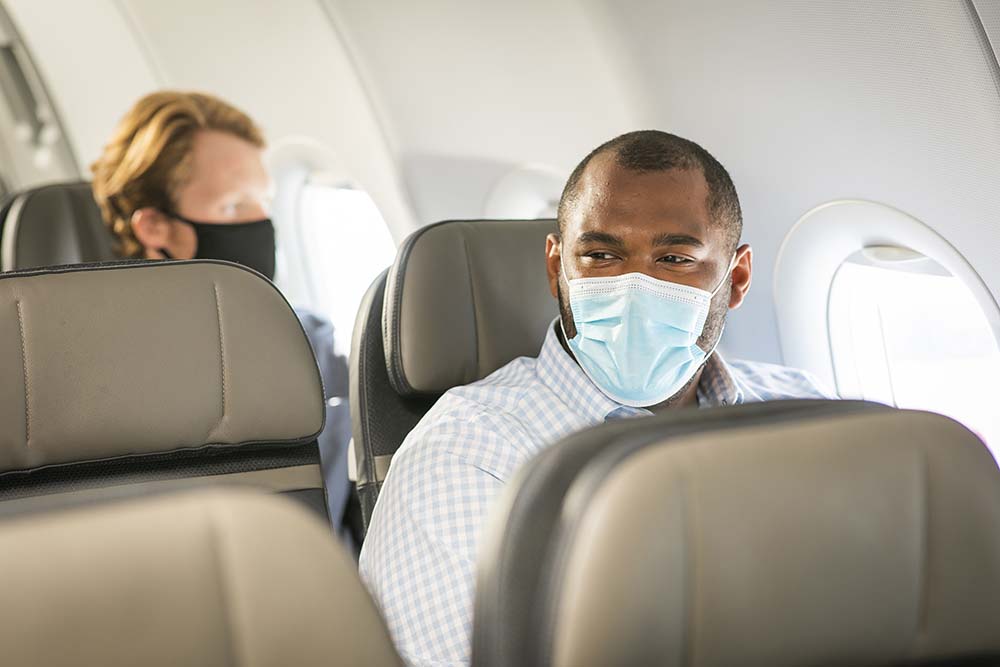
  • Requiring guests and guest facing employees to wear a face mask or covering, with guests required to wear masks from check-in to deplaning (except when eating or drinking on board).
  • Modifying boarding and deplaning processes.
  • Modifying in-flight service to minimize close interactions between crew members and guests.
  • Eliminating change fees on all domestic and international flights in order to provide guests with travel flexibility across the Company's network.

During the first quarter of 2021, the Company, in coordination with the state of Hawai'i, will implement the Hawai'i Pre-Clear Program across its mainland network to improve the arrivals process for its guests by validating the state's pre-travel testing requirement prior to departure.

Environmental, Social and Corporate Governance

In December 2020 , the Company published its inaugural Corporate Kuleana Report outlining its progress advancing various environmental, social and governance (ESG) initiatives. A link to the report can be found through the Investor Relations, Corporate Responsibility section of Hawaiian's website.

Among key environmental accomplishments, the Company lowered its pre-pandemic carbon emissions while increasing flight operations in 2018 and 2019. In 2019, Hawaiian increased Available Seat Miles (ASMs) by 2.1 percent and Revenue Passenger Miles (RPMs) by 3.6 percent while reducing CO2 greenhouse gas emissions by 1.4 percent. When adjusted for year-over-year growth in flying, as measured by RPMs, Hawaiian reduced its CO2 emissions by 4.8 percent during this period.

Multibillion-dollar fleet modernization investments and state-of-the-art flight programs and strategies have allowed Hawaiian to lower jet fuel burn by approximately 8.5 million gallons annually between 2015 and 2019. This decline in jet fuel burn has reduced CO2 emissions by 75,540 metric tons, or the equivalent of removing, on average, more than 16,000 cars from the roads, annually in this period. Hawaiian has also cut energy use at its headquarters by approximately five percent between 2016 and 2018 through motion sensors, LED lighting and tinted windows. In partnership with Carbon Lighthouse, Hawaiian aims to lower energy consumption at its Airport Center building by approximately 24 percent by the end of 2021. In February 2020 , Hawaiian became the first U.S. airline to join the U.S. Department of Energy's Better Buildings Challenge, committing to a 20 percent reduction in electricity use by 2026.

First Quarter 2021 Outlook

The Company announced on December 8, 2020 that it will launch four new routes in March and April 2021 ; non-stop flights from Honolulu to Austin, Texas ; Orlando, Florida , and Ontario , California as well as a new flight from Long Beach, California to Maui .

The Company expects its first quarter 2021 capacity to be down about 50 percent compared to the first quarter of 2019, with the state of Hawai'i's pre-travel testing program anticipated to remain in place throughout the first quarter.

The Company expects its full year 2021 capital expenditures to be approximately $50 $70 million .

Statistical information, as well as a reconciliation of the non-GAAP financial measures, can be found in the accompanying tables.

Investor Conference Call

Hawaiian Holdings' quarterly and full year earnings conference call is scheduled to begin today ( January 26, 2021 ) at 4:30 p.m. Eastern Time ( USA ).  The conference call will be broadcast live over the Internet. Investors may listen to the live audio webcast on the investor relations section of the Company's website at HawaiianAirlines.com . For those who are not available for the live webcast, the call will be archived and available for 90 days on the investor relations section of the Company's website.

About Hawaiian Airlines

Hawaiian® has led all U.S. carriers in on-time performance from 2004-2019 as reported by the U.S. Department of Transportation. U.S. DOT results for 2020 will be reported in February 2021 . Consumer surveys by Condé Nast Traveler, Travel + Leisure and TripAdvisor have placed Hawaiian among the top of all domestic airlines serving Hawai'i.

Now in its 92nd year of continuous service, Hawaiian is Hawai'i's biggest and longest-serving airline. In 2019, Hawaiian offered non-stop flights between Hawai'i and more U.S. gateway cities (13) than any other airline, along with service connecting the islands with Japan , South Korea , Australia , New Zealand , American Samoa and Tahiti. As a result of the COVID-19 pandemic, Hawaiian is offering an adjusted schedule of daily flights within the Hawaiian Islands and between Hawai'i and the U.S. mainland as well as Japan and South Korea .

The airline is committed to the health and safety of its guests and employees and has reinforced enhanced cleaning procedures across its business. While the experience may be a little different, the authentic Hawaiian hospitality remains unchanged. Additional details on how Hawaiian is keeping guests and employees safe can be found at HawaiianAirlines.com/KeepingYouSafe .

Hawaiian Airlines, Inc. is a subsidiary of Hawaiian Holdings, Inc. (NASDAQ: HA). Additional information is available at HawaiianAirlines.com . Follow Hawaiian's Twitter updates ( @HawaiianAir ), become a fan on Facebook ( Hawaiian Airlines ), and follow us on Instagram ( hawaiianairlines ). For career postings and updates, follow Hawaiian's LinkedIn page.

For media inquiries, please visit Hawaiian Airlines' online newsroom .

Forward-Looking Statements

This press release contains "forward-looking statements" within the meaning of the Private Securities Litigation Reform Act of 1995 that reflect the Company's current views with respect to certain current and future events and financial performance.  Such forward-looking statements include, without limitation, the Company's ability and timing to rebuild its business from the impacts of COVID-19 pandemic; the impact on the Company's business of the reopening of the state of Hawai'i to tourism through the state's COVID-19 pre-travel testing program and the Company's testing partnerships; funds expected to be received by the Company under the PSP Extension; recommencement of the Company's ATM Program; the Company's future borrowing under the ERP;  the Company's expectations related to the delivery and timing of its Boeing 787-9 aircraft purchases; implementation of the state of Hawai'i's Pre-Clear Program; the Company's reduction of electricity use under the U.S. Department of Energy's Better Buildings Challenge; the Company's outlook for the first fiscal quarter and fiscal year 2021, including expectations regarding capacity and capital expenditures, and statements as to other matters that do not relate strictly to historical facts or statements of assumptions underlying any of the foregoing.  Words such as "expects," "anticipates," "projects," "intends," "plans," "believes," "estimates," variations of such words, and similar expressions are also intended to identify such forward-looking statements.  These forward-looking statements are and will be subject to many risks, uncertainties and assumptions relating to the Company's operations and business environment, all of which may cause the Company's actual results to be materially different from any future results, expressed or implied, in these forward-looking statements.  These risks and uncertainties include, without limitation, the continuing and developing effects of the spread of COVID-19 on the Company's business operations and financial condition; whether the Company's cost-cutting plans related to the COVID-19 pandemic will be effective or sufficient; the duration of government-mandated and other restrictions on travel; the full effect that the quarantine, restrictions on travel and other measures to limit the spread of COVID-19 will have on demand for air travel in the markets in which the Company operates; fluctuations and the extent of declining demand for air transportation in the markets in which the Company operates; the Company's dependence on the tourism industry; the Company's ability to generate sufficient cash and manage its available cash; the Company's ability to accurately forecast economic volatility; macroeconomic developments; political developments; the price and availability of aircraft fuel; labor negotiations; regulatory determinations and related developments; competitive pressures, including the impact of industry capacity between North America and Hawai'i and interisland; changes in the Company's future capital needs; and foreign currency exchange rate fluctuations.

The risks, uncertainties and assumptions referred to above that could cause the Company's results to differ materially from the results expressed or implied by such forward-looking statements also include the risks, uncertainties and assumptions discussed from time to time in the Company's other public filings and public announcements, including the Company's Annual Report on Form 10-K and the Company's Quarterly Reports on Form 10-Q, as well as other documents that may be filed by the Company from time to time with the Securities and Exchange Commission.  All forward-looking statements included in this document are based on information available to the Company on the date hereof.  The Company does not undertake to publicly update or revise any forward-looking statements to reflect events or circumstances that may arise after the date hereof even if experience or future changes make it clear that any projected results expressed or implied herein will not be realized.


Table 1.

Hawaiian Holdings, Inc.

Consolidated Statements of Operations

(in thousands, except for per share data) (unaudited)


Three Months Ended December 31,


Twelve Months Ended December 31,


2020


2019


% Change


2020


2019


% Change


(in thousands, except per share data)

Operating Revenue:


Passenger


$

91,791


$

648,782


(85.9)

%


$

664,799


$

2,597,772


(74.4)

%

Other


57,892


59,355


(2.5)

%


180,014


234,456


(23.2)

%

Total


149,683


708,137


(78.9)

%


844,813


2,832,228


(70.2)

%

Operating Expenses:


Wages and benefits


149,833


185,659


(19.3)

%


387,910


723,656


(46.4)

%

Aircraft fuel, including taxes and delivery


26,338


137,283


(80.8)

%


161,363


542,573


(70.3)

%

Aircraft rent


26,770


27,131


(1.3)

%


103,890


118,904


(12.6)

%

Maintenance materials and repairs


28,504


67,233


(57.6)

%


121,571


249,772


(51.3)

%

Aircraft and passenger servicing


11,557


43,972


(73.7)

%


58,016


164,275


(64.7)

%

Commissions and other selling


11,453


33,618


(65.9)

%


46,297


130,216


(64.4)

%

Depreciation and amortization


36,149


39,632


(8.8)

%


151,665


158,906


(4.6)

%

Other rentals and landing fees


16,209


33,845


(52.1)

%


73,808


129,622


(43.1)

%

Purchased services


22,044


33,261


(33.7)

%


99,050


131,567


(24.7)

%

Special items


5,704


100.0

%


184,111


100.0

%

Other


24,600


37,219


(33.9)

%


104,743


155,260


(32.5)

%

Total


359,161


638,853


(43.8)

%


1,492,424


2,504,751


(40.4)

%

Operating Income (Loss)


(209,478)


69,284


(402.3)

%


(647,611)


327,477


(297.8)

%

Nonoperating Income (Expense):


Other nonoperating special items


1,329


(5,682)


Interest expense and amortization of
debt discounts and issuance costs


(13,827)


(6,596)


(40,439)


(27,864)


Interest income


1,003


3,378


8,731


12,583


Capitalized interest


653


779


3,236


4,492


Other components of net periodic benefit
cost


711


(920)


1,300


(3,864)


Gains (losses) on fuel derivatives


3


494


(6,930)


(6,709)


Other, net


(9,153)


1,490


(12,657)


(1,119)


Total


(19,281)


(1,375)


(52,441)


(22,481)


Income (Loss) Before Income Taxes


(228,759)


67,909


(700,052)


304,996


Income tax expense (benefit)


(66,199)


18,192


(189,117)


81,012


Net Income (Loss)


$

(162,560)


$

49,717


$

(510,935)


$

223,984


Net Income (Loss) Per Common Stock
Share:


Basic


$

(3.50)


$

1.07


$

(11.08)


$

4.72


Diluted


$

(3.50)


$

1.07


$

(11.08)


$

4.71


Weighted Average Number of Common
Stock Shares Outstanding:


Basic


46,458


46,402


46,100


47,435


Diluted


46,458


46,658


46,100


47,546


Cash Dividends Declared Per Common
Share


$


$

0.12


$

0.12


$

0.48


Table 2.

Hawaiian Holdings, Inc.

Selected Statistical Data

(in thousands, except as otherwise indicated) (unaudited)


Three Months Ended December 31,


Twelve Months Ended December 31,


2020


2019


% Change


2020


2019


% Change


(in thousands, except as otherwise indicated)

Scheduled Operations (a) :


Revenue passengers flown


480


2,893


(83.4)

%


3,353


11,737


(71.4)

%

Revenue passenger miles (RPM)


569,608


4,520,090


(87.4)

%


4,558,045


17,808,913


(74.4)

%

Available seat miles (ASM)


1,431,771


5,242,919


(72.7)

%


7,527,383


20,568,476


(63.4)

%

Passenger revenue per RPM (Yield)


16.11

¢


14.35

¢


12.3

%


14.59

¢


14.59

¢


%

Passenger load factor (RPM/ASM)


39.8

%


86.2

%


(46.4)

pt.


60.6

%


86.6

%


(26.0)

pt.

Passenger revenue per ASM (PRASM)


6.41

¢


12.37

¢


(48.2)

%


8.83

¢


12.63

¢


(30.1)

%

Total Operations (a) :


Revenue passengers flown


485


2,898


(83.3)

%


3,362


11,751


(71.4)

%

RPM


580,977


4,526,797


(87.2)

%


4,576,623


17,826,887


(74.3)

%

ASM


1,453,062


5,255,202


(72.4)

%


7,560,486


20,596,711


(63.3)

%

Passenger load factor (RPM/ASM)


40.0

%


86.1

%


(46.1)

pt.


60.5

%


86.6

%


(26.1)

pt.

Operating revenue per ASM (RASM)


10.30

¢


13.47

¢


(23.5)

%


11.17

¢


13.75

¢


(18.8)

%

Operating cost per ASM (CASM)


24.72

¢


12.16

¢


103.3

%


19.74

¢


12.16

¢


62.3

%

CASM excluding aircraft fuel and non-
recurring items (b)


22.51

¢


9.54

¢


136.0

%


18.35

¢


9.54

¢


92.3

%

Aircraft fuel expense per ASM (c)


1.82

¢


2.62

¢


(30.5)

%


2.13

¢


2.62

¢


(18.7)

%

Revenue block hours operated


10,968


56,246


(80.5)

%


82,711


218,801


(62.2)

%

Gallons of jet fuel consumed


21,250


68,454


(69.0)

%


106,225


270,001


(60.7)

%

Average cost per gallon of jet fuel (actual) (c)


$

1.24


$

2.01


(38.3)

%


$

1.52


$

2.01


(24.4)

%

Economic fuel cost per gallon (c)(d)


$

1.29


$

2.05


(37.1)

%


$

1.60


$

2.06


(22.3)

%


(a)

Includes the operations of the Company's contract carrier under a capacity purchase agreement. Total Operations includes both scheduled and chartered operations.

(b)

See Table 4 for a reconciliation of GAAP operating expenses to operating expenses excluding aircraft fuel and non-recurring items.

(c)

Includes applicable taxes and fees.

(d)

See Table 3 for a reconciliation of GAAP fuel costs to economic fuel costs.


Table 3.
Hawaiian Holdings, Inc.
Economic Fuel Expense
(in thousands, except per-gallon amounts) (unaudited)

The Company believes that economic fuel expense is a good measure of the effect of fuel prices on its business as it most closely approximates the net cash outflow associated with the purchase of fuel for its operations in a period. The Company defines economic fuel expense as GAAP fuel expense plus losses/(gains) realized through actual cash (receipts)/payments received from or paid to hedge counterparties for fuel hedge derivative contracts settled during the period.


Three Months Ended December 31,


Twelve Months Ended December 31,


2020


2019


% Change


2020


2019


% Change


(in thousands, except per-gallon amounts)

Aircraft fuel expense, including taxes
and delivery


$

26,338


$

137,283


(80.8)

%


$

161,363


$

542,573


(70.3)

%

Realized losses on settlement of fuel
derivative instruments


1,137


3,108


(63.4)

%


9,035


12,403


(27.2)

%

Economic fuel expense


$

27,475


$

140,391


(80.4)

%


$

170,398


$

554,976


(69.3)

%

Fuel gallons consumed


21,250


68,454


(69.0)

%


106,225


270,001


(60.7)

%

Economic fuel costs per gallon


$

1.29


$

2.05


(37.1)

%


$

1.60


$

2.06


(22.3)

%


Table 4.
Hawaiian Holdings, Inc.
Non-GAAP Financial Reconciliation (unaudited)

The Company evaluates its financial performance utilizing various GAAP and non-GAAP financial measures, including net income, diluted net income per share, CASM, PRASM, RASM, Passenger Revenue per RPM, EBITDAR, and pre-tax margin.  Pursuant to Regulation G, the Company has included the following reconciliation of reported non-GAAP financial measures to comparable financial measures reported on a GAAP basis.  The adjustments are described below:

  • During the three and twelve months ended December 31, 2020 , the effective tax rate included a tax benefit of $15.9 million and $45.4 million , respectively, resulting from the rate differential between the prevailing tax rate of 21% during the years that generated net operating losses and the previous tax rate of 35% that was in effect during the years to which net operating losses were carried back as a result of the enactment of the CARES Act.
  • During the twelve months ended December 31, 2020 , the Company recognized $240.6 million in contra-expense related to grant proceeds from the PSP. The grant proceeds were recognized in proportion to estimated wages and benefits expense over the period the PSP covers. The Company utilized all proceeds from the PSP as of December 31, 2020 .
  • Changes in fair value of fuel derivative contracts, net of tax, are based on market prices for open contracts as of the end of the reporting period, and include the unrealized amounts of fuel derivatives (not designated as hedges) that will settle in future periods and the reversal of prior period unrealized amounts.
  • Changes in fair value of foreign currency derivative contracts, net of tax, are based on market prices for open contracts as of the end of the reporting period, including the unrealized amounts of foreign currency derivatives (not designated as hedges) that will settle in future periods and the reversal of prior period unrealized amounts.
  • Unrealized loss (gain) on foreign debt is based on fluctuation in exchange rates and the measurement of foreign-denominated debt to our functional currency.
  • The Company recorded the following as special items:
    • During the three months ended March 31, 2020 , a charge of $20.2 million was recorded for the ratification of a collective bargaining agreement with the Association of Flight Attendants in April 2020 (related to service prior to January 1, 2020 ).
    • During the three months ended March 31, 2020 , a special charge of $106.7 million was recorded for goodwill impairment resulting from the decline in the market value of the Company's equity (i.e., share price), and the Company's inability to support the carrying value of goodwill on its financial statements.
    • During the three months ended June 30, 2020 , an impairment charge of $27.5 million was recorded related to the Company's ATR-42 and ATR-72 fleets. An additional impairment charge of $3.4 million was recorded related to the Company's commercial real estate subsidiary.
    • During the three months ended June 30, 2020 , the Company recorded $3.1 million of charges related to write-downs of projects permanently suspended as a result of the COVID-19 pandemic.
    • During the three months ended September 30, 2020 , the Company recorded $24.5 million in special items related to its voluntary and involuntary separation programs, of which $17.5 million was recorded as an operating special item related to severance and benefits and $7.0 million was recorded as a non-operating special item related to termination benefits and curtailment loss.
    • During the three months ended December 31, 2020 , the Company recorded long-lived asset impairment of approximately $5.4 million , comprised of an additional write-down of its ATR-42 and ATR-72 fleet of approximately $4.9 million as a result of ongoing market uncertainty attributed to the COVID-19 pandemic and the write-off of approximately $0.5 million in capitalized software projects that were permanently suspended in response to the continuing impacts of the COVID-19 pandemic. Additionally, the Company recorded $0.3 million related to additional costs for the finalization of the voluntary and involuntary separation programs discussed above.
    • During the three months ended December 31, 2020 , the Company completed its accounting for voluntary and involuntary separation programs initiated in the third quarter of 2020, resulting in the reversal of non-operating special items of approximately $1.3 million .

The Company believes that adjusting for the impact of an effective tax rate differential, the receipt of grant proceeds, changes in fair value of fuel derivative contracts and foreign currency derivative contracts, fluctuations in foreign exchange rates, special items, and the sale of aircraft and aircraft equipment helps investors better analyze the Company's operational performance and compare its results to other airlines in the periods presented.


Three Months Ended December 31,


Twelve Months Ended December 31,


2020


2019


2020


2019


Total


Diluted
Per Share


Total


Diluted
Per Share


Total


Diluted
Per Share


Total


Diluted
Per Share


(in thousands, except per share data)

GAAP net income (loss), as reported


$

(162,560)


$

(3.50)


$

49,717


$

1.07


$

(510,935)


$

(11.08)


$

223,984


$

4.71


CARES Act – carryback of
additional NOLs


(15,879)


(0.34)


(45,416)


(0.99)


CARES Act grant recognition


(240,648)


(5.22)


Changes in fair value of fuel
derivative instruments


(1,140)


(0.02)


(3,602)


(0.08)


(2,105)


(0.05)


(5,694)


(0.13)


Unrealized loss on non-
designated foreign
exchange positions


904


0.02


1,327


0.03


Change in unrealized loss
(gain) on foreign debt


7,218


0.16


(1,558)


(0.03)


14,759


0.32


696


0.02


Gain on sale of aircraft


(1,948)


(0.04)


Special items


5,704


0.12


184,111


3.99


Nonoperating special items


(1,329)


(0.03)


5,682


0.12


Tax effect of adjustments


(5,765)


(0.12)


1,370


0.03


42,252


0.92


1,845


0.04


Adjusted Net Income (Loss)


$

(172,847)


$

(3.71)


$

45,927


$

0.99


$

(550,973)


$

(11.96)


$

218,883


$

4.60


Three months ended
December 31,


Twelve months ended
December 31,


2020


2019


2020


2019


(in thousands)

Income (Loss) Before Income Taxes


$

(228,759)


$

67,909


$

(700,052)


$

304,996


CARES Act grant recognition


(240,648)


Changes in fair value of fuel derivative instruments


(1,140)


(3,602)


(2,105)


(5,694)


Unrealized loss on non-designated foreign
exchange positions


904


1,327


Change in unrealized loss (gain) on foreign debt


7,218


(1,558)


14,759


696


Gain on sale of aircraft


(1,948)


Special items


5,704


184,111


Nonoperating special items


(1,329)


5,682


Adjusted Income (Loss) Before Income Taxes


$

(217,402)


$

62,749


$

(736,926)


$

298,050


Three months ended
December 31,


Twelve months ended
December 31,


2020


2019


2020


2019

Net Income (Loss) before Taxes


$

(228,759)


$

67,909


$

(700,052)


$

304,996


Depreciation & Amortization


36,149


39,632


151,665


158,906


Aircraft Rent


26,770


27,131


103,890


118,904


Interest and amortization of debt


(13,827)


(6,596)


(40,439)


(27,864)


EBITDAR, as reported


(152,013)


141,268


(404,058)


610,670


Add: CARES Act grant recognition


(240,648)


Add: changes in fair value of fuel derivative instruments


(1,140)


(3,602)


(2,105)


(5,694)


Add: unrealized loss on non-designated foreign
exchange positions


904


1,327


Add: unrealized loss (gain) on foreign debt


7,218


(1,558)


14,759


696


Add: gain on sale of aircraft


(1,948)


Add: special items


5,704


184,111


Add: nonoperating special items


(1,329)


5,682


Adjusted EBITDAR


$

(140,656)


$

136,108


$

(440,932)


$

603,724


Operating Costs per Available Seat Mile (CASM)
The Company has separately listed in the table below its fuel costs per ASM and non-GAAP unit costs, excluding fuel and non-recurring items.  These amounts are included in CASM, but for internal purposes the Company consistently uses cost metrics that exclude fuel and non-recurring items (if applicable) to measure and monitor its costs.


Three Months Ended
December 31,


Twelve Months Ended
December 31,


2020


2019


2020


2019


(in thousands, except CASM data)

GAAP operating expenses


$

359,161


$

638,853


$

1,492,424


$

2,504,751


Aircraft fuel, including taxes and delivery


(26,338)


(137,283)


(161,363)


(542,573)


CARES Act PSP grant recognition


240,648


Gain on sale of aircraft


1,948


Special items


(5,704)


(184,111)


Adjusted operating expenses


$

327,119


$

501,570


$

1,387,598


$

1,964,126


Available Seat Miles


1,453,062


5,255,202


7,560,486


20,596,711


CASM—GAAP


24.72

¢


12.16

¢


19.74

¢


12.16

¢

Aircraft fuel, including taxes and delivery


(1.82)


(2.62)


(2.13)


(2.62)


CARES Act PSP grant recognition


3.18


Gain on sale of aircraft


0.00

Special items


(0.39)


(2.44)


Adjusted CASM


22.51

¢


9.54

¢


18.35

¢


9.54

¢


Pre-tax margin
The Company excludes unrealized (gains) losses from fuel derivative contracts and foreign debt, losses on the sale of aircraft and non-recurring items from pre-tax margin for the same reasons as described above.


Three months ended
December 31,


Twelve months ended
December 31,


2020


2019


2020


2019

Pre-Tax Margin, as reported


(152.8)

%


9.6

%


(82.9)

%


10.8

%

Add: CARES Act grant recognition


(28.5)


Add: changes in fair value of fuel derivative
instruments


(0.7)


(0.5)


(0.2)


(0.2)


Add: unrealized loss on non-designated foreign
exchange positions


0.6


0.2


Add: unrealized loss (gain) on foreign debt


4.8


(0.2)


1.7


Add: gain on sale of aircraft


(0.1)


Add: special items


3.8


21.8


Add: nonoperating special items


(0.9)


0.7


Adjusted Pre-Tax Margin


(145.2)

%


8.9

%


(87.2)

%


10.5

%


Cision View original content to download multimedia: http://www.prnewswire.com/news-releases/hawaiian-holdings-reports-2020-fourth-quarter-and-full-year-financial-results-301215500.html

SOURCE Hawaiian Holdings, Inc.

What does travel look like in 2021? Your checklist & must do’s before you fly

COVID-19 has been a wild ride for all of us this past year. If you plan to get out of the house and travel soon, Alaska has tips to make your next flight infinitely easier and carefree.

First things first fly healthy.

Alaska guests must be COVID negative and have not been around someone who has tested positive for the virus within 72 hours of travel. This is for the safety of all guests and employees. Need to postpone your trip? Our peace of mind options allow you to cancel or change (most) reservations without a fee.

Pack masks, sanitizer and patience.

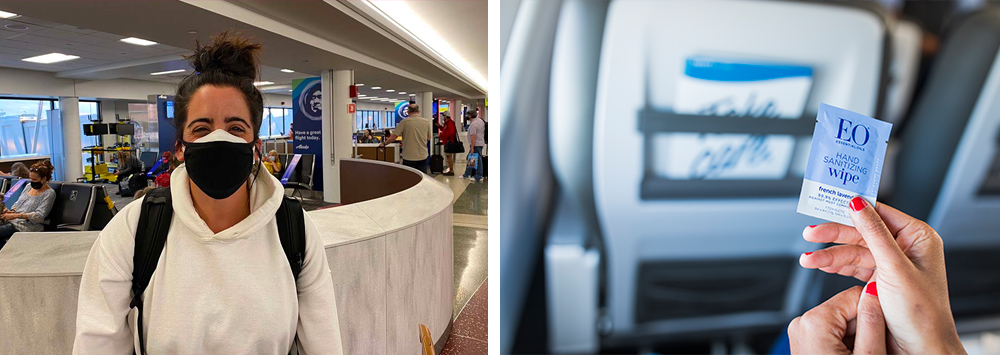
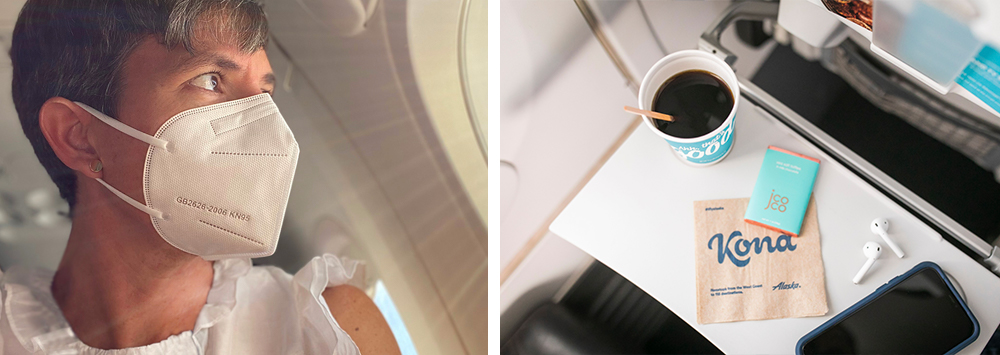
Aside from the obvious packing to-dos like clothes, toothbrushes and shoes, don’t leave without the pandemic essentials: masks, hand sanitizer, cleaning wipes and the patience to respect/maintain physical distancing when boarding/exiting the aircraft, at baggage claim and customs. Remember: All travelers must wear a mask that covers their nose and mouth for the entire flight and in the airport. Learn how to become BFFs with your mask.

Do what you can to take care of yourself & others.

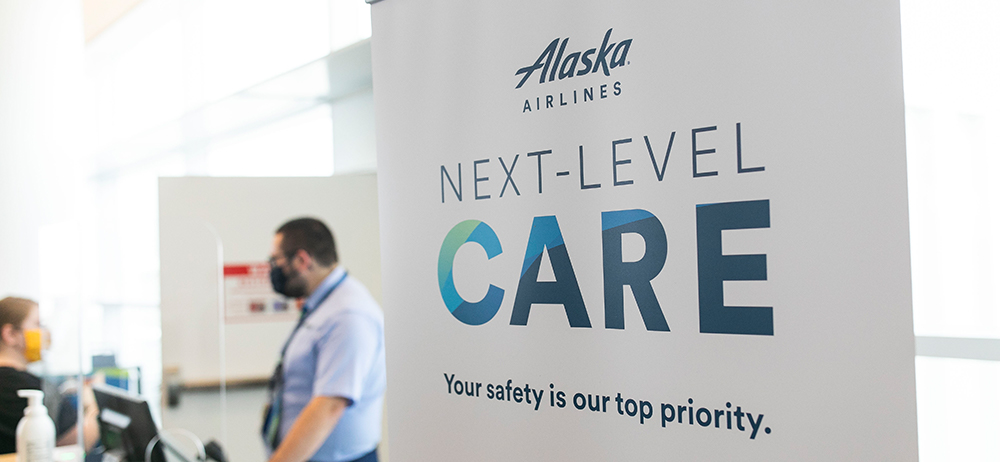
While Alaska is bringing you Next-Level Care, there are still things you can do to stay safe during your journey. According to the CDC, National Safety Council and World Health Organization:

  • Cover your mouth and nose with a cloth face cover when around others.
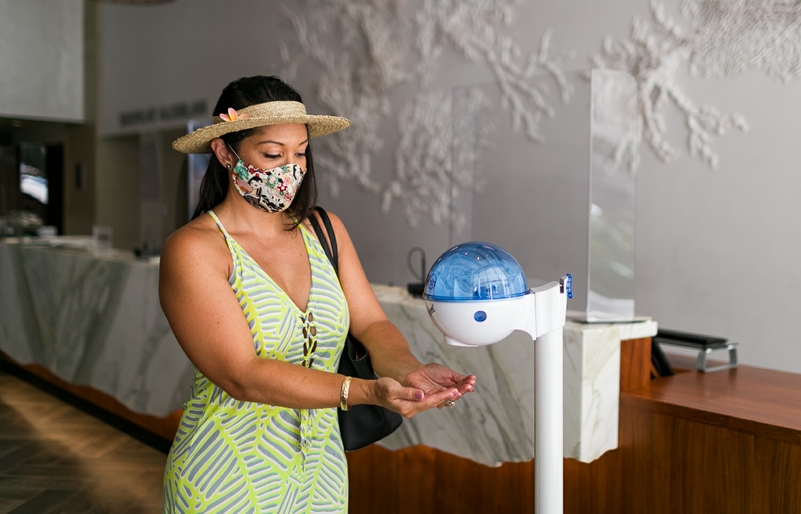
  • Wash your hands often – and thoroughly – with soap and water for at least 20 seconds, or use hand sanitizer (with at least 60% alcohol).
  • Avoid touching your nose, mouth and eyes.
  • Keep your distance, especially to those who are at a higher risk (older adults and people who have severe underlying medical conditions like obesity, diabetes, or heart or lung disease).
  • Clean and disinfect high-touch surface areas.

Some cities require COVID tests.

Keep in mind some places require a negative COVID test or quarantine. For instance, if you’re traveling from Las Vegas (which currently doesn’t have restrictions for incoming guests) to Maui or New York City—both Hawaii & New York State require incoming travelers to take a COVID-19 test 72 hours before travel or head straight to quarantine. You might also be asked to fill out a traveler health form, which will be collected at the airport upon your arrival. See the latest travel restrictions.

Know where to get tested.

Ask yourself if you know where to get a rapid test in your hometown or where to get one in the city you plan to visit? Even if you’re from a state that doesn’t require testing prior to re-entry, it’s better to be safe than sorry. Remember, you could still be positive yet show no signs or symptoms of COVID-19. So take a PCR or rapid test before you fly to protect fellow travelers and others around you. See Alaska’s testing partners.

Now’s not the time to let the universe make plans.

Spontaneity is a thing of the past—we get it, sometimes it’s great to let your hair down & make up plans as you go. But right now, it’s too risky. If you happen to be flying to a city, consider what’s open and what safety protocols are in place—and make reservations in advance. Outdoor dining and activities are ideal.

Sip & cover if you drink or eat.

While you’re technically allowed to remove your mask to eat or drink on board, studies have shown wearing a mask is the best way to limit the risk of COVID-19. We recommend you sip & cover—when you’re done with your bite and/or had a refreshing sip reapply your mask for your safety and others around you. If your flight is relatively short (give or take five or six hours) try eating a hearty meal before you board & save for a smorgasbord when you land.

Utilize technology for a touch-free experience.

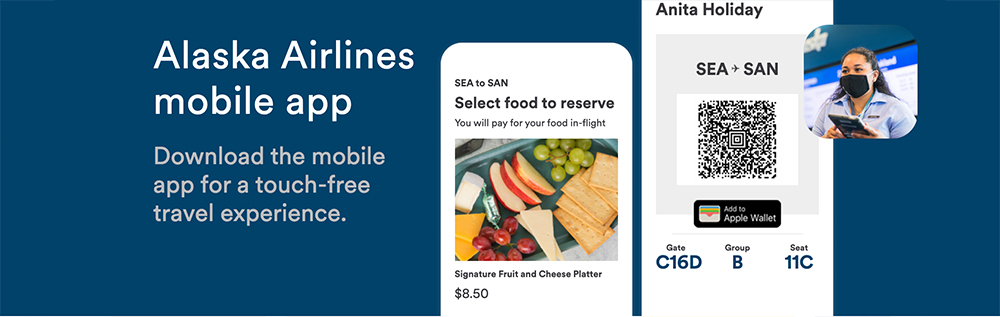
You don’t need a printed boarding pass anymore or to check your bags at a counter—simply download the Alaska Airlines app to get convenience at your fingertips. The Alaska app offers the following perks:

  • Check in and get your mobile boarding pass
  • Select and change your seats
  • Prepay for checked baggage
  • Print your own bag tags
  • Pre-order food and beverages on select flights
  • Check your flight status
  • Change your reservation
  • Get boarding notices and other travel updates
  • View and manage your travel receipts
  • Track your Mileage Plan™ balance
  • Join/Sign in Mileage Plan

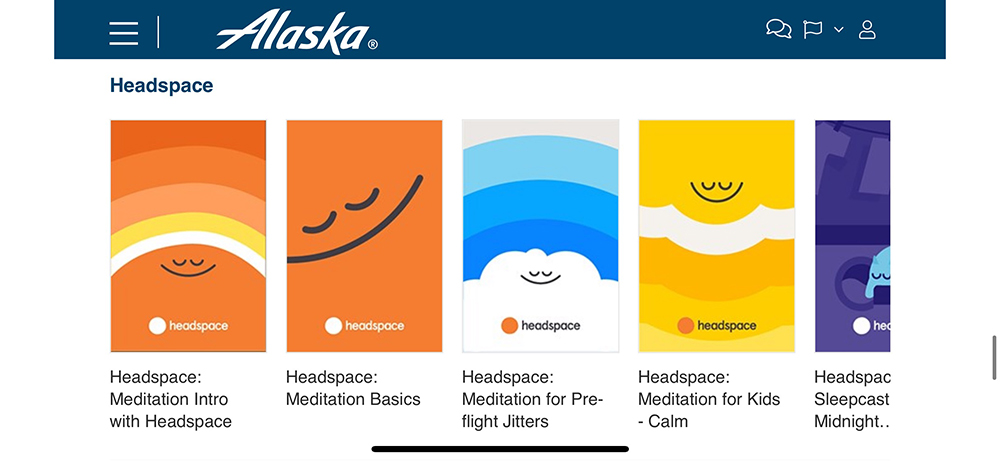
Have anxiety? Alaska offers Headspace meditation.

Sit back, relax and ease your mind on any Alaska flight with Headspace, a feature on our inflight entertainment. There are sessions for kids, sleep and more to give you moments of mindfulness and casts to wind-down.

Mask up. Book now. Let’s go.

We believe it’s safe to fly––and experts agree. Our commitment to Next-Level Care means we’ve implemented 100+ ways to maintain the highest standard of safety throughout your travels, including mask requirements, enhanced cleaning, hospital-grade HEPA filters onboard and no change fees. Book your next adventure today at alaskaair.com.

Have more questions? Here are 10 Qs you might have about traveling again.

Hawaiian Airlines Reinforces Commitment to Effortless Travel with Pre-Clear Program

HA High Res Logo_mid

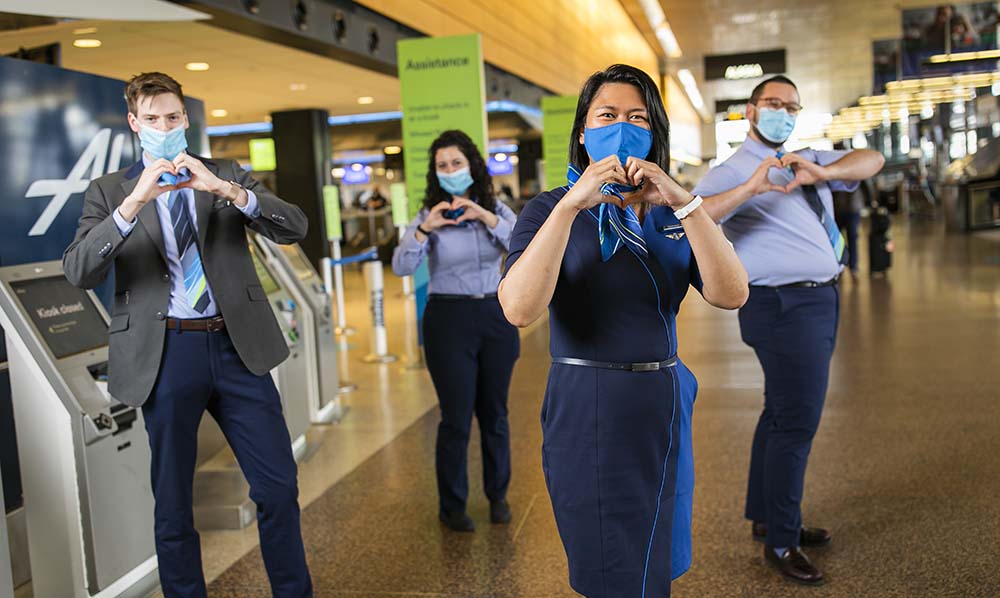
HONOLULU – Hawaiian Airlines has begun pre-clearing guests departing from select U.S. mainland cities to Hawai‘i under a program allowing travelers with a negative COVID-19 test to bypass the airport screening in Hawai‘i.  

Hawaiian, which launched its Pre-Clear Program at San Francisco International Airport (SFO) last week, will expand it to Boston Logan International Airport (BOS), John F. Kennedy International Airport (JFK) Long Beach Airport (LGB) and Phoenix International Airport (PHX) beginning Jan. 29. The program will be added to the airline’s remaining North America destinations next month.

Visitors and returning Hawai‘i residents who meet the state of Hawai‘i’s pre-travel testing requirements to be exempt from quarantine will receive a Pre-Clear wristband from a Hawaiian Airlines guest service agent who will verify their documents prior to boarding. To qualify for pre-clearance, guests must complete the following steps:

  • Create a Safe Travels account for every adult on the itinerary.
  • Add all flight and lodging information to the account.
  • Complete the mandatory health questionnaire within the account.
  • Upload a negative test result (PDF format) from a state-approved testing partner to the Safe Travels account. A printed copy of the negative results is also recommended.
     

“With the Pre-Clear Program, our guests will spend less time in line at the airport and more time safely enjoying Hawai‘i,” said Jeff Helfrick, vice president of airport operations at Hawaiian Airlines.

Travelers whose negative COVID-19 test results are not uploaded to the Safe Travels app prior to departure or not made available during screening will be required to sign the state of Hawai‘i’s 10-day self-quarantine agreement.

About Hawaiian Airlines

Hawaiian® has led all U.S. carriers in on-time performance for each of the past 16 years (2004-2019) as reported by the U.S. Department of Transportation. Consumer surveys by Condé Nast Traveler, Travel + Leisure and TripAdvisor have placed Hawaiian among the top of all domestic airlines serving Hawai‘i.

Now in its 92nd year of continuous service, Hawaiian is Hawai‘i's biggest and longest-serving airline. In 2019, Hawaiian offered nonstop flights between Hawai‘i and more U.S. gateway cities (13) than any other airline, along with service connecting the islands with Japan, South Korea, Australia, New Zealand, American Samoa and Tahiti. As a result of the COVID-19 pandemic, Hawaiian is offering an adjusted schedule of daily flights within the Hawaiian Islands, and between Hawai‘i and the U.S. mainland as well as Japan and South Korea.

The airline is committed to the health and safety of its guests and employees and has reinforced enhanced cleaning procedures across its business. While the experience may be a little different, the authentic Hawaiian hospitality remains unchanged. Additional details on how Hawaiian is keeping guests and employees safe can be found at HawaiianAirlines.com/KeepingYouSafe.

Hawaiian Airlines, Inc. is a subsidiary of Hawaiian Holdings, Inc. (NASDAQ: HA). Additional information is available at HawaiianAirlines.com. Follow Hawaiian’s Twitter updates (@HawaiianAir), become a fan on Facebook  (Hawaiian Airlines), and follow us on Instagram (hawaiianairlines). For career postings and updates, follow Hawaiian’s LinkedIn page.

For media inquiries, please visit Hawaiian Airlines’ online newsroom.


Hawaiian Holdings Announces 2020 Fourth Quarter and Full Year Conference Call

HA High Res Logo_mid


HONOLULU , Jan. 19, 2021 /PRNewswire/ — Hawaiian Holdings, Inc. (NASDAQ: HA), parent company of Hawaiian Airlines, Inc. ("Hawaiian"), plans to report its fourth quarter and full year 2020 financial results after the market closes on Tuesday, January 26 , 2021.  An investor conference call is scheduled for 4:30 p.m. Eastern Time that day.

The call will be open to all interested investors through a live audio webcast accessible in the Investor Relations section of Hawaiian's website at HawaiianAirlines.com . For those who are not able to listen to the live webcast, the call will be archived for 90 days on Hawaiian's website.

About Hawaiian Airlines

Hawaiian ® has led all U.S. carriers in on-time performance for each of the past 16 years (2004-2019) as reported by the U.S. Department of Transportation. Consumer surveys by Condé Nast Traveler , Travel + Leisure and TripAdvisor have placed Hawaiian among the top of all domestic airlines serving Hawai'i.

Now in its 92nd year of continuous service, Hawaiian is Hawai'i's biggest and longest-serving airline. In 2019, Hawaiian offered nonstop flights between Hawai'i and more U.S. gateway cities (13) than any other airline, along with service connecting the islands with Japan , South Korea , Australia , New Zealand , American Samoa and Tahiti. As a result of the COVID-19 pandemic, Hawaiian is operating an adjusted schedule of daily flights within the Hawaiian Islands and between Hawai'i and the U.S. mainland as well as Japan and South Korea .

The airline is committed to the health and safety of its guests and employees and has reinforced enhanced cleaning procedures across its business. While the experience may be a little different, the authentic Hawaiian hospitality remains unchanged. Additional details on how Hawaiian is keeping guests and employees safe can be found at HawaiianAirlines.com/KeepingYouSafe .

Hawaiian Airlines, Inc. is a subsidiary of Hawaiian Holdings, Inc. (NASDAQ: HA). Additional information is available at HawaiianAirlines.com . Follow Hawaiian's Twitter updates ( @HawaiianAir ), become a fan on Facebook ( Hawaiian Airlines ), and follow us on Instagram ( hawaiianairlines ). For career postings and updates, follow Hawaiian's LinkedIn page.

For media inquiries, please visit Hawaiian Airlines' online newsroom .

Cision View original content to download multimedia: http://www.prnewswire.com/news-releases/hawaiian-holdings-announces-2020-fourth-quarter-and-full-year-conference-call-301211090.html

SOURCE Hawaiian Holdings, Inc.
MLK’s legacy inspires Alaska employee nearly 60 years later

Dr. Martin Luther King Jr. impacted Hilda Shepherd’s life before she was even born.

Fifty-seven years ago, Shepherd’s mother, Georgia, an accountant at the Pentagon, joined 250,000 people in front of the Lincoln Memorial to hear Dr. King deliver his “I Have A Dream” speech. Shepherd will always remember her ‘silently strong’ mother telling her about the experience of that moment.

“It’s something that will be a legacy in my family. We show up,” said Shepherd. “I’m proud of her. I hope my grandchildren can say ‘my great grandmother, my grandmother stood up for equality and I will too.’”

Hilda Shepherd poses for a portrait with her mom and brother-in-law in Anchorage, Alaska.

Born in the 1920s, Shepherd’s mother lived through some of the more difficult times in our history. Nearly two years after Dr. King’s speech at the March on Washington, segregation ended and Black Americans were given the right to vote. Dr. King’s words sparked not only hope in Shepherd’s mother that day but made a lasting impression on Hilda.

“It was just as important then as it is now,” Shepherd said. “For Black Americans to continue to strive for equity. It’s really important for the survival of our race to make sure that people understand that there are inequities. There are injustices.”

Shepherd has spent a lot of time reflecting this year. Thinking about where we’ve been and where we have to go.

“It’s been a very tender time in our society … This MLK 2021—the celebration of what he has done for us—means more for me then it ever has before because of all the things and emotions that have been stirred up in our country’s unrest and division this past year,” she said.

Shepherd began her career at Alaska Airlines in 1999 as a customer service agent in Anchorage, Alaska. She later transferred to Oakland, California, where she trained to become an aircraft mechanic. She continues to be a leader and pushes for diversity and racial equity within the company.

“You have to have a dream,” she said. “If you don’t have a dream, you won’t work as hard to make things happen.”

Hilda lined up with her eldest daughter and niece at midnight to get a front row spot for President Obama’s first inauguration. They waited for 16 hours in the cold to experience the historic moment of the first Black president being sworn into office. Hilda likens this experience to the one her mother witnessed many years prior at Dr. King’s speech. “It was a full-circle moment,” she said.
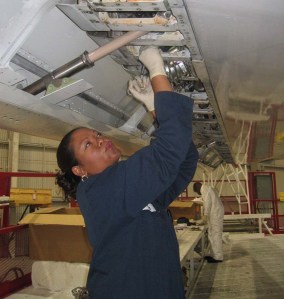
Hilda working on an aircraft when she was a mechanic.

After several years of working as an aircraft mechanic, Shepherd transferred to station operations, where she leads a behind-the-scenes team whose goal is to keep the operation running smoothly. She says a key to being a good leader is to make it easier for your team to be successful by removing obstacles—a crucial part of building racial equity in a company.

“We have to continue to make sure to honor Dr. King and the life that he led. We have to continue to strive for advancement. We’re not asking for anything above and beyond,” said Shepherd. “We’re just asking for basic human dignity and decency. Please respect and treat and honor us and create laws that say we are equal Americans. That’s all that anyone has ever asked for—nothing more, nothing less.”

At Alaska, we’ve been listening to and learning from our employees, reflecting – and taking a hard look and sharing our commitments to advance racial equity and justice at our company and in our communities. Shepherd and other leaders at Alaska recognize there is still a lot of work to be done, but we are taking steps with policies, education and training, recruiting, and community partnerships, and we recognize that it is a journey.

“We have a better point of view when we have a more diverse team,” she said. “If you have all one mindset, you can’t move the needle.”

Hilda Shepherd at her desk in Seattle.

“I don’t want the dream to ever die. I want the generations behind me to know how important it is to exercise their rights, their votes. To continue to strive for equality—to be treated as one would want their own to be treated,” Shepherd said. “For as long as I live, I’ll show up and keep spreading his message.”

Alaska’s D&I leaders pay tribute to Martin Luther King Jr.’s life and legacy

As we celebrate and honor the legacy of Dr. Martin Luther King Jr., Alaska Airlines employees came together to create this powerful 4-minute video, reading a passage from Dr. King’s 1963 speech to a crowd of 250,000 in front of the Lincoln Memorial. It continues to serve as a powerful reminder that we can all make a lasting impact on those around us.

The best places to visit in the U.S. right now, all an easy nonstop flight away

For those who are looking to explore the beautiful USA *safely*, this is for you!

We’ve rounded up some destinations that offer wide-open spaces where you can wanderlust and explore at a distance. As you plan your trip, keep in mind COVID restrictions are constantly changing—some things may be closed and some communities might require quarantining. Before you go, triple check travel advisories.

While many destinations around the world are still off-limits, regional travel remains open and is doing so with health and safety protocols in place, which bodes well for those who want to travel in 2021. Alaska Airlines is also doing its part by implementing safety procedures that help our guests and employees travel confidently and easily.

California

California is brimming with beauty and your options for exploring are endless. From road tripping along the coast to visiting some of the most iconic national parks (hello, Big Sur?) to sipping vino (not in your kitchen).

If you’re looking for a change of scenery, the Pacific Coast Highway has breathtaking ocean views all along the drive with stretches where it’s just you and mother nature. Fly to: San Francisco, San Luis Obisbo, Los Angeles or San Diego.

Fun fact: If you’re lucky, just off Highway 101 on Davison Road, you might find a meadow full of wild Elk!

Surrounding yourself among the trees is also an option with the Redwood Forest! Fly to: San Francisco or Medford (technically, Oregon but it’s another great starting point).

The Bixby Creek Bridge is also featured in HBO’s Big Little Lies.

Speaking of views you can get at a distance, nestled on the rugged central coast of California is Big Sur, one of the best big little secrets of Monterey County. Fly to: Monterey or San Jose.

Pro tip: Wine flies free on Alaska Airlines. Yes, you heard that right (chef’s kiss).

There’s always Napa and Sonoma for anyone 21+ who wants to unwind (uncork) in wine country. Fly to: Santa Rosa/Sonoma County or Sacramento.

Oregon

If you love rugged coastlines and vast forests, Oregon is the place for you. There are plenty of great escapes to peak your interest and falls to wash away any worries. Camping (or glamping, no judgment here) is also an easy to-do, just secure your spot ahead of time. Fly to: Portland, Eugene, Medford or Redmond/Bend.

Hawaii

If you’re able to work from home, why not make paradise your office for a week or two? It’s stunning beaches, local shops and assurance that visitors are COVID-negative upon arrival sounds like the place to be! Fly to: Maui, Kona or Honolulu.

Before you say aloha, learn about Hawaii travel.

Alaska

Visit the state where our airline got its roots. Packed with small towns and rich history, this vast, beautiful state will leave you wanting more. Being the largest and most sparsely populated state in the U.S., you can bet to find gems like Ketchikan or Cordova, and potentially a glacier or two! Fly to: Anchorage.

Washington

As our hometown state, Washington is an incredible escape from it all. We might be a little biased but you can’t beat coffee shops on every corner and the city combo of water and greenery. Plus, boundless bike paths, gorgeous mountain hikes and kayaking Puget Sound are just minutes away. Fly to: Seattle.

Book now at alaskaair.com. Mask up. Let’s go!

10 Qs you might have about traveling again

All of us at Alaska are here to bring you the best care in the air—and answers to your burning travel questions—check out our tips so you can travel well and plan those long-awaited trips for spring and summer!

1. Should I wait to get the vaccine before taking a trip?

If you’re able to get vaccinated for COVID-19, we highly encourage you to do so. However, Alaska Airlines does not require it. Before your flight with us, you will be asked to fill out a health agreement, which simply confirms you will wear a face covering on board/at the airport and that you have not shown any COVID symptoms in the past 72 hours and have not been in proximity to someone who has tested positive.

2. What is the safest type of trip to plan right now?

Wherever you’re planning to go, Dr. John Lynch from UW Medicine says it’s important to protect yourself & others by wearing a mask, avoiding large crowds and washing your hands often. Also, double check any special travel rules in place for the destination.

According to the International Air Transport Association (IATA), flying remains one of the safest travel alternatives during the pandemic. Adding multiple layers of safety are key to combat the virus—i.e. Alaska’s Next-Level Care—which includes mask-wearing, rigorous cleaning programs and strong air circulation.

3. Am I more at risk sitting next to someone on a plane?

While it seems like sitting on a plane with other people could be risky, analysis of air travel shows viruses don’t spread easily on aircraft because of a number of things. One study concluded people wearing masks have a near zero (0.003%) chance of contracting COVID-19—even while seated next to someone.

You’ve covered by:

  • High air exchange rates (fresh air every 2-3 min in the cabin)
  • HEPA filtration
  • Forward faced seating
  • High-back seats
  • Mask-wearing *this one is SUPER important*
  • Enhanced cleaning
  • Contactless features (pre order meals, mobile boarding pass)
  • Complimentary sanitizer

4. What if I tested positive for COVID-19 or recently recovered from the virus? Can I still fly on Alaska Airlines?

For your safety and for the safety of others around you, guests who have exhibited COVID-19 symptoms 72 hours before their flight or who have been in close proximity to someone who has tested positive are not allowed to fly with us. This is for the safety of all guests and employees. Our current Peace of Mind waiver covers change and cancellation fees for all flights booked through March 31, 2021.

For those who have recovered from the virus (yay!) you are welcome to fly with us after the CDC-recommended quarantine period has passed: 10 days after a positive test or symptom onset, no fever for 24 hours, and all other symptoms not getting worse.

5. I don’t like tests. Do I need a COVID test before I fly?

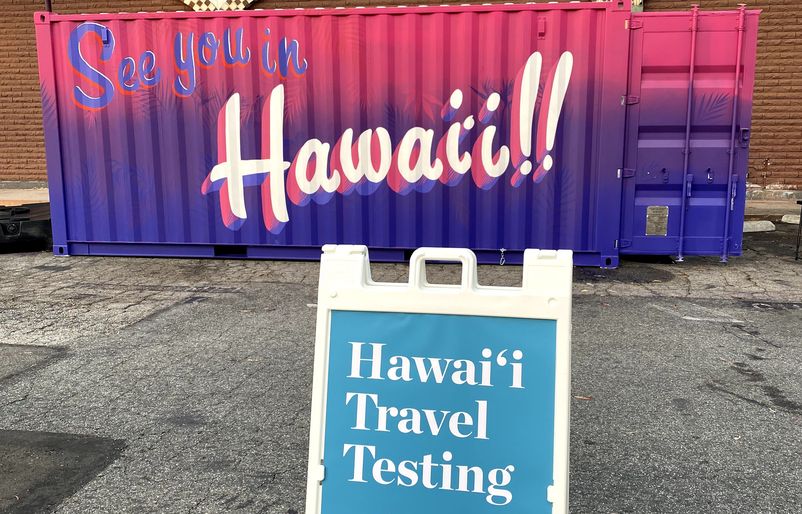
It depends. Some of your favorite destinations, including Hawaii, Alaska, Chicago and New York, require negative Covid-19 test results taken no more than 72 hours before your flight, or you’ll need to comply with a 10-day self-quarantine. Be sure to schedule your test early, as appointments fill up in advance. Find a testing location.

6. I can’t fly without snacking, can I still eat or drink on board?

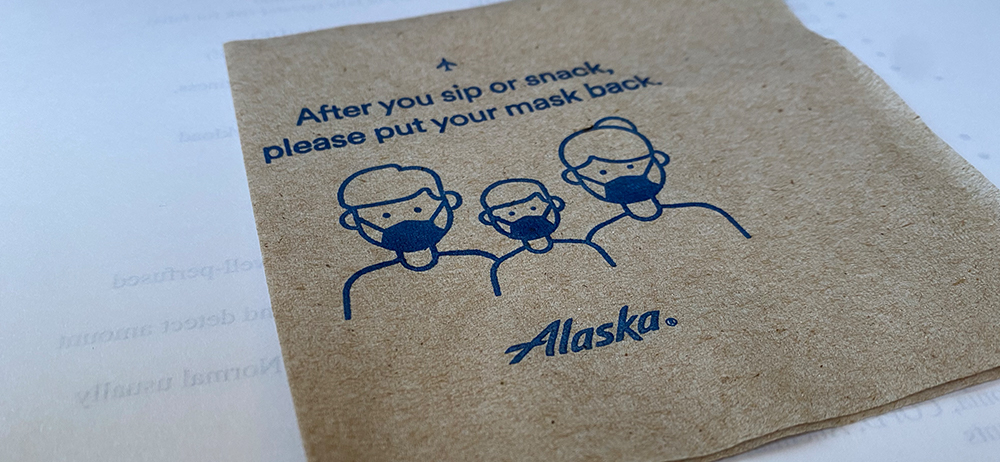
Yes! We don’t want any hangry or parched passengers. We just kindly ask, after you sip or snack, please put your mask back.

7. So, masks. Does everyone have to wear them? Can I take mine off in my seat?

No mask? No travel. Per our policy, Alaska guests must wear a cloth face mask or covering for the entire flight, including boarding and deplaning. Your mask or face covering must cover your nose and mouth—and cannot have valves, mesh material or holes of any kind.

Exceptions apply only to children under the age of two (in alignment with CDC age guidelines). Guests who repeatedly refuse to wear a mask or face covering will be given a final warning—in the form of a yellow card—and may be suspended from flying with us for a period of time. Read more about our mask enforcement.

8. How is the quality of Alaska’s cabin air?

The cabin air is very clean and safe, says Josh Nice, the Director of Quality Assurance at Alaska Airlines. We have one of the newest fleets in the country which means our planes have the latest air filtration technology. Our planes are equipped with two hospital-grade HEPA filters that remove 99.95% of airborne particulates. There is a full exchange of cabin air with outside and HEPA-filtered air every 2–3 minutes and 100% fresh air every 6 minutes. Learn more.

9. You sure we can trust the cleaning of aircraft and airports?

Our planes have never been cleaner, says Nice. Alaska’s enhanced aircraft cleaning procedures exceed CDC cleaning guidelines and was developed/validated with infectious diseases experts at UW Medicine. We’re taking cleaning to the next level to reduce the already low risk of onboard transmission. Here’s how:

Onboard
Between every flight, we’re using high-grade EPA disinfectants and electrostatic disinfectant sprayers to sanitize the most critical areas (overhead bins, armrests, tray tables, seatbelts, lavatories, etc).

Please note: If you wipe the leather seat with your own cleaning wipe, the blue leather dye color may come off. This doesn’t mean it’s dirty, it’s the active ingredient that is causing the color to come off on the wipe.

At the airport
We’re working closely with airport services to ensure the highest level of cleanliness. We’ve instituted a cleaning program for the check-in lobby counters and gate counters where the surfaces are wiped down with a disinfectant more frequently.

10. It’s been almost a year since I traveled. What’s it like now?

Travel is a little different but Alaska has thought through every step of the way—from booking to boarding, and beyond—and implemented nearly 100 ways to keep you safe.

Here are some travel tips:

  • Pack enough masks and hand sanitizer. TSA now allows you to bring one 12 oz. bottle in your carry-on until further notice.
  • Masks must be worn at all times (except to briefly eat/drink).
  • Prep ahead of time to minimize interactions at the airport:
  • Check in online or via Alaska’s mobile app.
  • Print bag tags from home or with Alaska’s app at any airport self-service kiosk.
  • Fill out applicable health forms or requirements (per the destination you’re traveling to, i.e. Hawaii).
  • Security checkpoints will be as contactless, spread out and efficient as possible.
  • Expect deeper and more frequent cleaning of surfaces at airports and on Alaska aircraft.
  • You’ll probably notice floor decals to maintain distancing, hand sanitizer stations and plexiglass dividers at counters.
  • Catering procedures on board will be simplified to lower crew movement and interactions between guests.
  • Please remain calm & respect physical distancing when boarding/exiting the aircraft, at baggage claim and customs.

We’re all in this together and can’t wait to travel with you!

Book now at alaskaair.com. Mask up. Let’s go!

A Year of Giving and Persevering: Recapping 2020 at Hawaiian Airlines

As we bid aloha to 2020 and reflect on the exceptional hardships and challenges it brought upon so many of us at Hawaiian Airlines, the year will forever stand out as a time when our ‘ohana proved what it means to be Hawaiʻi’s hometown carrier.

“What I want to remember from 2020 is how we distinguished ourselves as Hawai‘i’s airline despite, or even because of, the adversity we faced,” Hawaiian Airlines President and CEO Peter Ingram told employees in a company message. “Let 2021 be our year of lōkahi (unity) and poʻokela (excellence). To recover and thrive again, we must succeed as a team and strive for excellence. Opportunity is everywhere: from your role, to your team, to our guests, to the broader planning and strategy work. Let’s keep finding opportunities to make this a healthy and bright new year.”

While last year presented our business and the airline industry with unprecedented obstacles, it was also a time of philanthropy, community engagement and innovation. We implemented enhanced cleaning procedures at every travel stage, added a new health form to our check-in process and began offering our guests convenient pre-travel COVID-19 testing options. And while we’ve adjusted our services, we still fly with the same award-winning ho‘okipa (hospitality) we’re known for. 

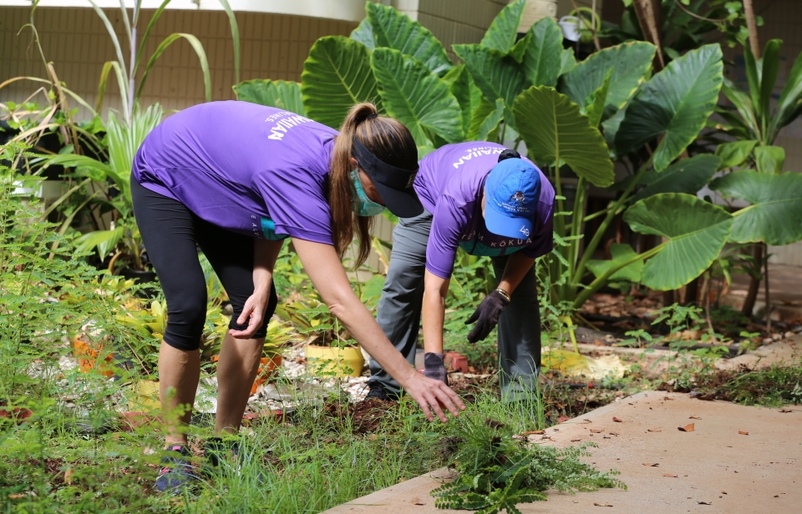
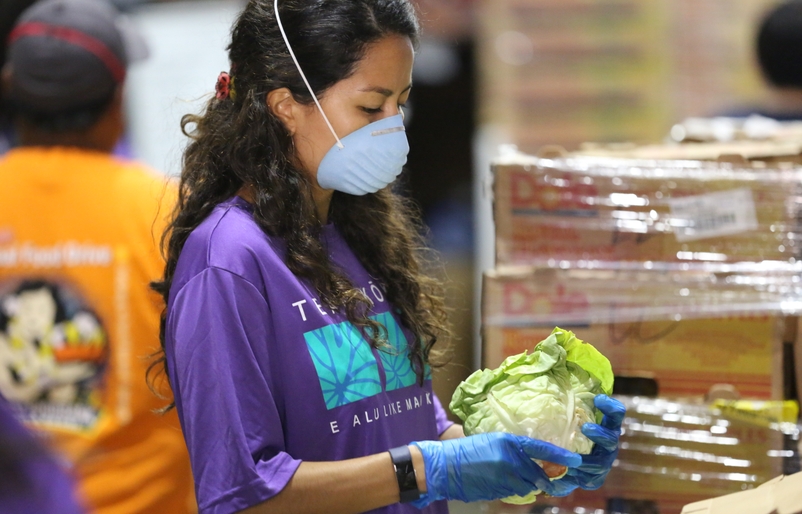
On the ground, 1,510 members of our airline ‘ohana volunteered 6,506 hours to Hawai‘i-based organizations through our Team Kōkua employee giving program. They distributed boxes of donated foods and household goods, packed and delivered meals to kupuna (elderly), refreshed public schools and painted vibrant campus murals. In addition to sweat equity, Team Kōkua organized the equivalent of approximately $144,500 in employee-sponsored donations, ranging from travel and HawaiianMiles to cash contributions benefiting hundreds of nonprofits throughout the state. 

Elisa Asato HFB


We are grateful for the generosity of our loyalty members who gave 10.3 million miles through the HawaiianMiles charity program, including 1.3 million miles raised during our special Giving Tuesday promotion. We matched 8.4 million miles, resulting in a total year-end donation of 18.7 million HawaiianMiles for 14 local charities.


These are all shining examples of our company’s values in action that we will continue throughout our recovery. Join us as we recap some of our airline’s proudest accomplishments in perpetuating our role as Hawai‘i’s hometown carrier.


Answering the Call to Help Our Guests

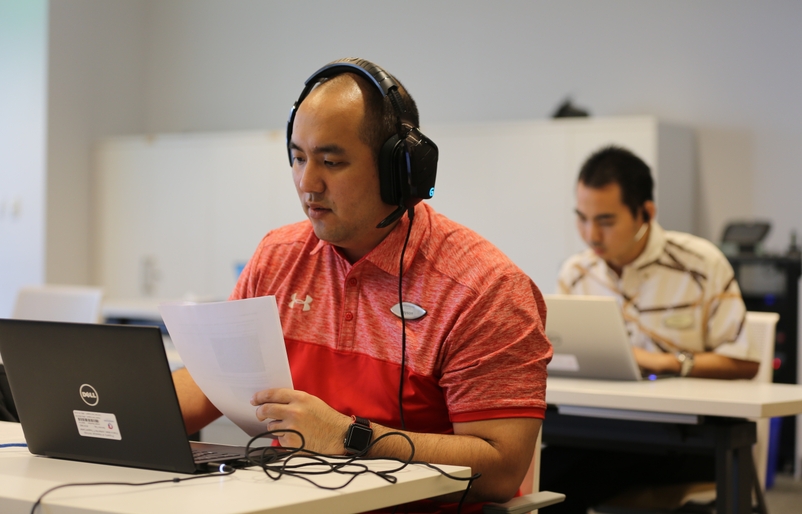
As the COVID-19 pandemic abruptly derailed vacations, weddings, honeymoons, family reunions and other Hawai‘i travel, our Hawaiian Airlines ‘ohana came together to support tens of thousands of guests with their reservations. In March, to manage a rapid influx of guest inquiries, our information technology, customer contacts, project management and facilities teams worked around the clock to set up a supplemental contact center at our Honolulu headquarters. 

reservations


Hundreds of employees from across the company – from airport operations and procurement to network planning and executive leadership – picked up the phone or reached out via our social channels to assist guests promptly. Volunteers clocked in thousands of hours each week, answering inquires, messaging guests via text and our mobile app, replying to emails and assisting with back-office processes.


Giving New Life to Our Soft Goods and Inflight Catering 

As we began suspending much of our flying, our product development and in-flight teams assessed inventory of unused cabin items, including blankets, pillowcases, slippers, mattress pads and amenity kits, to find them new homes and help vulnerable members of our community.

truck


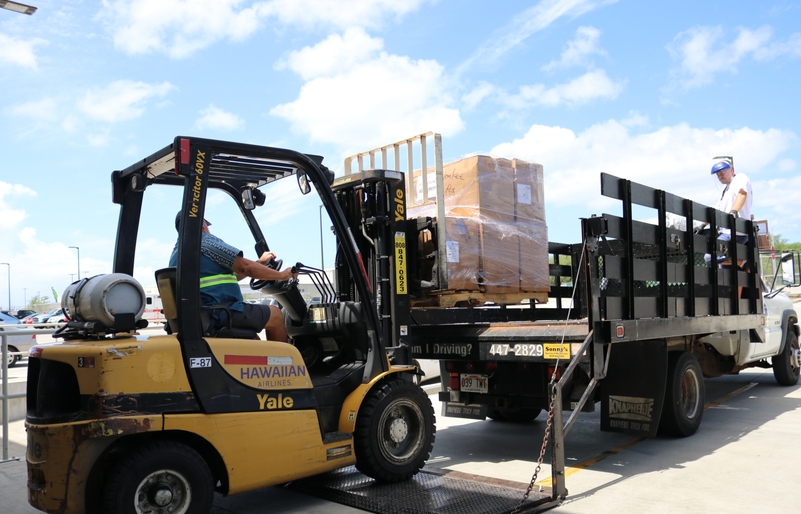
Since March, our airline has distributed over 10,300 fleece Main Cabin blankets, 177,000 Main Cabin pillowcases, 86,400 Main Cabin amenity kits, 600 Business Class pillowcases, 23,400 Business Class slippers, 2,199 Business Class mattress pads and 16,630 Business Class and Extra Comfort amenity kits to 12 local nonprofit organizations. A donation of 290 earbuds was also made to O‘ahu students who didn’t have dependable internet access for at-home learning and relied on schools' temporary, socially distanced learning labs.

donation


Over $472,000 worth of catering goods, ranging from new hand towels and condiments to soft drinks and packaged foods, were donated to nonprofits in Hawai‘i and throughout our U.S. mainland network. 


Getting Medical Professionals Where They Need to Be

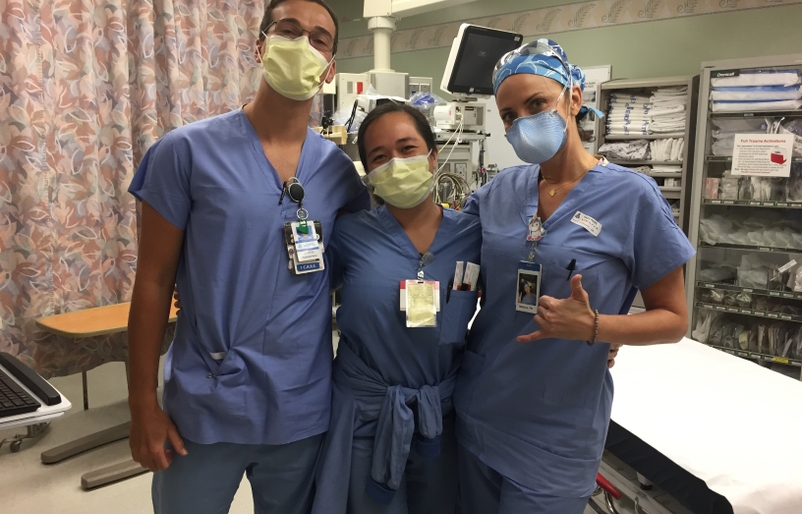
In April and May, we were honored to support Hawai‘i’s medical workers, including doctors, nurses, assistants and volunteers who boarded nearly 600 complimentary Neighbor Island flights while traveling throughout our islands to conduct testing and deliver care.

Queens2

The All-Hands-On-Deck Cargo Flight for Masks

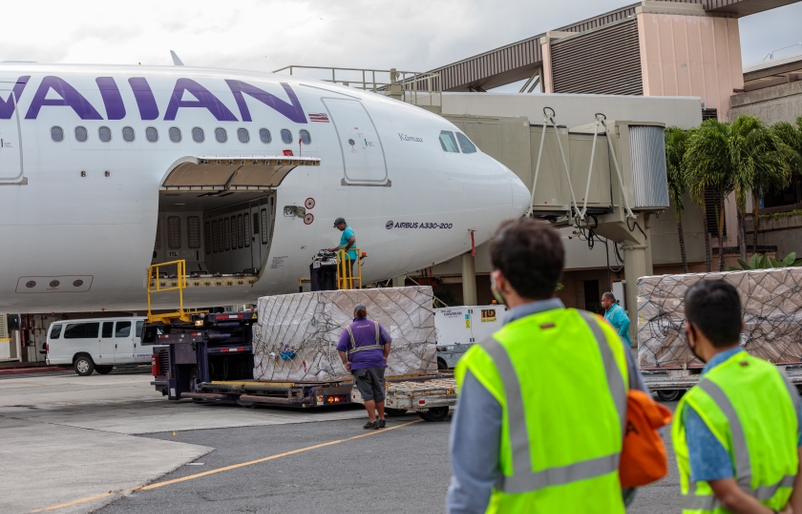
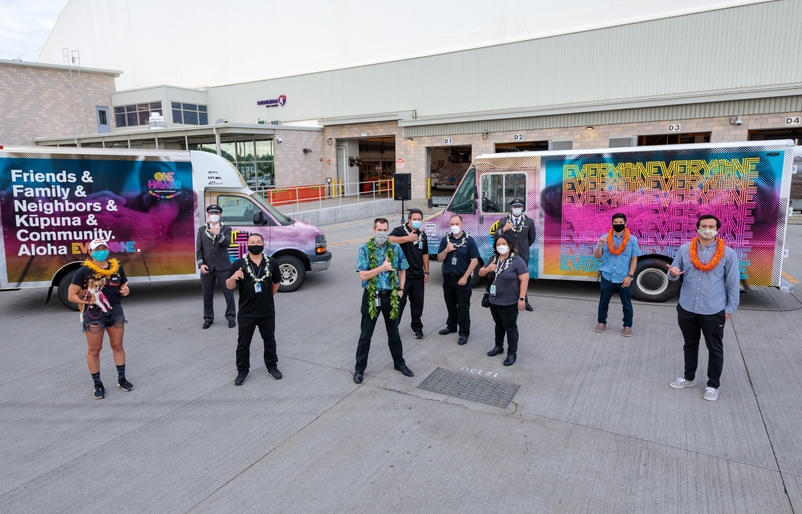
When local grassroots organization Every1ne Hawai‘i wanted to bring 1.6 million face masks to Hawai'i residents back in April, they turned to our airline to transport the shipment to Honolulu (HNL) from Shenzhen (SZX), China. Working with local organizations and vendors, the group acquired the protective gear directly from factories in China for distribution via a fleet of “mask mobiles” and a “mask marketplace” at City Mill locations. As the hometown carrier, we welcomed the humanitarian mission with open wings.  

Unloading HNL


On April 18, four pilots, two mechanics and two airport operations employees boarded our charter aircraft and departed HNL for Incheon (ICN), South Korea, where the crew rested before continuing to Shenzhen. The plane made its celebrated return to HNL on Tuesday, April 21, when the face masks were loaded into Every1ne Hawai‘i vans and distributed to communities statewide. 

HA and Every1ne Hawaii


Mālama Hawai‘i’s Public Schools

When the Hawai‘i State Department of Education (HIDOE) announced the August reopening of public schools with new COVID-19 protocols, we unveiled the Kōkua Our Schools program. The initiative, which kicked off in June in partnership with City Mill and POW! WOW! Hawai‘i, drew 385 Team Kōkua volunteers who put on their face masks and rolled up their sleeves to help six campuses across O‘ahu, Maui and Kaua‘i with various maintenance jobs ahead of the fall semester.

Maunawili 3


Thus far, these projects have amounted to over 2,400 hours of labor so educators could focus on providing a safe, COVID-conscious learning environment.


Kōkua for Returning College Students

This summer, our airline provided travel assistance to thousands of college students as they prepared to return to Hawai‘i and move within the islands for the fall semester. Under a travel assistance program, students registered for fall classes at Chaminade University, Hawaii Pacific University (HPU) and the University of Hawai‘i (UH) could take advantage of discounted fares and two complimentary checked bags. 


Dedicated Testing Partnerships 

After the September launch of the state of Hawai‘i’s Safe Travels program, we began to establish a dedicated network of laboratory partnerships aimed at making pre-travel COVID-19 testing seamless and accessible for our guests. 

IMG_8084


Our growing testing network offers travelers taking a long-awaited Hawai‘i vacation or kama‘āina (residents) returning home convenient drive-through, walk-up and at-home COVID-19 test options. The result: our guests can bypass the state of Hawai‘i quarantine and safely enjoy the islands from the moment they arrive. To learn more about our testing partners and options, click here


Ready, Set, Holoholo

In October, we launched the Holoholo Challenge, a virtual fitness experience that encouraged the public to holoholo (to go out) during a time of isolation and disconnection. Over 12,000 participants chose between two courses, the 50-mile Mauka-to-Makai (mountainside-to-oceanside) or 130-mile O‘ahu perimeter, to holoholo in their own time and state while practicing safe social distancing.

20200905_020620000_iOS 1


Collectively, participants, including 20 Special Olympics Hawai‘i athletes and coaches sponsored by Hawaiian Airlines, clocked in approximately 852,700 miles (equivalent to trekking around Oʻahu more than 6,500 times) and raised over $68,000 for Special Olympics Hawai‘i.


Travel Pono

As Hawai‘i’s hometown carrier, we recognize the responsibility we have to steward our guests as they travel to, from, and between the Hawaiian Islands. We launched our Travel Pono campaign, a community-integrated effort to remind travelers to travel pono during this new era of exploration. 

hawaiianairlines-web-preview-314


What does travel pono mean? Debbie Nakanelua-Richards, director of community and cultural relations at Hawaiian Airlines, explains, “Pono, like ‘aloha’, embodies many important meanings. When we specifically say travel pono, we are asking others to travel responsibly and thoughtfully. We are ready to welcome our guests back, but we first ask for their kōkua [help] in taking the necessary steps that protect these islands and preserve its culture, natural resources and communities.”

Are you planning your visit to Hawai‘i soon? Click here to learn how you can travel pono while vacationing, visiting family or returning home.


Corporate Kuleana

To cap off 2020, we published our inaugural Corporate Kuleana Report outlining progress advancing a host of environmental, social and governance (ESG) initiatives. To read the full report, click here.


We wouldn’t be here without the support of our employees, partners and guests, and for that, we offer our sincerest mahalo.

Hauʻoli Makahiki Hou (Happy New Year),

from our ʻohana to yours.


Where to Travel Based on Your Zodiac Sign

IT’S A SIGN! Your next travel destination could be written in the stars! We joined forces with the @AstroTwins & Create Cultivate to help you figure out where you should go safely in 2021 based on your zodiac. Check it out now!

Fly Alaska, ski for free at stunning resorts

Did you know you can use your Alaska Airlines boarding pass to redeem incredible ski deals, including free lift tickets? Simply present your Alaska Airlines boarding pass and matching ID at any ticket office and ski free the day you arrive—but double check your destination’s quarantine rules!

Plus, we’re making it more affordable to fly with your gear too. Instead of charging oversize bag fees, skis and snowboards are treated as regular checked bags subject to our standard feesAnd don’t forget: Eligible Alaska Airlines Visa® cardholders get their first checked bag free, including their ski or board bag.

Here’s a look at the resorts offering deals for the 2020-2021 ski season. Please note: some regions have travel restrictions in place due to COVID-19.

Alyeska Resort

Photo courtesy of Alyeska Resort.

Fly to Anchorage (ANC) Flights from Chicago, Las Vegas, Los Angeles, Phoenix, Portland, Seattle, and Spokane

Alyeska Resort sits in the heart of Girdwood, a glacier-carved valley. To the west and north, the mountains of the Chugach State Park provide a stunning backdrop over Alyeska. Alyeska is an established ski destination known for its steep terrain and deep snowpack. With expansive mountain and ocean inlet views, Alyeska boasts an average 669″ of annual snowfall at the summit. Learn more.

Bogus Basin

Bogus Basin.

Fly to Boise (BOI) Flights from Seattle.

Bogus Basin is much more than a typical hometown ski hill. The nonprofit recreation area boasts 2,600 acres of skiable terrain, four high speed quad chair lifts, and night skiing until 10pm, seven days a week. True to its mission, Bogus Basin offers accessibility (the area is just 16 miles from downtown Boise, Idaho), and affordability. In addition to downhill skiing and riding, Bogus Basin has a Nordic Center with 37 kilometers of trails for skiing, snowshoeing and fat tire biking. Learn more.

Eaglecrest Ski Area

Photo courtesy of Eaglecrest Ski Area.

Fly to Juneau (JNU) Flights from Anchorage, Glacier Bay/Gustavus, Ketchikan, Petersburg, Seattle, Sitka, and Yakutat.

Eaglecrest is Juneau, Alaska’s community owned and operated ski area with big mountain terrain, 1620′ vertical drop, 640+ acres, impressive backcountry access, untracked powder, and hardly a lift line. Never heard of Eaglecrest? They’re a well-kept secret, but closer than you think. Downtown Juneau is only 15 minutes away, and there are daily flights from Seattle and Anchorage. Learn more.

Red Lodge Mountain

Photo courtesy of Red Lodge Mountain.

Fly to Billings (BIL) Flights from Seattle and Portland

Red Lodge Mountain is Montana skiing, pure and simple. No lift lines, no attitude, no big prices – just great snow, great people, and an authentic Montana experience. Located in south central Montana, Red Lodge Mountain boasts 2,400 feet of vertical and over 1,635 acres of groomers, glades, & chutes to explore. The laid-back atmosphere & small-town personality make the town of Red Lodge the “Coolest Ski Town You’ve Never Heard Of,” according to Business Insider. And with its rich history, scenic vistas, and quaint 6-block downtown, Red Lodge will capture your heart and leave you dreaming of your next visit. Learn more.

RED Mountain Resort

Photo courtesy of Red Mountain Resort.

Fly to Spokane (GEG)Flights from Anchorage, Boise, Portland, San Diego, and Seattle

Fiercely independent RED Mountain Resort delivers 3,850 acres of pristine skiing, putting us in Top 10 terrain territory in North America. With a new chairlift on Topping Creek, the skier flow and access to Grey Mountain is streamlined along with an additional 7 incredible intermediate runs over 300 acres of terrain. Read more.

Schweitzer Mountain Resort

Schweitzer Mountain Resort.

Fly to Spokane (GEG)Flights from Anchorage, Boise, Portland, San Diego, and Seattle

Considered by many as the best skiing in Idaho and the best family-friendly resort in the Pacific Northwest, Schweitzer Mountain Resort is independently owned and proud of it. Schweitzer ranks as one of the nation’s top winter destinations with 2900 acres of amazing terrain thanks to its two massive bowls and renowned tree skiing. Located in the rugged Selkirk Mountains of the northern Idaho panhandle, and only 80 miles from Spokane, WA , Schweitzer overlooks the town of Sandpoint, ID and offers breathtaking views of three states, Canada and the impressive Lake Pend Oreille. Read more.

Ski Marmot Basin

Photo courtesy of Ski Marmot Basin.

Fly to Edmonton (YEG) or Calgary (YYC) Flights from Seattle

Ski Marmot Basin is located 12 miles south of the authentic Canadian mountain town of Jasper, surrounded by 4,247 square miles of protected wilderness in Jasper National Park. Boasting the highest base elevation of any major ski area in Canada, the ski area receives consistent snow from mid-November to early May each season. Skiers and snowboarders can explore 91 runs and two terrain parks on 1,720 acres of perfectly groomed trails, powder-filled alpine bowls, and treed runs at one of the most uncrowded ski areas in North America. Read more.

Whitefish Mountain Resort

Whitefish Resort.

Fly to Kalispell/Glacier Park (FCA) Flights from Portland and Seattle.

Since 1947, Whitefish Mountain Resort has welcomed skiers and riders seeking a mountain that is uncrowded, beautiful, and affordable. Rising above the town of Whitefish, in beautiful northwest Montana, in the backyard of Glacier National Park (only 35 miles away), the resort charms its guests with a friendly fun-loving vibe, variety of terrain, and virtually no lift lines at an unbeatable value. Whitefish’s Big Mountain is the quintessential skier’s mountain averaging more than 300 inches of snow annually on 3,000 acres of bowls, chutes, and glades on all aspects. Read more.

Year in Review: Clean planes, remarkable service from our top-notch crew, here’s a poem bidding 2020 adieu

Though 2020 was far from what we expected,
Alaska did whatever we could to help keep people connected.

From putting on our dancing shoes and masking all of our crews.
We want to share our top moments with all of you.

We continue to stand up for what’s right.

ICYMI: In Palm Springs, we made an airplane shine bright.

We rocked new custom uniforms and holiday sweaters.

We announced more oneworld perks for our loyal jetsetters.

We learned how to pivot during a pandemic.

Protip: get your hands on our free sanitizing wipes—they’re organic.

Remember that special flight for a boy and his Dad?

Or the time our CSA gave her car keys to a stranger? That also made us glad!

We donated iPads and hockey sticks to youth.

And, don’t forget, we also flew the first Copper Salmon,

(we hear it pairs well with honey & vermouth).

You might also recall a familiar face above Seattle’s skyline.

And studies that showed it’s safe to fly was an excellent sign!

From zero to 30,000 feet, there’s HEPA- filtered, fresh air.

Our goal is to keep you safe with our Next-Level Care.

Make sure you wear a mask, unless you’re grabbing a bite.

And sit back, relax on your next Alaska flight.

Did you catch the news? Or the word on the street?

This year, we also announced plans to expand our MAX fleet.

We flew medical workers and the first of many COVID-19 vaccines.

If you liked Alaska’s “Safety Dance”music video, don’t forget to check out the behind-the-scenes.

This year, our planes may not have seen as many of you,

but they saw lots of essential goods and PPE too.

We also offered sweet deals like Russell’s touchdown discounts and Buy-One-Get-One-Free.

We shared tips for travel and what to do in Hawaii.

Alaska even planted trees and donated a million meals,

seeing all the good that can happen gives us all the feels.

For those of you who stayed at home, our Zoom backgrounds and couch getaways helped you explore.

We offered tips for long weekends, seeing the Northern lights and places for golfers to shout “FORE!”

We celebrated a year at Everett’s Paine Field.

And our partnership with the NHL in Seattle was revealed.

Before we bid 2020 adieu,

Please know that this is our commitment to you!

We’re here to make travel accessible and safe for everyone.

And we cannot wait for you to fly with us in 2021.

Most photos by Ingrid Barrentine.

Alaska and Kraken team up to donate hockey sticks to local youth

Talk about community GOALS! Alaska recently teamed up with the Seattle Kraken and Matt Griffin YMCA to spread holiday cheer with an equipment drive to help kids get excited about ice hockey.

Masked-up volunteers handed out nearly 200 hockey sticks and street hockey balls to families in the Seatac area through a drive-up system. Our hope is every child gets the chance to participate in and develop an interest in the sport.

Talk about community GOALS! Alaska Airlines teamed up with the the Seattle Kraken and Matt Griffin YMCA Saturday, December 12, 2020 to spread holiday cheer with an equipment drive to get kids excited about hockey.

“This was a fun, safe way to not only spread our Alaska holiday cheer, but to support the Seattle Kraken’s initiative of making the sport of hockey available to everyone, especially kids who may not have access to hockey previously,” said Ian Bremner, brand activation marketing manager.

There were also a lot of Kraken fans there to support.

Alaska Airlines has been an ongoing community partner and supporter of The Matt Griffin YMCA, which serves the SeaTac area by providing programming for the health and well-being of youth and their families.

Loading...