Hawaiian Airlines Ramps Up Hiring Efforts Ahead of Summer Travel Season

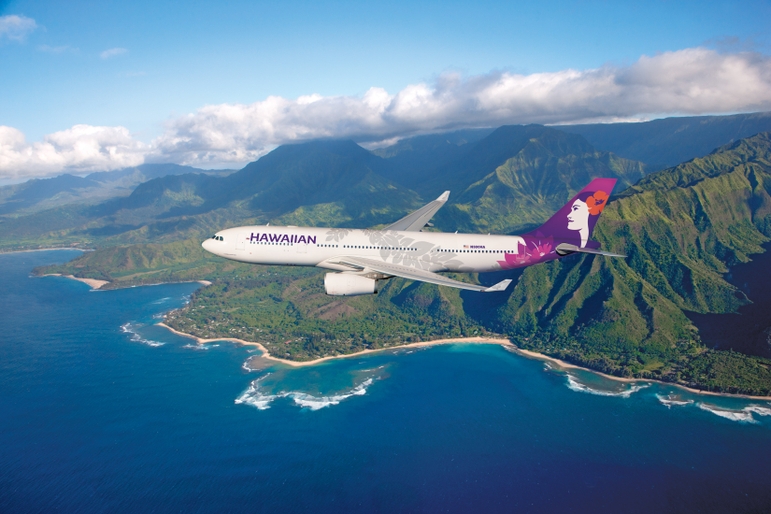
A330_TunnelsBeach_4C_SM_mid

HONOLULU – Hawaiian Airlines is seeking qualified candidates to fill more than 400 positions ahead of what is expected to be a busy summer travel season.

Hawaiian saw a rebound in demand in the first quarter and has been rebuilding its network and workforce to accommodate steadily growing interest in travel to its home state. The need for team members on Maui is particularly acute, and Hawaiian is offering a $2,000 sign-on bonus to attract experienced applicants for most jobs on the Valley Isle.

“We aspire to be the employer of choice,” said Robin Kobayashi, senior vice president of human resources at Hawaiian Airlines. “We offer rewarding career opportunities along with generous travel privileges. As businesses recover from the pandemic, the need for qualified workers is increasing. It is imperative that we remain competitive, and we hope our sign-on bonus for positions on Maui generates a lot of interest.”

Hawai‘i’s hometown airline currently employs about 6,850 people, more than 90 percent of whom are based in the state. Most new positions are in airport operations and include guest service agents, ramp agents, operations managers and aircraft mechanics in Honolulu, Maui, Hilo, Kona, Līhu‘e and in select cities on the U.S. West Coast; the majority are part-time positions. Full-time job opportunities at the company’s corporate office in Honolulu are in IT, marketing, human resources and sales.

Although Hawaiian recalled nearly all furloughed employees, it is hiring to backfill vacant positions and to fill openings that support new routes. The company recently launched nonstop services between Honolulu and Orlando, Austin and Ontario, California, and added flights connecting Maui to Long Beach and Phoenix.

“We’re looking for team members who can help us deliver the exceptional service and guest experience that Hawaiian is known for,” added Kobayashi.

For a complete list of job openings, position descriptions, qualifications, and benefits, visit www.hawaiianairlines.com/careers.


About Hawaiian Airlines

Hawaiian® has led all U.S. carriers in on-time performance for each of the past 17 years (2004-2020) as reported by the U.S. Department of Transportation. Consumer surveys by Condé Nast Traveler, Travel + Leisure and TripAdvisor have placed Hawaiian among the top of all domestic airlines serving Hawai‘i.

Now in its 92nd year of continuous service, Hawaiian is Hawai‘i's biggest and longest-serving airline. Hawaiian offers nonstop flights within the Hawaiian Islands, between Hawai‘i and more U.S. gateway cities (16) than any other airline, as well as service connecting the islands with Japan and South Korea. As a result of the COVID-19 pandemic, Hawaiian has temporarily suspended service in Australia, New Zealand, American Samoa and Tahiti.

The airline is committed to the health and safety of its guests and employees and has reinforced enhanced cleaning procedures across its business. While the experience may be a little different, the authentic Hawaiian hospitality remains unchanged. Additional details on how Hawaiian is keeping guests and employees safe can be found at HawaiianAirlines.com/KeepingYouSafe.

Hawaiian Airlines, Inc. is a subsidiary of Hawaiian Holdings, Inc. (NASDAQ: HA). Additional information is available at HawaiianAirlines.com. Follow Hawaiian’s Twitter updates (@HawaiianAir), become a fan on Facebook  (Hawaiian Airlines), and follow us on Instagram (hawaiianairlines). For career postings and updates, follow Hawaiian’s LinkedIn page.

For media inquiries, please visit Hawaiian Airlines’ online newsroom.

Hawaiian Holdings Announces Webcast of Investor Presentation at the 2021 Wolfe Transportation and Industrials Conference

HA High Res Logo_mid


PR Newswire

HONOLULU , May 20, 2021 /PRNewswire/ — Hawaiian Holdings, Inc., parent company of Hawaiian Airlines, Inc. ("Hawaiian"), today announced it will webcast a presentation by Peter Ingram , Hawaiian's president and chief executive officer, at the 2021 Wolfe Transportation and Industrials Conference on Tuesday, May 25 , 2021.  The webcast will begin at approximately 9:45 a.m. Eastern Time .

The presentation will be open to the public through a live audio webcast accessible in the Investor Relations section of Hawaiian's website at HawaiianAirlines.com .


About Hawaiian Airlines

Hawaiian ® has led all U.S. carriers in on-time performance for each of the past 17 years (2004-2020) as reported by the U.S. Department of Transportation. Consumer surveys by Condé Nast Traveler , Travel + Leisure and TripAdvisor have placed Hawaiian among the top of all domestic airlines serving Hawai'i.

Now in its 92nd year of continuous service, Hawaiian is Hawai'i's biggest and longest-serving airline. Hawaiian offers nonstop flights within the Hawaiian Islands, between Hawai'i and more U.S. gateway cities (16) than any other airline, as well as service connecting the islands with Japan and South Korea . As a result of the COVID-19 pandemic, Hawaiian has temporarily suspended service in Australia , New Zealand , American Samoa and Tahiti.

The airline is committed to the health and safety of its guests and employees and has reinforced enhanced cleaning procedures across its business. While the experience may be a little different, the authentic Hawaiian hospitality remains unchanged. Additional details on how Hawaiian is keeping guests and employees safe can be found at HawaiianAirlines.com/KeepingYouSafe .

Hawaiian Airlines, Inc. is a subsidiary of Hawaiian Holdings, Inc. (NASDAQ: HA). Additional information is available at HawaiianAirlines.com . Follow Hawaiian's Twitter updates ( @HawaiianAir ), become a fan on Facebook  ( Hawaiian Airlines ), and follow us on Instagram ( hawaiianairlines ). For career postings and updates, follow Hawaiian's LinkedIn page.

For media inquiries, please visit Hawaiian Airlines' online newsroom .


Cision View original content to download multimedia: http://www.prnewswire.com/news-releases/hawaiian-holdings-announces-webcast-of-investor-presentation-at-the-2021-wolfe-transportation-and-industrials-conference-301296515.html

SOURCE Hawaiian Holdings, Inc.

Horizon employees make 4-year-old’s birthday wish come true

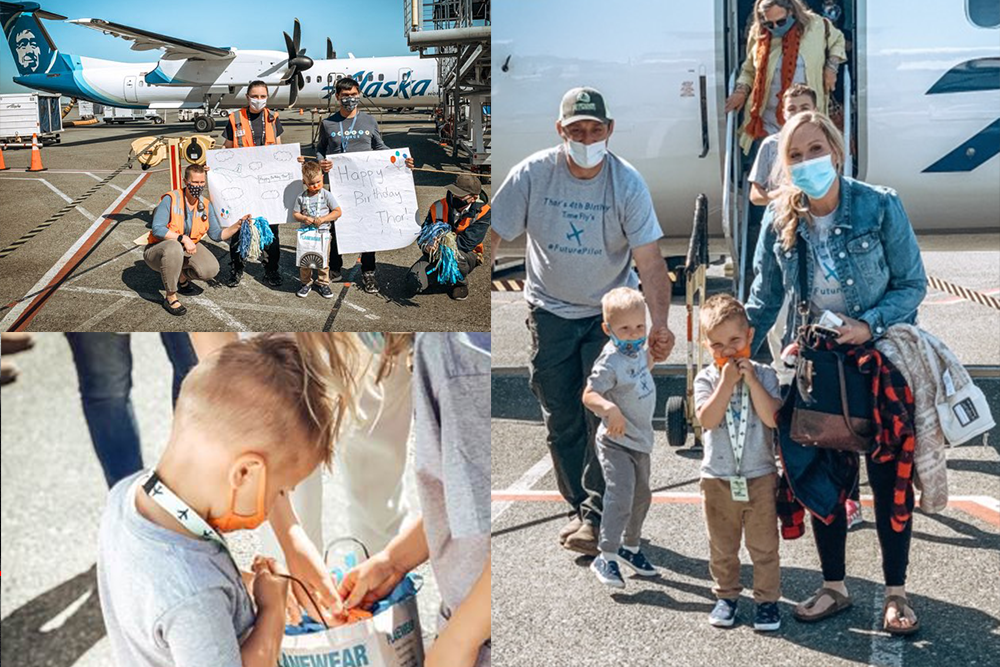
When Horizon employees found out that a four-year-old guest would be flying for his birthday, they went above and beyond to make his day extra special. Photos courtesy of the Simonis family.

It’s not every day that you get to celebrate your birthday in the air onboard your first flight.

For Thor’s birthday, his parents got him a special present – his first flight, which happened to be on Horizon Air.

When employees from Horizon Air, Alaska’s regional airline, found out that a four-year-old guest would be flying for his birthday, they went above and beyond to make his day remarkable.

William Suarez, Horizon duty manager of Seattle station operations, was notified by Patricia Eidem, Horizon SOC customer operations manager, that an inbound flight from Pasco had a special guest onboard.

The special guest was named Thor and he happened to be celebrating his fourth birthday. Eidem had heard the news about Thor and his family from CSA Andrew Dorman.

Megan Simonis, Thor’s mom, says he loves airplanes. Whenever he looks up and sees an airplane, he stops what he’s doing, makes everyone around him look up at the plane and wave. He always says he’s going to fly one someday.

The family flew from Pasco to Seattle to eat lunch and return home the same day.

In Pasco, Dorman checked Thor’s family in. They boarded early and took photos with and talked to the crew. Onboard, the flight attendant even made a birthday announcement.

In Seattle, Thor was greeted by a welcoming committee.

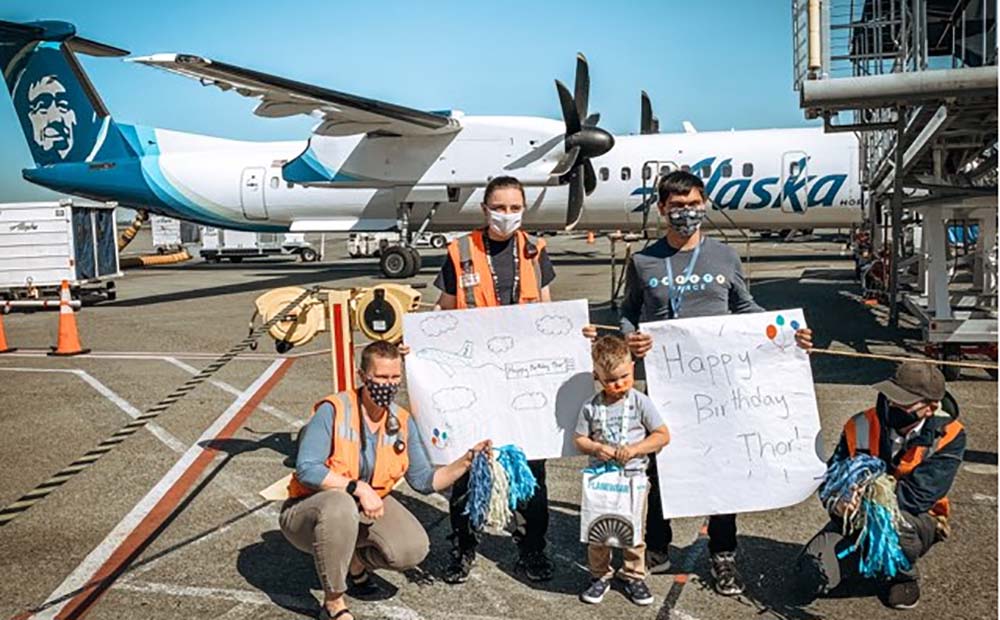
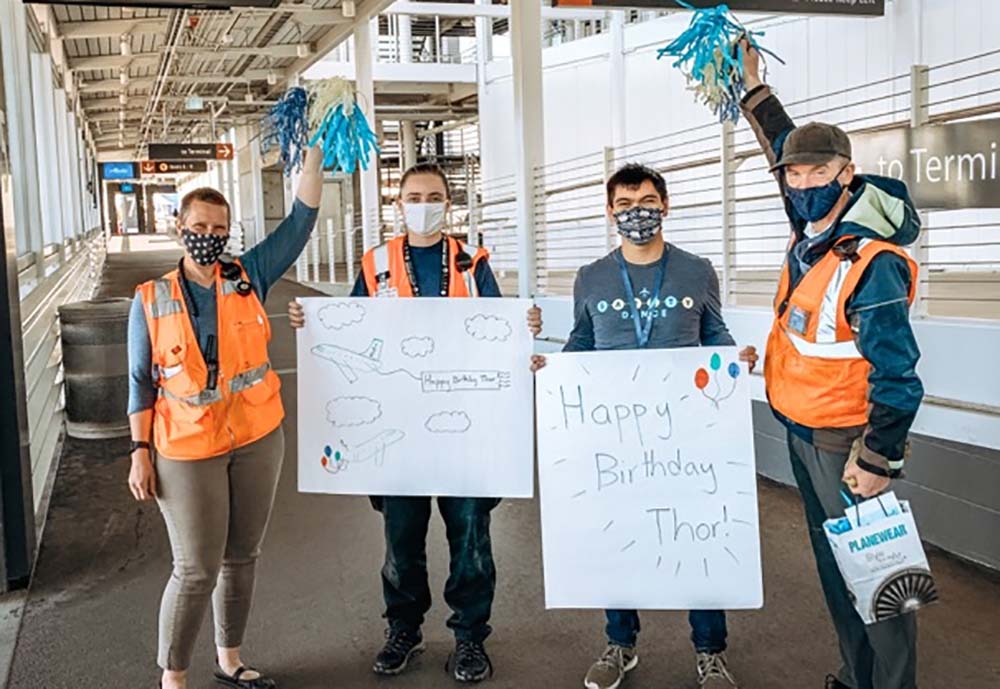
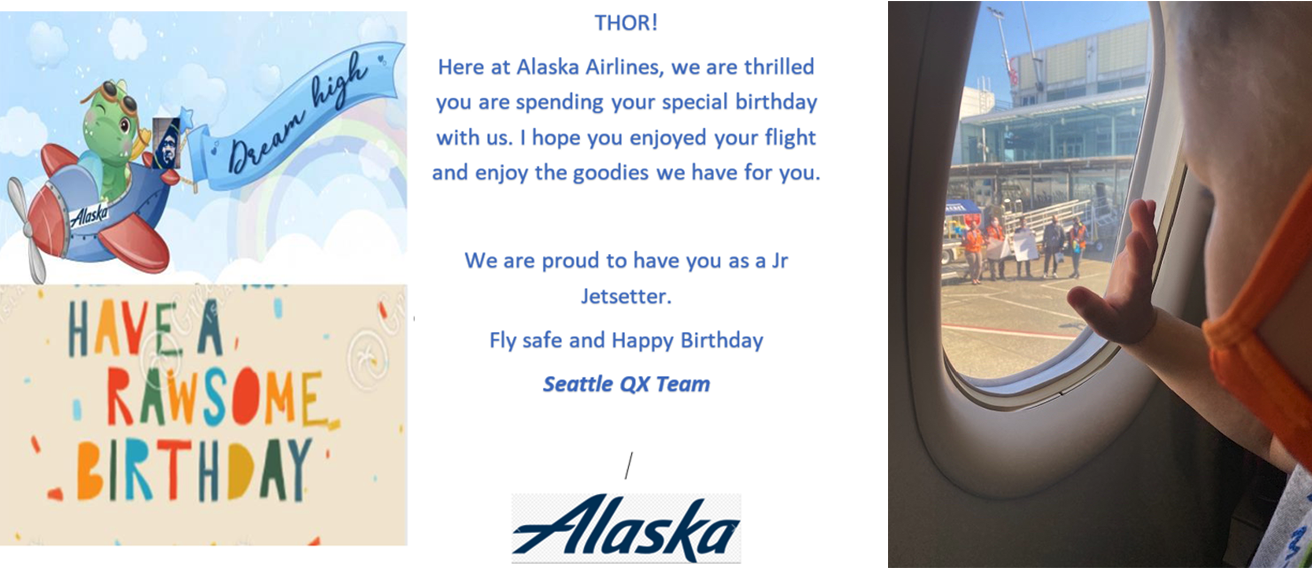
In Seattle, Thor was greeted by a welcoming committee made of Matt Anderson, supervisor of customer service; Christa Hastings, supervisor of customer service; Brittney Leggett, ground service agent team captain; and Tyler Strader, communications agent. The team greeted Thor and his family holding pom poms and signs.

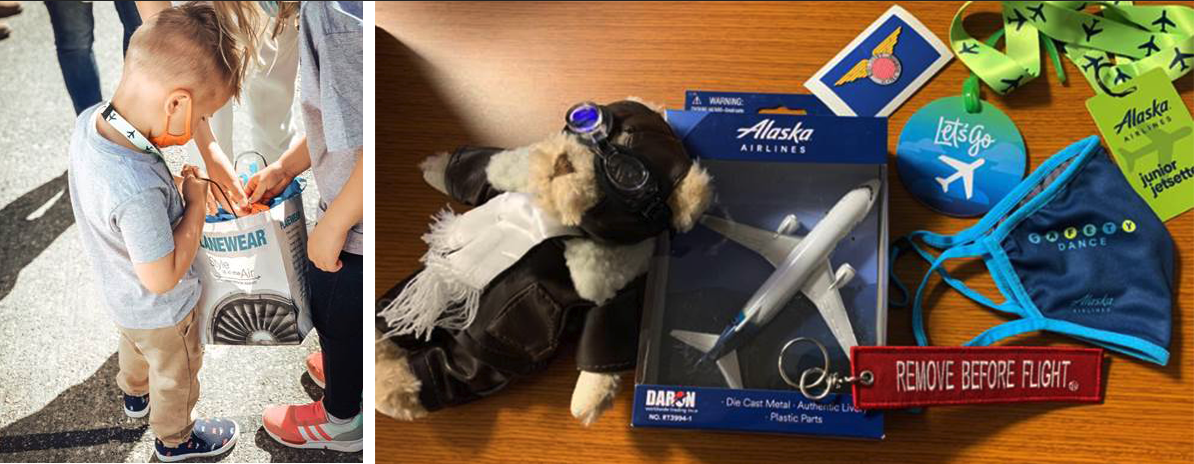
“I was able to gather some Alaska-branded merchandise to throw in the bag and gave him a personalized card from the team,” Suarez said.

Thor was so happy and excited.

“The team went above and beyond for Thor’s birthday,” wrote Simonis, in an email. “It was truly a magical day, one that won’t be forgotten. You all are amazing.”

Alaska Airlines flies season’s first Copper River salmon to Seattle

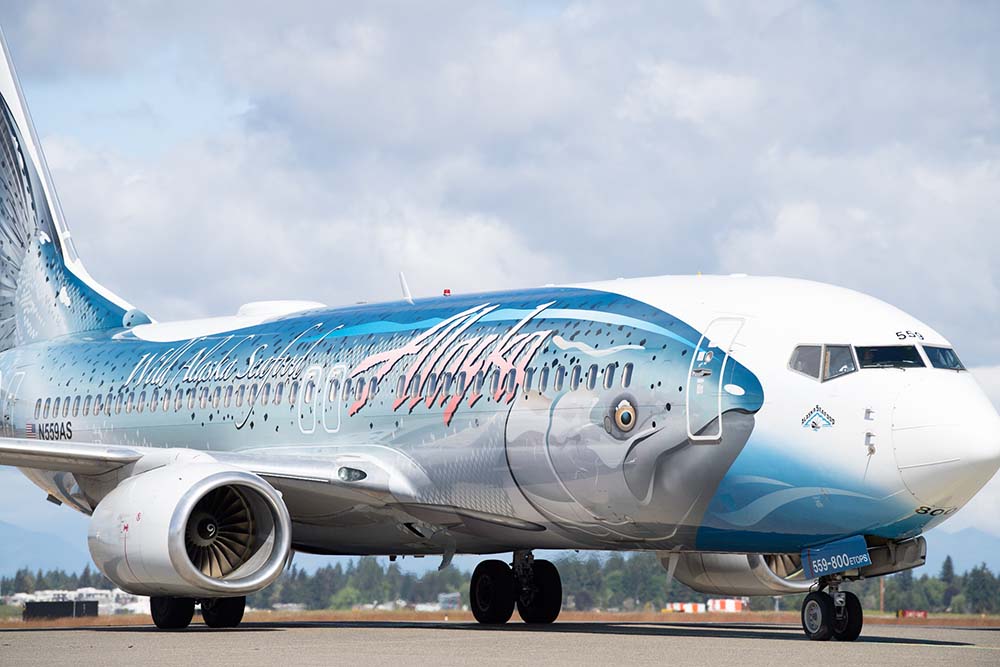
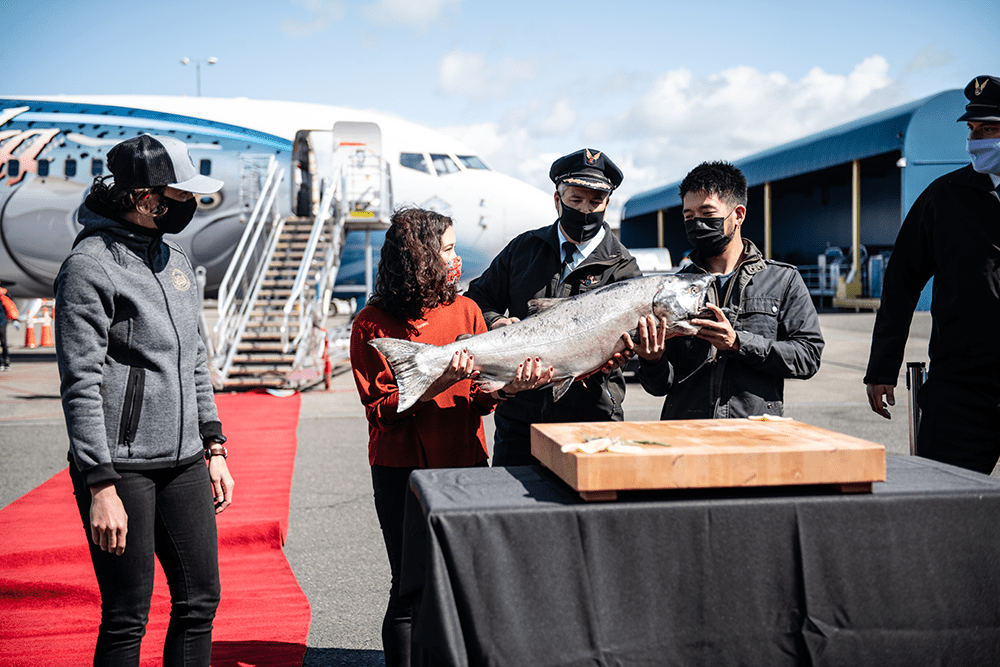
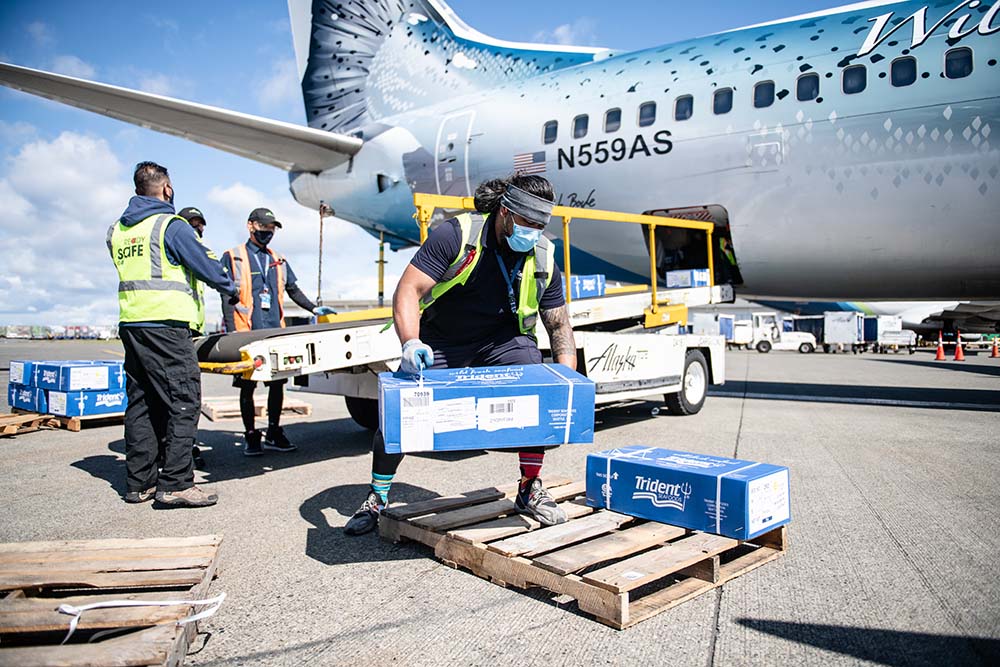
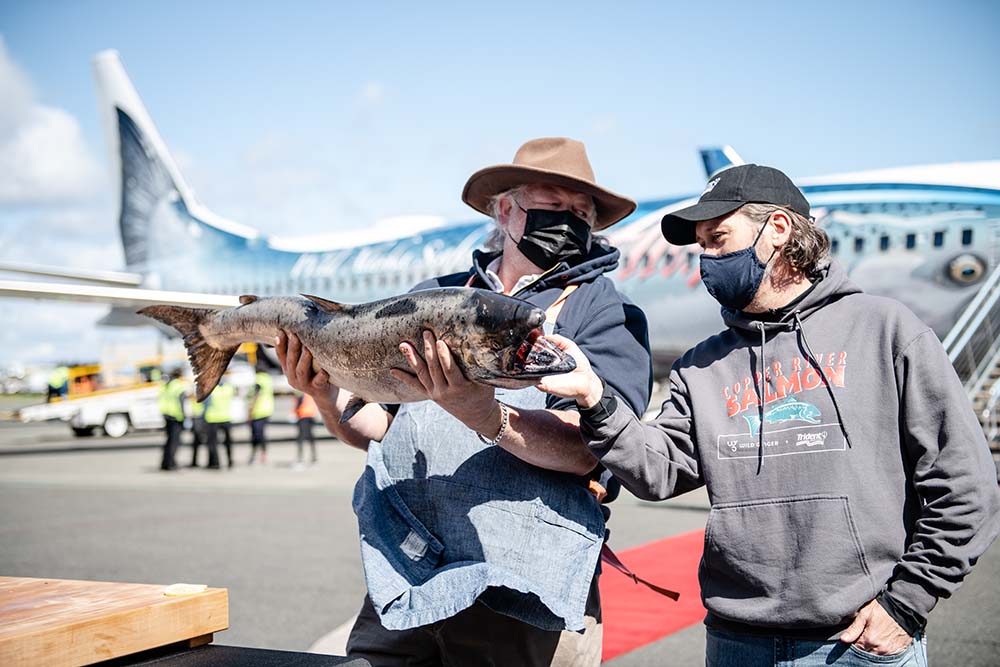
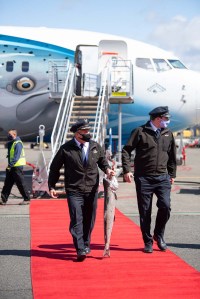
A fish-filled (& painted) jet touched down at Seattle-Tacoma International Airport shortly after 10 a.m. today, carrying 17,000 pounds of wild Alaska Copper River salmon. For many, the fish are a sign that summer is officially here!

In total, today, we’re flying nearly 55,000 pounds of salmon from Cordova, Alaska to Seattle by Alaska Air Cargo – the first of many shipments expected this season, which runs now through September.

How does Alaska Airlines keep the fish fresh during the flight? Copper River salmon shipped on Alaska Air Cargo arrive as fresh as possible to grocery stores and restaurants across the nation, thanks in part to a cool chain training program required of all airline employees who handle perishables. Employees follow strict seafood quality standards and pass an annual food quality course. The goal is to keep seafood moving rapidly throughout its journey on Alaska Airlines and maintain a consistent temperature range from the time it leaves the water to when it arrives at stores and restaurants.

When is copper river salmon season? Usually mid-May through June.

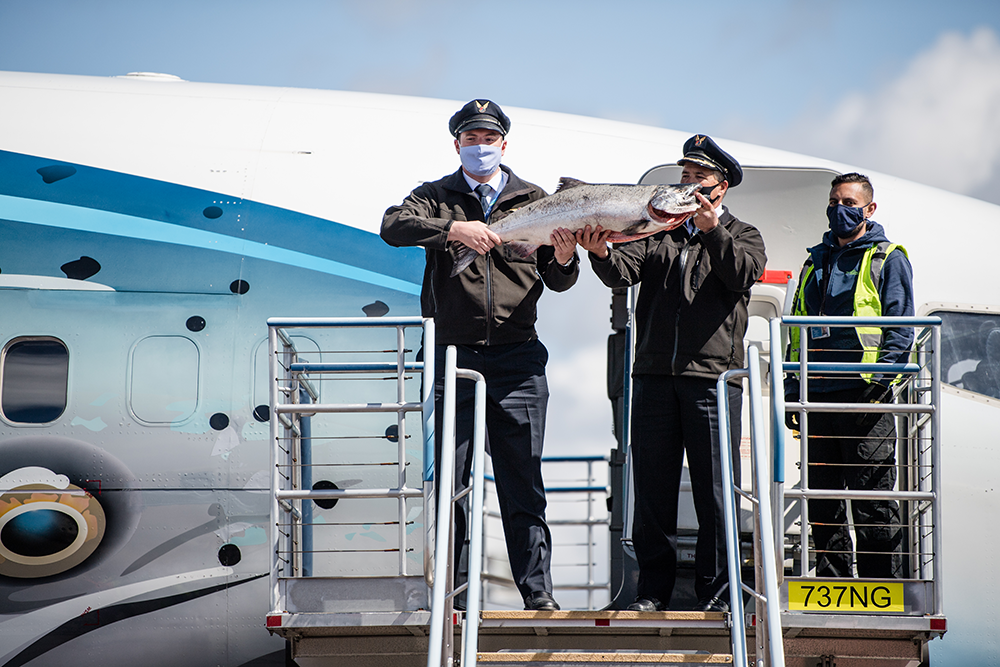
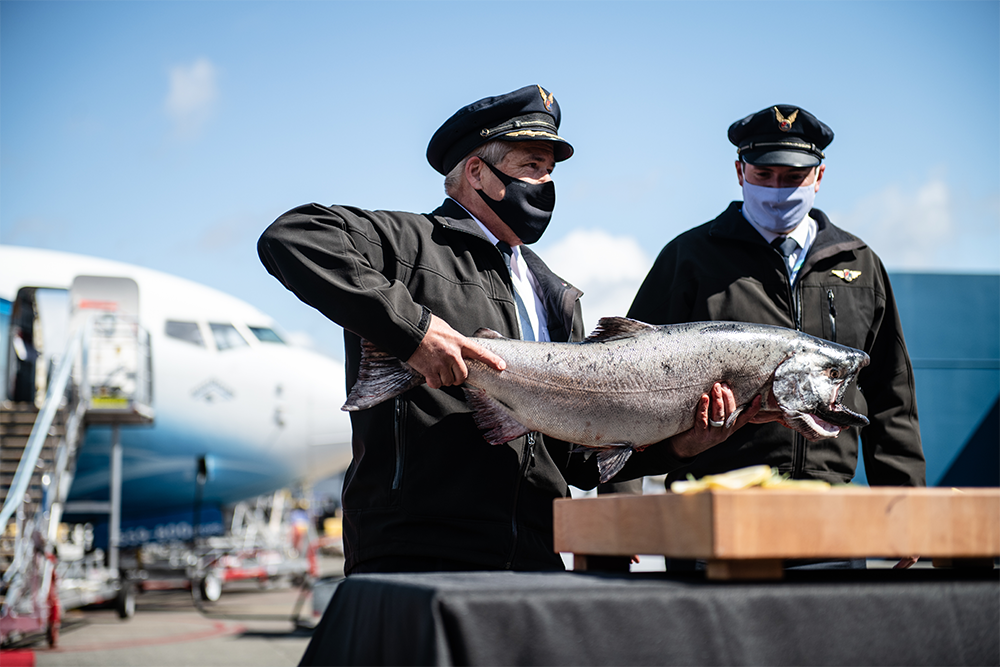
Anchorage based pilots Tim Deal and Bill Jacobson with the first first, a 37-pound Copper River salmon.

How big can the salmon get? A Copper River king salmon (also called a Chinook) can grow up to 50 pounds or more, according to the Copper River Marketing Association.

How does it taste? Copper River salmon must travel 300 miles from the ocean, where they have spent their adult lives, through rugged terrain and icy waters to reach their spawning grounds, a journey that requires extra stores of energy in the form of fat, according to the Copper River Marketing Association. It is this fat that not only creates the exceptional flavor and texture of Copper River salmon, but also the high levels of omega-3 fatty acids that make it so healthy to eat.

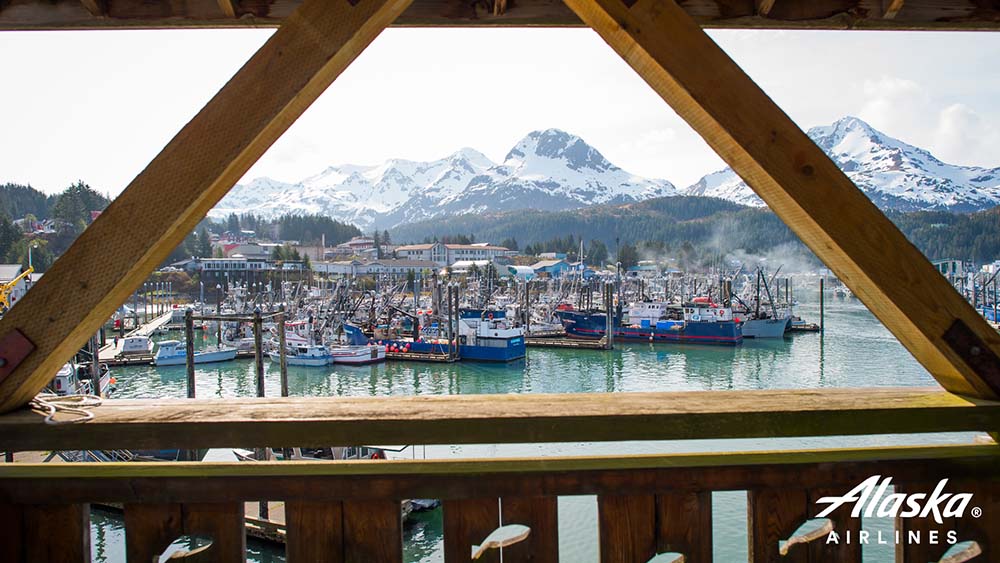
Want to see the season in action? Fly to Cordova, Alaska. Nestled in the thick of the Chugach National Forest, Cordova is quintessential small-town Alaska. It’s a place where everyone knows everyone, and like many coastal areas in Alaska, Cordova is only accessible by boat or plane. It’s a place where neighbors take care of one another, all united by passion for their community and the land they call home. Related: An Alaska state fishing tradition on the Copper River Delta

Download your very own Cordova background for your next virtual meeting!

Cook at home with Tom Douglas’ salmon recipe

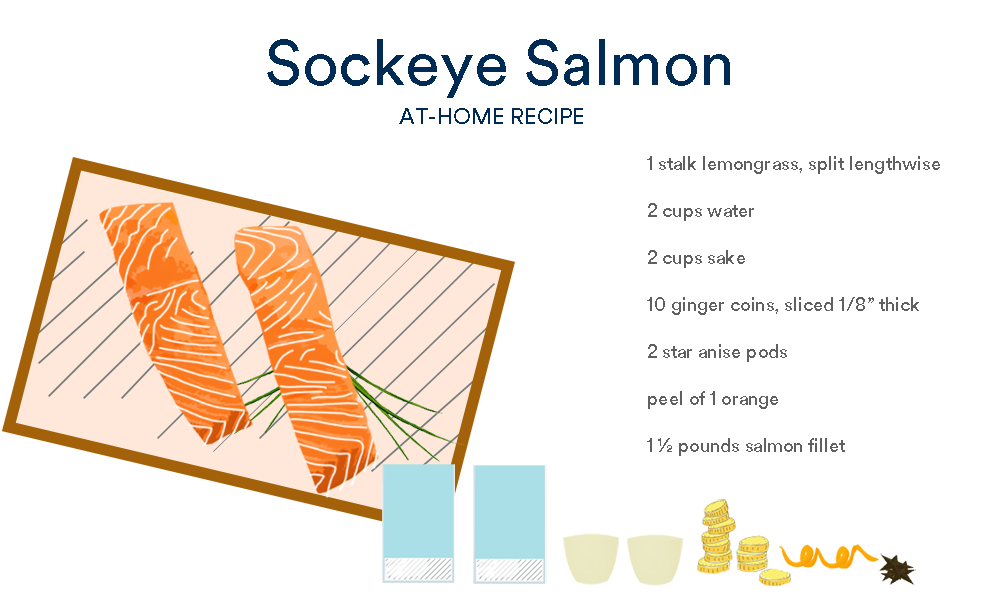
“I like to use sockeye salmon for this dish – its firm flesh and rich flavors are perfect for steaming. You could, of course, use other types of salmon and this is a good technique for other firm-fleshed fish such as ling cod or halibut. Chinese bamboo steamers work well and they are not very expensive, though any steamer set up is fine. I love the aromatic steam you get in this method of cooking: the water really does have a beautiful aroma and it permeates the salmon.” – Tom Douglas, Seattle chef & restaurateur

Sake steamed Sockeye salmon with sake butter recipe:

What you’ll need:
1 Stalk lemongrass, split lengthwise
2 cups water
2 cups sake
10 Ginger coins, sliced 1/8” thick
2 Star Anise pods
Peel of 1 orange
1 ½ pounds salmon fillet, cut into 4 portions
Serves 4

Directions:

  • Bruise the lemongrass with the back of your knife to help release the aromatics.
  • Set up your steamer (we use a large saucepan or a wok with a Chinese bamboo steamer set over it).
  • Place the lemon grass, water, sake, ginger, star anise, and orange peel in the bottom of your steamer (ie. the saucepan or wok). Bring to a boil.
  • Lay the salmon fillets in the steamer basket and cover with the steamer lid.
  • Steam until the salmon is just done, about 4 to 5 minutes.
  • Place a salmon fillet on each plate. Spoon some of the sake butter over each portion of fish. Garnish with a lime wedge.
  • Serve with Crispy Sesame Rice Cake or Aromatic Steamed Rice and steamed baby bok choy. Pair it with some sake or a glass of classic Oregon Pinot Gris.

Bon appetit!

Hawaiian Airlines, POW! WOW! Hawai‘i Release Exclusive Anniversary Logo Collection

HONOLULU – Hawaiian Airlines and POW! WOW! Hawai‘i, in partnership with the Bishop Museum, are celebrating the art collective’s 10th anniversary with a series of commemorative merchandise being sold to support arts education for children in Hawai‘i.

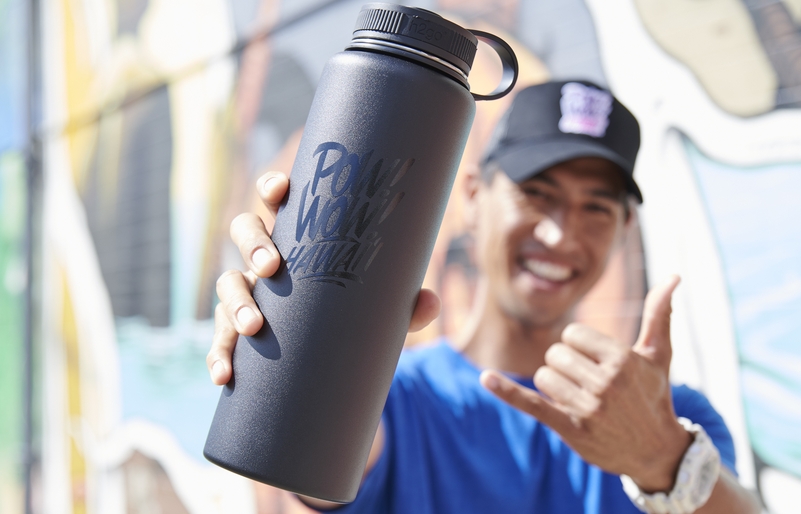
The collection features designs by the founder and lead director of POW! WOW! Hawai‘i Jasper Wong, directors Kamea Hadar and Jeff Gress, as well as keiki art from the Pālama Settlement program. The first set in the five-style collection is available starting today on Shop.HawaiianAirlines.com and includes co-branded hats, water bottles and a matte black sketch book. A new artist collection will be released at the beginning of each month, coinciding with the anniversary exhibit at Bishop Museum titled POW! WOW! The First Decade: From Hawai‘i to the World, which runs May 15 through Sept. 19.

taubtl

“We’re excited to launch this exclusive collection in celebration of POW! WOW! Hawai‘i’s anniversary and congratulate them on ten successful years of bridging our local community with the global arts scene,” said Alisa Onishi, senior director of brand and community and cultural relations at Hawaiian Airlines. “This collection represents our longstanding partnership and highlights the diverse styles of each artist displayed on essential items that are great for travel, work and play.”  

All proceeds will go back into the local community by supporting arts education for children through Bishop Museum’s various initiatives which include interactive experiences, engaging hands-on programs, and guided tours.

“We’re extremely grateful to our partners and community members who have embarked on this decade-long journey with us,” said Jasper Wong, founder and lead director of POW! WOW! Hawai‘i. “Launching a fun and functional collection while also supporting the next generation of artists is a great way to commemorate this milestone.”


Hawaiian Airlines + POW! WOW! Hawai‘i Logo Collection Launch Dates:

Co-Branded Collection, available now
Featured items include: a Flexfit® raised 3-D embroidered hat; a mid-profile, curved visor trucker hat; a 40-ounce double-wall stainless steel thermal bottle available in a coated matte black or matte white finish; a removeable adhesive sticker; and a soft touch, matte black book with unlined acid free pages making it the perfect place to explore the creative process.

PW group shot


Jasper Wong Collection, available June 1
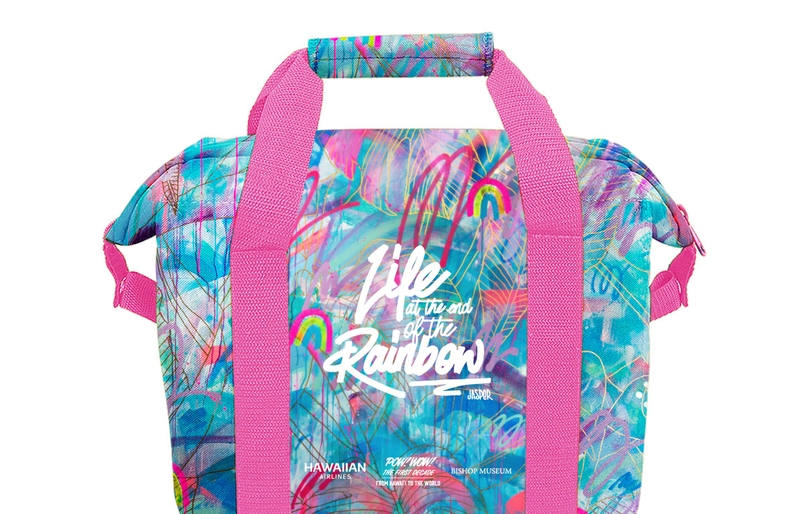
This vibrant, playful collection features a tri-color rainbow design displayed on an insulated travel cooler, beach towel, crew socks, cotton t-shirt and adhesive sticker.
 

Jasper Cooler

Kamea Hadar Collection, available July 1
Three hibiscus, inspired by Hawaiian’s brand colors, adorn this collection of everyday items including an assortment of drinkware, large canvas tote with enamel pin, a Flexfit® raised 3-D embroidered hat and adhesive sticker.
 

Kamea Mug Front 002

Jeff Gress Collection, available Aug. 1
Collection details will be available closer to launch.

Pālama Settlement Collection, available Sept. 1
Collection details will be available closer to launch.


About POW! WOW!

The name POW! WOW! was inspired by the color-filled pages of comic books. “POW!” being the impact that art has on a person. And “WOW!” being the reaction that art has on a viewer. Together they form POW! WOW!, (pow wow), which is a Native American term that describes a gathering that celebrates culture, music, and art. It spoke to the core of POW! WOW!’s mission to beautify, educate, and bring people together through art.

Over the past decade, POW! WOW! has grown into a global network of artists and has organized mural festivals across the globe. As of today, it holds festivals in over 17 cities and brings over 100 international and local artists together to create murals and beautify communities.

About Bernice Pauahi Bishop Museum

Bernice Pauahi Bishop Museum’s mission is to inspire our community and visitors through the exploration, celebration and perpetuation of the extraordinary history, culture, and environment of Hawai‘i and the Pacific. The museum was founded in 1889 by Charles Reed Bishop in memory of his wife Bernice Pauahi Bishop, a royal descendant of King Kamehameha I. Today, the museum thrives as an educational center for the community and is widely regarded as the world’s premier institution for Hawaiian and Pacific content. Its vast collections of more than 25 million objects and specimens represent nine disciplines and include more than 22 million biological specimens, over two million cultural objects, 115,000 historical publications, and one million photographs, films, works of art, audio recordings, and manuscripts. These collections tell the stories of the cultures and biodiversity of Hawai‘i and the Pacific as well as the proud legacy of scholarly research spanning 130 years. Bishop Museum proudly serves more than 200,000 visitors each year, including 20,000 children on school visits. To learn more about the museum’s research, collections, exhibits, and programs, visit BishopMuseum.org, follow @BishopMuseum on Twitter and Instagram, become a fan of Bishop Museum on Facebook, visit Bishop Museum’s YouTube channel, or call (808) 847-3511. Bishop Museum is a 501(c)(3) nonprofit organization.

About Hawaiian Airlines

Hawaiian® has led all U.S. carriers in on-time performance for each of the past 17 years (2004-2020) as reported by the U.S. Department of Transportation. Consumer surveys by Condé Nast Traveler, Travel + Leisure and TripAdvisor have placed Hawaiian among the top of all domestic airlines serving Hawai‘i.

Now in its 92nd year of continuous service, Hawaiian is Hawai‘i's biggest and longest-serving airline. Hawaiian offers nonstop flights within the islands, between Hawai‘i and more U.S. gateway cities (16) than any other airline, as well as service connecting the islands with Japan and South Korea. As a result of the COVID-19 pandemic, Hawaiian has temporarily suspended service in Australia, New Zealand, American Samoa and Tahiti.

The airline is committed to the health and safety of its guests and employees and has reinforced enhanced cleaning procedures across its business. While the experience may be a little different, the authentic Hawaiian hospitality remains unchanged. Additional details on how Hawaiian is keeping guests and employees safe can be found at HawaiianAirlines.com/KeepingYouSafe.

Hawaiian Airlines, Inc. is a subsidiary of Hawaiian Holdings, Inc. (NASDAQ: HA). Additional information is available at HawaiianAirlines.com. Follow Hawaiian’s Twitter updates (@HawaiianAir), become a fan on Facebook  (Hawaiian Airlines), and follow us on Instagram (hawaiianairlines). For career postings and updates, follow Hawaiian’s LinkedIn page.

For media inquiries, please visit Hawaiian Airlines’ online newsroom.

AAPI heritage destinations Alaska Airlines’ oneworld partners can take you to *someday*

As parts of the world start to open up to international travel, knowing where you can fly and what you can do when you get there is key.

To celebrate Asian American & Pacific Islander Heritage Month, we’ve compiled a list of places you can fly to (when travel is permitted) on our oneworld airline partners and tips from our employees who are members of our Pan-Asian and Pacific Islander business resource groups.

Although the term AAPI generally refers to Asian Americans and Pacific Islanders, it’s important to know the rich heritage and diversity within it, especially before traveling to Asian and Pacific Islander destinations. Here’s a roundup of destinations you must add to your travel bucket list and cultural tips when you get there.

Asia

Although some capacity is picking back up in mainland China, overall, the travel industry in Asia is still looking forward to opening its borders to visitors. We expect more travel as people get vaccinated and the resurgent of coronavirus cases subside.

Here are airlines you can fly to Asia and earn/redeem Alaska miles with our oneworld alliance:

  • American Airlines
  • British Airways
  • Cathay Pacific
  • Japan Airlines
  • Malaysia Airlines
  • Qantas
  • Royal Jordanian
  • S7 Airlines
  • SriLankan Airlines
  • Fiji Airways

Culture note: Asian Americans may include persons having origins in any of the original people of Asia’s six major sub-regions: East, West, Central, Northern, Southeastern and North including, but not limited to: Indonesia, Cambodia, China, India, Japan, Korea, Malaysia, Pakistan, the Philippines, Thailand and Vietnam.

HONG KONG

oneworld partners to fly:

Derek, Manager Software Engineering in Seattle

I grew up in Hong Kong, a pretty small place compared to the state of Washington, where I Iive now (165x smaller). Although I’ve been in the U.S. for a while, I miss everything about Hong Kong – especially the food. There are so many great layers to Hong Kong, and I’m sure you’ll find one you enjoy.

Visit during fall and winter instead of summer as it gets very hot and humid. I’d also suggest bringing a pair of comfortable walking shoes, as travel by foot is easy when used in conjunction with public transportation (known as the Mass Transit Railway, or MTR, in Hong Kong.)

Most people in Hong Kong understand and communicate in English – so try to explore the city on your own instead of joining a group tour. This way, you’ll have an opportunity to interact with the locals (who love visitors and may end up becoming your new friend!).

Mindful travel advice: You’ll notice that in Hong Kong, although we stand close to each other while talking, body contact should be avoided when you first meet someone. I also suggest that you do not point your index finger at someone, as it is considered rude, as it is in other countries around the world.

Common greeting in Hong Kong: Neih hou, (pronounced “nay hoe”), is Cantonese and means “How are you?”

JAPAN

oneworld partner to fly: Japan Airlines

Edrea, Alaska Airlines Technical Product Owner in Seattle

I am a Nisei, or second-generation Japanese American. What I love most about Japan is its unique diversity and distinctive culture – deeply rooted in traditions and blended with the latest innovations – Japan leaves you enchanted and wanting more.

Whether you’re a foodie, a trendsetter or eager to experience Japan’s pursuit of perfection through its beautiful traditions, there is something for everyone! From the moment you step off the plane, you will experience the art of omotenashi, or genuine hospitality and exceptional service that anticipates your every need. Immerse yourself in the rich culture by taking advantage of the JR Rail Pass to explore Japan at your own pace by train, or if you prefer flying, our oneworld partner Japan Airlines can connect you anywhere between Okinawa and Sapporo (and even Tokyo Disney!). Don’t forget to grab an ekiben (railway bento) to enjoy on the train!

Travel advice: When traveling around Japan, it’s super important to be mindful of others and don’t litter or talk loudly on the train. Tipping is not necessary and avoid standing your chopsticks in your food (it’s considered bad luck!).

Common greeting in Japan: Konnichiwa (pronounced “koh knee chi wah), is Japanese and typically means “hello” during a mid-day to early evening greeting.

Pacific Islands

Some Pacific Islands are open to travel, which is good news for people eager to find a vacation spot this summer, but don’t assume that everything is back to normal everywhere you go.

For example, the beautiful islands of French Polynesia, which include popular beach getaways like Tahiti and Bora Bora, reopened its borders to travelers arriving from the United States on May 1 who have been in the U.S. for at least 30 days prior to departure — but islands of Tahiti still have curfews in place until June 1.

Pacific Islanders may include persons having origins in any of the original people of Oceania’s three major sub-regions of Polynesia, Melanesia or Micronesia, including, but not limited to: Hawaii, Samoa, Guam, Palau, Papua New Guinea and Vanuatu.

oneworld partners that fly to Pacific Islands:

SAMOA, POLYNESIA

oneworld partner to fly: Fiji Airways

Tai, Seattle Lounge Host

I was born and raised in Samoa – one of the main Samoan islands recognized as a United States territory, separate from the Independent Nation of Samoa. However, all of the Samoan archipelago is a tropical paradise.

Travel tip: A popular place to visit is the island of Aunu’u; it’s one of the smaller islands off the southeastern shore of Tutuila, American Samoa. There, I’d recommend visiting the marketplace where there’s all kinds of fresh fruits, local foods and souvenirs.

Mindful travel advice: Samoan culture is all about respect. When it comes to villages, there may be some restrictions; please be mindful of your behavior as local villages may be run by chiefs. Also, Samoans are modest people; I’d recommend covering up if you’re outside of a resort.

Common greeting in Samoa: Talofa, (pronounced “tah-low-fuh”), means ‘hello’, sometimes extended to ‘talofa lava’, which means ‘hello to you.’

GUAM, MICRONESIA

oneworld partner to fly: Japan Airlines

Marie Laureano, Seattle Supervisor of Passenger Record Support

I grew up in Dededo, the second largest most populated villages in Guam. What I love most about Chamorro culture (indigenous people of the Mariana Islands including Guam) is the people. The feeling of warmth is everywhere – you are always welcome into someone’s home.

Travel tip: Head south, away from Tumon (the center of tourism activity), to try some mom-and-pop shops like: Buenas Market in Yona known for their many pickled foods or Chode’s Mart in Hagatna for titiyas (Chamorro tortillas). For hiking, I’d recommend Marbo Cave in Mangilao for the inside cave you can swim through, and Thousand Steps trail in Mangilao for a beautiful water view when you reach the bottom.

Mindful travel advice: Because hospitality is so embedded into the culture, wouldn’t suggest turning down food. Don’t be shy – eat as much as you want, and don’t hesitate to take food home if offered.

Common greeting in Guam: Hafa adai, (pronounced as “half a day”), which means hi or hello.

The history behind “AAPI”

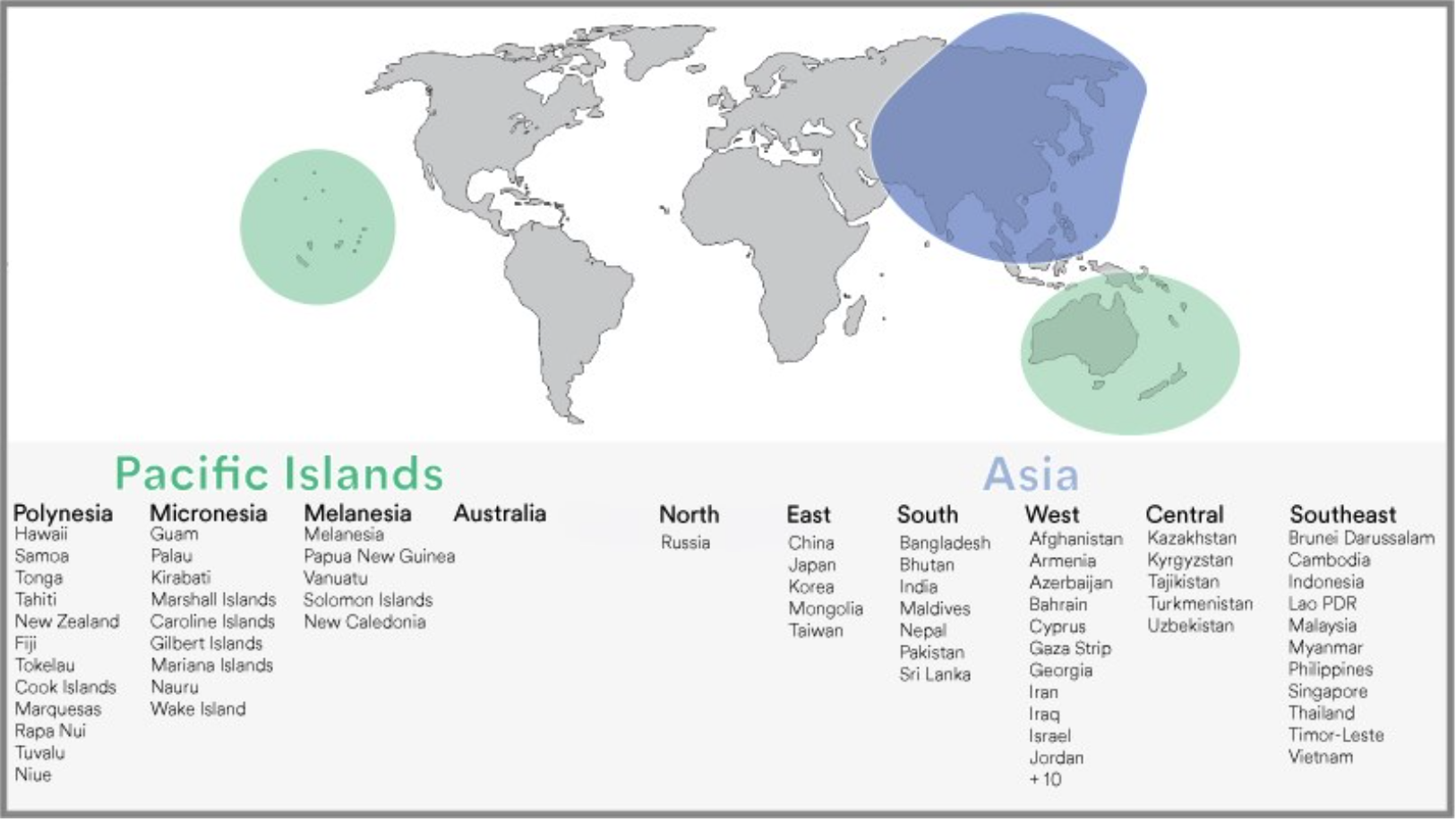
What does AAPI mean and where did it come from? There are countless distinctions within AAPI communities, starting with geographical differences. The illustration below gives a general idea where Asian and Pacific Islander origins may stem.

This map is a general geographic illustration of Asia and the Pacific Islands and what they include. It is not intended to represent the intricacies pertaining to countries, geopolitics, regions, borders, cultures or otherwise.

The catch-all term was initially created in the 1980s by the United States Census Bureau as a category for race when surveying population (deemed “Asian Pacific Islander,” or API.) Later in the 90s, the need to recognize the significant cultural and geographic differences between Asian from Pacific Islander then resulted in separating the two as racial categories, now recognized as “Asian” or “Native Hawaiian and Other Pacific Islander.” However, the old term ‘API’ stuck; today, this term has inadvertently embedded itself into the United States, often referred to as Asian Pacific Islander (API) or Asian American Pacific Islander (AAPI).

Whether or not you’re planning to travel to Asia or the Pacific Islands (although we hope you do!), we invite you to take a moment not just this month, but year-round to better understand the term AAPI, what it includes, acknowledging the differences between groups and how to appreciate them individually.

Learn more about AAPI month here and Alaska’s oneworld alliance.

Spot for two? A new way to get through airport security: Make a reservation.

This probably hits home right about now: You’re itching to take-off somewhere. Once you get to the airport, how does a shorter wait in security sound?

Save time while traveling with SEA Spot Saver, a new pilot program for TSA line reservations. Learn more.

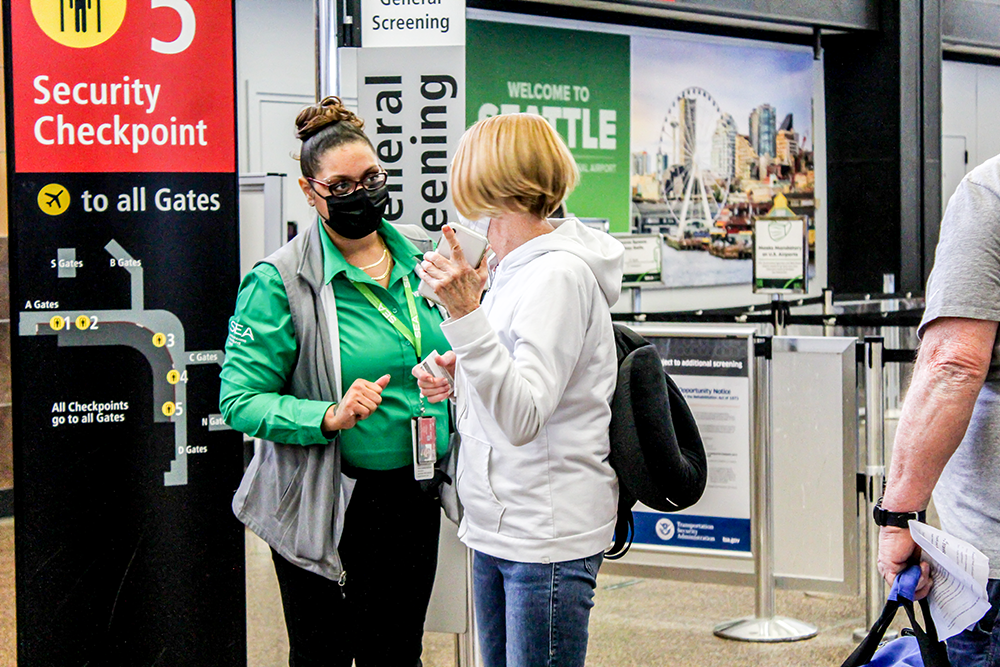
If you’re flying out of Seattle, Alaska Airlines and the Port of Seattle are testing a new way to get you through the general screening security checkpoint faster called SEA Spot Saver.

Alaska guests can sign up online for an appointment and then get a designated time on their day of departure to pass through an expedited security screening at Checkpoint 5, which is right behind the Alaska ticket counters. Securing a slot is free and no membership is required.

You’ll get a 15-minute window of time (say 8-8:15 a.m.) to make your way through security. Appointment slots are issued every day between 4 a.m. to noon Pacific Time – when the airport is busiest – now through the end of August. Your entire family can be listed on your reservation to get through security together.

“These are the innovations and ideas that we love to make our guest experiences more convenient and stress-free, especially as more people get back to flying again,” said Charu Jain, Alaska’s senior vice president of merchandising and innovation. “With very little effort, guests can lean on technology to get them through the security process quicker.”

The program’s primary goal is to regulate passenger flow in security areas that can often become congested and improve physical distancing between travelers.

How it works

Alaska guests can register for an appointment up to 24 hours before their scheduled departure:

  1. Book a spot online with your date of travel, destination, flight number and how many are traveling in your party.
  2. You’ll receive an email with a QR code that you’ll use when you arrive at your scheduled time.
  3. Enter Checkpoint 5 during your designated 15-minute window.

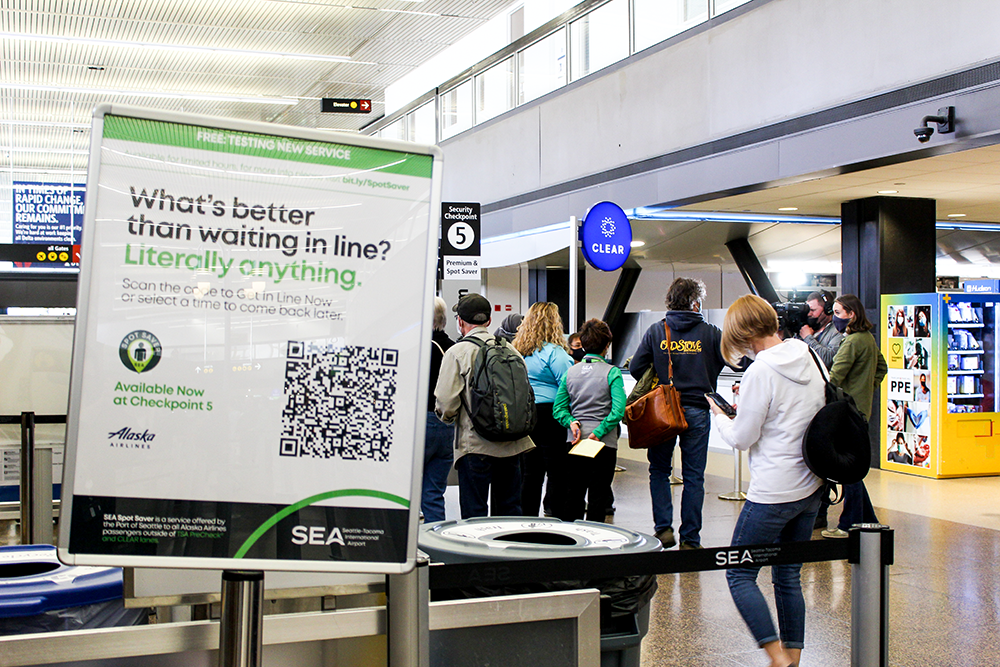
Guests can also take advantage of the program once they get to the airport by scanning the QR code on SEA Spot Saver signs around the terminal — the code will take you to the website to sign up.

Save time now! The pilot program is scheduled to end on Aug. 31, 2021.

SEA Spot Saver is available only to general screening passengers who are not part of a trusted traveler program – that’s to help provide a better screening experience and create efficiency where demand is the highest. TSA PreCheck passengers will continue to be screened at Checkpoint 4 in order use their PreCheck benefits, such as not having to remove their shoes and electronics. CLEAR customers should still use their dedicated lanes at each security checkpoint.

“We can use technology to make the travel experience more streamlined and intuitive,” said Port of Seattle Commissioner Sam Cho. “Touchless solutions reduce stress for those traveling today but are the kind of innovations that will make the airport safer and more efficient for years to come.”

With hygiene and safety concerns top of mind as many of us return to air travel, we’ve focused additional innovation efforts on making it easy for your journey to be almost entirely touch-free. Here are some options:

  • Use the Alaska mobile app to do it all, from buying a ticket to checking in for your flight to paying for any bags you want to check.
  • At our airport kiosks, you can scan your mobile boarding pass to print bag tags – without even touching the screen.
  • If you need to check in with one of our agents, no need for handing over a paper trail: they can text you your boarding pass and email your receipts.
  • During boarding, your boarding pass can now be scanned from up to six feet away to help maintain physical distance.
  • Onboard your flight, enjoy the food and beverage you pre-ordered and paid for using a credit card stored in your Mileage Plan account. If you purchase a Signature Fruit and Cheese Platter and a glass of wine on the flight, our flight attendants can still use your stored credit card – no need to reach out and hand over a card.

Boxed Water is helping Alaska Airlines reduce plastic waste onboard

When it comes to recycling and sustainability, we mean business. We’ve set goals to reduce our carbon emissions to net-zero by 2040, as well as efficiency, waste and water goals for 2025, and are always looking for ways to offset our footprint.

For over two years, we’ve reduced waste on board by shifting to more sustainable practices and service items such as ditching straws in our lounges and on aircraft, using cans instead of plastic bottles and reducing packaging where we can.

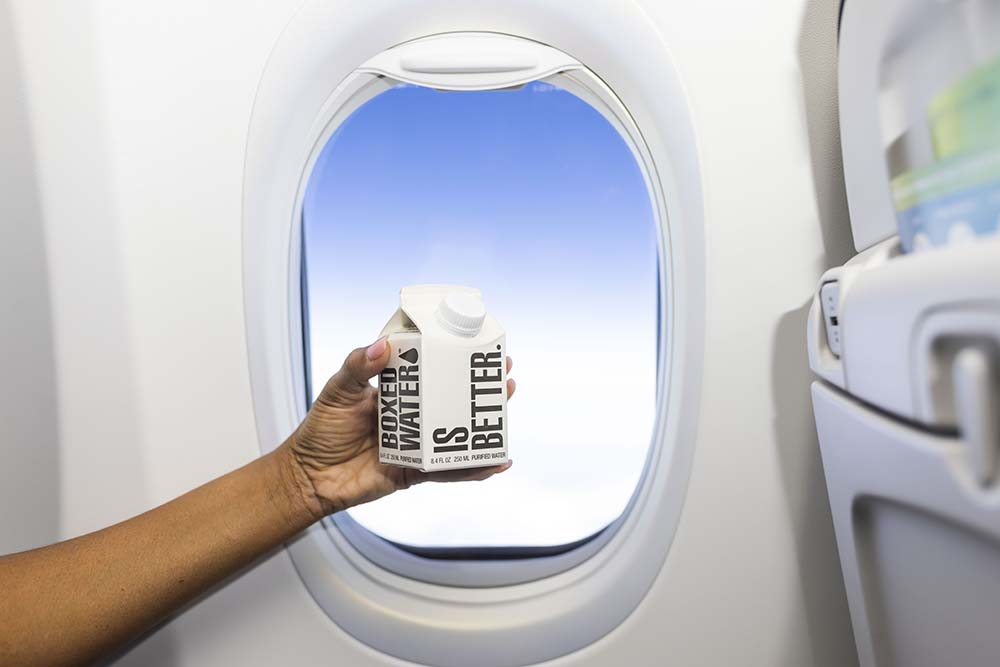
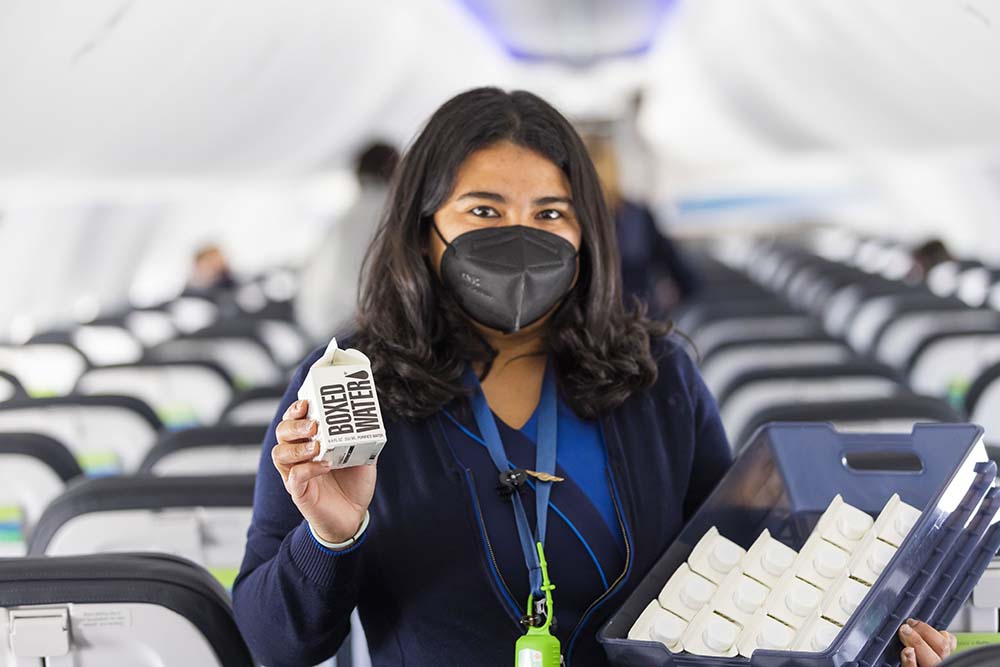
Today, we’re excited to partner with Boxed Water to begin to replace single-use plastic bottles in First Class, as well in the main cabin on our Q400 aircraft, with Boxed Water’s 92% plant-based cartons. This will effectively remove 7.2 million plastic bottles from landfills per year — that’s equivalent to approximately 98,000 lbs of plastic. Earlier this year, we introduced Boxed Water on Alaska’s Horizon Air operated flights and will expand the program to all Alaska flights this summer.

Boxed Water is exactly what it suggests: a fully recyclable box-shaped carton of water, sealed with a plant-based cap. Each carton is made from sustainably harvested trees and the multi-filtered water goes through a proprietary eight-step purification – giving it a clean, crisp taste.

Alaska and Horizon employees are also excited to re-launch our industry-leading inflight recycling program on May 19.

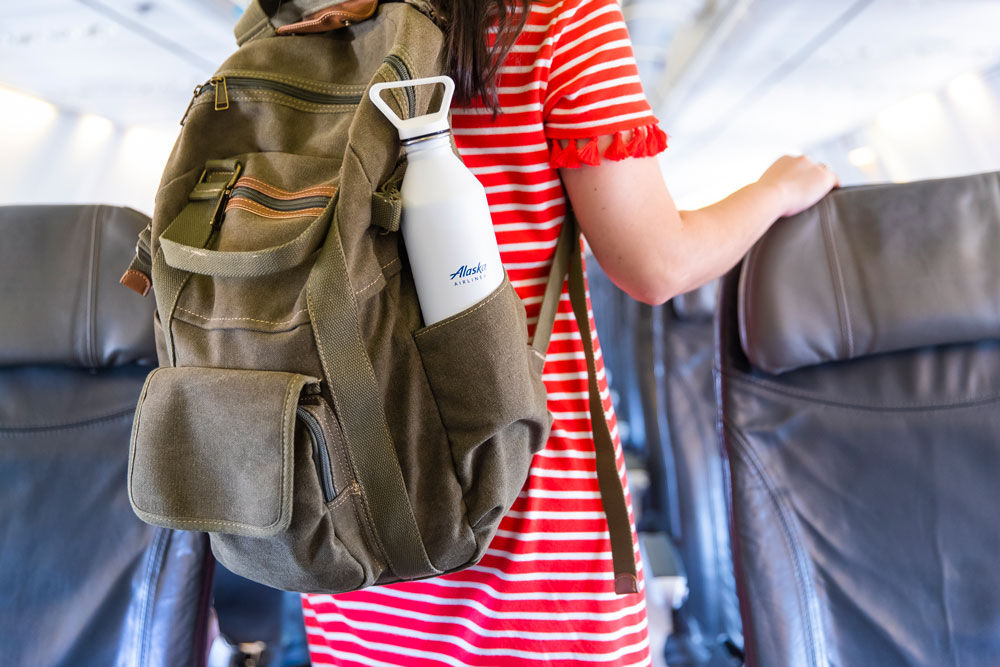
Beyond our common goal of moving to non-plastic alternatives, both Boxed Water and Alaska partner with the National Forest Foundation (NFF). Boxed Water has planted 1.2 million trees with the organization and Alaska guests supporting their mission through donating Mileage Plan miles in our LIFT Miles program. Alaska also encourages our guests to bring their own refillable water bottle, and if each time a guest tags Alaska and #FillBeforeYouFly with a photo of their refillable, we’ll plant a tree in partnership with the Bonneville Environmental Foundation to strengthen local habitats.

Our sustainable journey

In 2007, several environmentally conscious Alaska and Horizon employees formed the “Green Team,” a business resource group dedicated to improving the environment through increased in-flight recycling and trash sorting programs and other environmental initiatives. The group was the first of its kind in the airline industry and their efforts have significantly decreased the amount of waste per guest that ends up in landfills. Green Team members were also involved in the selection process for Boxed Water.

“When researching alternatives to plastic water bottles, the Green Team considered a variety of factors on overall environmental impact such as water sourcing, packaging materials, recyclability, and shipping distance,” said Robbie Neff, Green Team member and pricing team lead at Alaska. “Boxed Water scored better than the other options of glass bottles and aluminum cans.”

In 2019, we encouraged guests to join our efforts by bringing a reusable water bottle when they travel and #FillBeforeYouFly, as part of an initiative to completely avoid using single-use plastics.
“Is there anything cuter than a mini box of water? I think not!” @courtney.mones via Instagram

While we know our greatest impact is reducing carbon emissions, every decision we make, including how we source the products we serve onboard is critically important. Alaska is committed to working with forward-thinking companies like Boxed Water that are focused on sustainability, both in their finished products and operations.

“We admire Boxed Water’s leadership to change manufacturing, production, conversation and consumer choice to create a more sustainable and eco-friendly future,” said Traynor-Corey, managing director of guest products for Alaska Airlines. “We hope that when our guests are enjoying Boxed Water they are interested in learning more about eco-friendly products and, ideally, are inspired to make sustainable choices when they travel and on the ground.”


For the Love of Lei: How to Join Our ʻOhana’s May Day Celebrations

On the eve of May 1, kamaʻāina (residents) across the islands string together flowers or visit their local florist so they can share lei with those around them the next day. May Day, also known as Lei Day, is a lively holiday when gifts of lei serve as gestures of aloha, hospitality is abundant, and the air is rich with fragrant blossoms, fresh greenery, live music and love for community.

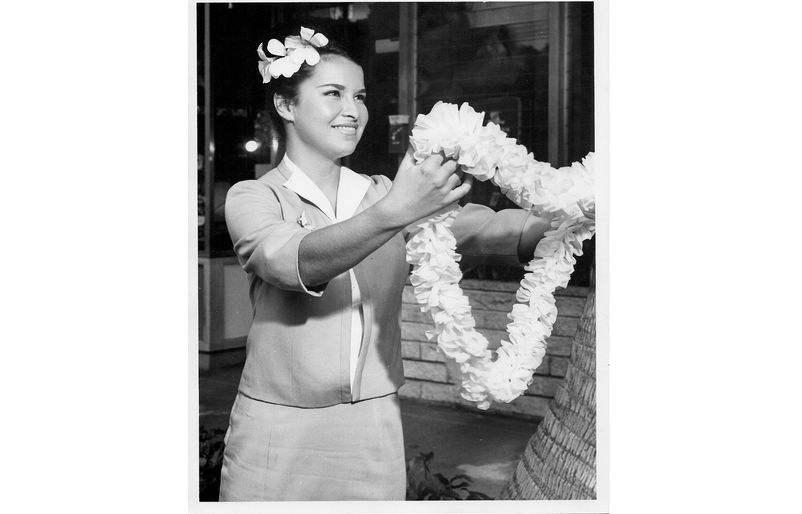
Lei has long served as a symbol of our signature hoʻokipa (I am host) hospitality at Hawaiian Airlines and is shared when we greet our guests on special occasions, bless our planes before entering service and celebrate our employees.

1929 4 Bellanca with a Lei

The 1929 Bellanca CH-300 Pacemaker, our airline's first aircraft, adorned with a lei after undergoing a full restoration in 2009.


This year, we’re inviting our guests to join our May Day celebrations in a few different ways:

Virtually tune in to a live May Day showcase with some of Hawaiʻi’s most beloved musicians and dancers. “Hawaiian Airlines May Day 2021: Mākaʻikaʻi” will debut at 6 p.m. HST on May 1 on Hawaii News Now-KGMB and 7 p.m. HST on Hawaii News Now-KFVE. The performance will be streamed live on HawaiiNewsNow.com and the station’s Facebook channel.

Share the lei love with your ‘ohana digitally this May Day by taking a selfie with our Lei Day filter! The new plumeria lei filter is available on Facebook and Instagram.

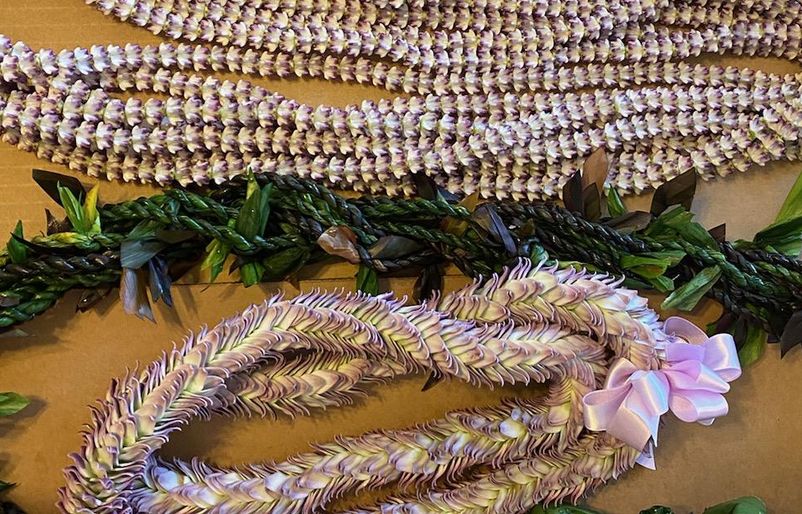
Learn the language of lei with a starter guide to help you get to know the names and meanings of the most common lei in Hawai‘i.

Subscribe to our Spotify playlists, built with May Day in mind. Our team has selected mele (songs) that pay tribute to locations across each island. Click here to start streaming and subscribe.

Lei day 1

During this year's May Day festivities, we welcome you to take a trip down memory lane as our employees reminisce on special moments of making, giving or receiving a lei.


Debbie Nākanelua-Richards, director of community and cultural relations: This is a photo of one of the first times I received lei made of ʻākulikuli flower. I was riding in the Aloha Festival Parade that year, and I remember being moved by the fact that someone had painstakingly gathered on the island of Maui and brought for me to wear. The lei is so significant, and I always keep this photo at my desk because it was such a special gift.

Lei Day

Puamana Garcia, flight attendant: May Day always has been a special day for me. This photo was taken in 2014 while celebrating with my Hawaiian Airlines inflight ʻohana. From left: Our Handsome Crewmembers pictured are Kaimana Domingo, Stanley Dickson, Puamana Garcia, Kaleo Izumi. 

GarciaP_MayDay

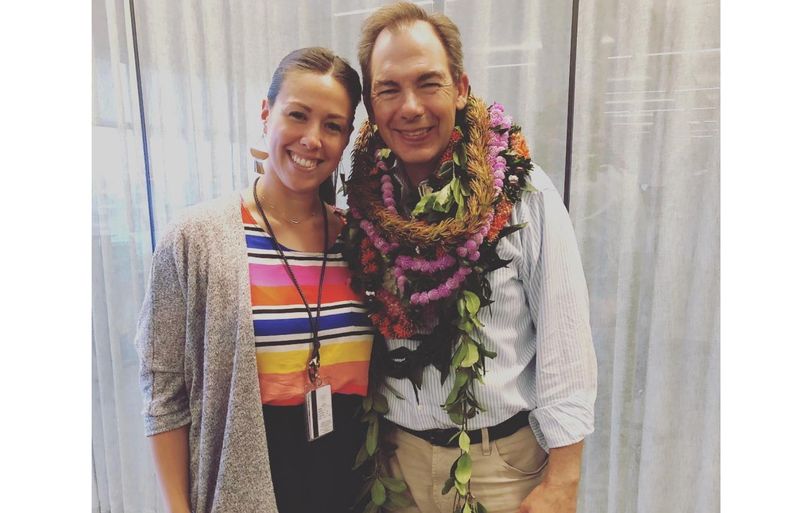
Tara Shimooka, manager of external communications: My colleague took this photo when we bid aloha to our former president and CEO, Mark Dunkerley, on his last day before he retired. People from across the company stopped by to give lei, and I remember him taking the time to exchange memories with every person. There was a constant stream of people and activity throughout the day, but everyone got a chance to talk story with him. I love giving lei because it offers this unique opportunity to share a moment with someone regardless of what else is going on around you. It’s almost as if everything else stops during this brief connection. Lei Day captures that feeling and honors it, and it truly is something special. 

Tara

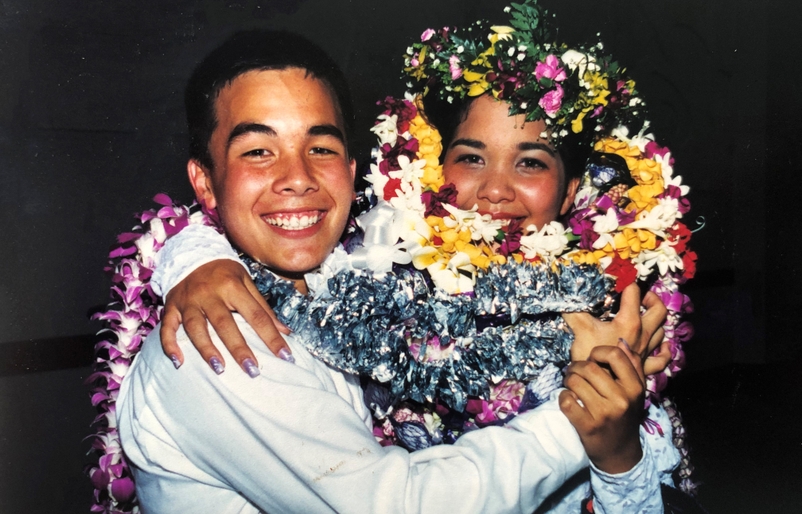
Alisa Onishi, senior director of brand and community: One of my most cherished, favorite memories is when my little brother Ryan and I won the Kamehameha Schools Song Contest. We were both showered with lei from our classmates and families. Winning was such an honor but winning alongside my little brother made it even better.

OnishiA_Lei

Jamie Matsuda, pricing implementation analyst: Receiving a lei is always special. We learned at an early age to sew flower lei, especially plumeria and carnations, for our school May Day programs. Our grandpa made the lei needles, so we would always have them on hand. My family would search the neighborhood for plumeria flowers, and my dad would bring home orchid and carnation flowers. We even learned to make double carnation lei, which I hardly see today. Though we are no longer in school, my mom still enjoys sewing lei and calls it her “relax time” and makes her lei even if there is no special occasion. 

MatusdaJ_Lei1

Irina De La Torre, senior specialist of community relations: When I was in sixth grade at Sunset Beach Elementary, we had to prepare for our school’s May Day celebrations by making our own lei. I distinctly remember each kid had to collect 150 plumeria flowers and bring them back to class the next day. I foraged all over the North Shore to gather my plumeria, but the trees were bare, so it proved to be more challenging than I thought. Our teachers thought we would be building character by having our parents drive us around as we actively searched and climbed trees to pick our flowers. I was so proud of myself, but I later learned some kids purchased loose plumeria from a nearby farm. Here is a picture with me wearing my lei, on the left.

Torre_MayDay

Shannon Kaleikini-Fukuda, customer service chief agent: I remember my mom's sister, Sarah (Ayat) Quick, known as Kumu (Teacher) Quick to her students at Kamehameha Schools, would come to visit our home in Kāneʻohe often. The day my family took this photo, she and my mother were teaching me how to make my first Haku Lei, which my aunt later took with her to the Annual May Day Lei Contest in Kapiʻolani Park where she was one of the judges

KaleikinFukudaS_Lei


Hawaiian Holdings Reports 2021 First Quarter Financial Results

HA High Res Logo_mid


PR Newswire

HONOLULU , April 27, 2021 /PRNewswire/ — Hawaiian Holdings, Inc. (NASDAQ: HA) (the "Company"), parent company of Hawaiian Airlines, Inc. ("Hawaiian"), today reported its financial results for the first quarter of 2021.

First Quarter 2021 – Key Financial Metrics


GAAP


YoY Change


Adjusted


YoY Change

Net Loss


($60.7M)


$83.7M


($190.6M)


($156.6M)

Diluted EPS


($1.23)


$1.91


($3.85)


($3.11)

Pre-tax Margin


(42.2)%


(10.9) pts.


(132.4)%


(124.4) pts.

"We reached an important inflection point during the first quarter on our path to recovery with an encouraging rebound in demand, despite the challenges that the COVID-19 pandemic continues to impose on our business. Bookings in North America improved materially as we began to realize the pent up demand for leisure travel after a year of lockdown," said Peter Ingram , Hawaiian Airlines President and CEO. "I am grateful to my colleagues who continue to connect people with aloha in the face of historic uncertainty. I am more optimistic each day about our progress as we rebuild our network and capitalize on the resilience of Hawai'i as a post-pandemic vacation destination."

Statistical data, as well as a reconciliation of the reported non-GAAP financial measures, can be found in the accompanying tables.

First Quarter 2021

Financial Results

For the first quarter of 2021, the Company reported a net loss of $60.7 million , and adjusted net loss of $190.6 million .

The Company reported total revenue of $182 million , down 72% compared to the first quarter of 2019, on 49% lower capacity.  After a slow start to the year, the Company experienced a rebound in close-in demand in North America in March 2021.

The Company reported total operating expenses of $255.4 million , and operating expenses excluding non-recurring items of $402.7 million , down 33% compared to the first quarter of 2019.

Routes and Network

Throughout the first quarter of 2021, the State of Hawai'i continued its Safe Travels program, which allows guests to avoid quarantine with evidence of a negative COVID-19 test, subject to certain additional county-specific requirements.

The Company continued to rebuild as well as expand its network primarily in North America . During the first quarter, the Company operated an average of 51% of its first quarter system 2019 capacity, comprised of 73%, 38% and 12% of North America , Neighbor Island and International 2019 capacity levels, respectively.

In March and April of 2021, the Company launched four new North America routes. Starting in the summer of 2021, the Company will expand frequencies on the less than daily routes.

  • Daily service between Kahului , Maui (OGG) and Long Beach (LGB), which started March 9, 2021 .
  • Twice weekly service between Honolulu's Daniel K. Inouye International Airport (HNL) and Orlando International Airport (MCO), which started March 11, 2021 .
  • Five-times-weekly service between Honolulu's Daniel K. Inouye International Airport (HNL) and Ontario International Airport (ONT), which started March 16, 2021 .
  • Twice weekly service between Honolulu's Daniel K. Inouye International Airport (HNL) and Austin-Bergstrom International Airport (AUS), which started April 21, 2021 .

In April 2021 , the Company announced it will initiate four-times-weekly service between Kahului , Maui (OGG) and Phoenix Sky Harbor International Airport (PHX) starting in May 2021 .

Liquidity and Capital Resources

As of March 31, 2021, the Company had:

  • Unrestricted cash, cash equivalents and short-term investments of $1.9 billion , up $1.0 billion from December 31, 2020
  • Outstanding debt and finance lease obligations of $2.1 billion , up $852 million from December 31, 2020
  • Air traffic liability of $687 million , up $154 million from December 31, 2020

The Company further enhanced its liquidity position during the first quarter of 2021, including:

  • In February 2021 , Hawaiian completed a private placement by Hawaiian Brand Intellectual Property, Ltd., an indirect wholly owned subsidiary of Hawaiian, and HawaiianMiles Loyalty, Ltd., an indirect wholly owned subsidiary of Hawaiian, of an aggregate of $1.2 billion principal amount of 5.75% senior secured notes due 2026.
  • In March 2021 , the Company completed an at-the-market equity offering ("ATM program") of shares of its common stock. The Company issued an aggregate of 5.0 million shares through the ATM program, raising net proceeds of $109 million , of which $68 million was raised in the first quarter of 2021.
  • As of March 31, 2021 , the Company has received $147.3 million in grants and $20.2 million in loans pursuant to the Payroll Support Program Extension Agreement (the "PSP Extension Agreement") with the U.S. Department of the Treasury.

In February 2021 , the Company repaid in full the $45 million loan from the U.S. Department of Treasury under the Economic Relief Program pursuant to the Coronavirus Aid, Relief, and Economic Security Act (the "CARES Act"). This debt extinguishment resulted in the recognition of a non-operating loss of $4 million.

In February 2021 , the Company repaid $235 million of borrowings under its revolving credit facility, of which the full amount is available to the Company.

In the second quarter of 2021, the Company expects to receive approximately $25.1 million pursuant to the PSP Extension Agreement and approximately $179.7 million in Payroll Support Program funds pursuant to a Payroll Support Program 3 Agreement ("PSP3") with the U.S. Department of Treasury under the American Rescue Plan Act of 2021.

As of March 31, 2021 , the Company had $2.1 billion in liquidity, including the undrawn portion of its revolver. This figure does not include the $205 million of additional PSP Extension Agreement and PSP3 funding that the Company expects to receive in the second quarter. The Company is confident it has the liquidity to weather the remaining near-term effects of the pandemic and is not currently looking to raise additional capital.

Guest Experience

The Company continues to adapt its policies and services to better meet the needs of its guests. In April 2021 , the Company announced that HawaiianMiles – the currency of its award-winning loyalty program – will no longer expire. This policy comes in addition to the elimination of change fees and the extension of status for Hawaiian's elite members.

In the first quarter, the Company joined the State of Hawai'i Pre-Clear Program, allowing its guests in both domestic and participating international markets ( Japan and Korea) who are entering the state of Hawai'i to validate their pre-travel testing status at their departure airport and avoid lines upon arrival in Hawai'i.

Starting June 1, 2021 , the Company will bring back more of its signature onboard services, including drink service, complimentary Koloa Breeze cocktails, and a curated assortment of alcoholic beverages and snacks for purchase, in addition to the complimentary meals it has served throughout the pandemic, while maintaining the highest standards of safety for its guests and guest-facing team members.

The Company continues its enhanced cleaning procedures and guest-facing protocols to minimize the risk of transmission of COVID-19. Understanding that health and safety are still critical concerns for our guests, the Company will continue to focus on effective measures such as:

  • Frequent cleaning and disinfecting of counters and self-service check-in kiosks in airports.
  • Ensuring hand sanitizers are readily available for guests at airports it serves.
  • Requiring guests and guest facing employees to wear a face mask or covering, with guests required to wear masks from check-in to deplaning (except when eating or drinking on board).
  • Performing enhanced aircraft cleaning between flights and during overnight parking.

Awards and Recognition

The Company maintained its #1 national ranking for On-Time Performance for the 17th consecutive year in 2020 as well as in January and February of 2021, as reported in the U.S. Department of Transportation (DOT) Air Travel Consumer Report.

Second Quarter 2021 Outlook

The Company expects to continue to rebuild its network in the second quarter, and expects significant sequential improvement in revenue compared to the first quarter, primarily driven by strength in North America.  The Company expects a sequential increase in operating expenses, excluding non-recurring items, driven by the increase in capacity as compared to the first quarter.

The table below summarizes the Company's expectations for the second quarter ending June 30, 2021 , expressed as an expected percentage change compared to the results for the quarter ended June 30, 2019 , as applicable.

Item


Second Quarter 2021
Guidance


GAAP Equivalent


GAAP Second
Quarter 2021
Guidance

ASMs


Down 30 to 33%


Total Revenue


Down 45 to 50%


Operating Expenses, excluding non-recurring items (a)


Down 20 to 24%


Operating Expenses (a)


Down 35 to 39%

Interest Expense


$30 million


Adjusted EBITDAR (b)


($70) million to ($20)  million


Effective Tax Rate


~21%


Fuel Price per Gallon


$1.75


(a) See Table 4 for a reconciliation of GAAP operating expenses to operating expenses excluding non-recurring items.

(b) The Company is not providing a reconciliation of adjusted EBITDAR to GAAP net income, the most directly comparable GAAP measure, as it is unable, without unreasonable efforts, to calculate certain special and non-recurring charges, which could have a significant impact on the GAAP measure.

Statistical information, as well as a reconciliation of certain non-GAAP financial measures, can be found in the accompanying tables.

Full Year 2021 Outlook

The Company expects its capital expenditures for the full year of 2021 to be between $50 and $60 million .

Investor Conference Call

Hawaiian Holdings' quarterly results conference call is scheduled to begin today (April 27, 2021) at 4:30 p.m. Eastern Time ( USA ).  The conference call will be broadcast live over the Internet. Investors may access and listen to the live audio webcast on the investor relations section of the Company's website at HawaiianAirlines.com . For those who are not available for the live webcast, a replay of the webcast will be archived for 90 days on the investor relations section of the Company's website.

About Hawaiian Airlines

Hawaiian® has led all U.S. carriers in on-time performance from 2004-2019 as reported by the U.S. Department of Transportation. U.S. DOT results for 2020 will be reported in February 2021 . Consumer surveys by Condé Nast Traveler, Travel + Leisure and TripAdvisor have placed Hawaiian among the top of all domestic airlines serving Hawai'i.

Now in its 92nd year of continuous service, Hawaiian is Hawai'i's biggest and longest-serving airline. In 2019, Hawaiian offered nonstop flights between Hawai'i and more U.S. gateway cities (13) than any other airline, along with service connecting the islands with Japan , South Korea , Australia , New Zealand , American Samoa and Tahiti. As a result of the COVID-19 pandemic, Hawaiian is offering an adjusted schedule of daily flights within the Hawaiian Islands and between Hawai'i and the U.S. mainland as well as Japan and South Korea .

The airline is committed to the health and safety of its guests and employees and has reinforced enhanced cleaning procedures across its business. While the experience may be a little different, the authentic Hawaiian hospitality remains unchanged. Additional details on how Hawaiian is keeping guests and employees safe can be found at HawaiianAirlines.com/KeepingYouSafe .

Hawaiian Airlines, Inc. is a subsidiary of Hawaiian Holdings, Inc. (NASDAQ: HA ). Additional information is available at HawaiianAirlines.com . Follow Hawaiian's Twitter updates ( @HawaiianAir ), become a fan on Facebook ( Hawaiian Airlines ), and follow us on Instagram ( hawaiianairlines ). For career postings and updates, follow Hawaiian's LinkedIn page.

For media inquiries, please visit Hawaiian Airlines' online newsroom .

Forward-Looking Statements

This press release contains "forward-looking statements" within the meaning of the Private Securities Litigation Reform Act of 1995 that reflect the Company's current views with respect to certain current and future events and financial performance.  Such forward-looking statements include, without limitation, the Company's ability and timing to rebuild its business, including its network, from the impacts of COVID-19 pandemic; funds the Company expects to receive under the PSP Extension Agreement and PSP3; the Company's ability to weather the remaining near-term effects of the COVID-19 pandemic; the Company's intention to bring back traditional onboard services; the Company's continued focus on effective cleaning, sanitization and safety efforts; the Company's expectations related to rebuilding its network and significant sequential improvement in revenue in the second quarter of 2021, including the expected strength of the North America market; the Company's expectations regarding the sequential increase in operating expenses, excluding non-recurring items, driven by the increase in capacity in the second quarter of 2021; the Company's outlook for the second quarter of 2021, including expectations regarding a ASMs, total revenue, operating expense, interest expense, adjusted EBITDAR, effective tax rate, capital expenditures and statements as to other matters that do not relate strictly to historical facts or statements of assumptions underlying any of the foregoing.  Words such as "expects," "anticipates," "projects," "intends," "plans," "believes," "estimates," variations of such words, and similar expressions are also intended to identify such forward-looking statements.  These forward-looking statements are and will be subject to many risks, uncertainties and assumptions relating to the Company's operations and business environment, all of which may cause the Company's actual results to be materially different from any future results, expressed or implied, in these forward-looking statements.  These risks and uncertainties include, without limitation, the continuing and developing effects of the spread of COVID-19 on the Company's business operations and financial condition; the duration of government-mandated and other restrictions on travel; the full effect that the quarantine, restrictions on travel and other measures to limit the spread of COVID-19 will have on demand for air travel in the markets in which the Company operates; fluctuations and the extent of declining demand for air transportation in the markets in which the Company operates; the Company's dependence on the tourism industry; the Company's ability to manage its available cash; the Company's ability to accurately forecast economic volatility; macroeconomic developments; political developments; the price and availability of aircraft fuel; labor negotiations; regulatory determinations and related developments; competitive pressures, including the impact of industry capacity between North America and Hawai'i and interisland; changes in the Company's future capital needs; and foreign currency exchange rate fluctuations.

The risks, uncertainties and assumptions referred to above that could cause the Company's results to differ materially from the results expressed or implied by such forward-looking statements also include the risks, uncertainties and assumptions discussed from time to time in the Company's other public filings and public announcements, including the Company's Annual Report on Form 10-K and the Company's Quarterly Reports on Form 10-Q, as well as other documents that may be filed by the Company from time to time with the Securities and Exchange Commission.  All forward-looking statements included in this document are based on information available to the Company on the date hereof.  The Company does not undertake to publicly update or revise any forward-looking statements to reflect events or circumstances that may arise after the date hereof even if experience or future changes make it clear that any projected results expressed or implied herein will not be realized.

Table 1.

Hawaiian Holdings, Inc.

Consolidated Statements of Operations (unaudited)


Three Months Ended March 31,


2021


2020


% Change


(in thousands, except per share data)

Operating Revenue:


Passenger

$

137,469


$

503,469


(72.7)

%

Other

44,748


55,675


(19.6)

%

Total

182,217


559,144


(67.4)

%

Operating Expenses:


Wages and benefits

12,809


188,254


(93.2)

%

Aircraft fuel, including taxes and delivery

47,736


113,478


(57.9)

%

Maintenance, materials and repairs

34,252


60,409


(43.3)

%

Aircraft and passenger servicing

17,251


38,283


(54.9)

%

Depreciation and amortization

35,356


39,449


(10.4)

%

Commissions and other selling

11,409


26,716


(57.3)

%

Aircraft rent

29,841


27,004


10.5

%

Other rentals and landing fees

19,668


29,766


(33.9)

%

Purchased services

24,097


34,241


(29.6)

%

Special items


126,904


100.0

%

Other

22,962


42,736


(46.3)

%

Total

255,381


727,240


(64.9)

%

Operating Loss

(73,164)


(168,096)


(56.5)

%

Nonoperating Income (Expense):


Interest expense and amortization of debt discounts and issuance costs

(23,693)


(6,795)


Interest income

1,249


3,020


Capitalized interest

684


831


Gains (losses) on fuel derivatives

217


(6,452)


Loss on extinguishment of debt

(3,994)


Other components of net periodic benefit cost

981


338


Other, net

20,896


1,966


Total

(3,660)


(7,092)


Loss Before Income Taxes

(76,824)


(175,188)


Income tax benefit

(16,133)


(30,816)


Net Loss

$

(60,691)


$

(144,372)


Net Loss Per Share


Basic

$

(1.23)


$

(3.14)


Diluted

$

(1.23)


$

(3.14)


Weighted Average Number of Common Stock Shares Outstanding:


Basic

49,472


45,967


Diluted

49,472


45,967


Hawaiian Holdings, Inc.

Consolidated Balance Sheet (unaudited)


March 31, 2021
(unaudited)


December 31,
2020


(in thousands, except shares)

ASSETS


Current Assets:


Cash and cash equivalents

$

987,865


$

509,639


Restricted cash

31,817


Short-term investments

889,962


354,782


Accounts receivable, net

57,887


67,527


Income taxes receivable

94,724


95,002


Spare parts and supplies, net

36,014


35,442


Prepaid expenses and other

74,340


56,086


Total

2,172,609


1,118,478


Property and equipment, less accumulated depreciation and amortization of $928,892 and $894,519 as of March 31, 2021 and December 31, 2020, respectively

2,063,134


2,085,030


Other Assets:


Operating lease right-of-use assets

604,766


627,359


Long-term prepayments and other

118,890


133,663


Intangible assets, net

13,500


13,500


Total Assets

$

4,972,899


$

3,978,030


LIABILITIES AND SHAREHOLDERS' EQUITY


Current Liabilities:


Accounts payable

$

117,288


$

112,002


Air traffic liability and current frequent flyer deferred revenue

687,323


533,702


Other accrued liabilities

145,701


140,081


Current maturities of long-term debt, less discount

142,051


115,019


Current maturities of finance lease obligations

22,545


21,290


Current maturities of operating leases

83,428


82,454


Total

1,198,336


1,004,548


Long-Term Debt

1,863,999


1,034,805


Other Liabilities and Deferred Credits:


Noncurrent finance lease obligations

115,447


120,618


Noncurrent operating leases

482,140


503,376


Accumulated pension and other post-retirement benefit obligations

212,853


217,737


Other liabilities and deferred credits

79,688


78,908


Noncurrent frequent flyer deferred revenue

207,610


201,239


Deferred tax liability, net

200,824


216,642


Total

1,298,562


1,338,520


Commitments and Contingencies


Shareholders' Equity:


Special preferred stock, $0.01 par value per share, three shares issued and outstanding as of March 31, 2021 and December 31, 2020


Common stock, $0.01 par value per share, 51,107,210 and 48,145,093 shares outstanding as of March 31, 2021 and December 31, 2020, respectively

511


481


Capital in excess of par value

261,423


188,593


Accumulated income

464,919


525,610


Accumulated other comprehensive loss, net

(114,851)


(114,527)


Total

612,002


600,157


Total Liabilities and Shareholders' Equity

$

4,972,899


$

3,978,030


Hawaiian Holdings, Inc.

Condensed Consolidated Statements of Cash Flows (unaudited)


Three Months Ended March 31,


2021


2020


(in thousands)

Net cash provided by Operating Activities

$

122,009


$

46,887


Cash flows from Investing Activities:


Additions to property and equipment, including pre-delivery payments

(10,417)


(46,845)


Proceeds from the disposition of aircraft related equipment

117


Purchases of investments

(655,266)


(48,133)


Sales of investments

117,857


80,218


Net cash used in investing activities

(547,709)


(14,760)


Cash flows from Financing Activities:


Proceeds from the issuance of common stock

68,132


Long-term borrowings

1,220,259


235,000


Repayments of long-term debt and finance lease obligations

(328,256)


(25,320)


Dividend payments


(5,514)


Debt issuance costs

(24,664)


Repurchases of common stock


(7,510)


Payment for taxes withheld for stock compensation

(1,565)


(1,230)


Other

1,837


Net cash provided by financing activities

935,743


195,426


Net increase in cash and cash equivalents

510,043


227,553


Cash, cash equivalents, and restricted cash – Beginning of Period

509,639


373,056


Cash, cash equivalents, and restricted cash – End of Period

$

1,019,682


$

600,609


Table 2.

Hawaiian Holdings, Inc.

Selected Statistical Data (unaudited)


Three months ended March 31,


2021


2020


% Change


(in thousands, except as otherwise indicated)

Scheduled Operations (a) :


Revenue passengers flown

733


2,360


(68.9)

%

Revenue passenger miles (RPM)

1,054,128


3,711,474


(71.6)

%

Available seat miles (ASM)

2,466,043


4,974,971


(50.4)

%

Passenger revenue per RPM (Yield)

13.04

¢


13.57

¢


(3.9)

%

Passenger load factor (RPM/ASM)

42.7

%


74.6

%


(31.9)

pts.

Passenger revenue per ASM (PRASM)

5.57

¢


10.12

¢


(45.0)

%

Total Operations (a) :


Revenue passengers flown

737


2,362


(68.8)

%

Revenue passenger miles (RPM)

1,062,317


3,714,773


(71.4)

%

Available seat miles (ASM)

2,481,647


4,979,529


(50.2)

%

Operating revenue per ASM (RASM)

7.34

¢


11.23

¢


(34.6)

%

Operating cost per ASM (CASM)

10.29

¢


14.60

¢


(29.5)

%

CASM excluding aircraft fuel and non-recurring items (b)

14.30

¢


9.78

¢


46.2

%

Aircraft fuel expense per ASM (c)

1.92

¢


2.27

¢


(15.4)

%

Revenue block hours operated

26,995


52,860


(48.9)

%

Gallons of jet fuel consumed

29,945


63,822


(53.1)

%

Average cost per gallon of jet fuel (actual) (c)

$

1.59


$

1.78


(10.7)

%

Economic fuel cost per gallon (c)(d)

$

1.60


$

1.83


(12.6)

%


(a)

Includes the operations of the Company's contract carrier under a capacity purchase agreement.

(b)

See Table 4 for a reconciliation of GAAP operating expenses to operating expenses excluding aircraft fuel and non-recurring items.

(c)

Includes applicable taxes and fees.

(d)

See Table 3 for a reconciliation of GAAP fuel costs to economic fuel costs.

Table 3.
Hawaiian Holdings, Inc.
Economic Fuel Expense (unaudited)

The Company believes that economic fuel expense is a good measure of the effect of fuel prices on its business as it most closely approximates the net cash outflow associated with the purchase of fuel for its operations in a period. The Company defines economic fuel expense as GAAP fuel expense plus losses/(gains) realized through actual cash (receipts)/payments received from or paid to hedge counterparties for fuel hedge derivative contracts settled during the period.


Three months ended March 31,


2021


2020


% Change


(in thousands, except per-gallon amounts)

Aircraft fuel expense, including taxes and delivery

$

47,736


$

113,478


(57.9)

%

Realized losses on settlement of fuel derivative contracts

165


3,086


(94.7)

%

Economic fuel expense

$

47,901


$

116,564


(58.9)

%

Fuel gallons consumed

29,945


63,822


(53.1)

%

Economic fuel costs per gallon

$

1.60


$

1.83


(12.6)

%

Table 4.
Hawaiian Holdings, Inc.
Non-GAAP Financial Reconciliation (unaudited)

The Company evaluates its financial performance utilizing various GAAP and non-GAAP financial measures, including net income (loss), operating expenses, diluted net income per share, CASM, PRASM, RASM, Passenger Revenue per RPM, EBITDAR, and pre-tax margin.  Pursuant to Regulation G, the Company has included the following reconciliation of reported non-GAAP financial measures to comparable financial measures reported on a GAAP basis.  The adjustments are described below:

  • During the three months ended March 31, 2020 , the effective tax rate included a tax benefit of $14.2 million resulting from the rate differential between the prevailing tax rate of 21% during the years that generated net operating losses and the previous tax rate of 35% that was in effect during the years to which net operating losses were carried back as a result of the enactment of the CARES Act.
  • During the three months ended March 31, 2021 , the Company recognized $147.3 million in contra-expense related to grant proceeds under the PSP Extension Agreement. The grant proceeds were recognized in proportion to estimated wages and benefits expense over the period the PSP Extension Agreement covers. The Company utilized all proceeds received in the first quarter of 2021 pursuant to the PSP Extension Agreement as of March 31, 2021 .
  • Loss on extinguishment of debt is excluded to allow investors to better analyze our core operational performance and more readily compare our results to other airlines in the periods presented below.
  • Changes in fair value of fuel derivative contracts, net of tax, are based on market prices for open contracts as of the end of the reporting period, and include the unrealized amounts of fuel derivatives (not designated as hedges) that will settle in future periods and the reversal of prior period unrealized amounts.
  • Changes in fair value of foreign currency derivative contracts, net of tax, are based on market prices for open contracts as of the end of the reporting period, including the unrealized amounts of foreign currency derivatives (not designated as hedges) that will settle in future periods and the reversal of prior period unrealized amounts.
  • Unrealized loss (gain) on foreign debt is based on fluctuation in exchange rates and the measurement of foreign-denominated debt to our functional currency.
  • The Company recorded the following as special items:
    • During the three months ended March 31, 2020 , a charge of $20.2 million was recorded for the ratification of a collective bargaining agreement with the Association of Flight Attendants in April 2020 (related to service prior to January 1, 2020 ).
    • During the three months ended March 31, 2020 , a special charge of $106.7 million was recorded for goodwill impairment resulting from the decline in the market value of the Company's equity (i.e., share price), and the Company's inability to support the carrying value of goodwill on its financial statements.

The Company believes that adjusting for the impact of an effective tax rate differential, the recognition of grant proceeds, changes in fair value of fuel and foreign currency derivative contracts, fluctuations in exchange rates on debt instruments denominated in foreign currency, special items and the loss recognized on the extinguishment of debt helps investors better analyze the Company's operational performance and compare its results to other airlines in the periods presented.


Three months ended March 31,


2021


2020


Total


Diluted Net
Loss Per Share


Total


Diluted Net
Loss Per Share


(in thousands, except per share data)

GAAP Net Loss, as reported

$

(60,691)


$

(1.23)


$

(144,372)


$

(3.14)


Adjusted for:


CARES Act carryback of additional NOLs


(14,156)


(0.31)


Payroll support programs grant recognition

(147,270)


(2.98)


Loss on debt extinguishment

3,994


0.08


Changes in fair value of fuel derivative contracts

(382)


(0.01)


3,366


0.07


Unrealized (gains) losses on foreign debt

(19,043)


(0.38)


743


0.02


Unrealized gain on non-designated foreign exchange positions

(1,749)


(0.03)


(812)


(0.02)


Special items


126,904


2.76


Tax effect of adjustments

34,534


0.70


(5,722)


(0.12)


Adjusted net loss

$

(190,607)


$

(3.85)


$

(34,049)


$

(0.74)


Three months ended March 31,


2021


2020


Total


Margin


Total


Margin


(in thousands, except margin data)

Income Before Income Taxes, as reported

$

(76,824)


(42.2)

%


$

(175,188)


(31.3)

%

Adjusted for:


Payroll support programs grant recognition

(147,270)


(80.8)


Loss on debt extinguishment

3,994


2.2


Changes in fair value of fuel derivative contracts

(382)


(0.2)


3,366


0.6


Unrealized (gains) losses on foreign debt

(19,043)


(10.4)


743


0.1


Unrealized gains on non-designated foreign exchange positions

(1,749)


(1.0)


(812)


(0.1)


Special items


126,904


22.7


Adjusted Income Before Income Taxes

$

(241,274)


(132.4)

%


$

(44,987)


(8.0)

%

Operating Costs per Available Seat Mile (CASM)
The Company has separately listed in the table below its fuel costs per ASM and non-GAAP unit costs, excluding fuel and non-recurring items.  These amounts are included in CASM, but for internal purposes the Company consistently uses cost metrics that exclude fuel and non-recurring items (if applicable) to measure and monitor its costs.


Three months ended March 31,


2021


2020


(in thousands, except CASM data)

GAAP Operating Expenses


$

255,381


$

727,240


Adjusted for:


Payroll support programs grant recognition


147,270


Special items


(126,904)


Operating Expenses excluding non-recurring items


$

402,651


$

600,336


Aircraft fuel, including taxes and delivery


(47,736)


(113,478)


Operating Expenses excluding fuel and non-recurring items


354,915


486,858


Available Seat Miles


2,481,647


4,979,529


CASM – GAAP


10.29

¢


14.60

¢

Aircraft fuel, including taxes and delivery


(1.92)


(2.27)


Payroll support programs grant recognition


5.93


Special items


(2.55)


CASM excluding fuel and non-recurring items


14.30

¢


9.78

¢

Operating Expenses Excluding Non-recurring Items Outlook

The Company excludes non-recurring items from its operating expense outlook for the same reasons as described above.


Estimated three months ending June 30,
2021


(in thousands)

GAAP operating expenses


$

378,361


$

403,327


Adjusted for:


Non-recurring items


(96,000)


(96,000)


Operating expenses, excluding non-recurring items


$

474,361


$

499,327


Adjusted EBITDAR

The Company believes that adjusting earnings for interest, taxes, depreciation and amortization, aircraft rent expense, non-recurring operating expenses (such as changes in unrealized gains and losses on financial instruments) and one-time charges helps investors better analyze the Company's financial performance by allowing for company-to-company and period-over-period comparisons that are unaffected by company-specific or one-time occurrences.  Although aircraft rent expense is a recurring cash operating expense, it is a variable metric across the airline industry because airlines use different practices in obtaining aircraft, including renting and financing. Presentation of EBITDA unadjusted for aircraft rent expense would eliminate the costs of financing and owning aircraft (interest and depreciation expense), but not the cost of leasing aircraft (aircraft rent expense).


Three months ended March 31,


2021


2020


(in thousands)

Net Loss

$

(60,691)


$

(144,372)


Income tax benefit

(16,133)


(30,816)


Depreciation and amortization

35,356


39,449


Aircraft rent

29,841


27,004


Interest expense and amortization of debt discounts and issuance costs

23,693


6,795


EBITDAR, as reported

12,066


(101,940)


Adjusted for:


Payroll support programs grant recognition

(147,270)


Changes in fair value of fuel derivative instruments

(382)


3,366


Unrealized gain on non-designated foreign exchange positions

(1,749)


(812)


Unrealized (gains) losses on foreign debt

(19,043)


743


Special items


126,904


Loss on extinguishment of debt

3,994


Adjusted EBITDAR

$

(152,384)


$

28,261


Cision View original content to download multimedia: http://www.prnewswire.com/news-releases/hawaiian-holdings-reports-2021-first-quarter-financial-results-301278359.html

SOURCE Hawaiian Holdings, Inc.

A Labor of Love: Instilling Pride and Kuleana This National Volunteer Week
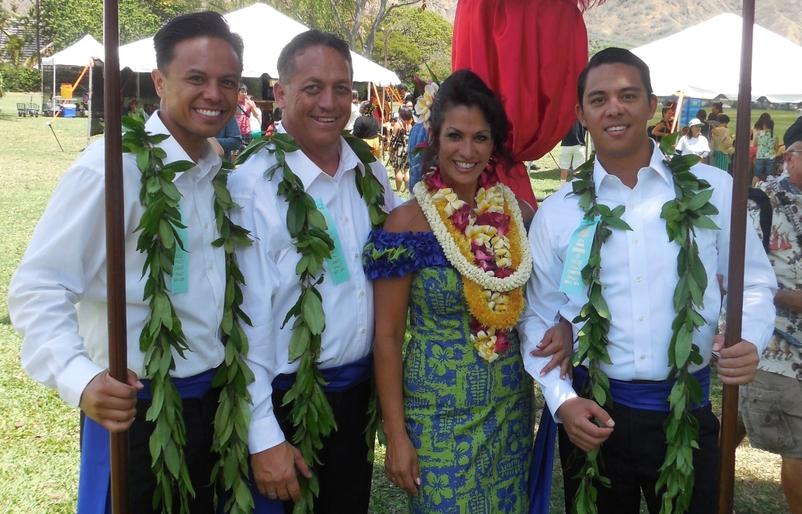
At Hawaiian Airlines, we view giving back as a shared kuleana (responsibility). In celebration of National Volunteer Week and Earth Day, over 70 Team Kōkua volunteers spent the last several days donating over 270 hours of labor to a selection of beloved environmental, cultural and human services organizations. Maximizing the opportunity, we teamed up with the nonprofit Kanu Hawaii, which empowers people to build more environmentally sustainable, compassionate and resilient communities rooted in personal commitments to change. 

Hawaiian Airlines was a proud supporter of Kanu Hawaii’s fourth annual Volunteer Week Hawaiʻi, a local take on National Volunteer Week created to foster volunteerism in the continued prosperity of communities across the state.

Join us as we recap last week’s events and celebrate our employees who donated their time to kōkua (help) others.


Monday: Removing Invasives with Mālama Maunalua

Along Oʻahu’s southeastern shoreline is the picturesque Maunalua Bay, where locals cast their fishing lines, spend time with family and paddle canoes and boards through its shallow waters. Once a marshy ecosystem home to native sea life and waterbirds, the bay’s health has been harmed by development over the past century.

Since 2005, Mālama Maunalua has focused on seabird habitat restoration, data collection, education and outreach in the area. Among the nonprofit’s longstanding effort is removing invasive alien algae (IAA) to restore once-thriving fields of native seagrass and algae.

HAL00148


“These invasive, non-native marine algae species flourish in an environment created by sediment and runoff from the land,” according to the organization’s website. “As IAA spreads, it smothers coral reefs and native algal communities and kills extensive areas of native habitat…Restoring Maunalua Bay takes a community that understands the Bay is in trouble, believes it is worth saving and has hope that the decline can be reversed. Our work is driven by these community members who help improve the quality of Maunalua Bay.”

Twenty-one volunteers waded into the waters at Paikō Beach in Maunalua Bay and pulled detrimental IAA, including gorilla ogo, leather mudweed, and prickly seaweed, from the seafloor.

HAL00167


“The work they [Mālama Maunalua] do is very important, not only for the community but also in keeping Oʻahu’s shores healthy. Their efforts go beyond clearing the shoreline and extend into the community via education and land management,” said Irina De La Torre, senior specialist of community relations at Hawaiian Airlines. “With Earth Day just a few days after, it was the perfect opportunity to remind ourselves that taking caring for a special place like Hawaiʻi is a never-ending labor of love.”


Friday: Loʻi cleanup at Ulupō Heiau

Ulupō Heiau rests on the eastern edge of Windward Oʻahu’s Kawainui Marsh and is the largest heiau (ceremonial place) on Oʻahu. Believed to be over a thousand years old, Ulupō Heiau is cared for by the loving hands of Kauluakalana, a local nonprofit working to revive cultural identity, steward the community, restore connections to ‘āina (land) and renew kuleana (responsibility) in the historic ahupuaʻa (traditional subdivision) of Kailua, Oʻahu. 

1N8A8012


The organization, established in 2019 by a group of Kailua residents, offers immersive, culture-based programs centered around the nonprofit’s vision “to restore and grow healthy relationships between people and place through the aloha ʻāina practices of retelling our Kailua-specific stories, replanting and eating our ancestral foods, and caring for the sacred sites, lands, and waters of our beloved ahupuaʻa of Kailua.”

Team Kōkua volunteers came together at Ulupō Heiau to learn from its caretakers and remove ʻaeʻae, a native weed, and invasive apple snails from a loʻi kalo (taro patch).

1N8A7939


“My ʻohana, Kūaliʻi, has ties to Kailua and Kawainui in particular,” shared ʻIwalani Kualiʻi Kahoʻohanohano, senior specialist of internal communications at Hawaiian Airlines. “This was my first time visiting the area and Kauluakalana provided a space for us to be present – especially with our kupuna [elders], including the ʻāina [land]. Giving back to the ʻāina at and around Ulupō Heiau by getting waist-deep in the loʻi and huli ana i ka lima i lalo (turning our hands down in the work) made me feel more connected to Kawainui than ever. Hearing the moʻolelo (stories) of the significance of this place and working alongside those who keep these stories alive made me proud to have had the chance to contribute with my ʻohana at Hawaiian Airlines.”

[Editor’s note: Have you heard about our Hawaiian Airlines Earth Day logo collection? All proceeds from the collection will be donated to Kauluakalana.]


Friday: Distributing Donations with Hawaii Foodbank

The Hawaii Foodbank has spent nearly four decades ensuring that no one in Hawaiʻi goes hungry, and its role has become even more critical as the COVID-19 economic fallout impacts communities statewide. Since the onset of the pandemic, the Hawaii Foodbank distributed 28 million pounds of food to local families.

foodbankvolunteerweek


In response to the nonprofit’s growing demand for services and, thus, the need for volunteers, Team Kōkua has spent each Friday for over a year helping Hawaii Foodbank staff distribute food boxes to community members in Central Oʻahu. Last week, 16 volunteers once again answered the call and offered their kōkua to those in need.


Saturday: Cleaning Beaches with Sustainable Coastlines Hawaiʻi

Sustainable Coastlines Hawai’i (SCH) works to engage communities to care for Hawaiʻi’s coastlines through fun, educational beach cleanups where participants also learn about the impact everyday purchases have on the environment.

IMG_4887


“In Hawai’i, we see the growing impact of consumerism as plastics wash up on our shores, coming from both our own home and afar, and impact our islands' marine life,” Rafael Bergstrom, executive director of SCH, recently said in a Manaʻo blog post. “Education on how to stop this pollution at the source is what leads to change; this is where you can make an impact.”

Last weekend, SCH safely gathered hundreds of volunteers, including Hawaiian Airlines employees, along the shores of Sherwoods Beach in Waimānalo, Oʻahu, a hotspot for micro-plastics, fishing nets, oyster spacers and more. Nearly 30 of our Team Kōkua members dawned their gloves, purple shirts and reef-safe sunscreen to sift bits of plastic out of the beach’s fine sand.

IMG_4913


“Volunteering with Sustainable Coastlines Hawaiʻi last weekend allowed me to demonstrate a selfless pride in restoring and protecting my island home’s beaches,” said Michelle Nguyen, senior supply chain analyst at Hawaiian Airlines. “Seeing people from all around the island come together to clean Sherwoods Beach embodied the meaning of kuleana and was an enriching experience.”

Alaska Airlines reveals “Our Commitment” aircraft in partnership with UNCF to promote education and equity

We are on a journey to make Alaska Airlines a place where everyone belongs and has opportunity. We also believe education is the key to equity and representation, with the power to transform the lives of young people—opening doors to careers in aviation and beyond. In partnership with UNCF, this special aircraft is a symbol of our commitment to education and advancing racial equity at Alaska Airlines, and we hope it inspires others as well.

One of our diversity, equity and inclusion commitments is to help create career pathways for young people by supporting programs like UNCF, the nation’s largest and most effective minority education organization, who we’ve been working with for more than 15 years. Today, we are proud to reveal a special aircraft that symbolizes our support for education and equity – called “Our Commitment.” We know there is much more to do, and this airplane is a flying reminder of the journey.

“The time is always right to do what is right.” – Rev. Dr. Martin Luther King, Jr.

“Education is the most powerful weapon which you can use to change the world.” – Nelson Mandela

“When you learn, teach, when you get, give.” – Dr. Maya Angelou

Inspired by these words and designed in partnership with Alaska’s Black employees, allies and UNCF, Our Commitment aircraft features profiles of the next generation of leaders — the children, grandchildren and mentees of Alaska’s employees along with teachings from extraordinary social activists. Because when we create belonging, we can be our best and soar together.

“As a company, we know we are not yet where we need to be when it comes to diversity, but we are inspired and guided by our value to do the right thing. With this aircraft, we are doing the right thing by amplifying the conversation around education, equity and belonging and taking it to the skies,” said Ben Minicucci, Alaska Airlines CEO. “This aircraft will continue to be an inspiration for us on the journey.”

‘Education has the power to transport us from where we are to where we want to go.’

This aircraft will fly throughout Alaska’s network, inspiring conversation, raising awareness and spreading the word about UNCF, an organization dedicated to enabling under-represented students to become highly qualified college graduates.

In 2017, UNCF became one of our LIFT Miles partners, enabling guests to contribute airline miles alongside the company to ensure travel does not hold young people back from pursuing their dreams. Today, our company and guests have contributed more than 13.4 million Alaska Airlines miles to fly students to Historically Black Colleges and Universities (HBCUs) for college tours, career development events, and other UNCF programs.

As part of our commitment, Alaska will donate one million miles annually to support students attending HBCUs. We’ve also established a scholarship fund through UNCF to help students overcome the financial obstacles of getting a college education. Learn more about donating miles here.

Dr. Michael L. Lomax, president and CEO of UNCF says, “While small in number, our HBCUs are landmarks to our past and keys to our future. They enable us to keep a legacy — by their very existence. HBCUs are much more than schools. They are places where Black students can feel safe, welcomed, and embraced by the college community. Additionally, the nation’s HBCUs make up just 3% of America’s colleges and universities, yet they produce almost 20% of all African American graduates and 25% of African American graduates in the STEM fields of science, technology, engineering and mathematics  —  the critical industries of the future.”

We are proud to reveal a special livery to celebrate our commitment to equity in education – introducing the “Our Commitment” aircraft. Revenue service for the aircraft begins on April 27, with an inaugural flight from Seattle to Washington D.C.

Our Commitments

Earlier this year, we shared our commitments to racial equity.

Our commitments are not simply a statement of values, they are a statement of actions and accountable goals we believe are essential to making our guests feel welcome and our employees feel valued, respected and seen.

Based on input from employees, we set three areas of focus:

  • Representation: Increasing the racial diversity of our leadership to reflect the diversity of our frontline employees.
  • Culture: Cultivating an inclusive culture so employees feel welcomed and that they belong.
  • Public Leadership: Working with community-based organizations to positively impact the lives of young people through education and career development.

We are expanding our programs for outreach, recruitment and career pathways to cultivate and support diverse talent and continue to work closely with our employee business resource groups and external partners to learn and improve. See our latest DEI progress.

About the aircraft

Where did the idea come from?

As an airline with the unique asset of aircraft, we have a long history of wearing our values on our wings, including our “Honoring those who serve” aircraft, which honors the brave men and women of the U.S. military. We use our aircraft to drive awareness and inspire conversation around topics of importance to our company and the communities we serve.

Alaska employees inspired the aircraft following conversations with Alaska’s Black business resource group known as ABEA or Alaska Air Group Black Employees, Allies & Advocates, around last summer’s civil unrest.

De Marco Best, a Duty Manager of Simulator Operations in Seattle, who has been an ABEA leader since its inception in 2006, says this aircraft is a small part of Alaska’s equity and inclusion efforts. It represents the most visible part of its commitment for the next decade and holds us accountable for creating an equitable future, says Best—for our children, our grandchildren, and us all.

“This airplane supports kids and education. I happen to have an affinity for education and kids, especially underserved youth and those who look like me. I think all kids could be inspired by this plane to find a career that they’ll love. If every child can find a career—not a job— that they are passionate about, it could propel them and create lasting change that instills the power of education,” said Best.

We focused on one key question: How can Alaska do something lasting, inspirational and impactful? With aircraft as our biggest tool, we realized we could create a flying reminder of the work toward equity.

Who are the faces?

The custom-painted Boeing 737-900 ER features artistic renderings of 14 students connected to Alaska’s employees, along with quotes from legendary social activists, Dr. Martin Luther King Jr. and former South African President Nelson Mandela, whose leadership and words continue to drive our commitment. Learn more about the students represented on Our Commitment aircraft.

Who are the designers?

The typography and color palette on the aircraft were created by Adé Hogue, a Chicago-based artist and designer who found inspiration in Civil Rights Movement-era imagery.

“At the beginning, my mind went to protest posters from the 60s and the shape of the design slowly shifted into what you see today,” Hogue said. “A lot of the sort of lettering pieces I do, especially with things like this, I try to use the subject matter as a basis for things I’m creating. I think we integrated something that feels strong and impactful.”

Hogue worked with designer Jonny Mack, who has previously designed ten of Alaska’s special aircraft, to take our employees’ vision and make it a reality.

“Designing artwork for an airplane is incredible. It’s a big challenge and there’s lots of things that go into it. We knew we wanted to illustrate actual people instead of generic profiles that didn’t mean anything—we decided ‘let’s feature real people and have a real story to tell,’” said Mack.

The type treatment, he added, was a critical piece.

“The quotes from activists, thinkers and world changers on the plane are just as important as the people … and are a heavy weight to put on somebody—Adé was the first person I thought of for this project because I’ve seen his work and saw what he was doing in this space for social justice,” said Mack.

Adé Hogue and Jonny Mack met in 2019 at a Letter West design conference in Salt Lake City, sponsored by Alaska Airlines.

What can flyers expect onboard?

Onboard, guests will be able to learn more about the aircraft through a custom seatback card and digital resources featuring bios of the students on the aircraft, details on Alaska’s DEI commitments, and information about UNCF, including how to donate miles to support college students.


Loading...