Last year, more than 15,000 volunteers with the National Forest Foundation worked to restore 67,000 acres of wildlife habitat across the country, repair 125 miles of public trails and engage more than 7,500 young adults in forest restoration activities, introducing the next generation of stewards to their public lands.
And in strategic wildfire-prone areas of California, NFF teams are preventing future disasters by thinning 7,900 acres of forestland within the Tahoe National Forest and more than 4,000 acres in the American River Ranger District near Sacramento.
Participants in the 2019 Junior Field Ranger Program interact with visitors on the Angeles National Forest. (Photo by Brian Cavallaro, courtesy the National Forest Foundation)
Alaska Airlines Mileage Plan members support these and other NFF projects to restore and protect the nation’s 193 million acres of national forests and grasslands by donating miles through Alaska’s LIFT Miles program. These miles allow NFF staff to travel to sites across the National Forest System – from Alaska to California to Washington, D.C. – to meet with partners, host events and volunteer opportunities, and oversee projects. Since 2013, Alaska guests have donated more than 5 million miles in support of the National Forest Foundation work. In 2019, NFF staff traveled more than 1 million miles on Alaska using these donations. Learn more about how to donate miles to the NFF and other causes supported by LIFT Miles.
“Alaska Airlines miles donated to the National Forest Foundation are critical for our work,” says NFF President and CEO Mary Mitsos. “These miles enable us to travel across our voluminous National Forest System to conduct our mission to engage Americans and improve forest health.”
Participants in the 2019 Junior Field Ranger Program clean up a trail in the Angeles National Forest. (Photo by Brian Cavallaro, courtesy the National Forest Foundation)
Here are a few highlights from the National Forest Foundation’s work in 2019:
Engaging young adults with their forests in Southern California
For many urban residents, especially minority youth, access to and knowledge of public lands is limited. At the same time, forests in the backyard of urban areas are suffering the impacts of inexperienced users. In Southern California, the NFF is addressing this challenge through the Junior Field Ranger Program. More than 150 teens have participated in the program over the past six years. Program participants receive STEM-based outdoor education and training as certified California naturalists. This training earns them college credit and provides them with sufficient experience to interact with the public around basic conservation education.
“Before I joined the Junior Ranger Program, I didn’t realize the Angeles National Forest was this close,” says Carlos Regalado, age 16 and a resident of Los Angeles.
A key component of the program includes interacting with forest visitors. Thanks to the Junior Rangers, visitors learn how littering, creating unofficial trails and damming streams can adversely impact local water resources and wildlife habitat.
Helping rural Alaskan youth connect with public lands
The 2019 Angoon YCC poses during a work day on the Tongass National Forest. (Photo courtesy U.S. Forest Service)
For the fifth year, the National Forest Foundation has partnered with other organizations to support the Angoon Youth Conservation Corps (YCC) in Southeast Alaska’s Admiralty Island, where brown bears outnumber residents 3 to 1. For the six Native Alaskan crew members working on the Angoon YCC, this is often their first job.
Throughout the summer, the crew’s primary objectives are conservation-based – maintaining trails, cabins and campsites, and restoring habitat by cleaning up debris along shorelines and removing invasive species. They kayak to and camp at many of the remote sites they are working. The youth also engage other village residents in volunteer events, and have begun a campaign to teach them about the dangers of marine debris to wildlife. In addition to these benefits for the surrounding Tongass National Forest, the participants also acquire professional skills.
Restoring a popular trail in the temperate rainforests of Washington
The NFF, with partner EarthCorps, just completed 500 hours of work to improve the popular Lake 22 Trail on the Mountain Loop Highway near Seattle. The crew upgraded the trail tread to improve drainage and built a new bridge from natural materials. This work will make the hike more pleasant for users, and will keep sediment out of the streams. This work will ensure visitors can continue to access this hike to Lake 22, which combines the best of old-growth rainforests, wetlands, and mountain views on the stunning Mt. Baker-Snoqualmie National Forest.
The NFF will continue projects in this area for the next five years including a new Treasured Landscapes site just east of Everett, Washington. Alaska Airlines miles donated through LIFT Miles will support NFF work to enhance outdoor recreation sites to accommodate increased visitor use; to restore watershed health and aquatic ecosystems to benefit threatened salmon and steelhead as well as other wildlife species; and to increase the number and diversity of people stewarding the National Forest for future generations. Alaska Airlines’ new flights into Paine Field allow NFF staff to travel efficiently to and from the project sites to support implementation.
Alaska Airlines offers daily service to Hawaii Island (Kona), Kauai, Maui and Oahu.
Oahu’s Nainoa Thompson has spent his life pursuing far-fetched adventures. Sailing across the Pacific in a traditional double-hulled canoe, named Hokulea, open to the elements, using the wind and stars for direction? Preposterous. Guide Hokulea around the world for three years? Outrageous. Dangerous, in fact.
In late October 2015, some 16,000 nautical miles into the journey, Hokulea was sailing along the east coast of Africa toward Cape Town, the most dangerous leg of the journey to date. “Everybody said we should put the canoe on a cargo ship to get around South Africa,” Thompson recalls of Hokulea’s most recent journey circling the entire planet.
For more than 40 years, Thompson has studied the stars, wind, currents, waves and animals of the sea to find his way across vast oceans–and to help prove that ancient Polynesians purposefully voyaged to his native Hawaii. Photo by Ingrid Barrentine.
“‘Go ahead,’ I told them. ‘But I quit.’ ” Hokulea stayed in the water and rounded the Cape of Good Hope, a notoriously tempestuous stretch of water. Thompson did not quit, and Hokulea continued on, making goodwill stops along the way, visiting with Indigenous groups in Brazil, the Caribbean, the United States, Canada and islands in the South Pacific before returning to Honolulu in 2017—earning global acclaim and making Thompson perhaps the most famous person in Hawaii.
But Thompson is not the daredevil he may seem. Just the opposite, in fact. He is a savvy leader who balances risk-taking with readiness—and now he is expanding his leadership profile, traveling the world (by air and sea) to support the global Indigenous revival and response to climate change. Thompson visits elementary school classrooms, service-club luncheons, business-leadership summits, and local and national government events. His message is low-key but strong: We must act now to preserve human civilization in the face of global warming and cultural conflict. He believes full preparation, loving cooperation and bold action can make a difference, and his example is Hokulea’s global journey.
Photo by Ingrid Barrentine.
“That three-year global voyage was actually a 10-year journey,” Thompson says of the adventure named Malama Honua—roughly translated as “care for our home.”
“We spent seven years in preparation to sail around the world. People think I’m a risk-taker—and in some ways I am—but I am also extremely cautious. You can do anything with sufficient preparation.”
In person, Thompson is a laid-back Pacific Islander whose careful conversation seems mild and measured. Years of open-ocean adventures have weathered his face. His steady gaze is ideal for charting maritime star maps. His smile blossoms when kids are in the vicinity. And after a lifetime proving the impossible can be done, he is trying to convince the whole human race to take on something that might seem impossible: to spread a message of peace and sustainable living, of care for the earth.
Oddly enough, instead of adventurer, risk-taker and leader, Thompson might have become a dairy farmer. “Milking cows at 5 a.m.,” he says. “That’s what I did when I was a boy.”
Photo by Ingrid Barrentine.
Thompson’s grandfather, Charlie Lucas, owned a dairy operation in the Niu Valley, about 2 miles east of Waikiki. Like almost all ag-family kids, Thompson had farm chores from an early age, though he recalls, “I wasn’t very good at it.”
What he did prove good at was adventure.
Thompson learned wayfinding, thus helping to save the ancient Polynesian art of navigation from extinction. As a wayfinder, he crossed the Pacific on voyaging canoes, then circled the globe in that epic journey, becoming the most visible advocate for and public figure of Polynesian voyaging, representing the achievements of Pacific Indigenous peoples to the world at large.
Nainoa Thompson – Photo by Ingrid Barrentine.
Now 66, he and the organization he heads, the Polynesian Voyaging Society, are transforming their achievements into concepts that directly bear on our entire civilization. Having sailed well more than 175,000 nautical miles, he is in the company of such historic adventurers as James Cook and Vasco da Gama. And as he relates his journeys to others, he speaks of the earth itself as a voyaging canoe, entering perilous waters.
“Our most important challenge lies ahead of us,” he says. “Humanity needs to come together based on values, such as those that made Hokulea possible. The heart of voyaging is not the canoe, or wayfinding, it’s the community behind all those things. Our world is worth it—and we don’t have another one,” Thompson says.
Seeking to spread that message, Thompson and his compatriots will set sail on Hokulea again, next year, departing from Alaska to circumnavigate the Pacific.
Thompson still lives adjacent to what was his grandfather’s farm on the outskirts of Honolulu. But in the past 40 years, guiding a traditional Polynesian voyaging canoe—using ancient navigation techniques such as reading the stars, winds and waves—to prove it could be done, he and his companions in PVS have rewritten our understanding of the way humankind populated the Pacific. Thompson and PVS have painted a new portrait of the indomitable spirit of human beings.
Photo by Ingrid Barrentine.
Without compasses, sextants or other instruments, adventurers thousands of years ago began migrating east and north from Southeast Asia through the islands of the Pacific. Polynesians eventually reached Hawaii—one of the most remote major land masses on Earth, nearly 2,300 miles from North America—where they established a dynamic, self-sustaining civilization that supported an estimated 300,000 Hawaiians by the time Cook arrived in 1778.
That initial contact was long called Cook’s “discovery” of Hawaii. Twentieth-century Western academics and explorers dismissed Hawaiian oral histories of those early crossings as mere myths. Yet the presence of Polynesians throughout the Pacific meant there had to be some explanation. In 1947, Norwegian adventurer Thor Heyerdahl crossed to the French Polynesia island Raroia from South America on a raft (utilizing navigation instruments), on the theory that this was how the South Pacific came to be settled; his book, Kon-Tiki, was a 1950 sensation. Anthropologists such as Andrew Sharp in the mid 1950s dismissed ancient Polynesians as wanderers, incapable of navigation, who were swept across the ocean accidentally to Tahiti, Rapa Nui and Hawaii by storms.
PVS co-founder Ben Finney, a young anthropology student from California, thought this made no sense—and in the early 1970s he met a University of Hawaii professor who handed him the Heyerdahl and Sharp books and issued a challenge: “Read these. They are wrong. Prove it.”
The 62-foot double hulled Hokulea sailed around the world with a rotating crew of 11 to 13 living on an open deck. The canoe has logged more than 250,000 miles over 11 long-distance voyages and numerous training journeys.
Finney joined Hawaiian artist Herb Kane and mariner Tommy Holmes to found PVS for the exact purpose of crossing the Pacific. They built a traditional voyaging canoe, Hokulea, and searched for information on wayfinding. Eventually they discovered a master navigator, Mau Piailug, on a small island in Micronesia—believed to be the last human keeper of wayfinding knowledge.
Meanwhile, Thompson was a young man in love with the ocean—surfing, swimming, paddling, but still looking for his life’s mission. He began doing odd jobs for Kane, and one night at the latter’s house, the artist took young Thompson outside to look at the stars, describing how the stars were the charts PVS would use to cross the Pacific and demonstrate that their ancestors had deliberately sailed to Hawaii.
Thompson says he knew then and there what his life’s mission would be.
By Ingrid Barrentine.
“That night I got sucked into a dream,” he recalls, his eyes still flashing a half-century later. “Herb wanted cultural justice. Ben wanted scientific justice. I wanted the magic of the stars and the canoe. I loved the ocean. I just wanted to go, man.”
PVS convinced Mau to guide Hokulea to Tahiti in 1976, a successful 30-day voyage. But the canoe was forced to return to Hawaii using instruments, and PVS members—especially Thompson—resolved to learn wayfinding so they could sail Hokulea with an entirely Hawaiian crew. Thompson spent a couple years studying with the master navigator, drawing star maps in beach sand, scanning the night skies aboard Thompson’s fishing boat, watching cloud formations in the day, reading ocean swells. A master wayfinder can literally be asleep and awaken when wave patterns shift because the canoe is off course.
Photo by Ingrid Barrentine.
“Nainoa, I can teach you how to go out and back, but I can’t teach you the magic,” Thompson recalls Mau saying, advising his apprentice that it would be 20 years before Thompson could fully “see” the ways of the ocean.
Thompson gained skill and magic enough to help guide the canoe once again to Tahiti and back in 1980, becoming the first Hawaiian to navigate an open-ocean journey to Tahiti in 600 years. The PVS-odyssey plans had been met with great skepticism, but the trips outbound and back were fairly straightforward, and that success replaced derision with awe.
While it is incredible that ancient Polynesians crossed the Pacific in double-hulled canoes using wayfinding; it is equally incredible that a small, committed group of 20th century Hawaiian adventurers revived a nearly lost art and brought history back to life.
Photo by Ingrid Barrentine.
While Thompson’s life illustrates the way that answering an innate urge for adventure might result in great meaning (not to mention fame), the very ideas of voyaging and wayfinding are built on concepts such as self-discipline, self-knowledge, respect for the natural world and care for all onboard. Long-distance voyages are tests of bravery and self-composure. Most of the time, very little happens aside from monitoring the sails and the heading. One experienced voyager describes the experience as “a long series of power naps.”
But occasionally it is much more exciting. Bad weather appears, obscuring the sky; riding out a storm is a test of skill and courage. No matter how wild and risky those first voyages may have seemed, dedication to voyaging principles assured their success, Thompson says.
When PVS proposed that Hokulea journey around the world, many argued that the journey would be too dangerous.
“No matter how dangerous it may seem for us to go, the greater danger lies in keeping Hokulea tied up to shore,” Thompson replied in a characteristically measured remark.
The 62-foot canoe departed Hilo in May 2014 and returned to Honolulu in triumph in June 2017, having taken three years to visit 150 ports in 27 countries, covering 42,000 miles.
Photo by Ingrid Barrentine.
Now an elder among the Native Hawaiian people, and a world figure, Thompson travels the planet to encourage application of voyaging principles to cultural revival, sustainability and human progress. “We have a responsibility to history and culture, and to the canoe we all share,” he declares.
Historically, navigators were men, but today there are a number of young women who are wayfinding apprentices. It’s an innovation Thompson embraced, gently overruling objections from traditionalists. Wayfinding is studied at several universities, where it is considered a science.
Photo by Ingrid Barrentine.
The story of the Polynesian Voyaging Society does lead one to wonder what other chapters of the human story have been lost. How to live in peace with our planet, perhaps? How to live in peace with one another? These are the principles within a traditional Hawaiian philosophy known as “The Way of the Canoe,” which seeks to apply voyaging protocols to daily life as individuals, communities and nations—to respect and care for ourselves, each other, and our natural and cultural environments.
Thompson is a leader among the world’s Indigenous communities, and has thus gained friends and allies among many Native peoples on six continents. Among them are Alaskans, such as the Tlingits of Southeast, who decided long ago to support the PVS mission. Former Alaska Lieutenant Governor Byron Mallott, a Tlingit elder from Juneau and onetime CEO of Sealaska Corporation, donated two immense spruce logs to PVS in 1990 to use in making a new canoe (Hawaiiloa) because there are no longer any sufficiently large koa trees in the Islands.
“Over the years, Nainoa’s family and mine have become close as we have worked together personally and with our institutions to advance our cultures, a healthy planet and stronger ties among Indigenous and all people,” says Mallott. “Nainoa’s innate, palpable and humble spirituality has been a source of strength, and his embracing worldview based on that spiritual core is tied to a powerful vision of a shared planet in peril but capable of healing by caring, committed peoples. This is what defines his powerful leadership. In a sentence, Nainoa is a leader our Island Earth needs now more than ever,” Mallott says.
Why didn’t Thompson stay put on his grandfather’s farm? When Thompson was about 5, a neighbor took him to a beach to go fishing. “It all started with a fishing pole in my hand,” he laughs. “That was the first great gift of my life.”
Much of Charlie Lucas’ farm was long ago transformed into suburbs, with tidy homes, quiet streets and pleasant shopping centers. Resorts line the beach where Thompson first cast a line.
Thompson and his compatriots recognize that they did not create wayfinding or voyaging, and like almost all pathfinders, Thompson unfailingly credits his mentors and teachers, especially Mau.
Photo by Ingrid Barrentine.
But those 20th century adventurers who first set out across the Pacific using the vessels and techniques of the ancients, just to prove it could be done, and had been done, have transformed their achievements into an innovation perfect for the 21st century world—the canoe as metaphor. Today, Hokulea and her sister ships represent our planet, and Thompson says the voyagers’ work has just begun. “Navigation is not just about sailing.”
Thompson offers a simple, concise catalog of his values: family, home, ocean. “And by home I mean our planet,” he says. If you ask what his life has meant, his answer is equally simple: “I stood up for something that matters.”
Eric Lucas lives on a small farm on San Juan Island in the Pacific Northwest’s Salish Sea. This story originally appeared in ALASKA BEYOND MAGAZINE—FEBRUARY 2020.
Hawaiian Holdings Reports 2019 Fourth Quarter and Full Year Financial Results
HONOLULU, Jan. 30, 2020 /PRNewswire/ — Hawaiian Holdings, Inc. (NASDAQ: HA) (the "Company"), parent company of Hawaiian Airlines, Inc. ("Hawaiian"), today reported its financial results for the fourth quarter and full year 2019.
Fourth Quarter 2019 – Key Financial Metrics
GAAP
YoY Change
Adjusted
YoY Change
Net Income
$49.7M
+$18.1M
$45.9M
$(3.3)M
Diluted EPS
$1.07
+$0.43
$0.99
$(0.01)
Pre-tax Margin
9.6%
+3.6 pts.
8.9%
(0.4) pts.
Full Year 2019 – Key Financial Metrics
GAAP
YoY Change
Adjusted
YoY Change
Net Income
$224.0M
$(9.2)M
$218.9M
$(55.9)M
Diluted EPS
$4.71
+$0.09
$4.60
$(0.84)
Pre-tax Margin
10.8%
+0.2 pts.
10.5%
(2.1) pts.
"Hawaiian delivered another year of strong financial results in 2019, despite the heightened competitive capacity environment we faced throughout the year," said Peter Ingram, Hawaiian Airlines president and CEO. "These results are a testament to the competitive advantages we have built and give me great confidence in our ability to continue to execute well in the years ahead. My thanks, as always, go out to the 7,400 outstanding professionals both in the day-to-day operation and in the back office, for keeping us competition-fit, running the best operation in the business, and delivering aloha to our guests day-in and day-out."
Statistical data, as well as a reconciliation of the reported non-GAAP financial measures, can be found in the accompanying tables.
Liquidity and Capital Resources
The Company returned $91.6 million to shareholders in 2019 through $68.8 million in share repurchases and $22.8 million in dividends.
On January 24, 2020 the Company's Board of Directors declared a quarterly cash dividend of 12 cents per share to be paid on February 28, 2020 to all shareholders of record as of February 14, 2020.
As of December 31, 2019 the Company had:
Unrestricted cash, cash equivalents and short-term investments of $619 million.
Outstanding debt and finance lease obligations of $764 million.
2019 Highlights
Operational
Carried 11.8 million passengers in 2019.
Ranked #1 nationally for on-time performance year-to-date through November 2019, as reported in the U.S. Department of Transportation Air Travel Consumer Report, adding to its record of 15 consecutive years as the most punctual airline.
Opened a new 15,000 square-foot Information Technology Center in Tempe, Arizona.
Announced the expansion of its in-house pilot training capabilities with its planned purchase of a Boeing 787-9 flight simulator.
Customer Experience
Debuted newly designed lobbies at Daniel K. Inouye International Airport (HNL), Kahului Airport (OGG), Kona International Airport (KOA), Hilo International Airport (ITO), and Lihue Airport (LIH), as part of its ongoing initiative to improve the day-of travel experience for its guests.
New routes and increased frequencies
North America
Began service on its second East Coast route with new five-times-weekly non-stop flights between Boston Logan International Airport (BOS) and Honolulu (HNL).
Expanded its routes to Northern California with the launch of new daily non-stop flights between Sacramento International Airport (SMF) and Maui (OGG) and expanded service between San Francisco International Airport (SFO) and Honolulu (HNL).
Expanded its routes to Las Vegas with the launch of new four-times-weekly non-stop flights between McCarran International Airport (LAS) and Maui (OGG).
Announced expanded service to the Pacific Northwest with additional thrice-weekly non-stop flights between Seattle-Tacoma International Airport (SEA) and Honolulu (HNL) beginning January 2020.
International
Began service on its sixth Japan route with new four-times-weekly non-stop flights between Fukuoka Airport (FUK) and Honolulu (HNL).
Received final U.S. Department of Transportation approval to operate one additional daily non-stop flight between Tokyo Haneda Airport (HND) and Honolulu (HNL) beginning March 2020.
Product and loyalty
Launched sales of Main Cabin Basic fares in all North American markets, enhancing Hawaiian's product portfolio with a fare option that appeals to the most price-conscious travelers.
Launched a new Hawaiian Airlines mobile app with features designed to improve guests' day-of-travel experience.
Partnerships
Expanded its codeshare agreement with Virgin Australia that offers travelers in more than a dozen Australian and New Zealand cities a broader and more convenient network of flights to Hawai'i.
Fleet and financing
Took delivery of six Airbus A321neo aircraft, increasing the size of its Airbus A321neo fleet to seventeen aircraft.
Retired the last of its Boeing 767 aircraft.
Completed two Japanese Yen-denominated debt financings, collateralized by four Airbus A330 aircraft and two Airbus A321neo aircraft.
Extended the leases on three Airbus A330 and five Boeing 717 aircraft, enabling cost savings while maintaining fleet flexibility for future growth.
People
Celebrated its 90th year of service in the Hawaiian Islands with festivities in the air and on the ground to thank the customers and local communities who supported its evolution from pioneer interisland carrier to global airline.
First Quarter and Full Year 2020 Outlook
The table below summarizes the Company's expectations for the first quarter ending March 31, 2020 and the full year ending December 31, 2020 expressed as an expected percentage change compared to the results for the quarter ended March 31, 2019 or the year ended December 31, 2019, as applicable.
The Company expects its effective tax rate for the full year ending December 31, 2020 to be in the range of 26 percent to 28 percent.
Item
First Quarter
2020 Guidance
GAAP Equivalent
GAAP First Quarter
2020 Guidance
ASMs
Up 7.5 – 10.5%
Operating revenue per ASM
Down 4.5 – 7.5%
Cost per ASM excluding fuel and non-recurring items (a)
Down 1.5 – 4.5%
Cost per ASM (a)
Down 1.8 – 4.3%
Gallons of jet fuel consumed
Up 4.5 – 7.5%
Economic fuel cost per gallon (b)(c)
$1.97
Fuel cost per gallon (b)
$1.93
Item
Full Year
2020 Guidance
GAAP Equivalent
GAAP Full Year
2020 Guidance
ASMs
Up 5.5 – 8.5%
Cost per ASM excluding fuel and non-recurring items (a)
Up 0.5% – Down 2.5%
Cost per ASM (a)
Down 2.0 – 4.4%
Gallons of jet fuel consumed
Up 2.5 – 5.5%
Economic fuel cost per gallon (b)(c)
$1.85
Fuel cost per gallon (b)
$1.83
(a)
See Table 4 for a reconciliation of GAAP operating expenses to operating expenses excluding aircraft fuel and non-recurring items.
(b)
Economic fuel cost per gallon estimates are based on the January 28, 2020 fuel forward curve.
(c)
See Table 3 for a reconciliation of GAAP fuel costs to economic fuel costs.
Investor Conference Call
Hawaiian Holdings' quarterly and full year earnings conference call is scheduled to begin today (January 30, 2020) at 4:30 p.m. Eastern Time (USA). The conference call will be broadcast live over the Internet. Investors may listen to the live audio webcast on the investor relations section of the Company's website at HawaiianAirlines.com. For those who are not available for the live webcast, the call will be archived and available for 90 days on the investor relations section of the Company's website.
About Hawaiian Airlines
Hawaiian® led all U.S. carriers in on-time performance from 2004-2018 as reported by the U.S. Department of Transportation. U.S. DOT results for 2019 will be reported in February. Consumer surveys by Condé Nast Traveler, Travel + Leisure and TripAdvisor have placed Hawaiian among the top of all domestic airlines serving Hawai'i.
Now in its 91st year of continuous service, Hawaiian is Hawai'i's biggest and longest-serving airline. Hawaiian offers non-stop service to Hawai'i from more U.S. gateway cities (13) than any other airline, along with service from Japan, South Korea, Australia, New Zealand, American Samoa and Tahiti. Hawaiian also provides, on average, more than 170 jet flights daily between the Hawaiian Islands, and over 260 daily flights system-wide.
Hawaiian Airlines, Inc. is a subsidiary of Hawaiian Holdings, Inc. (NASDAQ: HA). Additional information is available at HawaiianAirlines.com. Follow Hawaiian's Twitter updates (@HawaiianAir), become a fan on Facebook (Hawaiian Airlines), and follow us on Instagram (hawaiianairlines). For career postings and updates, follow Hawaiian's LinkedIn page.
For media inquiries, please visit Hawaiian Airlines' online newsroom.
Forward-Looking Statements
This press release contains "forward-looking statements" within the meaning of the Private Securities Litigation Reform Act of 1995 that reflect the Company's current views with respect to certain current and future events and financial performance. Such forward-looking statements include, without limitation, the Company's expectations regarding available seat miles, cost per available seat mile, cost per available seat mile excluding fuel, gallons of jet fuel consumed, fuel cost per gallon, and economic fuel cost per gallon each for the quarter ending March 31, 2020 and for the full year ending December 31, 2020; the Company's expectations regarding operating revenue per available seat mile for the quarter ending March 31, 2020; the Company's expected tax rate for 2020; and statements as to other matters that do not relate strictly to historical facts or statements of assumptions underlying any of the foregoing. Words such as "expects," "anticipates," "projects," "intends," "plans," "believes," "estimates," variations of such words, and similar expressions are also intended to identify such forward-looking statements. These forward-looking statements are and will be, as the case may be, subject to many risks, uncertainties and assumptions relating to the Company's operations and business environment, all of which may cause the Company's actual results to be materially different from any future results, expressed or implied, in these forward-looking statements. These risks and uncertainties include, without limitation, the Company's ability to accurately forecast quarterly and annual results; economic volatility; macroeconomic developments; political developments; the price and availability of aircraft fuel; fluctuations in demand for transportation in the markets in which the Company operates, including due to the occurrence of natural disasters, such as hurricanes, earthquakes and tsunamis; the Company's dependence on tourist travel; labor negotiations and related developments; competitive pressures, including the potential impact of rising industry capacity in the markets in which the Company competes; the Company's ability to continue to generate sufficient cash flow to support the payment of a quarterly dividend; changes in the Company's future capital needs; foreign currency exchange rate fluctuations; and the Company's ability to implement its growth strategy.
The risks, uncertainties and assumptions referred to above that could cause the Company's results to differ materially from the results expressed or implied by such forward-looking statements also include the risks, uncertainties and assumptions discussed from time to time in the Company's other public filings and public announcements, including the Company's Annual Report on Form 10-K and the Company's Quarterly Reports on Form 10-Q, as well as other documents that may be filed by the Company from time to time with the Securities and Exchange Commission. All forward-looking statements included in this document are based on information available to the Company on the date hereof. The Company does not undertake to publicly update or revise any forward-looking statements to reflect events or circumstances that may arise after the date hereof even if experience or future changes make it clear that any projected results expressed or implied herein will not be realized.
Table 1.
Hawaiian Holdings, Inc.
Consolidated Statements of Operations
(in thousands, except for per share data) (unaudited)
Three Months Ended December 31,
Twelve Months Ended December 31,
2019
2018
% Change
2019
2018
% Change
(in thousands, except per share data)
Operating Revenue:
Passenger
$
648,782
$
638,799
1.6
%
$
2,597,772
$
2,602,793
(0.2)
%
Other
59,355
58,666
1.2
%
234,456
234,618
(0.1)
%
Total
708,137
697,465
1.5
%
2,832,228
2,837,411
(0.2)
%
Operating Expenses:
Wages and benefits
185,659
167,813
10.6
%
723,656
684,719
5.7
%
Aircraft fuel, including taxes and delivery
137,283
150,140
(8.6)
%
542,573
599,544
(9.5)
%
Aircraft rent
27,131
32,428
(16.3)
%
118,904
125,961
(5.6)
%
Maintenance materials and repairs
67,233
63,530
5.8
%
249,772
239,759
4.2
%
Aircraft and passenger servicing
43,972
40,589
8.3
%
164,275
157,796
4.1
%
Commissions and other selling
33,618
32,833
2.4
%
130,216
129,315
0.7
%
Depreciation and amortization
39,632
38,329
3.4
%
158,906
139,866
13.6
%
Other rentals and landing fees
33,845
31,677
6.8
%
129,622
126,903
2.1
%
Purchased services
33,261
36,547
(9.0)
%
131,567
131,651
(0.1)
%
Contract terminations expense
—
—
—
%
—
35,322
(100.0)
%
Other
37,219
34,230
8.7
%
155,260
152,207
2.0
%
Total
638,853
628,116
1.7
%
2,504,751
2,523,043
(0.7)
%
Operating Income
69,284
69,349
(0.1)
%
327,477
314,368
4.2
%
Nonoperating Income (Expense):
Interest expense and amortization of debt discounts and issuance costs
(6,596)
(8,373)
(27,864)
(33,001)
Interest income
3,378
2,713
12,583
9,242
Capitalized interest
779
1,473
4,492
7,887
Gains (losses) on fuel derivatives
494
(21,474)
(6,709)
5,590
Other components of net periodic benefit cost
(920)
(282)
(3,864)
(825)
Other, net
1,490
(1,887)
(1,119)
(2,103)
Total
(1,375)
(27,830)
(22,481)
(13,210)
Income Before Income Taxes
67,909
41,519
304,996
301,158
Income tax expense
18,192
9,883
81,012
67,958
Net Income
$
49,717
$
31,636
$
223,984
$
233,200
Net Income Per Common Stock Share:
Basic
$
1.07
$
0.65
$
4.72
$
4.63
Diluted
$
1.07
$
0.64
$
4.71
$
4.62
Weighted Average Number of Common Stock Shares Outstanding:
Basic
46,402
48,946
47,435
50,338
Diluted
46,658
49,163
47,546
50,488
Cash Dividends Declared Per Common Share
$
0.12
$
0.12
$
0.48
$
0.48
Table 2.
Hawaiian Holdings, Inc.
Selected Statistical Data
(in thousands, except as otherwise indicated) (unaudited)
Three Months Ended December 31,
Twelve Months Ended December 31,
2019
2018
% Change
2019
2018
% Change
(in thousands, except as otherwise indicated)
Scheduled Operations (a) :
Revenue passengers flown
2,893
2,887
0.2
%
11,737
11,830
(0.8)
%
Revenue passenger miles (RPM)
4,520,090
4,280,809
5.6
%
17,808,913
17,198,985
3.5
%
Available seat miles (ASM)
5,242,919
5,059,708
3.6
%
20,568,476
20,158,139
2.0
%
Passenger revenue per RPM (Yield)
14.35
¢
14.92
¢
(3.8)
%
14.59
¢
15.13
¢
(3.6)
%
Passenger load factor (RPM/ASM)
86.2
%
84.6
%
1.6
pt.
86.6
%
85.3
%
1.3
pt.
Passenger revenue per ASM (PRASM)
12.37
¢
12.63
¢
(2.1)
%
12.63
¢
12.91
¢
(2.2)
%
Total Operations (a) :
Revenue passengers flown
2,898
2,891
0.2
%
11,751
11,840
(0.8)
%
RPM
4,526,797
4,285,036
5.6
%
17,826,887
17,206,703
3.6
%
ASM
5,255,202
5,067,412
3.7
%
20,596,711
20,171,911
2.1
%
Passenger load factor (RPM/ASM)
86.1
%
84.6
%
1.5
pt.
86.6
%
85.3
%
1.3
pt.
Operating revenue per ASM (RASM)
13.47
¢
13.76
¢
(2.1)
%
13.75
¢
14.07
¢
(2.3)
%
Operating cost per ASM (CASM)
12.16
¢
12.40
¢
(1.9)
%
12.16
¢
12.51
¢
(2.8)
%
CASM excluding aircraft fuel and non-recurring items (b)
9.54
¢
9.46
¢
0.8
%
9.54
¢
9.36
¢
1.9
%
Aircraft fuel expense per ASM (c)
2.62
¢
2.97
¢
(11.8)
%
2.62
¢
2.97
¢
(11.8)
%
Revenue block hours operated
56,246
53,440
5.3
%
218,801
208,809
4.8
%
Gallons of jet fuel consumed
68,454
67,751
1.0
%
270,001
273,783
(1.4)
%
Average cost per gallon of jet fuel (actual) (c)
$
2.01
$
2.22
(9.5)
%
$
2.01
$
2.19
(8.2)
%
Economic fuel cost per gallon (c)(d)
$
2.05
$
2.20
(6.8)
%
$
2.06
$
2.10
(1.9)
%
(a)
Includes the operations of the Company's contract carrier under a capacity purchase agreement.
(b)
See Table 4 for a reconciliation of GAAP operating expenses to operating expenses excluding aircraft fuel and non-recurring items.
(c)
Includes applicable taxes and fees.
(d)
See Table 3 for a reconciliation of GAAP fuel costs to economic fuel costs.
Table 3. Hawaiian Holdings, Inc. Economic Fuel Expense (in thousands, except per-gallon amounts) (unaudited)
The Company believes that economic fuel expense is a good measure of the effect of fuel prices on its business as it most closely approximates the net cash outflow associated with the purchase of fuel for its operations in a period. The Company defines economic fuel expense as GAAP fuel expense plus losses/(gains) realized through actual cash (receipts)/payments received from or paid to hedge counterparties for fuel hedge derivative contracts settled during the period.
Three Months Ended December 31,
Twelve Months Ended December 31,
2019
2018
% Change
2019
2018
% Change
(in thousands, except per-gallon amounts)
Aircraft fuel expense, including taxes and delivery
$
137,283
$
150,140
(8.6)
%
$
542,573
$
599,544
(9.5)
%
Realized (gains)/losses on settlement of fuel derivative contracts
3,108
(990)
(413.9)
%
12,403
(25,563)
(148.5)
%
Economic fuel expense
$
140,391
$
149,150
(5.9)
%
$
554,976
$
573,981
(3.3)
%
Fuel gallons consumed
68,454
67,751
1.0
%
270,001
273,783
(1.4)
%
Economic fuel costs per gallon
$
2.05
$
2.20
(6.8)
%
$
2.06
$
2.10
(1.9)
%
Estimated three months ending
March 31, 2020
Estimated full year ending
December 31, 2020
(in thousands, except per-gallon amounts)
Aircraft fuel expense, including taxes and delivery
$
129,926
–
$
133,739
$
505,590
–
$
520,576
Realized (gains)/losses on settlement of fuel derivative contracts
2,900
–
2,900
6,400
–
6,400
Economic fuel expense
$
132,826
–
$
136,639
$
511,990
–
$
526,976
Fuel gallons consumed
67,424
–
69,360
276,752
–
284,852
Economic fuel costs per gallon
$
1.97
–
$
1.97
$
1.85
–
$
1.85
Table 4. Hawaiian Holdings, Inc. Non-GAAP Financial Reconciliation (in thousands, except per-share and CASM data) (unaudited)
The Company evaluates its financial performance utilizing various GAAP and non-GAAP financial measures, including net income, diluted EPS, CASM, PRASM, RASM, Passenger Revenue per RPM and EBITDAR. Pursuant to Regulation G, the Company has included the following reconciliation of reported non-GAAP financial measures to comparable financial measures reported on a GAAP basis. The adjustments are described below:
Changes in fair value of derivative contracts, net of tax, are based on market prices for open contracts as of the end of the reporting period. This line item includes the unrealized amounts of fuel derivatives (not designated as hedges) that will settle in future periods and the reversal of prior period unrealized amounts.
Unrealized loss (gain) on foreign debt is based on fluctuations in foreign exchange rates related to foreign-denominated debt agreements.
Loss (gain) on sale of aircraft is the result of adjustments to the final purchase price for three of the Company's Boeing 767-300 aircraft included in a forward sale agreement entered into in January 2018 and described below. During the three and twelve months ended December 31, 2018, the Company recorded a gain of $1.5 million and a loss of $0.3 million, respectively. During the twelve months ended December 31, 2019, the Company recorded a gain on disposal for Boeing 767-300 aircraft equipment of $1.9 million in conjunction with the retirement of its Boeing 767-300 fleet.
During the twelve months ended December 31, 2018, the Company terminated two contracts which resulted in a $35.3 million contract terminations expense. In February 2018 the Company exercised its right to terminate its purchase agreement with Airbus for six Airbus A330-800neo aircraft and the purchase rights for an additional six Airbus A330-800neo aircraft. The Company recorded a contract terminations expense to reflect a portion of the termination penalty. In January 2018 the Company entered into a transaction with its lessor to early terminate three Boeing 767-300 aircraft leases and concurrently entered into a forward sale agreement for the same three Boeing 767-300 aircraft, including two Pratt & Whitney 4060 engines for each aircraft. These aircraft were previously accounted for as operating leases. In order to exit the leases and purchase the aircraft, the Company agreed to pay a total of $67.1 million (net of all deposits) of which a portion, $35.3 million, was expensed immediately and recognized as a lease termination fee. The expensed amount represents the total purchase price over fair value of the aircraft purchased as of the date of the transaction.
The Company believes that excluding the impact of these derivative adjustments, fluctuations in foreign exchange rates, the sale of aircraft and equipment, termination of contracts expense, and the tax effects of such adjustments helps investors better analyze the Company's operational performance and compare its results to other airlines in the periods presented.
Three Months Ended December 31,
Twelve Months Ended December 31,
2019
2018
2019
2018
Total
Diluted
Per Share
Total
Diluted
Per Share
Total
Diluted
Per Share
Total
Diluted
Per Share
(in thousands, except per share data)
GAAP net income, as reported
$
49,717
$
1.07
$
31,636
$
0.64
$
223,984
$
4.71
$
233,200
$
4.62
Add (deduct): changes in fair value of derivative contracts
(3,602)
(0.08)
22,464
0.46
(5,694)
(0.13)
19,973
0.39
Add: unrealized loss (gain) on foreign debt
(1,558)
(0.03)
2,711
0.05
696
0.02
380
0.01
Add: loss (gain) on sale of aircraft
—
—
(1,535)
(0.03)
(1,948)
(0.04)
309
0.01
Add: contract terminations expense
—
—
—
—
—
—
35,322
0.70
Deduct: tax effect of adjustments
1,370
0.03
(6,066)
(0.12)
1,845
0.04
(14,365)
(0.29)
Adjusted Net Income
$
45,927
$
0.99
$
49,210
$
1.00
$
218,883
$
4.60
$
274,819
$
5.44
Three months ended
December 31,
Twelve months ended
December 31,
2019
2018
2019
2018
(in thousands)
Income Before Income Taxes
$
67,909
$
41,519
$
304,996
$
301,158
Add (deduct): changes in fair value of derivative contracts
(3,602)
22,464
(5,694)
19,973
Add: unrealized loss (gain) on foreign debt
(1,558)
2,711
696
380
Add: loss (gain) on sale of aircraft
—
(1,535)
(1,948)
309
Add: contract terminations expense
—
—
—
35,322
Adjusted Income Before Income Taxes
$
62,749
$
65,159
$
298,050
$
357,142
Operating Costs per Available Seat Mile (CASM)
The Company has separately listed in the table below its fuel costs per ASM and non-GAAP unit costs, excluding fuel and non-recurring items. These amounts are included in CASM, but for internal purposes the Company consistently uses cost metrics that exclude fuel and non-recurring items (if applicable) to measure and monitor its costs.
The Company excludes unrealized (gains) losses from fuel derivative contracts and foreign debt, losses on the sale of aircraft and non-recurring items from pre-tax margin for the same reasons as described above.
Three months ended
December 31,
Twelve months ended
December 31,
2019
2018
2019
2018
Pre-Tax Margin, as reported
9.6
%
6.0
%
10.8
%
10.6
%
Add: changes in fair value of derivative contracts
(0.5)
3.2
(0.2)
0.7
Add: unrealized loss (gain) on foreign debt
(0.2)
0.4
0.0
0.0
Add: loss (gain) on sale of aircraft
—
(0.3)
(0.1)
0.0
Add: contract terminations expense
—
—
—
1.3
Adjusted Pre-Tax Margin
8.9
%
9.3
%
10.5
%
12.6
%
Leverage ratio
The Company uses adjusted total debt, including aircraft rent, in addition to long-term adjusted debt and finance leases, to represent long-term financial obligations. The Company excludes unrealized (gains) losses from fuel derivative contracts, losses on extinguishment of debt, and non-recurring items from earnings before interest, taxes, depreciation, amortization and rent (EBITDAR) for the reasons as described above. Management believes this metric is helpful to investors in assessing the Company's overall debt.
Twelve months ended
December 31, 2019
(in thousands, except
Leverage Ratio)
Debt and finance lease obligations
$
764,245
Plus: Aircraft leases capitalized at 7x last twelve months' aircraft rent
832,328
Adjusted debt and finance lease obligations
$
1,596,573
EBITDAR:
Income Before Income Taxes
$
304,996
Add back:
Interest and amortization of debt expense
27,864
Depreciation and amortization
158,906
Aircraft rent
118,904
EBITDAR
$
610,670
Adjustments:
Add: changes in fair value of derivative contracts
Our people are the heart of our business, and the reason we’re an award-winning airline. Our people always go above and beyond—on nights, weekends and holidays—to take care of our guests, each other and our communities.
Today, we’re awarding more than $130 million in annual bonuses to recognize their passion, dedication and hard work. For most employees, this equates to more than 7% of their annual pay in 2019, about a month’s extra pay. Employees also earned an additional $20 million throughout 2019 for meeting monthly operational goals.
Each year we adjust our incentive pay plans to align with our annual business objectives. Last year’s performance-based payout was determined by meeting or exceeding specific company-wide goals for safety, operational and guest-facing performance.
“I’m so proud of all the great things this team accomplished together in 2019. It was a pivotal year for Alaska as we put the integration further into our rearview mirror,” said Alaska President Ben Minicucci. “For the 11th-straight year, we exceeded our annual targets for incentive pay, and I’m happy that all 23,000 employees will be sharing in that success. As more people fly Alaska, they get to know what we’re all about: We’re safe, on time, a great value, and our people care more. That’s a powerful combination – and I’m excited about where it will take us.”
Breakdown of our yearly bonus, called Performance Based Pay (PBP) in 2019 by region:
About $70 million in annual bonuses — nearly 53 percent of the total — is being paid to Alaska Airlines and Horizon Air employees across Washington
$31 million — or 23 percent of the total — is going to employees throughout California
$13 million is being paid to employees in Oregon
$9 million is going to employees throughout the state of Alaska
Alaska Airlines and Horizon Air aim to hire nearly 2,800 employees in 2020
If you’ve ever wanted to fly for a living, work on planes or help passengers on their journeys, this could be the year to come work with us and jump into the fast-growing world of aviation.
Alaska Airlines and Horizon Air are announcing plans, as part of a 2020 jobs forecast, to hire nearly 2,800 employees in the coming year: from pilots and flight attendants to maintenance technicians and customer service agents in frontline positions, to software developers and product designers on the e-commerce team.
Most of the new jobs are based at the companies’ two hubs in Seattle and Portland. A majority of the positions do not require previous airline experience. The openings will be posted on alaskaair.jobs throughout the year.
“We’re hiring! And we’re eager to welcome more great people at Alaska and Horizon,” said Andy Schneider, Alaska’s vice president of people. “We offer a wide variety of positions at both airlines, including jobs in airport operations that can lead to growth opportunities within the companies. There’s always the potential to move up the ladder.”
Many employees who start off as a customer service agent, passenger service agent or ground service agent at Alaska or Horizon can move into other roles, including becoming flight attendants, supervisors or transition into corporate roles.
Here’s a look at the approximate number of positions in specific areas we’re aiming to fill most quickly:
Positions
Alaska
Horizon
Pilots
About 200
200
Flight attendants
166
About 150
Maintenance technicians
60
30
Ground service agents
—
About 450
Customer service agents / Passenger service agents
945
220
E-commerce software developers and product designers
25
—
Information technology services software engineers
22
—
Even though most of the jobs are based in the Pacific Northwest, we’re still hiring across our network. For Horizon, hundreds of ground service agent and passenger service agent job openings are at other airports outside of Sea-Tac.
We pride ourselves on providing career development in an inclusive workplace where you can grow your career. We provide travel privileges to explore and connect with family and friends; unique pay bonus programs to reward you when the company does well; and competitive benefits for your health and wellness.
Interested in the possibilities? The place to learn more is alaskaair.jobs.
Flyback Friday: Amelia Earhart’s Historical Day with Our Founders
The name Amelia Earhart does more than ring a bell in the aviation industry; it evokes a sense of adventure and nostalgia. She built her legacy by overcoming gender barriers and breaking records, including becoming the first female (and second person ever) to fly alone across the Atlantic Ocean.
Days before marking her great achievement, Inter-Island Airways, the former name of our airline, hosted the pioneer during her visit to the islands. Capt. Charles Irving “Sam” Elliott, the man who flew our maiden flight from Honolulu to Hilo in 1929, invited Earhart to join him in piloting a Sikorsky S-38 to Hilo. The duo, accompanied by Inter-Island Airways founder and president Stanley C. Kennedy, his son Stanley Kennedy Jr., and Earhart’s husband and publicist George Putnam, departed Honolulu’s John Rogers Airport and landed at Hilo Airport. The trip took an estimated two hours to complete.
[Editor’s note: Today, a flight from Honolulu to Hilo takes approximately 55 minutes.]
The group was greeted on the tarmac by local dignitaries and later led to Hawai‘i Volcanoes National Park to visit Kīlauea’s Halema‘uma‘u Crater and pay respects to Pele, the Hawaiian goddess of fire and volcanoes.
Afterward, they were escorted to Hilo’s Banyan Drive, where they planted a young Banyan tree that stills stands today. Town leaders frequently invited celebrities to participate in the tree planting program to encourage tourism in the sleepy Big Isle town.
Kennedy and Earhart, shovels in hand, worked together to pack the seedling into the ground before making their final return to Honolulu. Island of Hawai‘i visitors can relive history by visiting Hilo and grabbing a selfie under the growing 85-year-old tree.
Embrace safe, responsible and mindful travel in Hawaii
Alaska Airlines offers daily service to Hawaii Island (Kona), Kauai, Maui and Oahu.
My father’s tree is a cute little iliahi, a sandalwood that is barely a foot tall. I’ve planted it in the crumbly cinnamon-colored volcanic soil at 2,600 feet up the east slope of Mauna Kea, the world’s tallest mountain (as measured from its seafloor base), in a little clearing amid 50-foot ohia and koa trees. Dad would be happy with this memorial planting. He was a geologist, avidly interested in travel and the natural world, and supported my own adventures in those realms.
Photo courtesy of Hawaiian Legacy
We chant in the calm morning, led by Kekaiokalani Naone, a Hawaiian cultural practitioner: “I ola no oe, I ola no makou nei.” (You live so that we may live.) This blessing is a traditional Hawaiian planting invocation. In this case it’s for the tree, though I reflect on how it applies to my father, too. He passed on six years ago, but my understanding of many indigenous beliefs is that our ancestors are with us every day—even on this day, as I work here with Hawaiian Legacy Reforestation Initiative, the organization guiding this planting project. It’s an activity popular with visitors to Hawaii Island: The “Planter’s Tour” of the company’s midmountain forestland near the Hamakua Coast is an opportunity for guests to help restore native woodlands on the island while they experience a scenic excursion.
This activity is a modest example of a concept known as kuleana that’s gaining prominence in the Aloha State—a philosophy that promotes a heightened awareness of heritage, culture, conservation and safety. State tourism authorities, lodging and activity providers, community leaders and government officials are cultivating the idea in order to protect the things that make Hawaii special. They are asking guests to the Islands to embrace the effort.
“We believe our visitors care about perpetuating the uniqueness of this place,” explains Jay Talwar, chief marketing officer at the Hawaii Visitors and Convention Bureau (which is part of the Hawaii Tourism Authority).
Like many Hawaiian words, “kuleana” is a complex term that is difficult to express concisely in English. Kuleana embraces multiple concepts, including integrity, responsibility, stewardship, courtesy, tradition and respect for nature (and natural hazards).
Photo by Andrew Richard Hara
On one level, kuleana can be illustrated by the example of taking responsibility for your family’s safety around the ocean—being alert at all times in or near the water, not taking the sea for granted, not turning your back on the waves. And if you are less than an expert ocean swimmer, choosing beaches with lifeguards.
“If in doubt, don’t go out,” says Jason Cohn, president of Hawaii Forest & Trail, one of the biggest tour operators in the state and a purveyor of adventures on Hawaii Island and Oahu. The company’s offerings range from volcano-oriented day trips to waterfall hikes along little-traveled streams that plunge down from the island’s volcanic peaks.
Similar exercise-good-judgment principles apply to hiking in the Islands. You want to be sure you carry essential gear, mind the weather, be watchful that you only enter lands that are open to you, respect the landscape and its history … and enjoy your experiences.
On another level, kuleana is about seeking experiences that enhance your knowledge of natural and cultural history. I join a Hawaii Forest & Trail tour led by Cohn up a hillside on the north end of Kohala, the oldest of Hawaii Island’s volcanoes. Here, the outfitter takes visitors on walks in a small, privately owned gulch in the community of Hawi. We cross a trestle over the Kohala Ditch, an irrigation flume that has carried water to crops since the early 1900s—and Cohn tells us about the history of local sugar cane farming. We visit a small clearing where we can see traditional Hawaiian food plants such as kalo (taro), breadfruit, banana and sweet potato, all growing in a restored farming terrace. We navigate dense, dark stands of strawberry guava, an invasive nonnative plant that has overtaken much of Hawaii’s original forest and that people work to remove. And we learn the safe way to approach and plunge into a shimmering pool beneath a small waterfall—watching our footing on slick rocks and checking carefully for hazardous rocks above and below the water’s surface.
“Amazing how cool and refreshing it is,” Cohn enthuses. Immersing visitors in Hawaiian lands and heritage, he believes, helps create context that will boost a sense of place, which in turn leads to greater care for the Islands—and an enhanced vacation experience.
Cohn is one of 15 community leaders whom the Hawaii Tourism Authority and Hawaii Visitors and Convention Bureau have enlisted as spokespeople in videos designed to help visitors understand and practice kuleana. Ocean experts, cultural practitioners, artisans, business owners and journalists all explain why the Islands are unique, and how visitors can help keep them that way. Visitors can look for the film clips on, among other places, Alaska Airlines flights to Hawaii. Kuleana Campaign videos can also be found on YouTube.
In one video, Oahu conservationist Ocean Ramsey advises you to use reef-safe sunscreen. Coral-killing sunscreens are banned in Hawaii, but visitors may unwittingly bring unsafe products from home. In another video, Maui meteorologist Malika Dudley urges you to make sure you’re signing up for a private accommodation that is legitimately licensed for rental. In yet another, Kauai-based cultural practitioner Sabra Kauka suggests devoting some time to volunteer work that helps preserve Hawaii.
That’s what I do one morning at Hawaii Volcanoes National Park, one of the state’s highest-profile destinations. This time, I’ve enlisted in the invasive-species battle against a plant that at first glance may seem quite desirable. Himalayan ginger’s tall stems with glossy evergreen leaves are topped by attractive spires of fragrant flowers in rich yellow and orange. It’s a ubiquitous landscape plant in the Islands, seen in many backyard gardens. But it’s also an aggressive plant that has escaped its confined landscaping uses and is outcompeting native species in some areas.
“Amazing what a difference our effort makes,” observes crew leader Jane Field of the newly open, sun-strewn little clearing I’ve made in the woods about a mile from the park’s visitor center. I worked on one ginger patch while others tackled nearby areas. Using big pruning shears, I cut 6-foot ginger spires and stacked them carefully where they wouldn’t suffocate little native plants struggling to grow. I yanked out a few invasive guava seedlings, as well, trying to make room for the ferns and flowering shrubs that are endemic to the forest.
Photo courtesy of Hawaii Volcanoes National Park
Field and her husband, Paul, lead weekly work sessions at the park under a program called Stewardship at the Summit. It’s one of dozens of volunteer endeavors visitors are welcome to participate in.
If even a small portion of Hawaii travelers took part in such activities, the effect would be enormous. With more than 10 million visitors a year—about a third of them from foreign countries—Hawaii is among the most popular and best-known travel destinations on Earth. Each year, travel contributes about $20 billion directly to the state’s economy, a fifth of all economic activity in the Islands.
Hawaii residents and community leaders welcome the visitors who reach the chain of islands; the Aloha State is known worldwide for its nickname. Aloha means, among other things, “welcome.” But, as Talwar points out, the meaning of “aloha” also includes respect and care, as does the meaning of “kuleana.”
Photo courtesy of Hawaii Volcanoes National Park
Hawaii is one of many destinations asking guests to be more conscious of their actions while traveling. Responsible-travel campaigns are taking hold around the world, from Canada to Italy to Peru. The Republic of Palau, a small Pacific Island nation, stirred global notice when, in 2017, it enacted the Palau Pledge that all visitors are required to sign before entering the country. This pledge, addressed to the children of the nation, is stamped in passports and compels signees to tread lightly and respectfully.
Most destinations opt for Hawaii’s approach, which is to promote nonmandatory cooperation in the hope that visitors will realize that awareness around sustainability and safety is for everyone’s benefit. Voluntary pledges for visitors were first introduced on Hawaii Island and on Kauai in recent years. Visitors pledge to be pono (translated as “righteous”) when they sign the Island of Hawaii Pono Pledge (ponopledge.com). There is also some hope that this vow, along with Kauai’s Aloha Pledge (alohapledge.com), may inspire a statewide version tied to the Kuleana Campaign and its awareness videos.
“Hawaii touches your heart—and we all want to protect that,” says Sue Kanoho, executive director of the Kauai Visitors Bureau. “We hope these videos plant the seed for people to be more aware of the people and the place.”
Kauai has struggled with unwelcome behaviors, such as large numbers of visitors encroaching on private land or crossing barriers to access dangerous waterfalls. The Kauai Visitors Bureau and Hawaii Tourism Authority discourage geotagging, a practice of labeling locations where photos were taken, which has been linked to accidents, trespassing and overcrowding. Authorities ask that, if you find a special spot, you take pictures as mementos, and share them judiciously. They request that you not post something that could draw thousands to a steep cliff, or onto private or sacred land.
“Would you go up to somebody’s house, open the door and walk in without knocking?” asks Puni Patrick, a kumu hula (hula teacher) and Hawaiian cultural practitioner on Kauai who harvests salt at an ancient salt-pond complex near Waimea on Kauai’s south shore. Located next to a state park popular with campers and picnickers, the salt-pond complex is not an appropriate area for passersby to simply wander into.
Hawaiians have been making salt here for many centuries. It is a treasured place where more than 20 families now continue the annual salt-making heritage that once was a crucial art for those who thrived in the tropics, without refrigeration. According to legend, the goddess Pele came by on her search for a home in the Islands, and the salt-making ponds epitomize the amazing indigenous Hawaiian lifestyle that enabled people to live self-sufficient lives in these islands. Some families who enter the salt-pond area with guests first perform a chant/song that asks permission and calls on the spirits of those who have worked here for centuries.
Photo courtesy of Four Seasons Resort Hualalai
While the lands, waters, wildlife and other physical attributes of the Islands are among the many ingredients that make Hawaii unique, the indigenous cultural and spiritual heritage of Hawaii is perhaps its most distinctive feature—one that is easy for visitors to observe today.
The Hawaiian language, for instance, is a beautiful, evocative tongue enjoying a marvelous renaissance. Linguistic learning opportunities for visitors include quick tips on pronouncing words from bartenders at The Olelo Room, a Hawaiian-language-inspired lounge at Aulani, A Disney Resort & Spa on Oahu. They also include whole weekslong classes tailored to the many mainlanders who spend several months in the Islands in winter. The language app Duolingo also has Hawaiian capabilities.
Hula classes, once rare, are ubiquitous now; among the most popular are the sessions throughout the week at Waikiki’s Royal Hawaiian Center, where guests learn that hula is a deeply meaningful cultural practice.
Nearby, at The Royal Hawaiian, a Luxury Collection Resort, guests can join a sunrise ceremony in which participants immerse themselves in the ocean and perform a chant that thanks the sun for its return, and blesses our ancestors for bringing us to this day. My participation a few years ago in this type of ceremony, at The Ritz-Carlton, Kapalua, on Maui, was the first time I invoked my father’s spirit in the Islands.
“I want people to enjoy what I have enjoyed for 70 years, in the way I was brought up,” says Earl Kamakaonaona Regidor, cultural adviser at the Four Seasons Hualalai on Hawaii Island, and a Kuleana Campaign ambassador.
Regidor’s mother was full-blooded Native Hawaiian, and her guidance helped him create a sense of kuleana that is specific to the island he inhabits. Visitors to the resort’s Kaupulehu Cultural Center can learn words in the Hawaiian language, lauhala weaving, lei-making or ukulele playing—many of these taught by Regidor himself.
Regidor credits his ancestors for teaching him the kuleana way of life. His father, for example, would bring him down to the shore (at the exact location where Regidor now works) and they’d fish … for just a half-hour. Regidor recalls asking, “Dad, why did we come all the way here just to spend a half-hour?”
“Because it’s right to take only what you need—not what you want,” his father told him.
“Respect the people, the culture and the history,” Regidor urges. “My mother taught me: ‘Don’t live in the past, but learn from it.’
“She said it best when you are talking about kuleana,” he muses. “ ‘Respect everything,’ she told me. ‘Everything.’ ”
Eric Lucas lives on San Juan Island in Washington state. This story originally appeared in ALASKA BEYOND MAGAZINE—JANUARY 2020.
The formula to looking fly: Incorporating safety, employee feedback into custom uniforms
A day in the life of an airline uniform is hard. They brush through bustling airport crowds. They stretch to close overhead bins. They stand up to scorching heat and arctic cold as baggage is loaded, bolts are turned and fuel is measured.
And then they’re washed, dried, and expected to do it again. And again. And again.
So, when we set out to update our uniforms in partnership with Seattle designer Luly Yang in 2016, it wasn’t just a matter of picking a handful of colors and materials.
It was the start of a four-year journey in creating the perfect balance of quality, and form and function to achieve a U.S. airline industry first: a custom-designed uniform collection certified to STANDARD 100 certification by OEKO-TEX®, the highest industry standard for safety.
To meet the rigorous standard, more than 1,200 safety tests on fabrics, zippers, buttons, thread, linings and more were conducted.
Step 1: Asking the right questions
How do you get to the bottom of what more than 20,000 employees need from their uniforms? Well, you ask them. Over the past two years, we conducted surveys, focus groups and work-site visits to get the feedback they needed.
The answers? More pockets to accommodate all the odds and ends that come with keeping an airline in motion. Designs that look great on people of all shapes and sizes. And materials with the perfect amount of elasticity and breathability to keep a crew feeling comfortable and looking polished from the time they take off from Honolulu and land in Anchorage.
Step 2: Creating the look
With the research finished, it was Luly Yang’s time to shine. The designer got to work creating a signature silhouette for the Alaska collection, reviewing designs with employees, gathering feedback and making refinements to meet the needs of Alaska’s pilots, flight attendants, maintenance & engineering teams and more.
“This was the ultimate puzzle for a designer,” Yang said, in an interview with CNBC. “In this case it was more than 20,000 clients, employees with hundreds of body shapes, 13 work groups and sometimes 45 sizes per garment. It was complicated, which is why I loved it.”
They looked good, they felt good, but the only way to know if the new uniforms were up to the job was to see how they held up to the pressure of packing, unpacking, bending, lifting, scuffs, spills and spin cycles.
Alaska selected 175 employees to participate in 60 day “wear tests” of the new uniform and report back on performance. Following the first wear test, refinements were made and then a second, abbreviated wear test took place to validate the improvements and quality standards.
Step 4: Ready for lift off
After four years of research, design, feedback and testing, Alaska’s new uniforms launched, making Alaska and Horizon Air the first U.S. airlines to earn the Standard 100 by Oeko-Tex rating for its custom garments.
As the new uniforms continue their rollout in early 2020, with Horizon Air and Alaska Lounge concierges already donning the new look, they have also stood up to scrutiny from one of the toughest panels on the planet: anonymous social media users.
“My daughter and I just did it for fun and then it blew up,” said Banomyong. “I heard so much ‘you look amazing’ and ‘I can’t wait to see these uniforms on my flight.’ It was really fun to see the reaction.”
Long (weekend) story short: 2020 has eight (8!) holidays that fall on a Monday or Friday––including this past Monday when we honored MLK, Jr.––which means more opportunities for a much-needed long-weekend getaway.
Here are a few of the best places to use that extra day of self-care to take in the scenery, take a calming, deep breath or just take your mind off the weekday grind.
Picture this: your signature Starbucks drink in hand, a stroll on Alki Beach, a view of the skyline, and wildlife wherever you look! Why would you Seattle for anything less?
If you like it, then you should put a spring on it! (‘It’ being your wander-list!) If things are really heating up with you and your self-care goals, take it to the next level with a trip to any of the Montana hot springs––one of the world’s most beneficial, tranquil and spiritual wonders.
Branch out at Redwood National Forest in Crescent City, CA
See the tallest trees on Earth in this coveted neck of the woods! Naturally, a hike among the Redwoods will do wonders for the mind and the body. Inhale, exhale, repeat.
Draw a line in the sand at White Sands National Monument in Otero County, NM
Biking, camping, dune driving, hiking, sand sledding––this isn’t someone’s dating app profile, these are the amazing things you can do to let loose and unplug in this incredible and historic national park that’s “like no place else on earth.”
If skiing and mountains aren’t your thing, can we suggest flatter ground? The famous Bonneville Salt Flats are one of the most unique environments and landscapes in the U.S., and the perfect place to feel like you, too, are the salt of the Earth.
🎶 Our aircraft bring all the guests to vineyard! 🎶 We heard it through the grapevine you’re overdue for a Wine Country weekend, unwinding with a glass, bottle or barrel of pinot. (Plus, you can bring home your favorite sips from your trip because Wine Flies Free.)
Considering how energetic and nonstop the city is, this one might be a stretch. But if you find yourself in Central Park, take a moment to do some mind-clearing yoga ––we promise you won’t be the only one in mountain pose in the middle of the city.
Ready to plan?
Don’t let your long relaxing weekends get away from you. Take a deep breath, mark your calendar and seize the holiday on alaskaair.com!
MONDAY, JANUARY 20 – MARTIN LUTHER KING, JR. DAY
MONDAY, FEBRUARY 17 – PRESIDENTS DAY
MONDAY, MAY 25 – MEMORIAL DAY
FRIDAY, JULY 3 – INDEPENDENCE DAY
MONDAY, SEPTEMBER 7 – LABOR DAY
FRIDAY, NOVEMBER 27 – DAY AFTER THANKSGIVING
FRIDAY, DECEMBER 25 – CHRISTMAS DAY
FRIDAY, JANUARY 1 (BONUS DAY!) – NEW YEAR’S DAY
*We know everyone doesn’t get holidays off, but we hope you find time to explore these great destinations when you can!
Hawaiian Holdings Announces 2019 Fourth Quarter and Full Year Conference Call
HONOLULU, Jan. 16, 2020 /PRNewswire/ — Hawaiian Holdings, Inc. (NASDAQ: HA), parent company of Hawaiian Airlines, Inc. ("Hawaiian"), plans to report its fourth quarter and full year 2019 financial results after the market closes on Thursday, January 30, 2020. An investor conference call is scheduled for 4:30 p.m. Eastern Time that day.
The call will be open to all interested investors through a live audio webcast accessible in the Investor Relations section of Hawaiian's website at HawaiianAirlines.com. For those who are not able to listen to the live webcast, the call will be archived for 90 days on Hawaiian's website.
About Hawaiian Airlines
Hawaiian® led all U.S. carriers in on-time performance from 2004-2018 as reported by the U.S. Department of Transportation. U.S. DOT results for 2019 will be reported in February. Consumer surveys by Condé Nast Traveler, Travel + Leisure and TripAdvisor have placed Hawaiian among the top of all domestic airlines serving Hawai'i.
Now in its 91st year of continuous service, Hawaiian is Hawai'i's biggest and longest-serving airline. Hawaiian offers non-stop service to Hawai'i from more U.S. gateway cities (13) than any other airline, along with service from Japan, South Korea, Australia, New Zealand, American Samoa and Tahiti. Hawaiian also provides, on average, more than 170 jet flights daily between the Hawaiian Islands, and over 260 daily flights system-wide.
Hawaiian Airlines, Inc. is a subsidiary of Hawaiian Holdings, Inc. (NASDAQ: HA). Additional information is available at HawaiianAirlines.com. Follow Hawaiian's Twitter updates (@HawaiianAir), become a fan on Facebook (Hawaiian Airlines), and follow us on Instagram (hawaiianairlines). For career postings and updates, follow Hawaiian's LinkedIn page.
For media inquiries, please visit Hawaiian Airlines' online newsroom.
We’re on cloud nine to team up with our newest hometown professional sports team, NHL Seattle. As the official airline and founding partner of the hockey team, we’ll welcome our community and guests to Seattle Center’s New Arena and the teams’ practice facility and headquarters at Northgate Ice Centre.
As part of our partnership, Seattle Center’s atrium will be named “The Alaska Airlines Atrium.” The space, located at the main entrance on the south side of the arena, will offer a unique and memorable Alaska-immersive experience for everyone attending events at the facility – from sports to music and more.
Alaska branding will also appear on the ice and several boards of the hockey rink during NHL games. We’re thrilled to work closely with NHL Seattle to invest in our city and bring joy to the Seattle community and visitors beyond events at the arena.
“I grew up playing hockey and love the drive and energy of players and fans alike. This is an incredible sport – kids must really want to play, with early ice times and cold temperatures – so anyone who winds up in hockey has to work for it,” said Alaska Airlines President Ben Minicucci. “At Alaska, we get that, and we’re proud to be a founding part of bringing hockey to this great and growing city.”
In addition to the NHL Seattle, Alaska Airlines partners with several other Seattle Center gems, including the Museum of Pop Culture and Pacific Science Center and the Seattle Storm WNBA team. Last year, we launched “Free Throws for the Future” with the Seattle Storm, which provides 2,000 airline miles for every free throw completed by the Storm to support nonprofits who are equipping the next generation of young leaders with the knowledge, skills and pathways for success.
NHL Seattle’s inaugural season begins in 2021. Latest updates can be found at www.nhl.com/seattle.
Let’s do that hockey!
Photos of Alaska Airlines breaking the news to their employees with NHL Seattle:
At Alaska Airlines’ Seattle employee meeting, President Ben Minicucci was joined onstage by Tod Leiweke, CEO of NHL Seattle, and a group of our pilots and employees who love hockey and play in an Alaska-sponsored league or coach a youth team. Photos by Ingrid Barrentine.
This slideshow requires JavaScript.
Defying gravity is all in a day’s work for Line Aircraft Technician TJ Spring
Working hard, and well into the night, has never been an issue for TJ Spring, a 20-year Alaska Airlines aircraft technician in Seattle’s Maintenance & Engineering Department. Even as a young man mowing lawns for money, he used to attach bright lights to a lawnmower so he could keep working more safely into twilight hours. Nowadays, Spring, who works night shifts for Alaska, puts the same ingenuity, work ethic and safety consciousness to good use readying airplanes for daytime flights.
It’s work that he finds deeply satisfying. “I love aviation, and I love aircraft,” Spring says. “It takes a lot to defy gravity, and it’s remarkable to be part of a team making that happen.”
Spring began his career in the U.S. Air Force in 1991, and he later attended airframe-and-powerplant school. He served for 21 ½ years in the Air Force, Air Force Reserve and Air National Guard combined, maintaining military jets while also pursuing his airline career. On September 12, 2001, he was activated to support the nation’s air defenses, and in 2007 he volunteered for a tour in Iraq. He retired from the military in 2012 as a master sergeant.
Known for his technical expertise, Spring has played a key role for Alaska Airlines at the Aerospace Maintenance Competition, which brings together more than 70 international teams for events that resemble pit-stop repairs. Spring was on a team for four years that placed highly each year and won the overall contest in 2016.
As a member of Alaska’s Continuous Improvement Team, Spring meets monthly with co-workers from across the company to discuss ways maintenance can be done even better.
Outside of work, Spring volunteers at Alaska’s community Aviation Day and chairs a student-exchange program between his hometown area of Kent–Auburn, and its sister city, Tamba, Japan. He’s also the father of two grown daughters.
“I like to be busy,” says Spring. “It’s in my DNA to work hard.”
Questions & Answers
What do you like most about your job? I like identifying a problem, fixing it and knowing it’s fixed. To me, an aircraft is a living entity—with systems similar to bone structures and circulatory systems. Being able to diagnose and fix those systems is really what it’s all about.
What do you see as your role in providing service to Alaska Airlines guests? It comes down to efficiently delivering the safest, most reliable aircraft that we can. The entire airline is built on its aircraft.
What advice do you have for new hires? Being an aircraft technician is a lifestyle decision. You have to love the job, be willing to work long hours, and consider accuracy, time management, safety and doing a job correctly every single time.
What are your favorite places to travel? One favorite was Florida—we took a really good family trip to see Disney World and Universal Orlando. I’m from Upstate New York, and my wife’s family is in Las Vegas, so we get to those places, too.
Kudos from TJ’s Co-Workers
“When TJ is working a problem, you can consider it done. Along with his aircraft knowledge, TJ has a positive attitude—no job is too small or too big for him. He’s the first one on the job, the last to leave and always ready to help.” —William M., Lead Aircraft Technician, Seattle
“We always used to joke that the hardest-working guy is the dirtiest, and TJ is hands-down the dirtiest mechanic out on the floor.” —Ernest Y., Senior Engineer, Seattle
“TJ brings a wealth of knowledge and skill to the task of fixing airplanes. He never misses an opportunity to help others when his work is complete. He’s always available for questions, listening, and giving helpful, directed feedback.” —Tom A., Director, QA and Regulatory Compliance, Seattle
“He is just all around a great human being and one who keeps the Spirit of Alaska alive in the sky.” —Robert N., Line Aircraft Technician Trainer, Seattle
Alaska Airlines employees such as TJ Spring are the reason for our excellence. Join us in creating an airline people love. Visit alaskaair.jobs.





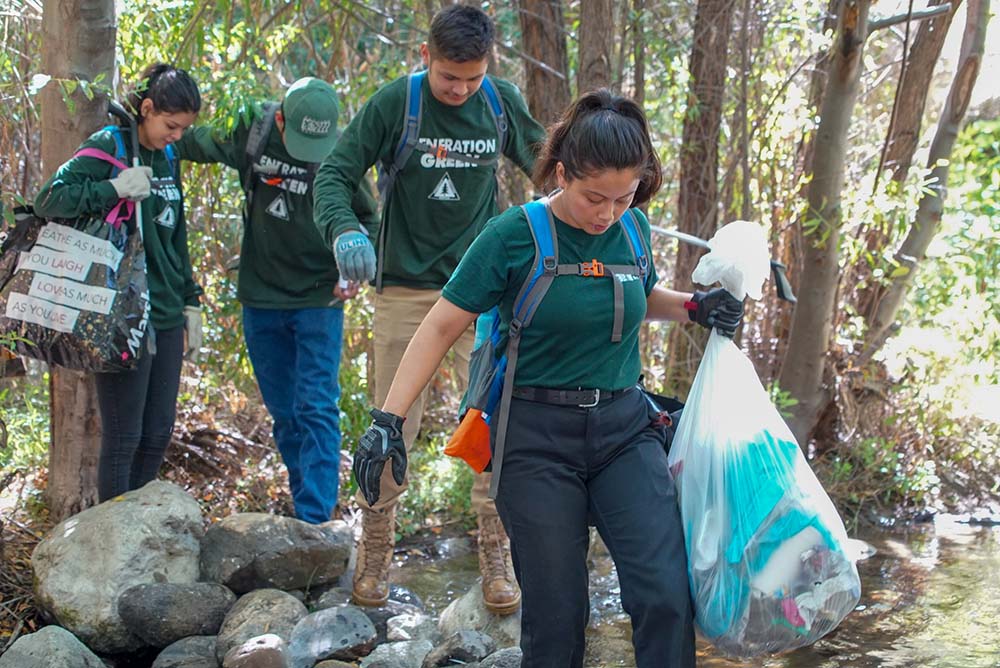

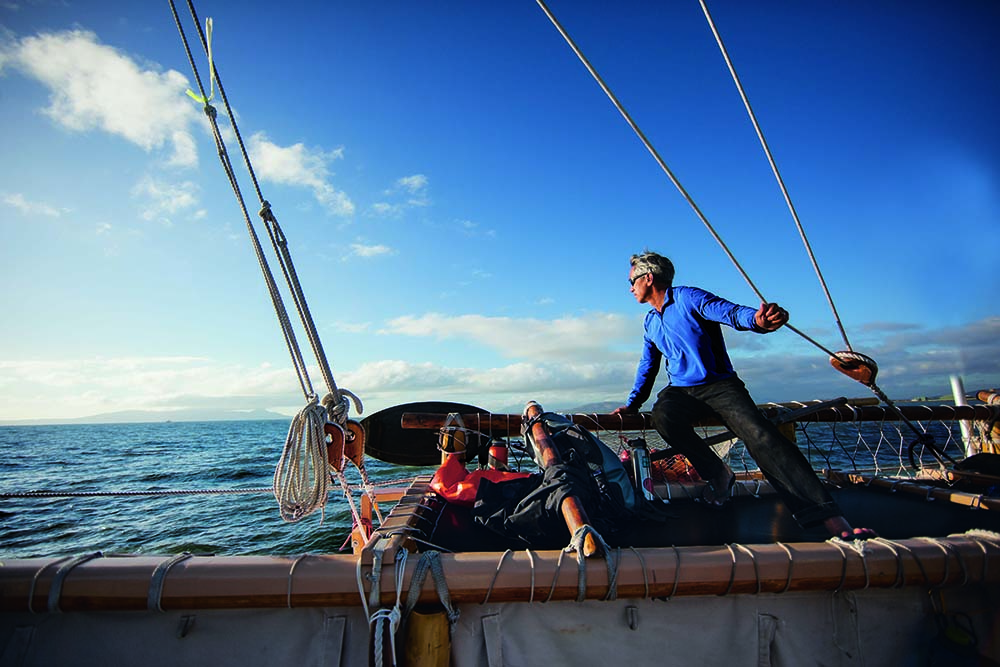




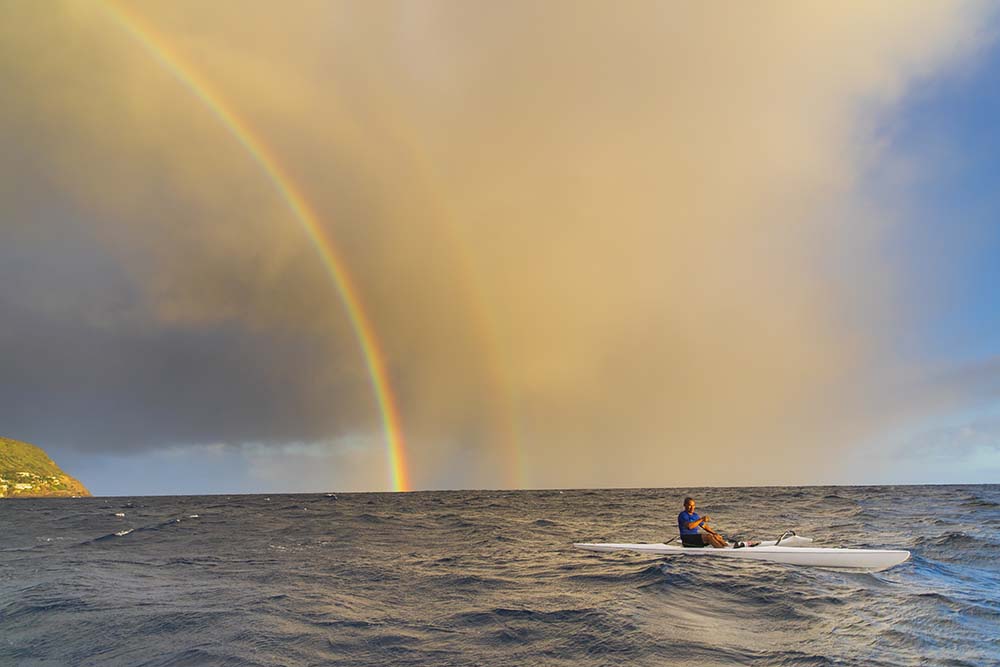
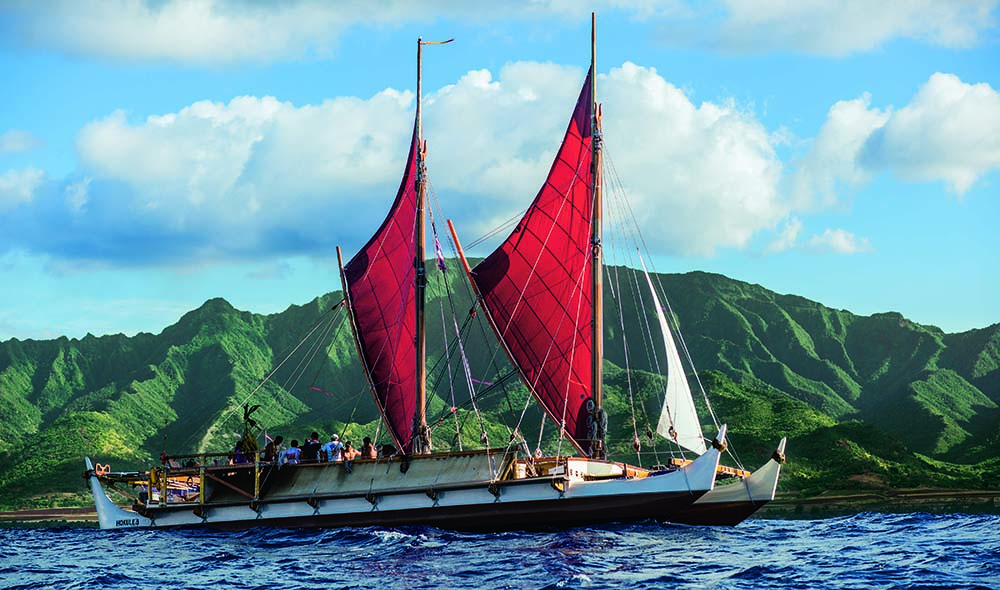
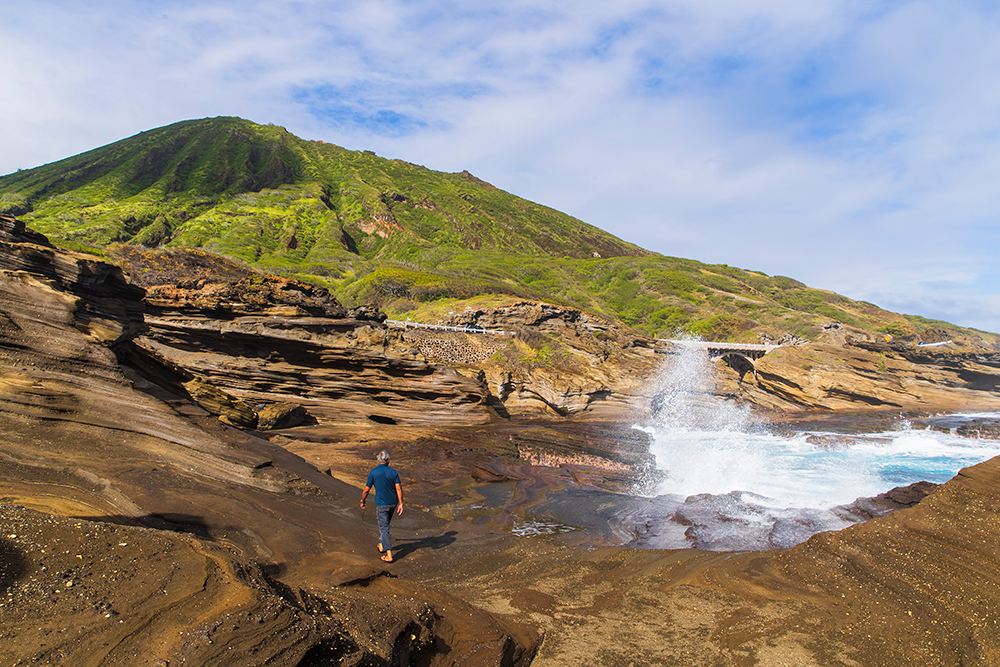


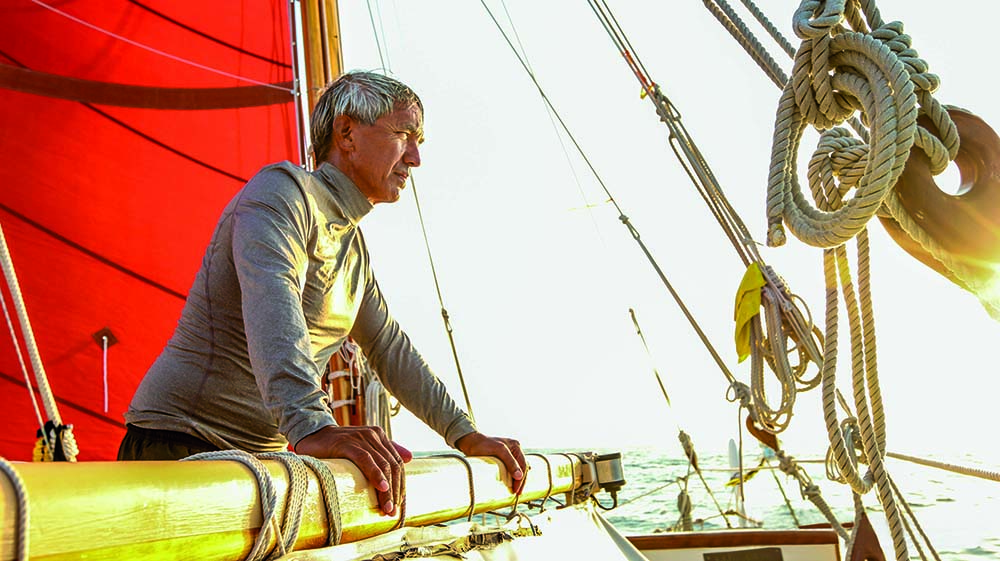
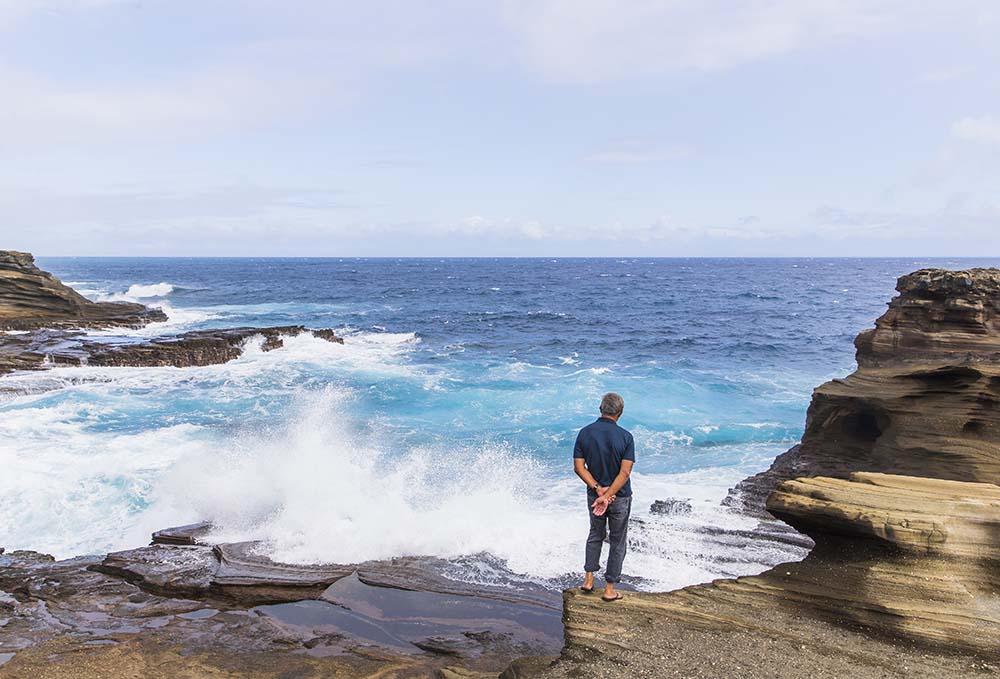

 View original content to download multimedia:
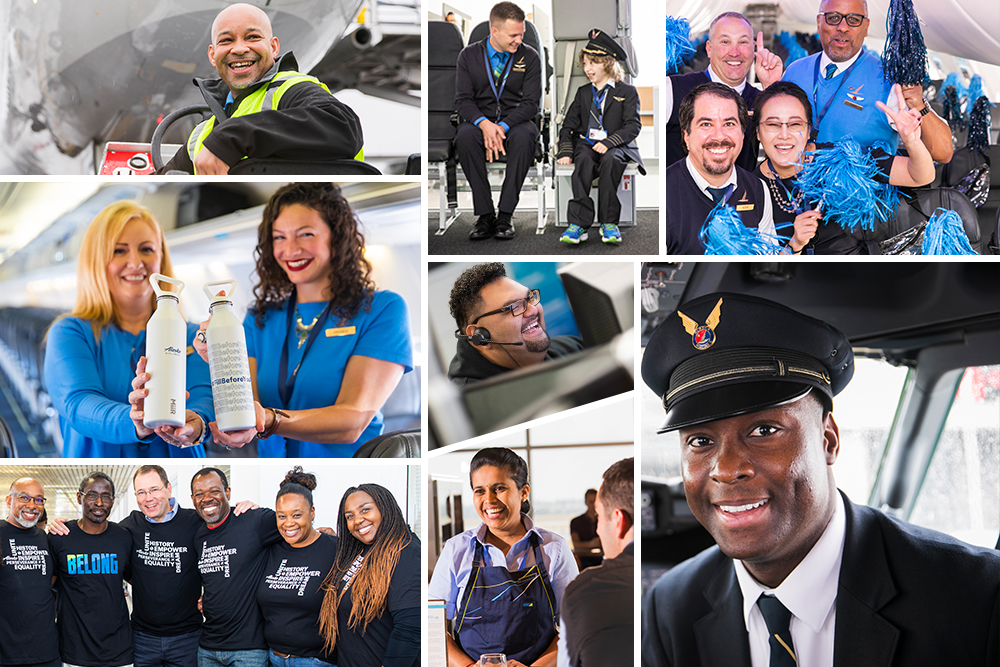
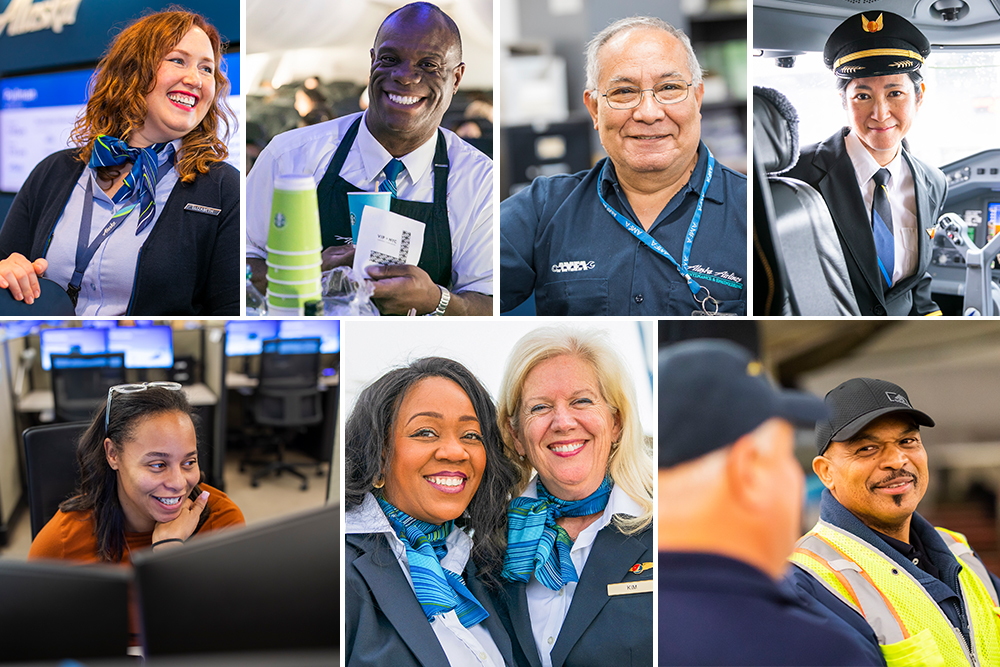
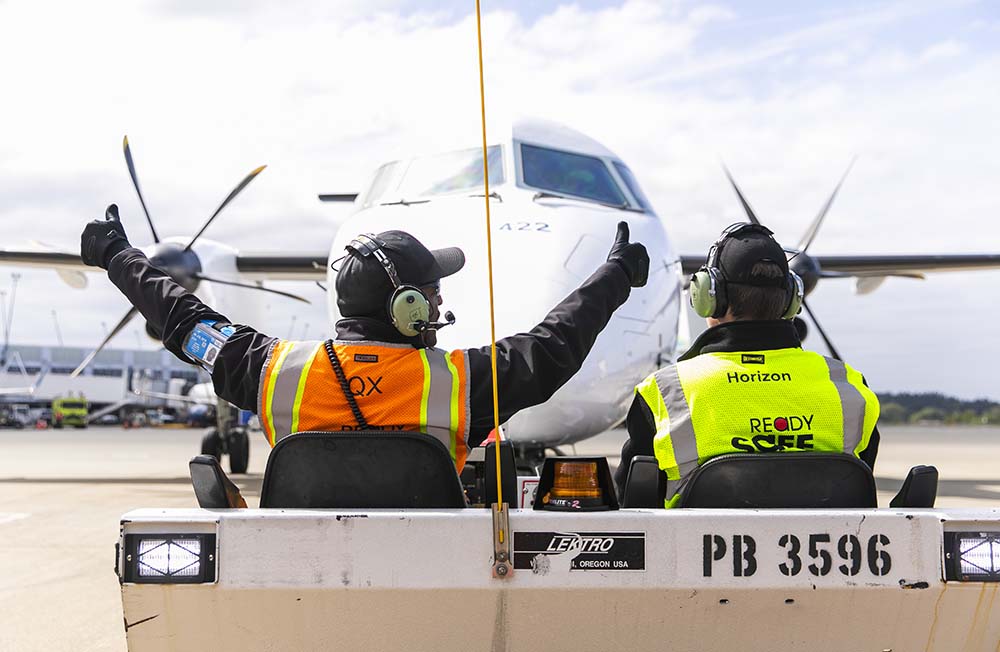



 Even though most of the jobs are based in the Pacific Northwest, we’re still hiring across our network. For Horizon, hundreds of ground service agent and passenger service agent job openings are at other airports outside of Sea-Tac.
 We pride ourselves on providing career development in an inclusive workplace where you can grow your career. We provide travel privileges to explore and connect with family and friends; unique pay bonus programs to reward you when the company does well; and competitive benefits for your health and wellness.

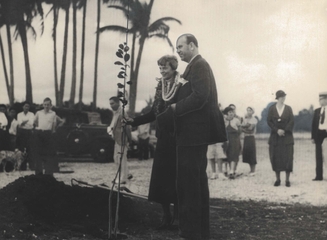
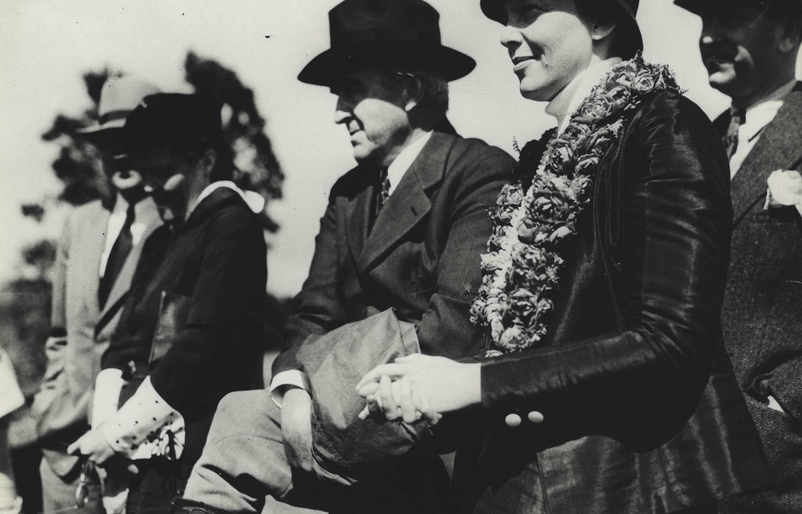

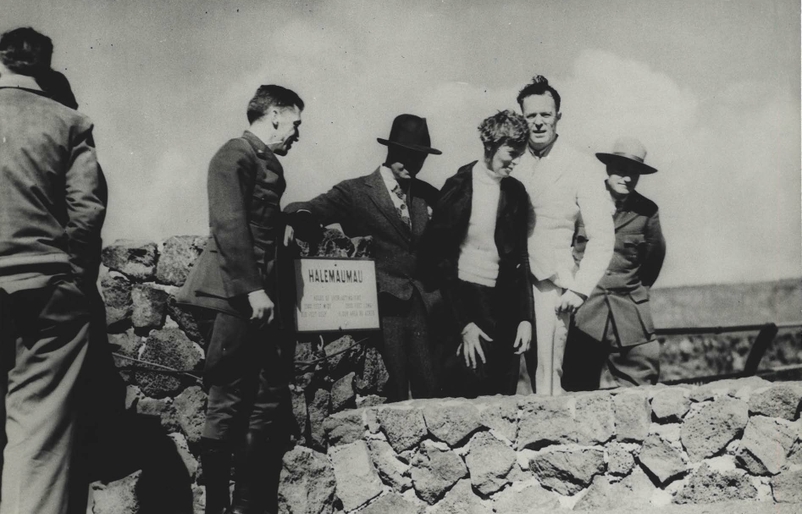
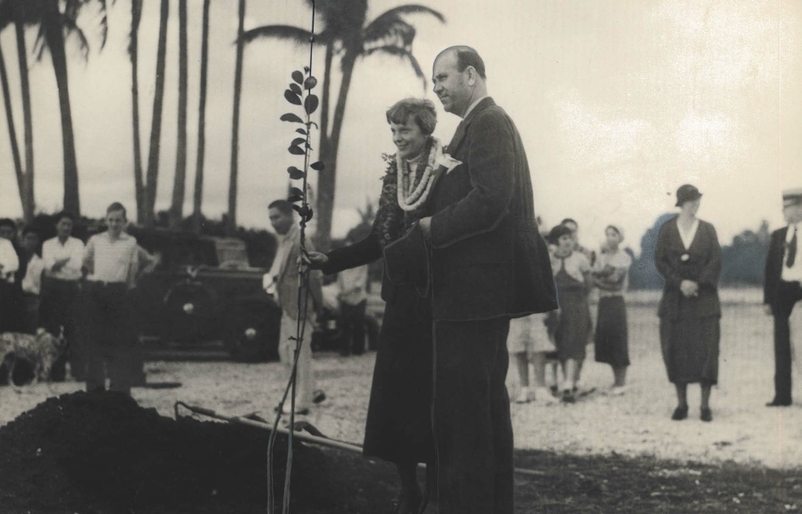



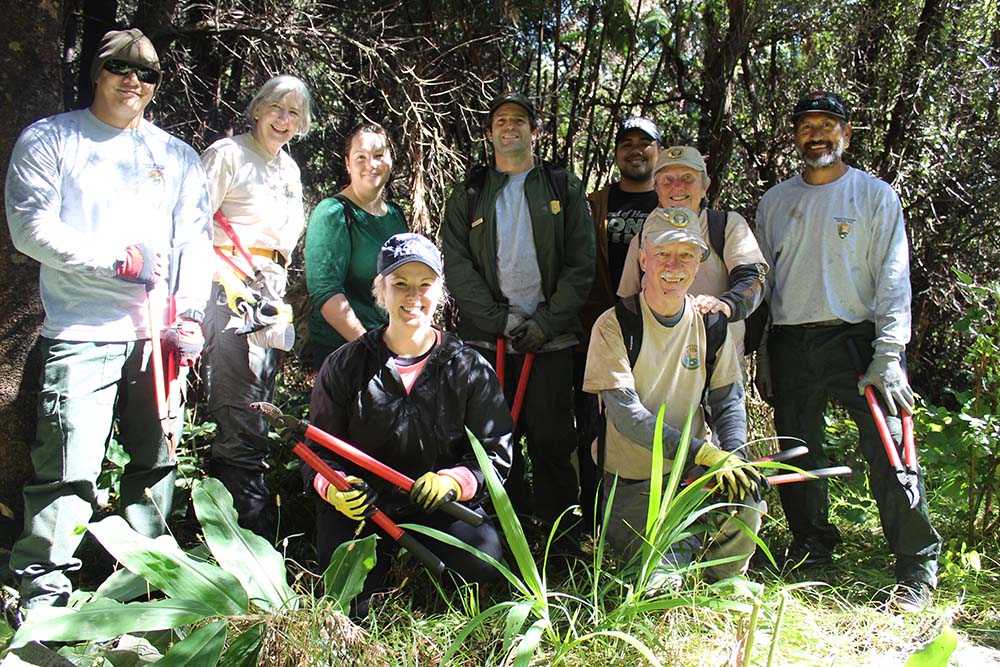


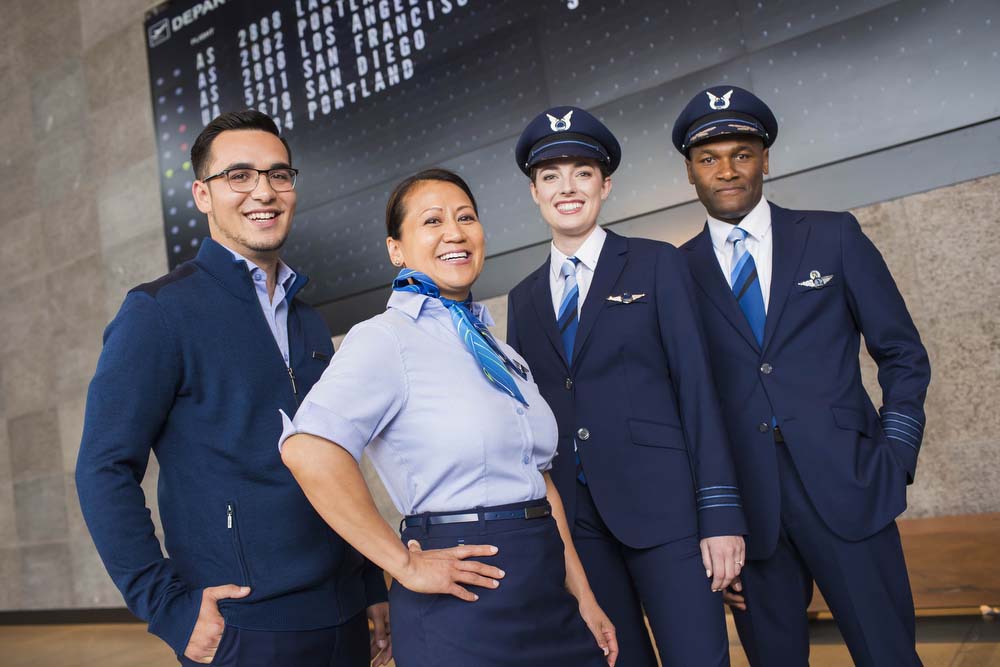
 And then they’re washed, dried, and expected to do it again. And again. And again.
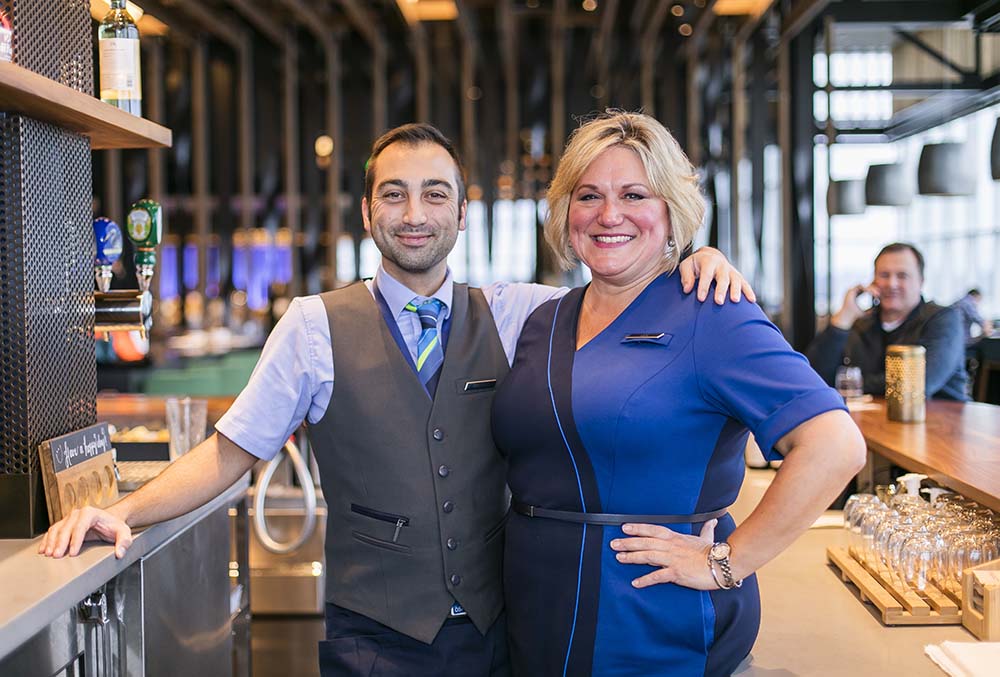
 With the research finished, it was Luly Yang’s time to shine. The designer got to work creating a signature silhouette for the Alaska collection, reviewing designs with employees, gathering feedback and making refinements to meet the needs of Alaska’s pilots, flight attendants, maintenance & engineering teams and more.

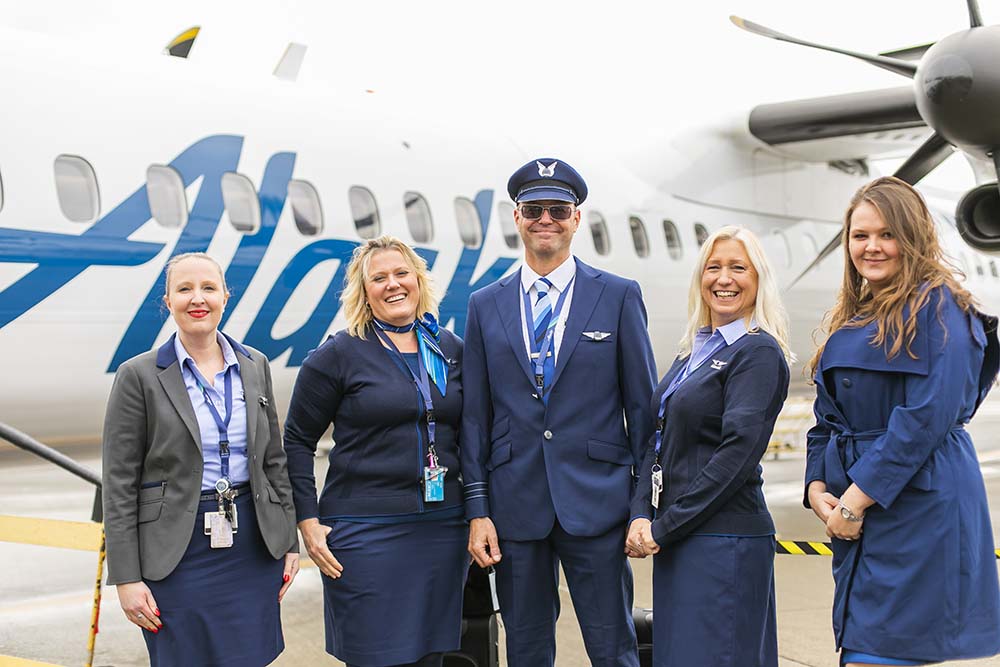









 View original content to download multimedia:


 Spring began his career in the U.S. Air Force in 1991, and he later attended airframe-and-powerplant school. He served for 21 ½ years in the Air Force, Air Force Reserve and Air National Guard combined, maintaining military jets while also pursuing his airline career. On September 12, 2001, he was activated to support the nation’s air defenses, and in 2007 he volunteered for a tour in Iraq. He retired from the military in 2012 as a master sergeant.