HONOLULU – Hawaiian Airlines is reducing its flight schedule systemwide by nearly 40 percent in April as the state of Hawai‘i deals with increasing COVID-19 cases and resulting government restrictions and pronouncements impacting travel.
Hawaiian remains focused on supporting its guests’ travel needs and minimizing disruptions as it closely evaluates challenging market conditions to guide network adjustments.
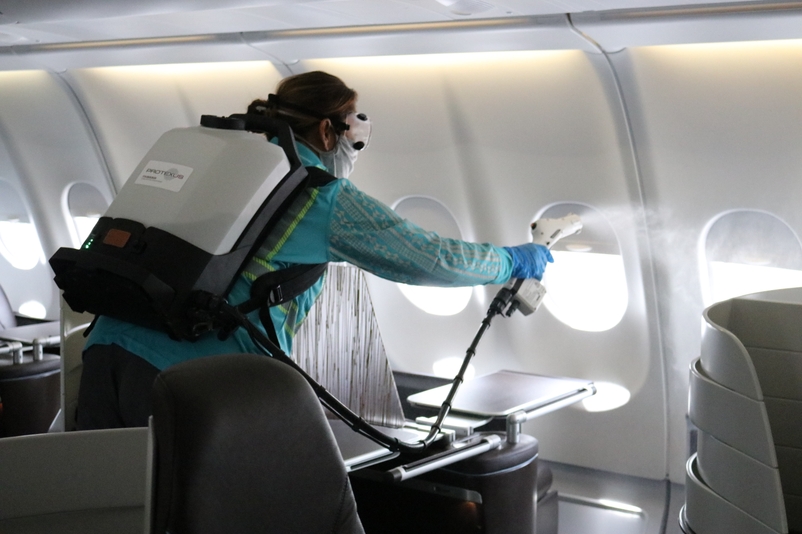
To keep guests informed, Hawaiian today launched an updated flight schedule grid with the latest status on affected routes. The carrier’s COVID-19 hub also lists travel waivers that will provide guests flexibility when booking and changing flights, and describes enhance cleaning measures to keep employees and guests safe.
Key changes announced today include:
International
Tahiti: Suspending nonstop service between Honolulu (HNL) and Papeete (PPT) due to new arrival restrictions by the French Polynesian government mirroring recent requirements imposed in Australia and New Zealand. The last HNL-PPT roundtrip will operate on March 21. Service is scheduled to resume in May.
Japan:
-Changing from daily to six weekly nonstop flights between Honolulu (HNL) and Osaka’s Kansai Airport (KIX), from April 6-28.
-Changing from four to three weekly nonstop flights between Honolulu (HNL) and Fukuoka (FUK), from April 5-June 1.
Domestic
North America:
-Suspending for the month of April nonstop service between Kahului, Maui (OGG) and Las Vegas (LAS) operated with narrow-body Airbus A321neo aircraft after the flight from LAS to OGG on March 31. Hawaiian will continue to offer daily nonstop service between Honolulu (HNL) and LAS with wide-body Airbus A330 aircraft.
-Suspending for the month of April a second daily nonstop flight operated with A321neo aircraft between Honolulu (HNL) and Seattle (SEA) and San Francisco (SFO). Hawaiian continues to offer daily service between HNL and both SEA and SFO with A330 aircraft.
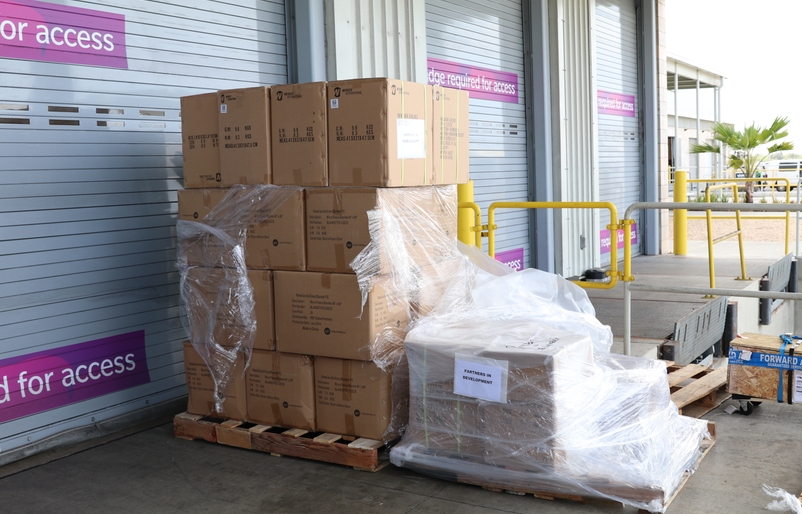
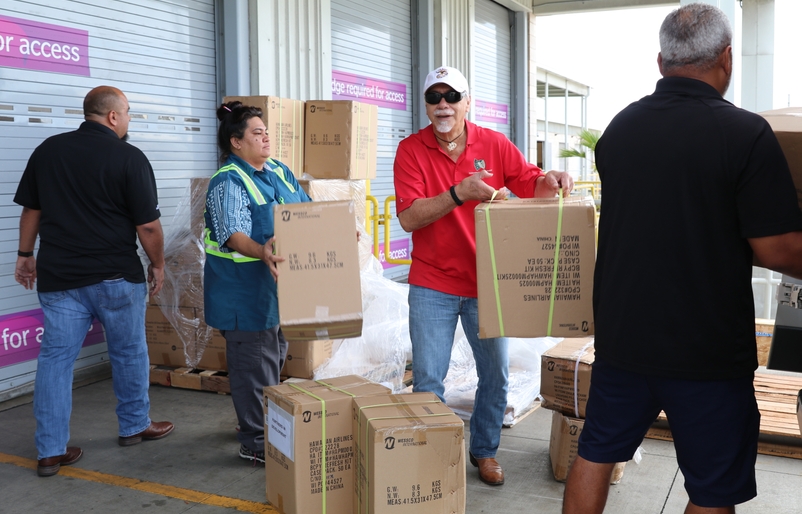
-Adjusting flight frequencies on select Hawai‘i-North America routes. Details are available here.
Neighbor Island: Reducing some service frequencies where demand is lowest, while preserving important connectivity between the Hawaiian Islands with a network of more than 100 daily flights in April. Hawaiian is suspending daily nonstop service between Kona (KOA) and Līhu‘e (LIH) after March 31 and affected guests will be accommodated via Honolulu or Kahului, Maui (OGG).
About Hawaiian Airlines
Hawaiian Airlines, Inc. is a subsidiary of Hawaiian Holdings, Inc. (NASDAQ: HA). Additional information is available at HawaiianAirlines.com. Follow Hawaiian’s Twitter updates (@HawaiianAir), become a fan on Facebook (Hawaiian Airlines), and follow us on Instagram (hawaiianairlines). For career postings and updates, follow Hawaiian’s LinkedIn page.
For media inquiries, please visit Hawaiian Airlines’ online newsroom.
Alaska Airlines unites with local businesses to help residents who need it most
As the nation confronts the coronavirus outbreak, it’s those on the front lines who need help the most: workers without health insurance, healthcare’s first responders, residents in our region’s most vulnerable communities.
Leaders across the country are working hard to respond to the pandemic and will be for some time. We admire the creative leadership and partnership of public and private sector entities to support food and nutrition, shelter, education and other basic needs of the neighbors within our communities.
We are humbled by this collective effort. While simply one step, Alaska Airlines is grateful to join other businesses headquartered in the Seattle region – including Amazon, Costco, Microsoft and Starbucks – to support the Seattle Foundation’s COVID-19 Response Fund. The joint effort by philanthropic, government and corporate partners has raised more than $12 million since it was announced March 9, with donations from businesses and individuals continuing to come in.
Donations will be used to support organizations with deep roots in affected communities, and funds are expected to start reaching front-line community groups within the next few weeks. Learn more about how businesses can donate.
“Our region has faced many challenges over the years, and this coronavirus is no exception,” said Brad Tilden, Alaska Airlines chairman and CEO. “All 23,000 of us at Alaska are focused on keeping employees and guests safe every day, and we are optimistic about our future. We’re proud to join the city, county and partners across our region to support this fund for those with the greatest needs.”
The grants will focus on needs in these hard-hit communities within the Puget Sound region:
Residents without health insurance and/or access to sick days
Residents with limited English language proficiency
Healthcare and gig economy workers
Communities of color, among others
“Alaska Airlines and the Alaska Airlines Foundation are dedicated to supporting our communities and continuing our work to enable opportunities for young people,” said Diana Birkett Rakow, vice president for external relations. “Right now, these are our most urgent needs: to protect and support our community’s most vulnerable – and to get through this crisis together.”
The following immediate needs in the community will be the first priority for the grants:
The economic impact of reduced and lost work due to the outbreak
Needs of economically vulnerable populations caused by closures and cancellations related to COVID-19
Increased demand for medical information and support
Fear and confusion about the outbreak among the region’s most vulnerable residents
“COVID-19 represents a battle on two fronts – a public health crisis and a threat to the economic stability of so many in our region,” said Seattle Foundation President and CEO Tony Mestres. “While we are all dealing with the effects of this outbreak, some of our neighbors face disproportionate challenges around time off work, the cost of care, and reliable access to information. Through this Fund and thanks to the generous support of our partners, we want to make sure everyone in our community has the support they need, regardless of race, place, income, or identity.”
To inquire about the grants or be considered, email the Seattle Foundation at covid19@seattlefoundation.org. Funds will be awarded to community organizations, and individuals in need of support should inquire about help from organizations working within their communities.
Visit Seattle Foundation’s website to stay up to date on the status of the COVID-19 Fund’s fundraising and grants.
Information involving PenAir Flight 3296 marketed by Alaska Airlines
Starting March 13, guests flying on RavnAir Alaska between Dutch Harbor and Anchorage can now earn or use Alaska Airlines miles. Guests will have the options to select either RavnAir’s FlyAway Awards or Alaska Airlines miles when booking flights between Unalaska and Anchorage. In order to collect or use Alaska Airlines miles, travelers will need an Alaska Airlines Mileage Plan number. For travel on Alaska Airlines miles, bookings must be made at Alaskaair.com.
Posted: 3:00 p.m. on Nov. 15, 2019
Nearly one month ago, PenAir Flight 3296 was involved in an incident when the aircraft overran the runway at Dutch Harbor, Alaska, which resulted in a loss of life and injuries to others onboard. Our thoughts remain with the those affected by this incident.
We also understand it has deeply impacted the community in Unalaska with the sudden loss of scheduled air service. Everyone at Alaska Airlines appreciates the community’s collaborative efforts, patience and resilience as we look for ways to support.
Ravn Air Group has decided to halt service of the Saab 2000 aircraft pending a full investigation into the circumstances of the incident. We respect and support that decision and are presently conducting our own assessment. It could be several months before that process is complete. Accordingly, all flights marketed by Alaska Airlines to and from Dutch Harbor through May 31, 2020 have been canceled.
Ravn Alaska has begun scheduled air service from Dutch Harbor to Anchorage with the Dash-8 aircraft. We are pleased that Unalaskans will again have access to scheduled air service.
Changes to service between Anchorage and Dutch Harbor:
Anyone who booked a ticket through Alaska Airlines that is now one of the canceled PenAir flights, will receive an email informing them that their DUT-ANC or ANC-DUT flight will automatically be rebooked on a Ravn flight, for no additional charge. This will apply both to tickets purchased with cash, and those booked as award flights through Alaska Airlines Mileage Program. Bags will be checked to the guest’s final destination.
If a ticket involves downline travel on Alaska Airlines, either in-state or out, that portion of the ticket will remain in place. Guests who prefer to receive a full refund instead of being rebooked on a Ravn flight or wish to change the Ravn flight on which they have been rebooked may call 1-800-ALASKAAIR.
Currently, there are no plans for Alaska Airlines to market service to and from DUT on Ravn or any other carrier.
Travel to and from DUT booked on Ravn will not accrue Alaska Mileage Plan miles. There is no change to accrual or redemption on Ravn to other destinations.
We are extending the cancellation of flights between Anchorage and Dutch Harbor marketed by Alaska Airlines through Nov. 15. This extra time will allow our guests to make any necessary changes to their travel arrangements.
Posted: 8:45 a.m. on Oct. 24, 2019
One week ago, PenAir Flight 3296 was involved in an incident when the aircraft overran the runway at Dutch Harbor, Alaska. We continue to keep those impacted in our thoughts, realizing what a difficult time this is for so many.
In the interest of safety, Ravn Air Group has paused the use of the Saab 2000 aircraft into Dutch Harbor in the wake of the incident on Oct. 17. Alaska Airlines will not market scheduled service to or from Dutch Harbor with a Saab 2000 until the preliminary findings of the NTSB and Saab have been reviewed. We understand this is a difficult time for the Unalaska community and seafood industry with the limited air service available.
At this time, flights marketed by Alaska Airlines through Nov. 8 have been canceled. Customers holding a ticket for travel through Nov. 8 will receive a full refund. Please call 1-888-885-0155 with any questions about your reservation.
We continue to work closely with PenAir, who is leading the response. This page will be updated as we learn more information.
Posted: 4:30 p.m. on Oct. 21, 2019
In the interest of safety, Alaska Airlines and PenAir have temporarily suspended ANC-DUT-ANC operations following the PenAir Flight 3296 incident. Alaska and PenAir are working together to determine a timeline for resuming service to Unalaska, Alaska.
Guests with tickets to or from Dutch Harbor purchased on or before Oct.17 for travel through Oct.28, may call Alaska Airlines at 1-888-885-0155 to request a full refund.
Posted: 11:20 a.m. on Oct. 18, 2019
PenAir has provided an updated statement on Flight 3296.
It is with deep sorrow that we have confirmed that one of our critically injured passengers from PenAir Flight 3296 passed away last night.
“On behalf of PenAir, Ravn Air Group and all our employees throughout the company, I would like to extend our deepest sympathies and condolences to the family and loved ones of our passenger who passed away,” said Dave Pflieger, President RavnAir Group.
Our entire team is devastated by this tragic incident. The thoughts of all 1,300 of our employees are with those who were hurt or affected.
Updates will be provided on an ongoing basis, as soon as more information becomes available.
On Thursday at 5:40 p.m. local time, PenAir Flight 3296 was involved in an incident while landing at Dutch Harbor, Alaska.
Right now, our highest priority is the safety and care of everyone who was onboard the flight. Our hearts are with them, their families and employees at PenAir.
While the aircraft is operated by PenAir and the crew are PenAir employees, this flight was marketed by Alaska Airlines and the passengers are our guests. At this point, we understand 39 passengers and three crew members were onboard. We’re still gathering information about the welfare of those on the flight and the incident itself.
We have established a toll-free hotline for anyone who believes they may have a family member or friend onboard. The telephone number, accessible from the United States and Canada, is 1-888-283-2153. A telephone number that’s accessible from Mexico is 001-877-542-6973.
We will continue to work closely with PenAir, who is leading the response. This page will be updated as we learn more information.
Posted: 10:15 p.m. on Oct.17, 2019
We have established a toll-free hotline for anyone who believes they may have a family member or friend onboard. The telephone number, accessible from the United States and Canada, is 1-888-283-2153. A telephone number that’s accessible from Mexico is 001-877-542-6973.
Posted: 9:30 p.m. on Oct. 17, 2019
PenAir Flight 3296 marketed by Alaska Airlines from Anchorage to Dutch Harbor, Alaska was involved in an incident during landing at 5:40 p.m. local time today.
There are 39 passengers and three crew members onboard. We’re still gathering information about the welfare of those onboard and the incident itself.
PenAir operates the Anchorage-Dutch Harbor service for Alaska with a Saab 2000 aircraft.
Flight 3296 departed Anchorage at 3:15 p.m. local time.
HONOLULU – Hawaiian Airlines today announced it will suspend thrice-weekly nonstop service between Honolulu’s Daniel K. Inouye International Airport (HNL) and Sapporo’s New Chitose Airport (CTS) from April 2 through July 18. Hawaiian, which has served Sapporo since 2012, is adjusting its global network in response to declining travel demand caused by the COVID-19 pandemic.
“As we make temporary schedule adjustments in a rapidly evolving and challenging environment, we remain committed to supporting guests traveling between Japan and Hawai‘i,” said Theo Panagiotoulias, senior vice president for global sales and alliances at Hawaiian Airlines. “Sapporo is a critical city in our Japan network and we look forward to resuming service in the summer.”
Hawaiian will pause Sapporo operations after its flight from CTS to HNL on April 1. Service is scheduled to resume July 21 from HNL to CTS, and July 22 from CTS to HNL. The airline is assisting guests impacted by its network revisions by offering re-accommodations on alternative flights or providing refunds.
In addition to Sapporo, Hawaiian offers nonstop flights between Honolulu and Tokyo (Haneda and Narita airports), and Osaka’s Kansai International Airport and Fukuoka Airport.
As Hawaiian balances its network, it continues to offer guests booking flexibility and the ability to change travel plans without fees. The airline has also enhanced sanitation procedures across its business to keep aircraft and airport spaces safe and clean.
About Hawaiian Airlines
Hawaiian Airlines, Inc. is a subsidiary of Hawaiian Holdings, Inc. (NASDAQ: HA). Additional information is available at HawaiianAirlines.com. Follow Hawaiian’s Twitter updates (@HawaiianAir), become a fan on Facebook (Hawaiian Airlines), and follow us on Instagram (hawaiianairlines). For career postings and updates, follow Hawaiian’s LinkedIn page.
For media inquiries, please visit Hawaiian Airlines’ online newsroom.
Hawaiian Airlines Suspending Australia, New Zealand Service
HONOLULU – Hawaiian Airlines today announced it will temporarily suspend nonstop service between Honolulu and its Australia and New Zealand gateways starting later this month due to new government entry restrictions being imposed in response to the COVID-19 pandemic.
Hawaiian, which currently flies five times per week between Honolulu’s Daniel K. Inouye International Airport (HNL) and Sydney Airport (SYD), will suspend service through April 30 after its SYD to HNL flight on March 22. The carrier will pause three-times-weekly Brisbane service through May 31 after operating the flight from Brisbane Airport (BNE) to HNL on March 23.
In New Zealand, which Hawaiian also serves with three-times-weekly flights, service will stop through May 31 after the flight that departs Auckland Airport (AKL) to HNL on March 22.
The new 14-day self-isolation entry requirements established by Australia and New Zealand to address the COVID-19 pandemic led to Hawaiian’s decision to suspend flights to both countries.
“We respect the efforts of our Australian and New Zealand neighbors to institute stringent public health measures, and we remain dedicated to resuming our service as we continue to closely monitor evolving market conditions and regulations,” said Theo Panagiotoulias, senior vice president for global sales and alliances at Hawaiian Airlines.
Hawaiian is assisting impacted guests by offering travel waivers, re-accommodations on alternative flights or refunds. Guests requiring assistance may use e-mail and the company reservations phone line. Options can be found at www.hawaiianairlines.com/contact-us. Travel waiver information is available at www.hawaiianairlines.com/coronavirus.
For further information, please visit HawaiianAirlines.com or call Hawaiian Airlines' reservations department at 1-800-367-5320.
About Hawaiian Airlines
Hawaiian Airlines, Inc. is a subsidiary of Hawaiian Holdings, Inc. (NASDAQ: HA). Additional information is available at HawaiianAirlines.com. Follow Hawaiian’s Twitter updates (@HawaiianAir), become a fan on Facebook (Hawaiian Airlines), and follow us on Instagram (hawaiianairlines). For career postings and updates, follow Hawaiian’s LinkedIn page.
For media inquiries, please visit Hawaiian Airlines’ online newsroom.
HONOLULU – Hawaiian Airlines today announced it will reduce flight capacity systemwide in April and May in response to declining demand caused by the COVID-19 pandemic.
The network adjustments will reduce Hawaiian’s capacity by 8-10 percent in April and 15-20 percent in May, compared to the airline’s original 2020 plans, to better match current demand. Schedule changes will be introduced over the next week.
“We find ourselves in a rapidly evolving environment that has presented our company with its greatest challenge in many years,” Hawaiian Airlines President and CEO Peter Ingram said today in a letter to employees. “We know this will not be our new normal, but we can’t know when health experts and community mitigation efforts will bring the spread of the virus under control – or when travel apprehension will fade.”
As the airline balances its network to reflect evolving market conditions, it continues to offer guests booking flexibility and the ability to change travel plans at no cost while reinforcing and expanding sanitation efforts across the company. Hawaiian has commenced enhanced cleaning of airport spaces and aircraft cabins, and made in-flight service adjustments such as suspending the refiling of beverage and hot towel service.
In his letter, Ingram said the company is instituting a hiring freeze and evaluating a series of actions to reduce costs, including reviewing third-party contracts, deferring non-essential aircraft painting, and renegotiating vendor rates. Hawaiian’s senior executives and board members are voluntarily taking compensation adjustments of 10-20 percent, effective immediately through at least June.
Earlier this month, Hawaiian announced it was temporarily suspending flights that operate three-times-weekly between Kona International Airport (KOA) on the Island of Hawai‘i and Tokyo’s Haneda Airport (HND), and four-times-weekly between Honolulu’s Daniel K. Inouye International Airport (HNL) and HND. The airline also suspended its five-times-weekly nonstop service between HNL and Incheon International Airport (ICN) from March 2 through April 20. Hawaiian is providing guests assistance that best fits their travel needs.
About Hawaiian Airlines
Hawaiian Airlines, Inc. is a subsidiary of Hawaiian Holdings, Inc. (NASDAQ: HA). Additional information is available at HawaiianAirlines.com. Follow Hawaiian’s Twitter updates (@HawaiianAir), become a fan on Facebook (Hawaiian Airlines), and follow us on Instagram (hawaiianairlines). For career postings and updates, follow Hawaiian’s LinkedIn page.
For media inquiries, please visit Hawaiian Airlines’ online newsroom.
The Hawaiian proverb “I ka wā ma mua, ka wā ma hope,” or “The future lies in the past,” carries a sentiment that is deeply woven into the fabric of Hawaiian Airlines. The endeavor to preserve our 90-year history hasn’t been an easy feat; however, sharing these moments, milestones and memories has played a pivotal role in telling our story to the world.
We owe our gratitude to Capt. Richard “Rick” W. Rogers, a longtime company pilot who, upon his retirement, worked enthusiastically to keep our mana‘o (thoughts, knowledge) alive as our airline’s archivist. Though it is with great sadness that we share Rogers, 70, passed away last month doing what he loved most: flying recreationally on O‘ahu’s North Shore.
Rogers in 2005 when he was an active Hawaiian Airlines pilot.
As we reflect on the life and achievements of our beloved colleague and friend, this post will serve as Rogers’ final feature in the “Flyback Friday” series.
Rogers’ life was nothing short of extraordinary, and he kept his cup overflowing with a love for history. A jack of all trades, he was a father, grandfather, husband, pilot, Army veteran, historian, shipwreck diver, hunter, flight instructor, beachcomber, entrepreneur, artist, farmer, fisherman, and author.
When not carefully curating our rich history, Rogers loved to fly his glider plane out of the Dillingham Airfield and worked passionately to preserve the history of Hale‘īwa, his hometown on the North Shore. One of his efforts led to the installation of plaques identifying sites of historical significance throughout Hale‘īwa.
One of the historical plaques Rogers helped create alongside local historical groups.
Born in Cape Girardeau, Missouri, Rogers launched his adventurous career on the shores off Vietnam as a salvage diver during the war. He became hooked on flying after taking a lesson while in dive school and later used his army earnings to pay for his pilot’s license.
Rogers sharing photos of women throughout our history during a 2018 Girls in Aviation Day event at our headquarters.
In January 1987, after several years of flight instructing and operating scenic air tours around Hawai‘i, Rogers joined Hawaiian Airlines as a Dash 7 pilot. Over the course of two decades, he experienced our airline’s fleet and network evolution from the flight deck, operating our DC-8s, DC-9s, Boeing 717s and 767s.
When Rogers wasn’t transporting our guests, he was raising four kids with his wife Lois and pursuing a career in marine archaeology. He recounted years’ worth of diving adventures in a book he published in 1999, called “Shipwrecks of Hawai‘i: A Maritime History of the Big Island.”
Rogers retired in 2010 and naturally segued into an archivist role after we reacquired our first plane, the Bellanca CH-300 Pacemaker, in 2009, ahead of our then-80th anniversary. For the next decade, he dedicated himself to cataloging the volumes of historical artifacts in our company collection, including images, posters, correspondence, manuals, uniforms, models, trinkets and more.
Rogers, pictured left, during the reveal of the Capt. Jimmy Hogg wall, which can still be viewed today at OGG.
He was known for his quirky personality and creative archives projects, including (but not limited to):
In 2014, he helped create a wall display at Gate 19 at Maui’s Kahului Airport that introduces travelers to Jimmy Hogg, a Hawaiian Airlines pilot and aviation pioneer who lent the last three letters of his last name to the airport’s designator code: OGG. A similar wall at Kapalua-West Maui honors former Hawaiian Airlines CEO John H. Magoon, whose initials, JHM, form that airport’s designator code.
In 2017, in celebration of our 88th anniversary, he installed a time capsule at our Charles I. Elliott Maintenance and Cargo Facility. The capsule will be enshrined until 2079 – the year of our 150th anniversary.
In 2019, as we geared up for our 90th anniversary, he led several historical showcases, including a “mini-museum” at our Honolulu-based headquarters and a Hawaiian Airlines window display at Saks Fifth Avenue in Waikīkī.
Rogers in 2017 showing the camera a time capsule that is still concealed beneath a stairwell in the Charles I. Elliott Maintenance and Cargo Facility.
Rogers has contributed to our Mana‘o blog since it was launched in June 2018 and served as the proud owner of the “Flyback Friday,” a monthly series revisiting noteworthy company accomplishments. He was also a regular contributor to our in-flight magazine, HanaHou!, where he penned a “From the Archives” column featured in the ‘Ohana Pages.
A memorial service was held in Hale‘īwa last Sunday, March 8, where family and friends gathered to share their memories of Rogers. His ashes were spread across the coastline and a cohort of small planes flown by his close friends performed a special fly-by salute. One of the aircraft was the Bellanca CH 300 Pacemaker, which dropped 30,000 flowers from the sky in honor of the long-lasting impact Rogers left on our airline.
A collage the family put together for Rogers’ service on O‘ahu’s North Shore.
Please join us in remembering the remarkable life of our archivist, colleague and friend Capt. Rick Rogers:
“Rick was a true aviation buff who loved and admired our industry. He will be deeply missed,” said Peter Ingram, our president and CEO, in a company memo to employees. “I send my aloha and heartfelt condolences to his wife, Lois, and his many friends here at Hawaiian Airlines.”
“Rick was a unique and wonderful person and pleasure to know,” said Ann Botticelli, our senior vice president of corporate communications and public affairs, the department where Rogers’ archival initiatives took shape. “He was a passionate protector of history, an aviation enthusiast, an author, and a marine archeologist. In short, he was a renaissance man and all of us were very lucky to have spent time with him.”
A fellow employee’s picture of Rogers in his glider over the North Shore in 2019.
“I always looked forward to days when I was scheduled to fly with Rick. [He was] always technically proficient, but still had an upbeat attitude that made him a pleasure to spend the day with,” said Ken Rewick, our vice president of flight operations who once piloted our planes alongside Rogers. “We would fill the time between flights sharing stories about our early days flying in Hawai‘i and Rick’s research chronicling shipwrecks throughout the Islands. I’ll always remember him as an energetic, passionate and eternally youthful person. He will be missed, but not forgotten.”
“Rick was an original who added texture to life and whose enthusiasm always lifted spirits,” said Mark Dunkerley, ourformer president and CEO who spearheaded the re-acquisition and restoration of our Bellanca CH-300 Pacemaker – the project that started Rogers’ archivist career.
Rogers, pictured far right, during the unveiling of our Bellanca CH-300 Pacemaker after the completion of its first restoration in 2009.
“I was first acquainted with Rogers in 1978 when he was my flight instructor, and in 1987, we became classmates at Hawaiian Airlines,” said Kirk McBride, one of our Airbus A330 captains. “One of my favorite experiences with him was just last year when we flew an American Champion Citabria together. Godspeed, Rick Rogers. He will always hold a special place with me.”
“Capt. Rick was always generous with his time, knowledge, and enthusiasm,” said Julie Ng, a lead business functional analyst in our technical operations team who often donated her time to help Rogers in the archives. “During my time volunteering in the archives, we cataloged around 1,000 artifacts – and he had a background story for almost every item. Capt. Rick loved getting visitors to the archives and sharing the history of Hawaiian Airlines with others.”
Rogers, pictured far right, when he was a pilot for a company called Scenic Air Tours.
“Rick and I flew air tours together in Twin Beech (Beechcraft Model 18) aircraft in the old days. His unique perspective to flying and all things historical made him one of the most exceptional pilots with whom I have shared the sky,” said Bruce Mayes, a longtime friend of Rogers who piloted one of the aircraft that flew over his service last weekend. “In my flying tribute over his celebration of life on Sunday, I honor a talented friend and outstanding pilot.”
Those wishing to offer support to the Rogers family are encouraged to direct their donations to The Ninety-Nines, an international organization of women aviators that is dedicated to the advancement of aviation through education, scholarships, and mutual support. To make a contribution in honor of Capt. Rick Rogers, please click here.
Video: B-roll, aircraft cleaning, cabin air quality
Alisa Onishi’s love for storytelling is a big part of the reason Hawaiian Airlines is one of the most recognized brands in the airline industry.
It was under her detail-oriented eyes that many of our latest and most visual initiatives – such as a comprehensive brand refresh, Disney’s Moana livery, new uniforms designed by Sig Zane, and in-flight amenity kits and soft goods by Kealopiko – came to fruition so seemingly, well, seamless.
Onishi and Avi Mannis, senior vice president of marketing, pictured in front of an aircraft being prepare for its first service with the new livery.
Onishi, director of brand management, was born and raised on O‘ahu and graduated from Kamehameha Schools before enrolling at Chapman University and finishing her degree at Hawaii Pacific University. After graduating with a visual communications degree, she set her sights on a career in broadcast journalism and landed a job at a local television station.
Despite the thrill of being on camera, she found herself more interested in the behind-the-scenes production process. “I thought I wanted to be on camera, but I fell in love with the people behind the camera,” Onishi recalled. “I learned that I enjoyed writing and producing really good stories and did that for a couple of years.”
Five years (and a few film jobs) later, Onishi broke into the marketing world, and in 2011 found her niche at Hawaiian Airlines’ marketing promotions team.
“I got to launch a bunch of promotional events like route launches for Brisbane, Taiwan, Auckland, Beijing, Chitose, among others, and host a lot of fun experiences,” she said. “For example, we created a stage of snow at the Sapporo Snow Festival with a 70-foot ice sculpture of Diamond Head and had hula dancers dancing on the ice.”
A photo of the massive display that Onishi's team created for the 2013 Sapporo Snow Fesitval.
Onishi’s experience in sharing our company’s Hawaiian hospitality and dedication to Hawai‘i's culture made her a natural fit for a role in brand management. When the job opened and she was encouraged to apply, she welcomed the opportunity despite her fears. “I was a little nervous because I knew it was a big role to fill and I wasn’t quite sure I was ready for it…but I believe that if you’re scared to do something, then you’re probably taking the right leap.”
In her role for over six years, she’s come to appreciate that a normal workday is far from normal.
“A typical day for me could range from starting the day with cleaning out my inbox or being on set at our maintenance hangar for an [Airbus] A330 aircraft photoshoot,” she said.
The Onishi ʻohana
When she’s not at work, she and her husband, Brandon, are at home busy taking care of their two keiki, Callie, 10, and Colten, 6, and pomski Mochi.
Her team oversees Hawaiian’s global brand strategy and visual identity. But Onishi says her job extends beyond our airline’s external expression and she remains equally dedicated to providing our employees with the resources they need to succeed.
“We curate, design and understand how we want to be seen externally as a brand. The way we do that is by making sure our people have the tools and guidance they need to do their job well – without forcing it,” she said “It comes down to how we behave, what our character is, how we make decisions and how we express ourselves at Hawaiian — not just in our ads but also in our emails to each other.”
Her current focus is ensuring employees feel equipped and empowered to represent Hawaiian Airlines and do their jobs in a way that is in line with our company values and representative of Hawai‘i’s warm host culture.
“One of the biggest challenges is that the brand is owned by everyone. We have 7,500-plus employees who reflect the brand every day, and it can be difficult to remind everyone of us how important they are, whether they interact with our guests daily or not.”
Onishi, who oversaw the redesign of our uniforms, at our Honolulu-base uniform center. Her team manages the center, which houses branded apparel for all pilots, flight attendants, guest services, maintenance and cargo employee.
She added, “It’s not only about flying our guests safely from point A to B and letting them experience Hawai‘i on their own. It’s about taking them on that journey and offering up the knowledge that we have (as hosts of this place) that no other airline has or needs to have.”
As our airline continues to thrive, Onishi believes that it’ll become more important for Hawaiian Airlines to stay true to its roots while also pushing our employees to think bigger in the role we play in representing Hawai‘i.
“Unlike other industries, our brand in the travel world is so much more important to our success as a company. My goal is to constantly push us to be better, from bolder designs to crafting stories with more intent. Traditionally, Hawaiians shared their knowledge and stories, and that was their culture—it’s how hula started and how the Hawaiian language was revitalized,” she said.
Onishi and her family with Hawai‘i actress Auliʻi Cravalho during an employee event for the launch of our Moana livery.
“One project that’s an example of this is our boarding video. We had a number of our Hawaiian musicians start to pass away, so we embarked on a project to capture the music of some of our greatest talents. We had an employee who was passionate about music and it was his idea to do a bunch of music videos, so he helped us create a lineup of artists who meant something to the community. Something as simple as a boarding video was a way for us to reinforce our responsibility and share artists who really mean something to Hawai‘i.”
One of the boarding videos Onishi's team created featuring legendary Hawai‘i musician Henry Kapono.
When asked what her guidance would be to others interested in her field, she shared, “My advice for anyone who wants to be in the creative world is to be brave. There were so many times in my life that I’d taken risks (without even knowing what the risk was) and put myself out there. Being brave enough to see opportunities and seize them and take advantage of them when you can. “
Hawaiian Airlines Reports February 2020 Traffic Statistics and Updates Expected First Quarter 2020 Metrics
HONOLULU, March 9, 2020 /PRNewswire/ — Hawaiian Airlines, Inc., a subsidiary of Hawaiian Holdings, Inc. (NASDAQ: HA) ("Hawaiian"), today announced its system-wide traffic statistics for the month ended February 29, 2020. It also updated its expectations for certain first quarter 2020 financial metrics.
Hawaiian welcomed more than 856,000 guests in February 2020. Total traffic (revenue passenger miles) increased 6.4 percent on an increase of 13.3 percent in capacity (available seat miles) compared to February 2019. Load factor decreased 5.2 points year-over-year to 79.3 percent.
The table below summarizes February and year-to-date statistics compared to the respective prior-year periods.
SYSTEM-WIDE OPERATIONS1
FEBRUARY
2020
2019
% CHANGE
PAX
856,687
870,538
(1.6)%
RPMs (000)
1,335,049
1,255,238
6.4%
ASMs (000)
1,683,538
1,486,005
13.3%
LF
79.3%
84.5%
(5.2) pts
YEAR-TO-DATE
2020
2019
% CHANGE
PAX
1,819,740
1,829,086
(0.5)%
RPMs (000)
2,863,751
2,689,257
6.5%
ASMs (000)
3,512,755
3,186,855
10.2%
LF
81.5%
84.4%
(2.9) pts
PAX
Passengers transported
RPM
Revenue Passenger Mile; one paying passenger transported one mile
ASM
Available Seat Mile; one seat transported one mile
LF
Load Factor; percentage of seating capacity filled
1Includes the operations of contract carriers under capacity purchase agreements.
First Quarter 2020 Outlook
The Company has revised certain of its expectations for the quarter ending March 31, 2020 that were previously provided in its fourth quarter and full year 2019 earnings release dated January 30, 2020.
Specifically, the Company:
withdrew its estimates for operating revenue per available seat mile (ASM) in light of demand reductions associated with the global spread of COVID-19; the Company is unable to provide an updated guidance range due to considerable uncertainty about the impact of COVID-19 on demand for the remainder of the quarter; if there are no new net bookings for March as of March 5, 2020, RASM would be down about 12 percent year-over-year for the first quarter
affirmed its estimates for ASMs; the decrease in capacity caused by the temporary suspension of the Company's service to South Korea starting from March 2, 2020 is largely offset by an increase in capacity due to up-gauges on North America routes for operational reasons;
affirmed its estimates for operating cost per ASM excluding fuel and non-recurring items;
affirmed its estimates for gallons of jet fuel consumed; and
lowered its estimates for economic fuel cost per gallon.
The table below summarizes the Company's revised expectations for the quarter ending March 31, 2020 expressed as an expected percentage change compared to the results for the quarter ended March 31, 2019.
Item
Prior First
Quarter 2020
Guidance
Revised First
Quarter 2020
Guidance
GAAP Equivalent
Prior GAAP
First Quarter
2020
Guidance
Revised GAAP
First Quarter
2020
Guidance
Available Seat Mile (ASM)
Up 7.5 – 10.5%
No change
Operating revenue per ASM
Down 4.5 – 7.5%
Withdrawn
Cost per ASM excluding fuel and non-recurring items (a)
Down 1.5 – 4.5%
No change
Cost per ASM (a)
Down 1.8 – 4.3%
Down 2.9 – 5.3%
Gallons of jet fuel consumed
Up 4.5 – 7.5%
No change
Economic fuel cost per gallon (b) (c)
$1.97
$1.87
Fuel cost per gallon (b)
$1.93
$1.83
(a) See Table 1 for a reconciliation of GAAP operating expenses to non-GAAP operating expenses excluding aircraft fuel and non-recurring items.
(b) Economic fuel cost per gallon estimates are based on the March 6, 2020 fuel forward curve.
(c) See Table 2 for a reconciliation of GAAP fuel costs to non-GAAP economic fuel costs.
Investor Conference Call
Hawaiian Holdings is holding an investor conference call today (March 9, 2020) at 4:30 p.m. Eastern Time (USA). The conference call will be broadcast live over the Internet. Investors may listen to the live audio webcast on the investor relations section of the Company's website at HawaiianAirlines.com. For those who are not available for the live webcast, the call will be archived and available for 90 days on the investor relations section of the Company's website.
(in thousands, except per-gallon amounts) (unaudited)
Estimated three months ending March 31, 2020
Aircraft fuel expense, including taxes and delivery
$
123,083
–
$
126,703
Realized (gains)/losses on settlement of fuel derivative contracts
3,000
–
3,000
Economic fuel expense
$
126,083
–
$
129,703
Fuel gallons consumed
67,424
–
69,360
Economic fuel cost per gallon
$
1.87
–
$
1.87
Forward-Looking Statements
This press release contains "forward-looking statements" within the meaning of the Private Securities Litigation Reform Act of 1995 that reflect the Company's current views with respect to certain current and future events and financial performance. Such forward-looking statements include, without limitation, the Company's expectations regarding operating revenue per available seat mile, available seat miles, operating cost per available seat mile, gallons of jet fuel consumed, economic fuel cost per gallon, and fuel cost per gallon and cost per available seat mile excluding fuel and non-recurring items for the quarter ending March 31, 2020; the impact on the Company's business of COVID-19 and the suspension of service to South Korea; and statements as to other matters that do not relate strictly to historical facts or statements of assumptions underlying any of the foregoing. Words such as "expects," "anticipates," "projects," "intends," "plans," "believes," "estimates," variations of such words, and similar expressions are also intended to identify such forward-looking statements. These forward-looking statements are and will be, as the case may be, subject to many risks, uncertainties and assumptions relating to the Company's operations and business environment, all of which may cause the Company's actual results to be materially different from any future results, expressed or implied, in these forward-looking statements. These risks and uncertainties include, without limitation, the Company's ability to accurately forecast quarterly and annual results; economic volatility; the effects of the spread of contagious diseases or viruses, such as the novel coronavirus, COVID-19; macroeconomic developments; political developments; the price and availability of aircraft fuel; fluctuations in demand for transportation in the markets in which the Company operates, including due to the occurrence of natural disasters, such as hurricanes, earthquakes and tsunamis; the Company's dependence on tourist travel; labor negotiations and related developments; competitive pressures, including the potential impact of rising industry capacity in the markets in which the Company competes; the Company's ability to continue to generate sufficient cash flow to support the payment of a quarterly dividend; changes in the Company's future capital needs; foreign currency exchange rate fluctuations; and the Company's ability to implement its growth strategy.
The risks, uncertainties and assumptions referred to above that could cause the Company's results to differ materially from the results expressed or implied by such forward-looking statements also include the risks, uncertainties and assumptions discussed from time to time in the Company's other public filings and public announcements, including the Company's Annual Report on Form 10-K and the Company's Quarterly Reports on Form 10-Q, as well as other documents that may be filed by the Company from time to time with the Securities and Exchange Commission. All forward-looking statements included in this document are based on information available to the Company on the date hereof. The Company does not undertake to publicly update or revise any forward-looking statements to reflect events or circumstances that may arise after the date hereof even if experience or future changes make it clear that any projected results expressed or implied herein will not be realized.
About Hawaiian Airlines
Hawaiian® has led all U.S. carriers in on-time performance for each of the past 16 years (2004-2019) as reported by the U.S. Department of Transportation. Consumer surveys by Condé Nast Traveler, Travel + Leisure and TripAdvisor have placed Hawaiian among the top of all domestic airlines serving Hawai'i.
Now in its 91st year of continuous service, Hawaiian is Hawai'i's biggest and longest-serving airline. Hawaiian offers non-stop service to Hawai'i from more U.S. gateway cities (13) than any other airline, along with service from Japan, South Korea, Australia, New Zealand, American Samoa and Tahiti. Hawaiian also provides, on average, more than 160 jet flights daily between the Hawaiian Islands, and over 240 daily flights system wide.
Hawaiian Airlines, Inc. is a subsidiary of Hawaiian Holdings, Inc. (NASDAQ: HA). Additional information is available at HawaiianAirlines.com. Follow Hawaiian's Twitter updates (@HawaiianAir), become a fan on Facebook (Hawaiian Airlines), and follow us on Instagram (hawaiianairlines). For career postings and updates, follow Hawaiian's LinkedIn page.
For media inquiries, please visit Hawaiian Airlines' online newsroom.
When flight HA576 from Honolulu to Maui landed at Kahului Airport in October 2018, its pilots weren’t expecting to be greeted by a new fan. But one guest, Victoria Thom, an 11-year-old aspiring pilot, was thrilled to see her flight was operated by two women and jumped at the opportunity to introduce herself. Our Boeing 717 Capt. Carrie Hironaka and First Officer Kanani Aio welcomed Thom with open arms, taking photos with her and inviting her into the cockpit before their next flight back to Honolulu’s Daniel K. Inouye International Airport (HNL).
When Thom returned to her home in Arizona, she sent us a letter thanking the pilots for their experience:
“This flight crew was very inspirational to me because I want to be a pilot as well. It was very exciting to discover that both the Captain and First Officer were women. My dad is a pilot at JetBlue Airways, and I have wanted to fly just like him since I was two years old. After my experience flying on Hawaiian, I have decided to become a pilot at Hawaiian Airlines when I grow up,” Thom said.
“After I graduate, I will be applying to Hawaiian Airlines. I plan to interview with you in about fifteen years, so I hope you will be watching for my application. I hope to do as well as the pilots that were on our flight to Maui! Please let them know that they have truly inspired me!”
Our pilots responded to Thom with their encouragement – reflecting our airline’s dedication to molding the next generation of aviation professionals:
Hironaka and Thom in October 2018
“I love seeing youth who are passionate about aviation – and love it, even more, when it is a young female. You seem very dedicated to your goals and with the support of your family, I have no doubt you will one day be my First Officer at Hawaiian Airlines, maybe in even less than the fifteen years that you’re giving yourself,” Hironaka said in her letter. “There is nothing like the feeling of rolling down that runway and taking off up into the sky, so study hard but remember to enjoy the ride!”
Aio and Thom in October 2018
“I’m so happy to hear that you’ve decided to become a pilot and that you’ve set your heart on Hawaiian Airlines! It’s an incredible place to fly and flying between the islands is pretty special. There’s no place like it in the world,” Aio said in her response. “You’re at the beginning of an amazing journey and I’m so excited for you! It’s not always easy but it so much fun and completely worth it. Don’t ever give up and you’ll get those wings!”
So, when we discovered the Thom family would be taking another trip on Hawaiian Airlines, we knew we had to make it special.
Just in time for International Women’s Day, our ‘ohana came together to give Thom the ultimate surprise: a chance to get a head start on her career as a Hawaiian Airlines pilot.
Clark (far left) pictured with the Thom family at HNL
When the family arrived at HNL, they were greeted by Hawaiian Airlines System Chief Pilot Peter Clark. In his hands were two special gifts: a pair of Thom’s very own Hawaiian Airlines wings and a captain’s logbook to document her pilot meet-and-greets in the years to come.
Thom in the cockpit of the Airbus A330
“I’m excited about today because I started when I was 15 years old. Tori is 11, so she’s even younger than I was,” Clark said before the surprise. “For some people flying is a passion that is going to carry them all the way into retirement and I suspect Tori will be one of those, so I’m happy to light that fire.”
The captain of the Airbus A330 filling out Thom’s first logbook
Thom broke in her logbook with her first pilot signatures from the captain of her flight to HNL and given her first pair of Hawaiian Airlines wings to pin on her shirt. Clark then took Thom on a walk in a pilot’s shoes, giving her a behind-the-scenes look at pre-flight preparations at our HNL crew center.
Thom at the briefing table with the captain and flight crew of a flight heading toward Seattle
There, she was able to sit in on a flight crew briefing, meet pilots preparing for their flights and see what it takes to finalize a flight plan with our Systems Operations Control Center.
Afterward, we headed to our nearby headquarters, gave her a tour of our pilot training facility, and buckled her into the co-pilot’s seat of an Airbus A321neo simulator, giving her the wheel to fly the aircraft around Diamond Head and over urban Honolulu.
Thom in the captain’s chair of our Airbus A321neo simulator
Before the Thom family left us to embark on their vacation, we ended their pilot adventure with a personal look at our very first airplane – the 1929 Bellanca CH-300 Pacemaker
The cherry on the cake, Thom took the captain’s seat in our first plane ever put into service.
“Since the first time I ever came to Hawai‘i, I was like this is where I want to fly,” said Thom. “[Hawaiian Airlines] is the best airline I’ve ever flown on.”
Our airline is proud to have one of the highest percentages of female pilots in the industry, making up nearly 10 percent of our entire pilot workforce. We strive to continue that momentum, fostering workplace diversity and creating skills-based learning opportunities tailored to educating and growing the next generation of aviation professionals.
Join us in celebrating our future pilot Victoria Thom and the next generation of aviation leaders.
For images from Thom’s surprise, check out the slideshow below. To enlarge the photos, click the images.
Women who fix & fly: Celebrating Alaska’s aircraft technicians on International Women’s Day
Alice grew up fixing anything and everything around the house alongside the men in her family. She became a licensed aircraft technician before she was old enough to buy a beer.
Surin originally planned to be an aeronautical engineer. But during university, she realized she’d rather do hands-on work maintaining planes than study the math and science behind them.
Charize dreamed of becoming a pilot, but wanted to learn about the nuts and bolts first and has been hooked ever since.
These three women forged diverse paths to Alaska Airlines’ maintenance operation at San Francisco International Airport – all sharing a love for aviation and their craft, making Alaska’s planes safe to fly every day. Today, on International Women’s Day, we’re sharing their stories of working in the maintenance group at Alaska – and celebrating women throughout the company.
Alice, Surin and Charize during a night shift at SFO.
Alice, Surin and Charize are among about a dozen women in the group of 920 aircraft technicians across the airline – in a work force that is 98% male nationwide.* With Alaska’s plans to hire dozens of new aircraft technicians this year, the SFO team hopes more women will join their ranks.
“Working on aircraft always inspires me to challenge myself,” Surin says. “As an aircraft mechanic, I ensure the passengers’ safety and the airworthiness of aircraft. That makes me feel empowered.”
Charize, Alice and Surin.
“Aviation, I love it. It’s the people and airplanes. That’s pretty much it.” – Alice
Throughout her maintenance career, Alice has worked in aviation operations ranging from agriculture to experimental, from cargo to corporate – repairing all kinds of aircraft, from crop dusters to jets. In 2011, she added commercial jets to her repertoire, becoming the first woman hired as a technician at Virgin America. “It opened a whole new world for me,” she says.
Alice.
And while she loves all areas of aviation, she appreciates the culture at Alaska, where she’s worked since 2018. “It takes a certain type of person to be in this career,” she says “You have to have passion, creativity, heart – and be willing to work hard at times. Aviation brings these types of people together.”
Alice credits early mentors with giving her a solid foundation. “I was blessed to have a lot of old-timers who took time to teach me how to approach an airplane,” she says. “They never made me feel different for being a woman. And humbly, I am thankful for that and for giving me that space where I just saw myself as a mechanic, regardless of my gender.”
Now, Alice is taking a new generation under her wing. This month, she’s attending her first Women in Aviation International (WAI) conference, where she hopes to encourage other women interested in maintenance. “I feel like I’m at a place where I could be a mentor,” she says. “Somebody did that for me, and it’s my time to give back.”
Some of her favorite parts about her job: “I like that I’m not limited to only working on one component or part. I get to work on the whole airplane,” she says. And she also loves to travel. She’s been to 28 countries and counting.
“I’m excited to see other ladies starting their journey, and if I can help them in any way, it would be a privilege,” she says.
Alice, whose Instagram is @fixandfly, plans to eventually earn her pilot’s license, and she sees a long career ahead fixing planes. “Fixing is something I’m going to be doing the rest of my life,” she says. “And flying is just the best way to get around.”
“Passengers can’t see us working at night, but they trust us. When planes start leaving, they know that they’re safe.” – Surin
Surin has always had a natural affinity for fixing things – and when she realized she could make a career out of it, she decided to move to the U.S. from South Korea to pursue aviation. After graduation from Embry-Riddle Aeronautical University in 2018, she had several job options, including an offer from Alaska Airlines. “I’m glad I chose Alaska because of their values,” she says. “I feel like we’re always trying to do the right thing and everyone’s living those values.”
Surin says she draws inspiration from other women at the company, including Alice, who helped her navigate the predominantly male workplace when she was starting out. And she hopes to follow in the footsteps of other women who’ve risen through the ranks of maintenance to management, like Constance von Muehlen. “Having Constance as senior vice president of maintenance and engineering really motivates me,” Surin says.
Surin.
Most days when people see her in her Alaska uniform – even people within the company – they assume she’s a flight attendant or customer-service agent. They never guess that she works on planes. “I’m proud to tell them I’m in maintenance,” she says.
“When my family or friends are going on an Alaska plane, I can say that this is what I maintained and this is super safe to fly,” she says. “And those kinds of things make me enjoy my work.”
Charize.
“Being in this field. It feels like the world is my playground.” – Charize
Charize got used to being one of a few women in her aircraft-maintenance classes at Spartan College of Aeronautics and Technology. “I knew this was such a guy’s world, and I was really nervous in the beginning,” she says. “But in this career, it’s actually better than you’d think. As long as you work hard and let your quality of work be known, everyone will respect you.”
Charize has worked for Alaska since summer 2018. “It’s so rewarding to fix a plane that needs to be fixed, and you know that it’s a go and you’ve made it as safe as possible,” she says.
Charize enjoys the compliments she hears from happy Alaska guests when she’s wearing the company logo. “Alaska is a great team, and it’s a great brand to work for,” she says, encouraging women to check out the job opportunities. “If you love planes and you want to work on them, don’t be scared. I think more girls should definitely be in maintenance.”
Charize doesn’t regret choosing maintenance over pilot training – and points out her job still gives her the opportunity to travel the world. She’s been to the Philippines, Amsterdam and Madrid. This year, she hopes to go to Brazil and Dubai. “I love the freedom – just going wherever I want to go,” she says.
Constance von Muehlen, Alaska’s Senior Vice President for Maintenance and Engineering, discovered her own passion for aircraft technology during seven years serving as a captain and maintenance pilot for Blackhawk helicopters in the U.S. Army. “I enjoyed the puzzle the work presented, the challenges that were always different and that satisfaction you get from resolving those challenges,” she says. ‘It’s a never-ending learning opportunity.”
Alaska hopes more young women will seek out exciting careers as aircraft technicians, von Muehlen says. One hurdle to recruiting young people, especially women, is overcoming stereotypes around what a technician’s job entails. “People realize you work with your hands, but it is also your mind that’s guiding you to what a problem could be. It’s like being a doctor for airplanes,” she says. “This really is a profession of the mind.”
Von Muehlen encourages students to attend events like Alaska’s annual Aviation Day, where they can get a hands-on learning experience from working technicians and better understand the complexity of the jobs. “Not only are there pilots and flight attendants on an airplane, but there are also technicians who are very important partners in keeping everyone safe on that airplane,” she says. “We have a tremendous amount of responsibility in the work that we do.”
#IamAlaska: Voices of women working throughout Alaska Airlines
“Go after your dreams, and follow your gut. But make sure to enjoy the motion as you go through it.” — Aisha, customer service agent, Alaska Airlines
“At work, there is nothing that I can’t do. I try to better myself and push my limits.” — Andrea, ground service agent, Horizon Air
“If you continue to work hard and strive for what you want, you can achieve whatever you want.” — Teal, flight attendant, Horizon Air
Photo by Tina Hong-Sandmel.
“Women have their power in who they are and what they bring to the table. Empowering other women to do that is important.” — Jithmi, senior product manager, Alaska Airlines e-commerce team
“If I could give other women advice, it would be to just be yourself, don’t worry about putting on a facade or anything like that. People will actually love you for just being you.” — Katharine, captain, Alaska Airlines
“Don’t worry about the things you can’t control––focus on the things you can do something about. Find something to enjoy every day.” — Patricia Bedient, Lead Independent Director of the AAG Board of Directors