



Changing Course: How Our Airport Teams Have Adapted amid COVID-19
Share
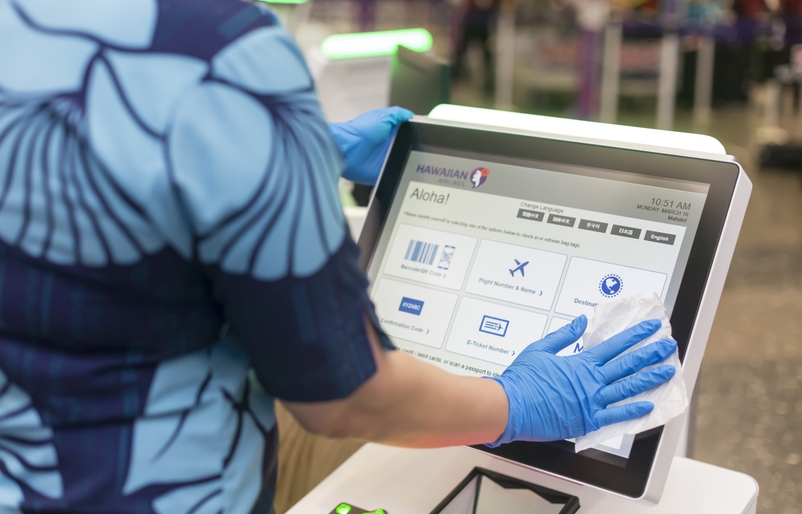
The COVID-19 pandemic has forced businesses, and in particular, the travel and hospitality industries to be more flexible than ever and adjust to meet unforeseen challenges. At Hawaiian Airlines, we've had to rethink every aspect of our operations so we can continue to protect the health and safety of our guests and employees during and long after the pandemic.
In our blog series "Changing Course," leaders across departments, from airport operations and information technology to human resources and sales, share how their teams have quickly adapted to continue to safely welcome and serve our guests with aloha.
Keep reading to learn how our hard-working airport teams have adapted their day-to-day roles amid the COVID-19 pandemic.
Mike Navares, managing director of airport operations, Honolulu hub:
Since March, when Hawai‘i Gov. David Ige enacted the first of a series of emergency proclamations, my team has had to change the way we do business at our Honolulu hub, the Daniel K. Inouye International Airport (HNL). We implemented additional health and safety directives and have had to get creative as we adjust to a severely reduced network, new cost-savings measures, and the state's travel quarantine orders.
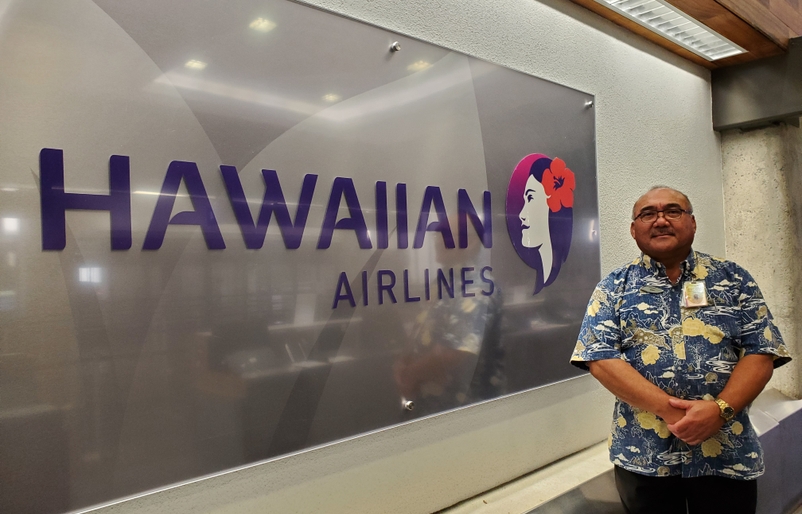
Some changes my team has had to make at HNL include:
- posting signs about social distancing and mask requirements in our lobbies, gates, jet bridges, and guest service areas;
- applying floor tape in HNL's various waiting areas to help our guests maintain six-foot spacing;
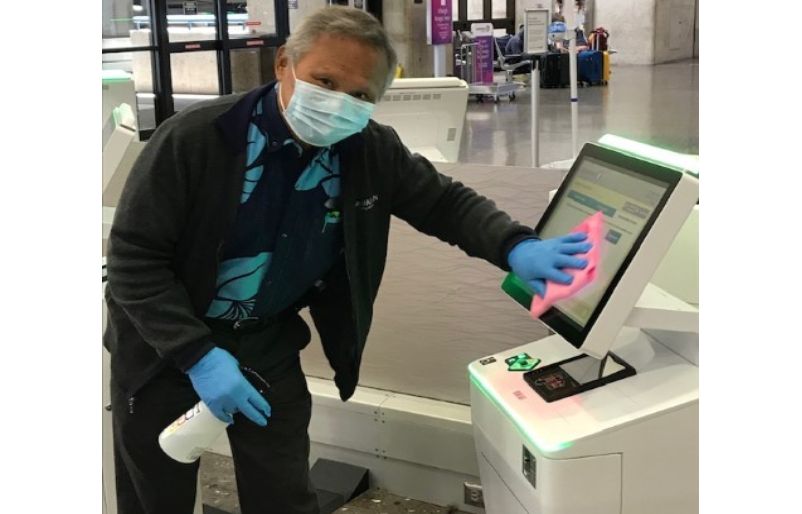
- requiring our guest-facing employees to wear face masks and gloves throughout their shift and frequently disinfecting kiosks, work areas, and counters;
- working with our aircraft appearance team to implement enhanced cleaning procedures, including electrostatic spraying of our cabins for additional disinfection;
- and expanding our upgraded cleaning procedures to include electrostatic spraying in work areas, such as our employee gathering spaces, restrooms, and breakrooms at HNL.
[Editor's note: To learn more about what we are doing to keep our employees and guests safe in the airport and on our planes, click here.]
My team has been working with county, state, and federal agencies as we all adapt to the situation. Before the pandemic, we were working out of lobbies 2 and 3 in Terminal 1 and lobby 4 in Terminal 2 to accommodate guests traveling on our approximately 180 daily flights departing HNL during our peak period. Given our significantly reduced flying, we've moved all operations to lobby 2 and worked with the Transportation Security Administration (TSA) and the Hawai‘i State Department of Transportation Airports Division (HIDOTA) to keep at least one screening checkpoint and bag inspection room open.
We've also had to find ways to save on costs. In addition to consolidating our lobby operations, we reduced the frequency of our once-busy employee shuttle service and temporarily suspended operations at the Makai Pier (gates B1-5) to minimize lease and utility expenses. (We are currently only using these gates for parking aircraft that are not in service or undergoing maintenance.)
Until the state is prepared to welcome visitors back to the Hawaiian Islands, my team at HNL will continue to pivot as necessary.
I feel very fortunate to have a great team and tremendous leaders who continue to guide us through all the challenges, changes, and the "new normal." We are one 'ohana and a unified company with a strong tradition of overcoming obstacles!
Pat Rosa, managing director of airport operations, Neighbor Islands:
The speed and scope of COVID-19 created an extraordinary challenge for any leader. There was no handbook to help us through this crisis. It required timely responses to our front-line employees, decisive actions coupled with consistent, honest communications, and the recognition that mistakes are inevitable.

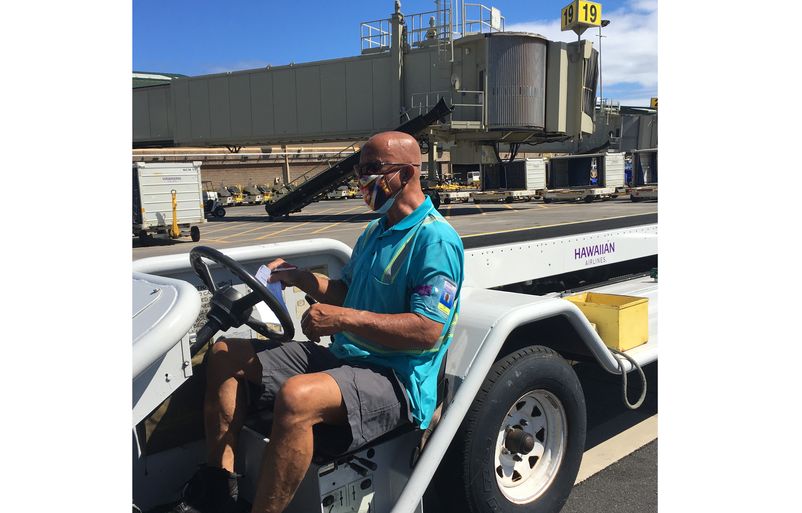
Some of the challenges we faced at the state's major Neighbor Island stations (Kona and Hilo on the Island of Hawai‘i, Kahului on Maui and Līhu‘e on Kaua‘i) included: implementing enhanced cleaning measures in our lobbies, breakrooms, and check-in counters with reduced staff. (Our guest service agents and ramp employees combine efforts and work with their colleagues to disinfect all work areas and equipment.)
In times of crisis, it's essential to keep your team focused. As we reduced our network to four daily flights between Honolulu and each major Neighbor Island airport, constant communication has been critical; we make sure we listen to each employee's perspective before we make any big decisions. In the beginning, we conducted daily briefings with four-to-five employees at a time to talk about company updates and new operational tasks. We also used any downtime to focus on improving as a team, including encouraging our chiefs and leads to complete professional development courses through training tools provided by the company.
I've also had to adjust how I manage my team. Since operations require a hands-on approach, I prefer to meet with my team in person. Prior to COVID-19, I was traveling between the islands at least once a week to visit the various stations, and rarely used Microsoft Teams, Zoom, or other video conferencing platforms to do my work. Now, I manage the Neighbor Islands stations from my office in Kahului, where I've quickly learned to become a virtual leader.
I am proud to be a part of Hawaiian's Airport Operations and feel my counterparts and the front-line team have done a great job in adapting and supporting each other. They take their time to talk story, check in on each other, and express their appreciation for their work 'ohana.
If this pandemic has confirmed anything, it's that working together toward a common goal, or in our case, a common enemy, can help you overcome anything.
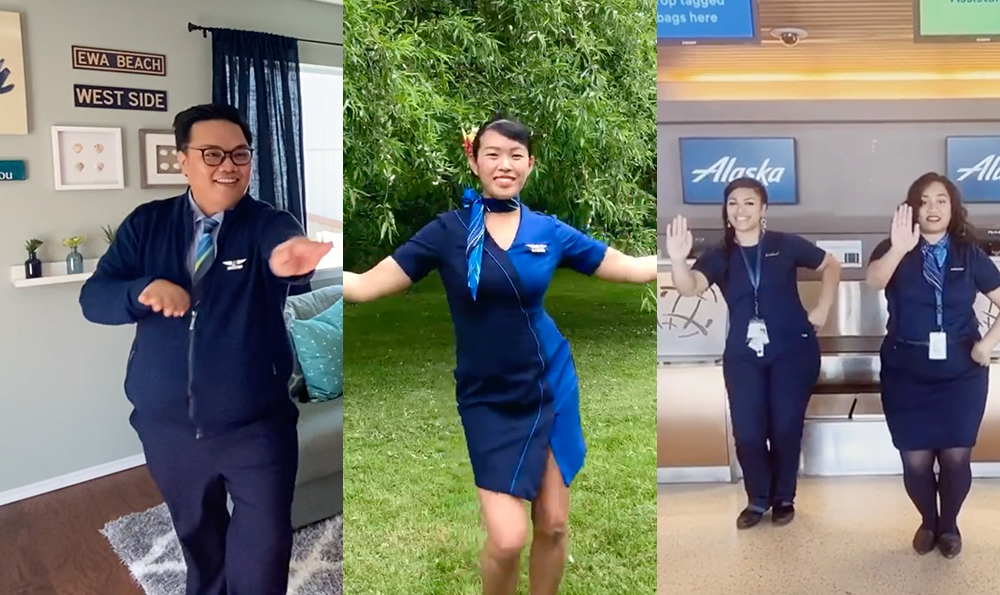
 “This month is a very special time where we get the chance to share our culture with the rest of the world. Tonga is known for being the friendliest island and so I’d like to keep that spirit alive whether I’m at work, home or out running errands. Be a light wherever you go.” — Ila Langi, a customer service agent in San Jose California
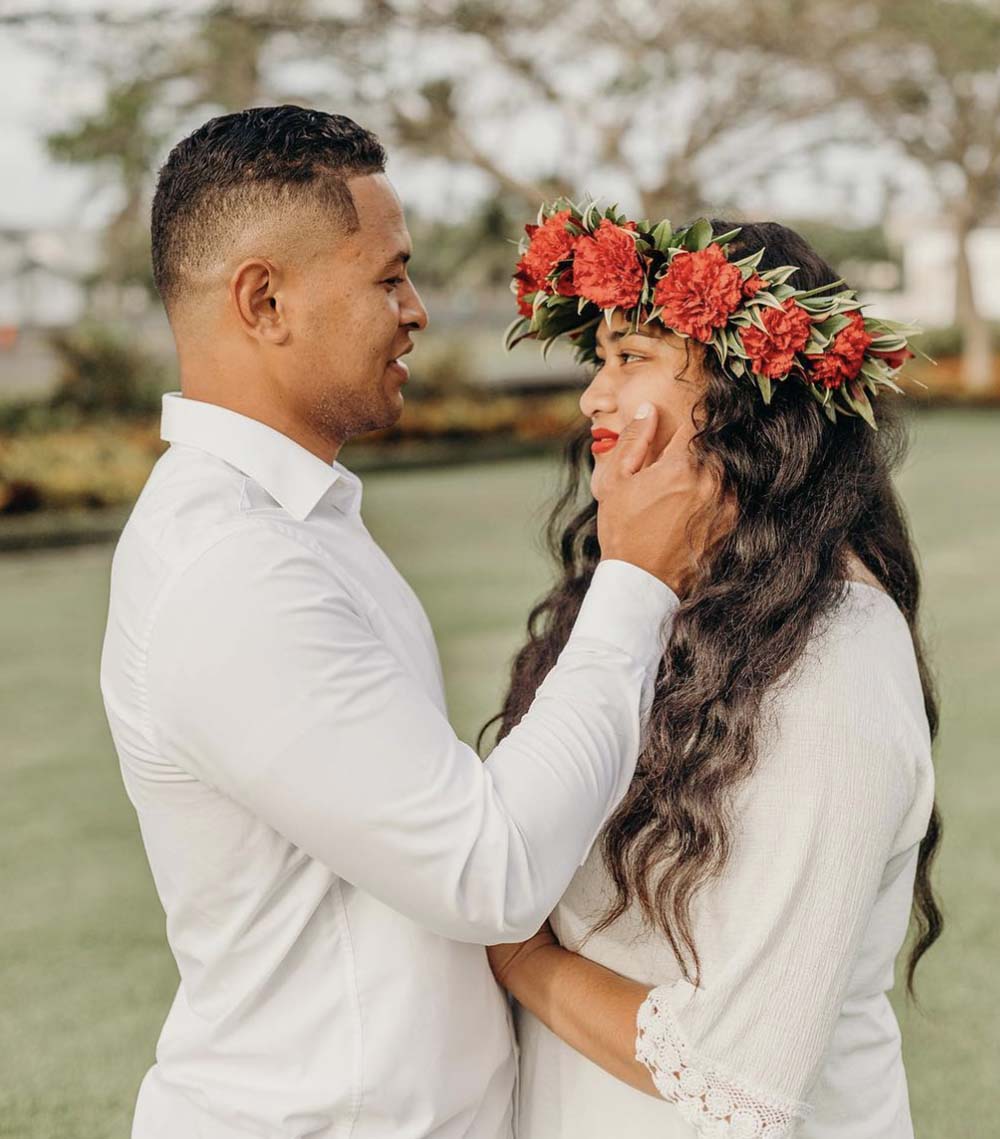 “This month has become a little more meaningful to me than it has in the past because I have finally taken initiative the past couple months to expand more on what I know of my culture. Especially being married to my husband, who knows the language and culture almost so fluently, he has helped me so much. He’s so encouraging and he makes it so enjoyable to learn and love our culture!” — Angelica Mapa, a customer service agent in San Jose California “Every day, I always try to make it a habit to pass on my knowledge to the younger generation in my family by trying to speak as much Tongan in the home and teach them traditions that we still hold on to today. At work, I always try to answer questions about my culture and heritage to anyone that asks. I always admire my coworkers who openly share what traditional foods they love to make or traditional events they keep up with their family because it also encourages me to share mine as well. It’s always a safe place to share about our heritage at work because no one judges,” she said.
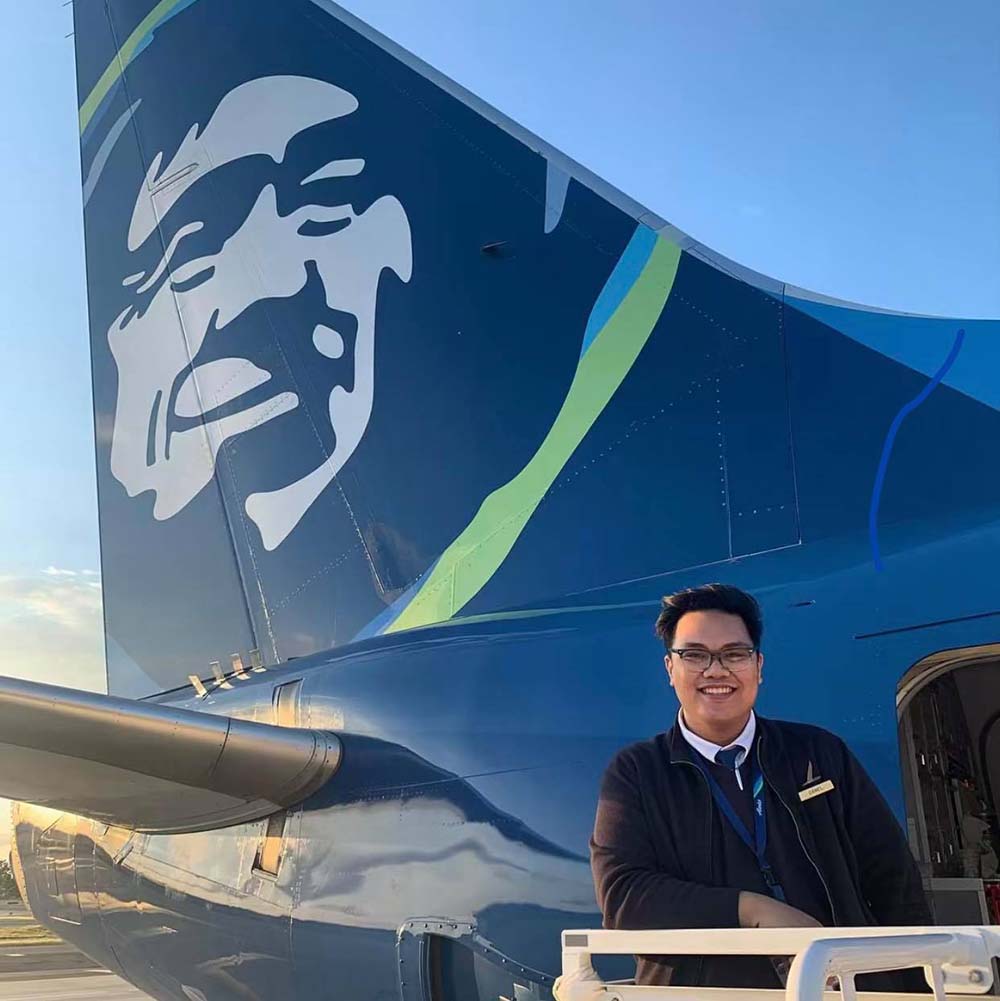 “This month means so much to me because not only does API month highlight my culture, it allows me to honor the generations before me that have paved the way for me, by their sacrifices and hard work. I am so blessed to have grown up in a multilingual household, and speaking multiple languages helps me stay connected to my heritage.” — Daniel Remigio, Seattle-based flight attendant
 “When most people think of Polynesians, they usually think of song and dance, and rightfully so, as it is the root of our culture. Dating back thousands of years, singing and dancing has been an ancient tradition used to communicate and connect, from ceremonial rituals to preparing for war to reciting history through storytelling and more. And although hula might be one of the first types of dance that comes to mind, there are actually many forms of ancient melodic traditions from around the South Pacific, like Samoa, Tonga, New Zealand, Fiji and Tahiti. But no matter which island or country, we all share that same heartbeat of Polynesia through dance.” — Shanyn Wright, multimedia communications specialist

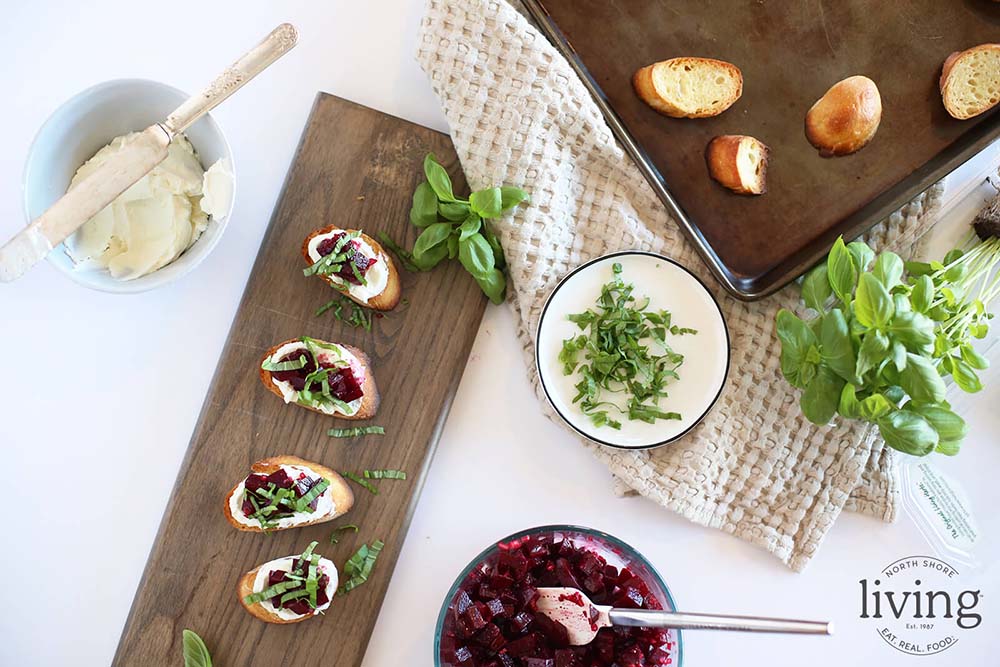
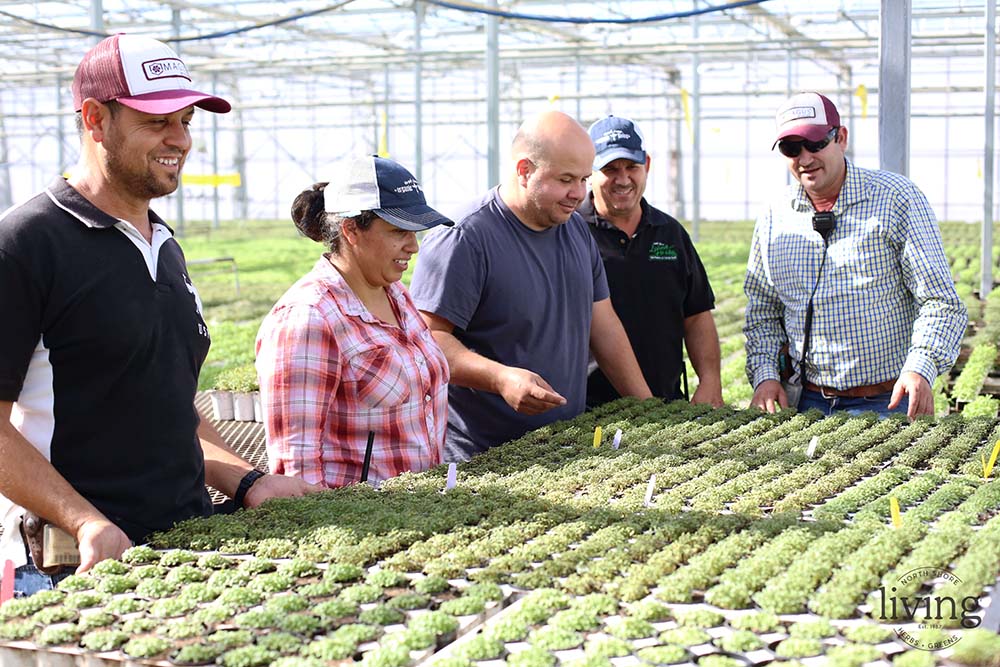
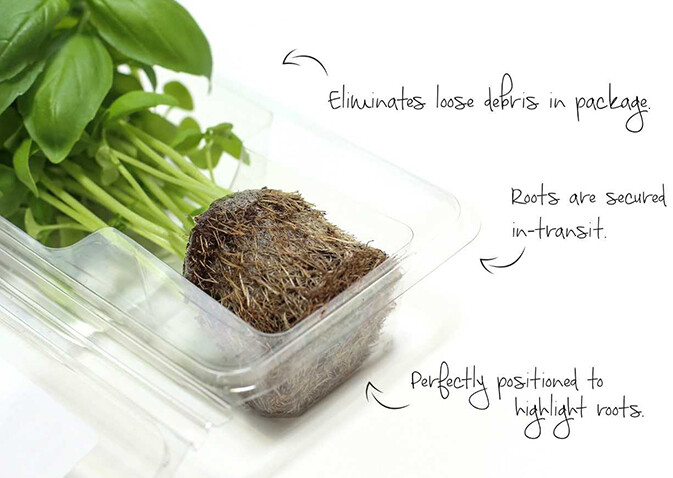
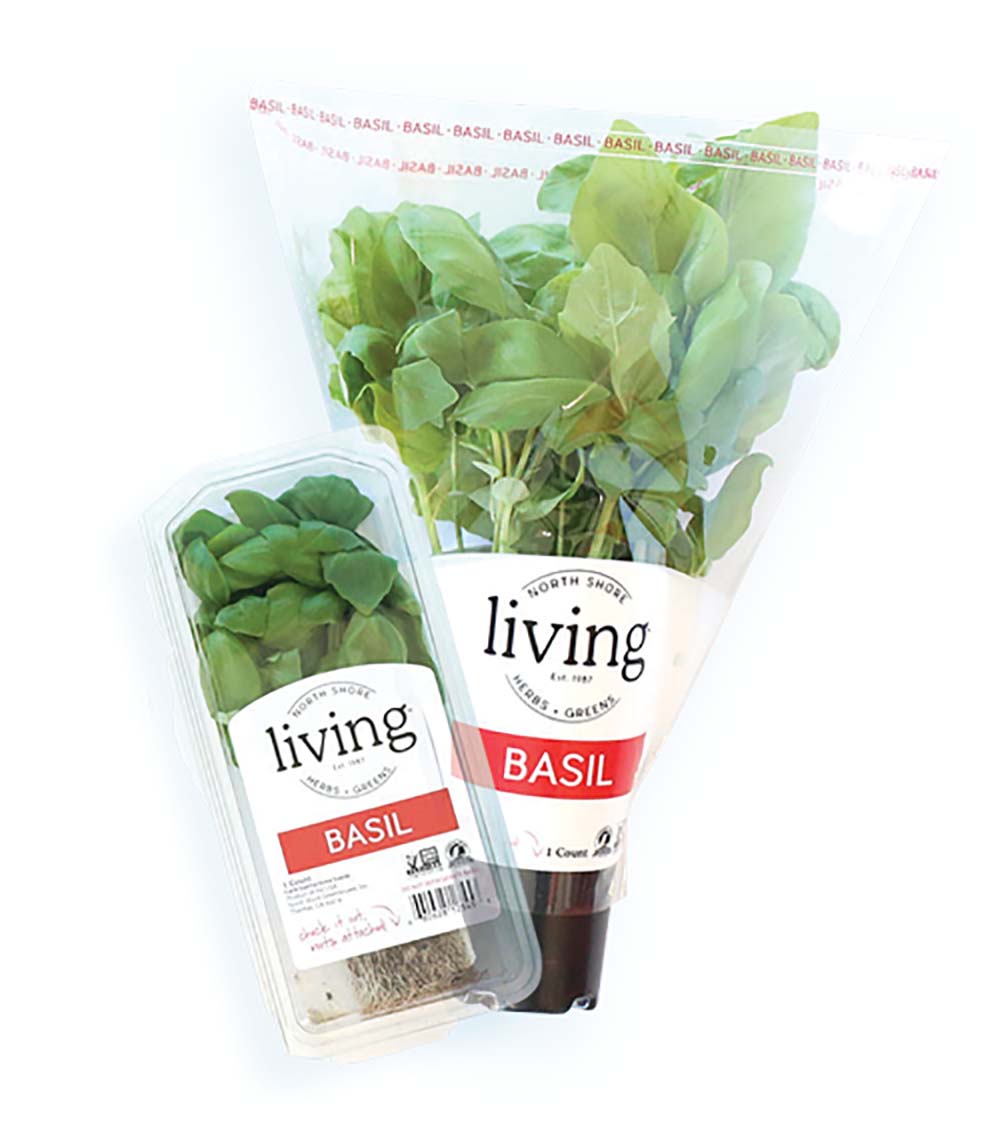 Not only can living herbs bring out so many flavors, but they can also be used as disinfectants and natural remedies for health and wellness. Pair sage with water with a little alcohol to make your very own natural disinfectant that smells wonderful, says Buehler.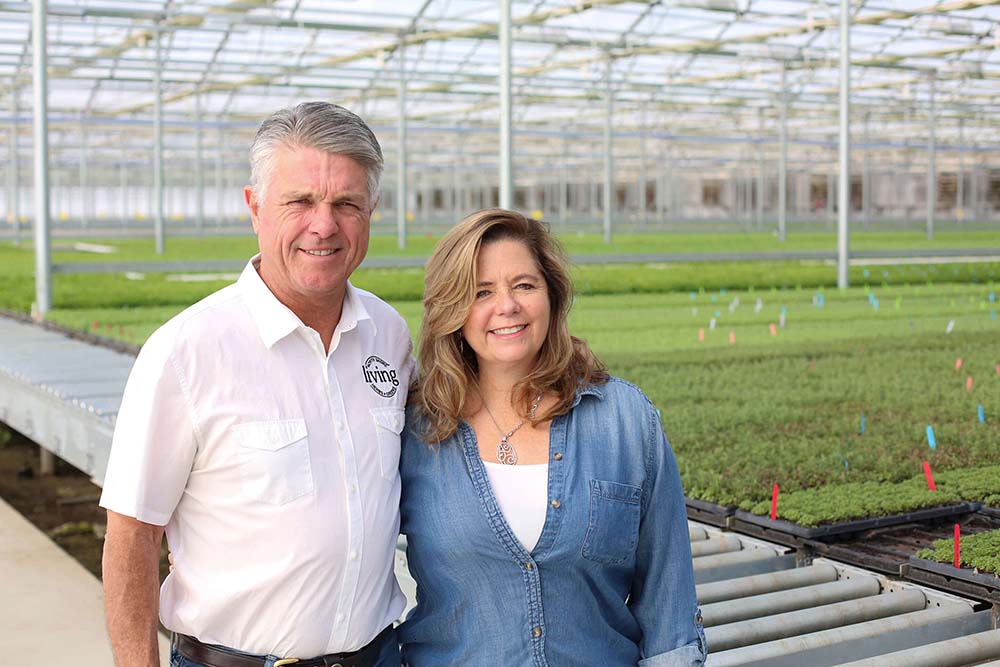



 View original content to download multimedia:




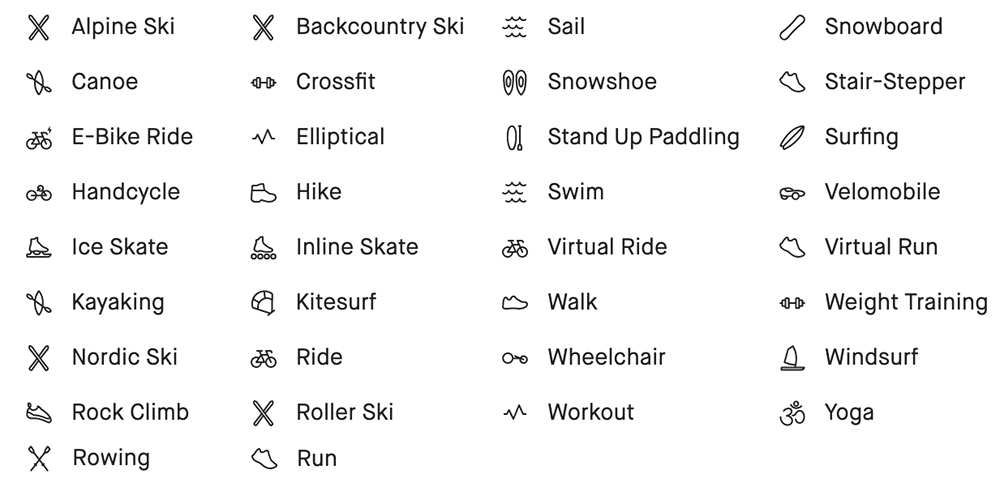
 Those who complete the challenge by May 30 will receive a completion badge and congratulations from Strava with a link to a page on alaskaair.com to register for the drawing. Participants must register by June 7 to be entered to win the miles.