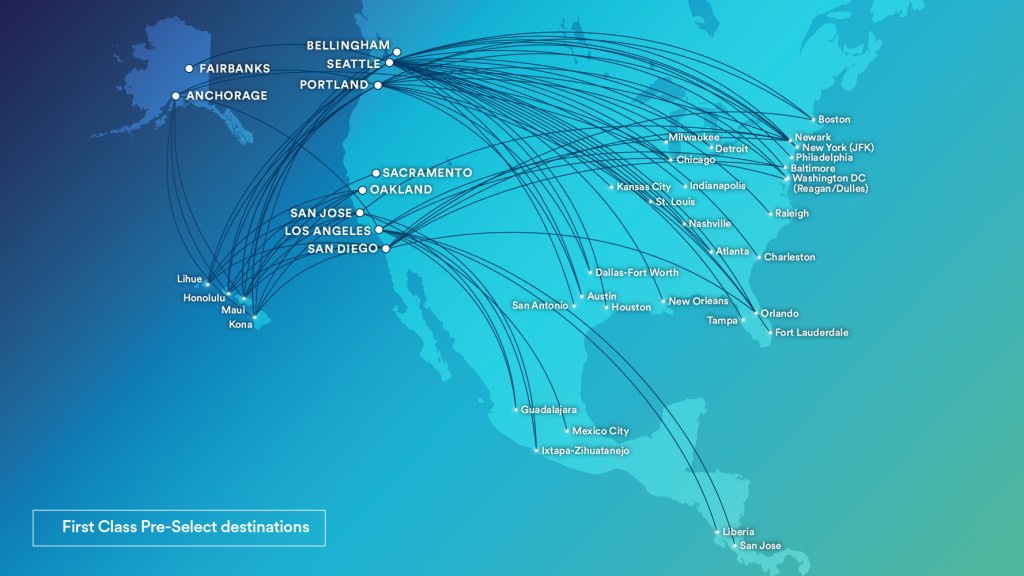
Rhubarb, asparagus and Salt & Straw ice cream on a plane? If you’re in First Class, it’s on the summer menu

How does brioche French toast with rhubarb thyme compote, real maple syrup and scrambled eggs sound for breakfast? Or, if it’s dinner time, perhaps some miso ginger beef with mesclun mix, tomatoes, cucumbers, radishes and ginger vinaigrette?

These are just two of the dishes rolling out on our First Class summer menu on Saturday, a selection that focuses on simplicity, fresh ingredients and generous portions.

The meals will be served on any flight with a First Class cabin – Boeing, Airbus and Embraer aircraft – and will change every three months based on the season.

“Our guests have told us they want more fresh food, larger quantities and a wider variety of options,” said Todd Traynor-Corey, director of food & beverage. “With a focus on local and healthy food with complex flavors, as well as our thoughtful beer and wine choices, the menu has a distinctive West Coast vibe.”

Read More

Kilauea 101: Frequently Asked Questions

Itching to ask a question related to Hawaiian Airlines and the latest Kīlauea eruptions? Below you will find answers to frequently asked questions we have received.


Have Hawaiian Airlines flights been impacted by the recent Kīlauea eruptions?

Our scheduled flights are operating normally, including all interisland flights, our once-daily, non-stop flight between Los Angeles (LAX) and Kona, and our three times a week service between Haneda and Kona.

Is flying in and out of Hilo International Airport (ITO) and Kona International Airport (KOA) still safe?

“Safety is our primary concern, and the flight activity that is currently underway is completely safe,” shared Ken Rewick, Hawaiian’s vice president of flight operations. “We are extremely conservative when it comes to flight operations and we monitor conditions on an ongoing basis.”

  • Operations at KOA – which is approximately 100 miles from Kīlauea – remain normal as the west coast of the island is unaffected. However, guests with respiratory disorders are advised to monitor air quality readings due to the regular presence of vog (volcanic fog).
  • ITO also remains open for business. The airport is roughly 30 miles from Kīlauea and has not been affected by the recent volcanic activity. Our airport team is in contact with state and federal agencies monitoring air quality for any potential health hazards.

Reid Shigeoka, Hawaiian’s senior manager of ITO and KOA airport operations, says both airports are working diligently to answer guests’ questions and to ensure they are aware of resources available to them. “However, we have noticed that many of our guests have taken the initiative to educate themselves prior to their trip, and have already adjusted any affected plans,” he said.

Take a walk in the shoes of two Hawaiian Airlines employees on the ground in Hilo and learn about their experiences during the latest Kīlauea eruption. Click here to read our recent post: Kilauea 101: The Kama‘āina Perspective on the Kīlauea Eruption.

How can I adjust my current travel reservation?

Hawaiian offered a flight change fee waiver from May 3 through June 10 to provide immediate flexibility to guests who booked their travel to Hilo or Kona prior to the recent eruption activity. We’ve resumed our normal fare rules. If you have questions about your upcoming trip, please contact our Reservations Department at 1-800-367-5320.

Guests are advised to check www.HawaiianAirlines.com for the latest updates on scheduled flights.

How is Hawaiian Airlines supporting residents and employees on the Island of Hawai‘i?

We are deeply saddened by the immense loss being experienced by so many of our Puna neighbors. We have been closely monitoring the situation on the ground to determine how Hawaiian can best support displaced Puna residents – some of whom are our own employees.

We have and will continue to provide assistance to agencies and organizations leading relief efforts on the Island of Hawai‘i. A snapshot of our involvement includes:

  • Monetary donations
  • Flights for first responders temporarily relocating to the Island
  • Shipments of food, water, and medical supplies for the Red Cross and Salvation Army
  • Distribution of various goods, including food and water
  • Team Kōkua volunteers providing boots-on-the-ground assistance at local shelters

We will continue to rely on the organizations managing the shelters and support services to identify individual cases where we can provide additional assistance.

How can I stay updated with the latest alerts during my trip?

Those planning a trip to the Island of Hawai‘i who have questions can contact the Hawai‘i Tourism United States Call Center at 1-800-GO-HAWAII (1-800-464-2924).

To learn more about the Kīlauea eruption, including alerts and updates, visit:

For real-time updates on environmental conditions, visit:

What areas should I avoid, and where do you recommend I visit instead?

Visitors should avoid hazardous areas close to the lava activity within the Puna district. Click here to view an official map with updates.

Being the largest of the Hawaiian Islands, the Island of Hawai‘i offers visitors a lot of ground to explore outside of the affected areas. If you’re looking to adjust your plans, we highly recommend building your itinerary using our Insider Guides, created by kama‘āina for a truly local experience, or by visiting the Hawai‘i Tourism Authority website.

We also recommend using #ExploreIslandofHawaii on Instagram, Twitter and Facebook before, during and after your tropical adventure!

Kilauea 101: The Kama‘āina Perspective on the Kīlauea Eruption

Kīlauea, the youngest volcano on the Island of Hawai‘i, continues to make headlines as lava flows to the surface and settles on the island’s southeastern coast in the Puna district.

At Hawaiian Airlines, we have been closely monitoring the situation to keep our flights operating safely, and to determine how we can best help the community – including our own Hilo-based colleagues who work at Hilo International Airport (ITO).

Kilauea is one of the world’s most active volcanoes for a reason: it’s been erupting since 1983, and as lava cools and hardens, the Big Island has been constantly expanding with some 570 acres of new land created during this period, according to the U.S. Geological Survey. So, what’s new this time? The eruption has intensified in recent weeks, with magma pouring from dozens of fissures carving a new path through more than seven square miles.

While the impacted area currently represents about 0.2 percent of the entire island, the lava flow has been tragic for hundreds of residents who have been displaced. We have partnered with several organizations to help take care of our Puna neighbors, deployed volunteers to serve meals, and supported relief efforts with donations and flight assistance to first responders and transportation of needed supplies.

To learn more about the ongoing eruption, we recently sat down with Luana Gibson (LG), our ITO general manager and a Hawaiian Airlines employee for 20 years, and Customer Service Agent Michael Quihano (MQ), who’s been with us for 14 years.

Continue reading to get their insight and experiences relating to Kīlauea. You can also learn more about our flight operations and how Hawaiian Airlines is assisting guests and the affected Puna community by reading Kilauea 101: Frequently Asked Questions.


Luana Gibson

Luana Gibson

Where do you live on the Island of Hawai‘i and in relation to Kīlauea volcano?

LG: The Island of Hawai‘i is my home. I live approximately 26 miles from Kilauea Crater in Mountain View just below Volcano National Park.

MQ: I live in Kalapana, approximately nine miles from the Kīlauea Crater.

Have you, your family or friends been directly impacted by the eruption?

LG: There is a sadness within the families and communities on the East Rift Zone, which is where the lava is actively cleansing and building the Island of Hawai‘i. Many of my friends, whom I consider a part of my ‘ohana, live in this area, including Seaview Estates, Kapoho, and Kalapana in Puna. Every day, I see much effort and service being contributed by other communities, businesses, friends and families who are assisting those in need.

MQ: We were impacted by an earthquake first, which created road cracks on one of the island’s major highways. This highway was eventually closed. We then had to use alternate routes, which added 40 minutes to a 30-minute work commute.

Michael Quihano

Michael Quihano

 How has the volcano had an impact on your overall community?

LG:  The area currently affected by the volcanic activity is relatively small, when you consider our island has more than 4,000 square miles. Undoubtedly, there is devastation to people’s lives such as our local farmers located in the active lava zone. The impact does not stop there, as local businesses that rely largely on tourism have been negatively affected. We understand travelers may be worried, given the amazing imagery of the lava, but the island remains open for business and it’s an ideal time to witness the history and wonder of how our islands grow.

MQ: As you can see in the news and on social media, the impact Tūtū (aunty) Pele (many residents refer to Pele, the Fire Goddess in Hawaiian mythology, when speaking about Kilauea) has created is just unexplainable! From people losing all that they had, to relocating…the list goes on. However, as a community, there is a lot of love that we all have for this place that we are all so fortunate to call home. We are all there for each other. 

Kīlauea has been erupting for over three decades now. What is the general reaction of the community and how have people been responding to this recent activity?

Kilauea glow at night

Photo credit: Michael Quihano
Kīlauea's volcanic glow illuminates Hilo's night sky

LG: We are taking it one day at a time as the eruption continues to unfold. The residential areas, fruit and flower farms, and other business – all of which were greatly affected – provided employment and services to our tourism industry. Most importantly, it has affected individual families. However, there are many “unsung heroes” who continue to contribute and support every way they can with love and service.

For decades, visitors have been drawn to the island of Hawai’i to watch the steam rise from the crater’s vents while driving by the crater rim through the beautiful and lush Volcano National Park. Many also take ocean tours and hikes to watch lava entering the ocean. One of my favorite memories was hiking to the cliffs in Kalapana and watching the red, glowing lava kiss the sea, while a Tutu who sat nearby wove a haku lei (a type of lei worn on the head like a crown) and a local brother named Puna played and sang beautiful Hawaiian songs. 

MQ: Long-time residents will remain in their homes until it becomes a safety issue and we are presented with a mandatory evacuation. Many of those who are going through this for the first time have relocated to another island, or found temporary shelter.

As you mentioned earlier, there’s been a lot of confusion about whether it’s safe for travelers to visit the Island of Hawai‘i, particularly the east side in Hilo. Are you able to share an update on the current conditions throughout the entire island?

LG: A majority of the island is operating in a business-as-usual manner. Every day the volcano erupts is another day in our lives, and we continue to live the best we can. If vog (meaning volcanic fog) settles in any one spot, it will usually only stay until the winds change…which can sometimes occur within minutes. The air is clear most of the time because of Hawai‘i’s trade winds.

MQ: I can only speak from my experiences working in Hilo and living in Kalapana. There have only been two times where the vog was bad, but it usually only lasts for a little bit and the trade winds come and blow it away. As for the lava flow, it is currently flowing into the ocean in the Kapoho area of Puna, so visitors should not be worried. (Guests should be aware of Civil Defense warnings and refrain from approaching hazardous areas near the eruption.)

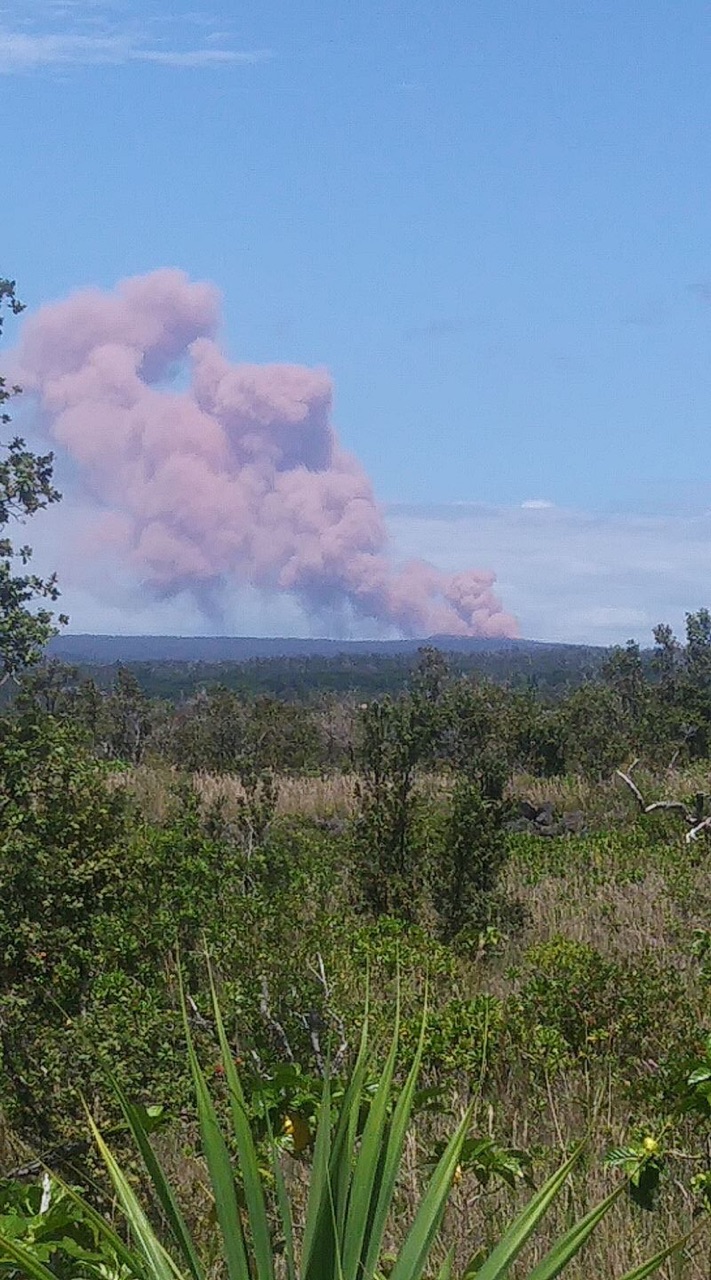
Kilauea - Distant Photo

Photo credit: Michael Quihano
Observing the Kīlauea eruption from afar

What is your piece of advice for guests who may be worried about the volcano and are considering postponing their trip to Hawai‘i?

LG: It's difficult to explain how life is here. Family and friends all over the world are concerned about us, but we're OK! Today we had beautiful blue skies. Every day is different.

We have so many other beautiful places to see and the Island of Hawai‘i is a true Hawaiian experience. I highly recommend:

  • Visiting Umauma Falls & Botanical Gardens, which has a zip-line adventure over waterfalls, ravines, and the lush beauty of our island
  • Driving over and in between Mauna Kea and Mauna Loa Mountains
  • Taking a dip in the Hilo shoreline tide pools
  • Stopping at Pa‘ani Ranch
  • Exploring the ‘Imiloa Astronomy Center
  • Stopping at a local restaurant in the area, like Hilo Bay Café or Café Pesto

MQ: We can only educate our guest with our local knowledge and experience. The most important thing I would say is that Hawai‘i Island remains a beautiful and safe destination. Currently, the flow is only affecting the lower Puna side of the island. It is a sight to see, but there are so many other wonderful places to explore! I recommend:

  • Visiting Mauna Kea (always check road conditions before visiting the summit)
  • Driving to Hilo’s Rainbow Falls
  • Walking through Akaka Falls State Park 

Looking for more travel recommendations? Guests can get a local’s perspective on Island of Hawai‘i activities via Hawaiian Airlines’ Island Guides. Click here to start planning your adventure.


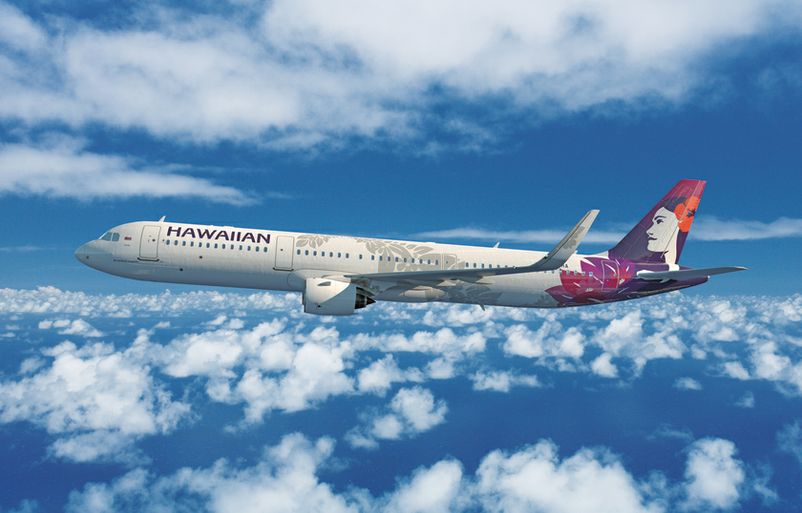
Meet the A321neo

It’s the dawn of a greener day as we welcome more fuel-efficient aircraft to Hawaiian Airlines’ growing fleet. The newest member of our ‘ohana is the Airbus 321neo, the mid-range cousin of our long-haul wide-body A330 aircraft, which is used for service between Hawai‘i and the U.S. Mainland and 10 international destinations. The neo allows us to extend our award-winning ho‘okipa (Hawaiian hospitality) to more major ports throughout the western United States.

In celebration of our recent Long Beach launch, which was operated by our third A321neo, we wanted to take a moment to introduce you to the newest model in our Airbus collection. Continue reading to learn more…


Why the A321neo?

HAWN-20006_a321Sky


For many years, Hawaiian has served the U.S. West Coast with larger, wide-body aircraft – most recently the Airbus 330-200 and the Boeing 767-300. While these aircraft are fantastic at transporting our guests safely and comfortably, they are too large for some of the smaller, secondary markets that we have been looking forward to serving. The A321neo right-sizes our aircraft for these markets, allowing us to offer more non-stop service to and from the Islands while maintaining affordable and competitive prices year-round.

Finally, as we introduce the A321neos to the West Coast, we are freeing up our A330 aircraft to support our existing long-haul network and explore launching service to exciting new destinations. 

We’re also big fans of the plane itself, from its advanced engineering to its unmatched level of comfort. The A321neo’s innovative model is touted for its quiet engine, the Pratt & Whitney PurePower® Geared Turbofan, and boasts a greener, more aerodynamic build than its predecessors. In the end, we’re able to reduce our company’s fuel consumption and carbon emissions on a single flight by 16 percent compared to previous generation aircraft.

Where it Will Spread its Wings

Hula dancers perform in front of the new A321neo now serving daily flights to and from Long Beach


As we build a fleet of 18 A321neos through 2020, we’ve already launched three aircraft into service.

Want to test out the A321neo? Consider booking your next Hawaiian vacation on one of the following routes:

    • Long Beach (LGB) to Honolulu (HNL) – launched June 2018

    • Portland (PDX) to Honolulu (HNL) – launched May 2018

    • Portland (PDX) to Kahului (OGG) – launched April 2018

Be on the lookout for additional A321neo routes to enter our network throughout 2018, including: 

    • Los Angeles (LAX) to Līhu‘e (LIH) and Kona (KOA)

    • Oakland (OAK) and LIH, HNL, and OGG

    • San Diego (SAN) and OGG

    • San Jose (SJC) and OGG


A Bird’s Eye View of the Neo

Interior Collage


    • INTERIOR

        • Total of 189 seats

            • 45 Extra Comfort seats (main cabin)

            • 128 economy seats (main cabin)

            • 16 luxurious leather recliners seats (first class)

        • Wireless streaming entertainment via Hawaiian Airlines Entertainment app

        • USB outlets

        • Additional overhead stowage space

    • LIVERY: The new livery features a silver maile lei that wraps around the fuselage as our iconic “Flower of the Sky” Pualani icon gazes forward from the tail of the aircraft.

    • DESIGN: Textiles and other materials throughout the cabin transport guests to the Islands the moment they step on board. The overall interior design perpetuates traditional Hawaiian crafts such as bark cloth (kapa) and fishing nets. Other details range from sand-inspired wall panels to Hawaiian language signage and LED mood-lighting evoking Hawai‘i’s soothing sunrises and sunsets.

    • AVIONICS: Next-generation communication, navigation and surveillance systems – including a completely digital low-range altimeter, and transponders and multi-mode receivers that are fully compliant with future airspace mandates – from Rockwell Collins, a pioneer in innovative aviation solutions.

The aircraft also includes MultiScan™ ThreatTrack weather radar, which alerts flight crews of potentially disruptive weather.

Going Back in Time


The A321neos are not our first transpacific narrow-body planes: The aircraft chosen for our first scheduled flights between Honolulu and Los Angeles and American Samoa was the Douglas DC-8.

Between 1983 and 1993, the four-engine DC-8 served as the primary aircraft for service to the South Pacific and for worldwide charters, while the wide-body Lockheed L-1011 flew most of the U.S. mainland to Hawai‘i routes. With a single aisle and six-abreast seating, our DC-8 Premier service included in-flight entertainment from VHS tapes and twelve audio channels.

At any given time, one of the DC-8s would be flying the South Seas while the others could be carrying tourists between European and exotic travel destinations, or even moving allied troops around the globe. During the decade the DC-8s were in use, few large airports worldwide did not see our iconic Pualani logo on their tarmac.

Hawaiian Airlines Reports May 2018 Traffic Statistics and Updates Expected Second Quarter and Full Year 2018 Metrics

HA logo

HONOLULU, June 11, 2018 /PRNewswire/ — Hawaiian Airlines, Inc., a subsidiary of Hawaiian Holdings, Inc. (NASDAQ: HA) ("Hawaiian" or the "Company"), today announced its system-wide traffic statistics for the month ended May 31, 2018. The Company also updated its expectations for certain second quarter financial metrics and its fuel costs for the full year 2018.

 (PRNewsfoto/Hawaiian Holdings, Inc.)

Hawaiian welcomed more than 1 million guests in May 2018, a record for the month of May and an increase of 4.7% over the same period last year. Total traffic (revenue passenger miles) increased 5.6% on an increase of 6.5% in capacity (available seat miles). Load factor decreased 0.8 points to 85.9%.

The table below summarizes May and year-to-date traffic statistics compared to the respective prior-year periods.

SYSTEM-WIDE OPERATIONS1


MAY

2018

2017

% CHANGE

PAX

1,011,175

966,179

4.7%

RPMS (000)

1,445,663

1,369,417

5.6%

ASMS (000)

1,683,228

1,579,843

6.5%

LF

85.9%

86.7%

(0.8) pts.


YEAR-TO-DATE

2018

2017

% CHANGE

PAX

4,864,128

4,574,329

6.3%

RPMS (000)

6,863,068

6,462,948

6.2%

ASMS (000)

8,042,653

7,619,942

5.5%

LF

85.3%

84.8%

0.5 pts.


PAX

Passengers transported

RPM

Revenue Passenger Miles; one paying passenger transported one mile

ASM

Available Seat Miles; one seat transported one mile

LF

Load Factor; percentage of seating capacity filled


1Includes the operations of contract carriers under capacity purchase agreements.

Second Quarter Outlook

The Company has revised its expectations for the quarter ending June 30, 2018, provided in its First Quarter 2018 Earnings Release on April 24, 2018.

Specifically, the Company:

  • lowered its expectations for operating revenue per available seat mile (RASM) primarily due to a reduction in the pace of domestic bookings following an increase in volcanic activity on the Big Island of Hawai'i;
  • revised its expectations for operating cost per available seat mile (CASM) excluding fuel and special items associated primarily with two specific items: an unscheduled maintenance event for one of its A330-200 aircraft, and a one-time expense related to an interim agreement with one of its labor groups pertaining to the Company's intent to purchase Boeing 787-9 aircraft as announced on March 6, 2018;
  • revised its expectations for gallons of jet fuel consumed; and
  • revised its expectations for economic fuel cost per gallon.

The table below summarizes the Company's revised expectations for the quarter ending June 30, 2018, expressed as an expected percentage change compared to the results for the quarter ended June 30, 2017.

Item


Original
Second
Quarter 2018
Guidance


Revised
Second
Quarter 2018
Guidance


GAAP
Equivalent


Original
GAAP Second
Quarter 2018
Guidance


Revised
GAAP Second
Quarter 2018
Guidance

Operating revenue per available seat mile (ASM)


Flat to up 3.0%


Down 0.5% to up 1.5%


Cost per ASM (CASM) excluding aircraft fuel and special items (a)


Up 4.0% to up 7.0%


Up 5.0% to up 7.0%


Cost per ASM


Up 8.6% to up 12.1%


Up 10.7% to up 12.7%

Gallons of jet fuel consumed


Up 5.0% to up 7.0%


Up 6.0% to up 7.0%


Economic fuel cost per gallon (b)(c)


$2.00 to $2.10


$2.05 to $2.10


Fuel cost per gallon (b)


$2.11 to $2.21


$2.20 to $2.25


(a)

See Table 1 for a reconciliation of GAAP operating expenses to operating expenses excluding aircraft fuel and special items.  Excluded from the Company's expectations for CASM excluding aircraft fuel and special items are any assumptions related to the amendable contract with its flight attendant union.

(b)

Fuel cost per gallon estimates are based on the June 8, 2018 fuel forward curve.

(c)

See Table 2 for a reconciliation of GAAP fuel costs to economic fuel costs.

Full Year 2018 Outlook

The Company also revised its expectations for economic fuel cost per gallon for the full year ending December 31, 2018, also previously provided on April 24, 2018, as noted in the table below.

Item


Original Full
Year 2018
Guidance


Revised Full
Year 2018
Guidance


GAAP
Equivalent


Original
GAAP Full
Year 2018
Guidance


Revised
GAAP Full
Year 2018
Guidance

Economic fuel cost per gallon (a)(b)


$1.97 to $2.07


$2.05 to $2.15


Fuel cost per gallon (a)


$2.02 to $2.12


$2.14 to $2.24


(a)

Fuel cost per gallon estimates are based on the June 8, 2018 fuel forward curve.

(b)

See Table 2 for a reconciliation of GAAP fuel costs to economic fuel costs.

The Company's expectations for the full year CASM excluding aircraft fuel and special items remain unchanged.

Non-GAAP Financial Reconciliations

Table 1. Operating Costs per Available Seat Mile (CASM)
(in thousands, except CASM data) (unaudited)


Estimated three months ending June 30, 2018

GAAP operating expenses


$

620,029


to

$

642,853


  Less: aircraft fuel, including taxes and delivery


(150,672)


to

(155,445)


Adjusted operating expenses – excluding aircraft fuel and special items


$

469,357


to

$

487,408


Available Seat Miles


4,972,266


to

5,066,975


CASM – GAAP


12.47

¢

to

12.69

¢

  Less: aircraft fuel


(3.03)


to

(3.07)


CASM – excluding aircraft fuel and special items


9.44

¢

to

9.62

¢

Table 2. Economic Fuel Expense
(in thousands, except per-gallon amounts) (unaudited)


Estimated three months ending June 30, 2018

Aircraft fuel expense, including taxes and delivery


$

150,672


to

$

155,455


Realized losses on settlement of fuel derivative contracts


(10,500)


to


(10,500)


Economic fuel expense


$

140,172


to

$

144,945


Fuel gallons consumed


68,376


to


69,021


Economic fuel costs per gallon


$

2.05


to

$

2.10


Estimated full year ending December 31, 2018

Aircraft fuel expense, including taxes and delivery


$

573,811


to

$

617,346


Realized losses on settlement of fuel derivative contracts


(25,000)


to


(25,000)


Economic fuel expense


$

548,811


to

$

592,346


Fuel gallons consumed


267,712


to


275,510


Economic fuel costs per gallon


$

2.05


to

$

2.15


Forward-Looking Statements
This press release contains "forward-looking statements" within the meaning of the Private Securities Litigation Reform Act of 1995 that reflect the Company's current views with respect to certain current and future events and financial performance.  Such forward-looking statements include, without limitation, the Company's expectations regarding operating revenue per available seat mile, cost per available seat mile, cost per available seat mile excluding fuel and special items, gallons of jet fuel consumed, fuel cost per gallon, and economic fuel cost per gallon for the quarter ending June 30, 2018; and fuel cost per gallon and economic fuel cost per gallon for the year ending December 31, 2018 ; and statements as to other matters that do not relate strictly to historical facts or statements of assumptions underlying any of the foregoing.  Words such as "expects," "anticipates," "projects," "intends," "plans," "believes," "estimates," variations of such words, and similar expressions are also intended to identify such forward-looking statements.  These forward-looking statements are and will be, as the case may be, subject to many risks, uncertainties and assumptions relating to the Company's operations and business environment, all of which may cause the Company's actual results to be materially different from any future results, expressed or implied, in these forward-looking statements.  These risks and uncertainties include, without limitation, the Company's ability to accurately forecast quarterly and annual results; economic volatility; macroeconomic developments; political developments; the price and availability of aircraft fuel; fluctuations in demand for transportation in the markets in which the Company operates; changes in the volcanic activity on the Big Island of Hawai'i and its effects on bookings; the Company's dependence on tourist travel; labor negotiations and related developments; competitive pressures, including the potential impact of rising industry capacity between North America and Hawai'i; the Company's ability to continue to generate sufficient cash flow to support the payment of a quarterly dividend; changes in the Company's future capital needs; foreign currency exchange rate fluctuations; and the Company's ability to implement its growth strategy.

The risks, uncertainties and assumptions referred to above that could cause the Company's results to differ materially from the results expressed or implied by such forward-looking statements also include the risks, uncertainties and assumptions discussed from time to time in the Company's other public filings and public announcements, including the Company's Annual Report on Form 10-K and the Company's Quarterly Reports on Form 10-Q, as well as other documents that may be filed by the Company from time to time with the Securities and Exchange Commission.  All forward-looking statements included in this document are based on information available to the Company on the date hereof.  The Company does not undertake to publicly update or revise any forward-looking statements to reflect events or circumstances that may arise after the date hereof even if experience or future changes make it clear that any projected results expressed or implied herein will not be realized.

About Hawaiian Airlines
Hawaiian® has led all U.S. carriers in on-time performance for each of the past 14 years (2004-2017) as reported by the U.S. Department of Transportation. Consumer surveys by Condé Nast Traveler, Travel + Leisure and TripAdvisor have placed Hawaiian among the top of all domestic airlines serving Hawai'i.

Now in its 89th year of continuous service, Hawaiian is Hawai'i's biggest and longest-serving airline. Hawaiian offers non-stop service to Hawai'i from more U.S. gateway cities (12) than any other airline, along with service from Japan, South Korea, China, Australia, New Zealand, American Samoa and Tahiti. Hawaiian also provides approximately 170 jet flights daily between the Hawaiian Islands, with a total of more than 250 daily flights system-wide.

Hawaiian Airlines, Inc. is a subsidiary of Hawaiian Holdings, Inc. (NASDAQ: HA). Additional information is available at HawaiianAirlines.com. Follow Hawaiian's Twitter updates (@HawaiianAir), become a fan on Facebook (Hawaiian Airlines), and follow us on Instagram (hawaiianairlines). For career postings and updates, follow Hawaiian's LinkedIn page.

For media inquiries, please visit Hawaiian Airlines' online newsroom.


Cision View original content with multimedia:https://www.prnewswire.com/news-releases/hawaiian-airlines-reports-may-2018-traffic-statistics-and-updates-expected-second-quarter-and-full-year-2018-metrics-300664338.html

SOURCE Hawaiian Airlines

Alaska simplifies boarding process

You may have a complicated relationship with boarding an aircraft. On the one hand, it means you will soon settle into your seat and you’re almost on your way. On the other hand, it can sometimes be stressful if you’re not sure when it’s your turn to board. At one point or another, you’ve probably seen a big queue of people – let’s be honest, sometimes it’s just a shapeless blob – that forms when people aren’t sure if it’s their time to board.

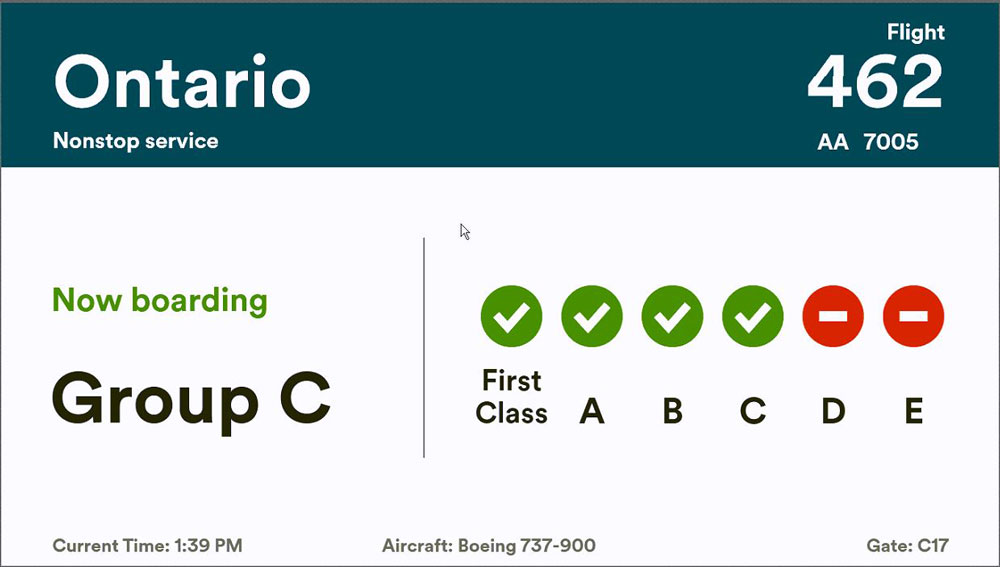
Starting July 18, Alaska will be launching a new group boarding process that will simplify the process for guests. This identifies which of the six groups – First Class, Group A, Group B, Group C, Group D or Group E – you belong to. You’ll simply approach the gate with the rest of your group when your group is announced.

This new boarding process doesn’t change anything about where you sit once you’re inside the plane – Alaska Airlines still has confirmed, assigned seats that you may select in advance. There’s no change to that.

Here’s a quick rundown on what this all means for you the next time you fly Alaska Airlines.

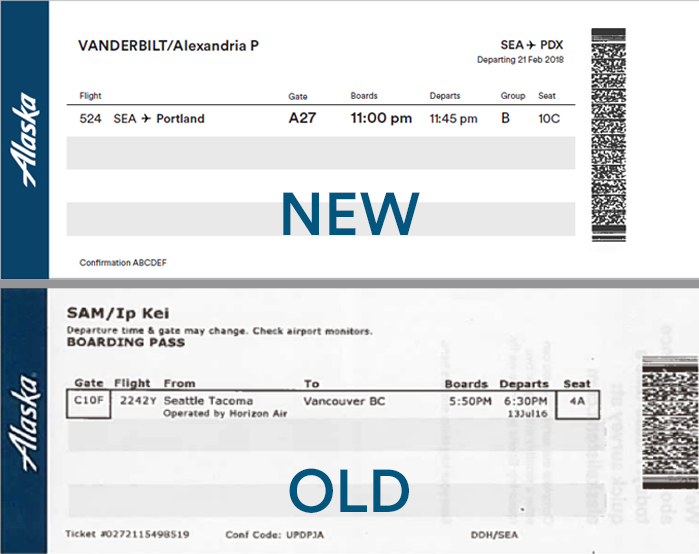
Boarding Pass

For flights on or after July 18, 2018, you will see some changes to the boarding pass design – such as larger fonts and more streamlined information.

Your boarding pass is really a guide for your journey. You want to know, first and foremost, where you need to be (your gate) and when you need to be there (your boarding time).

You’ll notice these two pieces of information are now big and bold. In tests, guests were quickly and easily able to get the information they needed from their boarding passes.

You will find your group letter listed on your boarding pass. If you have multiple flight segments, you’ll see each one on a separate line and an assigned group letter for each. If you’re a Mileage Plan MVP traveling with other people on the same reservation, you will all see the same boarding group noted on your boarding pass.

Read More

E komo mai!

In Hawai‘i, oral storytelling has long served as a cultural messenger, spreading centuries worth of traditions, values, legends and historical allusions throughout generations. For Hawaiian Airlines – one of the world’s first commercial airlines – our legacy has lived on since our founding in 1929 through our employees, our guests, and the experiences they share onboard each flight and while visiting our shores.

In honor of our deeply-rooted history, today we introduce you to Mana‘o, the blog of Hawaiian Airlines.

Intro Timeline

Why Mana‘o?

Mana‘o (meaning thought, idea, and knowledge) will serve as the platform to share the everyday expertise, stories, and happenings from our company’s ‘ohana.

What information can I expect?

With each post, you’ll learn how Hawaiian is making an impact in our local community and throughout the markets we serve, take a walk in the shoes of our employees and partners, and dive deep into interesting, aviation-related happenings taking place within our company.

How do I stay updated?

Anyone can sign up for real-time blog updates by entering an email address in the Subscribe box, located on our page’s sidebar.

You can also contact us at news@hawaiianair.com for more information.

Video: A stylist’s take on San Francisco

Alaska Airlines recently partnered with Darling Media to launch the “Go, Be You” video series, which follows eight women as they explore eight Alaska Airlines destinations. Each video is hosted by a traveler who shares the hidden gems that define the personality of each city.

San Francisco with Bethany Menzel

The quirks are the perks. Unconventional museums. Vintage shops. Stylish restaurants. Content Creator Bethany Menzal’s hilly adventure shares the city’s creativity and unique architecture.

Watch more videos in the series

Stirred to action: Alaska Airlines to ditch plastic straws in favor of marine-friendly stir sticks

By Jacqueline Drumheller, Sustainability Manager

These days, most 16-year-olds are focused on getting their driver’s licenses, playing Fortnite or deciding who they want to ask to prom, but Shelby O’Neil isn’t your average teenager. She’s a Girl Scout who created Jr Ocean Guardians for her 2017 Girl Scout USA Gold Award Project to share her passion to save our oceans and marine life for future generations.

Shelby O’Neil reached out to Alaska Airlines last year, asking us to eliminate single-use plastic stir straws to reduce the amount of plastic pollution that is damaging our oceans.

Shelby reached out to Alaska Airlines last year, urging us to eliminate single-use plastic straws to reduce plastic pollution that is damaging our oceans. Little did she know, we were on the cusp of becoming the first U.S. airline to make this change, building on our decades-long commitment to environmental stewardship.

Starting this summer, we’re replacing non-recyclable plastic stir straws and citrus picks – we used 22 million last year – with sustainable, marine-friendly alternatives on all domestic and international flights, as well as in Alaska’s lounges across the country. For people with special needs, we’ll happily provide non-plastic, marine-friendly option, upon request.

We’ve partnered with the Seattle-based nonprofit Lonely Whale, an organization that drives impactful market-based change on behalf of our oceans, to support this initiative.

Read More

Copper River salmon 2018: Alaska brings first fish to Seattle

This week marks the official start of the 2018 Copper River King Salmon season in Cordova, Alaska. For many people, the kick-off of Copper River salmon season means that summer is officially here.

As part of the tradition to celebrate the first catch, Alaska Airlines hosted the 9th annual Copper Chef Cook-off on Friday at Seattle-Tacoma International Airport.

Read More

Video: A beautician’s take on San Diego

Alaska Airlines recently partnered with Darling Media to launch the “Go, be you” video series, which follows eight women as they explore eight Alaska Airlines destinations. Each video is hosted by a traveler who shares the hidden gems that define the personality of each city.

San Diego with Jeanette Ogden

A breath of perfect air. The ultimate facial. Authentic Japanese Matcha. Campfire-inspired cuisine. Jeanette Ogden (founder of Shut the Kale Up – a wellness, health, and fitness platform) takes in the relaxing and rejuvenating air and aura of San Diego, and its surrounding natural beauty. Ready to fly? Shop now.

Read More

Tap to taste: Alaska expands pre-flight ordering for first class meals on more than 200 daily flights

Great trips require great planning. Whether you’re traveling for business, or flying some place new with the family, there’s a lot that goes into getting ready for travel.

You’ve scrolled through options for hotels, activities and restaurants, and made your selections. And now on Alaska, if you’ve splurged on a first class seat, or snagged an upgrade with your elite status, you can do the same with your in-flight meal options.

Read More

Loading...